The best AI customer service software is not the product with the longest feature list. It is the platform that can use your trusted knowledge, work with the systems that hold customer data, operate on your real service channels, and transfer exceptions without losing context.
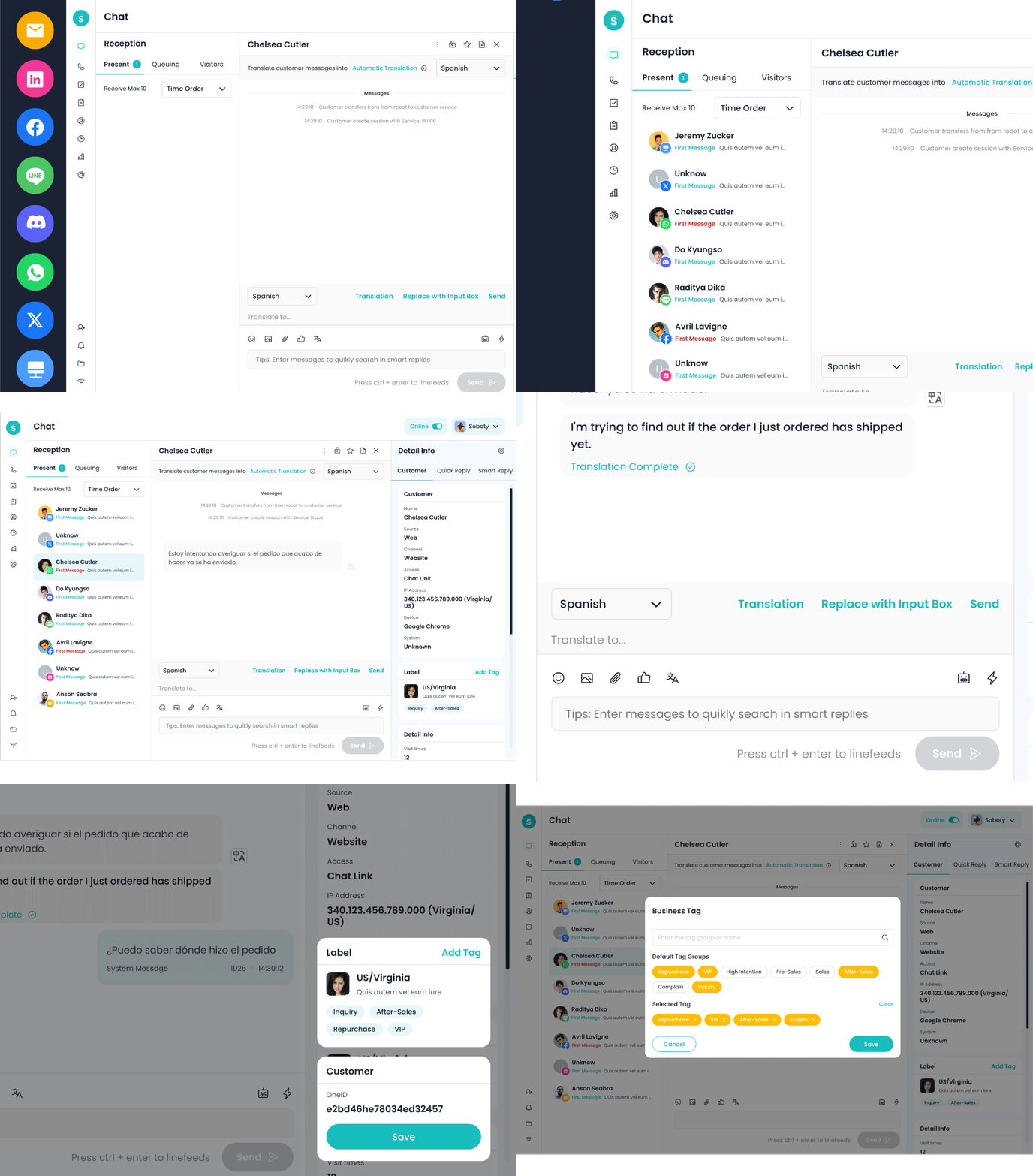
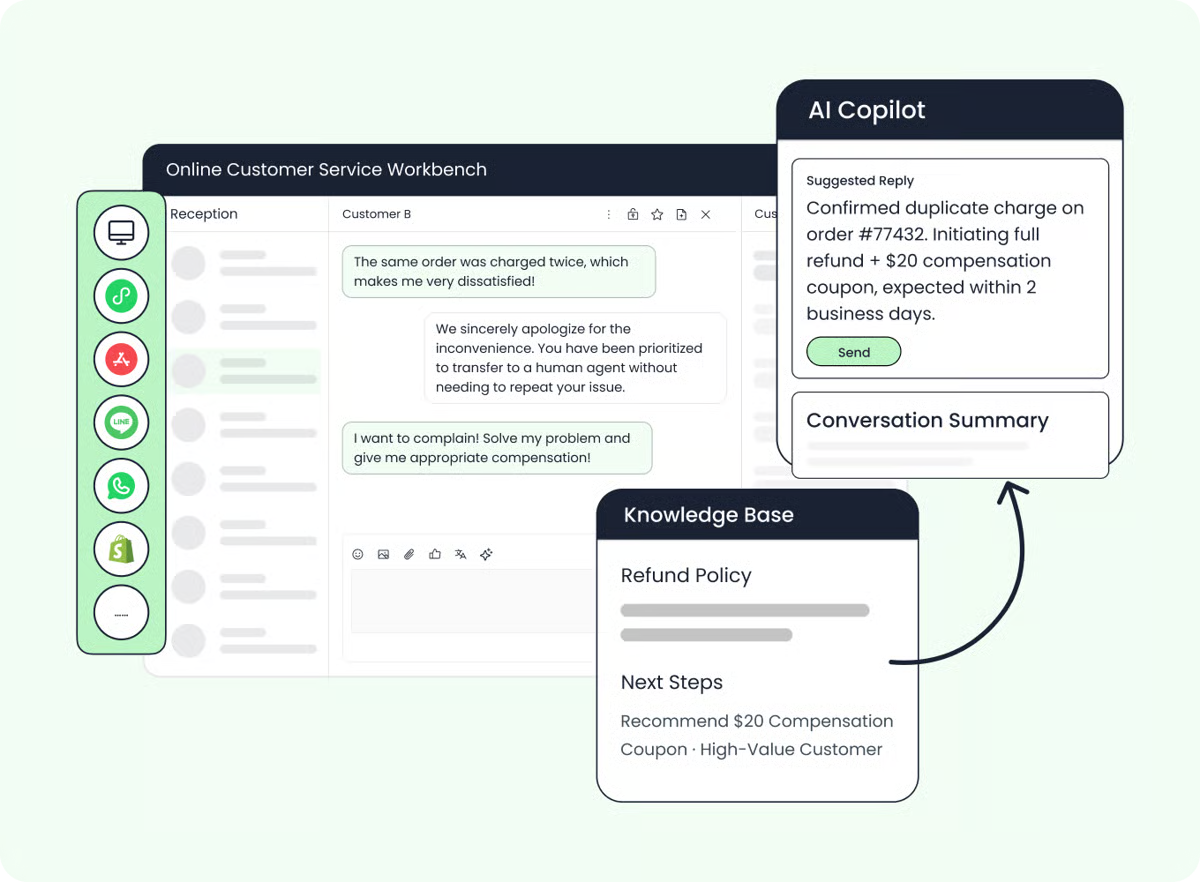
Customer service software is becoming less about managing conversations and more about coordinating the work behind them. Platforms such as Sobot are increasingly expected to connect AI assistance with customer context, service channels, business workflows, and human agents rather than treating each interaction as an isolated ticket or chat.
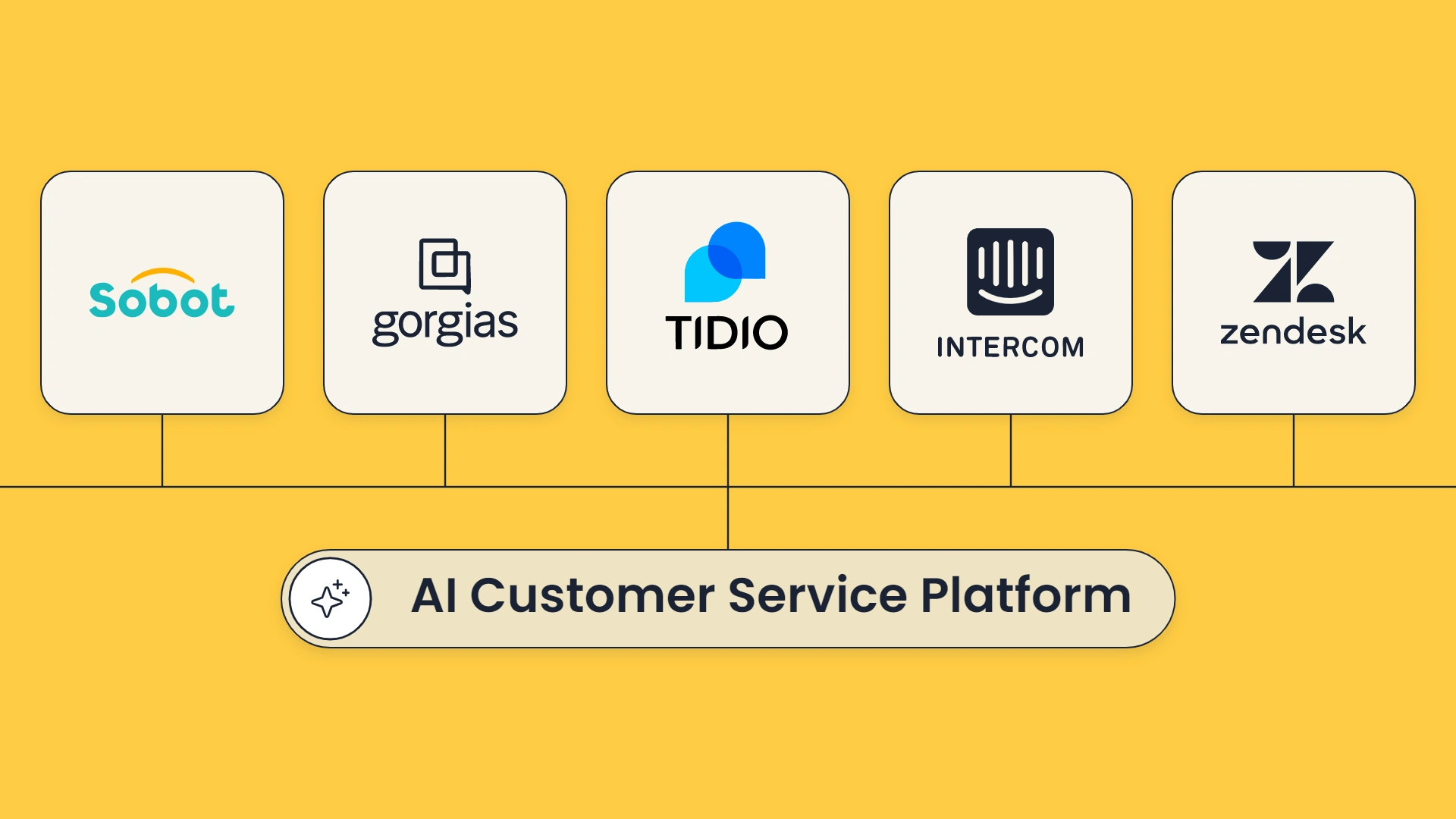
That changes how AI service software should be evaluated. That makes the decision less about finding one universal winner and more about choosing the right operating model. For teams that want AI, digital support, voice, ticketing, WhatsApp, and human service in one broader environment, Sobot is the strongest all-in-one starting point in this shortlist. Fin is a strong option for teams that want a dedicated customer agent across an existing help desk. Zendesk and Salesforce are natural first evaluations when those platforms already own service operations or customer data. Gorgias is purpose-built for ecommerce, while Ada, Freshdesk, and HubSpot each fit a different enterprise or growth-stack shape.
The Short Answer: Match the Platform to the System That Must Own the Outcome
| Platform | Best starting point for | System or workflow that should remain central | Main validation question |
|---|---|---|---|
| Sobot | Multi-channel and multi-region service teams that want one customer-contact platform | AI Agents, digital messaging, voice, ticketing, WhatsApp, and human operations | Can the proposed deployment connect every required workflow and governance control? |
| Fin | Teams that want a dedicated customer agent on Intercom or another supported help desk | Customer-agent automation with help-desk handoff | Which channels, procedures, and third-party actions are supported in the proposed package? |
| Zendesk AI Agents | Service organizations already centered on Zendesk | Tickets, knowledge, routing, reporting, and resolution workflows | Which outcomes are native, which require integrations, and how are automated resolutions counted? |
| Salesforce Agentforce Service | Enterprises whose customer and process data already lives in Salesforce | CRM data, Service workflows, Flow, and industry-cloud processes | What additional data, messaging, and implementation dependencies are required? |
| Freshdesk Omni with Freddy AI | Teams seeking an omnichannel help desk with configurable AI agents | Inbox, tickets, SLAs, messaging channels, and agent workflows | Which AI features, sessions, and channels are included in the selected plan? |
| Ada | High-volume enterprises that want an AI layer across an existing service stack | Cross-channel AI agent, integrations, and centralized performance management | How much integration and operating-model work is needed after launch? |
| Gorgias AI Agent | Ecommerce teams that want service and shopping workflows close to store data | Ecommerce help desk, product, order, return, and shopper workflows | Does the channel and regional scope extend beyond the commerce stack? |
| HubSpot Customer Agent | Growth teams already using HubSpot CRM and Service Hub | CRM-connected service, ticketing, knowledge, and front-office context | How will credit usage, channels, and escalation work at production volume? |
This is an editorial best-fit shortlist, not a measured performance ranking. A product should not be called “best” on resolution rate, cost, accuracy, or time to value until the same representative workload has been tested across the finalists.
1. Sobot: Best All-in-One Fit for AI, Digital, Voice, Tickets, and WhatsApp
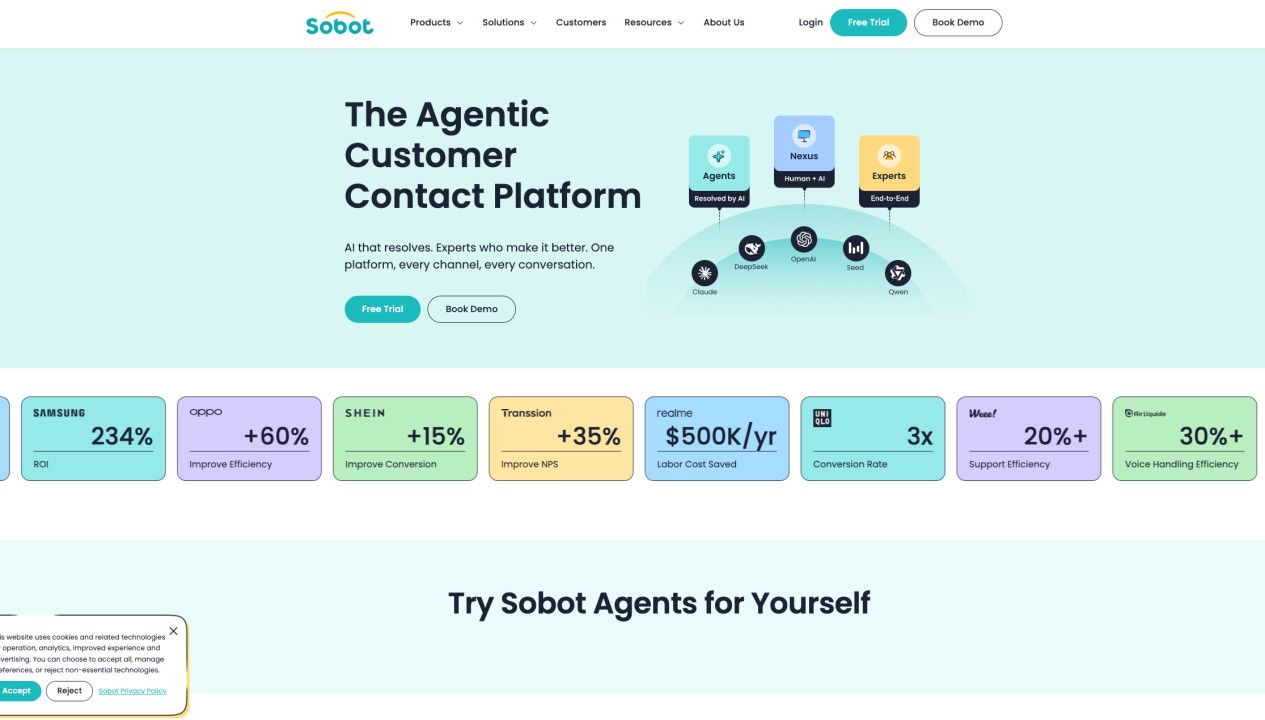
Sobot positions itself as an Agentic Customer Contact Platform built around Agents, Nexus, and Experts. The platform combines AI-led resolution with a broader customer-contact environment rather than treating the AI agent as an isolated widget.
Why Sobot belongs on the shortlist
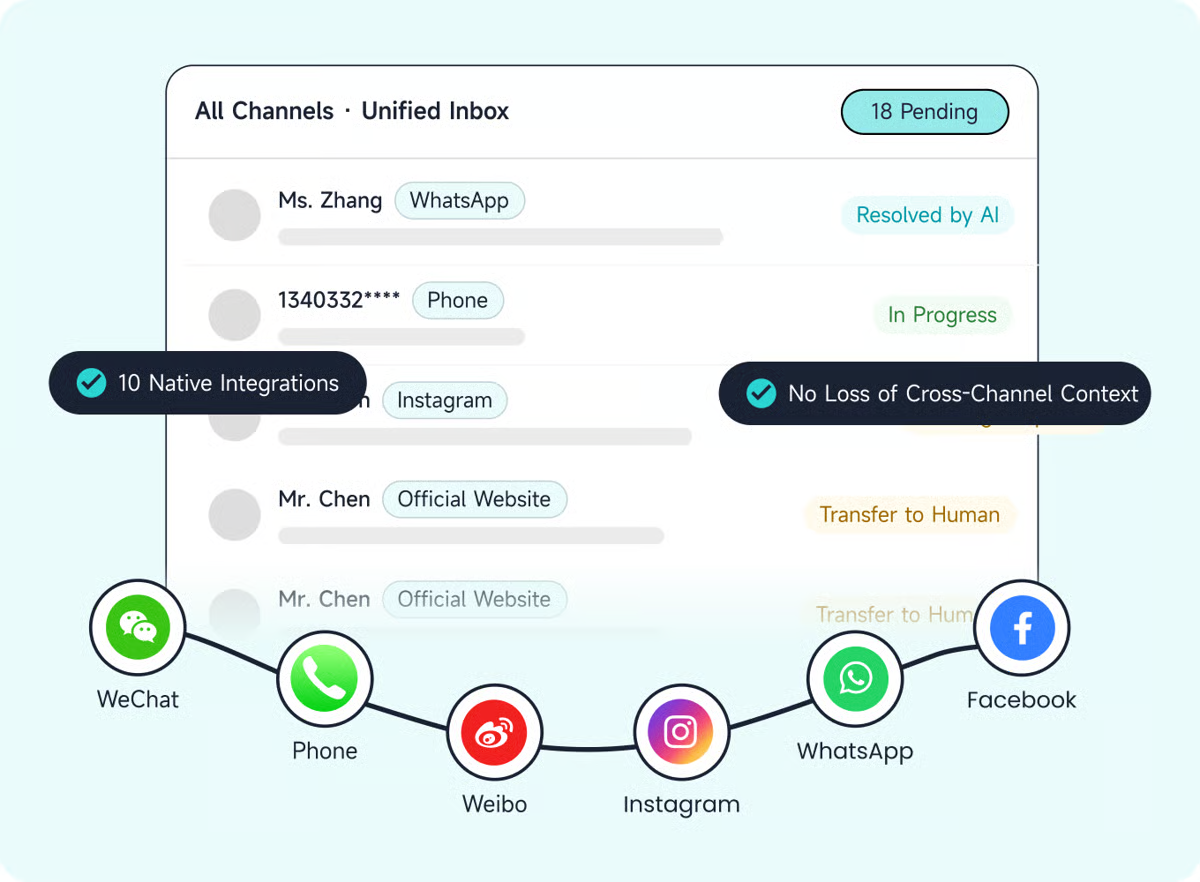
- One broader service environment: Sobot Nexus unifies customer context across digital channels, voice, ticketing, and human-agent work.
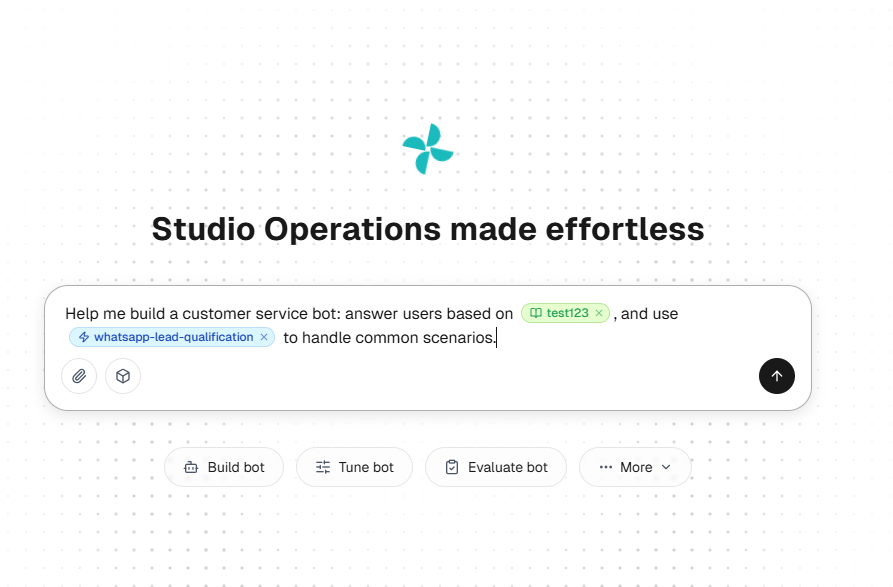
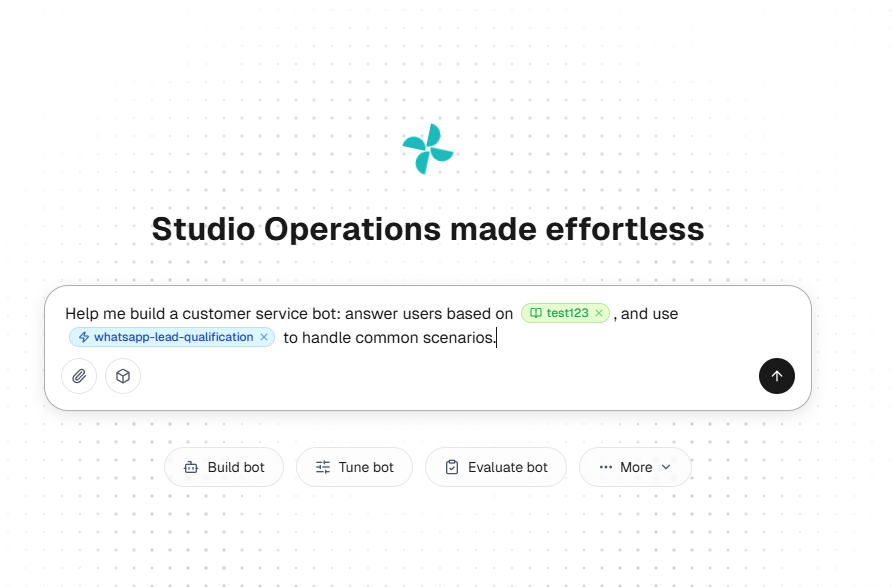
- Action-oriented AI: Sobot Agents uses enterprise knowledge, skills, tools, workflows, and connected systems to support multi-step customer-service tasks.
- Controlled escalation: Sobot supports human transfer when identity checks, policy exceptions, risk, missing information, or action boundaries require a person.
- Operational support: Sobot’s Experts layer is designed to help with deployment, training, evaluation, and continuous optimization.
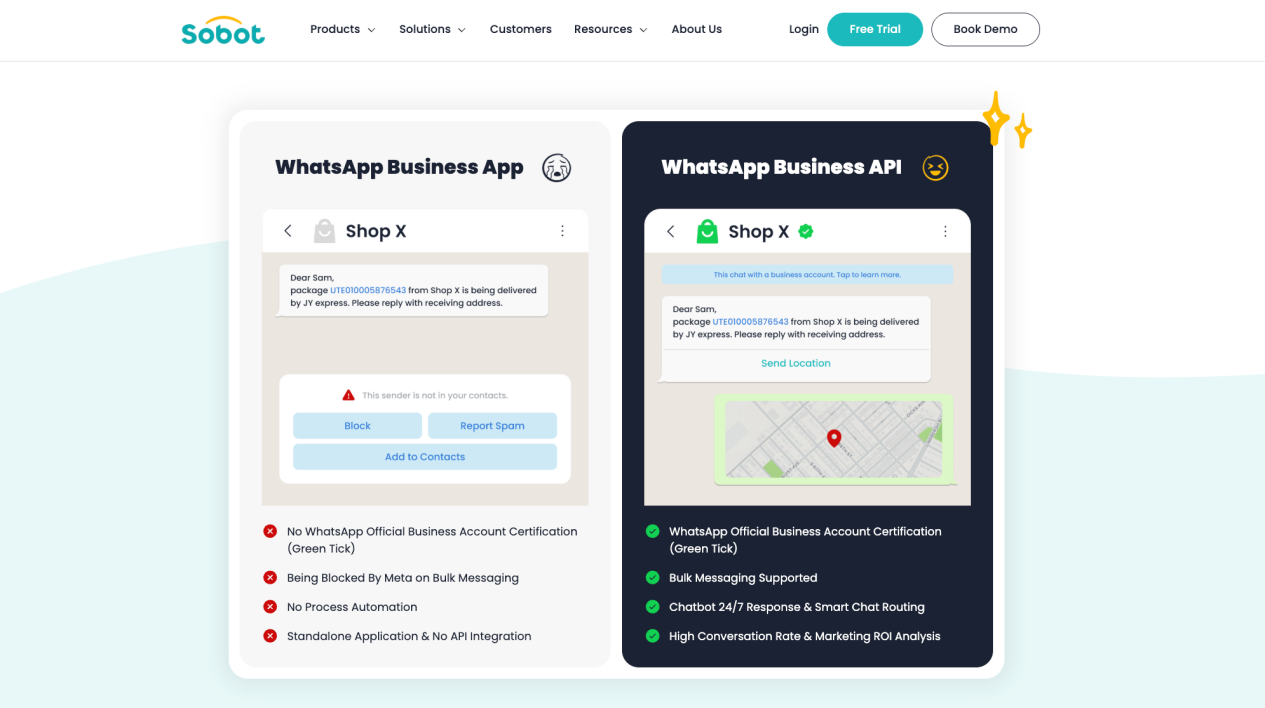
Sobot is the strongest fit here when the buyer wants to reduce fragmentation between AI automation, human agents, messaging, voice, tickets, and WhatsApp. It is a lower fit for a small team that only needs a basic website chat widget or for a buyer that requires public list pricing before talking to sales.
Before selection, verify the exact integration catalog, regional availability, language coverage by module, deployment model, security requirements, and commercial package. Sobot does not publish a universal resolution-rate benchmark or public package-and-price matrix, so those items belong in the pilot and proposal—not in an assumed score.
2. Fin: Best Fit for a Dedicated Customer Agent Across a Help-Desk Environment
Fin presents a customer agent that connects to business systems, takes actions through APIs and other integration methods, works across multiple channels, and hands off to human teams with context. It can operate natively with Intercom and supports other help-desk environments.
Choose Fin when
- You want a specialized customer agent without replacing the existing help desk.
- Your support program values configurable knowledge, procedures, testing, and observability.
- You need automation across chat, email, voice, social, or other supported channels.
The main diligence question is deployment scope. Confirm the exact help-desk integration, supported channel behavior, procedure limits, action permissions, escalation path, and outcome definition for your contract. Treat vendor-reported performance as a hypothesis for your pilot, not as a transferable forecast.
3. Zendesk AI Agents: Best Fit When Zendesk Already Owns Service Operations
Zendesk AI Agents work across messaging, email, and voice, connect knowledge to automated service, execute multi-step workflows, and escalate to human teams with context. Zendesk also ties AI-agent usage to automated resolutions and places the AI inside a wider resolution platform.
Choose Zendesk when
- Tickets, SLAs, routing, knowledge, and reporting already live in Zendesk.
- The lowest-risk path is extending an established service environment.
- Your team wants AI-agent and human-agent operations under one service platform.
The risk is assuming that “native” means “complete.” During evaluation, separate knowledge answers, authorized actions, cross-system actions, voice capabilities, and human handoff. Ask Zendesk to map each target intent to the exact procedure, integration, outcome definition, and reporting field that will be used in production.
4. Salesforce Agentforce Service: Best Fit When Salesforce Data Drives the Workflow
Agentforce Service combines AI agents, service representatives, customer data, and Salesforce workflows. Salesforce’s service-agent documentation describes agents that handle common requests, connect to customer channels, and escalate complex or sensitive work through service flows.
Choose Salesforce when
- Salesforce is the system of record for customers, cases, contracts, or service entitlements.
- The target actions already depend on Salesforce objects, Flow, or industry-cloud processes.
- Enterprise architecture and data governance favor extending the Salesforce platform.
Salesforce is not automatically the best fit just because the company uses the CRM. Confirm the data and messaging prerequisites, licensing dependencies, integration effort, implementation ownership, and cost unit. A representative pilot should include at least one case that reads trusted data, performs a permitted action, and escalates an exception with the complete record.
5. Freshdesk Omni with Freddy AI: Best Fit for an Omnichannel Help-Desk Operating Model
Freshdesk Omni combines an omnichannel inbox, ticketing, service workflows, knowledge, and Freddy AI capabilities. Freshworks documentation shows AI agents operating on real-time channels, executing configured workflows, and handing conversations to human agents when required.
Choose Freshdesk when
- The buying center wants help-desk fundamentals and AI in the same operating environment.
- Web chat, WhatsApp, social messaging, tickets, routing, and SLAs need a unified workspace.
- The team wants configurable AI-agent workflows without starting from a separate automation layer.
Plan-level packaging matters. Confirm which AI-agent features, included sessions, extra usage, channels, analytics, routing controls, and voice capabilities are present in the proposed edition. Compare total cost at your actual assisted and automated volumes instead of comparing entry prices.
6. Ada: Best Fit for an Enterprise AI Layer Across an Existing Stack
Ada is an enterprise customer-service AI platform spanning voice, email, chat, messaging, and custom channels. Its platform combines a reasoning layer, conversation hub, performance tools, and a developer toolkit; its integration catalog includes service platforms and channel-specific handoff patterns.
Choose Ada when
- The organization wants a dedicated AI-agent layer rather than a new help desk.
- Cross-channel consistency, enterprise integrations, and centralized optimization are core requirements.
- A formal AI operating model and ongoing performance management have clear owners.
Ada’s breadth makes operating readiness important. Ask who will own playbooks, knowledge, integrations, evaluations, coaching, incident review, and change control after launch. Validate the actions and handoff behavior on your actual systems instead of inferring them from the number of available integrations.
7. Gorgias AI Agent: Best Fit for Ecommerce Support and Shopping Workflows
Gorgias AI Agent is built around ecommerce service. Its official product page emphasizes connections to store and help-center data, post-purchase support, shopper guidance, order tracking, returns, discounts, and performance review.
Choose Gorgias when
- Shopify or another supported commerce platform is central to customer operations.
- The priority intents are product questions, order status, returns, exchanges, and shopper assistance.
- Support and commerce workflows should sit close to a purpose-built ecommerce help desk.
Gorgias becomes less obvious when the organization has complex non-commerce service, regulated workflows, deep contact-center requirements, or a large voice operation. Test whether all required regions, brands, channels, and back-office systems fit the ecommerce-centered model.
8. HubSpot Customer Agent: Best Fit for CRM-Connected Growth and Service Teams
HubSpot Customer Agent works with HubSpot’s service environment to answer customer questions, use connected context, resolve supported requests, and transfer conversations to a human when needed. Service Hub also connects ticketing, knowledge, customer portals, CRM data, and front-office workflows.
Choose HubSpot when
- Marketing, sales, and service already share HubSpot CRM.
- Customer context across the front office is more important than a separate enterprise contact-center stack.
- The team wants service automation alongside ticketing, knowledge, portals, and customer-success workflows.
Confirm channel coverage, credit consumption, action limits, escalation behavior, and the Service Hub edition required for the target workflow. HubSpot is a compelling first evaluation for a HubSpot-centered company, but that ecosystem fit should not substitute for a real channel and resolution test.
How to Choose the Right AI Customer Service Software
Use the shortlist to reduce the field to two or three candidates, then run the same evidence-based evaluation for each one.
- Map the system of record. Identify where customer identity, orders, contracts, tickets, entitlements, and policies live. Any product that cannot reliably read and update the required systems should leave the shortlist.
- Select representative intents. Include one knowledge question, one multi-step action, one ambiguous request, one policy exception, and one required human handoff.
- Test real channels. Use the channels customers actually use—not only the easiest web-chat demo. Include voice, WhatsApp, email, or social messaging when they materially affect the decision.
- Define resolution before the pilot. A useful definition requires the customer’s issue to be completed correctly, within policy, without an unnecessary handoff or repeat contact.
- Score the operating model. Measure knowledge maintenance, workflow changes, evaluation, approvals, observability, incident response, and human ownership—not only conversation quality.
- Normalize commercial terms. Convert seats, conversations, sessions, credits, automated resolutions, services, implementation, integrations, and overages into a comparable cost for your expected workload.
The Six Criteria That Separate a Demo From a Production Platform
1. Grounded knowledge
The system should identify approved sources, respect content permissions, handle conflicting material, expose knowledge gaps, and support a controlled update process.
2. Action depth
Ask whether the AI can only explain the next step or can complete a permitted task such as checking an order, changing an address, creating a ticket, or initiating a return. Verify identity, permission, rollback, and audit behavior for each action.
3. Channel continuity
Customers should not lose context when they move between web, WhatsApp, email, voice, and a human agent. For teams with a broad channel mix, compare a dedicated AI layer with an integrated omnichannel customer-service platform.
4. Human handoff
Good escalation transfers the conversation, customer context, completed checks, attempted actions, and reason for escalation. It also routes the work to the right queue under the right SLA.
5. Evaluation and governance
Require pre-launch testing, regression checks, version control, permissions, audit evidence, production monitoring, and a defined response when the agent behaves incorrectly.
6. Total cost per verified outcome
Do not compare only the advertised billing unit. Include platform access, human seats, AI usage, implementation, integrations, professional services, operations, and unresolved contacts. Then divide by outcomes that meet your agreed resolution definition.
Final Verdict
Start with Sobot when the goal is to run AI Agents and human service across digital messaging, voice, ticketing, WhatsApp, and customer-contact operations in one broader platform. Start with Fin when a specialized customer agent should sit across the current help desk. Start with Zendesk AI Agents or Salesforce Agentforce Service when those ecosystems already own the service workflow or customer record.
Choose Freshdesk Omni for an omnichannel help-desk model, Ada for an enterprise AI layer across an existing stack, Gorgias for commerce-centered service, and HubSpot Customer Agent for CRM-connected growth and service teams.
The final decision should come from a controlled pilot, not a vendor scorecard. If your shortlist requires AI, human agents, digital channels, voice, tickets, and WhatsApp to operate with shared context, book a Sobot demo and bring five representative customer intents. The evaluation will be more useful when every vendor must show the same actions, handoffs, controls, and measurable outcomes.
Frequently Asked Questions
What is the best AI customer service software overall?
There is no evidence-based universal winner. Sobot is a strong all-in-one choice for teams that need AI, omnichannel messaging, voice, ticketing, WhatsApp, and human operations together. Fin, Zendesk, Salesforce, Freshdesk, Ada, Gorgias, and HubSpot can be better starting points when an existing help desk, CRM, commerce stack, or operating model should remain central.
Which AI customer service software is best for ecommerce?
Gorgias is purpose-built around ecommerce service and shopping workflows. Sobot is a stronger candidate when ecommerce support also requires broader cross-border channels, voice, ticketing, WhatsApp, and human contact-center operations. The pilot should include real product, order, return, payment, and escalation scenarios.
Should we buy AI from our current help-desk or CRM vendor?
It is usually the lowest-friction option to evaluate first because the data and workflows are already nearby. It should not receive an automatic win. Compare it with at least one alternative when cross-platform action depth, channel scope, governance, portability, or total cost could materially change the result.
How many vendors should enter a pilot?
Two or three is usually enough after hard requirements remove poor-fit candidates. Give each vendor the same knowledge package, anonymized conversations, target actions, exception rules, channels, and success definition.
Which metric matters most?
Use verified resolution for the agreed intent set, then review correctness, repeat contact, escalation quality, customer experience, and total cost per verified outcome. Containment or deflection alone can count conversations that ended without actually solving the customer’s problem.