The best AI chatbots for ecommerce customer service should help shoppers find accurate product information, check orders, and resolve routine problems without losing context when a person takes over. A convincing reply is useful, but a completed service task is what reduces work for your team.
For Shopify-focused operations, Gorgias and Tidio deserve consideration. Sobot AI Agents is relevant when service involves reusable business rules and connected systems. Intercom’s Fin for Ecommerce combines shopping assistance with support, while Zendesk suits brands extending an established service operation.
The right choice depends on your storefront, support channels, order workflows, and operating budget. This guide compares published capabilities and buying considerations, rather than claiming a hands-on performance ranking.
Quick Comparison: Ecommerce AI Chatbots at a Glance
| Solution | Best-fit scenario | Main capability to evaluate | Key buying consideration |
|---|---|---|---|
| Gorgias AI Agent | Commerce-focused support teams | Product guidance and connected order actions | Store compatibility and combined usage charges |
| Sobot AI Agents | Brands coordinating knowledge and business workflows | Policy-based tasks, reusable resources, and human handoff | Integration scope and custom pricing |
| Tidio Lyro | Small stores adding AI to everyday support | Knowledge-based answers and Shopify order lookup | Recurring AI allowances versus trial allocations |
| Intercom Fin for Ecommerce | Teams combining shopping assistance and service | Catalog-based product discovery and order context | Ecommerce-specific plan and platform requirements |
| Zendesk AI agents | Brands building on an established help desk | Knowledge-grounded automation and service workflows | AI entitlements and action configuration |
What Makes an AI Chatbot Useful for Ecommerce?
Evaluate each option against the same shopping and support journeys:
- Product accuracy: Can it distinguish variants, explain specifications, and avoid inventing availability or discounts?
- Order access: Can it retrieve the correct order after appropriate customer verification?
- Business actions: Can it perform the required task, or does it only provide instructions?
- Policy controls: Does it respect return windows, exclusions, and approval requirements?
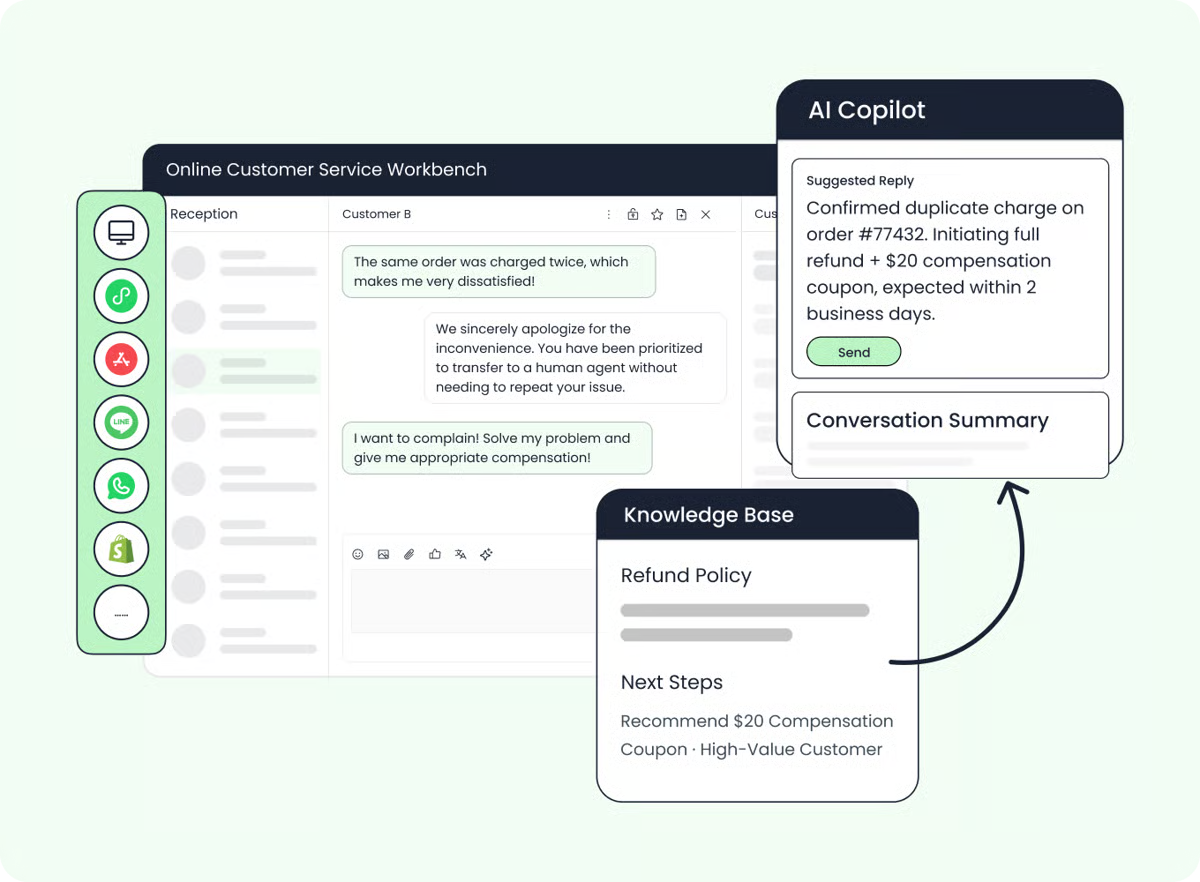
- Human handoff: Can staff see the conversation, attempted actions, and reason for transfer?
- Operational cost: What will subscriptions, AI usage, integrations, and maintenance cost during peak demand?
An integration that displays orders to human agents does not automatically allow the AI to change those orders. Ask vendors to demonstrate the exact read and write operations your store needs.
AI Chatbots to Consider for Ecommerce Customer Service
Gorgias AI Agent: For Commerce-Focused Support
Best for: Ecommerce teams that want shopping assistance and post-purchase automation connected to their store.
Gorgias AI Agent supports customer conversations using store and brand information. Its documented capabilities include actions in connected tools, such as canceling orders or processing returns, with human handoff when automation should stop. Shopping Assistant adds product-discovery capabilities for supported Shopify deployments.
The advantage is a commerce-oriented starting point. Teams can evaluate familiar requests—product questions, delivery inquiries, and order changes—in the context of their existing store operations.
Limitations and pricing: Confirm feature compatibility with your ecommerce platform and connected apps. Review help-desk charges alongside automated-interaction charges; a headline AI rate does not describe the entire bill. Gorgias documents these distinctions in its billing guide.
Takeaway: Shortlist Gorgias when store operations drive most support requests, then test the exceptions that usually require manual intervention.
Sobot AI Agents: For Connected Ecommerce Workflows
Best for: Brands that need enterprise knowledge, reusable business rules, and permitted actions across connected systems.
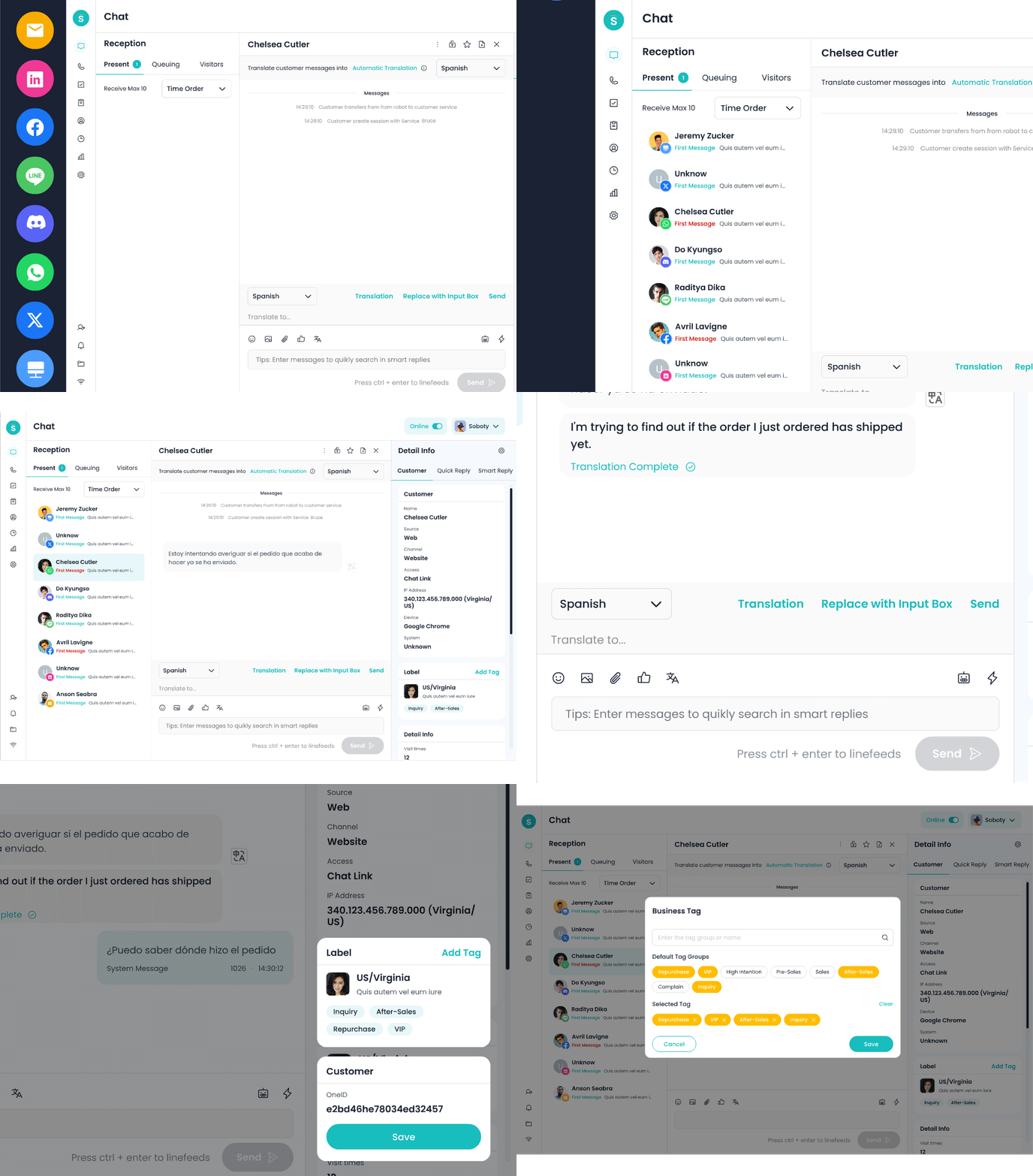
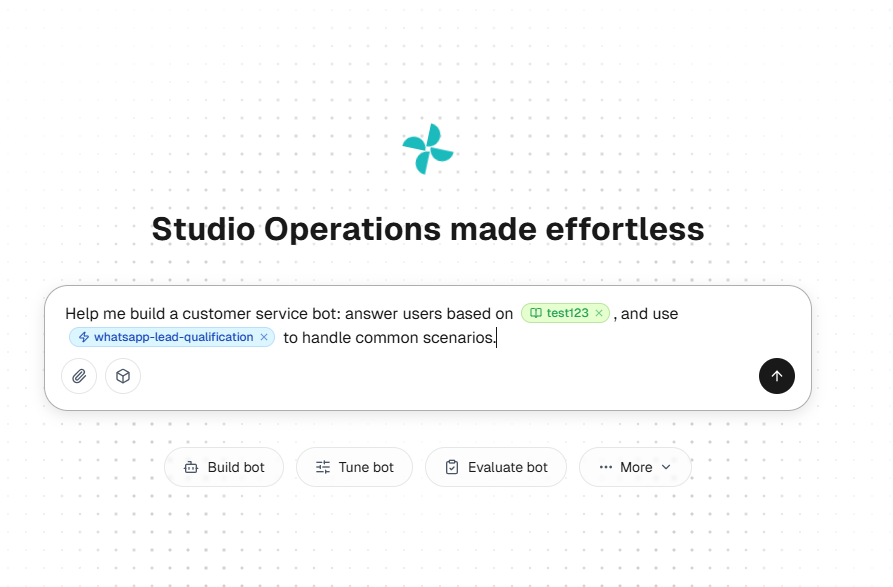
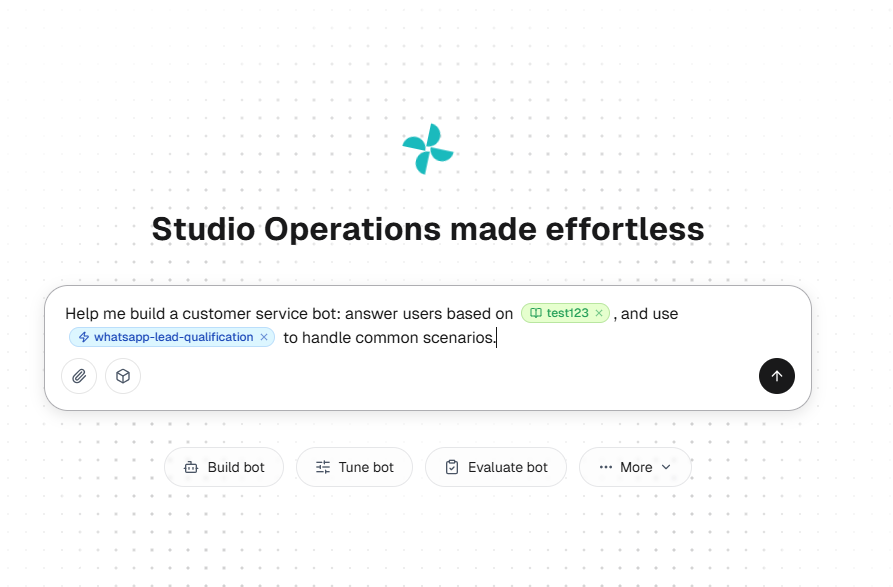
Sobot AI Agents is part of Sobot, The Agentic Customer Contact Platform. Its Resource Center organizes Knowledge, Skills, Workflows, Tools, Memory, and Variables for reuse across Agents.
For ecommerce, that supports a practical sequence: understand a return request, retrieve the policy, query an order through a configured tool, apply eligibility rules, and request missing information. A permitted action can proceed; an exception can transfer to a human with relevant available context.
RAG supports knowledge-grounded answers, while ReAct supports choosing actions and adapting to their results. The Build, Evaluate, Tune, and Observe operating loop helps teams review performance as catalogs and policies change.
Limitations and pricing: Pricing requires a tailored proposal. Confirm storefront connections, action permissions, module-level language coverage, and implementation support. Do not assume that a platform integration enables every AI workflow automatically.
Takeaway: Consider Sobot AI Agents when service requires coordination between knowledge, business systems, and people. Start with a clearly scoped workflow rather than automating every request at once.
Tidio Lyro: For Small Stores Starting With Support Automation
Best for: Small ecommerce teams handling recurring website questions and order inquiries.
Tidio combines human support tools with Lyro AI and configured automation. Its Shopify order-status integration can retrieve payment, fulfillment, purchased-item, and tracking information. That makes order lookup a concrete starting point for evaluating the product.
For a small team, the practical appeal is combining routine answers and human conversations in the same service environment. Begin with approved delivery information, product FAQs, and supported order queries before adding more consequential actions.
Limitations and pricing: Review AI usage separately from human conversations and Flows. Tidio’s pricing distinguishes recurring usage from one-off AI allowances, so an entry-level subscription should not be treated as unlimited AI support.
Takeaway: Evaluate Lyro when you want a focused deployment your existing team can maintain. Test whether its included capabilities and usage limits match your busiest periods.
Intercom Fin for Ecommerce: For Shopping Assistance and Support
Best for: Teams seeking product discovery and customer support within an Intercom-based ecommerce setup.
Fin for Ecommerce connects with Shopify catalog and order information to assist shoppers and support customers. Its dedicated ecommerce offering is relevant when pre-purchase questions and post-purchase requests need consistent customer context.
A useful evaluation should cover both sides: helping a shopper identify a suitable product, then handling an order-related question without confusing product advice with policy promises.
Limitations and pricing: Intercom distinguishes Fin for Ecommerce from Fin running on other help desks. Its plan documentation states that the ecommerce offering requires an Intercom plan. Include seat charges and billable AI outcomes in your estimate, and verify current eligibility in the official plan guide.
Takeaway: Consider Fin for Ecommerce when Intercom fits your service environment. Do not assume every Fin capability is available through every deployment option.
Zendesk AI Agents: For Established Support Operations
Best for: Ecommerce brands already organizing service around Zendesk tickets, knowledge, and agent workflows.
Zendesk AI agents use trusted knowledge sources to answer questions. Zendesk also documents ecommerce-focused agents and configurable actions for tasks such as Shopify order lookup and refunds. These capabilities make it worth evaluating for operational work beyond basic FAQs.
Its appeal is continuity with an existing support environment. Teams can assess automation alongside the ticket ownership, escalation, and knowledge processes they already use.
Limitations and pricing: Confirm the required AI entitlements, action configuration, and usage charges. A Shopify integration in the human-agent workspace is not proof that the same action is enabled for the AI.
Takeaway: Include Zendesk when preserving established service operations matters. Demonstrate each automated order action instead of relying on the integration’s general description.
How to Test Your Shortlist Before Buying
Give every vendor the same representative requests: a product comparison, delayed delivery, eligible return, excluded return, and order-change request after shipment. Include incomplete information and a failed system response.
Judge whether the chatbot uses current information, asks sensible follow-up questions, respects permissions, and escalates appropriately. Check that any claimed action appears correctly in the connected system.
Then estimate the full cost at normal and peak volume. Track completed tasks, incorrect actions, repeat contacts, and staff effort. A shorter conversation is not an improvement if the customer must contact you again.
Frequently Asked Questions
Which AI chatbot is best for a small Shopify store?
Tidio Lyro is worth evaluating for a focused support deployment. Gorgias is relevant when commerce workflows and shopping assistance are central. Compare required actions, included AI usage, and maintenance effort rather than choosing on the lowest advertised subscription.
Can an AI chatbot process returns and refunds?
Some can perform configured actions through connected systems. Explaining a return policy, opening a return request, and issuing a refund are different capabilities. Verify eligibility rules, customer authentication, approval limits, and what happens if an action fails.
Should I choose Sobot AI Agents or Gorgias?
Consider Gorgias when commerce-specific workflows dominate your requirements. Consider Sobot AI Agents when reusable knowledge and business rules must work across connected service systems. Ask both to complete the same workflow and handle an exception before comparing the implementation proposals.
What is the cheapest way to start?
Automate a narrow, repetitive request using reliable existing information. Compare the cost of that workload, including AI usage and setup, rather than a plan’s starting price. Expand when the deployment demonstrates useful results and manageable maintenance.
Which option suits international ecommerce support?
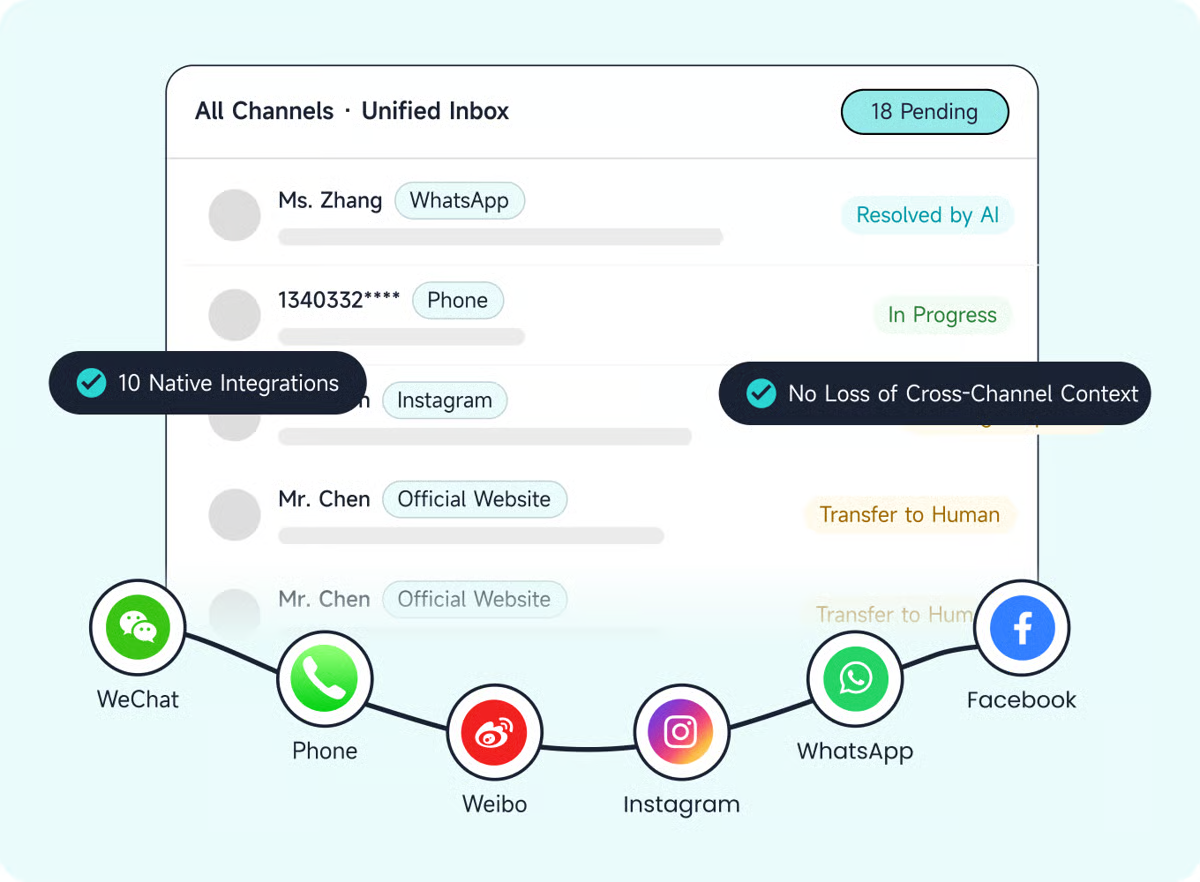
Shortlist by the languages, channels, storefronts, and service hours your customers actually use. Sobot AI Agents is worth evaluating for connected service workflows; other options may fit a particular store stack better. Test each required language and channel directly rather than relying on a company-wide language count.
Choose Around the Customer Task
Gorgias, Sobot AI Agents, Tidio, Intercom, and Zendesk address different ecommerce operating needs. The most useful comparison is how each handles your real product, order, and after-sales requests.
If your priority is connecting enterprise knowledge with controlled customer-service actions, explore Sobot AI Agents and request a workflow demonstration. Bring an ordinary request and an exception. Review the answer, the action, the handoff, and the total operating cost before making a decision.