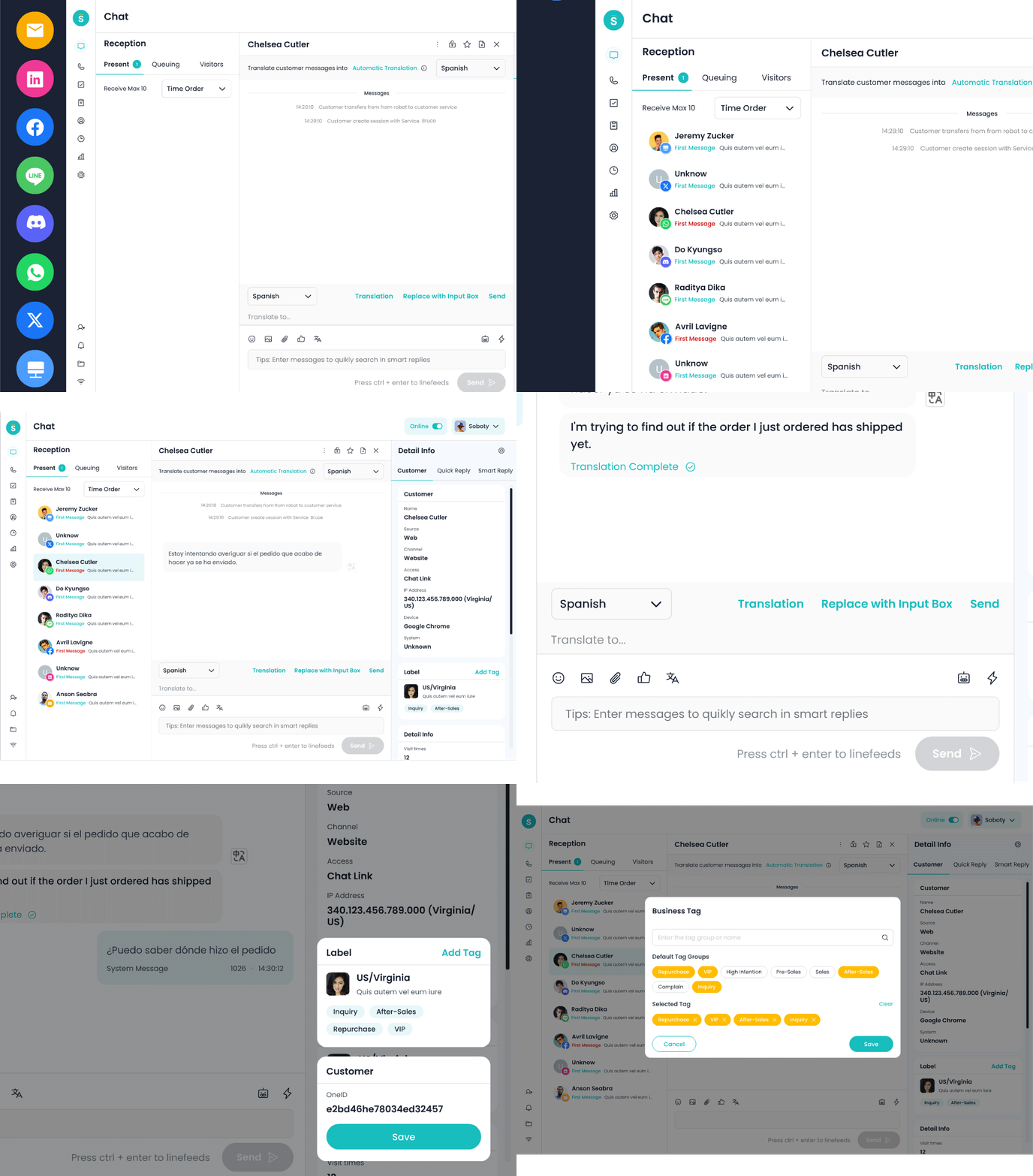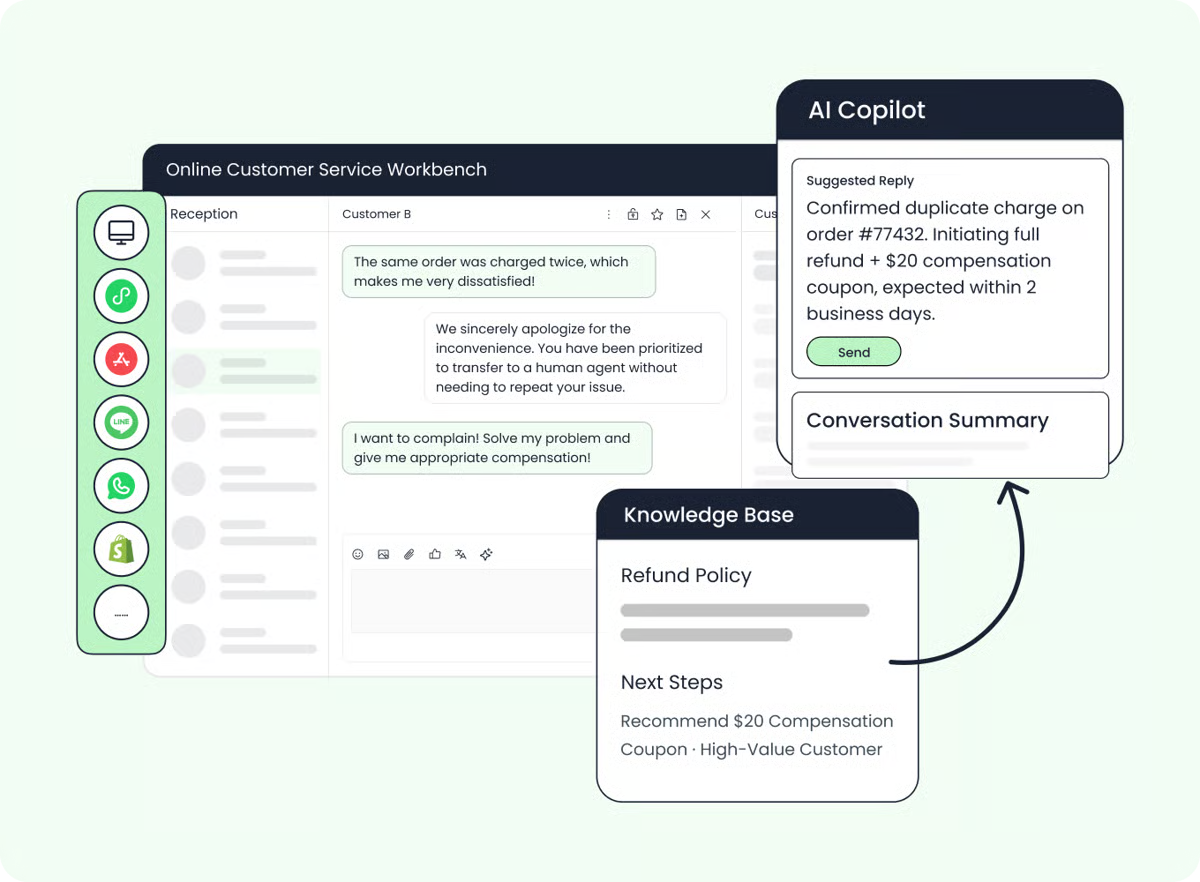
The best enterprise AI chatbot platform fits your service workflows, existing systems, and operating controls. Salesforce Agentforce deserves consideration when customer service runs on Salesforce; Zendesk AI agents suit teams extending a Zendesk environment. Sobot AI Agents, Ada, Intercom Fin, and Cognigy offer other approaches to connecting automated conversations with business processes.
Enterprise buyers should look beyond answer quality. A chatbot must retrieve the right information, respect permissions, complete approved tasks, and transfer exceptions to people with useful context.
In a June 2025 forecast, Gartner predicted that over 40% of agentic AI projects would be canceled by the end of 2027 because of costs, uncertain business value, or insufficient risk controls. This is a forecast about agentic AI projects broadly, not an observed failure rate for customer-service chatbots. It reinforces why operating fit matters during procurement.
Enterprise AI Chatbot Platforms at a Glance
| Platform | Best-fit environment | Main reason to shortlist | Key buying consideration |
|---|---|---|---|
| Salesforce Agentforce | Service operations centered on Salesforce | CRM-connected agents and business actions | Licensing, data preparation, and consumption costs |
| Sobot AI Agents | Service workflows spanning knowledge and business systems | Reusable resources and managed agent operations | Integration scope and tailored commercial terms |
| Zendesk AI agents | Established Zendesk support operations | AI within an existing service platform | Included capabilities and automated-resolution billing |
| Ada | Enterprises adding an AI service layer | Knowledge, integrations, and agent management | Contract scope and integration ownership |
| Intercom Fin | Intercom or compatible external help desks | Answers, configured actions, and handoff | Outcome definition and deployment conditions |
| Cognigy | Enterprises needing configurable conversational orchestration | Digital endpoints and integration flexibility | Architecture, implementation effort, and quote scope |
These are scenario-based recommendations drawn from official product information, not results from a comparative hands-on benchmark. Product and commercial information was reviewed on October 19, 2026.
What Makes a Chatbot Enterprise Ready
An enterprise AI chatbot is a customer-facing conversational system that operates within organizational knowledge, business processes, and access controls. Some platforms primarily answer questions; others also perform configured actions. The product label alone does not establish that distinction.
Evaluate each platform against the same requirements:
- Knowledge governance: Approved sources, update ownership, and access boundaries.
- Integration depth: The specific records and actions available through each connection.
- Permissions: Identity verification and authorization before sensitive operations.
- Human handoff: Routing, conversation history, and relevant business context.
- Operational control: Testing, monitoring, change approval, and recovery procedures.
- Channel and language fit: Performance in the markets and channels you actually serve.
- Total cost: Subscriptions, consumption, implementation, and ongoing maintenance.
Ask vendors to demonstrate these requirements in your proposed configuration. A feature listed at platform level may depend on a particular plan, connector, or deployment model.
Top Enterprise AI Chatbot Platforms
Salesforce Agentforce for Salesforce-Based Service Operations
Best for: Enterprises whose customer records and service processes already run through Salesforce.
Agentforce supports agents that work with business data and actions. Its appeal is strongest when teams can build around existing Salesforce records and processes, rather than duplicating customer context in another service environment.
Strength: Existing Salesforce investment can provide a useful foundation for connecting conversations to CRM work.
Limitation: That advantage depends on data quality, permissions, and process design. Organizations with fragmented records or little Salesforce infrastructure should assess the implementation burden before selecting on ecosystem reputation.
Pricing: Salesforce publishes several Agentforce pricing models, including Flex Credits and conversation-based options. Compare the applicable model alongside required Salesforce products and data services; a unit price is not the complete deployment cost.
Takeaway: Shortlist Agentforce when Salesforce is already central to service delivery and the required actions can be governed within that environment.
Sobot AI Agents for Reusable Service Workflows
Best for: Enterprises coordinating customer knowledge, business rules, connected systems, and human service teams.
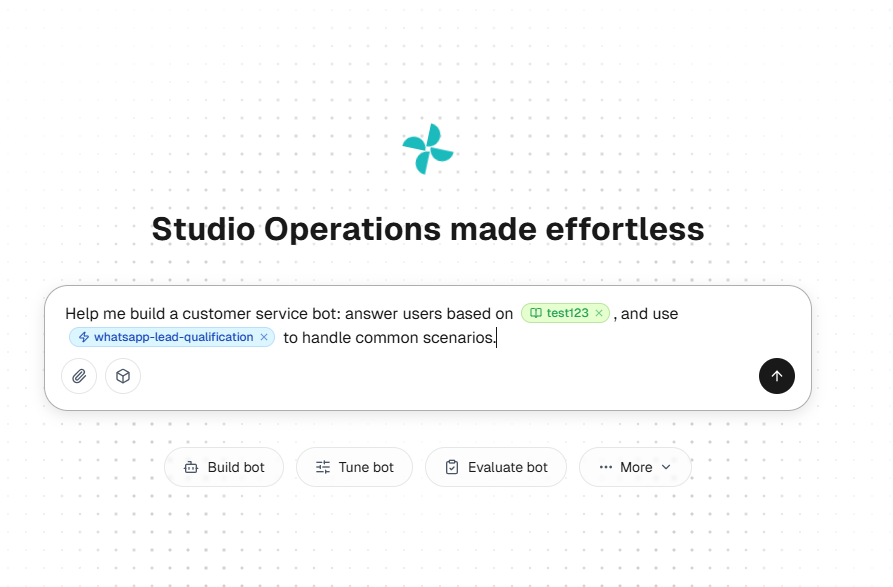
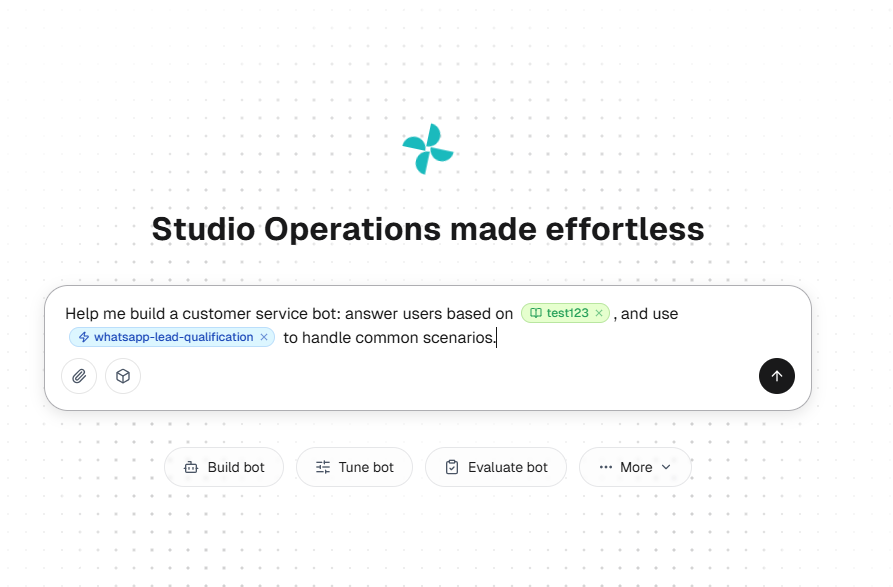
Sobot AI Agents supports knowledge-grounded responses and configured business actions. Its Resource Center organizes Knowledge, Skills, Workflows, Tools, Memory, and Variables for reuse across agents. AI Studio and evaluation capabilities support an operating cycle of building, evaluating, tuning, and observing performance.
Consider a return request: an agent can be configured to retrieve policy information, collect missing details, consult an order system, apply eligibility rules, and escalate an exception. This is an illustrative workflow; execution requires suitable connections, permissions, and approved processes.
Strength: Reusing resources gives teams a way to maintain consistent service logic without rebuilding every agent independently.
Limitation: Integration availability, action permissions, language coverage, and service scope require confirmation. Natural-language configuration still needs review and testing.
Pricing: Request a tailored proposal covering implementation, usage, evaluation, support, and ongoing optimization.
Takeaway: Consider Sobot AI Agents when workflow consistency and cross-system coordination are central to the business case.
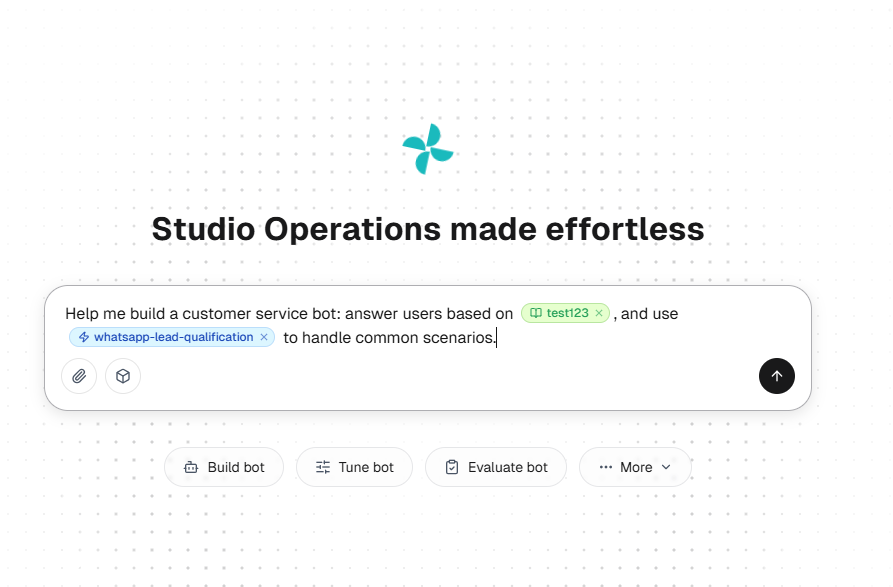
Official Sobot AI Agents Studio interface. Resource names shown are examples.
Zendesk AI Agents for Existing Zendesk Teams
Best for: Enterprises extending automation within an established Zendesk service operation.
Zendesk combines AI agents with its broader support platform. Existing customers can assess automation in the context of their knowledge, ticket handling, routing, and human service processes.
Strength: Keeping automation close to the existing service environment can reduce the amount of operational change a deployment requires.
Limitation: A connector available to a human agent does not automatically enable the same action for an AI agent. Verify each proposed workflow, entitlement, and handoff. Avoid relying on outdated package descriptions when comparing proposals.
Pricing: Zendesk’s pricing information describes AI agents with outcome-based charging. Review the underlying subscription, automated-resolution allowance, and additional usage terms together.
Takeaway: Start here when preserving Zendesk operations matters, then test whether the required automation works within the quoted configuration.
Ada for an AI Service Layer
Best for: Enterprises evaluating a dedicated AI customer-service platform connected to existing business systems.
Ada’s platform combines knowledge, integrations, agent management, and developer tools. This makes it relevant when the buying decision centers on how to automate service across the organization’s existing systems.
Strength: Its integration and management capabilities provide a framework for connecting customer conversations with enterprise information and actions.
Limitation: Integration ownership still matters. Establish who maintains authentication, API changes, knowledge updates, and escalation behavior. A vendor-managed agent does not remove the need for internal process owners.
Pricing: Ada describes conversation-based pricing and a resolution-based option for specific enterprise needs. Obtain a scoped proposal and compare exactly what each billable unit includes through its official platform information.
Takeaway: Evaluate Ada when you want a dedicated automation layer and have clear ownership of the systems it must use.
Intercom Fin for Help-Desk-Based Automation
Best for: Enterprises using Intercom or evaluating Fin with a compatible external help desk.
Fin supports customer answers, configured actions in external systems, and handoff to human agents. Its deployment options are relevant to organizations that want to add automation while retaining an existing support environment.
Strength: Buyers can compare an integrated Intercom deployment with an eligible external-help-desk configuration.
Limitation: Features and commercial conditions vary by deployment. Confirm how identity, context, routing, and reporting work with your selected help desk.
Pricing: Intercom lists Fin from $0.99 per outcome. Its pricing explanation includes completed Procedures, including handoffs, within the outcome definition. Do not equate every billable outcome with resolution without human assistance. Include applicable seats and other usage charges.
Takeaway: Consider Fin when the integration fits your service stack and its outcome model aligns with how you measure value.
Cognigy for Configurable Conversational Orchestration
Best for: Enterprises needing flexible conversational deployment across a complex customer-service environment.
Cognigy provides conversational orchestration and deployment endpoints. Its endpoint documentation describes Webchat, REST, and third-party connections, giving architecture teams concrete integration options to examine.
Strength: Endpoint flexibility is useful when customer interactions must connect to established enterprise infrastructure.
Limitation: Flexibility creates design decisions. Specify how the platform will connect to identity systems, business services, human routing, and monitoring, and which team maintains each connection.
Pricing: Request a proposal for the intended deployment, including platform access, consumption, implementation, and support.
Takeaway: Shortlist Cognigy when orchestration requirements justify dedicated architecture and implementation work.
How to Choose an Enterprise AI Chatbot Platform
Define the Business Outcome First
Choose a workflow with measurable value, such as order-status inquiries or account troubleshooting. Establish the current resolution quality, repeat-contact rate, and staff effort. A successful deployment should improve the whole service task, not simply shorten the first response.
Turn Requirements into Acceptance Tests
Give every vendor the same representative requests. Include missing information, restricted records, conflicting knowledge, an unavailable system, and an explicit request for a person. Confirm that an action reported as complete actually appears in the destination system.
For example, an address-change test should check identity, shipment status, permitted changes, and escalation when the update is no longer allowed. This reveals more than an unrestricted demonstration.
Verify Governance and Operating Ownership
Ask how administrators control access, approve changes, investigate failures, and disable problematic actions. Review data processing, retention, hosting, and audit requirements with the appropriate internal teams. Obtain evidence for the exact service and region being purchased.
Assign owners for knowledge, integrations, quality review, and escalations. Without clear ownership, even a promising pilot can become difficult to maintain.
Compare Full Costs and Run a Controlled Pilot
Request estimates for normal demand, peak periods, and expansion. Include platform fees, seats, AI consumption, channel charges, implementation, and maintenance. Compare billing definitions before comparing unit prices.
Pilot a bounded workflow with a clear human fallback. Expand only after reviewing correct resolutions, action failures, repeat contacts, customer feedback, and staff effort.
Frequently Asked Questions
Which enterprise AI chatbot platform is best overall?
There is no universal winner. Start with your existing service environment, required actions, governance requirements, and operating team. Use the comparison table to form a shortlist, then test the same workflows across vendors.
Should we choose Sobot AI Agents or Zendesk AI agents?
Consider Zendesk when extending an established Zendesk operation is the priority. Consider Sobot AI Agents when reusable knowledge and cross-system workflows drive the project. Compare the actual integration scope, maintenance responsibilities, and commercial terms.
Can a mid-sized business use an enterprise platform?
Yes, when its workflow complexity justifies the cost and operating effort. Start with a narrow deployment. A small team handling simple FAQs may get sufficient value from a less complex solution.
What is the biggest hidden cost?
Integration and ongoing maintenance deserve close attention. Content updates, API changes, evaluation, and human handling of exceptions all consume resources. Ask vendors to separate included services from work your team must perform.
How should we evaluate multilingual enterprise support?
Test real requests in each required language and channel. Include local terminology, mixed-language messages, and handoff to the correct team. A published language count does not establish quality for your workflow or regional configuration.
Make the Shortlist Around Your Service Operation
Enterprise AI chatbot platforms should be selected around the work they can reliably support. Salesforce and Zendesk are natural starting points for their existing users. Ada, Fin, and Cognigy merit consideration for different automation and integration requirements.
For organizations prioritizing reusable knowledge, controlled actions, and connected service workflows, request a Sobot AI Agents demonstration. Bring a real workflow and its exceptions, and evaluate the full path from customer request to verified result and human follow-up.