The customer service AI question in 2026 is no longer simply, “Can it answer?” It is also, “Can I still reach a person when the situation gets complicated?” In a Gartner survey, 87% of customers said companies using generative AI for customer service must provide access to a human agent. That makes safe handoff part of the product decision, not a footnote. Gartner’s survey is a useful reminder that automation and human access have to work together.
Quick comparison: the best AI customer service agent platforms 2026
The labels below are editorial fit recommendations, based on public product information and each platform’s stated operating model. Use this best AI customer service agent platforms 2026 comparison as a shortlist, not a podium. We have not run a controlled product benchmark. Before choosing, check that the advertised features, channels, integrations, and commercial terms apply to your plan and region.
| Platform | Best fit | What to validate before a pilot |
|---|---|---|
| Sobot AI Agents | Teams that need AI Agents, customer-contact infrastructure, and implementation support across channels and workflows | Which channels and systems are in scope; connector setup and permissions; US package, usage allowances, and handoff behavior |
| Zendesk AI Agents | Support teams that already run on Zendesk and want automation within that service environment | Plan allowances, eligible channels, automation definitions, and whether newer specialized agents are available for your account |
| Fin by Salesforce | Teams considering an outcome-priced AI agent that can work with an existing helpdesk | What counts as an outcome, any minimums, channel or platform charges, and how the Salesforce acquisition affects your roadmap |
| Salesforce Agentforce | Organizations that want customer-facing agents tied closely to Salesforce data and workflows | Required Salesforce editions, data access, action usage, setup effort, and the pricing model that fits your traffic |
| Ada | Enterprise service teams evaluating one AI layer across voice, chat, email, messaging, and social channels | Supported channel combinations, integration scope, governance, rollout support, and quote terms |
What changed in customer service AI—and why it matters
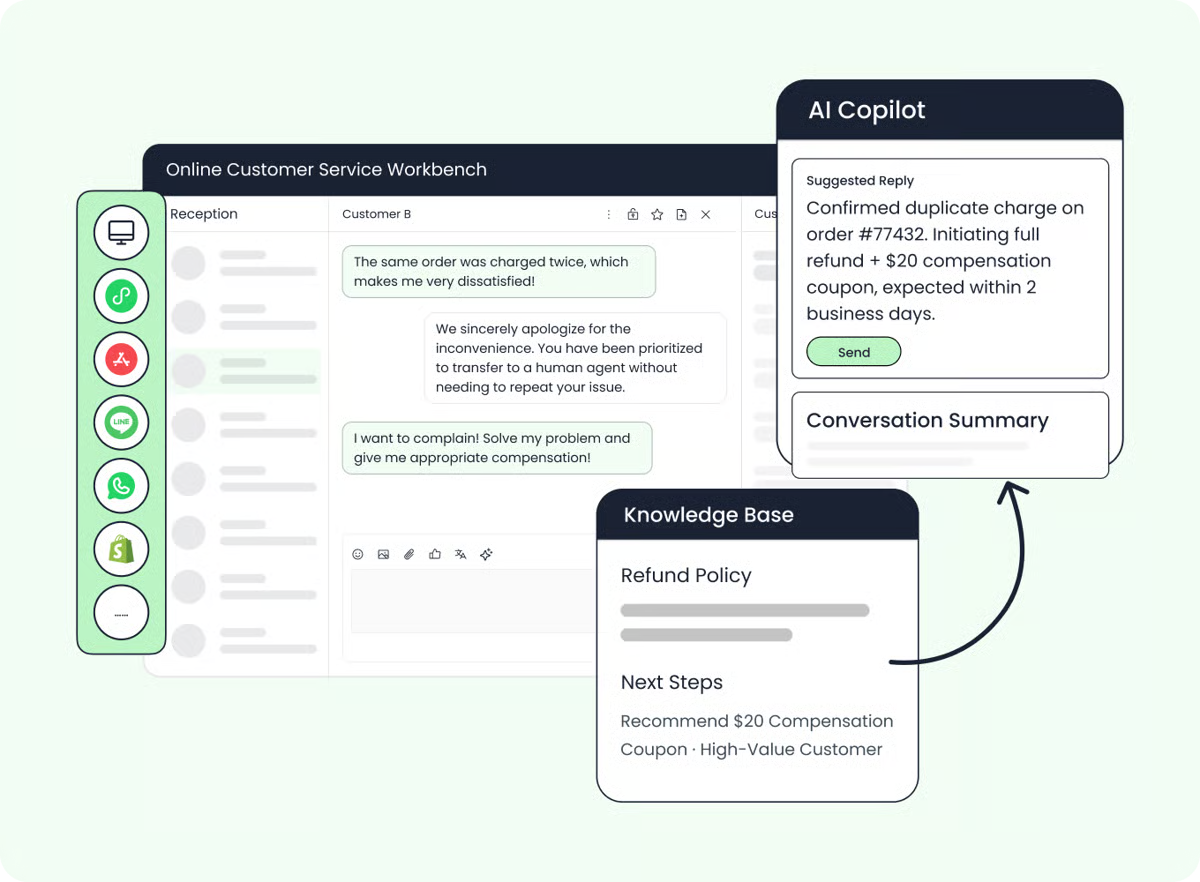
The human-access signal is part of a wider shift: buyers are asking whether an agent can finish a real service task, use the right customer context, and pass the case cleanly when it cannot. A polished answer is useful; a correctly authorized order update or a handoff that does not make someone repeat the story is a different level of service.
This is why a useful AI customer service platform comparison should look beyond model names and demo conversations. If you are comparing AI agent tools for customer service or broader AI customer support platforms, test the whole service path: knowledge retrieval, account or order context, permitted actions, exception handling, and what the human agent sees next. For an AI customer service agent workflow fit assessment, start with a small set of frequent, well-defined requests and include the messy edge cases too.
5 platforms, five different reasons to shortlist them
1. Sobot AI Agents: best for connected customer-contact workflows
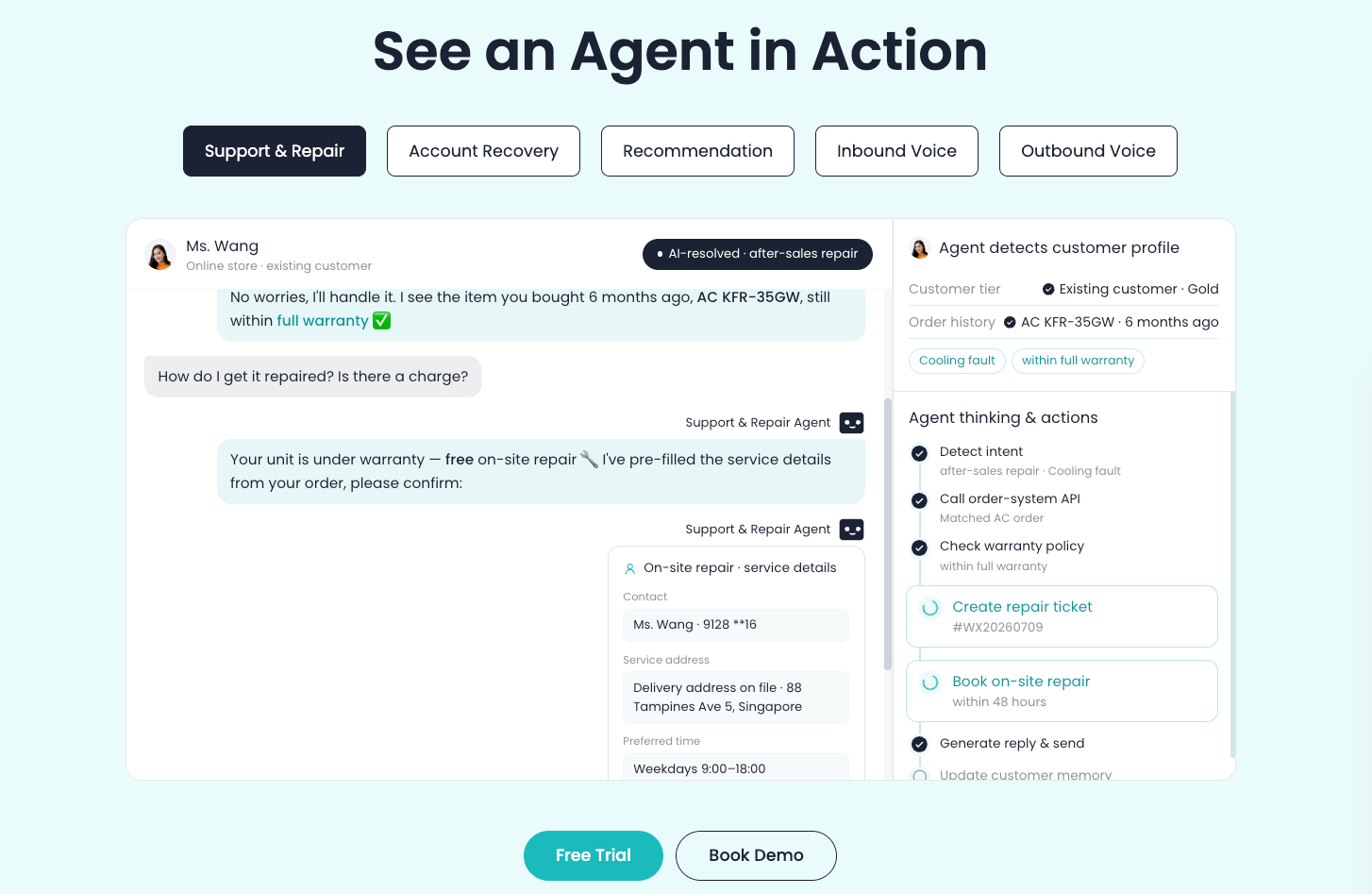
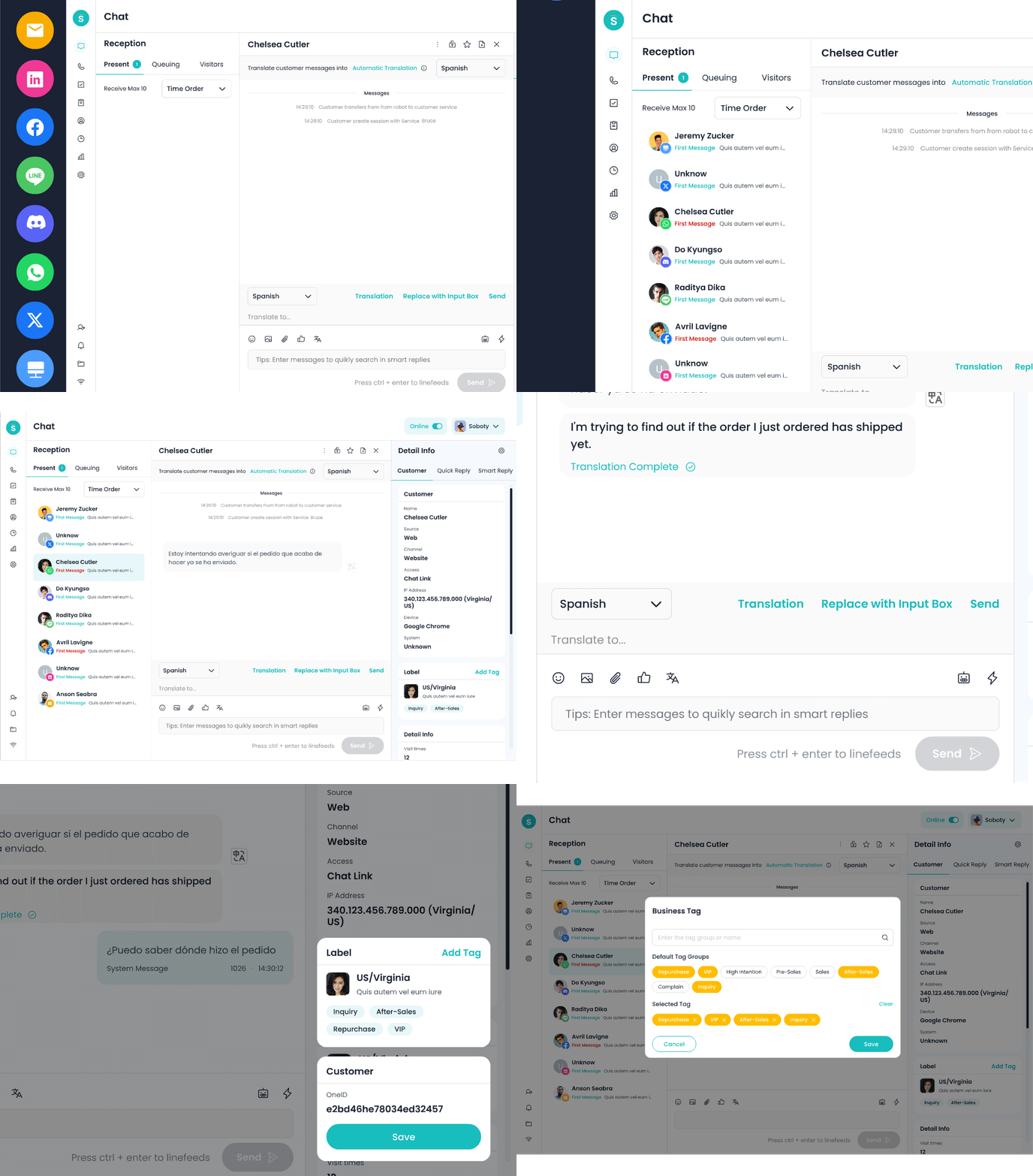
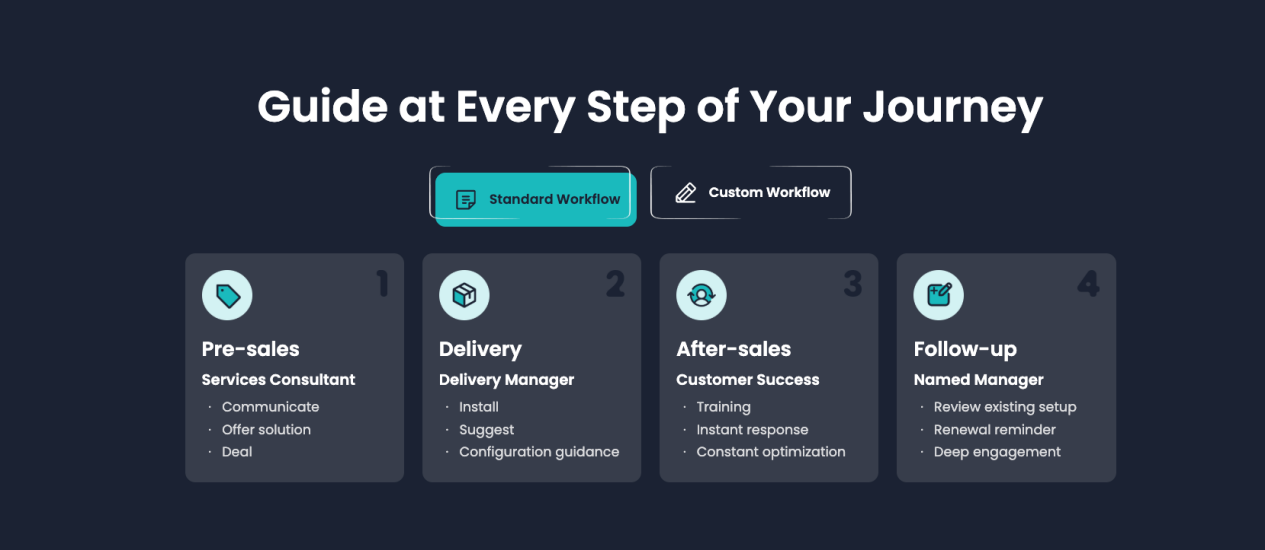
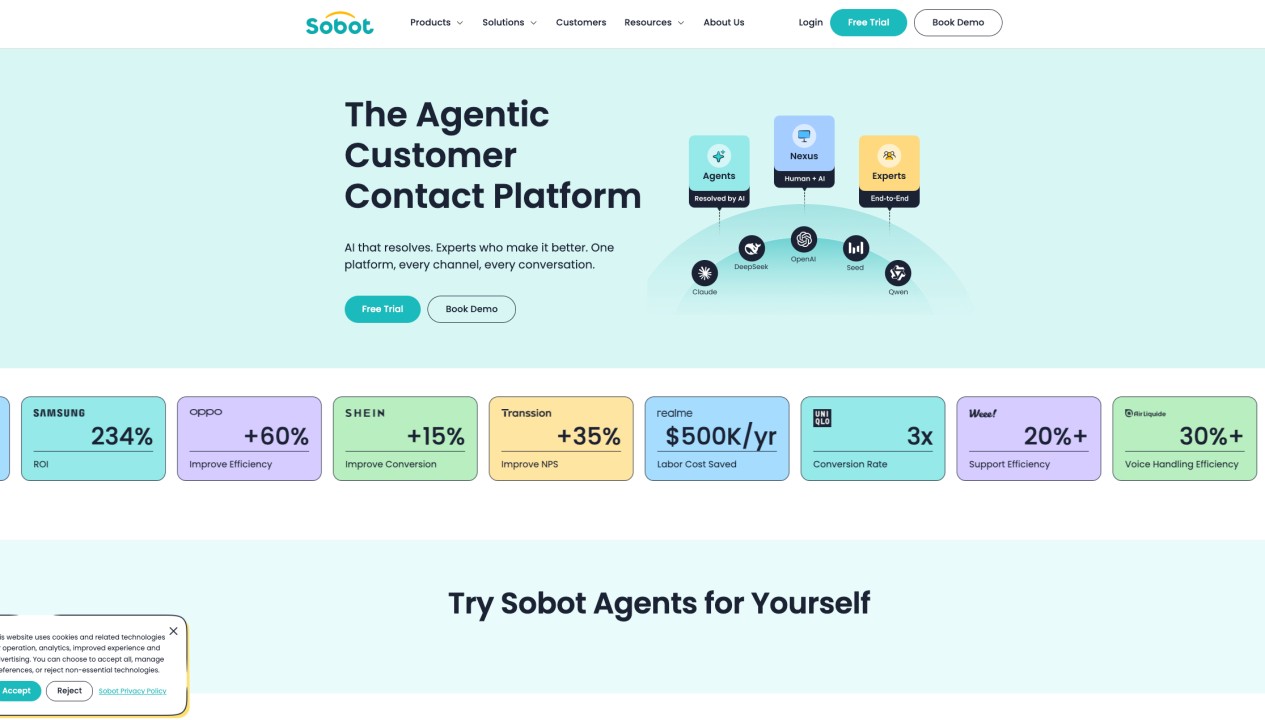
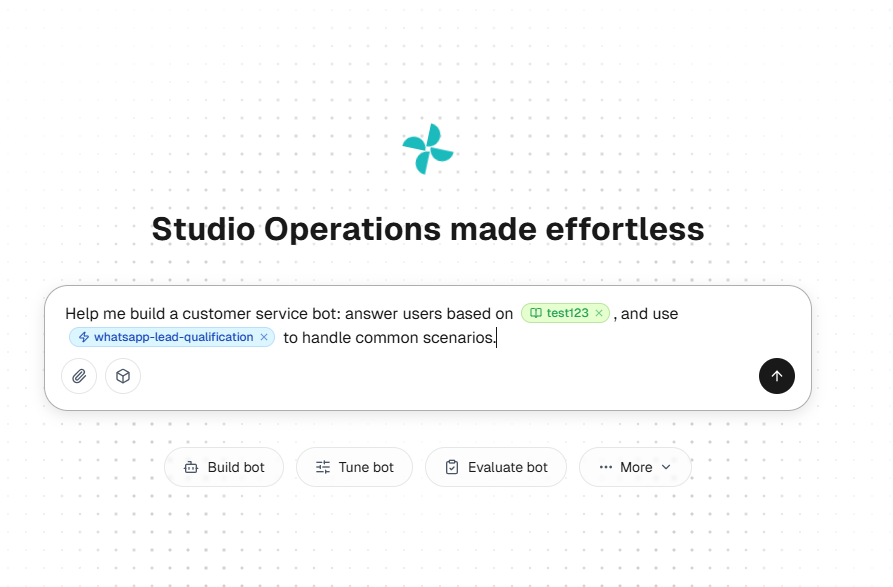
Sobot positions itself as an agentic customer-contact platform built around Agents, Nexus, and Experts. In practical terms, that means the shortlist case is not just an AI answer box: it is the combination of Agents, channel and context infrastructure, and people who can help deploy and operate the workflow. Sobot AI Agents includes reusable Knowledge, Skills, Workflows, Tools, Memory, and Variables, alongside building, evaluation, tuning, and observation capabilities. Sobot’s product page describes its current offering and operating loop.
That may suit teams handling repeatable service work across messaging, voice, ticketing, or connected business systems. An agent can use a CRM, ERP, order, or ticketing system only when the relevant connection is configured and the required permissions are granted. Set a clear boundary for identity checks, policy exceptions, risk, missing information, and actions that need a person; those are natural points for AI customer service human handoff.
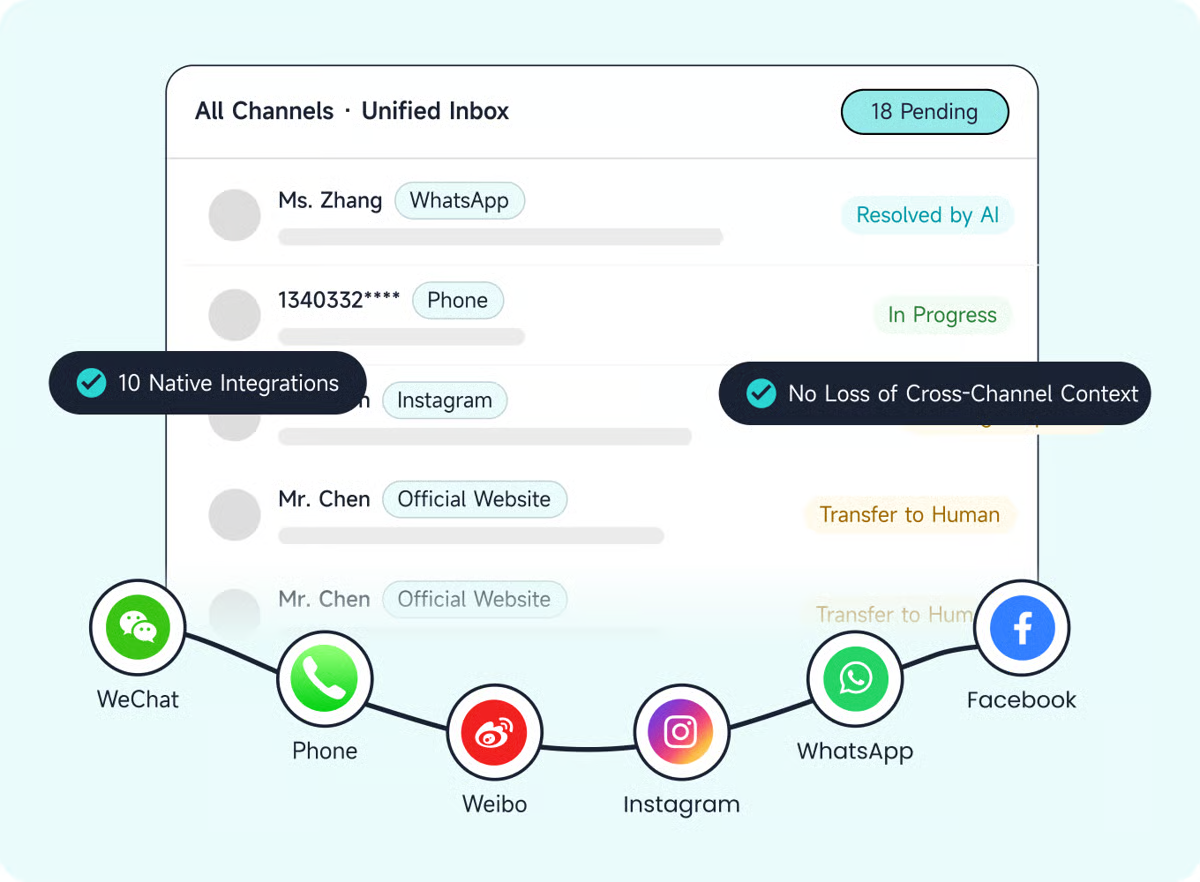
There is a public Renogy example on Sobot’s current Agents page. It describes service across WhatsApp, email, website, and app, with ecommerce system connections. That is useful as a company-published workflow example, not an independent benchmark: the published page does not give a comparable test protocol alongside the case. Ask for the case scope, data period, and metric definitions before treating any result as a forecast for your own operation.
Shortlist Sobot if your team wants to evaluate the complete customer-contact workflow, including deployment and ongoing operations. Check first which integrations, actions, languages, service channels, and commercial terms are included in the specific US deployment. For a closer look, see Sobot AI Agents.
2. Zendesk AI Agents: best for teams standardized on Zendesk
Zendesk is a natural candidate when your service desk, knowledge, and ticket processes already live in Zendesk. Its documentation describes agents using trusted knowledge sources, working across configured channels, and expanding from answers into authorized actions and API integrations. Zendesk also announced Specialized AI Agents for industry and custom workflows in September 2026; availability and fit should be checked against your account and service plan. (Zendesk setup documentation, Specialized Agents announcement)
The practical advantage is ecosystem fit, especially if teams already maintain their tickets, help center, and support operations there. The trade-off is that plan allowances, channel setup, permissions, and the definition of an automated resolution affect the buying decision. Zendesk’s help documentation says usage is measured through automated resolutions and that accounts receive an allowance based on their plan.
Shortlist Zendesk if reducing friction inside an established Zendesk environment matters more than choosing a separate customer-contact platform. Check first whether the workflows you care about require extra configuration, a particular plan, or an external integration.
3. Fin by Salesforce: best for teams evaluating outcome-based support automation
Fin’s product identity is in transition. Salesforce completed its acquisition of Fin in September 2026, so buyers should treat Fin and Agentforce as different product paths under the same parent—not as unrelated vendors. Fin 4, announced October 7, added a broader agent-and-operator direction, including customer-facing and human-in-the-loop elements.
Fin may be worth evaluating if you want an AI agent that can sit alongside an existing helpdesk; its help center describes that setup. Its pricing page currently lists $0.99 per outcome. That number is only a starting point for a cost model: confirm the outcome definition, any volume minimum, platform or seat charges, eligible channels, and whether your scenario is billed as a resolution or a completed procedure.
Shortlist Fin if outcome-based billing and the ability to work with an existing service setup are priorities. Check first how the Salesforce ownership transition affects integration, support, data, and product-roadmap requirements over your contract term.
4. Salesforce Agentforce: best for Salesforce-centered service workflows
Agentforce is the most obvious candidate when customer records, case management, and service processes already depend on Salesforce. Its commercial options include conversation-based pricing and Flex Credits, with additional licensing paths on the official pricing page. Those units are not interchangeable: estimate how many conversations, actions, and users your planned workflow will consume before comparing the total.
This is not a shortcut around data and process design. Decide which fields an agent can read, which actions it can take, how approvals work, and who owns testing when a Salesforce flow changes. A CRM-native agent can be compelling in a Salesforce-heavy stack; that does not automatically make it the easiest choice for a team whose service work lives elsewhere.
Shortlist Agentforce if a close fit with Salesforce data and automation is central to the use case. Check first the edition, credit or conversation assumptions, implementation work, and governance model.
5. Ada: best for enterprise teams comparing a unified channel layer
Ada describes a platform designed to support AI agents across voice, chat, email, messaging apps, SMS, in-app, and social channels, using a unified reasoning layer. That makes it a candidate for enterprises that need to compare how one agent experience could span several channels. Its own page also publishes performance claims; treat those as vendor-reported until you have a definition, sample, and measurement window that match your operation.
Shortlist Ada if your operating model spans several support channels and you want to evaluate a unified platform. Check first which channel combinations are supported for your deployment, which systems are connected, and how handoff and quality review work in practice.
2 lower-visibility, specialized options to keep on the radar
A couple of tools cover narrower entry points, such as answering from help content or adding an AI layer to a help desk. They can suit those jobs without being one-to-one replacements for every cross-channel, multi-system customer-contact workflow. If you’re comparing the best AI customer service agent platforms 2026, treat these as boundary cases and verify the exact work they can perform.
1. Help Scout AI Answers: best for knowledge-led self-service
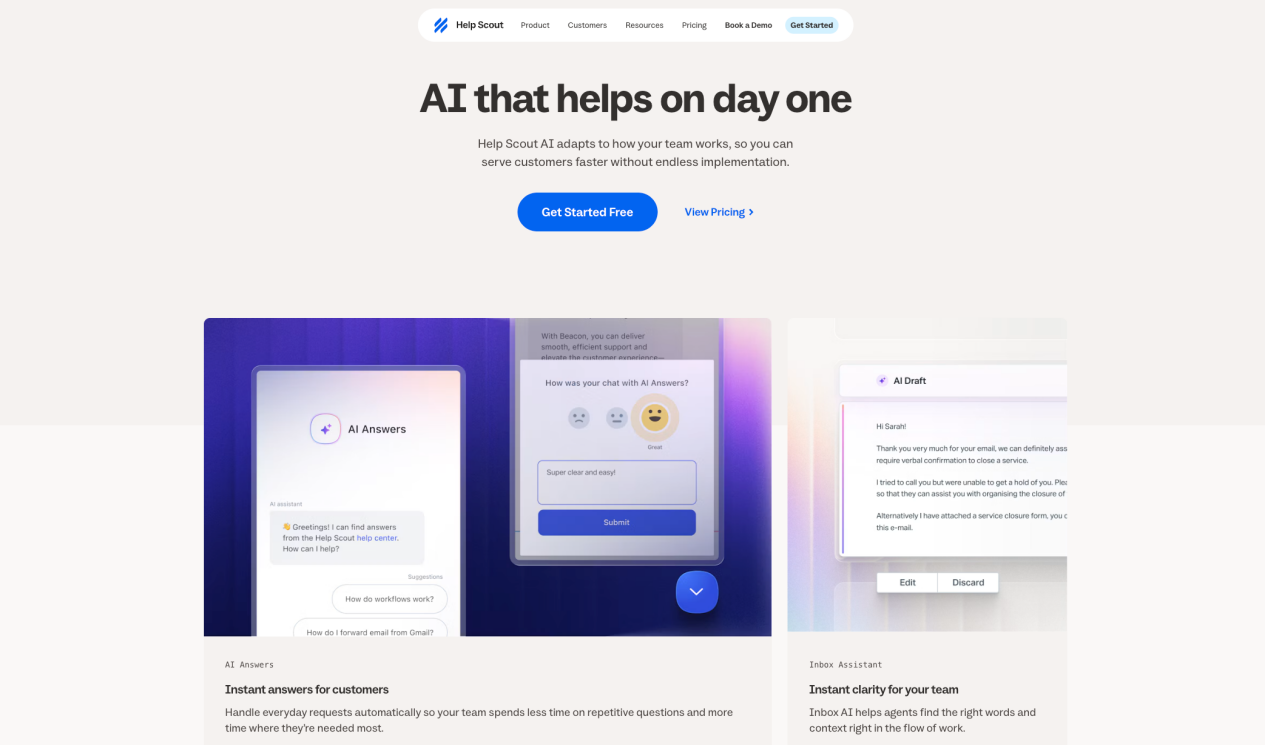
Help Scout AI Answers uses a team’s knowledge base, website sources, and instructions to answer everyday customer questions. Its public product information also describes a direct path to the support team when the AI cannot answer. That makes it a reasonable option for teams whose main goal is content-led website or in-app self-service.
The narrower fit is useful to know: the product page emphasizes answer-led self-service and agent assistance. For a workflow that must read or update records in several business systems, ask Help Scout to demonstrate those specific actions before treating it as equivalent to an agent platform built around task execution.
2. LiveAgent AI Chatbot: best for teams already choosing its help desk
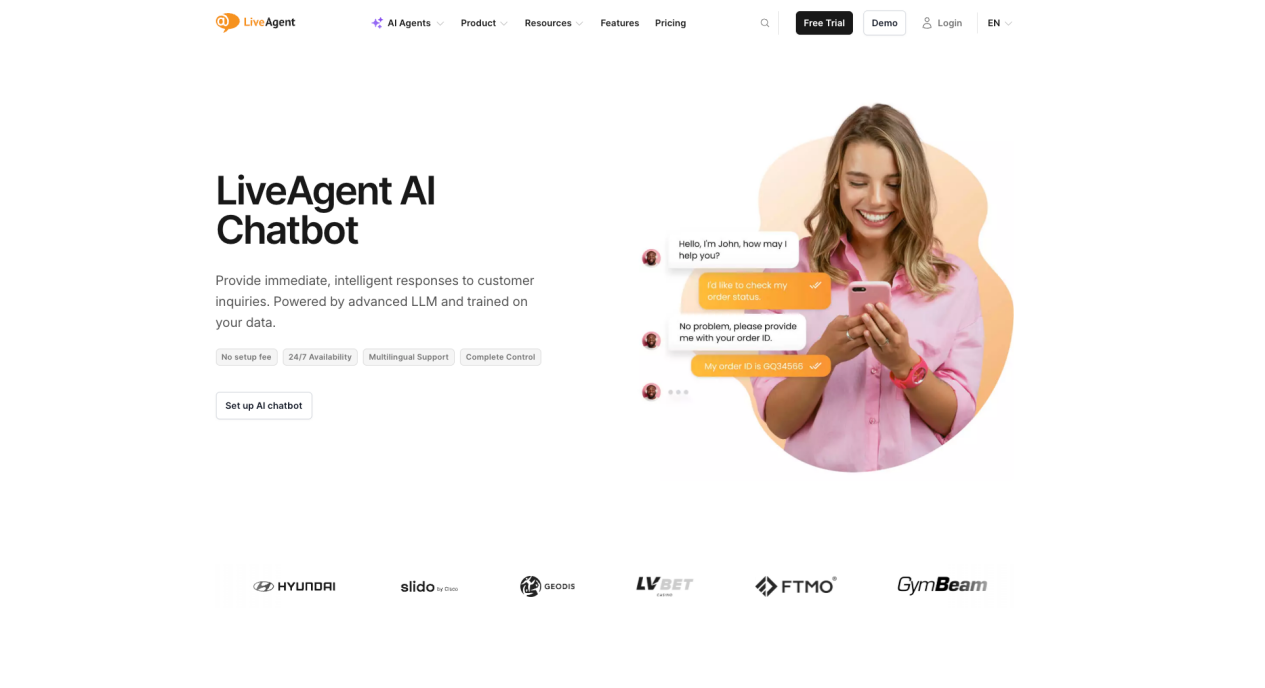
LiveAgent describes an AI chatbot trained on a company’s data, connected to public or proprietary knowledge sources, and able to escalate to a human when needed. It may be worth a look when the team wants conversational automation within a help-desk setup.
Before comparing it with broader customer-contact platforms, validate which integrations and actions are available in the plan you would buy, and whether the agent can complete your workflow or mainly answer and route questions. Its AI label alone does not establish that it supports the same operating scope.
How to compare AI customer service agent software without being misled by a demo
Use the same test set for every vendor. A useful pilot starts with a representative slice of recent, anonymized conversations, including routine questions, incomplete requests, policy exceptions, and cases that should go to a person. Then score the workflow, not just the first response.
For each platform, record whether it retrieved the right policy, accessed current customer context, took only authorized actions, confirmed the result, and passed the conversation with enough context for a human to continue. Track verified resolution, reopen rate, escalation quality, customer satisfaction, and the time your team spends maintaining knowledge and procedures. Define “resolved” before the pilot; a conversation that simply goes quiet is not automatically a successful outcome.
AI customer service agent integrations deserve their own test. Ask whether each connection is native or custom, read-only or read/write, real-time or delayed, and what happens when the system is unavailable. A feature list that says “integrates with CRM” does not tell you whether the agent can safely update a record or only retrieve one.
The same goes for AI customer service agent pricing models. Fin’s per-outcome rate, Zendesk’s automated-resolution allowances, and Agentforce’s conversation or credit options use different billing units. Add plan fees, seats, minimums, channel charges, implementation, and ongoing operations to the model. Compare cost per verified task completed—not the most attractive number on a pricing page.
Where to go next
If you want a wider market scan, read our 11-option AI agent tools comparison for customer service. For a deeper look at matching an agent to a particular service process, see our workflow-fit comparison. The market and local requirements can change the shortlist, so teams outside the U.S. can also review the Singapore-focused AI customer service agent shortlist.
If Sobot is on your shortlist, bring a few real service scenarios and ask how the proposed Agent, systems, permissions, channels, and human handoff would work together. You can review Sobot AI Agents or request a Sobot demo to discuss a workflow-specific evaluation.
Conclusion
The best AI customer service agent platforms 2026 are not interchangeable. Zendesk can make sense for a Zendesk-centered team, Agentforce for a Salesforce-heavy service operation, Fin for buyers evaluating outcome-based automation on an existing helpdesk, and Ada for a broad channel mix. Sobot belongs on the shortlist when the goal is to connect Agents, customer-contact infrastructure, and implementation support around cross-channel workflows—with permissions and human handoff defined up front.
Make the decision with a small, well-designed pilot. If an agent can retrieve the right context, complete only the work it is authorized to do, measure what happened, and hand exceptions to a person cleanly, you have evidence for a buying decision. If it cannot, a polished demo is not enough.
FAQ
Which of the best AI customer service agent platforms 2026 is right for my team?
There is no evidence-based universal winner in this comparison. Start with the systems your team already uses, the tasks the agent must complete, the actions it may take, and the human support path. The best AI customer service agent platforms 2026 are the ones that prove a good fit on your own representative cases.
Is Fin still an Intercom product?
Salesforce completed its acquisition of Fin in September 2026. Fin and Agentforce are distinct products, but the acquisition means buyers should account for their shared parent company when assessing roadmap, data, integration, and procurement implications.
How should I compare per-outcome, per-resolution, and per-conversation pricing?
First ask what triggers a billable unit and what does not. Then model the same monthly workload across vendor minimums, included allowances, seats, extra usage, integration, and implementation costs. Use verified completed tasks as the denominator, and ask vendors to show how handoffs, reopened cases, and multi-step work are billed.
Should an AI customer service agent always offer a human handoff?
Customers should have a clear path to a person, particularly for sensitive, risky, or unresolved cases. Gartner’s 2026 survey found that 87% of customers said companies using GenAI for customer service must provide access to a human agent. Design the handoff around the task and the customer’s needs; do not make automation a dead end.
What should I do before choosing from the best AI customer service agents 2026 shortlist?
Run a scoped pilot with your knowledge, systems, permissions, and real service cases. Agree in advance on how to count successful resolutions, handoffs, reopens, customer satisfaction, and operating cost. A vendor average cannot predict your result without those conditions.