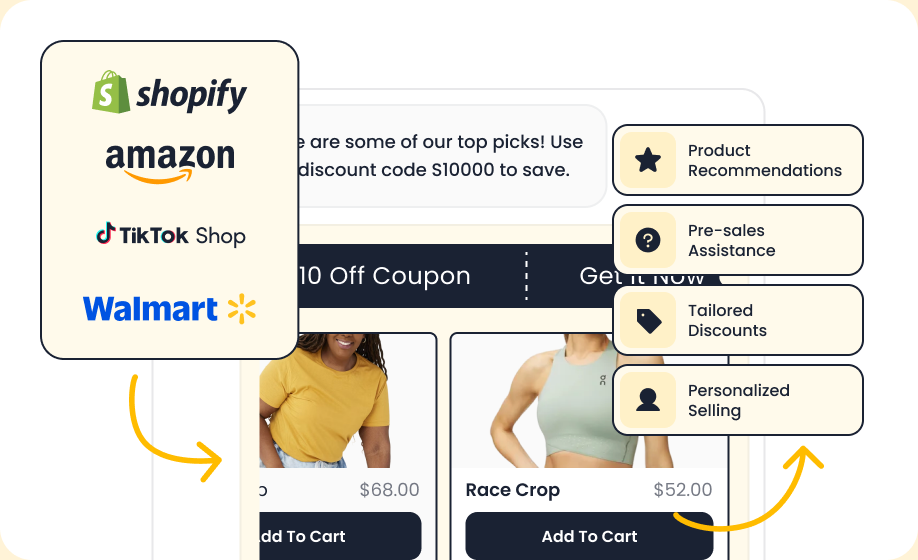
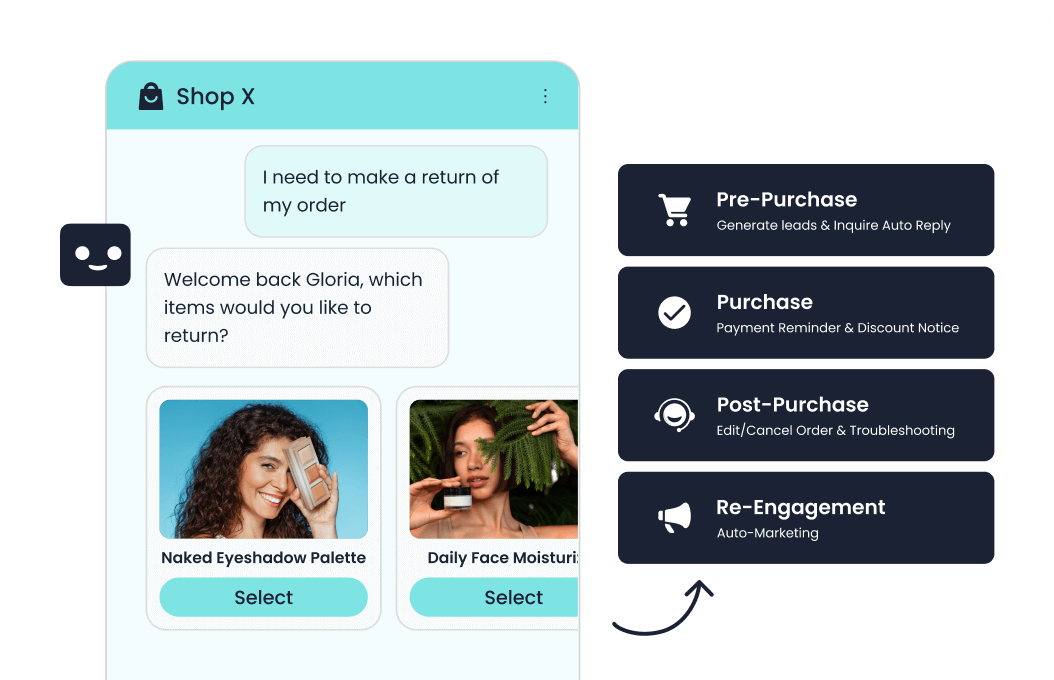
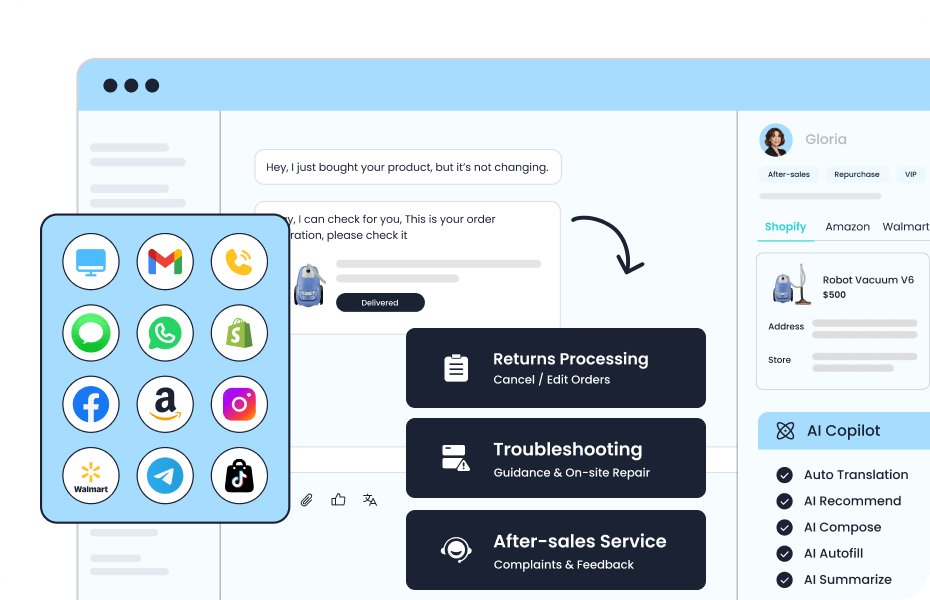
In enterprise customer service, conversational AI is the technology that lets a system interpret a customer’s message, maintain a useful exchange, and respond using relevant information. Its value depends on what the conversation can establish and what the connected business process can actually do.
A customer asking, “Can I change that to tomorrow?” leaves important details unstated. The system needs the earlier conversation to identify “that,” the current record to check what can change, and permission before making any update. Fluent language is one part of this capability.
Key Takeaways
- Conversational AI combines language interpretation, dialogue context, and a way to produce an appropriate response.
- Customer facts and current policies must come from suitable sources.
- Remembering a request does not establish identity or permission to act.
- Human support remains necessary when the information, authority, or confidence needed for a task is missing.
A Conversational AI Definition for Customer Support
Conversational AI is a category of technologies that enables software to interpret and participate in exchanges using natural language. In customer support, the software connects language understanding with dialogue management, relevant knowledge, and configured business systems. It can recognize the customer’s likely intent, retain details needed for the current exchange, and produce a response or request clarification. Some implementations also support permitted business actions. The category describes these interacting capabilities, rather than a guarantee that the software understands every request, has access to every customer record, or can resolve every issue without a person.
Quick Comparison: The Capabilities Behind a Conversation
| Capability | Question it answers | Important boundary |
|---|---|---|
| Language understanding | What does the customer appear to want? | An interpretation can be uncertain or incomplete |
| Dialogue management | What information and next step does this exchange need? | Conversation history is not verified identity |
| Knowledge retrieval | Which approved information supports the answer? | A policy article is not a live account record |
| Business-system connection | What information or permitted operation is available? | Reading a record does not authorize changing it |
These capabilities work together. A useful answer may require only an approved explanation, while an account-specific request may need verified identity, a current record, and a separate authorization decision.
How Does Conversational AI Work?
Understanding how conversational AI works is easier when the conversation is separated into its supporting capabilities. A language model can contribute to several of them, but the model alone does not supply the organization’s knowledge, permissions, or responsibility for follow-up.
Language understanding interprets meaning in context
Microsoft’s conversational language understanding documentation distinguishes identifying an utterance’s intent from extracting relevant entities. In support terms, the intent might be changing an appointment, while the entities include the requested date and the appointment reference.
Customers do not always describe a problem using the company’s labels. “It charged me again” may refer to a duplicate payment, a renewal, or a misunderstanding about a pending transaction. The appropriate response may be a clarifying question rather than an immediate category assignment. Interpretation should narrow the uncertainty enough to continue the task, not conceal uncertainty behind a plausible answer.
Dialogue management keeps the exchange coherent
Dialogue management determines what information has been established, what remains missing, and what the next response should accomplish. A system needs to connect “tomorrow” with the appointment under discussion rather than treat the word as a new standalone request. It also needs to recognize a correction when the customer changes their mind.
Current conversation state can hold an order reference, a selected item, or a question awaiting confirmation. Longer-term memory is a separate design decision involving what may be retained and reused. Neither should be treated as unrestricted knowledge about a person. If a customer switches accounts or introduces another order, the system must avoid carrying the previous assumption into the new request.
Knowledge supports a response that can be checked
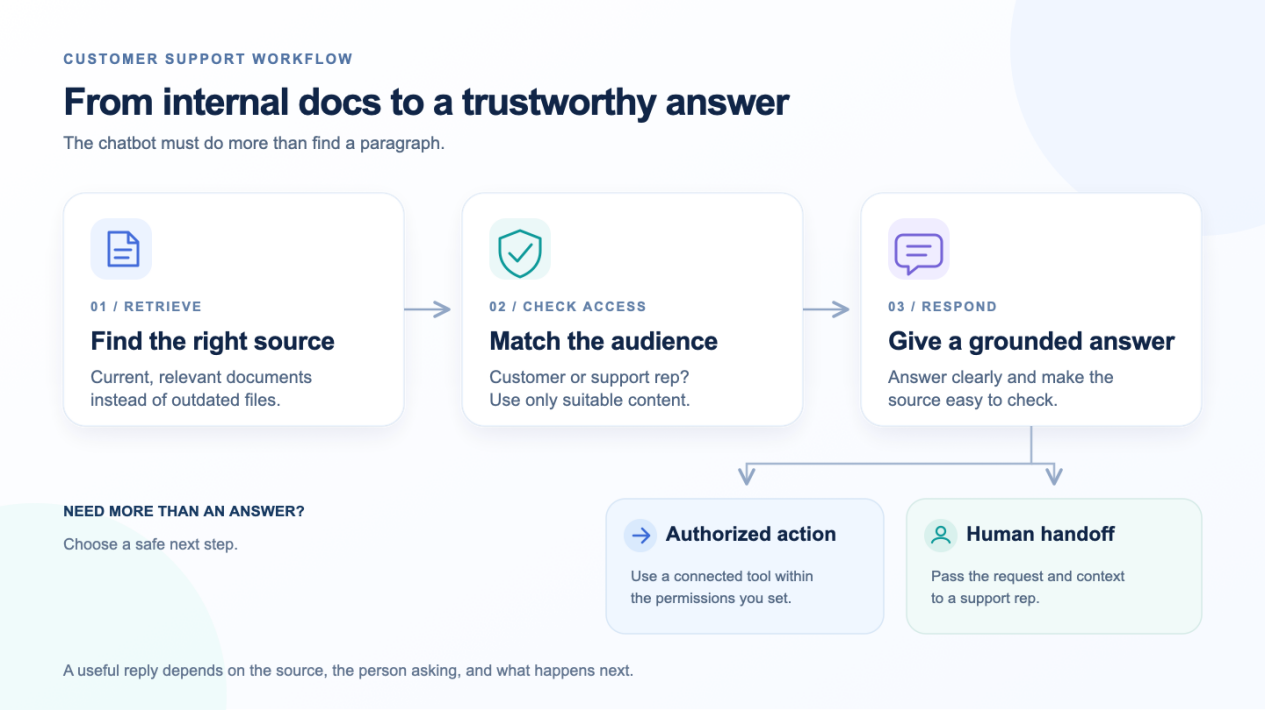
Approved knowledge can include product information, service policies, and help articles. Retrieval brings relevant material into the answering process so the response can reflect the business’s actual information. A generative model can then express that information in language appropriate to the question.
This connection needs maintenance. A return article may apply only to a particular region or product, and an old version may describe a policy that no longer applies. The answer needs the applicable condition, not just a passage containing similar words. A well-written response that drops an exception can still mislead the customer. Retain a way to inspect the supporting material when an answer is challenged or a policy changes.
Integration connects the exchange to business reality
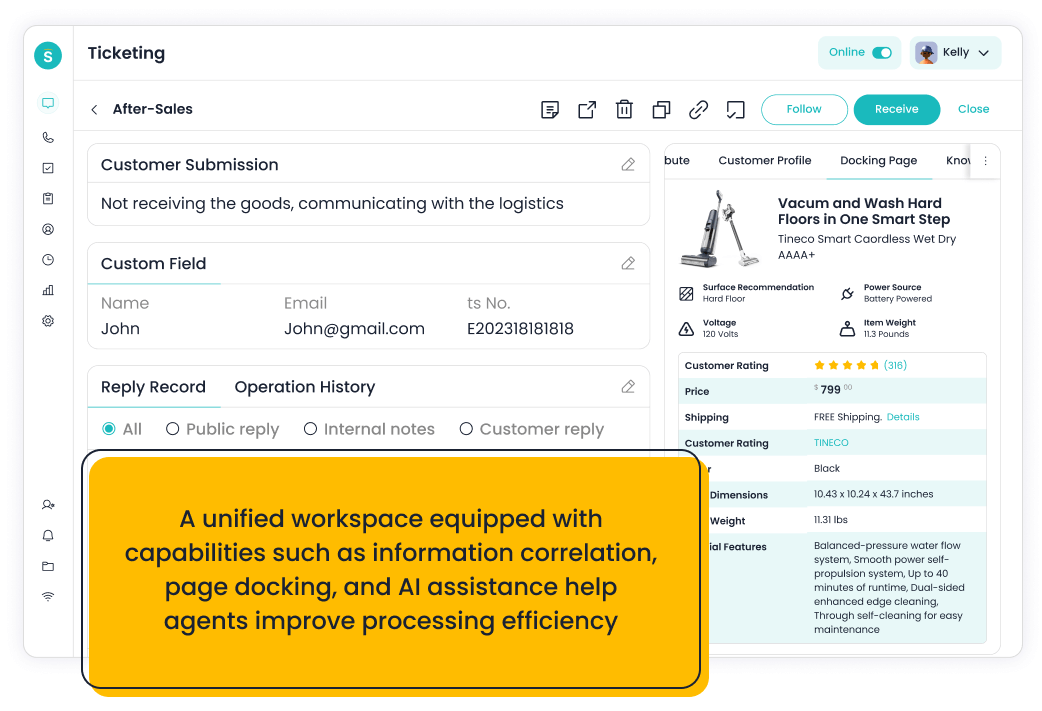
Conversational AI integration connects the dialogue to the business information or operations needed for a request. Explaining how appointment changes work is different from checking whether a particular booking can be changed. The latter needs the relevant record and an appropriate identity check.
An integration can provide read access without allowing an update. Even when an update is permitted, its result must be checked before the customer is told it succeeded. If a connected system is unavailable, the conversation should preserve the request and state what remains pending. This is an operational connection, not evidence that every product advertising an integration supports the same fields, actions, or safeguards.
Types of Conversational AI and the Role of Rules
Useful distinctions among types of conversational AI include systems organized around recognized intents, systems using generative responses, and hybrids combining both with controlled workflows. These are practical descriptions rather than a universal product taxonomy. An AI conversational interface should be understood through how it interprets a request, uses information, and selects an appropriate next step.
A traditional rule-based chatbot follows predefined conditions, menus, or response paths. Conversational AI can add interpretation of varied language and context, while generative capabilities can make replies more flexible. Rules remain useful for stable requirements such as collecting a reference, confirming a choice, or transferring a sensitive case. A short menu may be entirely adequate for a narrow, predictable request. More flexible language does not automatically make every part of the service process more reliable.
Where Customers Encounter Conversational AI
Customer-facing implementations appear in website conversations, apps, and messaging channels such as WhatsApp. Conversational AI SMS support uses text messages as the interface, subject to the channel’s capabilities and the organization’s operating rules. A shared product name does not establish that identity, attachments, history, or handoff behave identically across those interfaces.
Voice is another interface, adding speech recognition and speech generation to the conversation.
The same distinction helps with “virtual assistant vs conversational AI”: a virtual assistant describes a user-facing role or application, while conversational AI describes supporting technology. The label alone does not establish which tasks the assistant can perform. In customer support, inspect the actual information access and task authority rather than inferring capability from the name.
What Conversational AI Cannot Know or Do on Its Own
A system cannot establish a current customer fact solely because it can write a convincing sentence about it. A general model may explain common delivery practices, but that does not reveal where a particular parcel is now. Similarly, recalling an account number from a conversation does not prove that the person using it is authorized to access that account.
NIST’s Generative AI Profile identifies confidently presented erroneous content and human overreliance as risks. For support conversations, this makes source checking and consequential-action controls relevant even when replies sound fluent.
Common conversational AI challenges include ambiguous messages, stale knowledge, incomplete records, inconsistent language coverage, and failed connections. The response to those conditions should be designed: ask for missing information, explain the limitation, or transfer the issue with its context. A refusal to guess can be the correct service behavior.
Human support needs an actual destination and a way to continue the work. If nobody is available immediately, the customer should understand the follow-up arrangement. A message saying “transferring you” is insufficient when the case has no owner.
What Makes a Conversational AI Strategy Practical?
A practical conversational AI strategy starts with a defined customer need and the information required to address it. Choose a scope with maintained knowledge, identifiable owners, and an available human path. Decide which requests the system may answer, which actions need confirmation, and which cases should go directly to a person.
Review representative conversations, including corrections and unclear requests, in the intended languages and channels. Judge whether the exchange reaches a useful next step, whether the explanation is correct, and whether pending work remains visible. The task determines the evaluation; a general language benchmark cannot establish that a specific support workflow is ready.
Potential advantages of conversational AI include less repeated explanation and more consistent access to approved information. These conversational AI benefits depend on the support process and knowledge quality. For a SaaS business, a useful benefit might be continuity across an account question and its follow-up, but fluent conversation does not itself establish improved retention or revenue.
How to Read Market Claims and “Best” Labels
The conversational AI market covers different technologies, products, and deployment contexts. An analyst category, such as conversational AI in IDC’s AI market overview, is broader than a single customer-support workflow. When reviewing descriptions of conversational AI leaders, check the assessment’s category, date, and scope rather than assuming leadership establishes a fit for your own customers.
Likewise, the best conversational AI depends on the task and operating conditions. A useful initial evaluation asks whether the system uses appropriate information, handles uncertainty, and supports accountable handoff. A vendor list cannot answer those questions on its own.
How Sobot Connects Conversation with Support Work
Knowledge, context, and configured actions
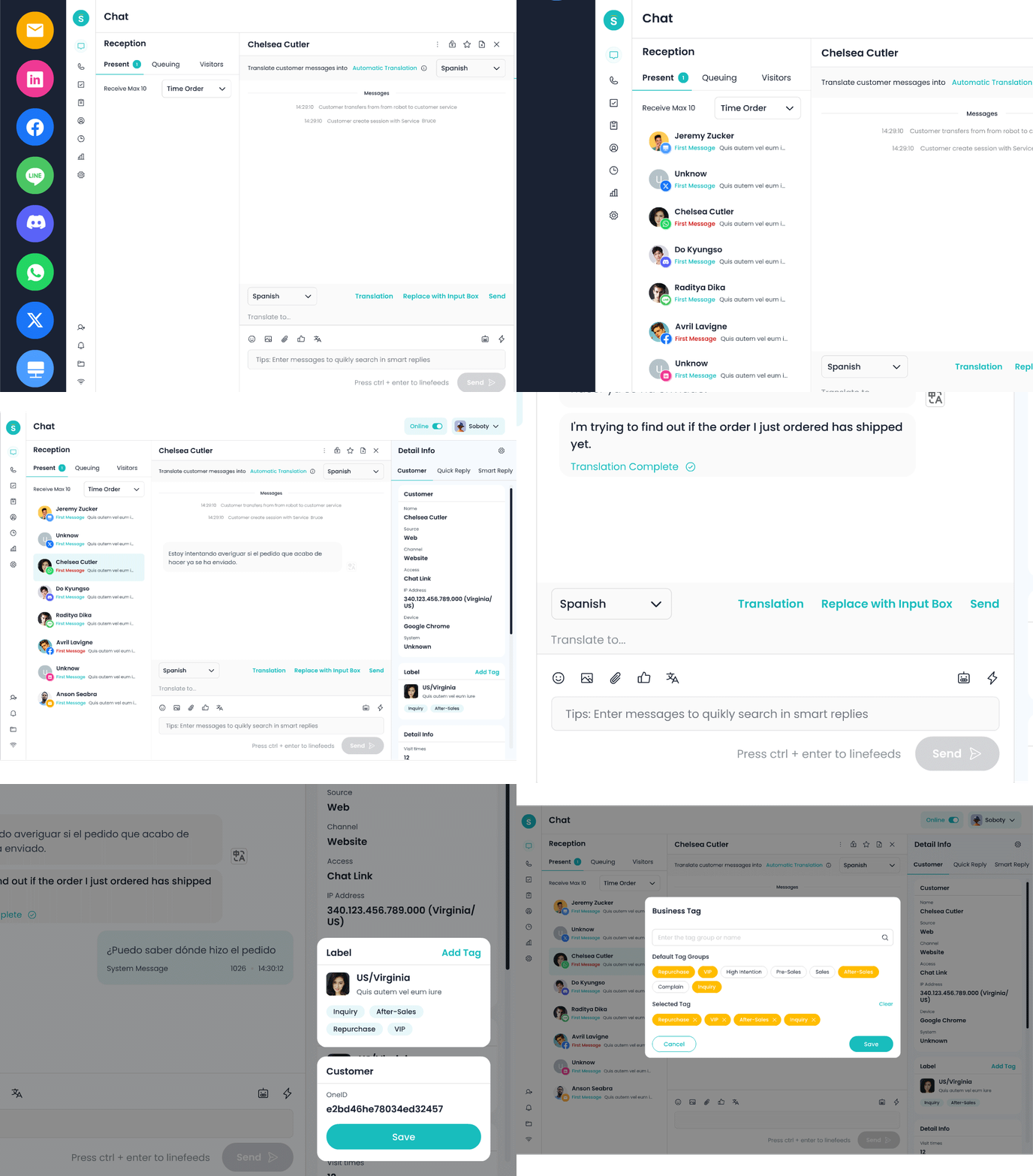
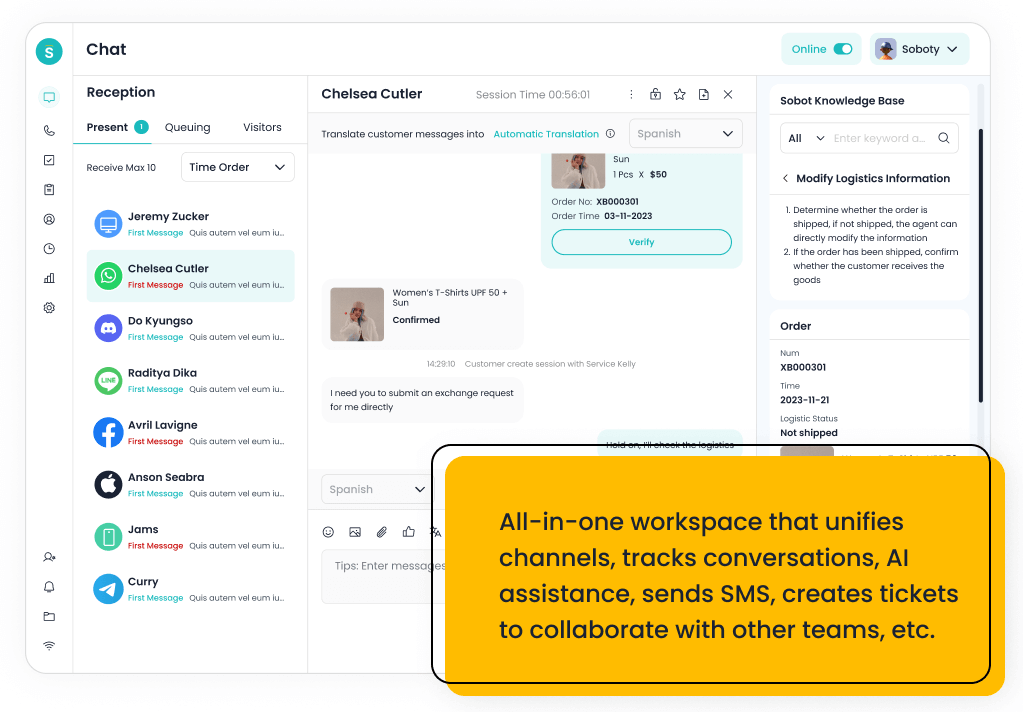
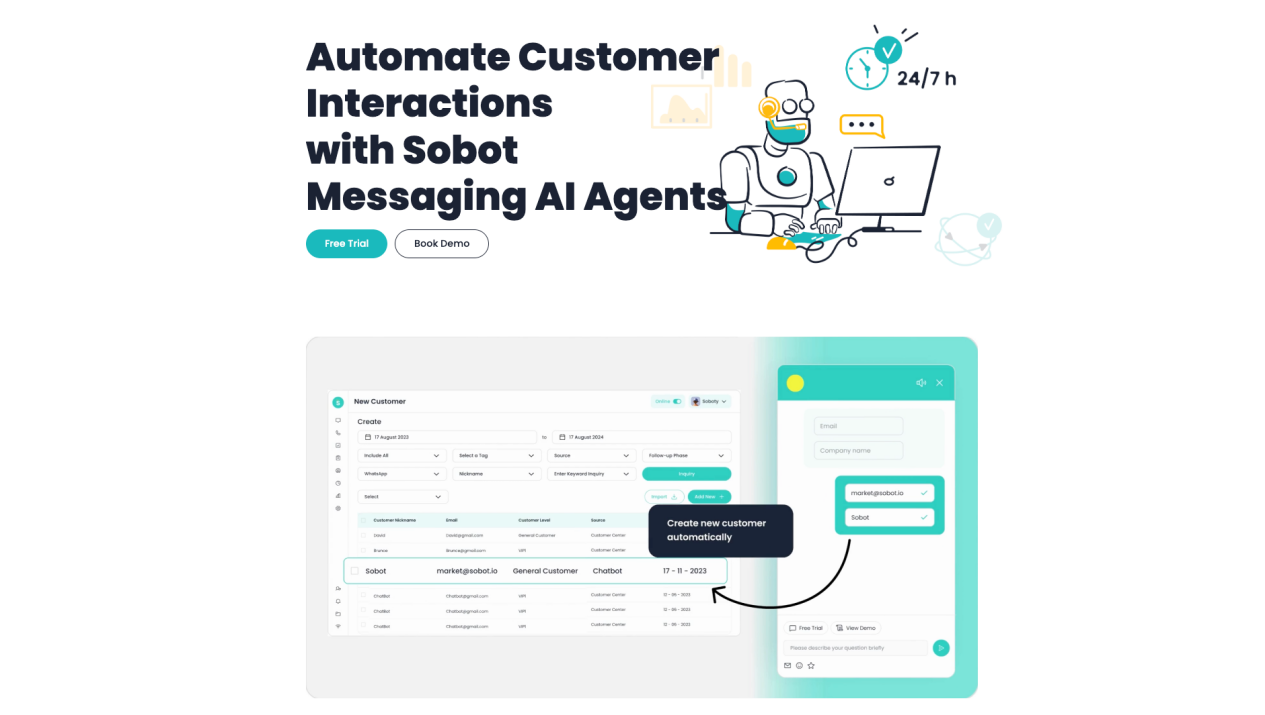
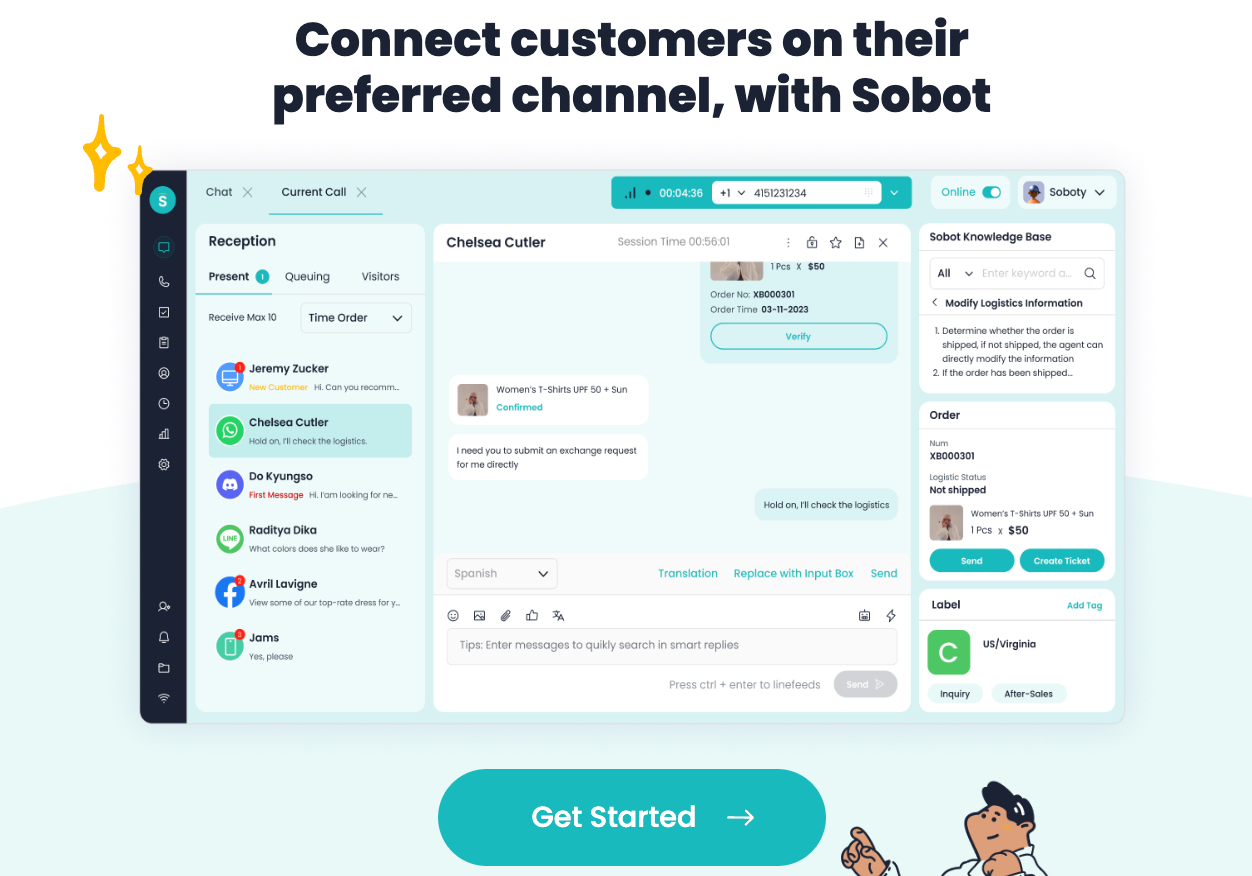
Sobot Messaging Agents describes interpreting requests, retrieving knowledge and business information, performing configured actions, and handing cases to people. These are concrete connections between conversational technology and a customer-support task.
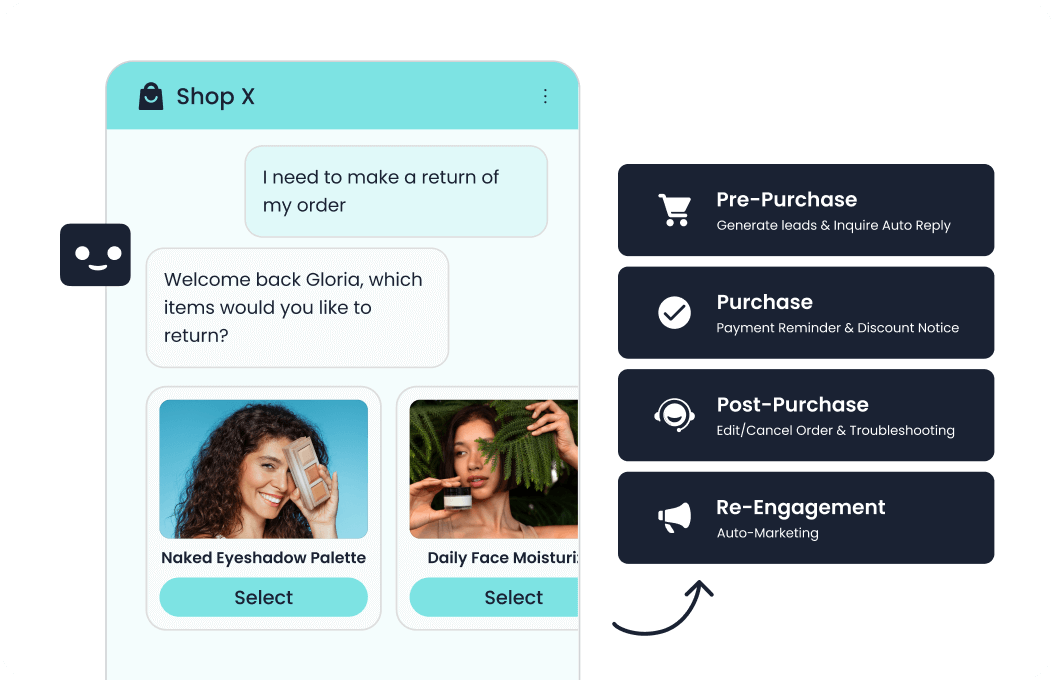
Confirm the intended channels, records, permissions, and handoff behavior for the proposed configuration. The archived illustration shows a conversation connected to a customer task; it does not establish that every depicted action is available in every deployment. The same distinction between language ability and permitted work applies here.
Prepare a representative customer exchange and identify what an acceptable answer or handoff would establish. Book a Sobot demo.
Frequently Asked Questions
Is conversational AI the same as generative AI?
No. Conversational AI describes interaction through language; generative AI describes producing content. A conversational system may use generative models alongside intent recognition, retrieval, rules, and business-system connections.
How do you use a conversational AI bot responsibly?
When considering how to use a conversational AI bot, begin with a supported customer task and approved information. Set limits for account access and actions, and preserve a usable human route when the request exceeds them.
What is the best conversational AI for business customer care?
The appropriate choice depends on the actual customer task, channels, information access, and support responsibilities. Evaluate those conditions before trusting a general recommendation or a fluent demonstration.
Does conversational AI for employee support work the same way?
It can use similar underlying capabilities, but employee identity, permissions, knowledge, and service responsibilities differ. Customer-facing support and internal employee support need their own operating scope and evaluation.
Does better conversation guarantee better customer interaction?
No. Conversational AI for better interaction also needs relevant information, a useful next step, and appropriate follow-up. Polished language cannot compensate for an incorrect answer or unresolved work.