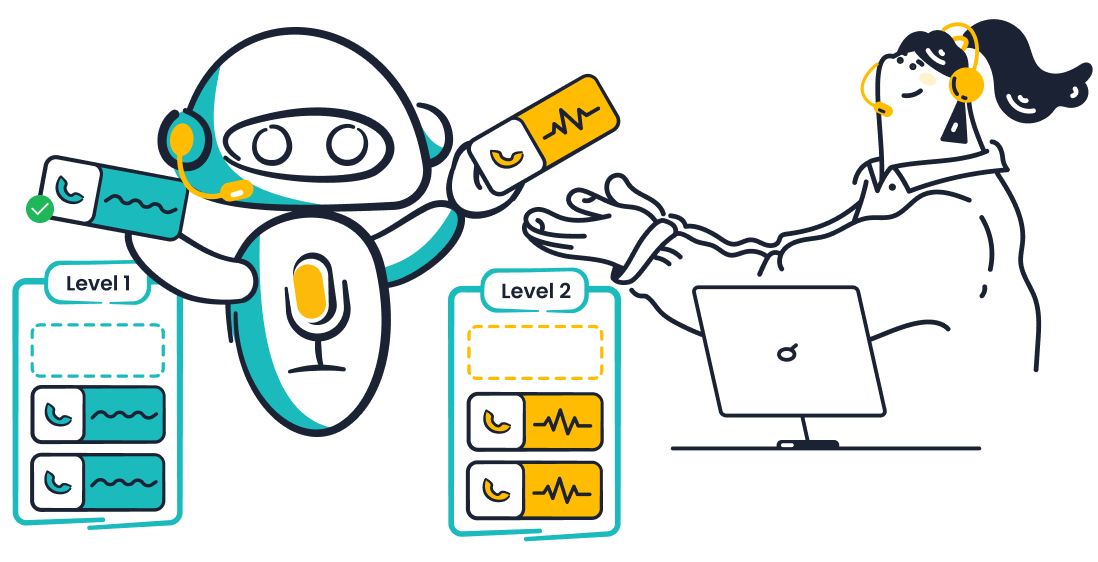
For customer support teams handling orders, account questions, returns, and complaints, AI-powered ticketing can reduce repetitive work, improve the first assignment, and make recurring problems easier to investigate. The benefit is progress toward resolving the customer’s issue, rather than a larger count of automatically answered or closed tickets.
Measure each improvement against the work it replaces and the checking it introduces. Faster drafting may create useful capacity, but that advantage disappears if agents spend the saved time correcting inaccurate replies or dealing with repeat contacts.
Key Takeaways
- Separate a fast acknowledgment from a useful first response.
- Include review, rework, and maintenance when measuring effort.
- Check whether consistent replies are also correct and complete.
- Use ticket categories to find problems, then verify them against actual conversations.
What Is AI-Powered Ticketing in Customer Support?
AI-powered ticketing combines the record of a customer support case with artificial intelligence that assists interpretation, assignment, and communication. The software maintains the issue, owner, status, and relevant history while AI can suggest categories, prepare replies, or summarize information. These capabilities can reduce the time spent understanding and documenting requests, but their value depends on information quality and the surrounding support process. The relevant outcome is a correctly handled customer need, including work completed by people. An automated message or a changed ticket status alone does not establish that outcome.
Quick Comparison: Benefits and the Evidence to Check
| Potential benefit | Useful measure | Check alongside it |
|---|---|---|
| Faster response | Time to a useful first reply | Accuracy and repeat contact |
| Better initial assignment | Correct destination on reviewed cases | Consequential misroutes |
| Less repetitive agent work | Total human effort per comparable case | Review, rework, and maintenance |
| More consistent answers | Policy correctness across sampled replies | Completeness and appropriate exceptions |
| More useful support data | Verified recurring issues and knowledge gaps | Category quality and mixed-intent cases |
The measures describe different outcomes. An improvement in one does not prove improvement in the others, so assess speed together with correctness and subsequent work.
Faster Responses and Fewer Avoidable Queue Transfers
Customer messages often require someone to read the history, identify the issue, and locate the appropriate team before useful work begins. Classification assistance and concise summaries can reduce that preparation. A suitable first assignment can also prevent the request from waiting in an unsuitable queue.
Measure elapsed time from receipt to a reply that addresses the request or provides a meaningful next step. Track automatic acknowledgments separately. State whether the clock uses calendar time or staffed hours, and use the same definition before and after introducing AI.
For assignment quality, review cases against an agreed destination and record incorrect initial routes. Separate ambiguous policy decisions from clear routing errors. An average can conceal important exceptions: inspect sensitive complaints and account-access concerns individually, even when routine requests are being assigned correctly.
Less Repetitive Work and More Consistent Replies
Drafting, summarizing, and suggesting ticket fields can reduce repeated reading and typing. That may free agents to investigate exceptions or work through a backlog. The relevant saving is the reduction in total human effort, including the work required to inspect and correct AI output.
The NBER working paper Generative AI at Work studies a conversational assistant used by customer support agents and reports differing effects across worker experience levels. It supports evaluating agent assistance in context; it does not establish the result of autonomous ticket resolution in another organization.
For reply consistency, review whether comparable cases receive accurate policy explanations and the required next step. Similar wording is insufficient. A template can repeat the same wrong return condition, and a fluent draft can omit a customer’s second question. Use a common review rubric covering correctness, completeness, tone, and escalation, with reviewers checking the underlying record where needed.
Compare results by experience and case type. A tool that assists new agents substantially may add little to an experienced specialist’s workflow. Keep those groups visible rather than presenting a blended result as a universal benefit.
A Clearer View of Recurring Issues and Knowledge Gaps
Categories and summaries can make customer problems easier to aggregate. Repeated questions may reveal an unclear policy, missing help content, or an operational issue that support cannot fix alone. The useful output is a verified pattern and an accountable next action, rather than a dashboard with more labels.
Sample conversations behind a rising category before treating it as a demand trend. A classification change can increase the category count without any increase in the underlying problem. Requests containing both delivery and billing concerns also need careful interpretation; forcing them into one label can hide the second issue.
When the team updates a help article, check whether agents can find the current version and whether the relevant repeat questions change afterward. Record other changes, such as a product release or seasonal demand, that could explain the pattern.
Measure Net Improvement, Including Work That Moves Elsewhere
Choose a defined group of comparable cases and record its total human effort under the current process. For the assisted group, include agent work, review, correction, and a fair allocation of ongoing knowledge and configuration maintenance. Use the same activity categories for both groups.
NIST’s AI Risk Management Framework includes non-monetary costs from AI errors when examining system costs. For a support team, correction and escalation effort therefore belong in the benefit calculation alongside the work saved.
Net human time released = baseline total human effort − assisted total human effort. Use the same unit and case scope throughout, counting each activity once within each total. Time released can become service capacity without becoming a cash saving; the staffing and operating arrangement determines that distinction.
Consider an explicitly illustrative situation: AI prepares return replies quickly, but reviewers repeatedly correct an outdated eligibility condition. Drafting looks faster while total handling effort stays unchanged. The team should correct the knowledge source and review the affected replies, then remeasure comparable return cases. More drafts produced would not establish a benefit.
Keep the follow-up window consistent when reviewing repeat contact and reopened cases. Compare channels, languages, issue complexity, and staffing conditions, and retain failures in the analysis. If changes in the workload prevent a fair comparison, report that limitation instead of attributing the whole difference to AI.
When the Benefits May Be Small or Disappear
Assistance has less room to improve work that is already quick and straightforward. It can also struggle when the knowledge is outdated, customer records are inconsistent, or nobody owns the exceptions. AI cannot remove a waiting period caused by a supplier investigation simply by generating a faster reply.
NIST’s generative AI risk profile identifies confidently presented false content as a risk. Faster drafting should therefore be checked against answer correctness and the work required to repair errors.
Start the analysis with the actual bottleneck. If specialist availability determines resolution time, better summaries may help the handoff while leaving the specialist queue unchanged. Report that narrower improvement honestly. Also preserve an easy human route: apparent containment can rise because customers cannot obtain help, which is not evidence that their problems were solved.
Connect Sobot Capabilities to a Measurable Support Task
Evaluate reduced preparation and handoff effort
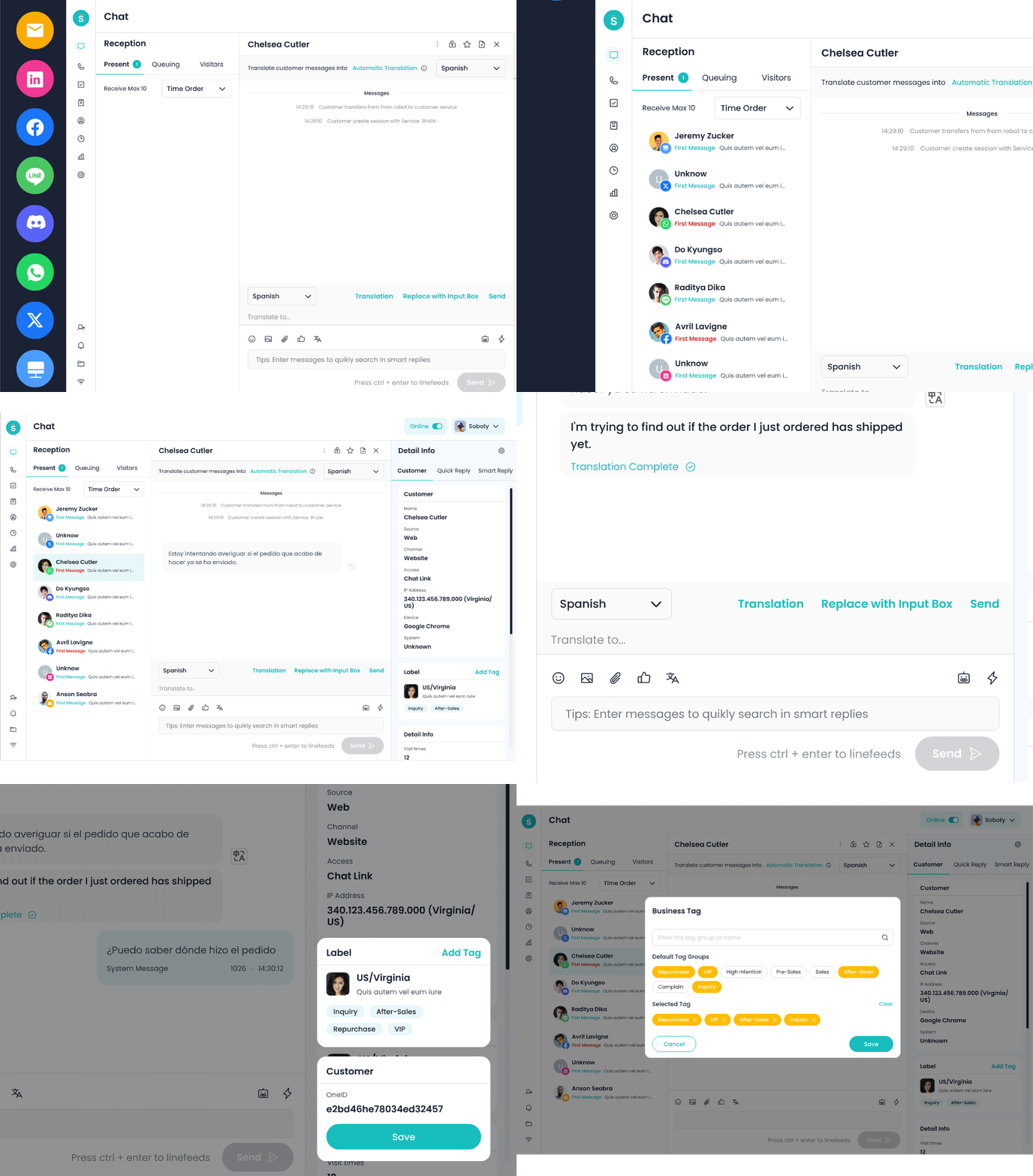
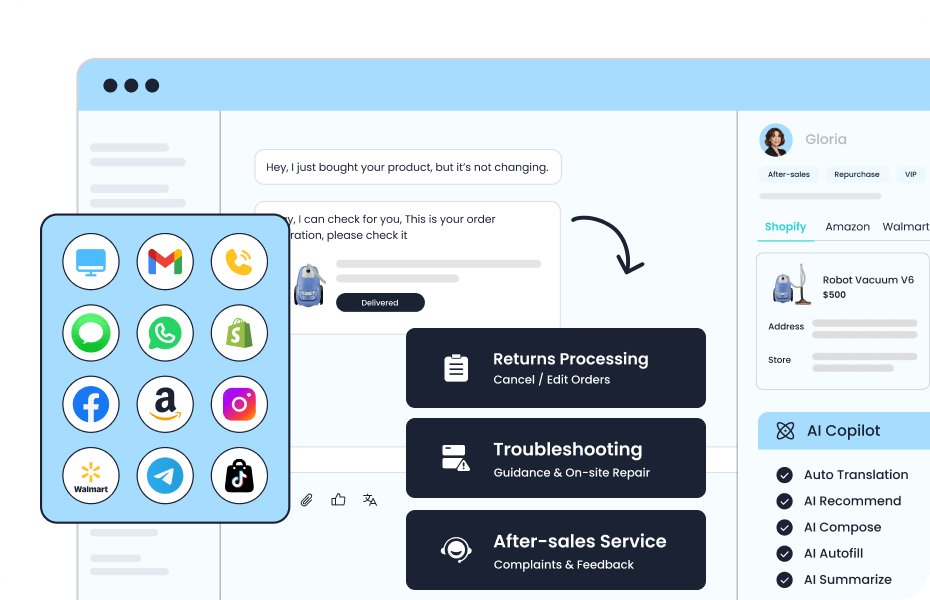
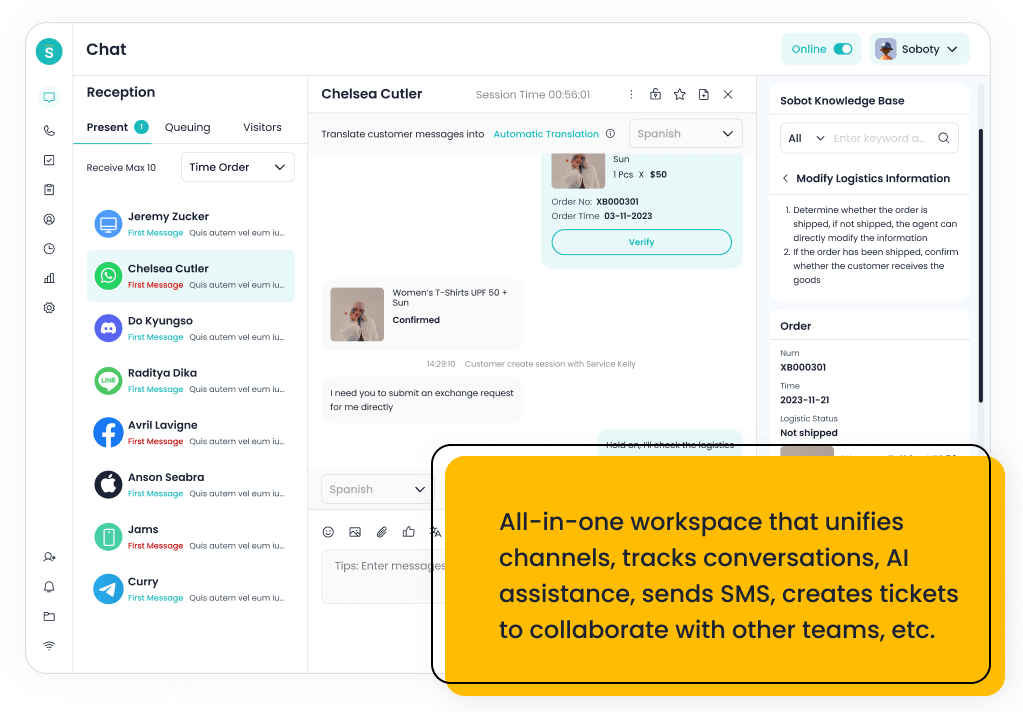
Sobot Nexus Ticketing documents AI assistance for ticket fields and reply refinement, alongside a shared workspace, assignment rules, and service-level agreement controls. These are relevant mechanisms to examine when measuring repetitive preparation and coordination work.
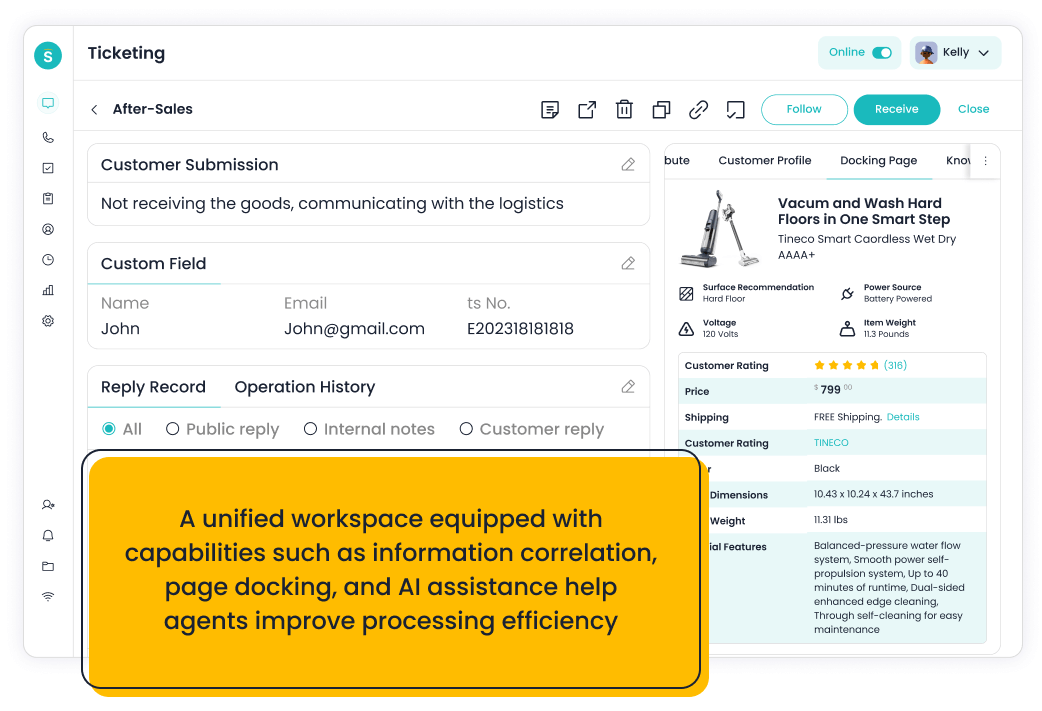
For a representative issue type, compare the time spent preparing the response and coordinating follow-up, including corrections. Keep the same quality checks in place. Product capabilities and an archived illustration are not evidence of achieved savings in your team.
Prepare the case definition, current effort measure, and quality criteria for a capability discussion. Book a Sobot demo.
Frequently Asked Questions
Does faster first response mean faster resolution?
No. A reply can arrive earlier while investigation or specialist work remains unchanged. Measure time to a useful reply and time to a confirmed outcome separately.
Are fewer tickets always a sign of improvement?
No. Customers may stop contacting support because access is difficult. Check unresolved needs, repeat contact, and customer feedback before interpreting lower ticket volume as a successful outcome.
Can a small support team measure these benefits?
Yes. Start with one recurring issue and a consistent review method. Keep the scope modest enough to inspect mistakes and follow-up work, rather than making claims about the entire operation.
What should happen if the measured benefit is unclear?
Identify whether the uncertainty comes from workload differences, missing effort data, or unstable knowledge. Improve that part of the measurement and repeat the comparison before expanding the claimed benefit.