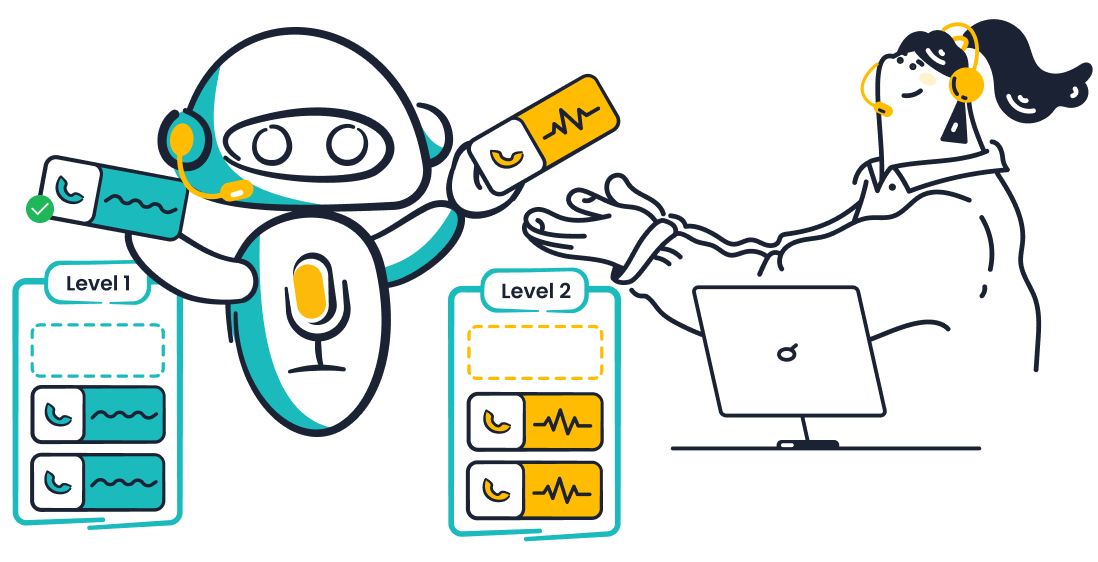
The best AI ticketing system for a customer support team is one that handles its real cases reliably: it assigns the right owner, uses current customer information, supports a useful reply, and preserves follow-up when automation stops. A convincing chatbot demonstration cannot establish those capabilities by itself.
Start with the work your team must complete. An ecommerce team investigating deliveries, a SaaS team escalating account problems, and a regional support operation need different evidence before choosing a system. Compare vendors against the same customer cases and acceptance conditions.
Key Takeaways
- Choose for customer case ownership and completion, alongside conversational ability.
- Test routing, knowledge access, human handoff, languages, and data controls separately.
- Use a shared pilot dataset and record exceptions as well as successful outcomes.
- Compare the cost of the complete operating workflow, including review and administration.
What Is an AI Ticketing System for Customer Support?
An AI ticketing system is customer support software that combines a persistent case record with artificial intelligence for interpreting requests and assisting service work. The software centralizes the issue, conversation history, assignment, status, and follow-up. AI capabilities may include classification, priority suggestions, response drafts, summaries, or permitted actions in connected systems. The ticketing layer provides continuity when a request cannot be completed in one conversation. An AI-based ticketing system therefore needs both language capabilities and operational controls. Its suitability depends on the customer cases it supports, the information it can access, and the responsibilities retained by people.
Quick Comparison: Which System Approach Fits the Work?
| Approach | Suitable starting point | Verify first | Main trade-off |
|---|---|---|---|
| Ticketing with AI assistance | Agents already own complex cases | Classification, drafts, summaries, and review | People still complete most actions |
| Conversation automation connected to ticketing | Routine questions arrive before escalation | Ticket creation, context transfer, and follow-up | Conversation and case states can diverge |
| Unified customer contact platform | Cases cross channels and departments | Shared history, routing, permissions, and ownership | Broader configuration and governance work |
These approaches can overlap within one product. Select the workflow you need to prove rather than assuming the broadest category is automatically the best fit.
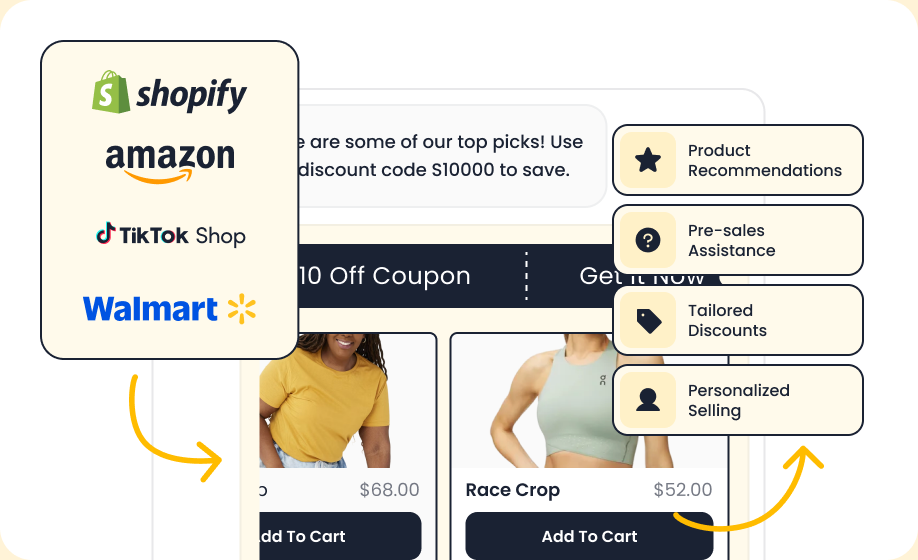
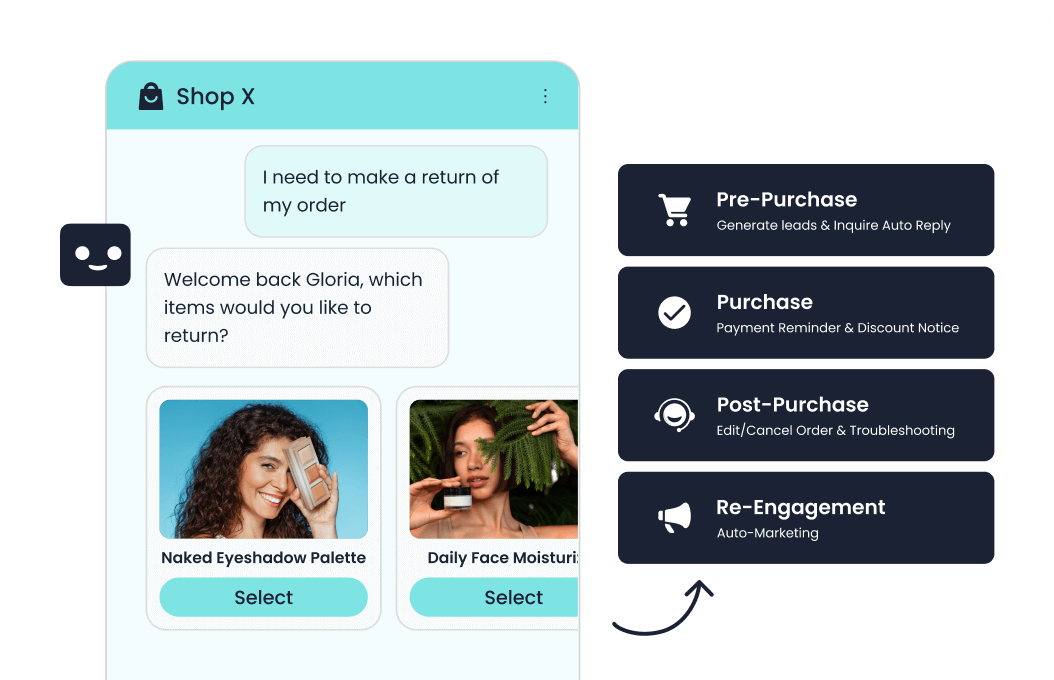
IBM’s chatbot overview notes that AI chatbots can connect to business applications and complete transactions. That capability alone does not establish persistent ticket ownership, case status, or follow-up; those parts of the proposed workflow still need to be demonstrated.
Five Tests That Separate Capability from a Good Demo
Use the following tests as a comparison sheet. For each vendor, record the input, expected behavior, observed result, unresolved exception, and person responsible for remediation. Agree on must-pass conditions before seeing the demonstrations.
1. Can routing handle the difficult requests?
Include routine messages, ambiguous wording, repeat contacts, and requests containing more than one issue. Ask your support leads to agree on the expected destination before testing. Otherwise, a disagreement about the support process can look like a model error.
Compare the assigned group with that reference decision, then inspect the mistakes. A billing complaint sent to a general queue and an account-security concern sent to the wrong team have different consequences. Record both, with the reason for reassignment. Test unknown intents as well: an appropriate review queue is preferable to an unsupported confident assignment. Priority and service deadlines should remain governed by explicit policy.
2. Can it use the right customer and knowledge records?
For each proposed customer relationship management (CRM) or order-system connection, ask which information is available, how identity is matched, and how current the record is. A connector name does not establish that the required fields or operations are supported.
Test a policy question separately from a request about a specific order. The first needs an approved knowledge source; the second may need a current business record. Then change or withdraw a test article and check the resulting answer. Ask the vendor to show what happens when data is missing or the connection is unavailable. Separate access to read a record from permission to change it.
3. Does human handoff preserve ownership and evidence?
A transfer is useful only when someone can continue the work. Trigger handoff through a customer request, an unresolved question, and an action outside the AI’s authority. Check that the receiving agent sees the original messages, relevant identifiers, actions attempted, and the remaining task.
Also test after-hours handling. The system should keep an accountable queue and communicate the actual next step when live transfer is unavailable. For explainability, request the policy or record behind a recommendation, the route taken, and an auditable action history. An invented explanation of a model’s reasoning is less useful than verifiable evidence showing what the system actually did.
4. Do language and channel changes preserve the case?
Use the languages your customers actually write, including mixed-language messages, product names, and local phrasing. Check intent interpretation and the final service meaning, rather than judging fluency alone. A smooth translation that changes a return condition is a failed support answer.
Then continue a test case through another intended channel. Confirm whether the customer must authenticate again, whether the same case can be found, and which history reaches the agent. Do not infer that every listed language is available on every channel or feature. Ask a competent reviewer for each important language to assess the agreed cases and record unresolved gaps before expanding coverage.
5. Are data controls and action permissions suitable?
Request evidence for who can view customer records, approve actions, export data, and inspect logs. Establish where relevant information is processed, how long it is retained, and what deletion covers. Confirm whether customer content is used for model improvement and which settings or contractual terms govern that use.
OWASP’s excessive-agency guidance identifies unnecessary functionality and excessive permissions as risk factors. In a ticketing trial, inspect the allowed operations and approval boundaries rather than assuming every available connection should be enabled.
These are procurement questions, not assumptions that a particular certification settles every requirement. In the pilot, give a test account limited access and attempt an operation outside that scope. The expected result is a controlled refusal or authorized escalation. Ask for the record showing the attempted operation and outcome. Check the organization’s applicable privacy and security requirements with its responsible specialists.
Match the Shortlist to Team Size and Support Scenario
Team size affects administration capacity, but the case mix should drive the shortlist. A small team handling sensitive exceptions may need stronger controls than a larger team answering routine product questions.
| Support scenario | Prioritize | Do not accept |
|---|---|---|
| Lean ecommerce team | Order context, simple assignment, maintainable policies | Repeated manual copying between chat and ticketing |
| SaaS support with specialists | Account context, escalation ownership, permissions | A closed conversation while specialist work remains open |
| Cross-region operation | Language coverage, time-zone queues, shared history | One successful English demo standing in for regional testing |
Prefer a narrow AI-assisted workflow when the team cannot yet maintain unattended actions. Consider broader automation once the information, ownership, and exception paths needed for that workflow are in place.
Run a Pilot with Comparable Inputs and Observable Outcomes
Give shortlisted providers the same appropriately anonymized cases, knowledge, permitted data access, and expected outcomes. Keep a separate set of cases for acceptance testing rather than allowing every test to become a configuration example. Include normal traffic and the exceptions that matter to your operation.
NIST’s AI Risk Management Framework connects measurement with deployment context and input from relevant users. Applied to ticketing procurement, that means evaluating the actual support work rather than relying on a general model benchmark.
For example, use an explicitly illustrative case: “Cancel the replacement; the original arrived, but the duplicate charge is still there.” If the system cancels the shipment task and closes the entire ticket, it has missed the payment issue. The expected result preserves both concerns, records the permitted update, and assigns the unresolved charge to its owner. If the order connection fails, it should retain the request and explain the pending action without claiming cancellation succeeded.
For before-and-after comparison, use the same definitions and comparable case groups. Measure correct initial assignment against reviewed cases; distinguish a useful first response from an automatic acknowledgment. Record agent handling and review work, repeat contact, and reopened cases over an agreed follow-up window. A faster first reply should not outweigh more unresolved issues. Approve only the tested scope, with an owner for monitoring and a route back to manual handling.
Compare the Full Operating Cost
An AI-powered ticketing system may price seats, usage, or automated outcomes separately. Request a written scope covering the relevant channels, AI allowances, implementation, connected systems, reporting, and support. Ask what happens when usage exceeds the agreed level.
Include the team’s ongoing work: updating knowledge, reviewing exceptions, testing changes, and administering permissions. Compare quotes using the same workload assumptions. For any AI automation ticketing system, determine what the vendor counts as a billable result and how reopened or failed cases are treated. A low entry price is insufficient evidence of a lower operating cost.
Where Sobot Fits in the Evaluation
Test the customer workflow, including the exception
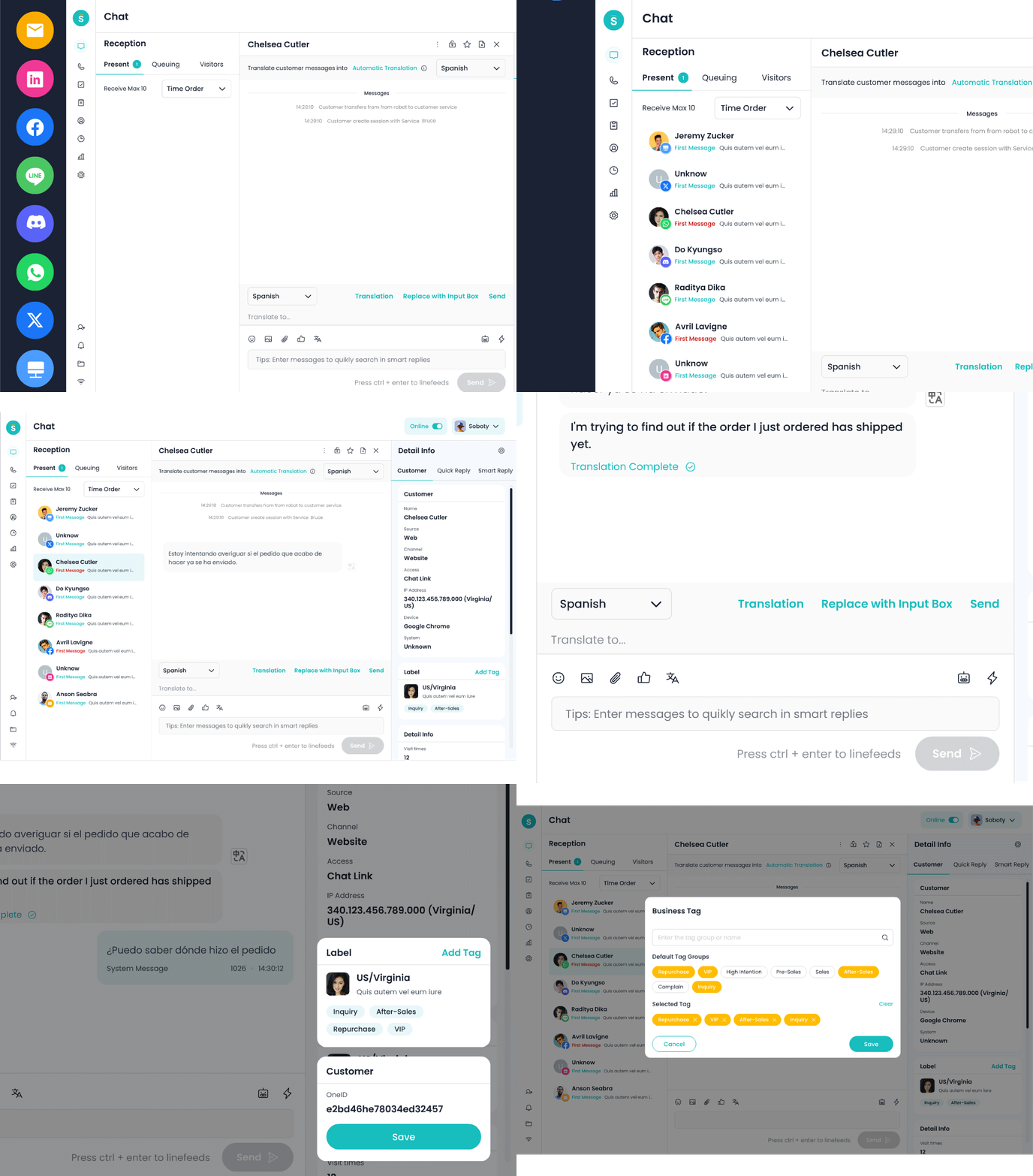
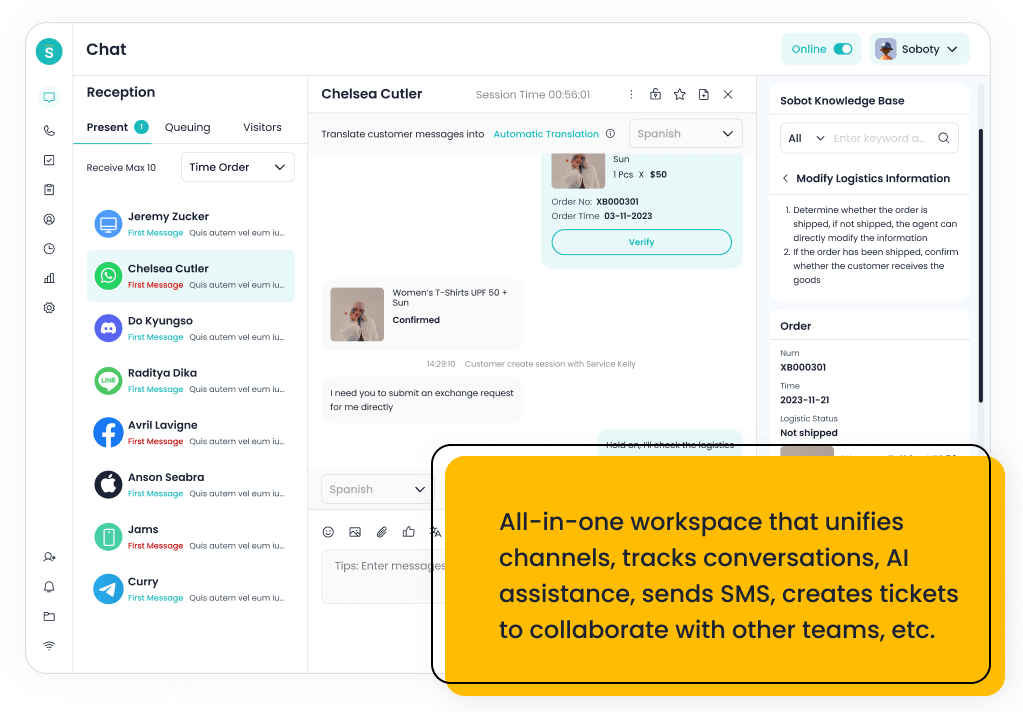
Sobot Nexus Ticketing documents customer-channel intake, a shared workspace, assignment rules, service-level agreement controls, and AI assistance for ticket fields and reply refinement. Its product page also describes access to third-party order information through integrations.
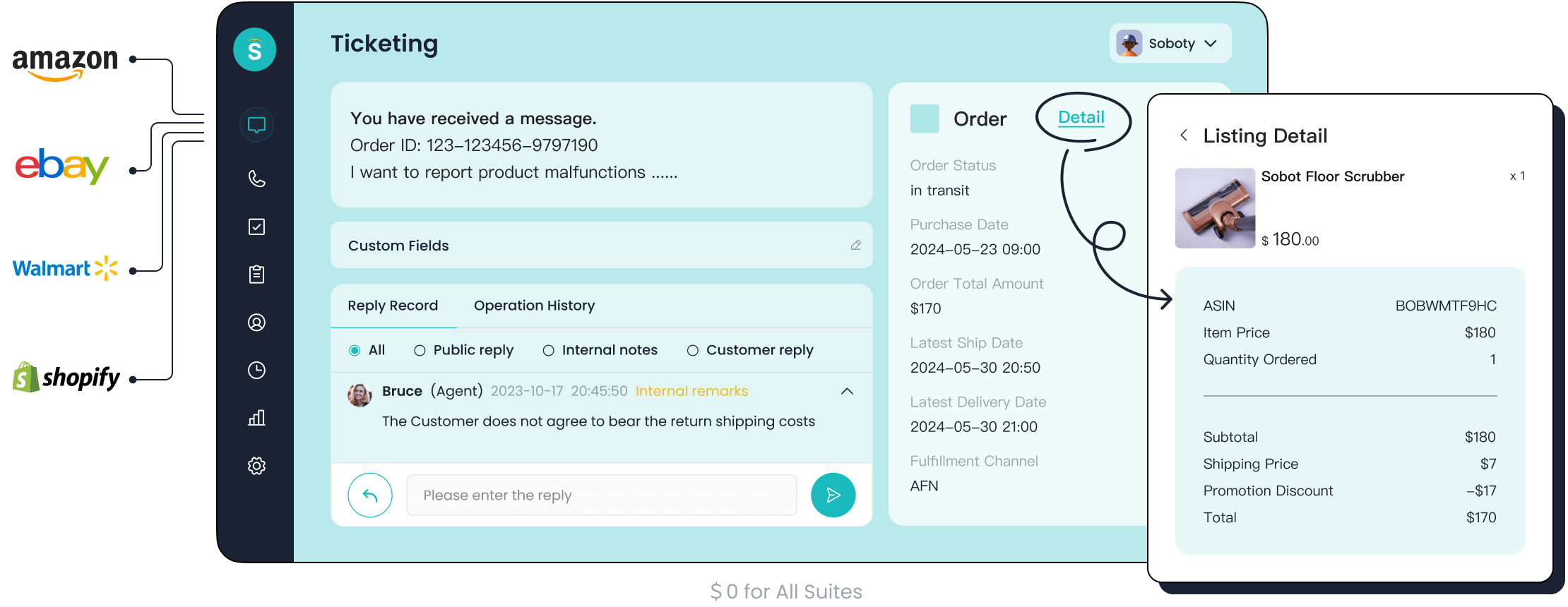
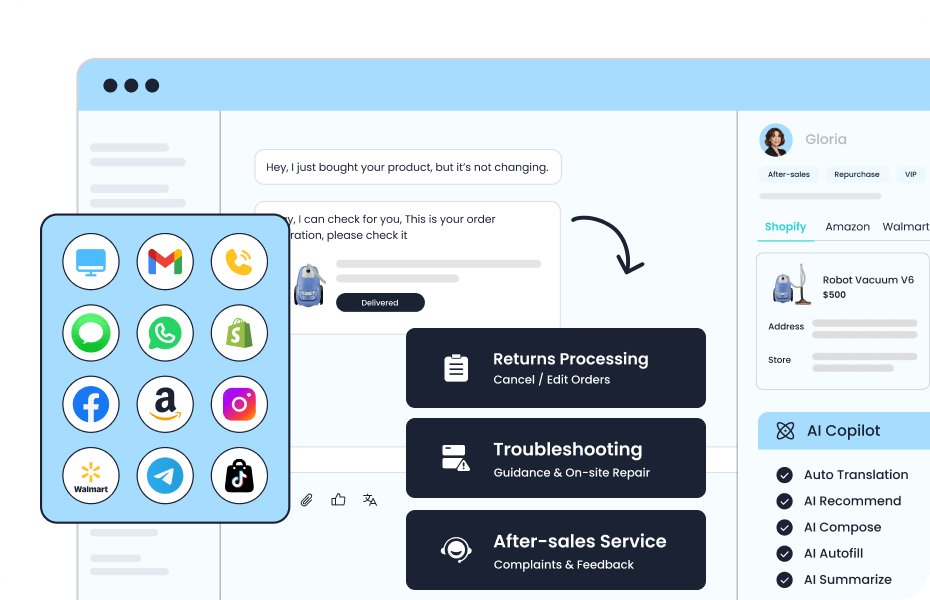
That makes it relevant to a shortlist where conversations must become tracked customer work. Apply the same tests above: confirm your channels, required fields, permissions, and handoff behavior in the proposed configuration. The archived illustration shows the relationship between orders and tickets; it does not prove every connector or action is available in your deployment.
Bring a representative customer case and its expected exception path to the discussion. Ask to see both the normal result and the unresolved branch. Book a Sobot demo.
Frequently Asked Questions
Is a chatbot enough for customer support ticketing?
Only if the connected workflow also preserves the case, owner, status, and follow-up. A chatbot that answers questions but loses unresolved work does not provide a complete ticketing process.
Should a small team start with autonomous resolution?
Start with the scope the team can supervise. Classification and agent-reviewed drafts may be a practical first step when policies, connected information, or exception ownership still need improvement.
How should two vendors’ routing accuracy be compared?
Use the same held-out cases and an agreed reference assignment. Report the reviewed denominator, case mix, and consequential errors. Results from different datasets do not establish which system will route your requests better.
Can these systems replace an internal IT service desk?
This selection approach addresses external customers, including orders, accounts, and complaints. Internal employee technology support has different workflows and requirements and needs its own evaluation.
What if a vendor cannot demonstrate a required integration?
Keep that requirement unresolved. Request evidence of the supported fields and operations, implementation responsibility, and acceptance conditions. Evaluate a narrower workable scope if appropriate; do not treat a roadmap promise as an available capability.