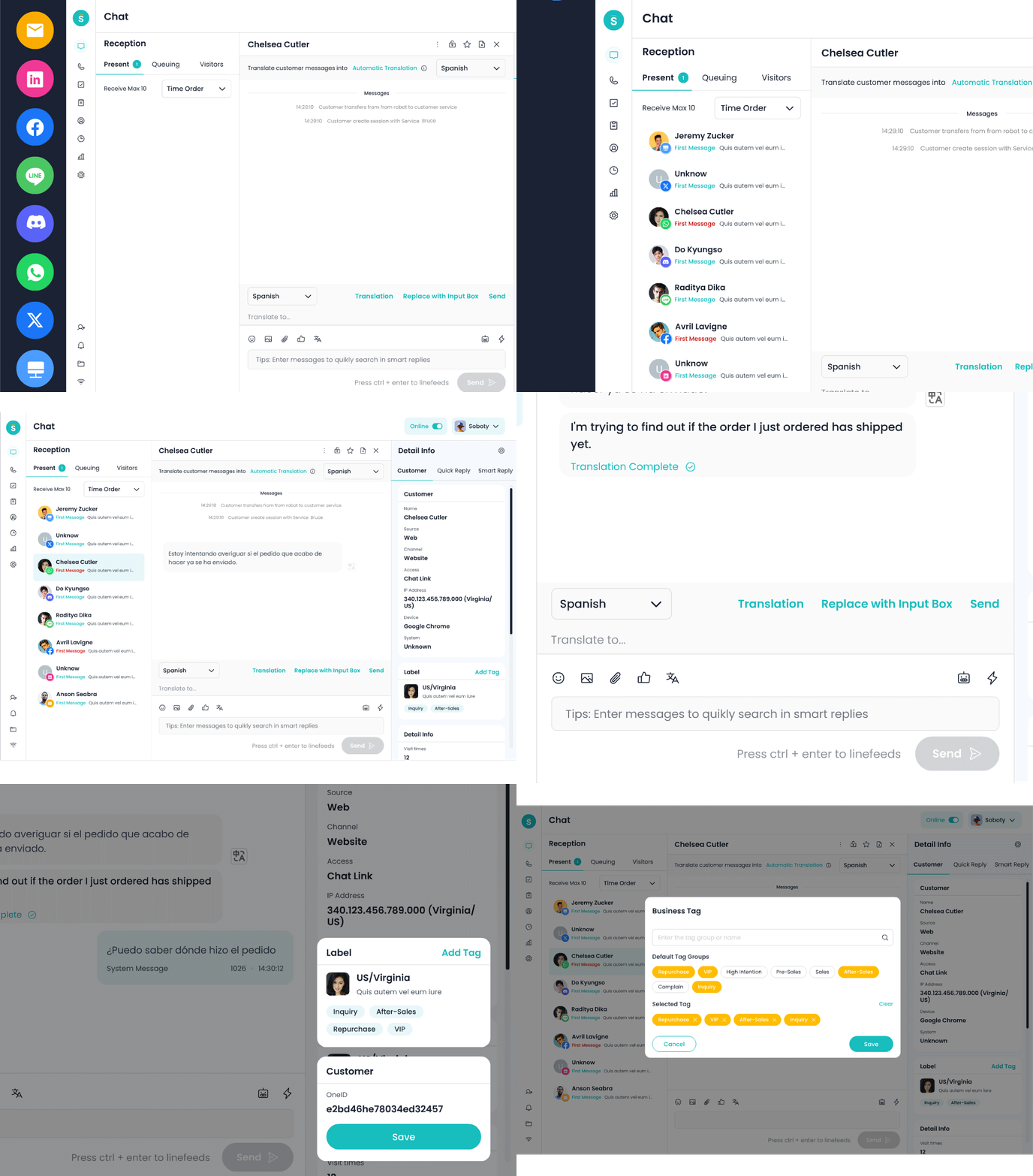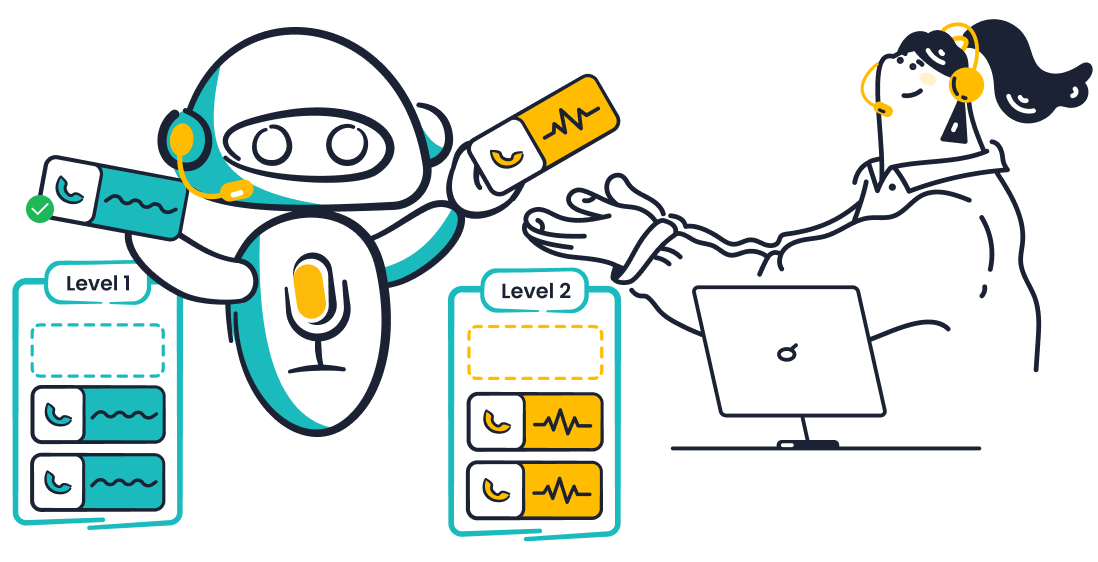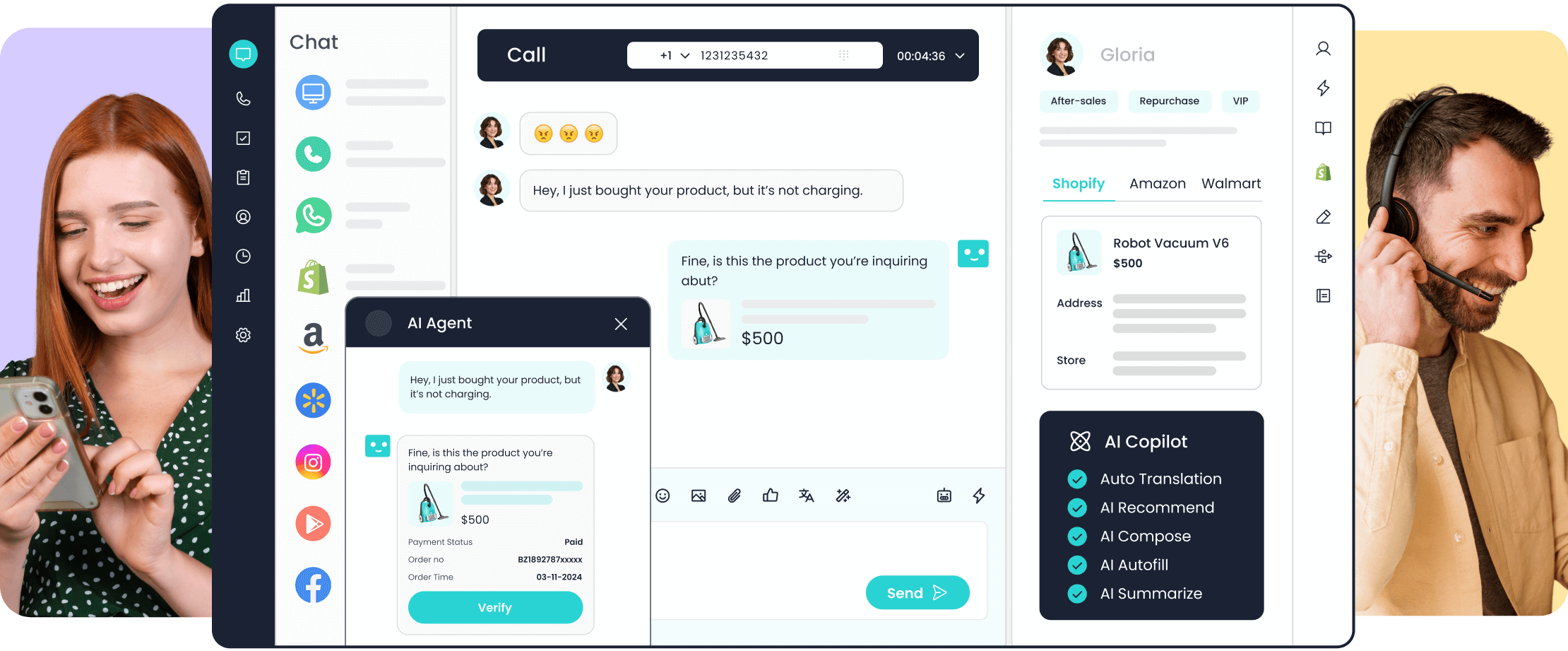
For a business support team, an AI assistant can help a human representative find information, prepare an answer, and keep track of a conversation. This staff-facing role—agent assist—puts suggestions in the employee’s workspace, where the person decides what to send and how to resolve the issue.
Key Takeaways
- Agent assist prepares information for human support staff.
- Useful functions include knowledge retrieval, reply drafts, summaries, and sentiment cues.
- Review effort and resolution quality matter alongside speed.
- A pilot should measure handling time, first-contact resolution, and new-hire progress.
What Is an AI Assistant for Customer Service?
An AI customer service assistant, in the agent-assist role, is software that prepares information and suggestions for a human support representative. It draws on permitted conversation context and company knowledge to retrieve relevant material, propose replies, and summarize what has happened, while the representative reviews its output and remains responsible for the customer interaction. Often called a copilot for support agents, it works within the staff workflow rather than independently owning the service case. Its usefulness depends on whether the person can understand the suggestion, check its basis, and accept, change, or reject it without adding more effort than it saves.
Quick Comparison Table
A knowledge search tool retrieves source material; a copilot prepares contextual suggestions; a conventional workspace leaves preparation to staff.
| Approach | Staff support | Human responsibility | Cost consideration |
|---|---|---|---|
| Sobot Nexus Copilot | Reply drafts, knowledge lookup, and summaries; confirm scope | Check relevance and decide the response | Custom quote; confirm selected features and implementation |
| Knowledge search | Finds source articles | Interpret the source and compose the answer | Search licensing and knowledge maintenance |
| Conventional agent workspace | Conversation records and staff-operated tools | Find context, write replies, and record follow-up | Workspace licensing and staff effort |
A customer-facing chatbot or agent communicates directly with the customer and may handle eligible tasks itself. Agent assist supplies material to the employee instead. A platform can offer both roles, so check who sees each suggestion, who sends the answer, and who is authorized to act.
How Agent Assist Supports a Live Conversation
Agent assist combines conversation context with permitted knowledge to prepare support that the representative can use during the interaction.
Knowledge Retrieval and Suggested Replies
Knowledge retrieval brings relevant policy or troubleshooting material into view. Suggested replies turn that material and the conversation into a draft the representative can adapt. The source should be accessible: a fluent answer is harder to review when the employee cannot see which article or record supports it.
Consider an illustrative troubleshooting conversation: a customer says a device still will not connect after restarting it. The assistant retrieves an article and drafts another restart instruction. Before accepting it, the representative checks the product model, the article’s currency, and the steps already attempted. If the article covers a different model, the person rejects that draft, retrieves the correct guide, and prepares the next relevant question. The assistance has value when it reduces searching and writing while making this relevance check practical.
Conversation Summaries and Sentiment Cues
A useful conversation summary preserves the customer’s problem, attempted steps, unresolved question, and next owner. Sentiment cues can draw attention to language suggesting frustration or confusion, but they are signals to inspect the exchange, not certain knowledge of the customer’s feelings. The representative decides whether to acknowledge a concern, clarify an answer, or seek help.
In the troubleshooting example, a handoff summary should retain “restart already tried” and the confirmed device model. Otherwise, the next employee may repeat the same unhelpful step. The person should also distinguish what the customer reported from what support verified. A summary that says “connection restored” when the customer only agreed to try a step creates a false outcome, even if the wording sounds plausible.
Why Human Review Still Matters
An AI assistant can confidently produce a false statement. NIST’s generative AI profile describes this risk as confabulation. For support staff, checking means confirming that the source applies to this customer, that the proposed answer preserves policy conditions, and that summaries retain unresolved facts. Teams should also limit retrieval to information the representative is allowed to access and give employees a clear way to flag incorrect suggestions.
How to Roll Out Agent Assist and Measure Its Impact
The study Generative AI at Work found an average 15% increase in issues resolved per hour at one business-software firm. Effects varied: less experienced workers benefited, while the most experienced and highest-skilled workers saw small quality declines. That is evidence from a particular deployment, not a forecast for every support team.
Start with a bounded queue and maintained knowledge. Compare assisted and unassisted work with similar issue types and agent experience, using a contemporaneous comparison group where practical. Keep the quality rubric consistent and account for changes in workload or policy.
Measure handling time, first-contact resolution, and new-hire progress together. Include review and wrap-up effort, declare the follow-up window for repeat contacts, and assess competence independently.
| Measure | Pilot definition | Check alongside it |
|---|---|---|
| Average handling time | Total handling and wrap-up time, including holds and review, divided by handled contacts; count each period once | Correction work and prematurely closed cases |
| First-contact resolution | Eligible issues resolved without repeat contact in the declared observation window, divided by eligible issues | Reopens and unresolved follow-up |
| New-hire ramp-up | Time to a defined, independently assessed quality and productivity standard | Ability to find sources and explain decisions |
Expand only when observed gains survive those quality checks. Draft acceptance alone does not show that the customer’s issue was resolved.
How to Choose the Best Customer Service AI Assistant
The best customer service AI assistant for a team fits how its representatives investigate, respond, and document work. Evaluate it with realistic conversations, including an outdated article, a missing fact, and a customer who has already tried the suggested step.
The research paper Guidelines for Human-AI Interaction recommends making unwanted AI assistance easy to dismiss and wrong output easy to edit or recover from. Apply that principle to the staff workflow:
- Can the representative inspect the source without leaving the conversation?
- Can they edit or reject a suggestion without losing their own work?
- Does the assistant preserve uncertainty and distinguish attempts from results?
- Can managers review failures and assign fixes to the appropriate knowledge or product owner?
Confirm channel coverage, data access, retention settings, feature availability, and the full cost of setup and ongoing maintenance.
Where Sobot Fits in the Support Workspace
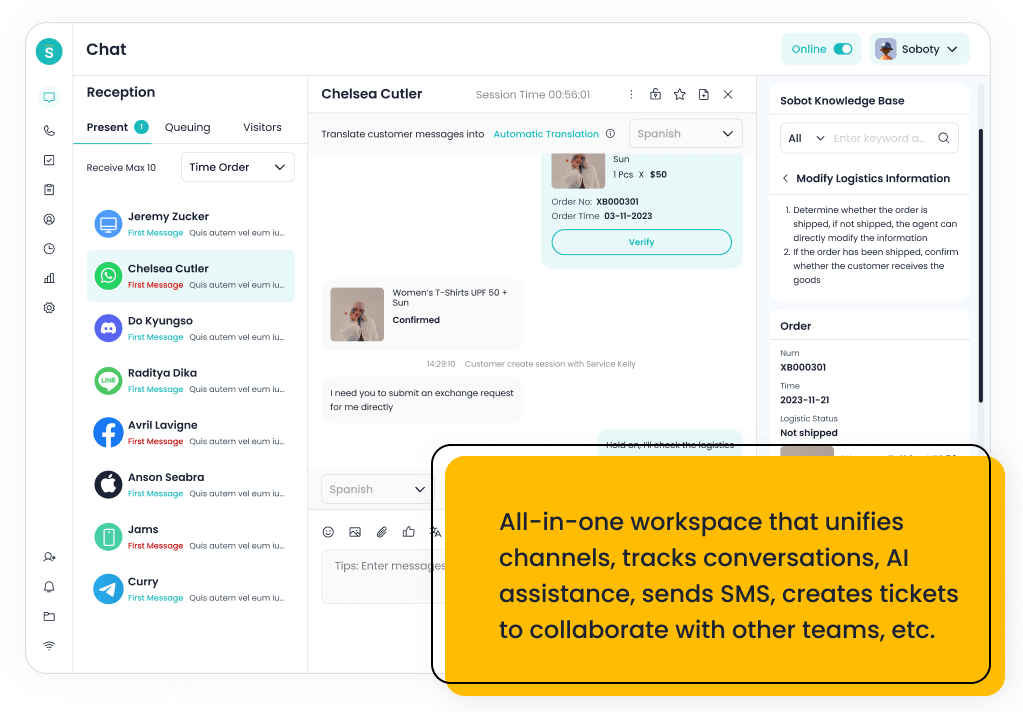
Evaluate Sobot’s assistance where the human support team reads conversations, prepares replies, and records follow-up.
Sobot Nexus Copilot and Messaging
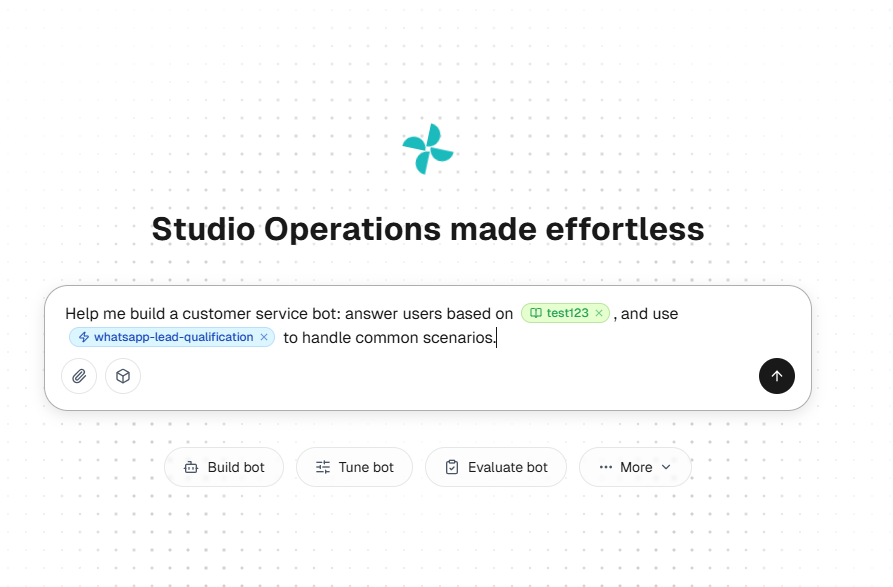
Sobot Nexus describes Copilot reply drafts, contextual knowledge lookup, automated summaries, and recommended next actions. Coverage depends on the selected product, configuration, and integrations. These capabilities support the representative’s preparation and review within the human workspace.
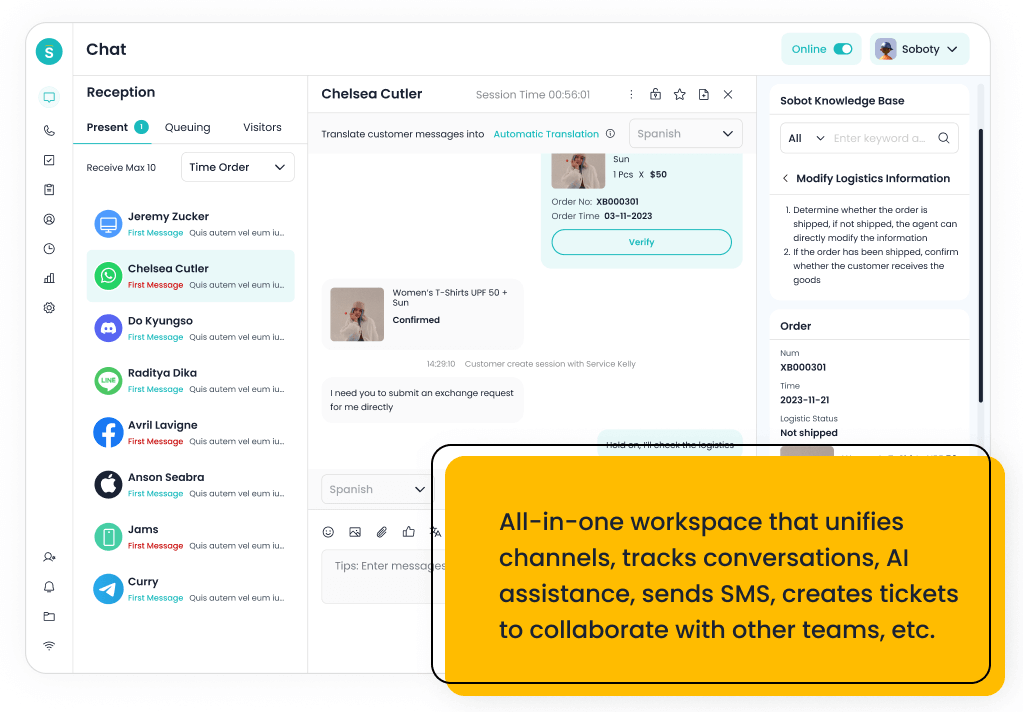
Sobot Nexus Messaging also describes translation, reply rewriting, and service summaries. Verify those functions in the chosen channel and configuration, using a case that requires a person to correct a suggestion. Book a Sobot demo to explore the relevant product capabilities with your team’s intended workflow in mind.
FAQ
Can an AI assistant replace training for new support agents?
An AI assistant can support new hires during real conversations, but it cannot replace training in company policy, judgment, and source checking. Coaching should ask employees to explain why a suggestion applies and recognize when it does not. Assess independent competence through reviewed cases, rather than treating accepted drafts as evidence that an employee understands the work.
Can the same assistant support every language equally well?
An assistant’s usefulness can vary by language, terminology, and the quality of the source material available to the team. Test real customer phrasing and product terms separately for each intended language. Have competent reviewers check meaning and tone, and define a human review route when a translation or suggested answer is uncertain.
What should agents do if the assistant is unavailable?
Agents should be able to continue from approved knowledge and existing procedures when the assistant is slow, unavailable, or unhelpful. An outage plan should preserve direct access to source articles and a clear route for unresolved work. Practicing that fallback helps supervisors distinguish a service-process dependency from an optional convenience in the workspace.