Conversational AI for customer service works by connecting a customer’s message to the information, decisions, and follow-up needed to address it. The system receives the request, identifies what is being asked, retrieves relevant knowledge or business records, and responds within its authority. When it cannot finish the work, it needs a human handoff that preserves what has already happened.
Consider a customer who wants to change a delivery address. Recognizing the request is only the beginning: the system must identify the order, check its current status, determine whether a change is allowed, and report the actual result.
Key Takeaways
- A useful conversation connects language understanding with current knowledge and business information.
- Looking up a record, requesting a change, and confirming a completed change are different operations.
- Human handoff should transfer the remaining task, history, and ownership.
- Measure verified resolution and subsequent work alongside response and handling time.
What Does Conversational AI Do in Customer Service?
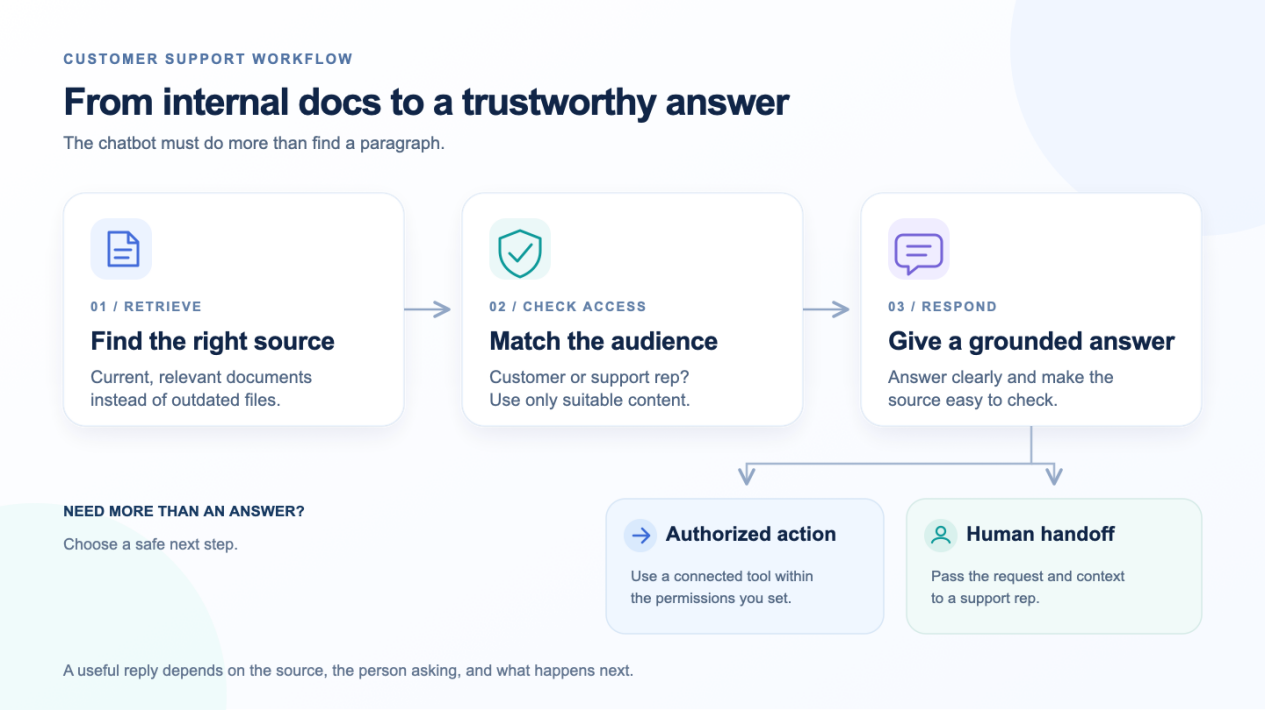
Conversational AI in customer service is software that interprets customer language and supports a coherent exchange around a service need. It combines conversation context with relevant knowledge and configured business-system access. The software may answer a question, collect missing details, perform a permitted operation, or prepare a case for a person. Its role depends on the request and the information available. Conversational AI for customer support therefore needs more than a response generator: it needs a way to establish relevant facts, respect action limits, and keep unresolved work moving toward an accountable owner.
Quick Comparison: What Each Part of the Conversation Must Establish
| Conversation stage | Required result | Failure to avoid |
|---|---|---|
| Receive | A usable request with its channel context | Assuming every channel supplies the same information |
| Understand | A sufficiently clear intent and relevant details | Acting on an ambiguous reference |
| Retrieve or act | Applicable facts or an authorized operation result | Confusing a policy answer with live account information |
| Respond | An accurate answer or explanation of the pending step | Claiming an unconfirmed change succeeded |
| Hand off | An owner who can continue the remaining work | Sending a transfer message without assigning responsibility |
The stages describe what needs to be established, rather than a rigid script. A correction, missing detail, or failed connection can require clarification before the conversation proceeds.
How a Customer Conversation Reaches a Useful Outcome
The delivery-address request provides an illustrative thread through a conversational AI customer service workflow. It is a workflow example, not a reported deployment or measured customer result.
1. Receive the message and preserve its context
The system receives the customer’s wording and the information available from the channel. That may include the conversation history or a reference supplied by an authenticated customer session. It should preserve the original request rather than replace it with an unsupported summary.
“Please change the address on yesterday’s order” still leaves questions. Which order does the customer mean, and is the person entitled to access it? The workflow may need an order reference and an approved verification step. A remembered name or a message arriving through a familiar channel is insufficient by itself. Avoid asking customers to paste sensitive credentials into the conversation.
2. Identify the intent and clarify missing details
Microsoft’s conversational language understanding documentation describes identifying the intention of an utterance and extracting relevant information, while distinguishing that understanding from performing an action. In this example, changing a delivery address is the intent; the order reference and requested address are details needed to continue.
If the customer then says, “Actually, use my office,” the system needs to establish which address is intended. It should retain the current task while clarifying the correction. Multi-turn dialogue state keeps the established details and outstanding questions together; it does not turn an unclear phrase into verified information.
3. Retrieve knowledge and check the business record
The knowledge base explains the conditions for address changes. A current order record establishes whether those conditions apply to this purchase. The two sources answer different questions, so the workflow should not infer shipment status from a general help article.
Suppose policy allows a change only before fulfillment reaches a particular stage. The system needs the current record and the configured authority to submit an update. If it can only read the order, it may explain the next step or prepare a request for an authorized person. If a connection fails, retain the pending task and avoid treating the absence of a result as success.
4. Generate a reply that matches the evidence
The response should explain what was established and what happened. “Your request has been submitted for review” and “The delivery address has been updated” describe different outcomes. The system should use the latter only when the authorized operation returns sufficient confirmation.
NIST’s Generative AI Profile identifies confidently presented erroneous content as a risk. In a support workflow, that makes a fluent message insufficient evidence that a business action occurred.
When information is unavailable, the reply should identify the unresolved point and the actual next step. It should not invent a delivery promise or imply that a human has accepted a case when no assignment exists.
5. Transfer unresolved work to a person
Handoff may be appropriate when the customer asks for a person, the request exceeds the permitted action scope, identity remains unresolved, or an exception requires judgment. The receiving team needs the transcript, verified details, actions attempted, and the remaining question.
For the address request, fulfillment might already be locked. A handoff should explain that limitation, identify the team able to investigate alternatives, and preserve the requested address as a proposed value. After-hours handling needs an accountable queue and an honest follow-up expectation. An escalation can be the correct outcome even though the conversation was not resolved automatically.
The Knowledge, CRM, and Ticketing Behind the Conversation
A conversational AI platform for customer service needs maintained knowledge and a reliable way to connect the exchange with ongoing work. Knowledge owners keep policy conditions and product information current. Customer relationship management (CRM) records can provide relevant account context within the permissions granted to the workflow.
Google’s Dialogflow CX documentation describes conversation states that collect relevant information and change as an exchange progresses. This illustrates why a multi-turn service needs to track established details as well as interpret the latest message.
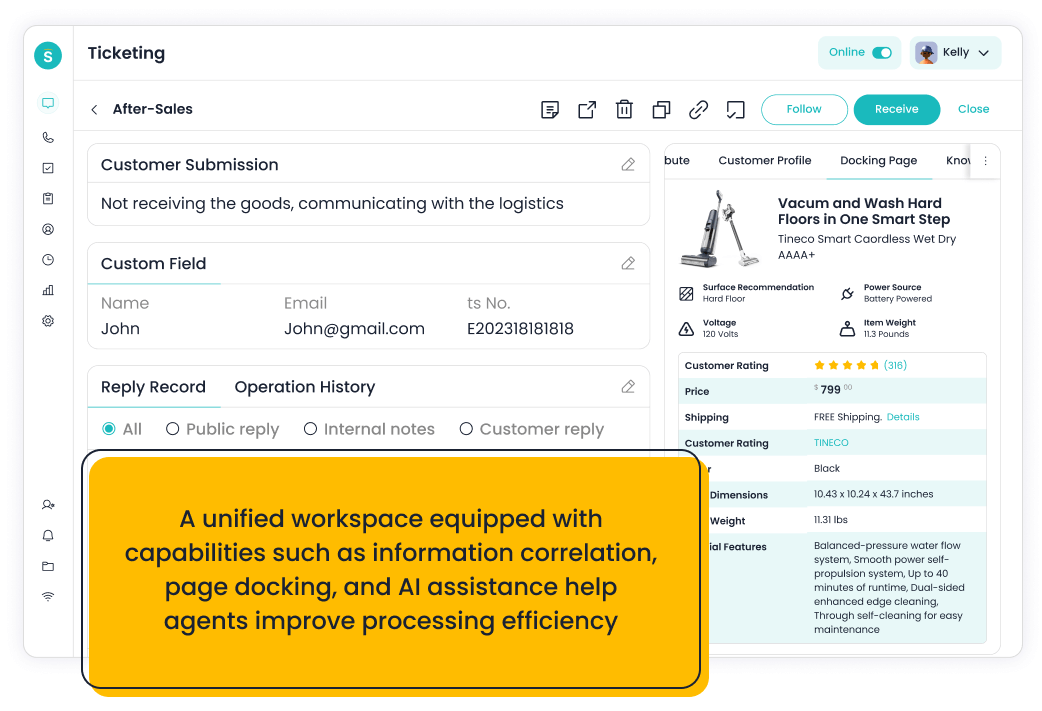
A ticket preserves the unresolved issue, owner, status, and follow-up when the task outlasts the conversation. The dialogue state holds the details needed in the current exchange; the ticket keeps the remaining work visible afterward. A transcript alone does not establish ownership, and a closed chat does not prove the associated customer problem is finished.
Check which fields and history actually reach the receiving person. A technically connected system may still omit the detail required for the next decision. Corrections should remain traceable so an agent can distinguish the customer’s latest instruction from a value that was considered earlier.
What Can Be Automated, and What Needs Human Judgment?
Automation is most workable when the request is understood, the required information is available, and the permitted response or action is clear. Examples include an applicable policy answer or an authenticated status lookup. Action automation additionally needs the relevant permissions, confirmation, and exception handling.
Send policy exceptions, unresolved identity disputes, consequential complaints, and unsupported requests to an appropriate person. Define these boundaries through the service process rather than assuming that a confident model response settles them. Preserve the customer’s ability to request help.
AI conversational agents for dealership customer service might collect an appointment request, while proactive conversational AI for automotive customer service might send a relevant reminder with appropriate contact preferences and reply handling.
For outsourcing customer service vs conversational AI, the operational question is who owns exceptions and follow-up; a staffing choice does not remove that responsibility.
Channels Change the Interface, Not the Need for Follow-Through
A website conversation may start with information from the current session, but access still depends on the configured identity and permissions.
WhatsApp can provide a messaging interface, while continuity with another channel depends on supported identity matching and history transfer.
Email can be asynchronous, so the workflow must preserve references and outstanding work between replies rather than assume the customer is still present.
Measure Resolution, Handoff, and the Work That Remains
Define the measured conversation scope first. Self-service resolution rate is the share with a verified outcome achieved without human handling. Use an agreed follow-up window to check repeat contact or reopened work. Separate verified resolution from containment, which may only indicate that no transfer occurred.
Handoff rate is the share of that same scope transferred to people; report the reasons as well. A lower rate is not automatically better if people cannot obtain needed help. For average handling time, divide the included handling time by the handled conversations in the measured group. State which human or automated work is included and retain the same definition across comparable groups. Inspect quality, review effort, and remaining tasks alongside the average.
Claims about the best conversational AI agents for customer service should be tested against those outcomes; enhancing the customer service experience requires more than fast or polished replies.
How Sobot Connects These Support Stages
From a customer message to a tracked next step
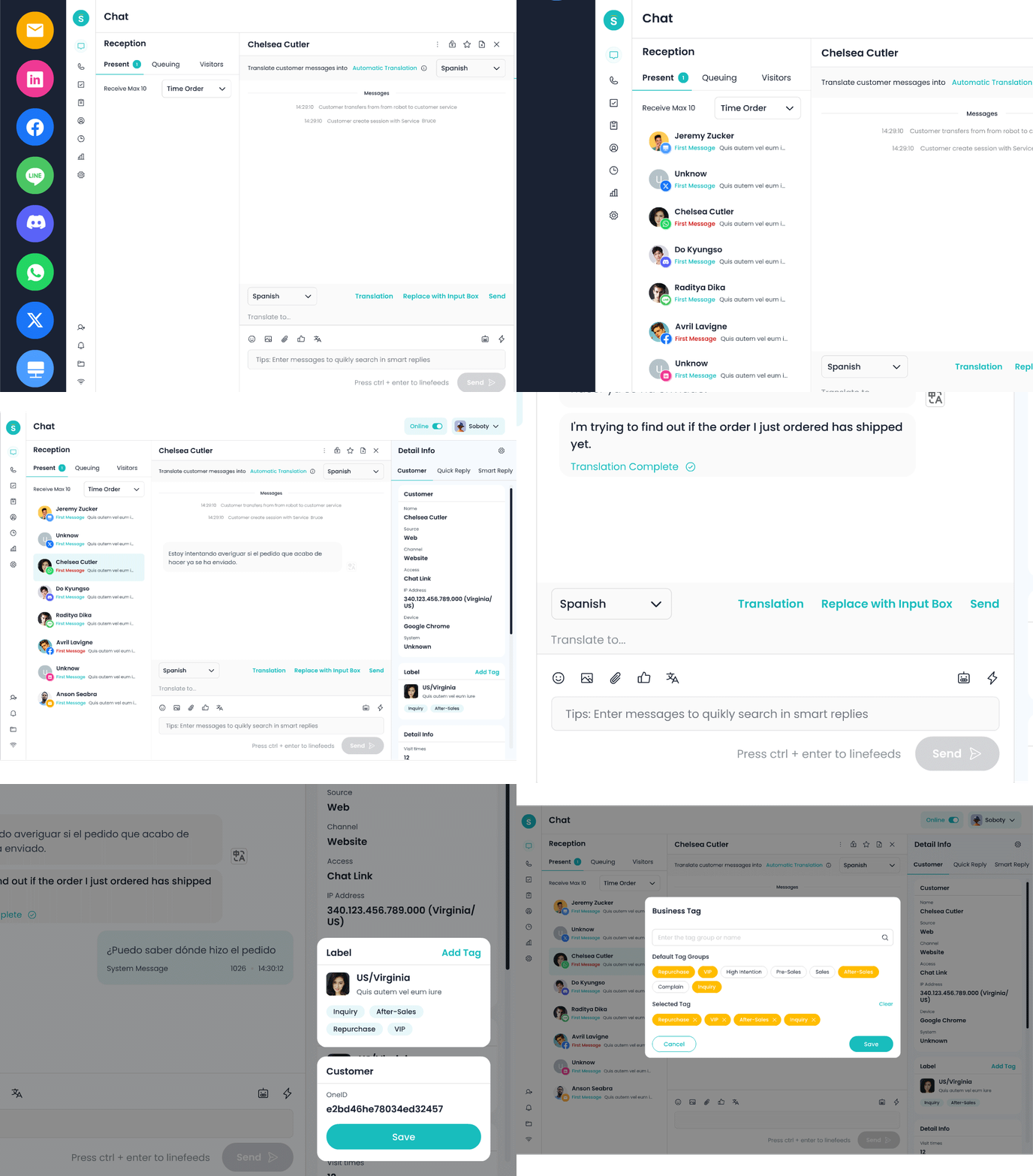
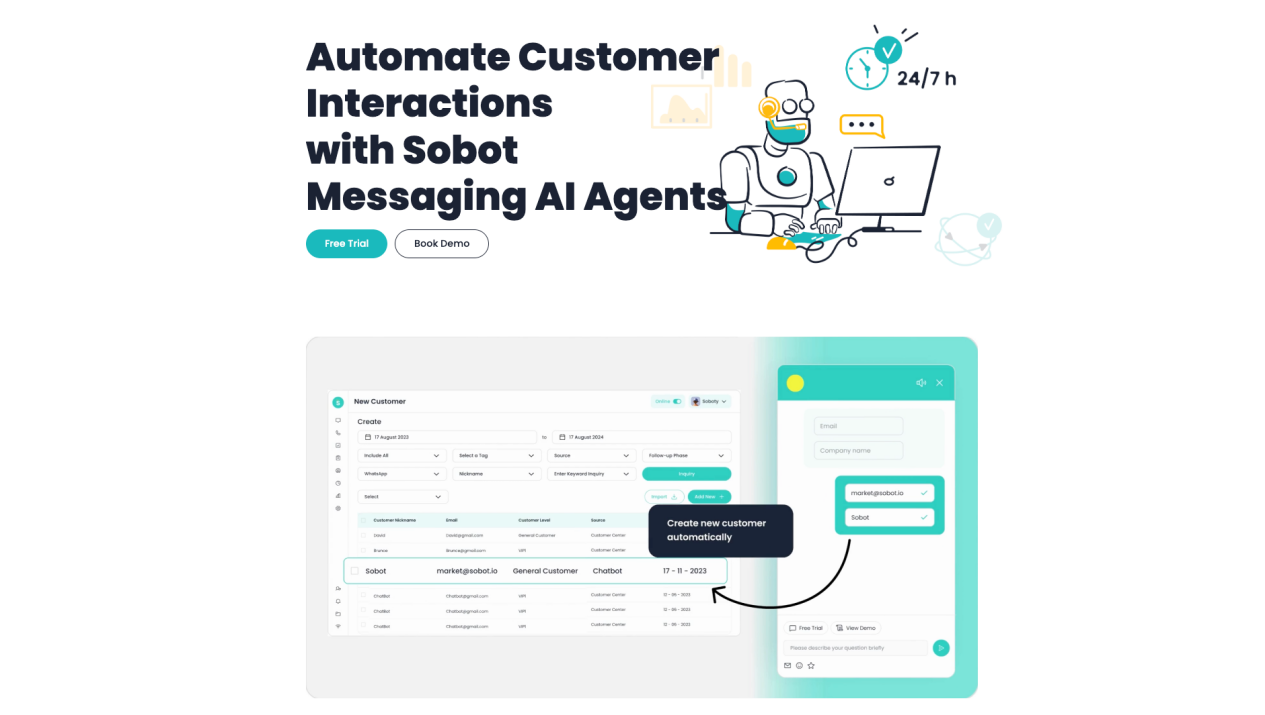
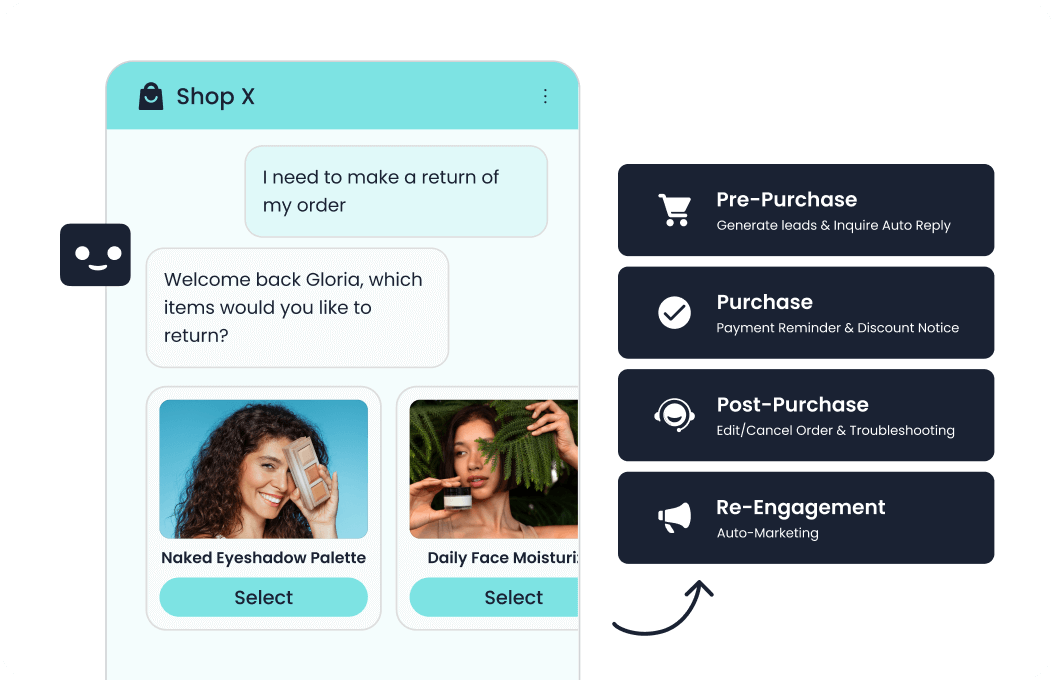
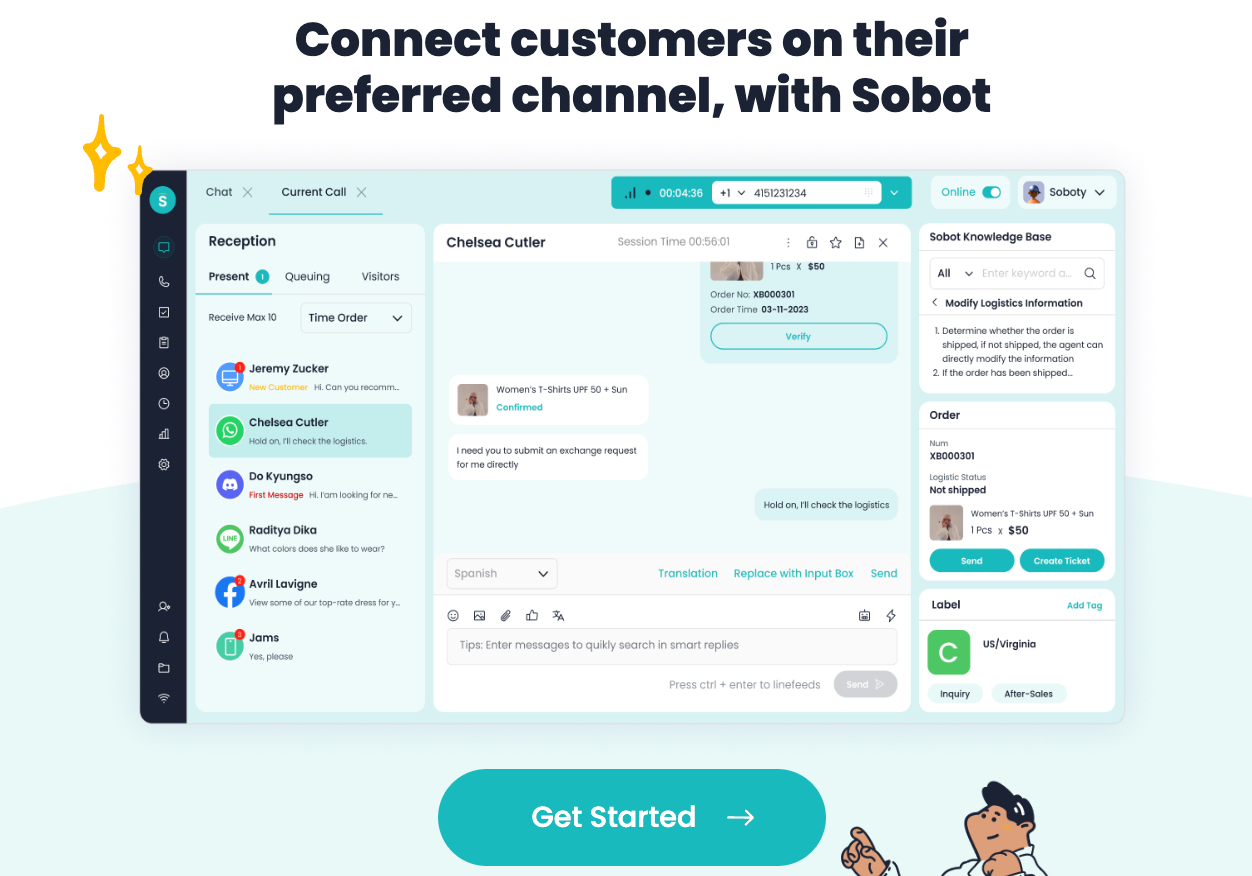
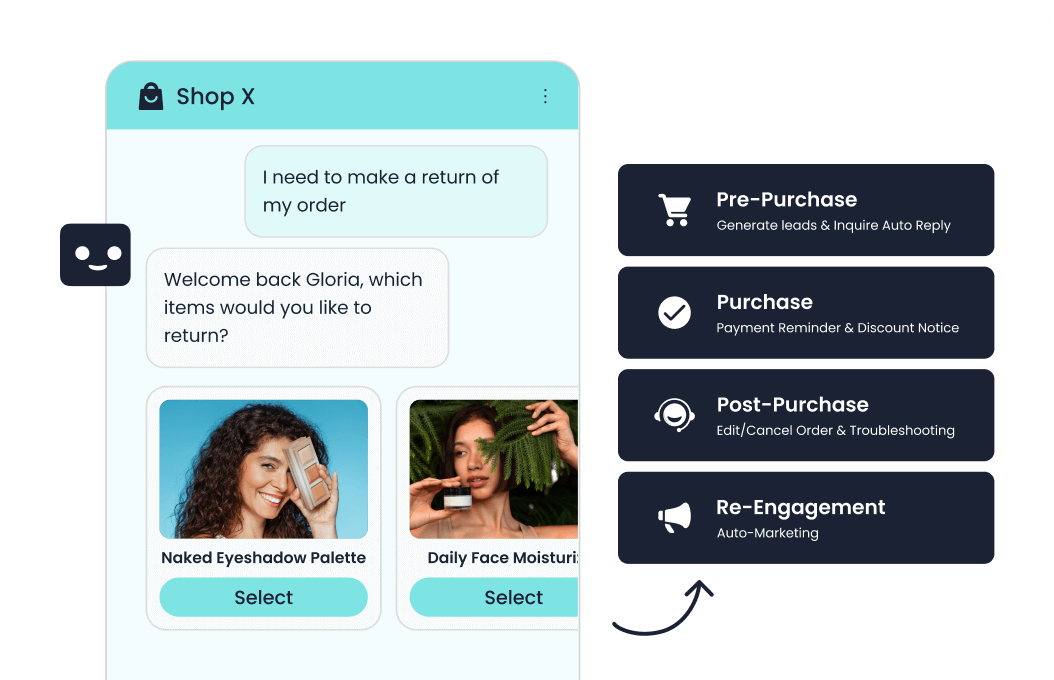
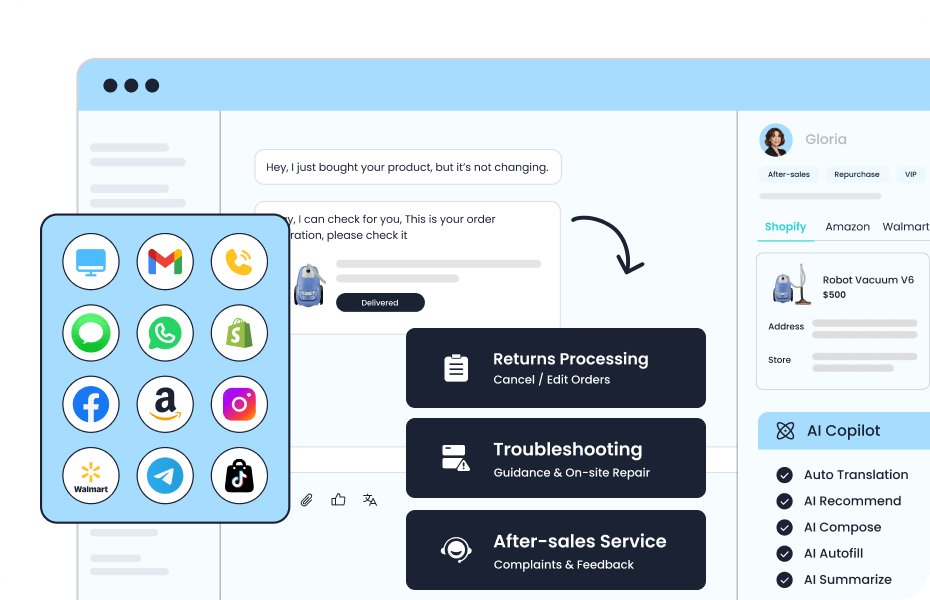
The Sobot Messaging Agents page describes request understanding, knowledge and business-information retrieval, configured actions, and human handoff. It also describes transferring the transcript and established customer context, with a ticket available when another team must continue the case.
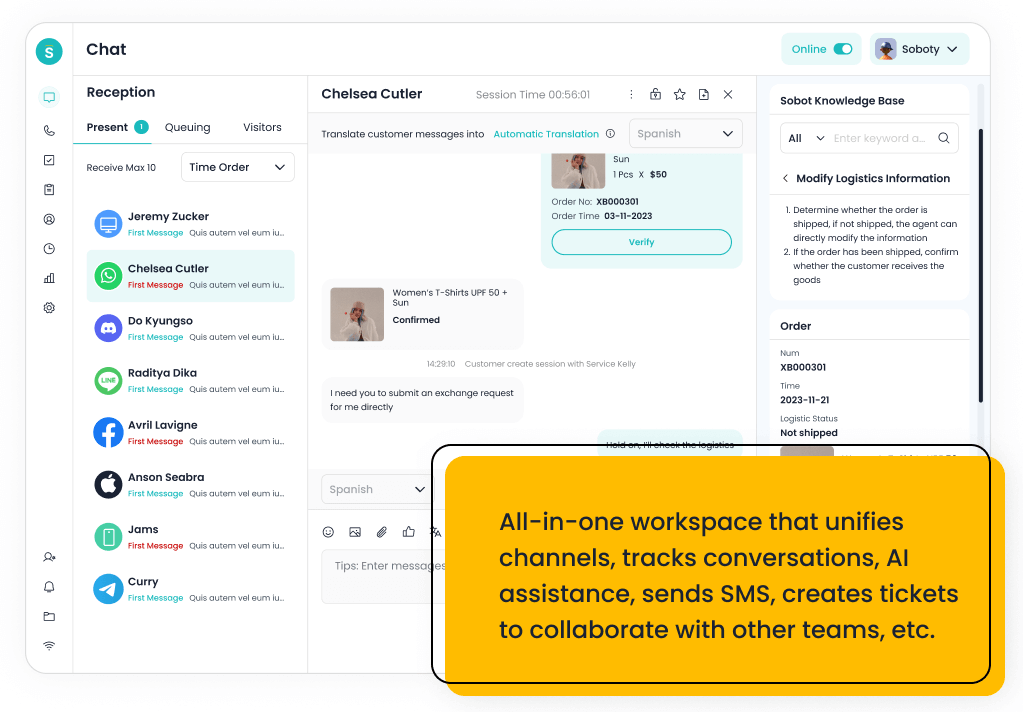
Use the delivery-address thread to check the proposed configuration: which record can be read, which update is permitted, what confirms completion, and what reaches the person handling an exception. These are deployment questions; the product description and archived illustration do not establish an achieved resolution rate.
Bring a representative exchange and its expected exception path to a capability discussion. Book a Sobot demo.
Frequently Asked Questions
Can conversational AI answer without a CRM connection?
Conversational AI customer support can answer suitable general questions from approved knowledge without a CRM connection. Account-specific facts or changes need access to the relevant business information and operations, which may come from a CRM or another configured system.
Does understanding a request authorize the requested action?
No. Interpretation establishes what the customer appears to want. Identity, policy, permissions, and current business conditions determine whether the action may proceed.
What happens when a customer corrects an earlier detail?
The conversation should preserve the correction and establish which value now applies. Before a consequential update, confirm the intended change rather than silently using an earlier assumption.
Can an appropriate human handoff count as success?
Yes, when the request needs human judgment and the receiving team can continue it. Report that successful routing separately from automatic resolution so the measures retain their meaning.
How can a team trace a customer-service workflow?
Trace a representative request through the stages and note the required information, permitted action, confirmation, and exception owner. Missing information or authority identifies a boundary to address before relying on automation.