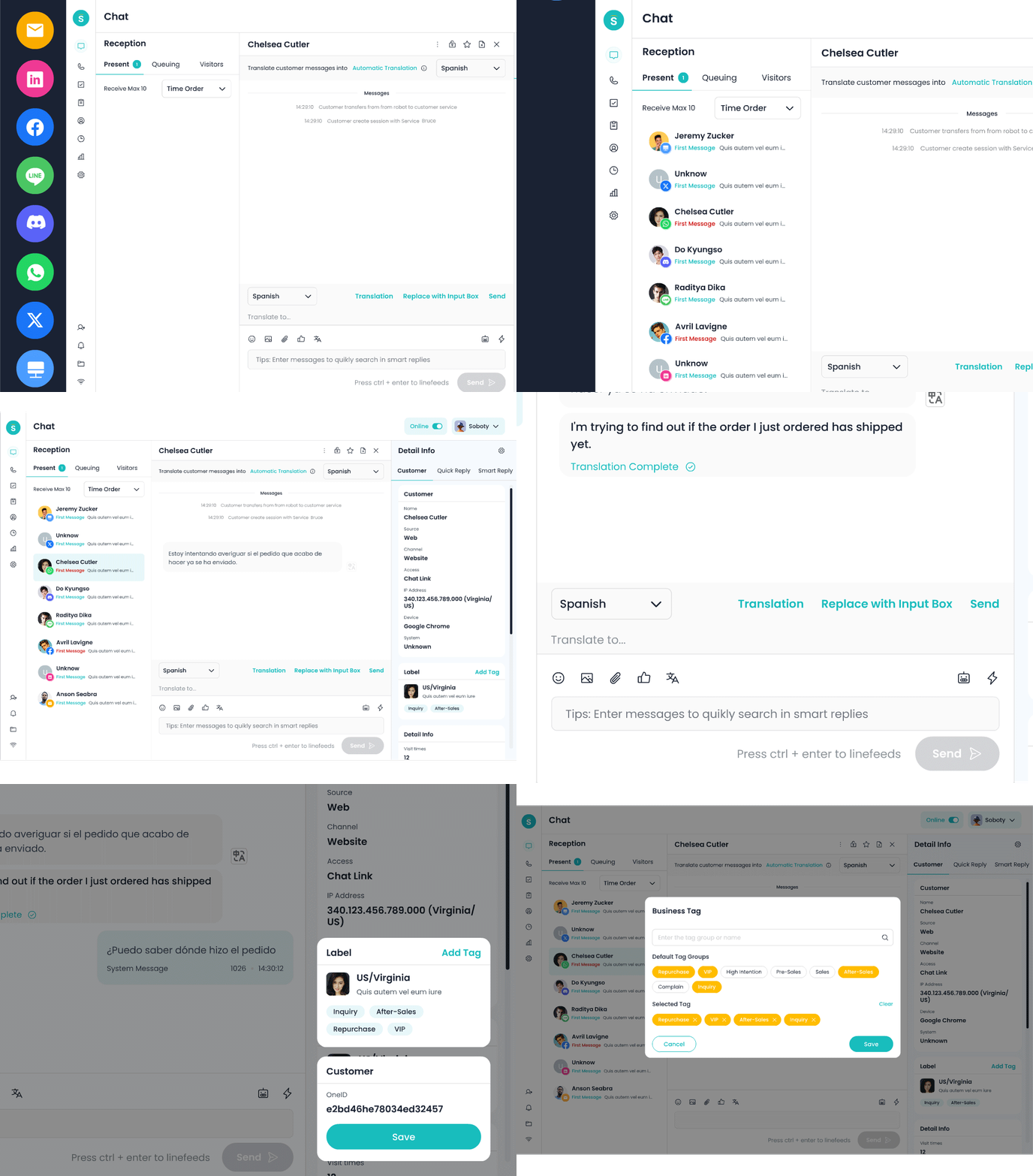
A customer should not lose the path to support when a conversation moves from English to Thai, Indonesian, or another language. A multilingual AI chatbot can make the first exchange easier, but language coverage only matters when the answer, escalation, and follow-up remain usable. For a global service team, the practical question is which languages can complete which customer tasks on which channels.
Key Takeaways
- Check language coverage by task and channel, including human handoff, rather than relying on a language count.
- Native language flows and live translation solve different problems; a mixed design can use both.
- Test real customer wording, local policies, and agent handoffs in each priority market before expanding.
What Is a Multilingual AI Chatbot?
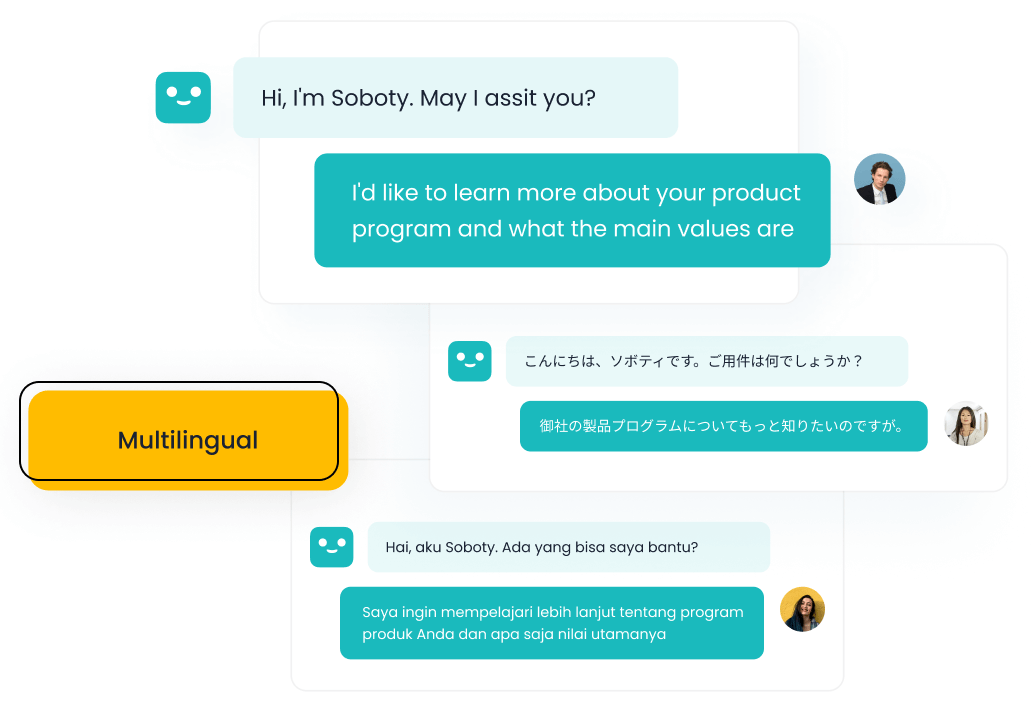
A multilingual AI chatbot is a conversational service entry point that can understand a customer’s request and respond in more than one language. It may use language-specific conversation flows, translate messages around a shared flow, or combine those methods. In customer service, the useful unit of coverage is a complete task: identify the request, retrieve the right local answer, collect necessary details, and transfer the case when a person is needed. A translated greeting alone does not establish that the task works in that language.
Separate three questions during evaluation: Can the chatbot recognize the customer’s wording? Is the source answer valid for that market? Can the next team continue in the same language, or through a clearly explained translation process? A system can perform well at one stage and fail at another.
Why Does Cross-Region Customer Service Break at the Language Boundary?
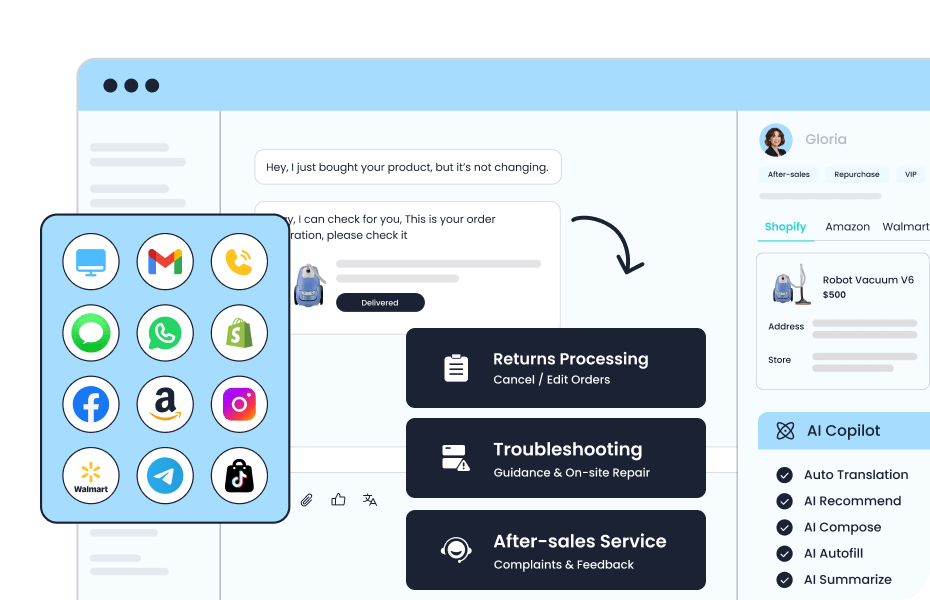
A regional support queue often receives the same request through a website, messaging app, and email, but the customer may describe it in a different language on each channel. The trouble is seldom just translating a sentence. Product names, shipping promises, return rules, local dates, and payment terms have to remain correct. If a bot answers from a global policy while a local exception applies, fluent wording can make a wrong answer sound more convincing.
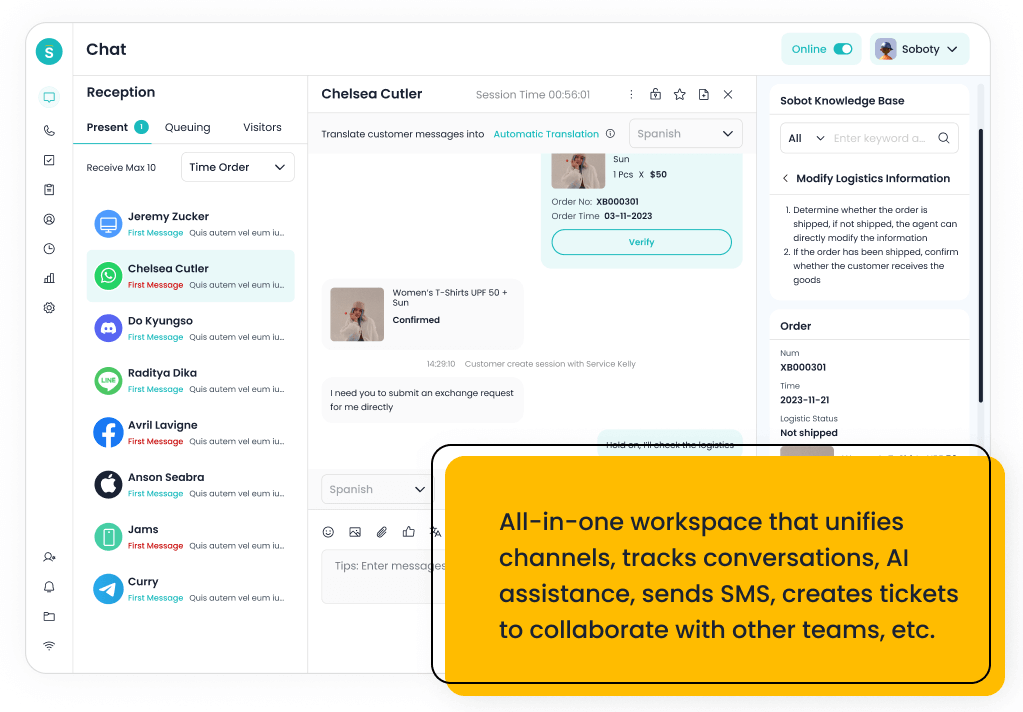
Handoff is another point of failure. A visitor might explain a delivery issue in Vietnamese, receive an automated reply in Vietnamese, then reach an agent who sees only an English summary or must ask the customer to repeat the story. Salesforce’s State of Service report notes that AI tools can maintain context when cases need human attention. In a multilingual rollout, test whether that context includes the original message, the customer’s preferred language, and the local-policy basis; the report does not measure this specific path.
Native Multilingual Flows or Real-Time Translation: Which Fits?
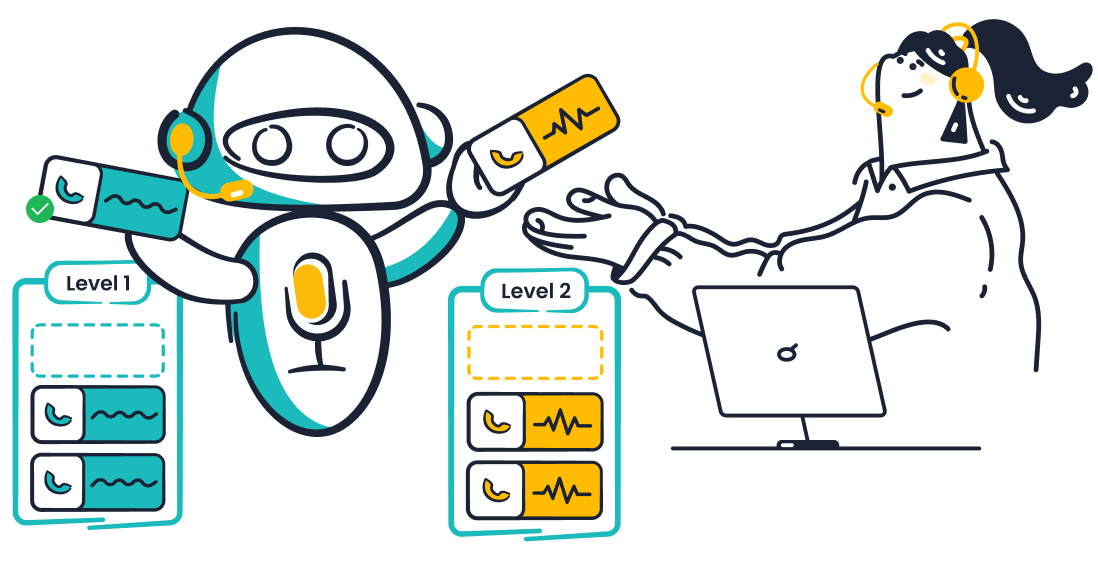
A native multilingual flow maintains language-specific prompts, examples, and sometimes intents or knowledge. A translation layer converts customer and agent messages around a common workflow. Neither approach is automatically better: the decision depends on the importance of local meaning, the volume of requests, and the capacity to maintain language-specific content.
| Approach | Where it helps | What to verify |
|---|---|---|
| Native language flow | Repeated, high-stakes tasks with local terms and policies | Localized training examples, maintained answers, and release review |
| Real-time translation | Lower-volume languages and cross-language agent support | Terminology, names, privacy, latency, and visible language switching |
| Hybrid | Core tasks in priority languages plus translated long-tail requests | When the system switches methods and who reviews exceptions |
Amazon Lex V2 documentation illustrates a language-specific design: intents, slots, prompts, and values are defined separately for each language. That can preserve local phrasing, but every added language needs maintenance and testing. It is an example of one platform architecture, not a rule that all multilingual chatbots use the same design.
Google Cloud Translation documentation describes language detection, translation, and glossaries that control domain-specific terms. Those are components a service team may evaluate for a translation route; they do not supply a chatbot’s knowledge, permissions, or human workflow by themselves. A practical hybrid can keep reviewed local answers for common policy questions and translate less frequent conversations for an agent to inspect.
How Might a Southeast Asian Rollout Work?
Consider a retailer serving customers in Singapore, Indonesia, Thailand, and Vietnam. This is a planning example, not a reported Sobot deployment. The team might begin with English, Indonesian, Thai, and Vietnamese on its two busiest service tasks: order status and return eligibility. It would map each market’s actual policy and shipping vocabulary before translating the answers. A customer switching language halfway through a chat should retain the order context and see a clear route to a person when the bot is uncertain.
W3C’s guidance on language tags and locale identifiers distinguishes content language from user locale preferences. For the pilot, record both: the language the customer wants for the conversation and the market whose policy applies. Browser language alone may be a poor proxy for either. Offer a visible way to change languages, and check dates, addresses, currencies, names, and policy links in the resulting reply.
Do not infer that one vendor’s support for a language automatically covers every voice feature, channel, region, or edition. If a country has multiple working languages, test the language combinations customers actually use. Begin with a modest set of real transcripts, including colloquial phrasing, mixed-language messages, and a request the chatbot should escalate.
How Should a Team Choose a Multilingual AI Chatbot?
Shortlist products against the first customer task, then verify the languages and channels needed to finish it. A broad language list is a starting point for questions, not a substitute for a local service test.
- Request the language, feature, and channel matrix for the current plan.
- Test local answers and a human handoff with market reviewers.
- Compare outcomes by language before adding more markets.
Check coverage by language, feature, and channel
Ask each provider for a matrix, not a headline count. For each priority language, list text understanding, answer generation, knowledge retrieval, agent translation, voice if needed, and the channels where those functions are available. Amazon Lex V2’s locale matrix shows why this matters: language availability and feature availability are separate tables, and some locales have limited support. The matrix describes Lex V2 specifically; use its structure as a question list when assessing other platforms.
Also ask how the product handles language detection, customer choice, and a language change mid-conversation. Confirm the current plan, channel, and deployment region with the vendor. A text chatbot’s language list cannot establish speech recognition or voice availability.
Test the whole task with local reviewers
Run the same service scenario in each priority language: a straightforward question, an ambiguous one, a local-policy exception, and a handoff. Have reviewers who understand the market judge whether the answer is correct and natural enough to act on. Track resolution, escalation, repeated questions, and corrections by language. Do not average a weak language into a strong global score.
For a translation route, maintain approved terms for products, fees, and policies. Google Cloud Translation’s glossary documentation explains how a translation glossary can control chosen terms in that service; the team still has to validate the final answer in context. Review any personal information passed to translation or agent tools under the company’s data rules.
Where Does Sobot Fit?
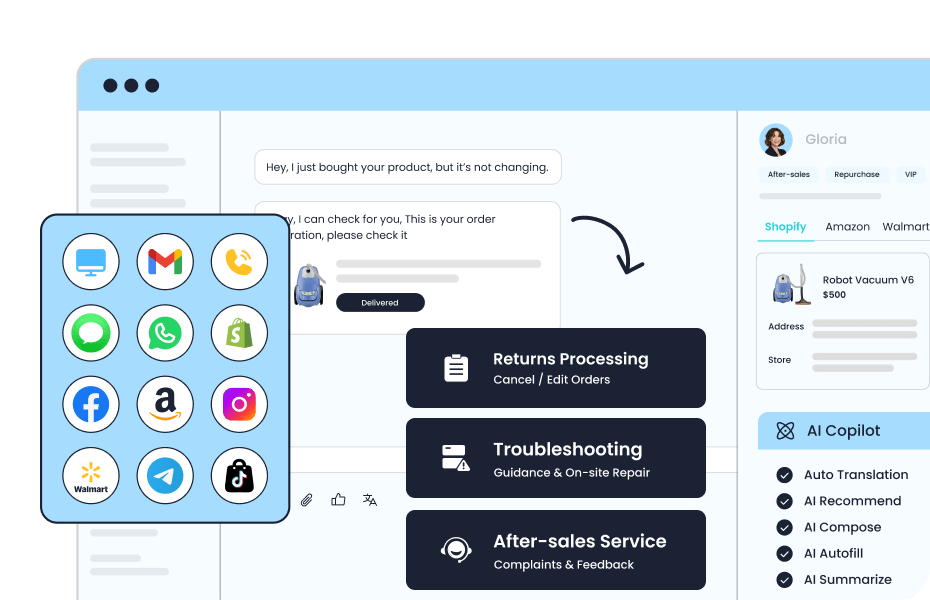
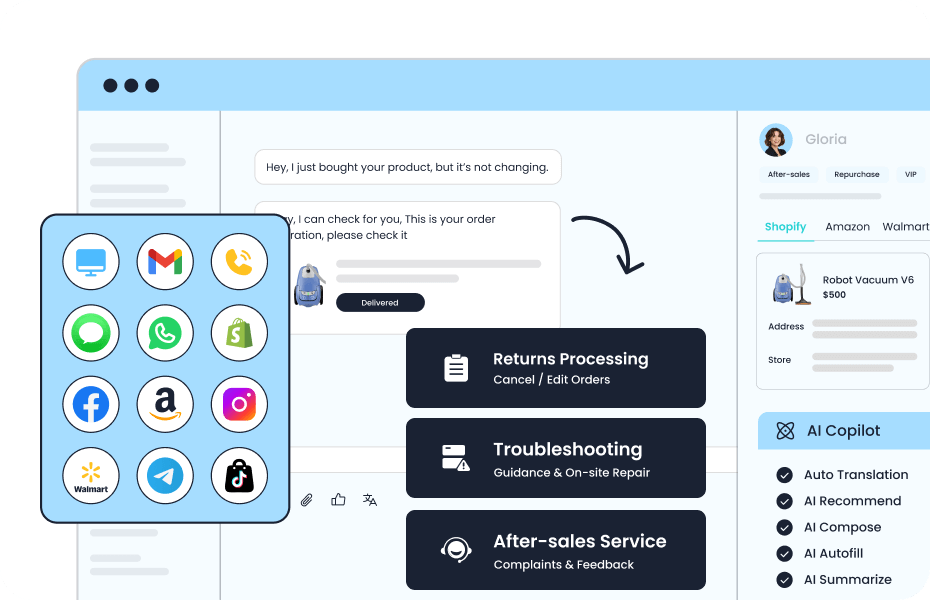
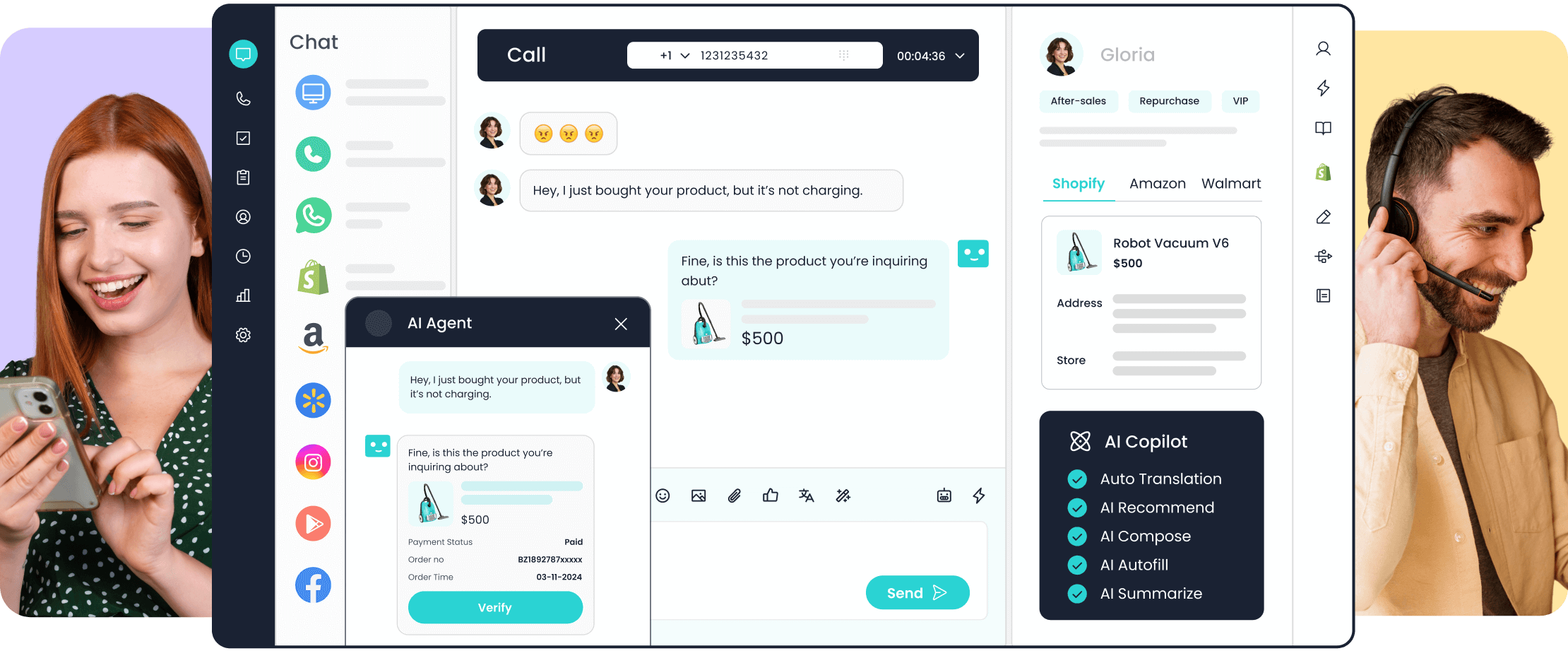
Sobot’s Agents page advertises customer interactions in 75+ languages and 75-language translation for its Copilot. These are first-party claims for those described contexts, not a language-by-language guarantee for every module, channel, dialect, or voice function. For a shortlist, ask Sobot to demonstrate the selected market languages on the actual service channel, with local knowledge, language switching, and a human handoff. Compare those results with other candidates using the same scenarios and reporting definitions.
Frequently Asked Questions
Is real-time translation the same as a multilingual chatbot?
No. Translation changes the language of messages, while a service chatbot also needs to identify the task, retrieve the right answer, and complete or route the request. Translation can be one layer in that workflow. Check whether it preserves policy meaning and customer context before treating it as full multilingual support.
Should a chatbot detect the customer’s language automatically?
Detection can reduce the first step, but the customer should be able to correct it. Google Cloud documents automatic language detection for text; a short English greeting, shared device, or mixed-language message may still fail to reveal the preferred service language. Store a confirmed preference for the conversation and keep the market-specific policy choice separate.
How do you measure multilingual chatbot quality?
Measure completed tasks, incorrect answers, handoff quality, and customer effort separately for each priority language. Review real conversations across channels with local speakers and check the source policy behind each answer. A high language count or smooth translation sample is useful for screening, but it does not prove service outcomes.