In a customer-service team, AI changes what agents need to check, when they need to intervene, and how they report problems. AI customer service training should prepare people for those decisions through realistic practice, supervised handling, and feedback that reaches the right owner.
Key Takeaways
- Teach agents to verify replies, take over with context, and report actionable corrections.
- Use approved past conversations and observable readiness checks before independent handling.
- Evaluate customer outcomes and reply quality alongside speed and course completion.
What Is AI Customer Service Training?
AI customer service training prepares human support employees to work with AI-generated suggestions and conversations handled partly by automation. It covers the assistant’s permitted tasks, the information employees should verify, the situations requiring human intervention, and the process for reporting mistakes. Training combines product knowledge, service policies, workspace practice, and coaching on actual handling decisions. Its purpose is to establish competent use of the organization’s support workflow. Training an AI model is a separate technical activity; using AI to deliver practice exercises is one possible learning method within the wider staff programme.
Quick Comparison Table
Combine learning formats according to the decisions agents need to practise. Each format answers a different preparation need.
Training formats and their practical trade-offs
| Format | Best use | Main limitation | Cost or effort |
|---|---|---|---|
| Sobot workspace practice | Rehearsing the workflow used by a Nexus team | Confirm features; a coach supplies the exercises | Custom quote; confirm service scope |
| Coach-led conversation replay | Explaining judgment and correcting mistakes | Requires approved examples and consistent scoring | Coach preparation and session time |
| Policy learning modules | Building shared product and process knowledge | Completion alone does not demonstrate handling skill | Content maintenance and learning time |
| AI role-play | Additional practice with varied customer responses | Scenario accuracy and feedback need checking | Tool fees and scenario review |
Why Human Training Still Matters After AI Goes Live
The customer-support field study Generative AI at Work found that less experienced and lower-skilled workers improved in speed and quality, while the most experienced, highest-skilled workers saw smaller speed gains and small quality declines. It studied an assistant rollout at one firm, rather than testing the training plan below.
The implication for a support leader is to assess starting skills. New agents may need more help understanding policies behind suggestions. Experienced agents still need practice spotting errors introduced by AI. Both groups should demonstrate the responsibilities attached to their role.
Three Skills Every Support Agent Needs
NIST’s voluntary AI Risk Management Framework connects training to personnel and partner duties and responsibilities. For support operations, translate those responsibilities into observable actions: checking an answer, taking over a conversation, and reporting a useful correction.
Judge the Answer Against the Source and Customer Context
Train agents to compare the suggested reply with the approved source, the customer’s situation, and the permitted next action. A fluent answer can still use an expired policy, miss an exception, or promise an action the system has not completed.
During practice, ask the agent to identify the supporting passage and explain why it applies. Then change a relevant detail, such as the purchase date or account status, and ask whether the same reply remains valid. Include correct suggestions as well as flawed ones so the exercise tests judgment rather than teaching blanket acceptance or rejection of AI.
Take Over Before the Conversation Loses Direction
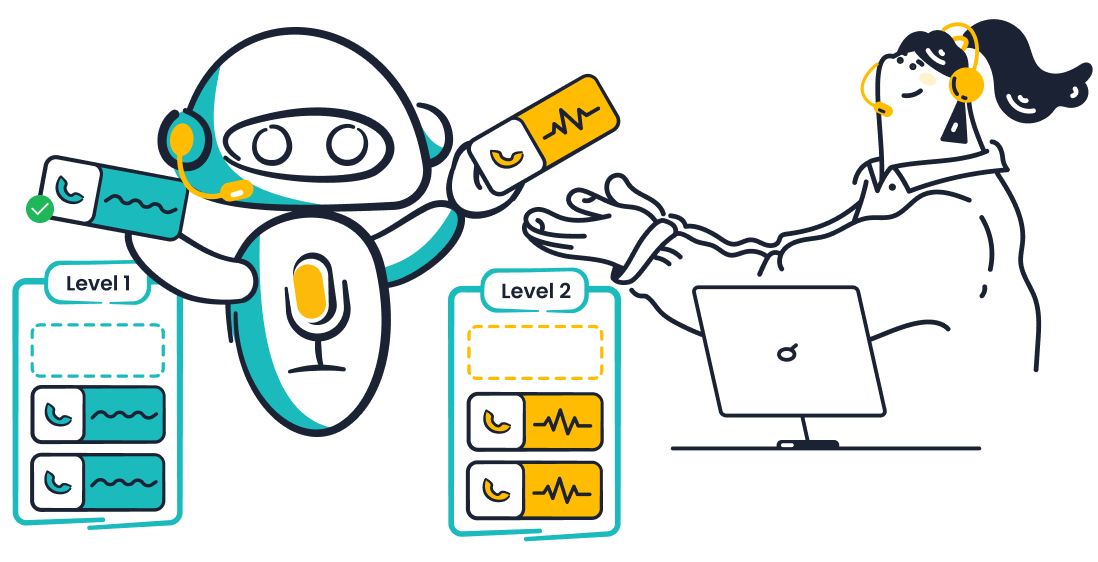
Practise taking over when a customer requests a person, repeated answers fail to move the task forward, or the assistant encounters uncertainty outside its permitted workflow. The receiving agent should identify the unresolved request, check what has already happened, and acknowledge the customer’s immediate concern.
Use incomplete summaries in some exercises. Ask the agent to inspect the underlying messages and verified records before continuing. Rehearse the fallback when the intended team is unavailable: assign an owner and communicate the approved follow-up route. A handoff is complete when someone accepts responsibility, not merely when the conversation leaves the bot queue.
Turn Corrections Into Actionable Feedback
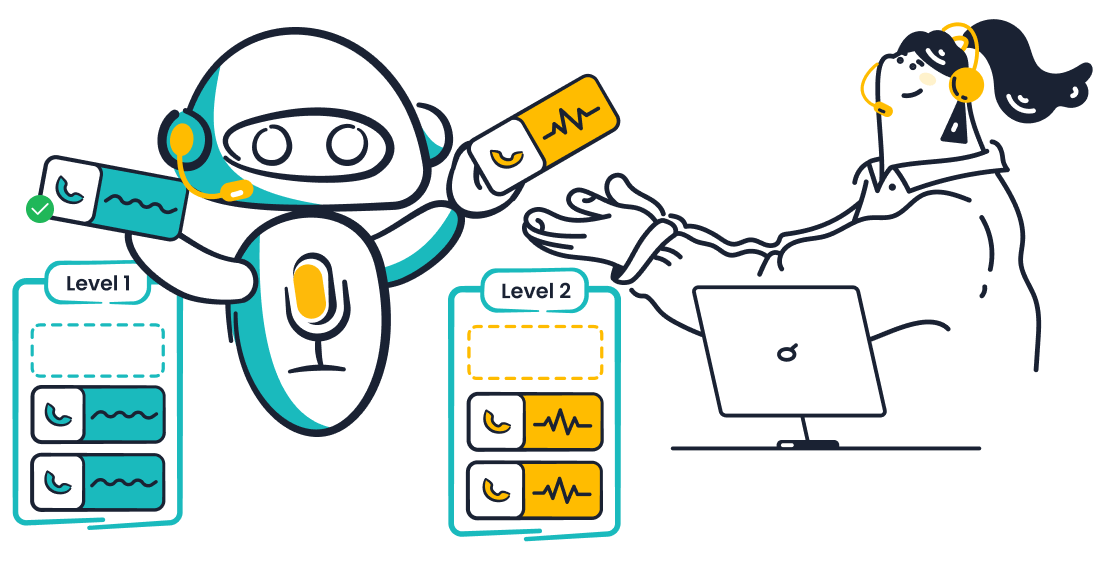
Teach agents to record the conversation reference, the incorrect suggestion, the expected answer, and its approved source. Classify the problem so it reaches an owner: outdated content goes to the knowledge team, failed actions to the workflow owner, and missed handling steps to the coach.
A thumbs-down rating alone does not explain what needs changing. Have trainees submit a short correction and check whether another person could reproduce the issue from it. After the owner fixes the problem, rerun the example and a related variation. Explain that submitting feedback does not mean the AI immediately learns or changes its behavior.
Build a Phased Training Plan With Conversation Practice
The European Commission’s AI literacy Q&A considers staff knowledge and experience alongside the system’s context and purpose. Apply that design principle to the team’s actual tasks; this proposed plan is not a statement of legal compliance.
Select past conversations with routine questions, exceptions, unsuccessful handoffs, and corrected answers. Remove personal data and obtain the appropriate internal permission before reusing them for training.
A proposed progression from orientation to independent handling
| Stage | Practice | Evidence to advance |
|---|---|---|
| Orientation | Review permitted tasks, sources, access, and escalation routes | Agent explains their responsibilities |
| Conversation replay | Pause real examples before the handling decision | Agent justifies the answer and next action |
| Supervised handling | Work on an agreed scope with a coach available | Agent meets the practice rubric without prompting |
| Ongoing review | Review failures and changed policies | Agent passes relevant new cases after changes |
In an illustrative refund exercise, AI drafts “Your refund has been issued,” but the payment record shows a pending request. The trainee should stop that promise, check the approved process, explain the recorded state, and route any unresolved payment question appropriately. After coaching, present a different case where the refund is confirmed. Passing requires recognizing that changed evidence supports a different reply.
Measure Readiness and Customer Outcomes Together
Assess practice with a shared rubric. Record the observed behavior and the next coaching action, using standards agreed by the support lead.
Observable readiness checks for a conversation exercise
| Skill | Ready behavior | Rework trigger |
|---|---|---|
| Answer review | Uses the correct source and verifies case details | Unsupported promise or missed exception |
| Takeover | Resumes the unresolved task with an accepted owner | Lost context or abandoned transfer |
| Feedback | Provides a reproducible correction to the right owner | Unexplained rating without supporting evidence |
For live service, first-contact resolution means resolving the issue in the initial contact without a same-issue repeat within your defined observation window. Compare it alongside resolution time and satisfaction, using consistent definitions and comparable request types, channels, and agent experience. Track reply quality and policy errors so a faster response does not hide an incorrect outcome.
Keep the repeat-contact window and satisfaction survey method stable. Log changes to routing, policies, and the AI system during the comparison; a before-and-after improvement alone cannot isolate the effect of training. Use missed rubric items to choose the next coaching session.
Address Resistance Through Clear Roles and Staff Input
The OECD’s manufacturing and finance survey findings report that training and worker consultation are associated with better worker outcomes. This is an association in those sectors, not proof of a particular customer-service programme.
Ask agents which tasks create concerns: loss of judgment, inaccurate suggestions, extra review work, or use of monitoring data. Explain what managers will measure, who can see it, and how employees can challenge an assessment. Allocate paid practice time and involve experienced agents in selecting examples. Show what happened to reported problems. Avoid treating high AI suggestion acceptance as a performance goal; a justified correction should count as competent work.
Use AI Role-Play as a Supplement to Coaching
AI role-play can provide additional practice with different customer responses, while automated feedback can flag moments for a coach to inspect. Check scenarios against current policies and have coaches validate important scoring decisions. Use approved, de-identified material rather than uploading raw customer histories to an unapproved tool. Simulated fluency does not replace observing whether an employee can complete the real service workflow.
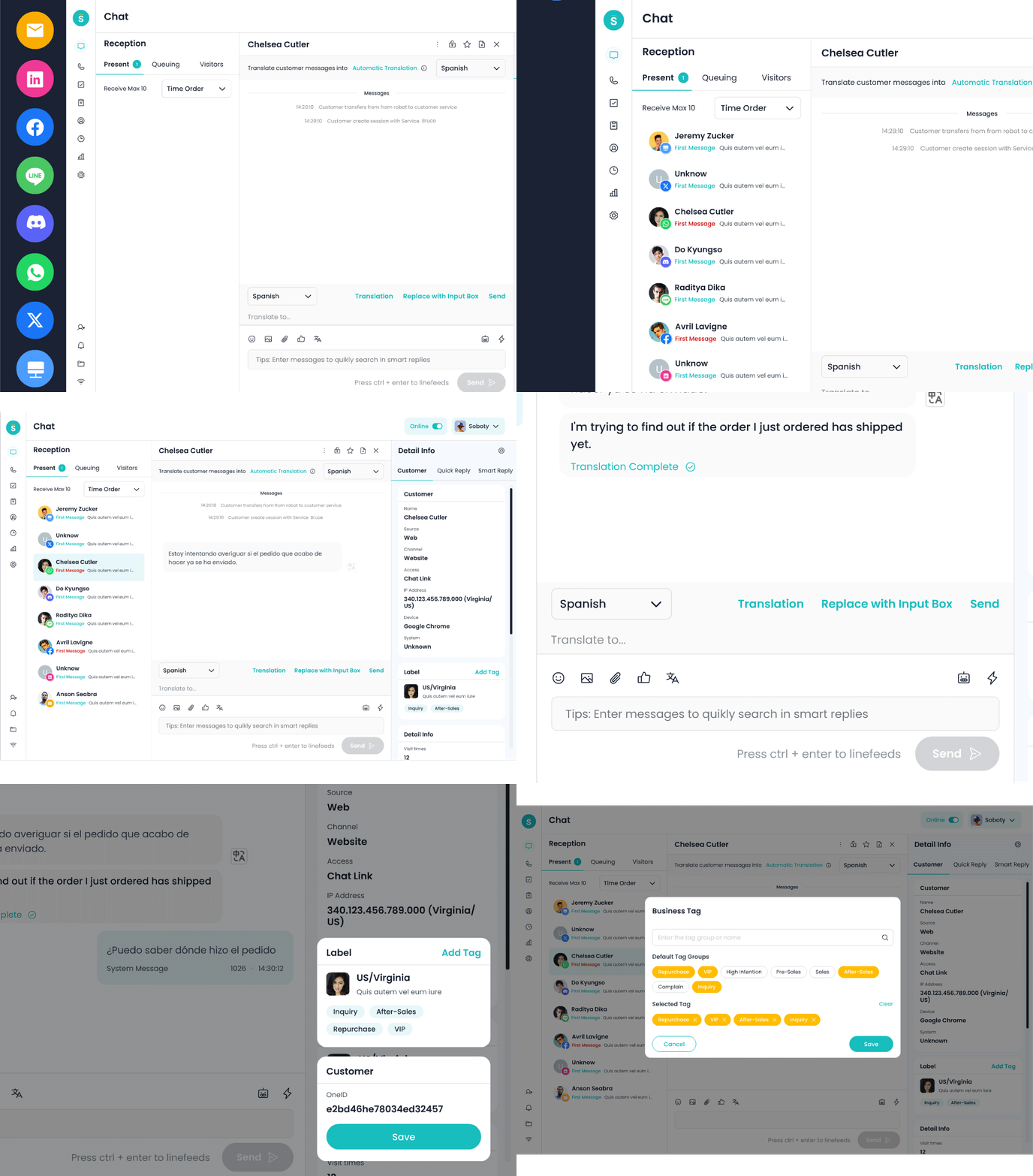
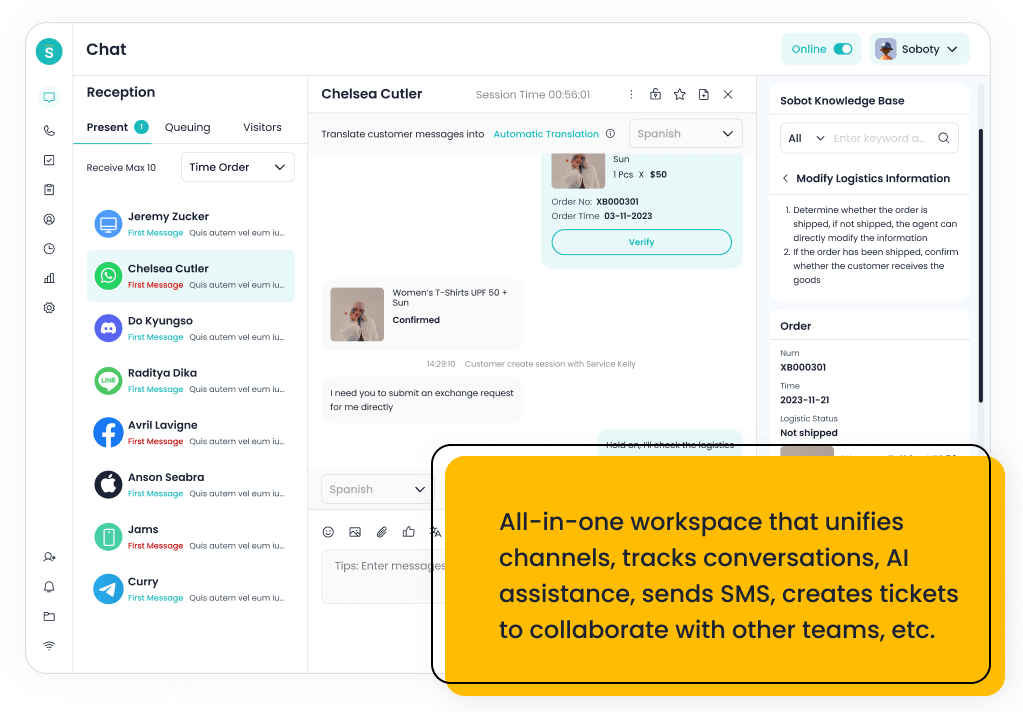
Practice in the Workspace Your Team Will Actually Use
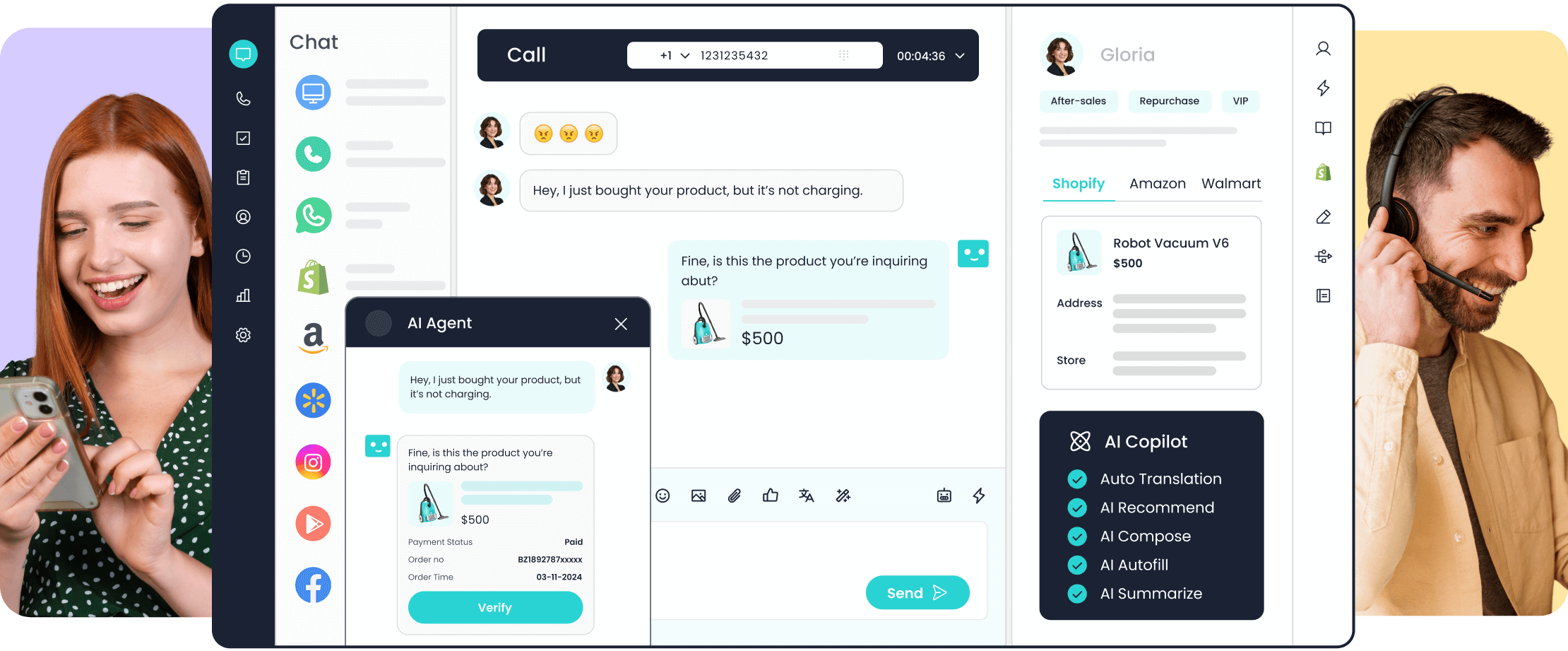
Sobot Nexus publicly describes AI-drafted replies, knowledge lookup, and conversation summaries for human teams. Those are relevant to practising suggestion review and resuming a conversation with context.
Sobot professional services describes product training and configuration guidance. Availability and implementation depend on the selected product, configuration, and agreed scope; confirm the training format and service entitlement.
To assess the intended workflow, book a Sobot demo. Use the answer-review and takeover exercises as your evaluation agenda, and confirm which features and permissions the team would use in practice.
FAQ
Do support agents need technical AI skills?
Most support agents need practical instruction in their approved service workflow, with technical depth matched to what they actually maintain. Teach them to provide relevant context, protect customer information, and verify the output. Staff who configure assistants need additional practice in workflow configuration and testing, matched to their responsibilities and permissions.
How should outsourced support agents join the programme?
Include outsourced agents in the same role-based readiness checks, with access and responsibilities matched to their contracted work. Assign owners on both sides for policy updates, coaching, and unresolved feedback. Ensure they practise the transfer route to the internal team and receive relevant change notices before the updated workflow reaches customers.
How long should AI customer service training take?
Set the duration from the team’s starting skills, workflow complexity, and access to coached practice rather than a universal timetable. Budget time for preparation, rehearsal, supervised handling, and refreshers. Track readiness by role and request type, allowing additional practice where needed instead of treating an attendance date as permission for every task.