For an insurance customer-service team, a policy question and a disputed claim need different routes. AI for insurance customer service works best when it explains approved information or completes a permitted step from a verified record, with staff available for uncertainty and disputes.
Key Takeaways
- Begin with policy inquiries, recorded claims progress, renewal reminders, and complaint intake.
- Match the policy version, verify account access, and preserve context when transferring.
- Measure correct answers and completed service alongside response speed.
What Is AI Customer Service for Insurance?
AI customer service for insurance uses conversational software to explain approved information, retrieve authorized records, and route policyholder requests. It connects questions about a policy or claim with the relevant knowledge, account information, or service team. General answers can come from an approved knowledge base; account-specific answers require identity checks and access to the correct record. Modern implementations may also perform permitted actions, such as creating a service request or directing a customer to a secure document-upload process. Underwriting and claims adjudication are separate backoffice functions with their own authority and controls.
Quick Comparison Table
Choose the service approach according to the information customers need and the staff capacity available to support it. These are implementation choices, not a software ranking.
Insurance service approaches: fit, prerequisites, and cost considerations
| Approach | Best fit | Main prerequisite | Cost signal |
|---|---|---|---|
| Sobot Agents + Nexus | Evaluating AI service with human follow-through | Confirm insurer system access, permissions, and routing | Custom quote; confirm implementation scope |
| FAQ-only assistant | General policy and process information | Approved, maintained content; no account lookup | Content upkeep and software fees |
| Staff knowledge assistant | Helping agents find approved answers | Searchable documents and staff review | Software plus staff handling time |
| Human-led service | Disputes and complex interpretation | Skilled staff and accessible queues | Staffing, training, and queue coverage |
Four Insurance Service Workflows to Prioritize
Prioritize repeatable requests with a clear information source, a permitted action, and an accountable service owner. Each workflow below needs a different completion test.
Policy Inquiries: Match the Exact Policy Wording
Policy inquiries need the correct product, market, and policy version before AI explains the wording. A current brochure may describe different terms from an older policy still in force. Keep approved answers linked to their source sections, including relevant exclusions and endorsements that change the base wording.
For general questions, the assistant can explain where to find a term or document. For a customer asking whether a particular loss is covered, it should gather the question and route uncertain interpretation to authorized staff. If documents conflict, show the agent the conflicting passages instead of selecting whichever answer sounds more reassuring.
Claims Progress: Report the Recorded Status
Claim status is the recorded stage of a claim’s processing. Retrieve it from the authorized claims system after verification, and display when the record was updated.
An illustrative claim update might say: “Your claim is awaiting the repair estimate. The latest record update is shown below; use the secure upload link to provide the requested document.” Pair that answer with the actual source timestamp. The progress update does not establish a payment decision. If the record is stale, unavailable, or inconsistent with the customer’s submitted documents, create a staff follow-up with those details rather than inventing a completion date.
Renewal Reminders: Confirm the Next Action
A renewal reminder should distinguish an invitation to act from confirmation that the policy has renewed. Use an approved notice tied to the correct policy, date, contact preference, and permitted communication channel. State whether the customer needs to review terms, update information, make a payment, or speak with an adviser.
Before sending, check for a recent renewal or cancellation so an outdated reminder does not create confusion. Send changed-price or coverage questions to the appropriate team. Record message delivery separately from renewal completion: a delivered notification does not prove the customer accepted terms or completed the required action.
Complaints: Capture the Issue and Give It an Owner
Complaint intake should preserve the customer’s description, the disputed answer, relevant conversation history, and requested resolution. Route the complaint to an accountable owner and provide a reference and next-step information from the insurer’s approved process. Avoid forcing a dissatisfied policyholder through the same FAQ loop.
Let staff review disputed facts and any proposed substantive response. Keep escalation accessible when the customer asks for a person or cannot complete the digital journey.
For U.S. policyholders, the NAIC directory provides state insurance department contacts and complaint routes. Preserve the appropriate external route in approved complaint guidance for the customer’s jurisdiction.
An Insurance Example: Allianz’s Knowledge Assistant
Allianz describes its Enterprise Knowledge Assistant as supporting call-center agents and operational experts. Its account of the German implementation explains how staff ask questions through a chatbot interface, retrieve relevant documents, and receive summaries with links to the full content.
The practical lesson is that staff knowledge retrieval offers a focused starting point when direct customer automation is premature. Agents can inspect the underlying wording while answering. This insurer-reported example demonstrates knowledge assistance; it does not establish autonomous claim approval, a transferable accuracy rate, or results from a Sobot insurance deployment.
Compliance and Data Security Before Launch
In the U.S. insurance context, the NAIC notes that insurers remain responsible for applicable insurance and consumer protection rules when using AI. Determine which obligations apply to the product and jurisdiction with the insurer’s compliance team; a platform feature does not settle that assessment.
Before account-specific service, verify identity and restrict access to the records needed for that request. Direct sensitive documents to approved secure collection channels instead of asking customers to paste medical records or identification into an open chat. Review encryption, transcript access, retention, deletion, hosting location, and vendor terms for data reuse or model training.
Give knowledge updates an owner, an effective date, and a withdrawal process for obsolete wording. Keep enough approved audit information to reconstruct the answer, source version, record lookup, and handoff without retaining unnecessary sensitive data. Test access failures and cross-account requests. Make the assistant identify its role and explain how a customer can reach staff.
Where Sobot Fits in an Insurance Service Workflow
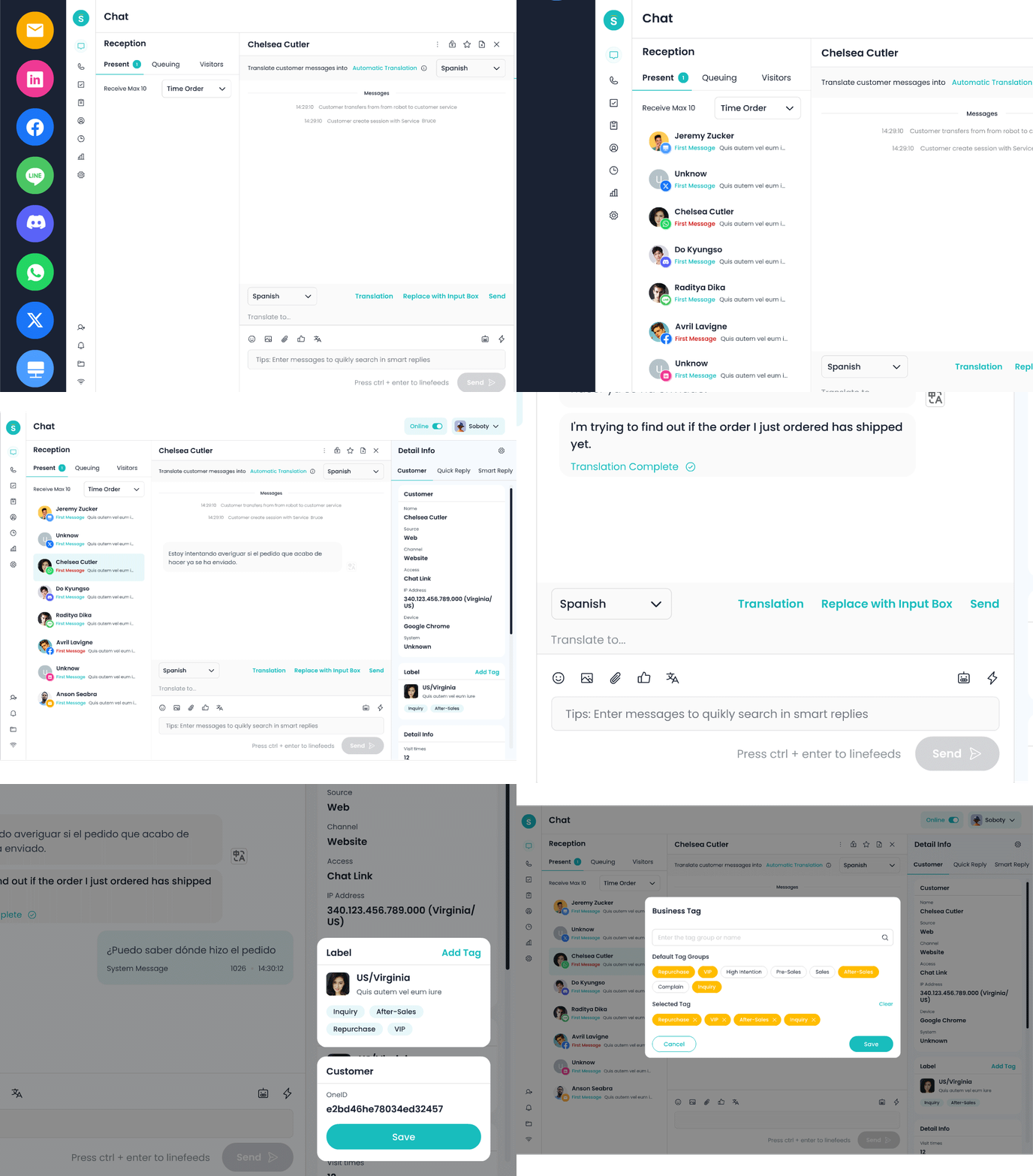
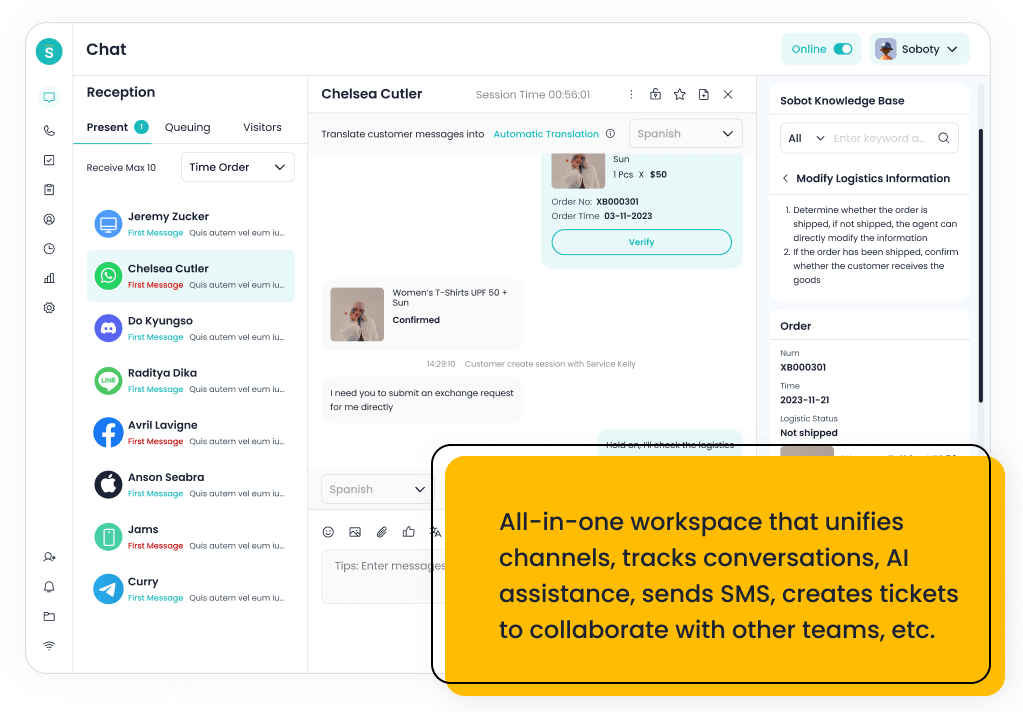
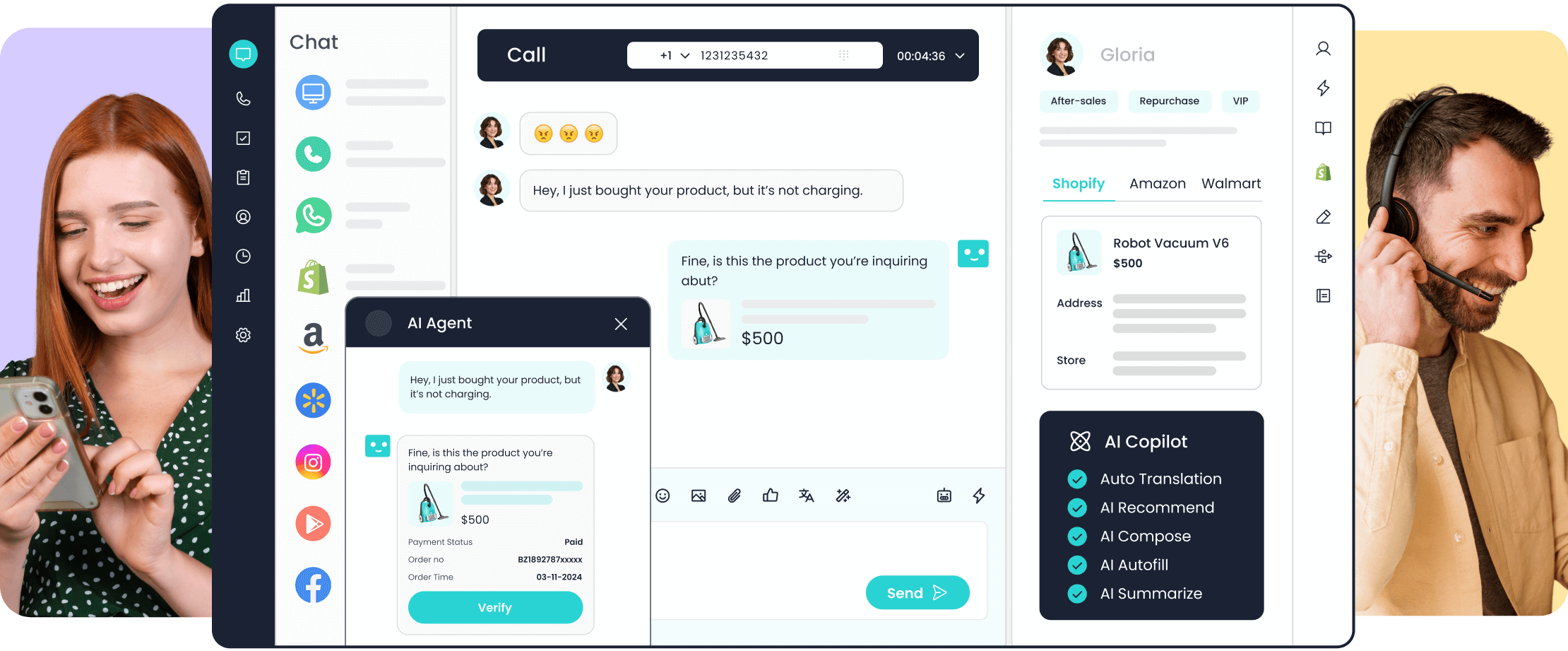
On its product page, Sobot Agents describes knowledge resources, reusable business rules, tools, and variables. Sobot Nexus describes a workspace that centralizes conversations and customer context for human teams. These capabilities connect the information stage with staff follow-through.
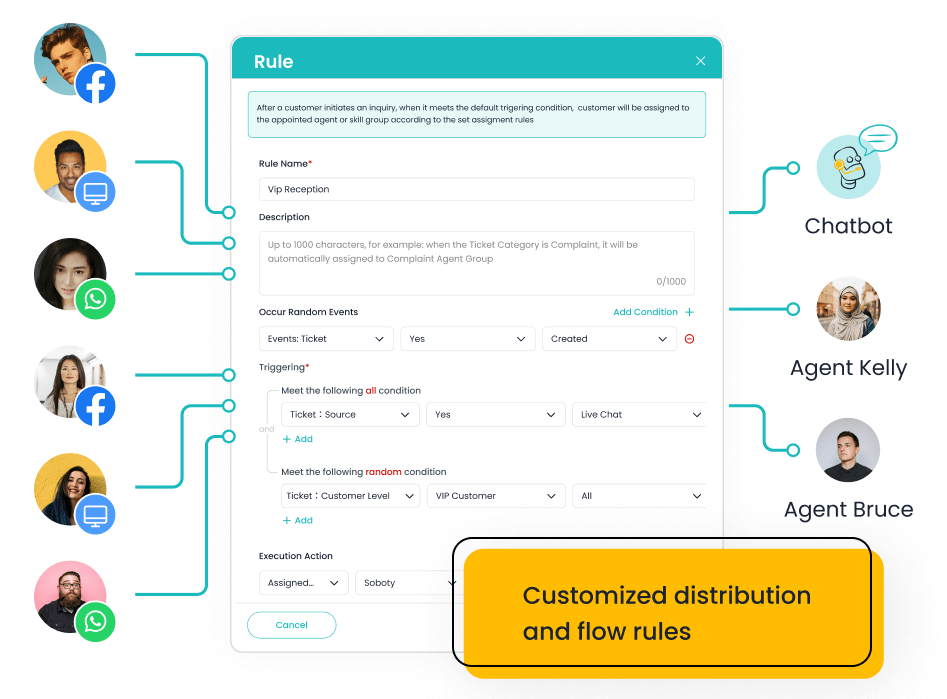
Availability and implementation depend on the selected product, configuration, and agreed scope. For insurance, validate policy and claims system connections, access controls, queue ownership, and conversation transfer in the intended environment. Request a quote covering the required channels, usage, and implementation work; generic platform descriptions do not establish a ready-made insurer integration or regulatory approval.
Roll Out by Intent and Measure Completed Service
Start with a defined product, channel, and request type. Prepare approved test answers, include missing and conflicting records, and rehearse the staff handoff before exposing the workflow to customers.
The UK FCA’s illustrative good-practice examples include testing outcomes across different consumer characteristics and scenarios. These examples do not create new requirements. For an insurance pilot, include customers with different accessibility needs and levels of digital confidence.
Use this acceptance table for each intent. Record the result and owner; agree risk-based tolerances before launch rather than adopting an unsupported industry benchmark.
Pilot checks to complete before expanding an insurance service workflow
| Check | Inspect | Hold expansion when |
|---|---|---|
| Answer correctness | Answers against approved policy versions | Wording changes the customer’s meaning or entitlement |
| Record freshness | Status accuracy and source timestamp | Stale or missing data produces confident answers |
| Completed service | Task completion and repeat contacts | Customers return because the next step failed |
| Escalation and complaints | Correct queue, retained context, accepted ownership | Transfers disappear or complaints remain unassigned |
| Privacy and access | Unauthorized requests and sensitive-data handling | The wrong person can retrieve protected information |
Track response time, satisfaction, and staff workload alongside these checks. A conversation ending without staff contact counts as successful containment only when the intended service was completed. Expand passing intents individually and pause affected flows when policy or system changes invalidate their answers.
To evaluate the platform behind these workflows, book a Sobot demo and use the chosen intent as your evaluation agenda.
FAQ
What is the best AI customer service for insurance?
The best fit depends on the insurer’s service tasks, data access, and escalation requirements. Use the same test cases with each shortlisted platform. A vendor that answers general questions well may still need substantial integration for claim updates. Compare implementation effort, human handoff, operational controls, and total cost for the intended scope.
How should AI respond during a claims surge?
During a claims surge, use AI for verified process and status information while providing accessible routes to additional staff support. Review queue messages frequently so the assistant does not repeat outdated waiting-time estimates. If system capacity or record freshness deteriorates, pause affected account actions and explain the available contact options. Increased volume should not silently expand the assistant’s decision authority.
How should AI handle someone acting for a policyholder?
Check the representative’s identity and permitted scope before exposing policyholder information. Use the insurer’s approved authorization process rather than treating possession of a policy number as permission. If authority is unclear, route the request to staff who can verify it and explain the secure next step without exposing account details.