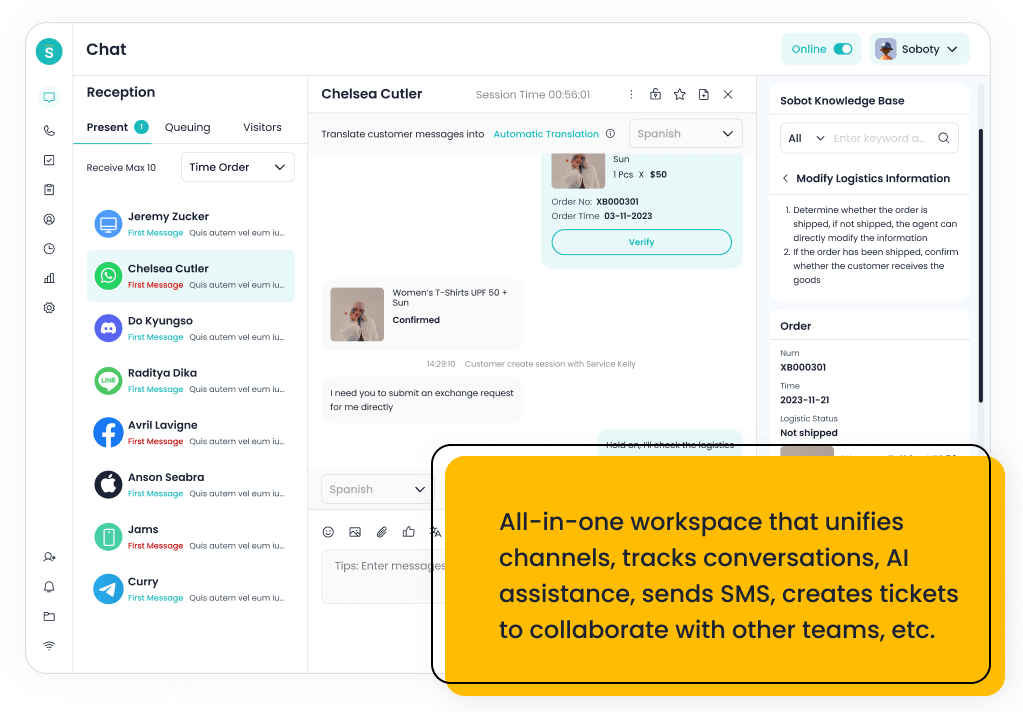
Enterprise customer service AI has to coordinate billing, logistics, product specialists and regional support across the systems they already use. The buying decision is whether it can complete the right work with the right authority, while preserving customer context and local operating rules.
Prioritize completed service tasks, scoped permissions and regional operating rules before increasing automated volume.
What to prove before scaling enterprise support AI
- Verify each system operation, its approval boundary and its failure response.
- Check storage, AI processing, staff access and recovery locations separately.
- Expand only after measuring completed work, repeat contacts and the full operating cost.
What makes customer service AI enterprise-ready?
Enterprise readiness means coordinating shared service capabilities with explicit team, system and regional boundaries. The platform connects customer context and approved knowledge to permitted business actions, while keeping responsibility clear across departments. Enterprise AI for customer service therefore needs more than a larger conversation allowance: it needs governed access, reliable integrations, controlled changes, operational visibility and a human continuation path. A shared platform may serve several brands or markets, but their policies, customer records and escalation routes can remain separate. The practical test is whether the same service workflow still behaves correctly when it crosses a team, system or regional boundary.
Quick Comparison Table
| Approach | Potential fit | Cost and operating consideration |
|---|---|---|
| Sobot | Configured AI tasks with shared human support context; verify enterprise and regional requirements | Custom quote plus agreed implementation and operating scope |
| Extend the existing service stack | Keep established records and routing where the required actions are supported | Existing licenses, AI usage, connectors and administration |
| Build an internal orchestration layer | Specialized workflows backed by sufficient engineering and operations capacity | Development, infrastructure, evaluation and ongoing maintenance |
Require capabilities that survive real service exceptions
Evaluate integrations, authority and capacity together rather than accepting a feature checklist. A polished answer is only one part of completing a customer request.
System integration: verify each action and its owner
A connected system must expose the operation needed for the task, with a known system of record and failure state. Order lookup, refund eligibility, request creation and payment execution are different operations. Ask the vendor to demonstrate the exact sequence your team needs, including an unavailable system and a customer who contacts support again.
Record which application owns the final status. If an action times out, the assistant should check whether it succeeded before trying again; otherwise, a retry could create duplicate work. A receiving team also needs the action attempted and the remaining issue.
In its published Samsung customer story, Sobot describes bringing historical chats and calls together with ERP, ticketing and order systems. The example illustrates joined service context; it does not establish connector coverage for every enterprise.
Permissions and governance: separate use from authority
NIST zero trust guidance does not grant implicit trust based only on network location or ownership. Apply that principle to the service workflow: being connected to a company system should not confer unrestricted authority over it.
Separate permission to answer from permission to view records, change account details, approve exceptions or publish new policies. Support staff, administrators and the AI’s system identity need different access. Test a user from one brand requesting another brand’s customer record, and an administrator trying to publish an unapproved policy change.
Security review should cover sign-in, access removal, encryption, retention, incident handling and audit evidence. Ask for the controls and contractual commitments that apply to the proposed configuration; a general certificate list leaves those implementation questions unanswered.
Scalability: test the entire service path
Capacity testing should include downstream limits, waiting states, human queues and recovery behavior. A conversation platform may accept a burst of messages while the order system slows down or specialist queues fill. Measure the time to a usable answer or completed action across that whole path.
Use the contact mix expected during an actual peak: short status checks, longer troubleshooting, authentication failures and handoffs. Observe what happens when a dependency reaches its limit. Customers should receive an accurate pending status or an appropriate continuation option. Obtain service commitments for the selected components, and identify exclusions involving external systems rather than assuming one headline availability figure covers everything.
Plan global and multi-region deployments explicitly
Distinguish where data is stored, processed, accessed and replicated before selecting a regional pattern. These decisions shape both normal service and recovery.
Map storage, AI processing and international transfers
Data residency describes where data is stored under the selected hosting arrangement. It does not, by itself, identify where every AI request is processed or where support personnel can access the information.
Microsoft documents that prompts and results can move outside an environment’s region when cross-region data movement is allowed. This is a source-specific example of why the processing path deserves its own review; other platforms require their own deployment evidence.
The European Commission describes safeguards and mechanisms for personal data transfers outside the European Economic Area. Have the privacy team assess the actual transfers and applicable mechanism; choosing a local storage region alone does not settle that assessment.
When evaluating AI customer service solutions for global multi-region deployments, map the conversation store, model processing, search services, logs, backups and administrative access. Confirm normal and fallback destinations in the service terms.
Validate language, channel and local policy together
Translation alone does not establish that a workflow, policy or staffed handoff works in the target market. Test each language with the actual local service task: a repair policy may differ by market even when the underlying product is identical.
Review names, addresses, dates, currencies and the way customers describe the problem. For voice, add accents, background noise, spoken-number confirmation and transfer behavior. Check whether the receiving team works the required hours and can continue in the same language. A successful English text pilot should not automatically authorize a new language or voice channel; each introduces a different set of failure cases.
Choose what happens during a regional failure
A regional outage plan needs explicit permitted destinations, dependencies and recovery checks. Decide whether the service can switch to another approved region, continue with limited functions, or pause affected actions and direct customers to staff.
Test the whole fallback, including identity services, knowledge versions, business-system access and human routing. A second application instance is insufficient if it depends on the same unavailable order service. Also decide how queued requests and partially completed actions will be reconciled when normal service returns. Review the permitted data flow before enabling automatic failover, so the recovery path does not introduce a destination the normal workflow was designed to avoid.
Expand by proven workflow, then by team and region
A pilot should pass task, authority, handoff and regional acceptance tests before expanding its exposure. Start with one supported workflow, a named operational owner and a baseline from comparable contacts.
Use this acceptance table to document the test result, unresolved issue and owner before approving the next team or market.
| Expansion check | Evidence to review |
|---|---|
| Task completion | System status confirms the action; repeated requests do not create duplicates |
| Authority boundary | Cross-brand access and approval exceptions follow the intended restrictions |
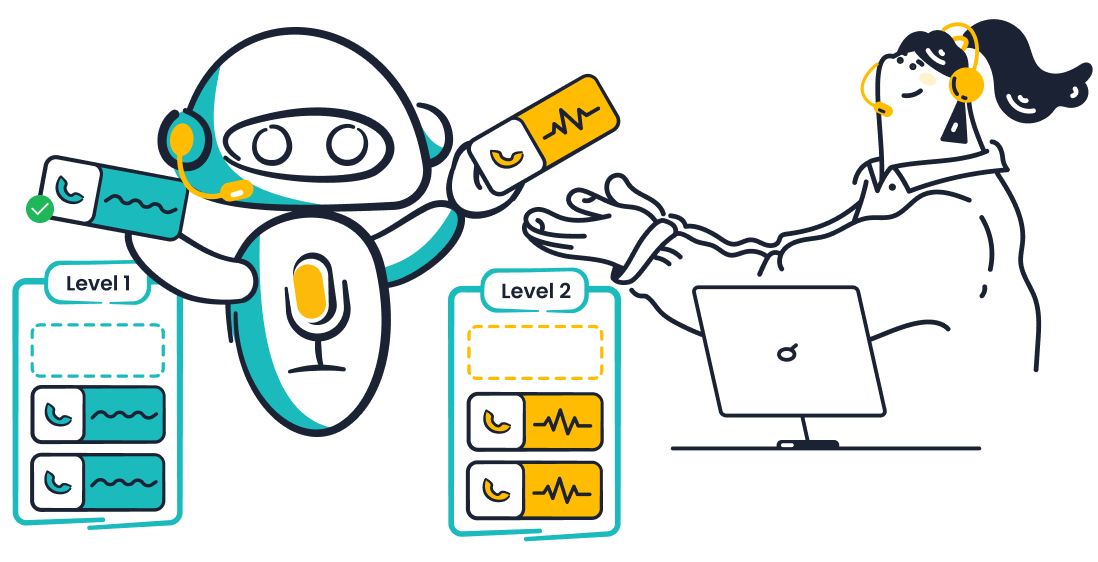
| Human continuation | The correct team receives the request, context and unfinished work |
| New region or language | Local policy, data flow, service hours and language cases pass review |
| Peak and outage behavior | Capacity limits, fallback destinations and recovery are demonstrated |
Set acceptance thresholds before launch with the teams responsible for service quality and risk. Expand one variable at a time where practical. That makes a regression easier to connect to its cause, whether it came from a policy change, a new system action or a different market.
Measure ROI using completed customer work
Evaluate financial return using verified service outcomes and total incremental cost; distinguish capacity value from cash savings. A conversation that ends without a staff transfer is not necessarily resolved. Check completion in the business system and look for repeat contacts or later rework.
ROI = (attributable benefit − incremental cost) ÷ incremental cost. Keep the time period consistent. Include usage charges, implementation, integration maintenance, ongoing evaluation, knowledge ownership and human escalation costs. Count a saved minute once, even if several tools contributed.
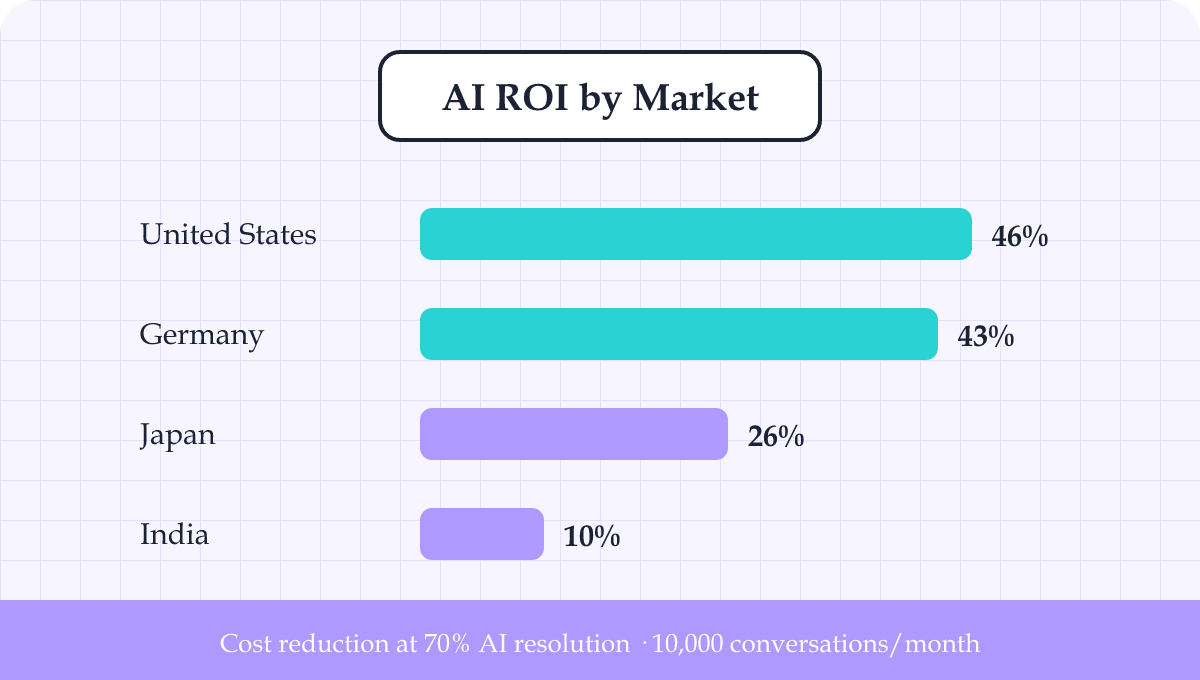
Illustrative monthly example: 10,000 eligible contacts × 30% verified automation × 6 minutes saved = 300 staff hours. At a loaded $30 per hour, that represents $9,000 of capacity value. With $4,000 of incremental recurring cost, capacity-based ROI is ($9,000 − $4,000) ÷ $4,000 = 125%.
These are planning assumptions, not observed Sobot customer results or realized payroll savings. Add implementation costs for a full investment view. Time released becomes a cash benefit only when it changes an actual expense; otherwise, assess the additional work the team can deliver. Compare like-for-like contact types and track quality, repeat contacts and complaints alongside cost per completed request.
Evaluate Sobot against the enterprise operating model
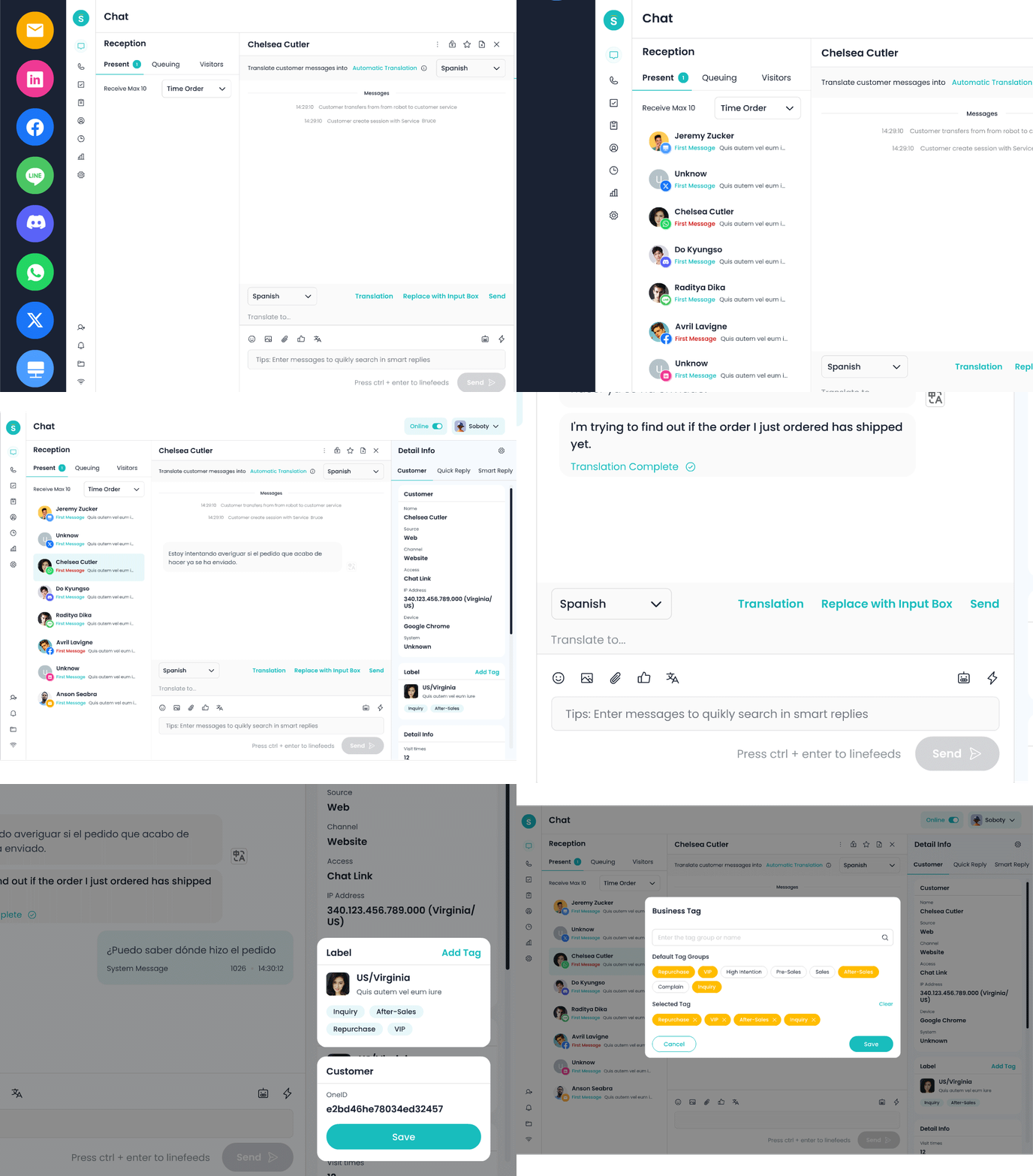
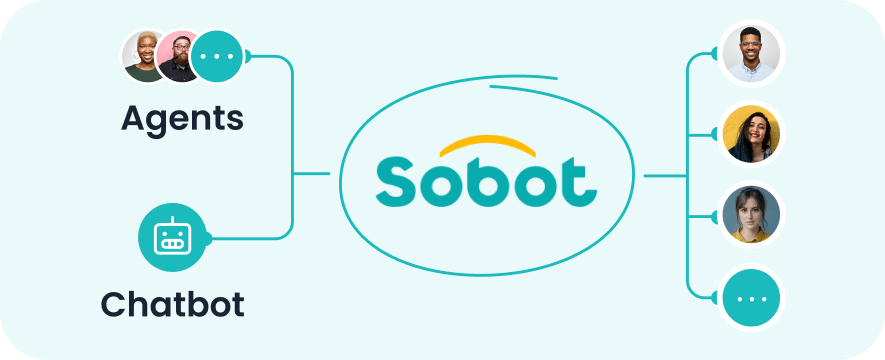
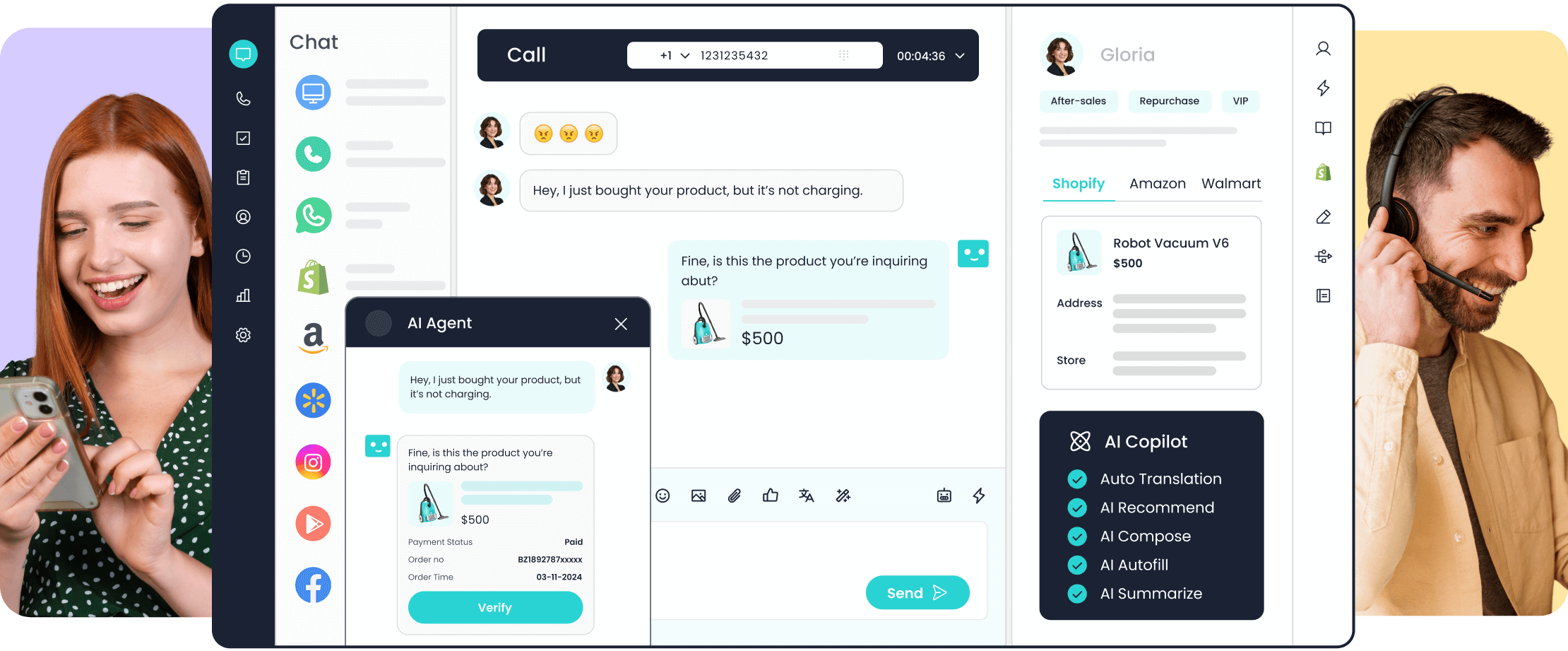
Sobot Agents provides configured knowledge and tools while Sobot Nexus centralizes conversations and customer context for human teams. Evaluate those capabilities against the named customer task, connected systems and receiving teams.
Ask for a demonstration covering an authorized action, a failed dependency and a context-preserving handoff. Confirm which operations the integration supports, which roles may use them, where the selected services process data, and what happens during an outage. Availability, implementation and support depend on the selected products, configuration and agreed scope.
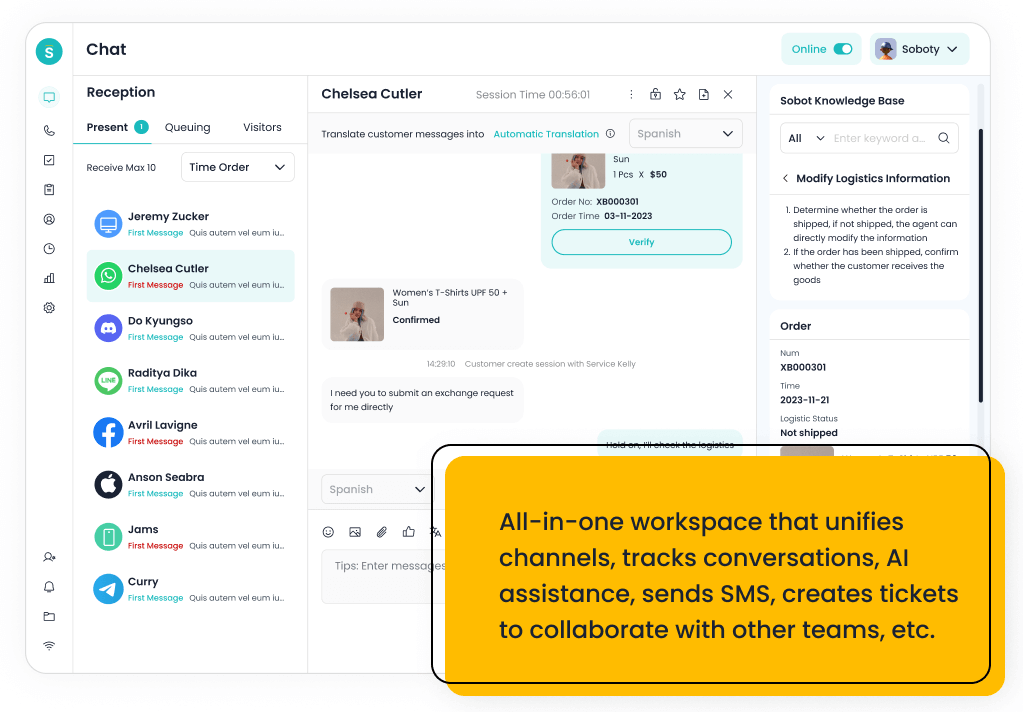
Book a Sobot demo to discuss your enterprise workflow and a quote for the proposed scope. Bring synthetic service examples and integration requirements so the discussion can address the acceptance checks above.
FAQ
Should an enterprise replace its existing CRM and help desk?
Replacement depends on whether the current systems can support the required workflow, permissions and reporting. An enterprise can evaluate AI alongside established records and routing before committing to migration. Test customer identity matching, duplicated records, ownership of case status and reporting continuity. If the required action cannot be supported reliably, include that limitation in the replacement business case.
Can every regional team share one knowledge base?
Teams can share approved common content while keeping market-specific policies separately governed. Use clear ownership for global product information and regional exceptions, with versioning and publishing permissions. Test which answer appears when policies conflict. The assistant should select the policy for the customer’s market and situation, and route ambiguity to the responsible team rather than blend incompatible instructions.
How should an enterprise prepare to roll back an AI release?
Keep an approved earlier configuration and define the rollback decision before expanding the workflow. Identify who can stop new actions, restore the configuration and notify the receiving service team. Reconcile requests already submitted or awaiting confirmation; rolling back a conversational release does not reverse a completed business transaction. Test recovery with the relevant system owners before relying on it.