For a business support team, AI agents connect a customer’s request with the work needed to resolve it. They can retrieve information, choose a permitted next step, and act through connected systems. Their value depends on whether the task reaches a verified outcome.
Key Takeaways
- An agent combines conversation, approved knowledge, and permitted business actions.
- The operating loop is understand, retrieve, choose, act, and check the result.
- A submitted request and a completed transaction are different outcomes.
- Start with a bounded task whose success and escalation conditions are clear.
What Are AI Agents for Customer Service?
An AI customer service agent is software that interprets a customer request, uses approved information, and selects permitted actions to progress a service task. It combines a language model with access to knowledge, business rules, and connected systems, allowing it to gather missing details and respond to the result of an action. In a configured deployment, this can extend service from explaining a policy to checking eligibility, submitting an authorized change, and confirming what the receiving system recorded. Its authority remains bounded: when the request exceeds its permissions, the available information conflicts, or a decision needs human judgment, the agent should stop or transfer the work.
Quick Comparison Table
Choose the approach around the task’s variability and the authority needed to complete it.
| Approach | How work progresses | Good fit | Cost consideration |
|---|---|---|---|
| Sobot AI Agents | Configured resources, tools, and handoff conditions | Eligible tasks connected to business systems; confirm deployment scope | Custom quote; confirm implementation and usage scope |
| Scripted workflow bot | Predetermined branches and actions | Stable paths with limited variation | Platform fees and flow maintenance |
| Knowledge assistant | Retrieves information and suggests answers | Questions or staff assistance without independent record changes | Licensing, usage, and knowledge upkeep |
| Human-led service | A person investigates and decides within their authority | Disputes, exceptions, and sensitive judgment | Staffing, training, and supporting systems |
The chatbot–agent distinction is a spectrum: a chatbot can also execute actions through fixed workflows. Anthropic distinguishes workflows with predefined paths from agents that dynamically direct their processes and tool use. The useful question is how the system chooses its next step, rather than whether its interface looks like a chat window.
How AI Customer Service Agents Work
AI customer service agents turn an intent into a sequence of information requests and permitted actions, checking each result before continuing. A language model helps interpret the request and select a next step; business rules and connected systems constrain what can happen.
The ReAct research paper studies interleaving reasoning with actions that access external information and environments. For customer service, the practical lesson is that new observations can change the next action. The following appointment example illustrates that loop; it is not a reported customer deployment.
Understand the Request and Retrieve the Right Context
In this illustrative example, a customer asks to move an appointment to Friday afternoon. The agent first identifies the intent—rescheduling—then checks the customer’s identity and finds the relevant booking. It retrieves the applicable change rules and available times, asking for any missing preference rather than guessing.
Different information serves different purposes. A policy document explains whether changes are allowed; the live booking record shows what the customer currently holds; the availability system shows possible replacements. A conversation history may explain a preference, but it does not establish that a slot is still open. If the customer has several bookings, the agent needs to establish which appointment they mean before proceeding.
Choose and Execute an Authorized Action
A tool is a permitted connection to a business system, such as looking up availability or submitting a booking change. Selecting that tool does not itself authorize the change: the receiving system should enforce the customer’s access and the operation’s business rules.
With the booking identified, the agent offers an eligible Friday slot and obtains the customer’s confirmation. It can then request the approved rescheduling operation. Access to read a calendar does not imply access to cancel appointments, waive charges, or change another customer’s booking. The configured process should handle the existing reservation safely, rather than cancel it before a replacement is secured. The transaction sequence depends on the booking system and the business’s rules.
Check the Result and Decide What Happens Next
If the appointment update times out, the agent should check the booking state before attempting another write. A delayed response might mean the change succeeded but its confirmation was lost. Repeating the operation blindly could create a second booking or another unintended change.
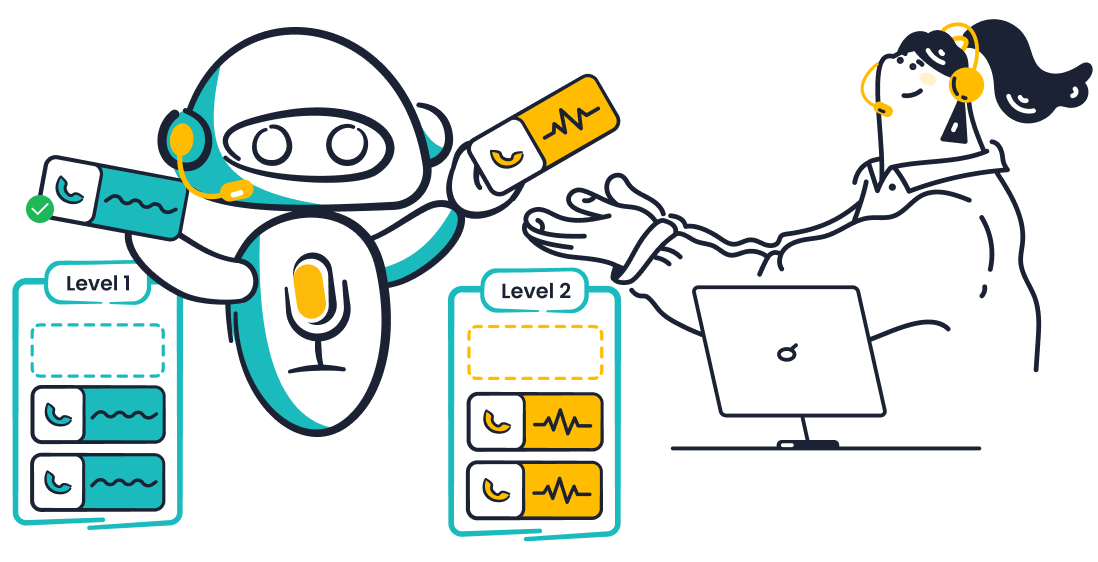
When the system confirms the new appointment, the agent can report the date, time, and confirmation reference. If it returns only “request received,” the customer should hear that the change is pending. If the state remains unclear, the agent should transfer the booking details, attempted action, and unresolved result to a human. This final check determines whether the next step is confirmation, continued work, or escalation.
What Can an Agent Handle from Start to Finish?
Order updates, refund requests, and appointment changes are useful candidate tasks because each can have a defined completion point. End-to-end handling means progressing the eligible task through that point, with an exception path when conditions change.
| Task | Possible authorized sequence | Evidence of completion | Human trigger |
|---|---|---|---|
| Order address change | Verify customer, check fulfillment status, submit eligible address update | Order system records the accepted new address | Shipment already dispatched or address rejected |
| Refund request | Check purchase and eligibility, obtain approval where needed, submit permitted refund | Payment system records the refund status; settlement may remain pending | Disputed eligibility, approval limit, or uncertain payment state |
| Appointment change | Identify booking, check availability, confirm choice, reschedule | Booking system confirms the replacement appointment | No eligible slot or conflicting booking state |
These are illustrative task designs, not universal product capabilities. Agent types can be described by role: customer-facing agents handle eligible requests; assistive agents prepare work for staff; coordinated agents divide a task among specialized roles. Text and voice describe how a customer interacts with them, while permissions determine what each can actually do.
Benefits of AI Agents in Customer Service—and Their Risks
The potential benefits of AI agents in customer support come from completing eligible work and preparing exceptions for people. Connecting an answer to an action can reduce the steps a customer must repeat. Using maintained policy information can improve consistency, while gathering relevant records before handoff can give staff a clearer starting point. Evaluate these benefits against actual resolved cases.
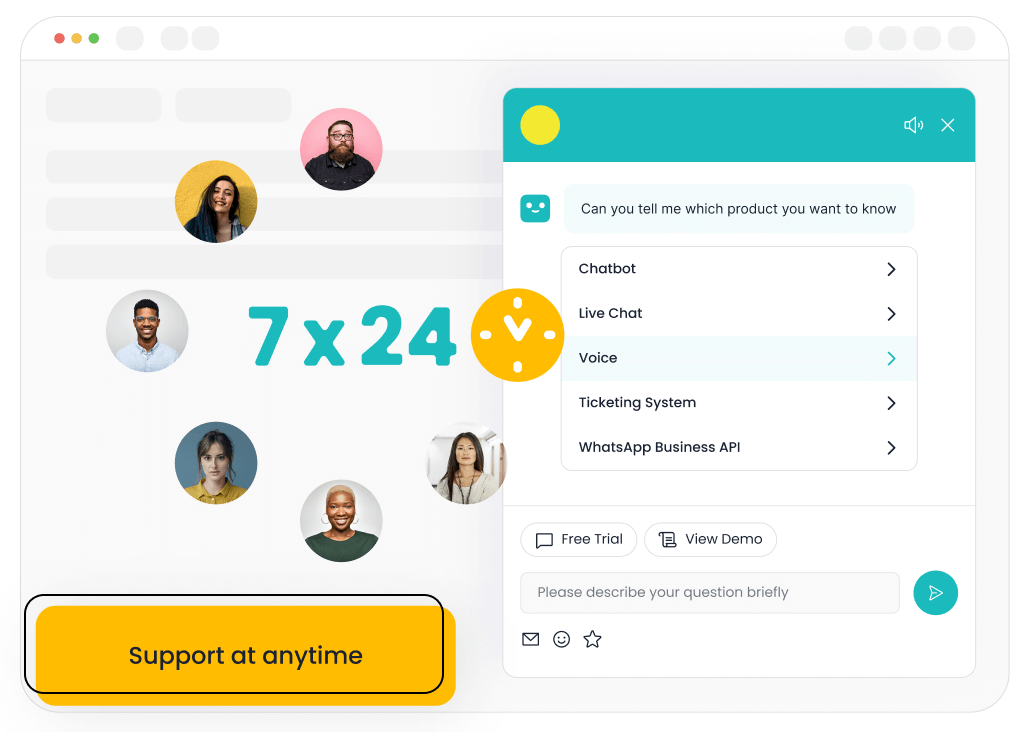
Availability is another possible benefit: an agent can handle configured tasks outside staffed hours when the required systems are available. That does not mean every issue receives immediate resolution. An approval queue or unavailable backend can still leave work pending, so the customer needs an accurate status and a follow-up path.
The risks grow when an incorrect answer can become an incorrect action. Outdated rules can produce a wrong eligibility decision; misleading text in retrieved material can steer the agent away from its intended task; excessive access can turn a local mistake into an unauthorized record change.
OWASP’s excessive-agency guidance identifies excessive functionality, permissions, and autonomy as root causes. It recommends narrower access, authorization enforced downstream, and human approval for high-impact actions. For a support team, this means granting the operations a task needs and placing consequential decisions behind explicit controls.
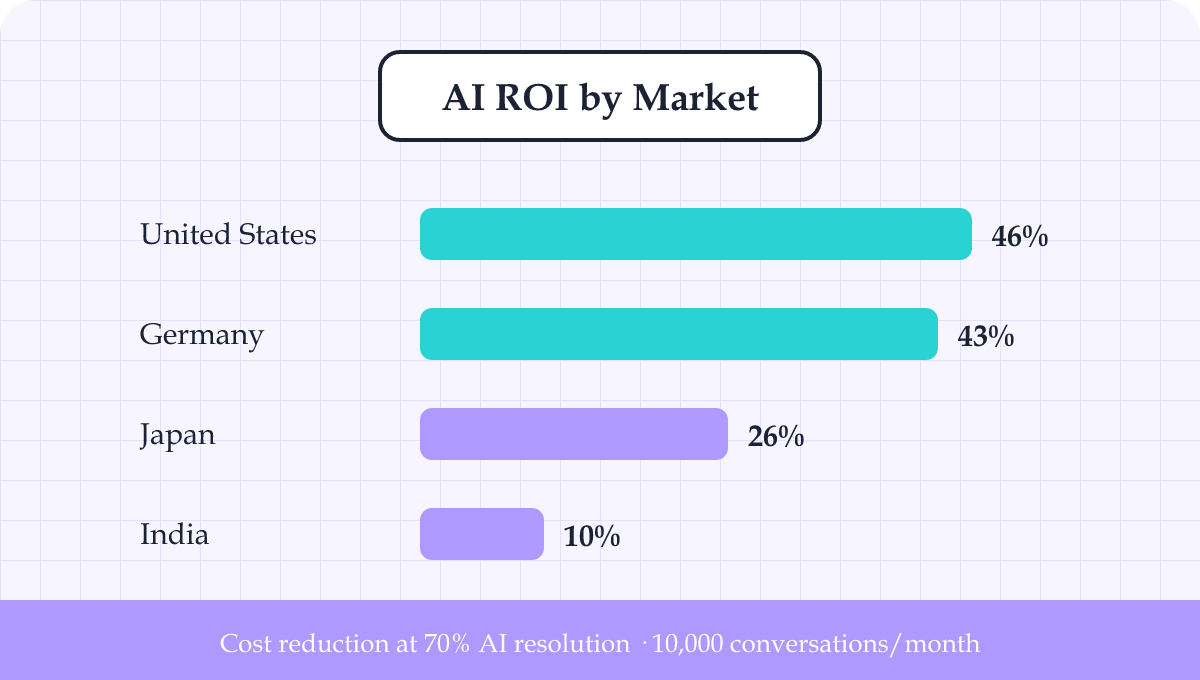
Evaluate confirmed task completion, repeat contacts, customer satisfaction, and successful handoffs. Include implementation, usage, maintenance, and human exception handling when assessing cost per resolved case. A shorter conversation can look efficient while leaving the original problem unfinished.
How to Choose the Best AI Customer Service Agents
The best AI customer service agent for a team is one that demonstrates task completion within the right authority boundaries, recovers from failure, and has clear operational ownership. Compare agents against a representative task, using the same starting conditions and expected outcome.
- Completion: Ask to see the resulting business record, including a pending or rejected outcome.
- Authority: Test a wrong identity, an out-of-scope request, and an action requiring approval.
- Recovery: Interrupt a system response and check whether the agent verifies state before retrying.
- Knowledge: Change a relevant rule and examine which source supports the next answer.
- Ownership: Establish who maintains rules, reviews failures, and receives unresolved cases.
Evidence matters as much as the final message. NIST is researching evaluation probes and structured audit trails that assess whether agent claims are grounded in reference documents. This research supports asking for traceable evidence; it does not certify any service platform.
The best AI customer service agents for ecommerce should demonstrate the relevant order and payment operations, including the difference between refund submission and settlement. AI customer service agents for WhatsApp should demonstrate identity continuity, permitted actions, and human escalation within the intended channel setup.
Before choosing, confirm supported operations, read and write permissions, integration work, and the full charging model. A pilot should include missing information, changed records, and exceptions from the team’s real workload.
How Sobot Connects Agents with Service Operations
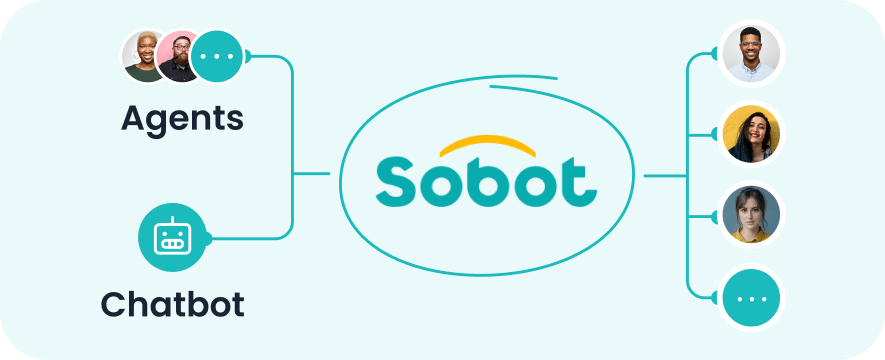
When evaluating Sobot, map the task-execution role to the human team’s workspace. This makes the relationship between an automated action and continued staff handling explicit.
Sobot AI Agents: Tasks, Resources, and Human Handoff
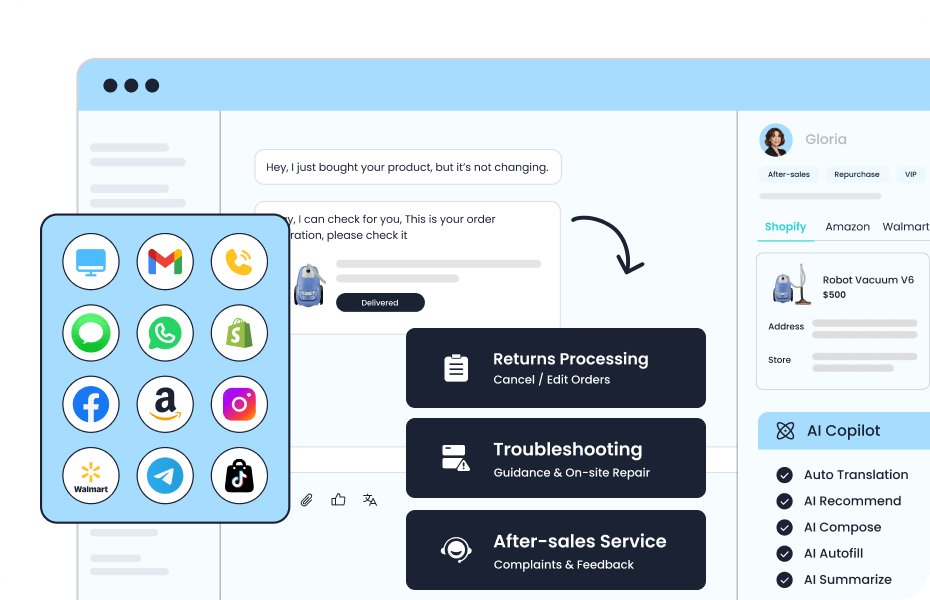
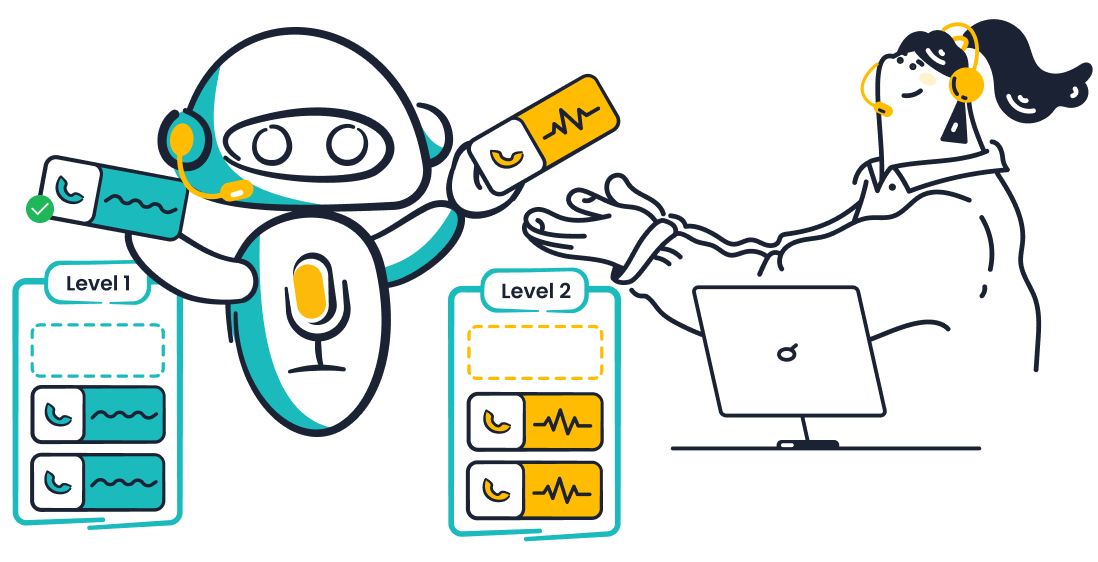
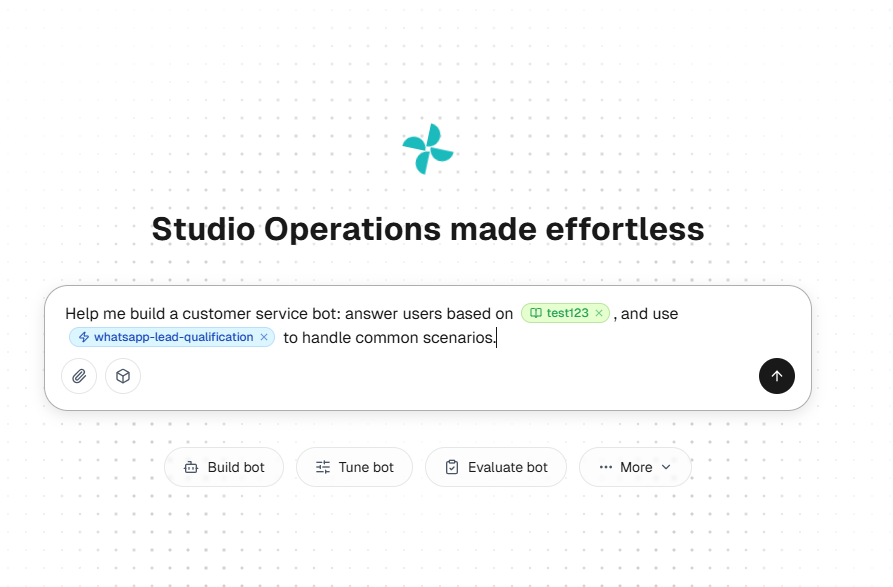
Sobot Agents describes reusable knowledge, skills, workflows, and tools, together with configurable human handoff. Available operations depend on the selected product, configuration, and agreed implementation scope. These resources connect what an agent knows with the tasks it is permitted to perform.
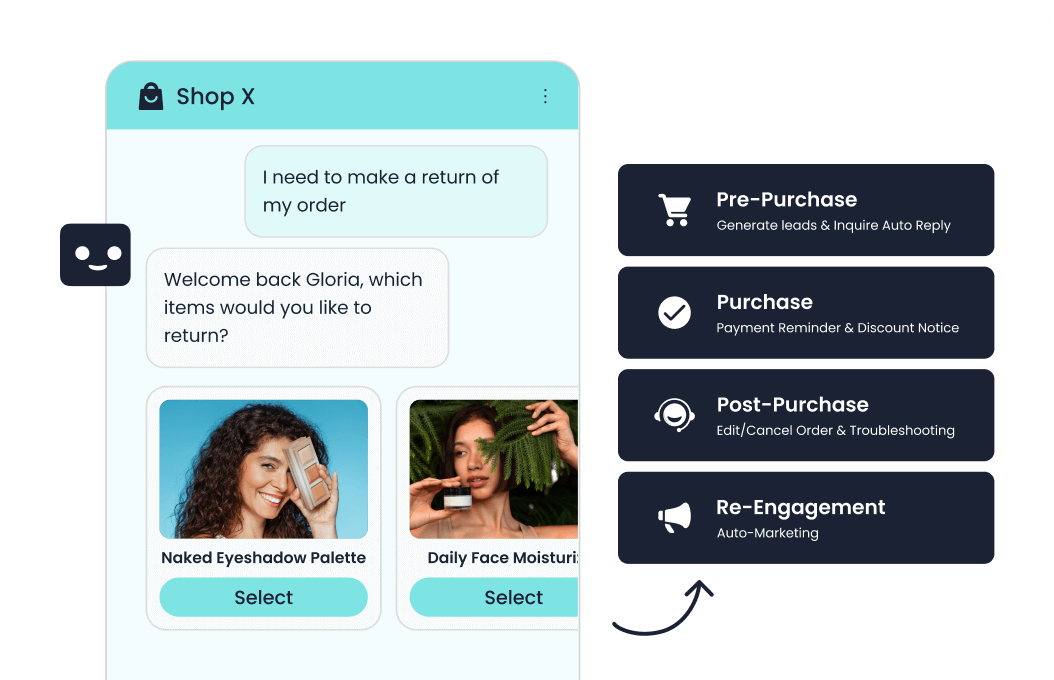
For an initial evaluation, identify the business record the agent needs to read, the operation it may submit, and the result it should return. Confirm those details for the intended systems rather than assuming that general tool support establishes a ready-made connection for every operation.
Sobot Nexus: Context for the Human Team
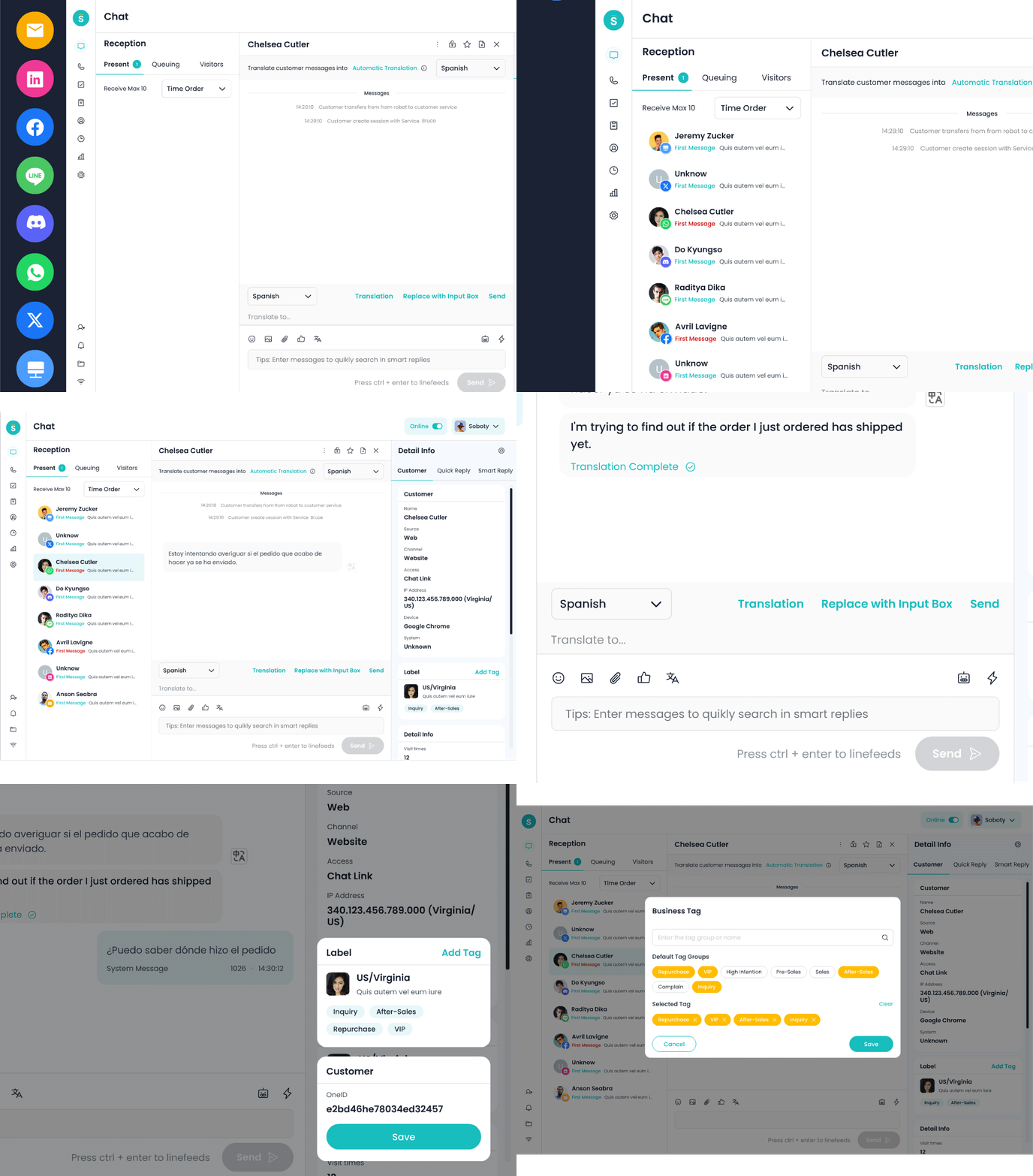
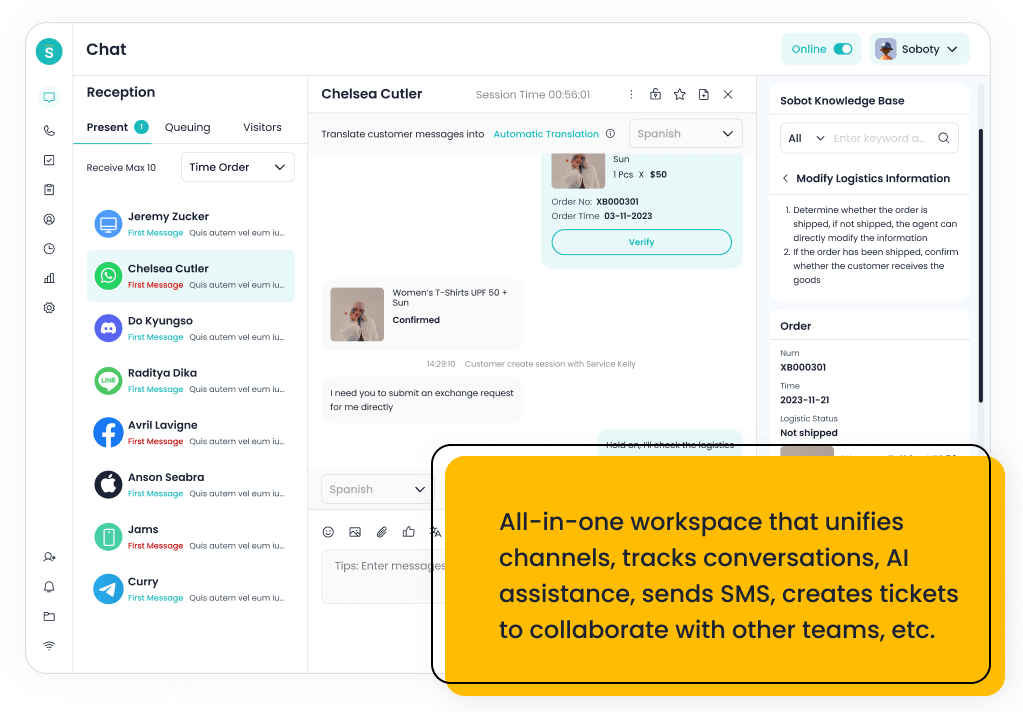
Sobot Nexus centralizes conversations and customer context, with human-agent assistance such as reply drafts, knowledge lookup, and summaries. Channel and data coverage depend on configured integrations. For escalated work, confirm that the receiving team can see the relevant customer, attempted operation, and unresolved result. Also test who owns the case when live transfer is unavailable.
A useful demonstration follows the same case through both roles: the agent handles an eligible action, then a changed condition sends the case to staff. Book a Sobot demo to explore the product capabilities against the service task you are considering.
FAQ
Can an AI Agent finish a task after the chat ends?
An agent can continue after a chat ends only when the deployment supports a tracked background task and an approved follow-up route. Define an accountable owner, a visible pending status, and how the customer will receive the result. Ending the conversation should not close unresolved work or remove it from the team’s follow-up queue.
Does an AI Agent learn automatically from every conversation?
An agent should not treat every conversation as an approved change to company knowledge or policy. Customer feedback can reveal missing answers or failed actions, but proposed changes should enter a reviewed improvement process. Retaining conversation context is also different from changing the model or its rules; retention and access depend on the deployment’s data settings.
Can an AI Agent undo an action it has already taken?
Whether an agent can reverse an action depends on the business system and company policy. Some changes need a separate corrective transaction or a human decision; others cannot be undone. Identify those actions before launch and use preventive limits or approval, rather than assuming that a later chat message can restore the previous state.