For an ecommerce support team, AI is useful when it helps a shopper complete a specific request: find a delayed order, understand a return, or choose a suitable product. Start with requests supported by dependable store data, then measure whether customers actually get the outcome they needed.
Where Ecommerce Support Benefits Most from AI
Prioritize repetitive requests that AI can resolve using current store data. Keep human support accessible when a shopper needs judgment, an exception, or help beyond the system’s authority.
Choose a clear customer task before choosing how much to automate.
Connect the relevant order, policy, and product information.
Judge performance by resolution and customer experience alongside speed.
What Is AI Customer Service for Ecommerce?
AI customer service for ecommerce applies artificial intelligence to shopper questions and service tasks across the purchase journey. It uses approved product information, store policies, and connected business systems to support requests before and after a purchase. Depending on the deployment, it can answer a question, retrieve an order update, collect details for a return, or assist a human support representative. Its useful scope depends on the information and actions available to it. Explaining a refund policy, submitting a return request, and issuing money back are different levels of service.
Quick Comparison: Compare service approaches by the work they can complete and the support resources they require.
| Platform or approach | Scope to evaluate | Best fit | Cost signal |
|---|---|---|---|
| Sobot | Configured AI tasks with connected human support | Teams evaluating automation alongside an ongoing support workflow | Custom quote for the intended scope |
| Store self-service | Tracking pages and published policy information | Shoppers who can complete a direct lookup | Check existing store tools and app charges |
| Human support team | Investigation, judgment, and exceptions | Ambiguous, disputed, or unusual requests | Staffing and handling time |
Why Ecommerce Support Queues Become Hard to Manage
Order, delivery, and return questions compete with complex complaints for a support team’s attention. During a promotion, a queue can fill with shoppers asking similar questions while each answer still depends on a different order, destination, or purchase condition.
The difficulty is often the work behind the reply. A representative may need to locate an order, check a carrier update, read the applicable return policy, and preserve the conversation for a colleague. Another message arriving through a different channel can make the same customer look like a new case.
That makes repetitive, well-documented requests sensible candidates for AI. A lost parcel, disputed charge, or unusual product problem may need investigation instead. Keeping those distinctions visible helps a team reduce routine work without making customers repeat their problem through an automated loop.
Where AI Fits in the Ecommerce Customer Journey
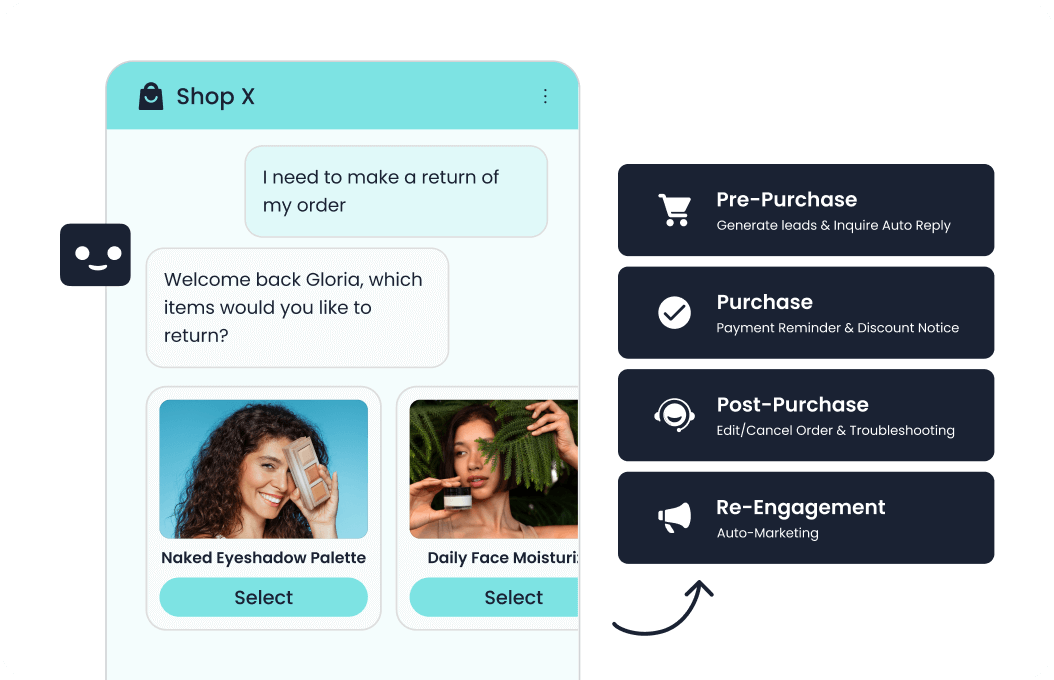
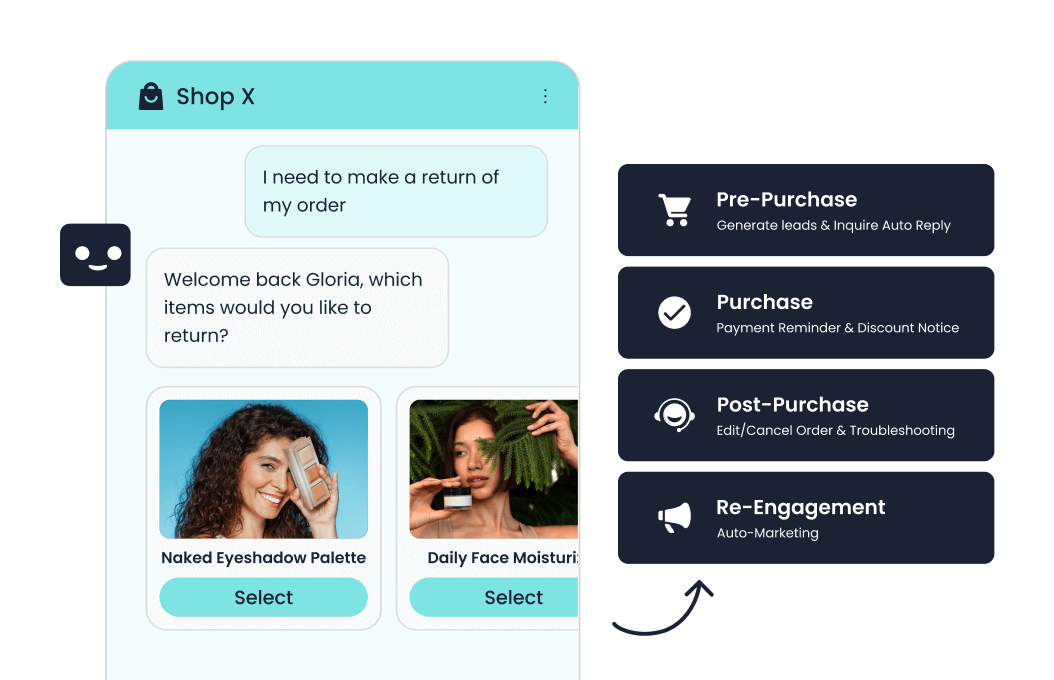
The main applications span presales advice and aftersales support. Each needs a dependable source of information and a defined next step.
Orders and shipping: AI can retrieve an order update or direct a shopper to tracking. Shopify’s order-status documentation explains that tracking numbers enable shipment updates, while real-time location updates depend on a supported carrier.
Returns and exchanges: AI can explain eligibility and collect a request using the store’s policy; Shopify’s return rules, for example, govern eligible items and return fees. Completing an exchange or refund requires the appropriate system operation and authorization.
Product questions and presales recommendations: AI can answer questions about dimensions, materials, or compatibility using approved catalog information. Recommendations should reflect the shopper’s requirements and current product availability.
Connect Store Data to the Customer Conversation
A useful connection brings the customer’s request together with the information needed to answer it. The Sobot listing on the Shopify App Store describes connected business systems, AI tasks, tickets, and handoffs to the support team.
Check the conditions behind that connection. Sobot’s Shopify guide describes customer and order lookup in the agent workbench, with displayed Shopify customer information tied to a logged-in customer.
Sobot Agents uses knowledge, tools, and workflows for service tasks. Available actions and human handoffs depend on the configured deployment, so confirm the intended operation rather than assuming that access to order information also permits refunds.
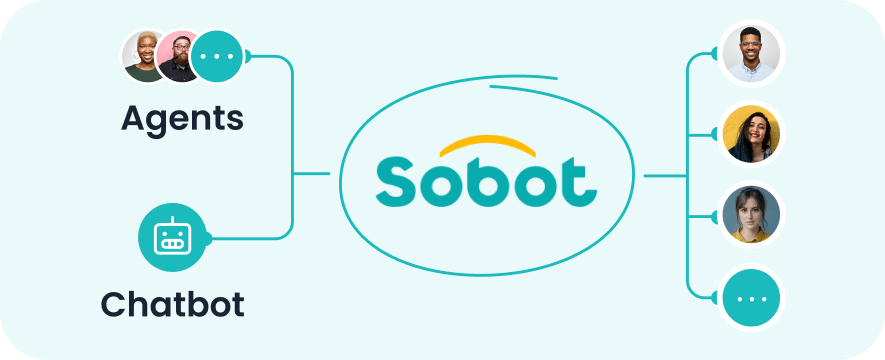
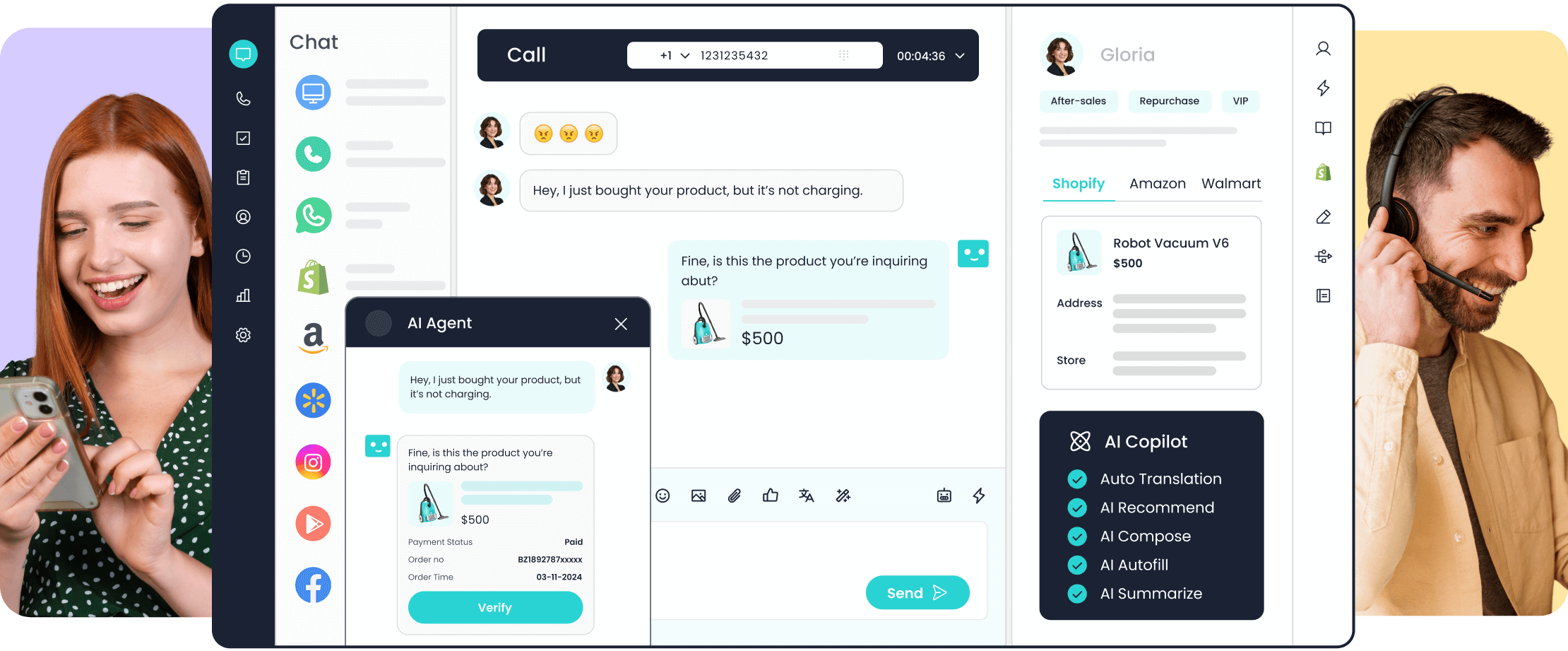
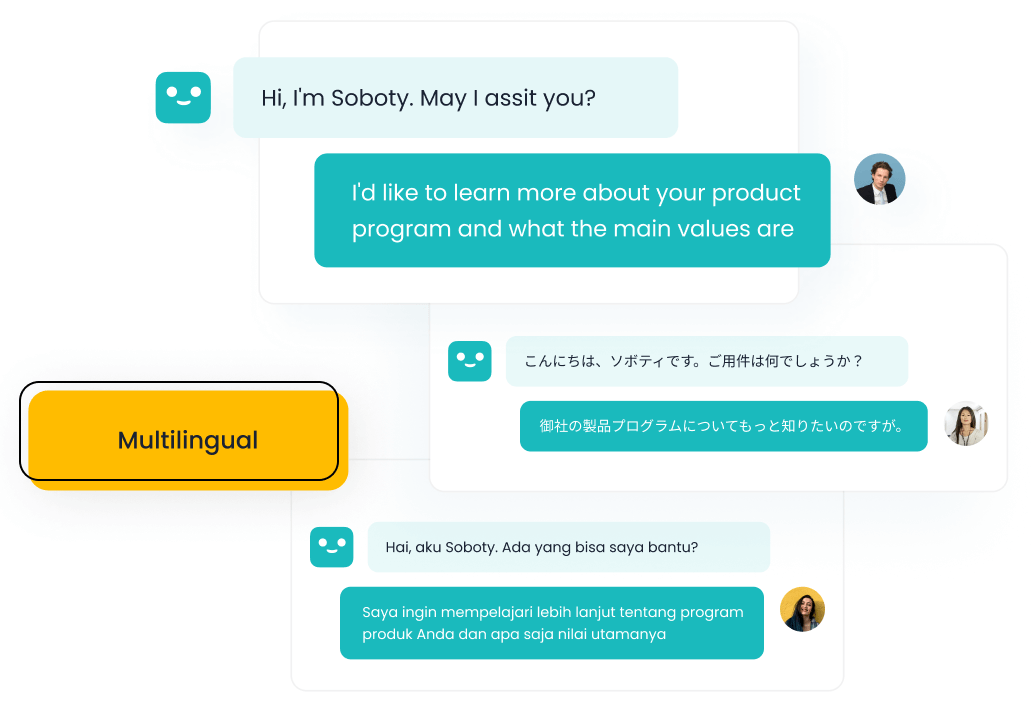
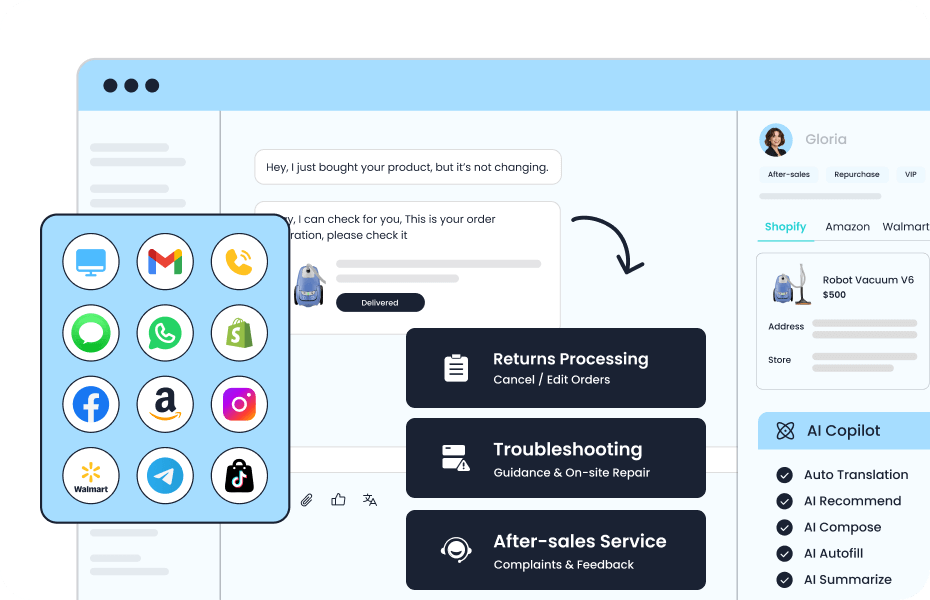
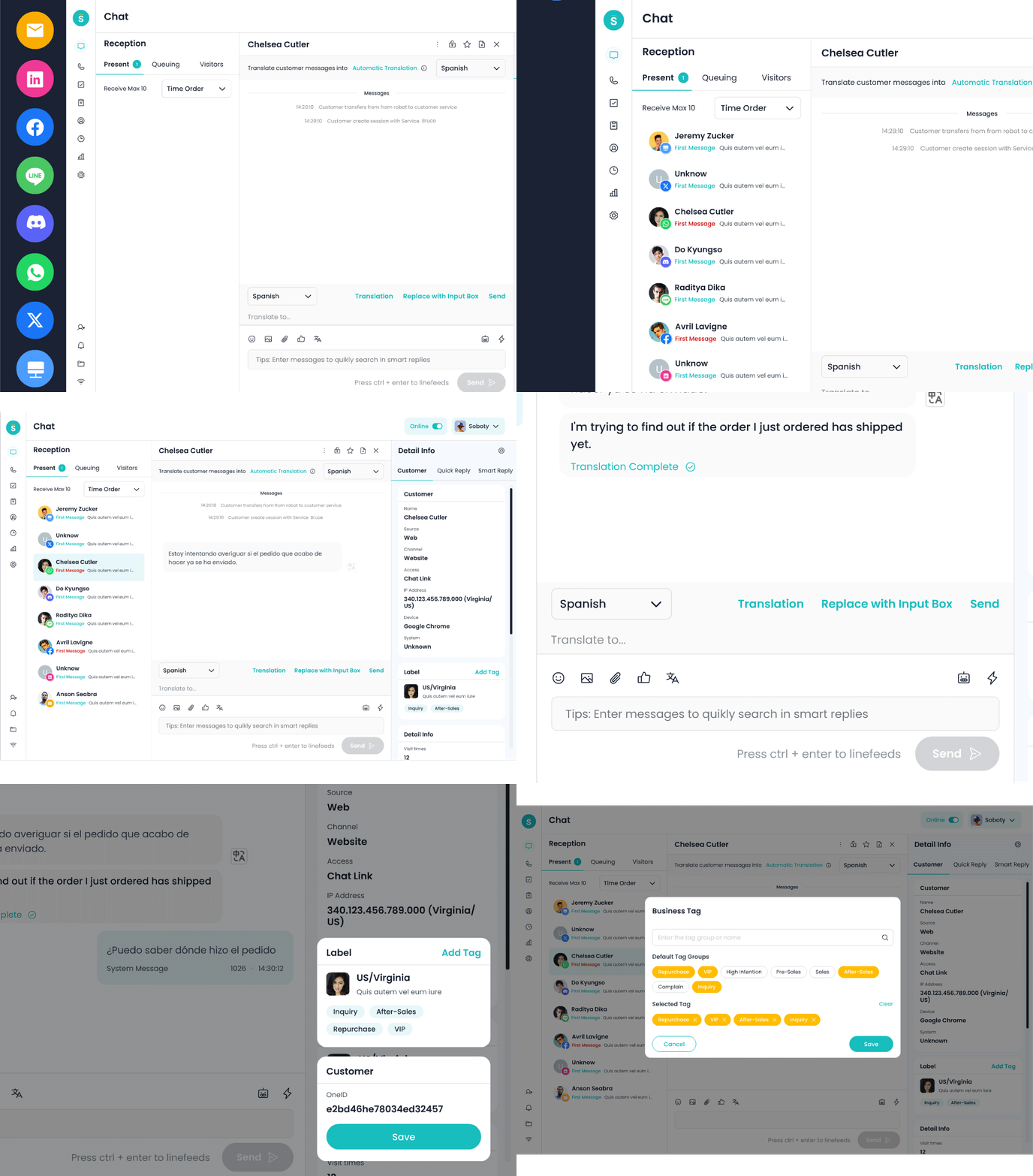
Across a store’s website, email, and messaging channels, the practical question is whether the next person receives the order reference, conversation, and unresolved request. A connected channel is useful only if the support workflow can continue from there.
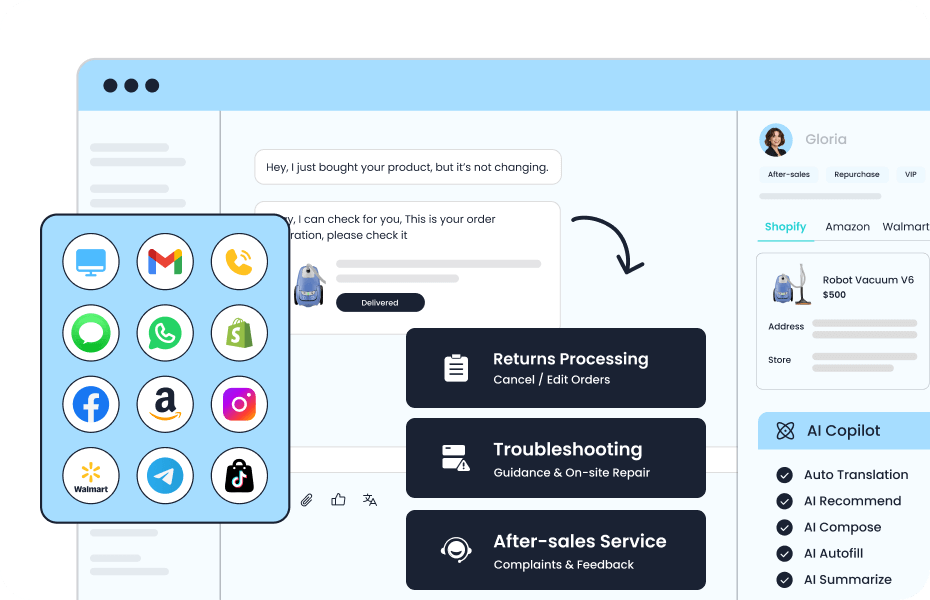
Sobot product illustration: connected channels support a continuous customer conversation.
Measure Resolution, Response Time, and Conversion Together
Define a successful outcome for each workload before comparing results. A shipping question may end with a verified update; a return request may end with a recorded submission. Neither is evidence that a refund has been issued. Track repeat contact and customer satisfaction as well as the initial response. For conversion, compare similar customer cohorts before attributing a change to AI.
| Measure | What to record | How to interpret it |
|---|---|---|
| Resolution rate | Successfully completed requests divided by eligible requests in the same workload | Review reopened cases and repeat contact within a stated follow-up window. |
| Response time | Time to a useful first response and time to resolution | An instant greeting does not establish that a customer received help. |
| Conversion | Purchases after eligible presales conversations within a defined attribution window | Compare similar shoppers and account for promotions, traffic sources, and stock availability. |
| Customer satisfaction (CSAT) | Survey responses, response rate, and whether AI or a person handled the request | A faster queue is useful only if customers can still complete their requests. |
Use the table to select a success measure that matches the task. Assess order tracking and product advice separately: they serve different customers at different stages of a purchase.
In its spring 2026 global survey, Salesforce found that service professionals named customer satisfaction as their most improved metric after deploying AI agents. That cross-industry, self-reported finding supports looking beyond speed; it does not predict an individual store’s results.
What Sobot Customer Cases Show
These vendor-published stories show different parts of ecommerce service. Neither discloses a complete measurement window or denominator, and neither isolates AI’s contribution from the wider implementation.
Renogy: Fewer Routine Conversations Escalated to People
Sobot’s January 2026 Renogy customer story reports that escalation fell from over 50% to around 30% after introducing a chatbot connected to Renogy’s knowledge base.
The solar-products business had already offered self-service resources, but its previous chatbot frequently passed routine requests to people. The replacement organized FAQs around technical support, presales, aftersales, and membership, with access to guides, files, and other knowledge resources.
For an ecommerce team, the useful lesson is to examine which repeat questions the knowledge base can actually answer. The reported escalation change illustrates improved self-service in this implementation; a lower handoff rate alone would still need to be checked against resolution and customer satisfaction.
Weee!: Connect the Human Team to Tickets and Customer Context
Sobot’s September 2024 Weee! customer story reports a 50% reduction in resolution time and 96% CSAT in a voice-and-workbench implementation connected to Weee!’s ticketing system.
The online grocery business needed representatives to handle purchasing and delivery problems while working across systems. The described integration connected its own ticketing environment with Sobot’s voice workbench, helping the human team continue cases without the same system switching.
This is evidence about connected human support, rather than a measured autonomous AI result. It complements the Renogy example: when a shopper’s problem needs a person, the surrounding workflow still determines whether the request moves toward resolution.
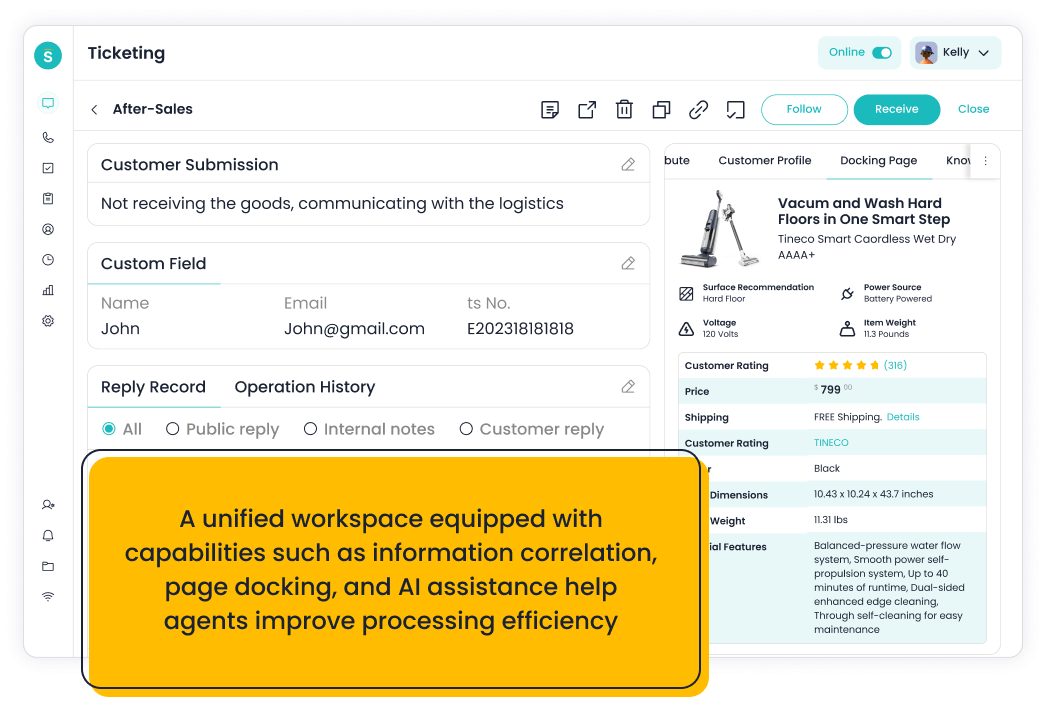
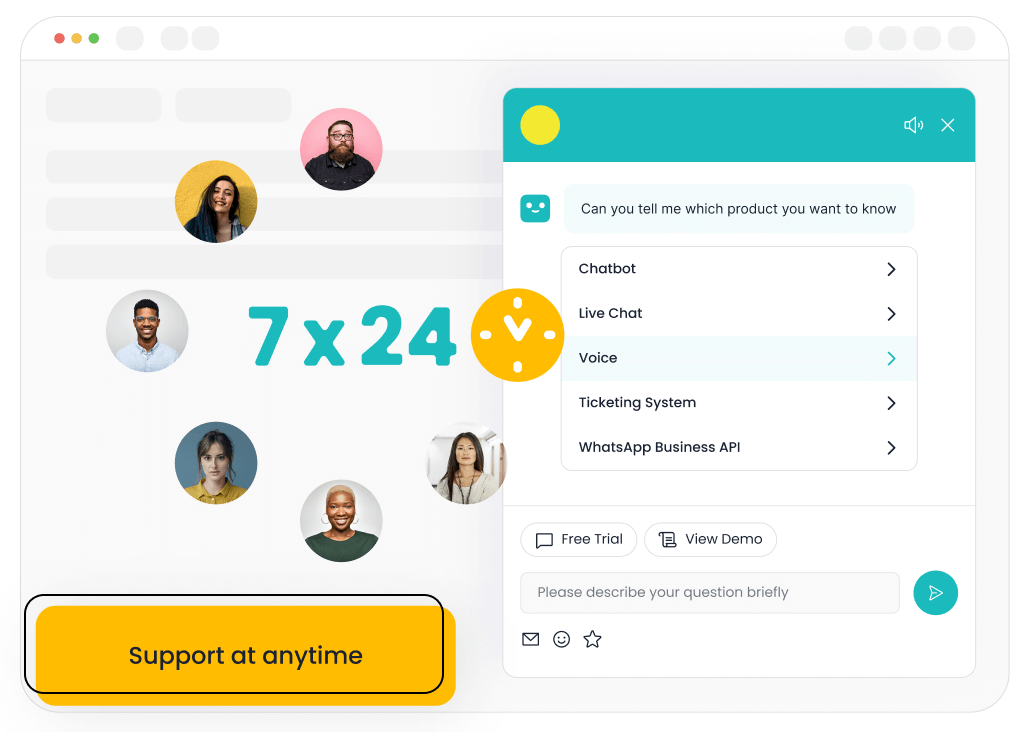
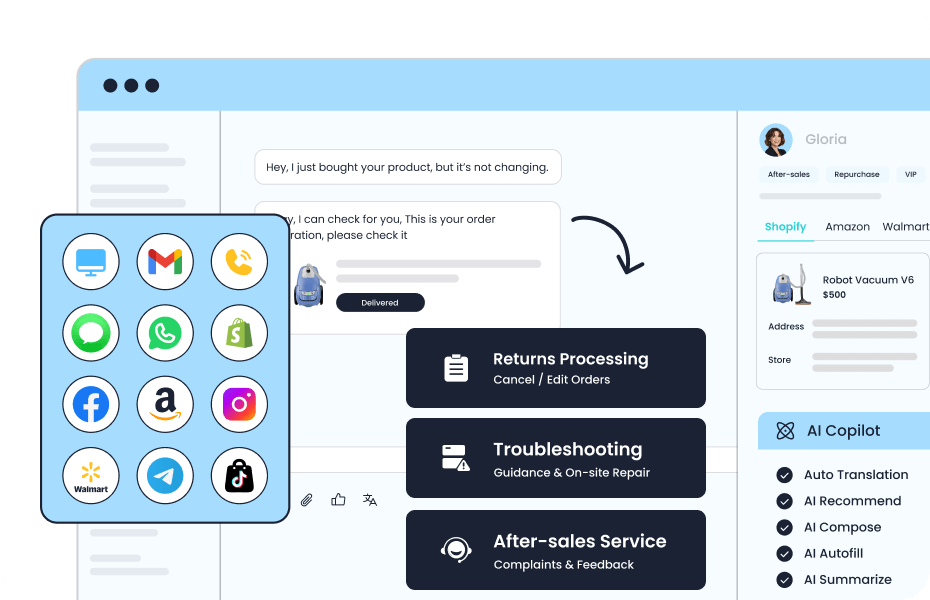
Sobot product illustration of a ticketing workspace; it does not depict Weee!’s implementation.
Start with a Workload Your Team Can Verify
Choose a narrowly defined first workload, such as order-status questions for a supported delivery service. Test normal requests alongside missing orders, stale tracking, and customers asking for a person. Expand after the team can verify completed outcomes and follow up on failures.
Assign someone to maintain the relevant policy or knowledge, and review the unresolved conversations during the pilot. Those conversations show whether the next improvement belongs in the AI’s information, the connected system, or the human support process.
Book a Sobot demo to see its service capabilities and discuss how your intended ecommerce workflow could fit the product.
Frequently Asked Questions
Can a small ecommerce team start with existing self-service tools?
Yes, a small ecommerce team can begin by improving order tracking and policy answers before adding more complex AI automation. If shoppers mostly need a tracking link or a clear explanation, improving those resources may address the immediate problem. Consider additional AI when customers need conversational help or connected tasks that the existing tools do not adequately support.
How much does AI customer service for ecommerce cost?
The cost depends on service channels, conversation volume, integrations, and the amount of implementation and ongoing operational support your store needs. Ask for the cost of the intended workload, including usage charges, required systems, setup, and maintenance. Compare that scope with the team’s current cost of handling the same requests; a headline subscription price does not describe the whole deployment.
How should AI handle support requests when nobody is online?
When nobody is available, AI should explain the next step, capture the unresolved request, and provide the store’s actual follow-up expectations. Give the customer a usable case reference or confirmation when the connected system supports it. Avoid promising that a person will respond immediately if the team is offline, and make sure the request reaches the queue someone will review.