A support chatbot can see contact details, account records, knowledge articles, and conversations that reach human agents. A secure AI chatbot needs controls over that entire path: what enters, who can retrieve it, what the model may say or do, where records go, and how the organization checks failures. In its customer survey, Salesforce reports that only 42% trust businesses to use AI ethically. The figure does not assess any chatbot.
Key Takeaways
- Map the data path from customer message to model, tools, logs, and human handoff.
- Test disclosure, prompt injection, and confident wrong answers as different failure modes.
- Review GDPR obligations and the exact scope of any SOC 2 report before approving a vendor.
What Makes an AI Chatbot Secure?
A secure AI chatbot is a customer-service system designed to limit unauthorized access, inappropriate disclosure, and unsafe actions across a conversation. Security is a property of the deployed workflow, not just its model. The widget, identity check, retrieved knowledge, connected tools, model, agent workspace, and transcripts each create exposure points. Customer configuration can still grant excessive access.
Show the vendor one real task, required data, and a request the bot should refuse. Demand a demonstration on the planned channel and integrations.
What Sensitive Data Can a Support Chatbot Encounter?
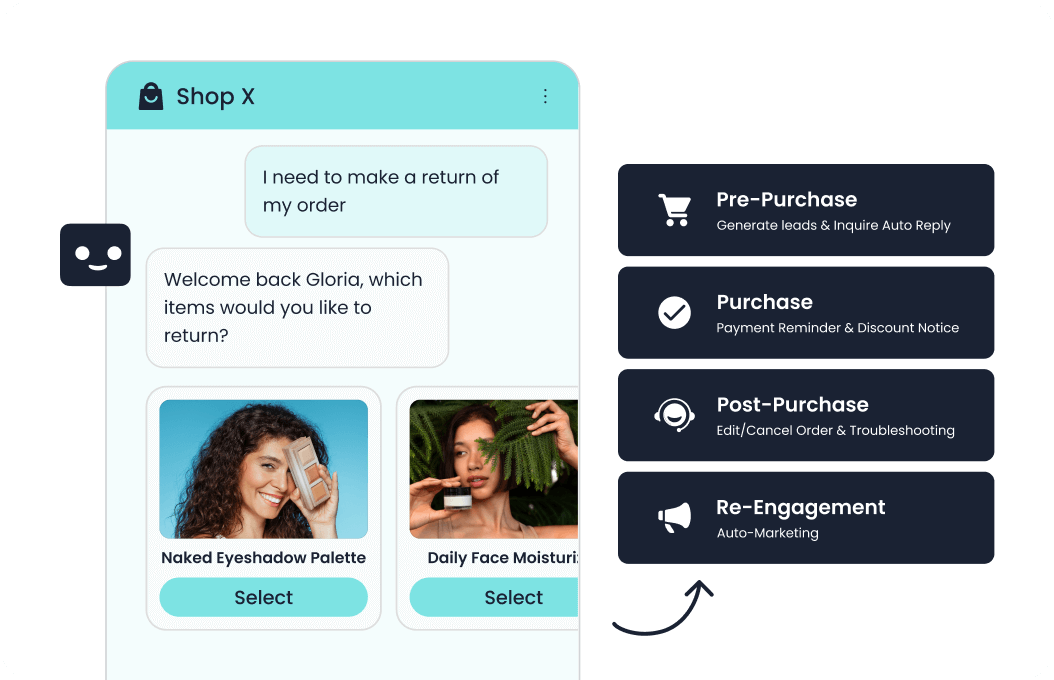
A customer may type a name, address, payment concern, health detail, or password even when the bot never asks. Connected systems can add account history, orders, loyalty status, and internal notes. Knowledge retrieval may expose policy drafts or confidential documents if permissions are loose. OWASP’s sensitive-information guidance identifies personal, financial, health, credential, and business data as disclosure risks in LLM applications.
Inventory those categories. Mark fields needed for each request and those requiring authentication or human handoff. Minimize information sent to a model, mask transcripts where feasible, and locate raw and redacted copies. The European Data Protection Board’s GDPR principles include data minimization, purpose and storage limits, and confidentiality. They apply within GDPR scope; they do not certify a chatbot.
Which AI Chatbot Risks Need Separate Tests?
Data leakage, prompt injection, and hallucination are related but different. A bot can reveal an authorized user’s information to the wrong person; it can follow hostile instructions hidden in retrieved material; or it can invent a refund rule without disclosing any private data. One “safe answer” demo cannot test all three. The following checks turn each risk into a procurement test.
| Failure mode | Example | Control to verify |
|---|---|---|
| Unauthorized disclosure | Bot returns another customer’s order details | Identity checks, least-privilege retrieval, redaction, and access logs |
| Prompt injection | A retrieved page tells the bot to ignore instructions or send data elsewhere | Separate untrusted content from instructions; restrict tools and test adversarial inputs |
| Hallucination | Bot invents an eligibility or payment rule | Ground answers in approved sources, show uncertainty, and escalate consequential cases |
OWASP’s prompt-injection guidance explains that malicious instructions can arrive directly from a user or indirectly through material a model reads, leading to unwanted output or actions. Test both routes with the actual knowledge base and connected tools. A prompt telling the model to “ignore previous instructions” is only one simple case; a realistic test also checks poisoned documents, hidden text, and tool responses.
The NIST Generative AI Profile describes confabulation: confidently presented false or erroneous content. For customer service, test a missing policy, a contradictory knowledge article, and an account question the bot cannot access. Define the acceptable response and human escalation before evaluating answer fluency. Fluency cannot replace a source or permission check.
What Controls Should the Data Path Include?
Secure service requires both permission limits and ongoing control of retained data.
- Require identity for account-specific answers.
- Restrict retrieval and connected actions by role.
- Review retained records and downstream copies.
Limit access before connecting the bot
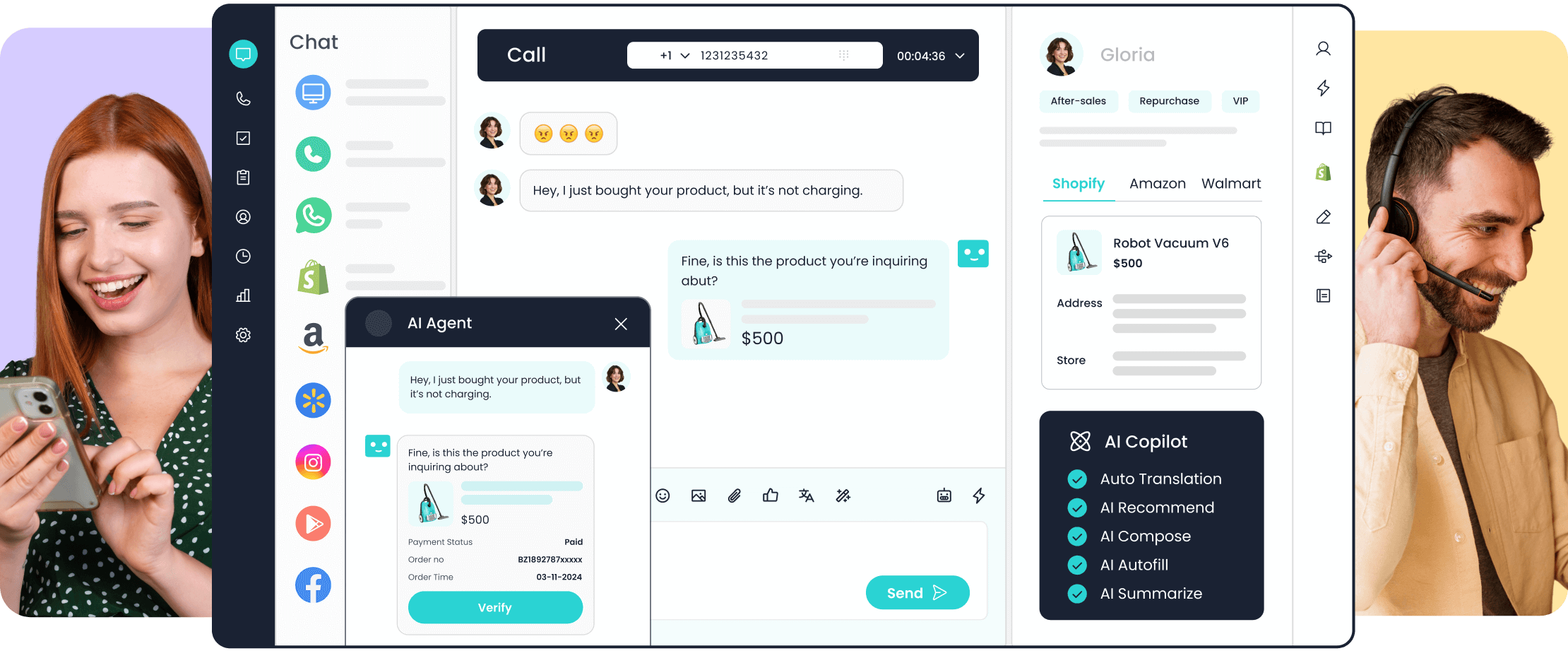
Start with the smallest workable data flow. Anonymous visitors can ask public policy questions, while order-specific answers require an identity step appropriate to the risk. Retrieval permissions should follow customer and agent roles. Connected tools need limits on what the bot may read or change, with human review for consequential actions. Keep credentials out of prompts. For Sobot or any vendor, test cross-account leakage using paraphrased requests and guessed identifiers. Test the same restriction after switching channels. Check an agent role with limited privileges, not only an administrator account. Record the denied result for review.
Inspect retention, logs, and downstream use
Inspect encryption, agent access, audit logs, retention, deletion, backups, incident notification, and subprocessors. Ask whether conversation data can train a model and what controls that use. Test deletion across transcripts, analytics, exports, and processors. Request evidence that backups follow the stated deletion schedule and that old exports cannot be reopened. Confirm who reviews failed deletion jobs and how exceptions are reported. EDPB security guidance discusses access controls, encryption, authorization reviews, and minimization under the GDPR.
Review denied access, tool calls, and wrong answers after launch. Retest when knowledge, integrations, or permissions change.
How Should Buyers Read GDPR and SOC 2 Claims?
GDPR review begins with applicability and roles. A company serving people in the European Economic Area may need to determine whether it is the controller for customer conversations and whether the chatbot provider and model or hosting services are processors or subprocessors. The EDPB’s controller and processor guide describes written processor terms, instructions, subprocessor authorization, security, deletion or return, and audit provisions. Review the actual processing agreement, transfers, retention, and rights-request process. “GDPR compliant” in a sales page is not enough to resolve those deployment-specific duties.
SOC 2 answers a different question.
The AICPA’s SOC 2 overview describes an independent examination of controls at a service organization against selected trust services criteria.
Inspect the current report’s system description, services, criteria, period, exceptions, subservice organizations, and customer responsibilities. A report covering one service or time period is not a certification of every AI feature or a substitute for GDPR analysis.
Apply the same scope check to other seals. A public privacy policy does not replace processor terms for customer conversations.
What 10 Questions Should You Ask Before Buying?
Send the same task, data categories, integrations, and deployment region to every shortlisted vendor. Request written answers and a demonstration. These ten questions reveal gaps that a feature list may hide:
- What data enters the model? Request a field-level diagram covering messages, retrieved files, tool results, logs, and analytics.
- Where is data processed and stored? Include model, hosting, support access, backups, and cross-border transfers.
- Who can see each record? Demonstrate customer authentication, agent roles, admin access, and tenant separation.
- Can our conversations train a model? Obtain the default, configurable setting, contract term, and subprocessor answer.
- How long is data kept? Check transcript, log, export, backup, and deletion schedules.
- What can the bot do in connected systems? List read and write permissions, limits, approvals, and rollback paths.
- How do you test prompt injection and leakage? Request recent test methods and remediation practices for the configured workflow.
- How are wrong answers contained? Show approved sources, uncertainty behavior, escalation, and post-launch review.
- What assurance evidence covers this service? Review SOC 2 scope or other evidence, dates, exceptions, and customer duties.
- What happens after an incident or rights request? Confirm notification, investigation, export, correction, and deletion responsibilities.
Compare answers against risk: a public FAQ bot needs different controls from an account bot that issues refunds. Narrow the launch scope if a high-risk path cannot be demonstrated safely.
How Could You Evaluate Sobot for This Use Case?
Sobot’s messaging chatbot page describes AI-powered service conversations. That description is a starting point for a scoped demonstration, not proof of your configuration or a security certification. Ask Sobot to trace a request through identity checks, retrieval, model processing, logging, and human handoff. Request current processor terms, subprocessors, retention options, and security evidence for the products and region under consideration. Apply the same ten questions to every candidate.
Frequently Asked Questions
Is an AI chatbot safe for personal data?
It can be appropriate for a defined use case when the organization has a lawful basis where required, limits collection and access, contracts with processors, tests the configured workflow, and monitors it. Safety cannot be inferred from the word “AI” or from encryption alone. Begin with low-sensitivity tasks and expand only after the controls are demonstrated.
Does SOC 2 mean a chatbot is GDPR compliant?
No. SOC 2 assesses specified service-organization controls within a report’s scope and period. GDPR obligations depend on the data, people, purposes, roles, and transfers in a particular deployment. Review the report and actual model and hosting subprocessors.
Can hidden instructions in a document trick a chatbot?
No single filter proves safety. Prompt injection may appear in user messages, retrieved documents, or tool output. Combine permission limits, separation of trusted instructions from outside content, constrained tool actions, testing, and monitoring. Test the connected workflow again when tools or knowledge change.