There is no reliable worldwide count of AI chatbots deployed for customer service. Published figures instead measure surveyed service teams, market revenue, and particular customer outcomes. Each number below stays attached to its population, time frame, and metric so support teams can use the evidence when planning a pilot.
Key Takeaways
- There is no verified global count of deployed AI chatbots; market revenue and survey adoption are different measures.
- In a 2025 service survey, current generative and agentic AI use covered overlapping categories, not chatbot adoption alone.
- Resolution, response time, and cost figures need their own denominators before they can inform a budget.
How Many AI Chatbots Are There in 2026?
An AI customer-service chatbot is a customer-facing conversational system that interprets requests and generates or retrieves replies, with a handoff when needed. A fixed menu bot and an AI tool assisting employees are distinct categories. There is no defensible public count of all AI chatbots in use worldwide. A company may run several bots across brands and channels; one bot may serve many customers; and providers count installations, paying organizations, conversations, or AI agents differently. A chatbot can also be a feature inside a larger contact center rather than a separately listed product. The available reports below measure spending, surveyed organizations, or service cases—not a census of deployed bots.
For customer service, a more useful question is how many eligible requests a bot can resolve correctly, with a defined handoff for the rest. Teams comparing statistics should record the unit first: organization, case, conversation, answer, or dollar of market revenue. None can stand in for the others.
How Widely Are Customer-Service Teams Adopting AI?
Adoption depends on whether a survey asks about testing or current use. In its seventh State of Service report, Salesforce surveyed 6,500 service and field-service professionals. Among respondents, 53% said their organization currently used generative AI and 39% said it used agentic AI. The categories overlap and include more than customer-facing chatbots. These shares describe surveyed service organizations, not the proportion of all businesses with a chatbot.
Current organizational AI use reported by surveyed service professionals
| Category | Share | Relative bar |
|---|---|---|
| Generative AI | 53% | |
| Agentic AI | 39% |
For planning, ask which data, knowledge, workflows, and governance let a particular team move beyond a pilot. Buying a chatbot alone does not establish effective service use.
- Ask whether “adoption” means a pilot, active use, or at-scale use.
- Check whether the denominator is organizations, leaders, or service conversations.
- Separate chatbot deployments from broader AI tools used by agents.
How Large Is the Chatbot Market in 2026?
Mordor Intelligence estimates the global chatbot market at US$11.45 billion in 2026, after an estimated US$9.30 billion in 2025. Its report includes solutions and services, multiple channels, business functions, and industries. The 2026 figure is a market estimate, not audited sales of customer-service AI chatbots. Its wider scope matters: a customer-support budget should not treat total market revenue as the amount companies spend on support bots alone.
Forecasts can signal supplier investment and competition, but they do not tell a buyer how many bots exist or what one deployment will save. Even reports titled “conversational AI” may include voice assistants and generative agents as well as text chatbots. When quoting a forecast, keep the research firm’s category, geography, base year, currency, and forecast status attached to the number.
What Do Customer-Service Outcomes Actually Show?
The three measures buyers most often want—resolution, speed, and cost—come from different types of evidence. Survey expectations describe what respondents believe or anticipate; a named customer case describes one configured operation. Neither is a universal chatbot benchmark. Read each result together with the eligible request set, channel, period, baseline, and the point at which a human took over.
Resolution rate: Cases are not the same as chatbot conversations
In its seventh State of Service report, Salesforce says service professionals estimated that AI resolved 30% of service cases in 2025 and expected the share to reach 50% by 2027. The report surveyed 6,500 service and field-service professionals. This is a reported AI case share and future expectation; it is not a measured cross-vendor chatbot resolution rate.
The case-share estimate still needs a local denominator before it can guide a chatbot target. Count only requests eligible for automation, record human intervention, and check whether customers return with the same issue. A vendor’s direct-answer rate may count replies, while a service team’s resolution rate counts completed cases; the two cannot be substituted.
Response time: Separate bot latency from time to resolution
An AWS customer case about Ryanair reports that a model change reduced the assistant’s response latency from 18 seconds to 2.9 seconds in its customer-service system. That is a reported answer-generation delay in a specific implementation, not the time needed to finish a customer’s issue. It should not be compared directly with a help desk’s first reply time or end-to-end case resolution time.
For a practical pilot, time the full path: when the customer asks, when the first useful reply arrives, when the issue is resolved, and when a transferred agent can act. A fast but incorrect first answer can increase repeat contacts. Track median and long-tail times, as well as customer effort, before declaring the workflow faster.
Cost: Separate expected savings from realized spending
The Salesforce survey says service operations and leaders who use or expect to use AI agents anticipated an average 20% decrease in service costs and case resolution time once AI agents were fully implemented. That is a respondent expectation, not an observed 20% saving. An NBER working paper studying 5,179 support agents found that access to an AI assistant raised issues resolved per hour by 14% on average. That is agent productivity, not a chatbot saving or a measured cost reduction; staffing, software, and quality still determine net cost.
To calculate local economics, include platform fees, usage, integration, knowledge maintenance, human review, and repeat contacts. Divide fully loaded cost by verified resolved requests, with an agreed recontact window. A decrease in contacts reaching agents may be useful, but it is not savings if unresolved customers return through another channel.
Which 2026 Trends Matter for Support Teams?
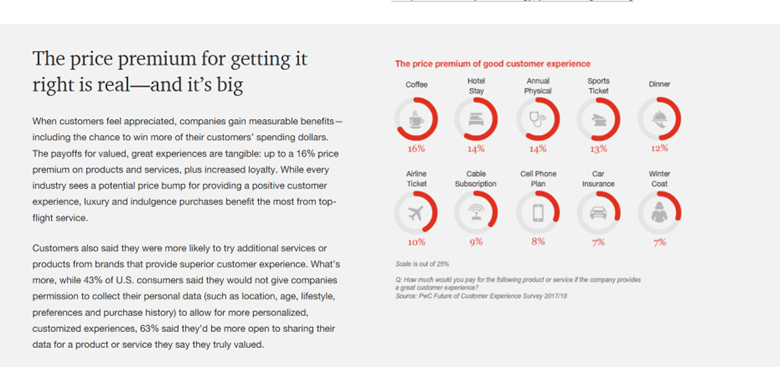
Customers’ expectations are changing faster than any single resolution benchmark. In Zendesk’s CX Trends 2026 research, 74% of surveyed consumers said AI had raised their expectation that service should be available around the clock. The study methodology reports responses from 6,182 consumers and 5,115 CX professionals across 22 countries. This is an expectation survey, not evidence that 74% of companies offer a chatbot or that always-on service solves issues well.
At the same time, Salesforce’s 2027 case-share expectation points to continued investment. These are different studies with different respondents, so they should not become one invented growth curve. The actionable trend is a shift from a bot that answers FAQs to a connected service workflow that can verify context, complete appropriate tasks, and transfer difficult cases without losing history.
How Should a Team Use These Statistics?
Use external numbers to choose questions for a pilot, then measure your own baseline. Select a recurring service task, define an eligible conversation, and specify what counts as resolved after a recontact window. Measure first useful reply, total time to resolution, transfer quality, customer satisfaction, and fully loaded cost in the same channel. Segment by request type and language so one easy category cannot hide failures elsewhere.
| Published number | What it measures | What to compare locally |
|---|---|---|
| Market revenue | Estimated provider market value | Configured total cost, not market size |
| Survey adoption | Respondents using or investing in a defined AI category | Active workflows and share of eligible requests |
| Resolution or speed | Cases or response latency within a stated scope | Verified resolution and end-to-end time |
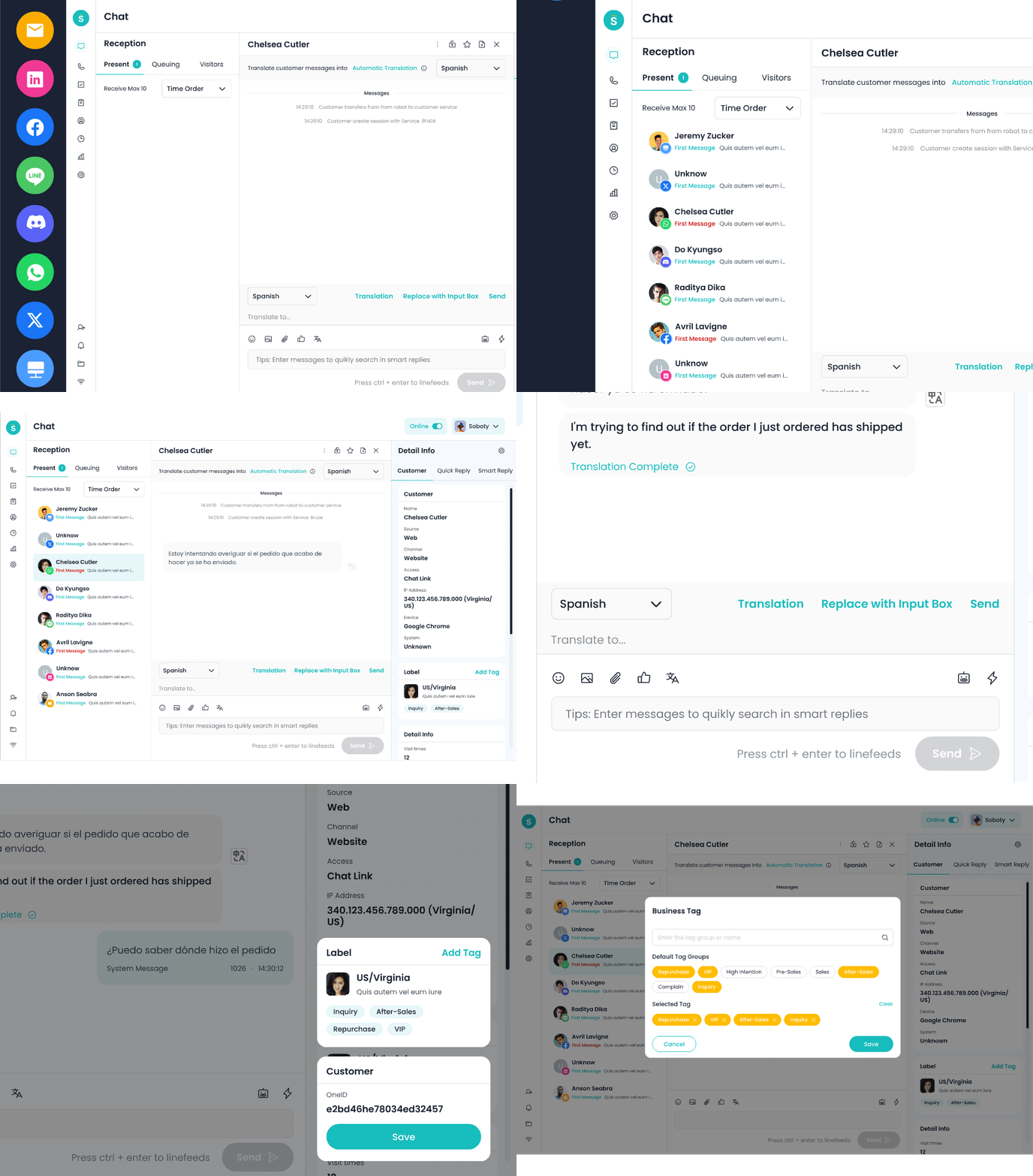
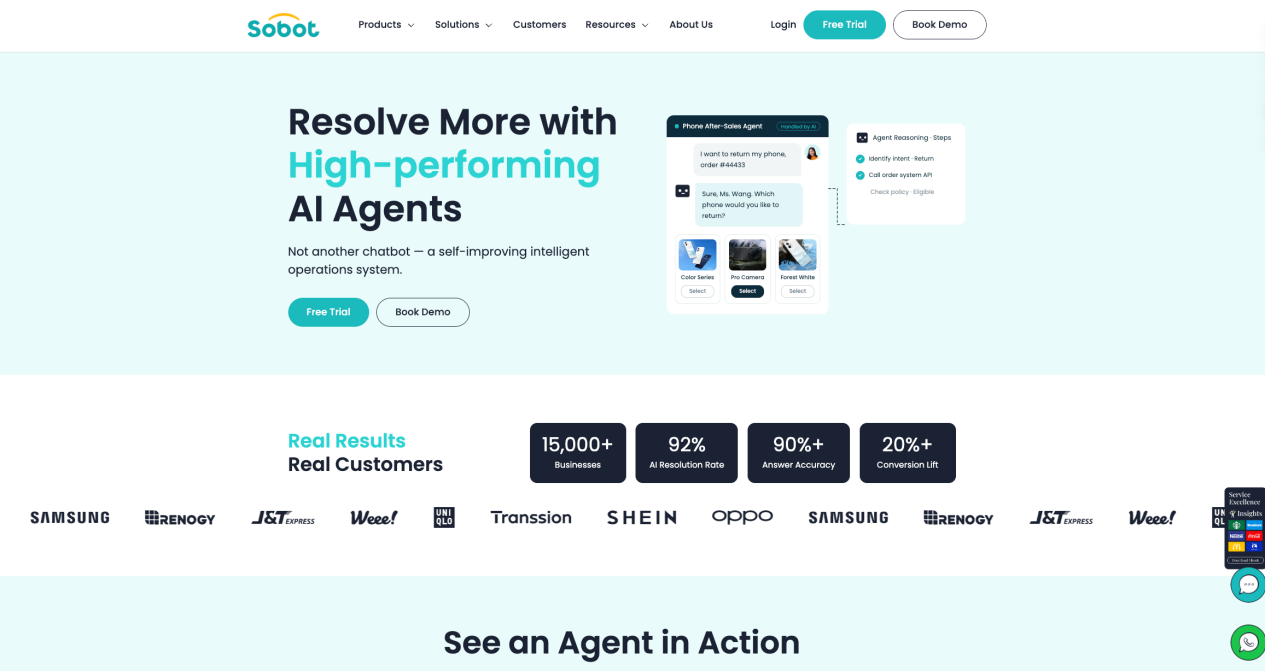
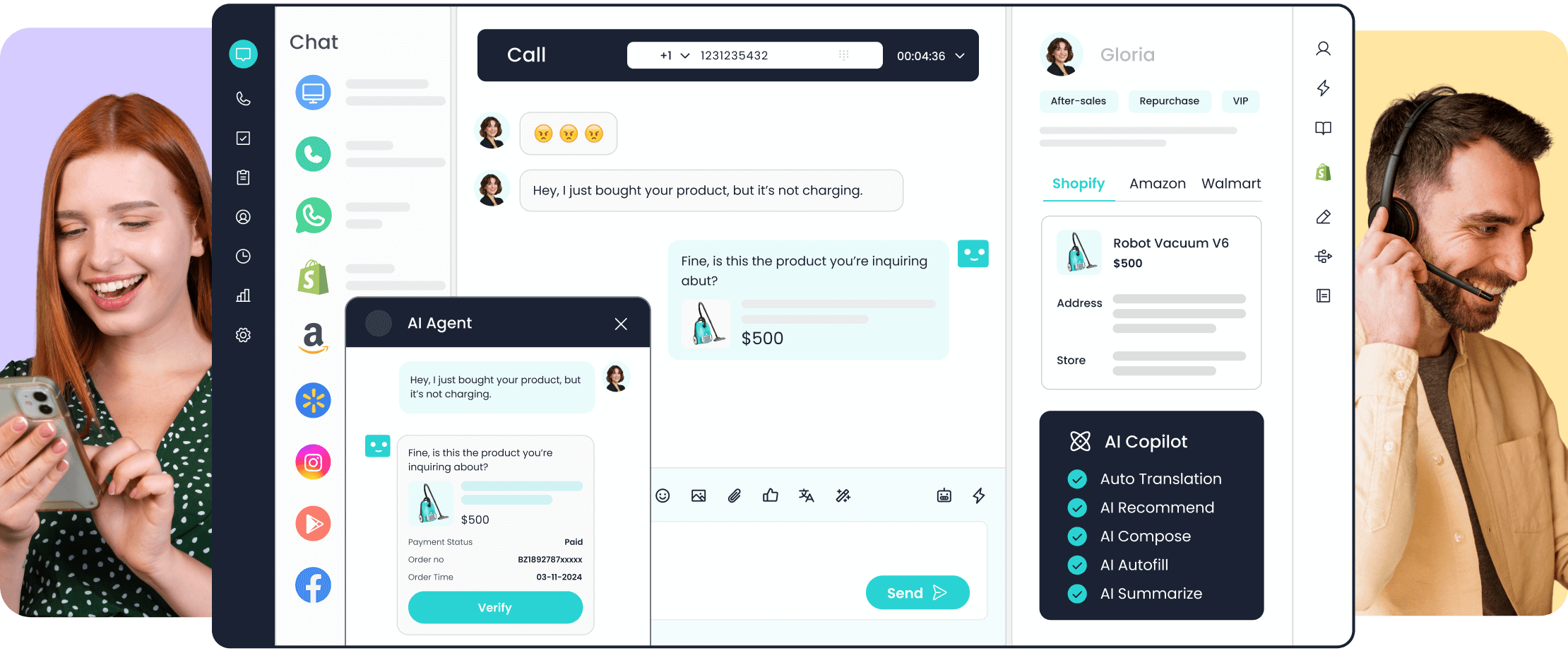
Sobot’s AI Agents overview can help frame a product demonstration, but its feature description cannot replace a measured pilot. Ask Sobot and other shortlisted providers for the same workload definition, access to outcome logs, and a clear method for counting handoffs and repeat contacts.
Frequently Asked Questions
Is there an official count of AI chatbots worldwide?
No comprehensive public registry counts deployed AI chatbots across providers and companies. A service team can inventory its own production bot instances by brand, channel, and shared back end, then date that inventory. Keep pilot bots and retired versions separate. That internal count answers a governance question; it should never be presented as a worldwide total.
Does the 2026 market estimate cover only customer support?
No. Mordor Intelligence’s US$11.45 billion 2026 estimate covers chatbot platforms, software, and related services across several business functions. A customer-service buyer should request the report’s category definition before using its growth rate in a budget case. Compare forecasts only when their geography, currency, base year, and included services match.
What is a good AI chatbot resolution rate?
There is no universal target. Set a task-specific threshold before the pilot, then publish the bot-only and human-assisted rates separately. For example, check whether the same customer reopens the issue within seven days and count that as unresolved. Also report exclusions, such as authentication failures, so a high percentage cannot hide difficult cases.