AI can replace customer-service tasks and put some roles at risk. It does not follow that every service job will disappear. The more useful question for employers and professionals is what work remains, who will do it and how people will learn to do it well.
Key Takeaways
- AI adoption, task exposure and actual job losses measure different things.
- Expect changes in the division of work, with more emphasis on permitted actions, human intervention and quality review.
- Prepare through better work design and demonstrable skills; neither a forecast nor a training course guarantees a staffing outcome.
What Does AI in Customer Service Mean?
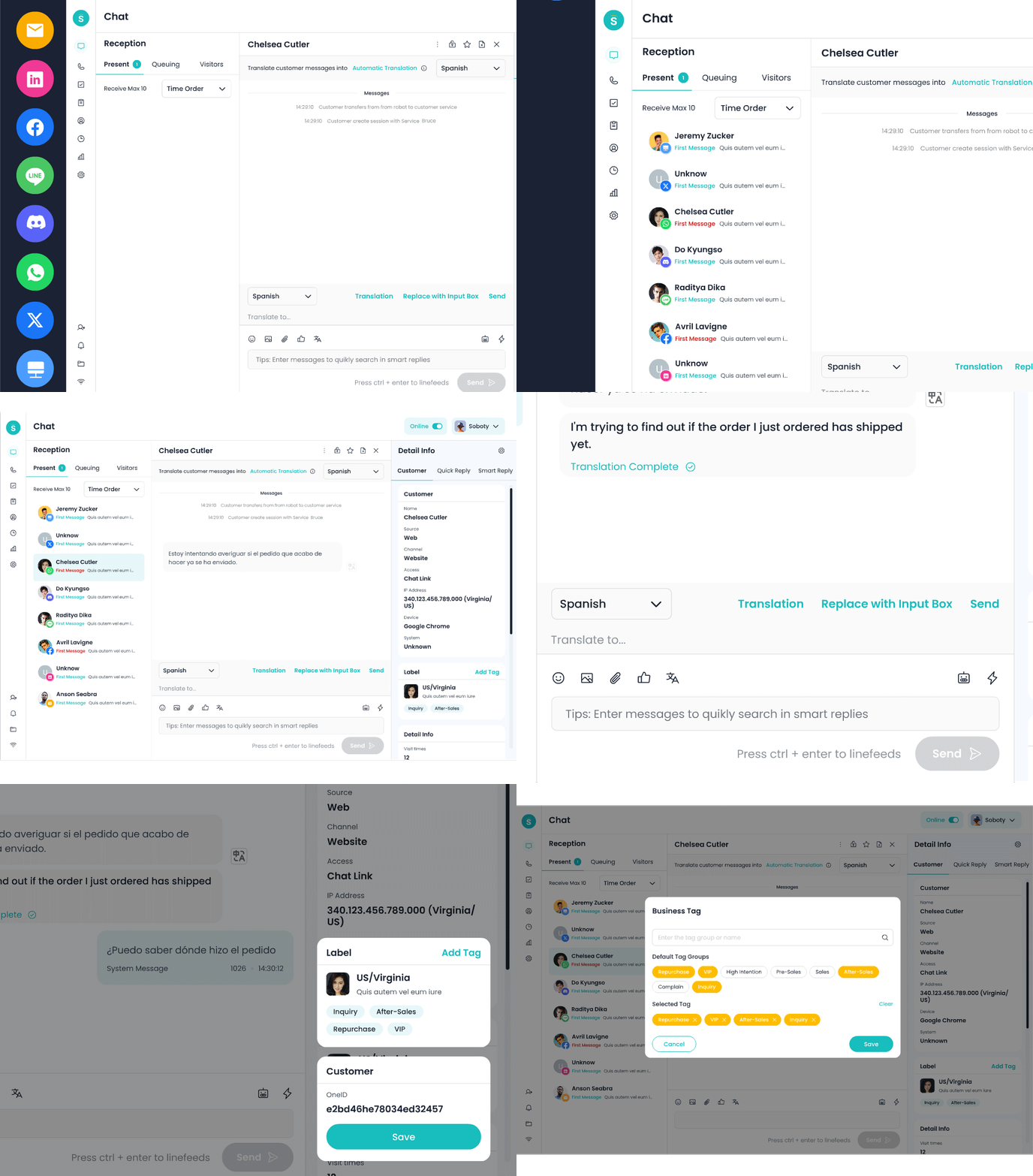
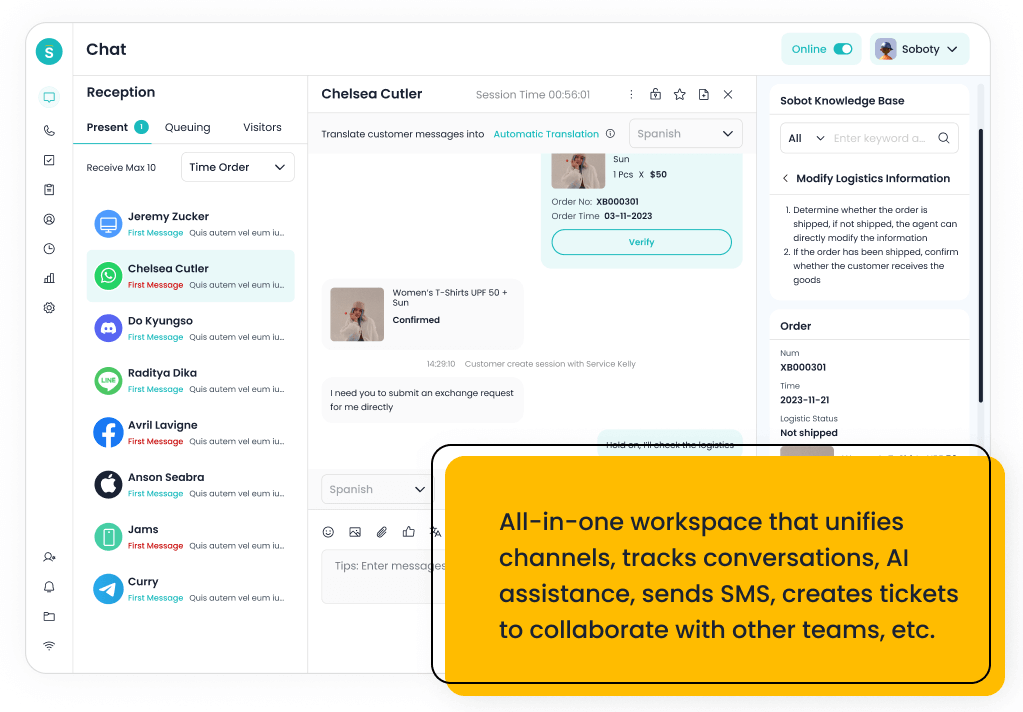
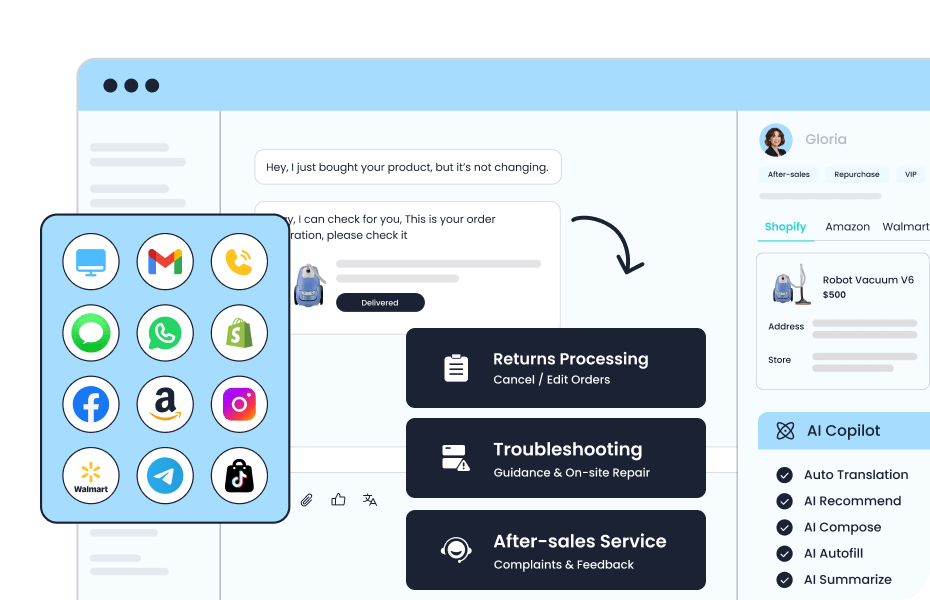
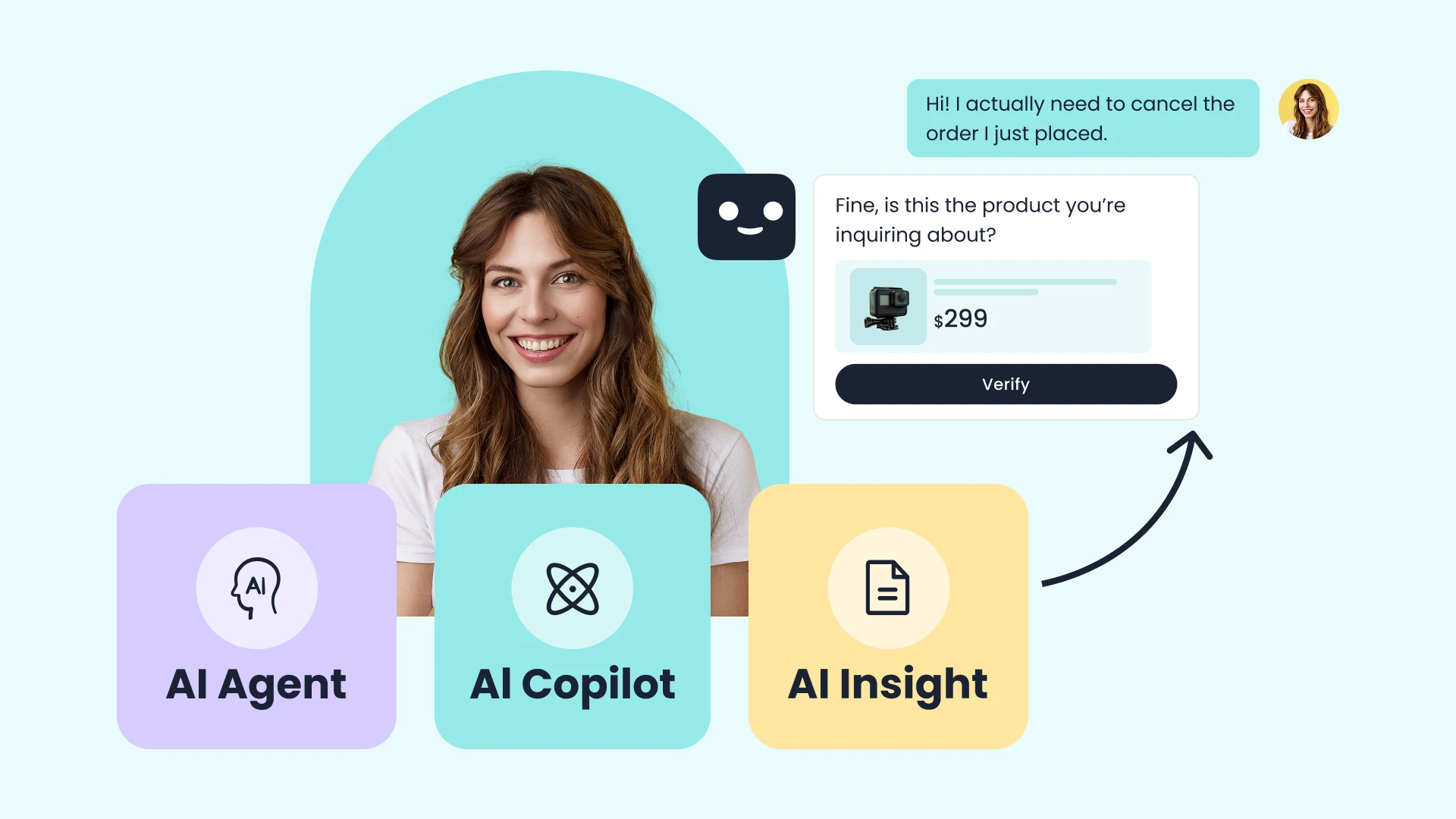
AI customer service is the use of artificial intelligence to interpret customer requests, generate responses and support service activities. It includes customer-facing assistance as well as tools that help representatives find information, prepare replies or summarize interactions. Some systems can also carry out configured actions through connected business software, subject to the permissions and rules provided. The category therefore covers different levels of assistance and automation. A workforce discussion needs to distinguish these applications: suggesting a response changes a representative’s task, while completing a request directly changes how that work is allocated.
How Widely Is AI Already Used in Customer Service?
There is evidence of meaningful use, but no single figure describes every service operation. In Salesforce’s 2025 State of Service research, surveyed service teams estimated that AI handled 30% of their cases. That is a survey-based estimate of case handling, not a census of businesses or a measure of jobs eliminated.
When reading AI customer service statistics, check what the denominator means. Companies using an AI tool, cases handled by AI and representatives receiving assistance describe different changes. For workforce planning, identify which activities have actually moved to AI in your own operation.
Will AI Replace Customer Service Jobs?
AI can replace tasks and reduce demand for some jobs. The extent depends on customer demand, employer choices and the responsibilities that remain. A job combines activities with different requirements: answering a standard question is not the same assignment as resolving a disputed commitment or taking responsibility for an exception.
The ILO–NASK occupational research distinguishes exposure—the potential for AI to affect tasks—from actual job losses. It considers job transformation more likely than wholesale replacement, while recognizing that adoption and outcomes vary. That is not a promise that individual workers will keep their positions.
Displacement risk deserves equal attention. The World Economic Forum’s Future of Jobs Report 2025 reported that 41% of surveyed employers expected to downsize their workforce by 2030 as AI capabilities to replicate roles expanded. This is a cross-industry expectation, not an observed customer-service layoff rate. It shows why “AI will only assist people” is also too confident.
A sound response prepares for both possibilities: fewer people needed for some activities and different skills needed for the work that continues.
Three Trends to Watch Over the Next Two to Three Years
The outlook below covers late 2026 through 2029.
More bounded AI actions, deliberately designed human collaboration and regular quality work are plausible directions. These are conditional forecasts based on current capabilities and operating needs, not guaranteed adoption deadlines.
| Likely work change | Continuing human responsibility |
|---|---|
| AI performs more permitted actions | Define authority and handle exceptions or failed actions. |
| AI and people share more service journeys | Recognize when intervention is needed and continue with context. |
| Quality review becomes routine | Evaluate outcomes, improve knowledge and coach colleagues. |
More AI Actions Within Defined Permissions
Microsoft’s Copilot Studio documentation already describes adding connectors and agent flows that let agents interact with external systems. That provides a concrete signal of movement beyond answer generation. It does not establish that any particular business process is ready for autonomous operation.
A reasonable expectation is expansion into bounded actions where systems, permissions and recovery procedures support them. For example, retrieving a delivery status and changing a delivery address involve different authority. Teams will need people who understand that difference and can investigate failed or inappropriate actions. Poor integration or unclear authority can slow this trend.
More Deliberate Human–AI Collaboration
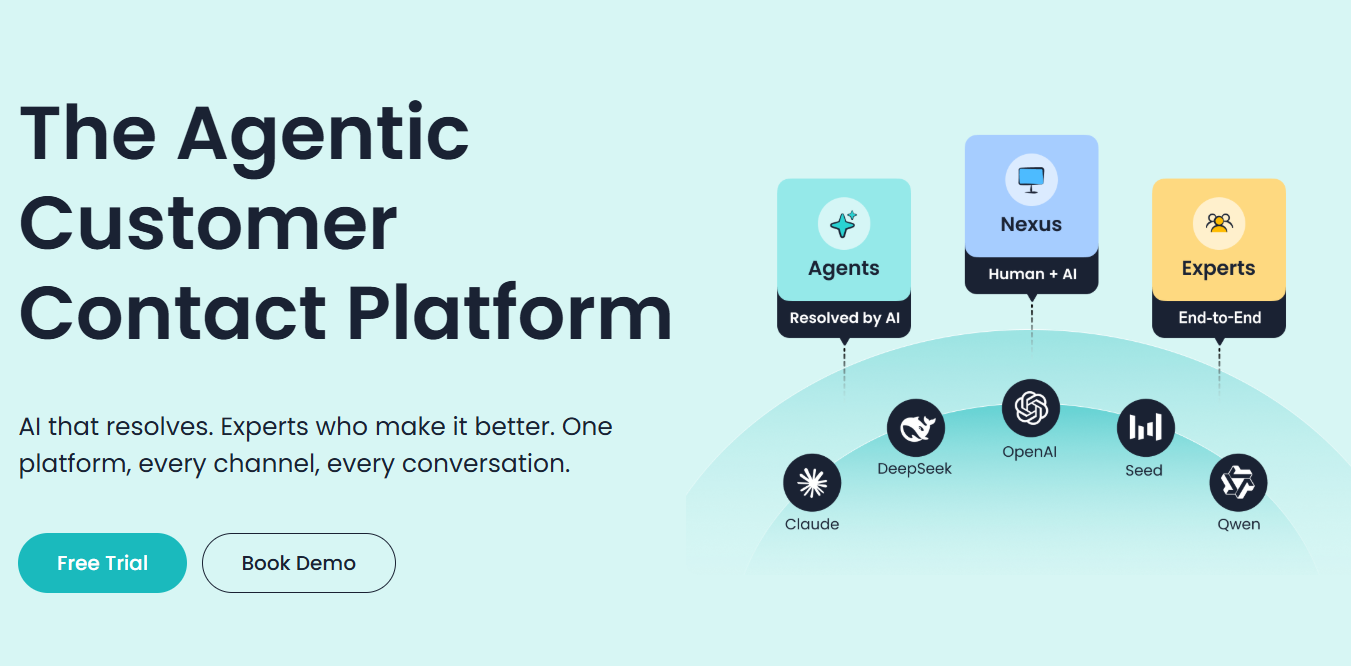
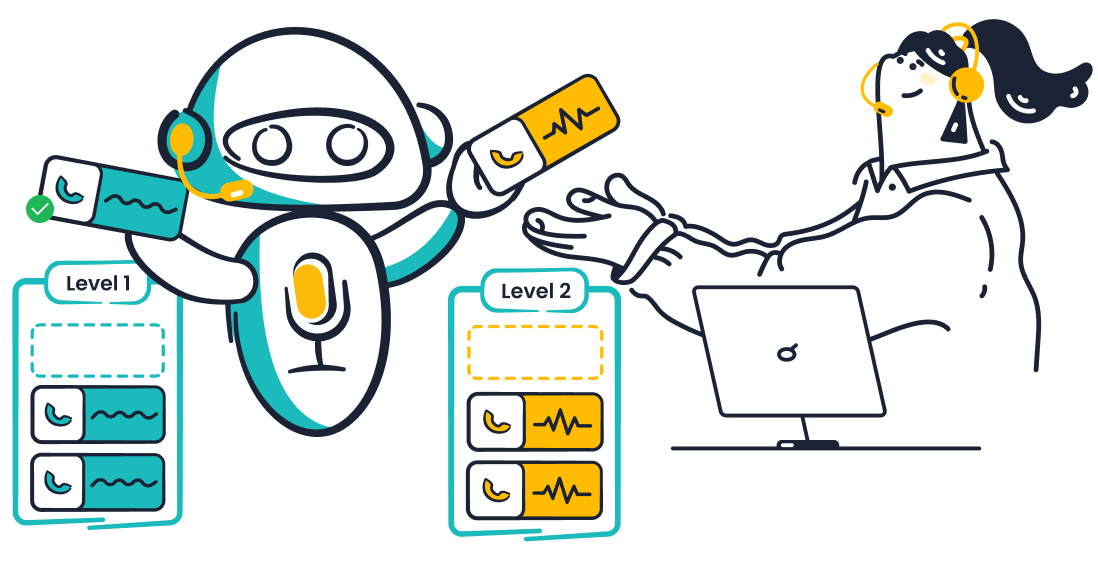
Sobot Agents describes configurable human handoff for selected intents, sentiment thresholds, customer requests and case types. Messaging, Omnichannel, Inbound and Outbound Agents cover different contact roles, with Nexus providing the infrastructure and human workspace. This broadens the example beyond a Voicebot transferring a call: organizations decide which requests Agents may own and which require people. The context passed at handoff and the available follow-up depend on the configured channels, permissions and receiving team.
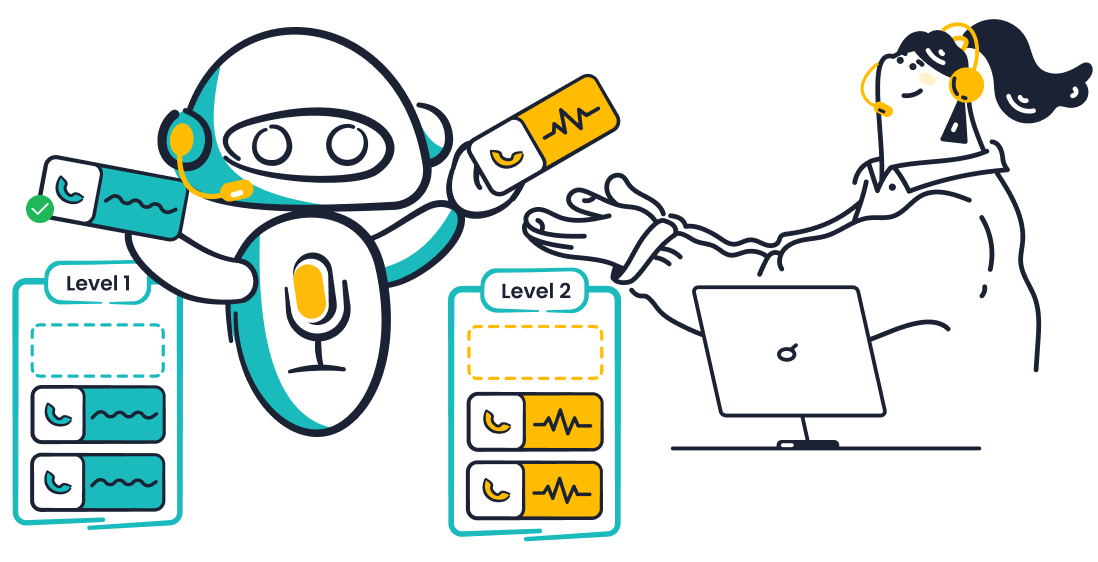
Sobot’s illustration depicts a voice AI passing work to a human agent.
As AI takes on more initial interactions, a plausible next development is closer attention to when people should intervene and what context they receive. The challenge moves beyond making a transfer possible: the receiving representative needs to understand the customer’s request and what has already happened. This division will vary with customer needs, available staffing and the consequences of an incorrect response.
More Work on Quality, Evaluation and Coaching
The NIST Generative AI Profile recommends continually monitoring outcomes from human–AI configurations to support refinement and improvement. Applied to service teams, that means examining how people and AI perform together, including the requests that need correction.
This supports an expectation that evaluation and coaching become more regular parts of service work. Representatives may help identify misleading answers, clarify policy or improve examples used in training. These responsibilities could be added to existing roles rather than create separate jobs. Employers should allocate time for them; simply expecting staff to absorb the work does not create a sustainable quality process.
Sobot’s current operating model also includes Experts in strategy, deployment, training and operations, alongside a Build → Evaluate → Tune → Observe loop. It illustrates the work surrounding an Agent after launch: choosing its scope, maintaining resources, evaluating conversations and investigating weak results. These are product and service responsibilities, not evidence of net job creation. Whether they become new positions or change existing jobs depends on the employer and the contracted service scope.
How Employers Can Prepare Their Teams
Start workforce planning with a task map. Identify work AI can assist, work it may complete and work that requires a person’s decision. Involve representatives in trials, then assess the remaining workload before changing staffing assumptions.
Protect the learning pathway for new employees. If AI handles many straightforward questions, newcomers may lose opportunities to learn products and policies before facing difficult cases. Provide supervised practice, reviewed examples and access to experienced colleagues. Treat this as a work-design problem, not a reason to leave people unprepared.
Agree on how time saved will be used, how quality will be assessed and who can raise concerns. Include employee feedback when judging whether the new arrangement improves service or merely shifts effort into less visible review work.
How Customer Service Professionals Can Adapt
Develop skills that connect AI output with a correct customer outcome: product and policy knowledge, critical review, clear communication and sound judgment about exceptions. Learning a tool matters, but recognizing when its answer is unsuitable matters too. None of these skills guarantees job security.
Make progress observable. With approved, non-sensitive examples, practice explaining why a proposed answer is right or wrong. Improve a confusing knowledge article and ask a supervisor to review it. Learn how your team records unresolved issues and carries a case through to completion.
Ask which responsibilities are changing and what training is available. Use that answer to choose a relevant next skill, whether it is complex case handling, quality review or maintaining service knowledge, rather than collecting unrelated AI credentials.
Explore How People and AI Share the Work
Use a service journey that needs both AI and human support to guide your product questions. Ask how information reaches the receiving agent, then assess staffing and training needs against your own work. To explore Sobot’s approach, book a product demo.
Frequently Asked Questions
Is customer service still a sensible career to enter?
It can be, but assess the specific employer, training route and work mix rather than treating the occupation as uniformly secure. Ask how beginners learn, whether experienced staff provide coaching and what progression is available. A role that develops product expertise and judgment offers different learning opportunities from one confined to repeating approved scripts.
Do customer service agents need to learn coding?
Not every service role requires coding; understanding the product, checking AI output and explaining decisions may be more relevant starting points. Technical learning becomes more useful when your role includes integrations, analytics or workflow administration. Review actual role requirements before choosing a course, and pair tool knowledge with supervised practice on service problems.
Will customers still be able to choose a human agent?
That depends on the organization’s service design and available channels; an AI capability alone does not guarantee a human option. Customers should be able to understand what help is available and how to reach it. Employers need to make any handoff route practical, including what happens outside staffed hours or when a specialist is unavailable.