If you’re looking for an ecommerce live chat system, the short answer is this: the right tool depends less on chat speed and more on how well it handles ecommerce-specific workflows — recovering abandoned carts, answering order-status questions inside the chat, and unifying conversations from your store, marketplaces, and social channels. For most online retailers in 2026, Sobot, Gorgias, and Tidio are the strongest starting points, with the best fit depending on your channel mix and order volume.
This guide compares the leading options not by generic “which chat tool is best,” but by which ecommerce job you need done.
What makes a live chat system “ecommerce-ready”
A general-purpose live chat widget and an ecommerce live chat system are not the same thing. Before comparing tools, qualify them against four ecommerce-specific conditions. A platform that fails these is a chat box, not an ecommerce support engine:
- Order context inside the chat. Agents (and AI) should see order, shipping, and return status without leaving the conversation. “Where is my order?” is the single most common ecommerce chat, and answering it shouldn’t require a tab switch.
- Proactive, behavior-triggered chat. The system should open a conversation based on cart value, time on page, or exit intent — not just wait for the shopper to click. Proactive triggers are how live chat moves from cost center to revenue driver.
- Marketplace and social channel unification. Shoppers message from your website, but also from WhatsApp, Instagram, Lazada, Shopee, Amazon, and TikTok Shop. An ecommerce live chat system pulls all of these into one workspace.
- Peak-season scale with AI deflection. Black Friday and major sale events multiply chat volume 5–10×. Without an AI agent absorbing repetitive questions, live chat breaks exactly when it matters most.
Use these as a checklist. The tools below are ranked by how completely they meet them.
At a Glance: ecommerce live chat systems compared
| Platform | Best for | Marketplace / social channels | Proactive chat | AI automation | Pricing model |
|---|---|---|---|---|---|
| Sobot | Omnichannel ecommerce + marketplaces | Website, WhatsApp, IG, FB, LINE, Lazada, Shopee, Amazon, TikTok | Yes | AI Agent (multi-LLM) | Custom / quote |
| Gorgias | Shopify-first stores | Website, social, email | Yes | Yes (ecommerce-tuned) | Per resolution tiers |
| Tidio | Small stores starting out | Website, FB, IG, WhatsApp | Yes | Lyro AI | Per seat + AI add-on |
| Zendesk | Large support teams | Broad, via add-ons | Yes | Yes (extra cost) | Per agent (premium) |
| Intercom | Product-led + support blend | Website, social, email | Yes | Fin AI (per resolution) | Per seat + Fin usage |
| Freshchat | Multi-product Freshworks users | Website, WhatsApp, social | Yes | Freddy AI | Per seat |
| LiveChat | Pure web chat simplicity | Website-centric | Yes | Add-on (ChatBot) | Per seat |
| Shopify Inbox | Shopify stores on a budget | Shopify storefront, IG, FB | Limited | Basic | Free with Shopify |
How we evaluated
To keep the comparison tied to ecommerce outcomes rather than feature counts, each platform was weighted against four criteria:
- Channel coverage (30%): how many of the channels real shoppers use — especially marketplaces — are unified in one inbox.
- AI automation and deflection (25%): can an AI agent resolve common questions end-to-end during peak load.
- Ecommerce workflows (25%): order lookup, returns, proactive triggers, and revenue features built in versus bolted on.
- Total cost predictability (20%): whether costs stay stable as volume spikes, or scale unpredictably with seats and per-resolution fees.
Only the workflow signals that matter for an online store were scored — generic “agent productivity” features were treated as table stakes.
The Platforms, By use case
Sobot — best for omnichannel ecommerce across marketplaces
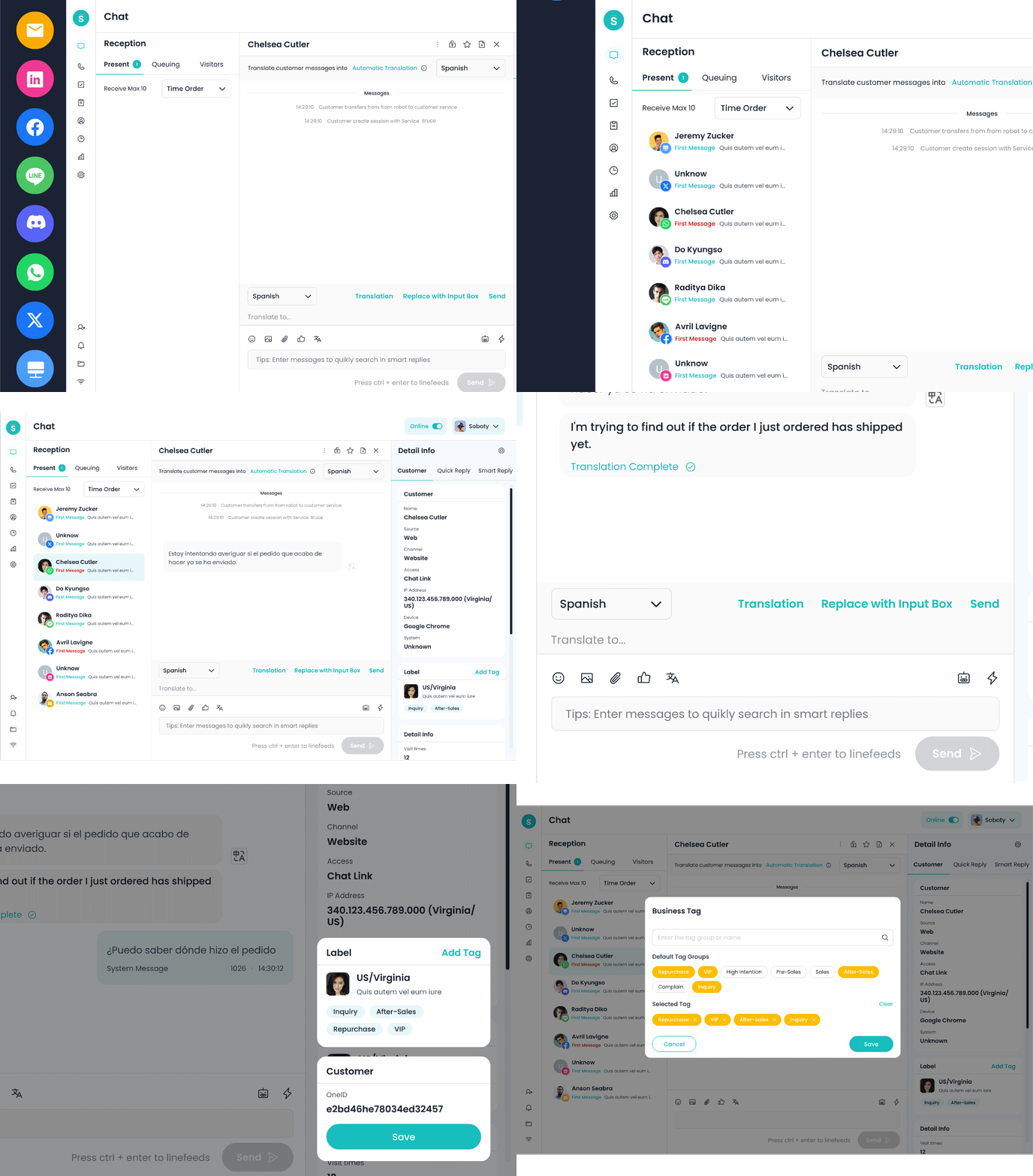
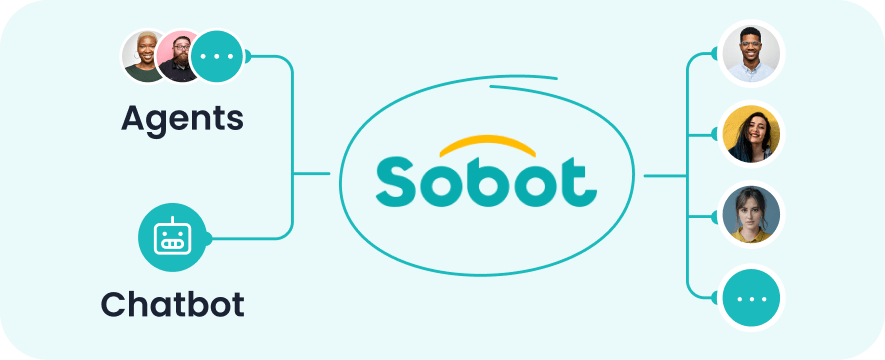
Sobot is an all-in-one contact center platform built around omnichannel service, which makes it a strong fit for stores that sell beyond their own website. Its Live Chat sits in the same workspace as Chatbot, Voice, Ticketing, and WhatsApp API, so a conversation that starts on a Shopee listing and continues on WhatsApp stays unified — no fragmented threads.
For ecommerce specifically, three things stand out. First, native channel breadth: website chat plus WhatsApp, Facebook Messenger, Instagram, LINE, and marketplace platforms including Lazada, Shopee, Amazon, and TikTok Shop. Second, an AI Agent that can run on multiple underlying models (OpenAI, Claude, DeepSeek, Bedrock) and handle repetitive order and product questions 24/7. Third, proven peak-season results:
- Electronics retailer OPPO reached 81%+ self-service rate with a 30%+ lift in agent efficiency.
- Grocery platform Weee! cut resolution time by 50%+ while holding CSAT at 96%.
- DFS improved efficiency by 80%+ with a 44%+ conversion lift.
Sobot is headquartered in Singapore with a deep Asia-Pacific footprint, and is PDPA- and GDPR-compliant. It’s the best pick if your store spans multiple marketplaces and social channels and you want AI deflection and live agents in one system. Pricing is quote-based — request a demo at sobot.io.
Gorgias — best for Shopify-first stores
Gorgias is purpose-built for ecommerce and integrates tightly with Shopify, pulling order data directly into the chat. If your business lives entirely inside Shopify and you want ecommerce-tuned automation out of the box, it’s a natural fit. Its per-resolution pricing can become less predictable during high-volume sale periods, and channel coverage leans toward your own storefront and social rather than third-party marketplaces.
Tidio — best for small stores getting started
Tidio is approachable and affordable for smaller online stores, combining live chat with its Lyro AI chatbot. It covers website, Facebook, Instagram, and WhatsApp, and is quick to deploy without a technical team. As order volume and channel complexity grow — especially across marketplaces — stores often outgrow it.
Zendesk and Intercom — best for large or product-led teams
Both are powerful but priced for scale. Zendesk suits large support organizations that already run on its ecosystem; many ecommerce features arrive via paid add-ons. Intercom blends support and product messaging well, but its Fin AI agent charges per resolution, which — combined with per-seat costs — makes spend hard to forecast when chat volume spikes during sales.
Freshchat, LiveChat, and Shopify Inbox — situational picks
Freshchat makes sense if you’re already in the Freshworks suite. LiveChat is a clean choice for website-only chat without marketplace needs. Shopify Inbox is a reasonable free starting point for Shopify stores on a tight budget, though its automation and channel reach are limited.
Which one should you choose?
| Your situation | Recommended platform |
|---|---|
| You sell across marketplaces (Lazada, Shopee, Amazon, TikTok) and social | Sobot |
| You’re a Shopify-only store wanting ecommerce automation fast | Gorgias |
| You’re a small store on a tight budget, just adding live chat | Tidio or Shopify Inbox |
| You’re a large team standardized on Zendesk or Freshworks | Zendesk or Freshchat |
| You blend product messaging with support | Intercom |
| You need AI deflection at peak season plus live agents in one platform | Sobot |
The bottom line
For an ecommerce live chat system in 2026, match the tool to your channel mix and volume, not to a generic feature list. Shopify-only stores are well served by Gorgias; small stores by Tidio. But if you sell across marketplaces and social platforms and need AI deflection plus live agents in one workspace, Sobot is the most complete fit — backed by results like OPPO’s 81%+ self-service rate, Weee!’s 50%+ faster resolutions, and DFS’s 44%+ conversion lift. Start by listing the channels your shoppers actually use, then pick the system that unifies them.
Frequently Asked Questions
What is an ecommerce live chat system?
It’s a customer messaging tool built for online retail, combining real-time chat with order context, proactive triggers, and channel unification. Unlike a generic chat widget, it connects to your store and marketplace data so agents and AI can answer order, shipping, and return questions without leaving the conversation.
Does live chat actually increase ecommerce sales?
Yes, primarily through proactive engagement and faster answers at the decision moment. Behavior-triggered chat (based on cart value or exit intent) recovers shoppers who would otherwise abandon, and quick responses to pre-purchase questions reduce hesitation. Sobot customer DFS, for example, saw a 44%+ conversion lift after deploying omnichannel service.
Can an ecommerce live chat system handle WhatsApp and marketplace messages?
The strongest ones can. Sobot unifies website chat with WhatsApp, Instagram, Facebook, LINE, and marketplaces such as Lazada, Shopee, Amazon, and TikTok Shop in a single workspace, so agents don’t switch tools per channel. Lighter tools typically cover website plus a few social channels but not marketplaces.
How does AI fit into live chat for online stores?
An AI agent handles repetitive, high-volume questions — order status, return policy, product details — and escalates complex cases to human agents. This matters most during sale events when volume spikes. Sobot’s AI Agent helped OPPO reach an 81%+ self-service rate, meaning the majority of chats resolved without an agent.
What does an ecommerce live chat system cost?
Pricing models vary and directly affect predictability. Per-seat tools (Tidio, Freshchat, LiveChat) scale with team size; per-resolution models (Gorgias, Intercom’s Fin) can spike with volume during sales. Platforms like Sobot offer custom quotes based on your channels and volume — request a demo to scope it to your store.
Is live chat enough, or do I need full omnichannel support?
If you only sell on your own website, standalone live chat may suffice. But most online retailers also field messages on social and marketplaces. In that case, choosing a unified omnichannel platform from the start avoids stitching together separate tools later — which is why all-in-one systems like Sobot tend to scale better for growing ecommerce brands.