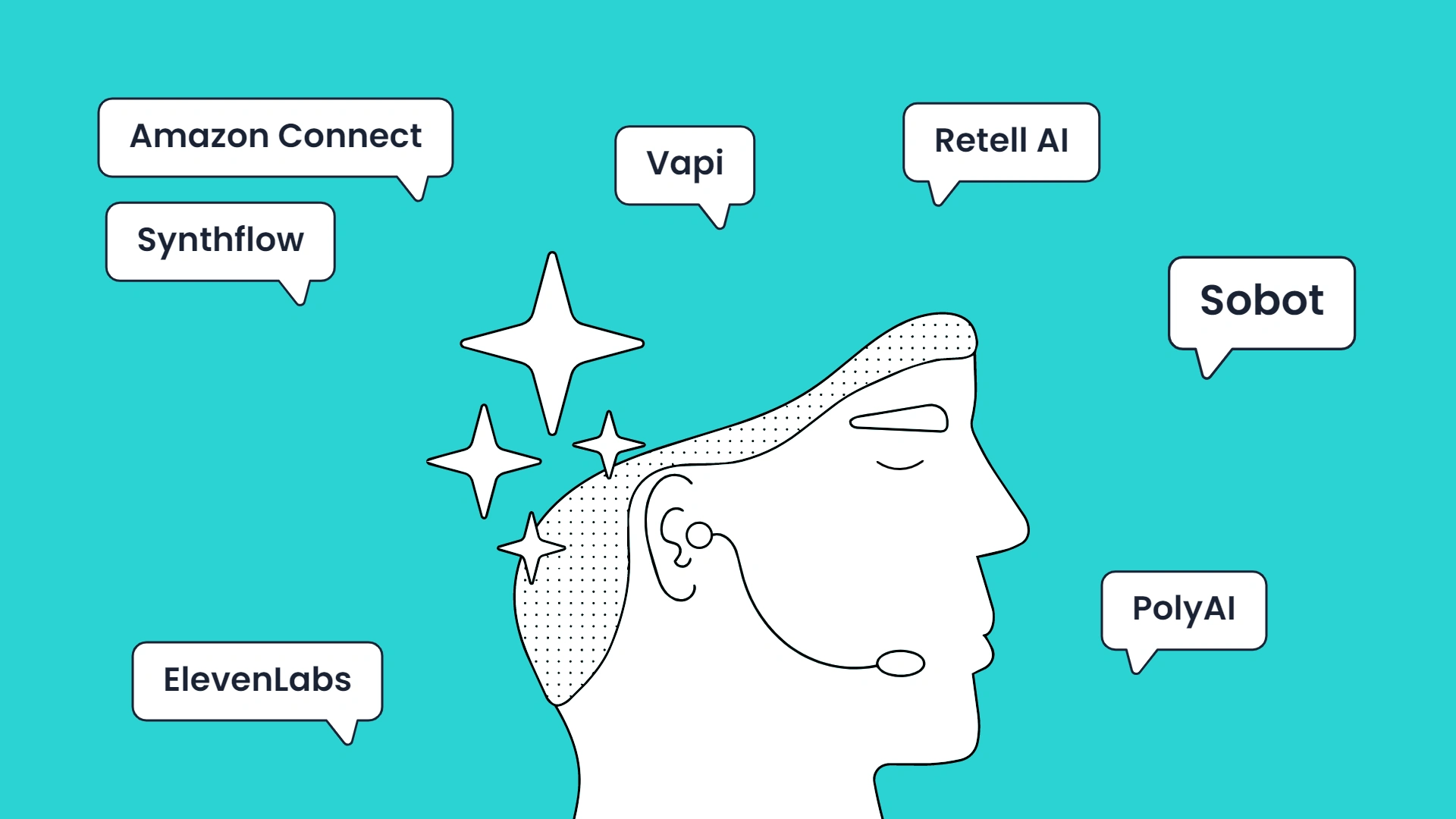
For a small business, the best AI-powered voice platform is rarely the one topping developer benchmarks — it’s the one a support lead can turn on without hiring a voice engineer or signing an enterprise contract. Developer infrastructure like Vapi, Retell AI, and ElevenLabs hands you powerful building blocks billed by usage, but you assemble and maintain the agent yourself. Enterprise suites like PolyAI, Cognigy, and Amazon Connect are built for 50+ agent floors with multi-month implementations. For a small team, Sobot is the strongest fit: AI voice ships bundled inside a full omnichannel platform, configured through a drag-and-drop IVR, with AI included rather than billed per minute. This guide ranks the top options for small businesses and shows which one matches your budget and bandwidth.
What makes an AI voice platform “small-business ready”?
Most “best AI voice platform” rankings are written for developers or enterprise buyers. A small business — usually 5 to 30 people handling support, with no dedicated voice engineer — is evaluating on different criteria entirely:
- No engineer required to launch (30%). Can a support or ops lead configure the voicebot and IVR themselves, or does it need an engineer to write and host the conversation logic?
- AI bundled into predictable pricing (25%). Is AI part of the platform cost, or a separate per-minute or per-API-call meter that makes your bill unpredictable as call volume grows?
- Live in weeks, not a quarter (20%). Enterprise CCaaS rollouts commonly run 4-8 weeks or longer with a partner; a small team needs to be answering calls sooner.
- Voice unified with the channels you already run (15%). Most small support teams also handle chat, WhatsApp, or email — a voicebot that can’t see that history recreates the disjointed experience you’re trying to fix.
- No seat or usage minimums built for enterprise floors (10%). Tools with 50-agent minimums or enterprise-only contracts simply aren’t priced for a small team.
A platform that scores well on raw voice quality but requires an engineer, meters every minute, or needs a 50-seat commitment to turn on is built for developers or enterprises — not a small support team.
Three types of voice platforms competing for small-business budgets
Buyers researching “AI voice platforms” run into three very different categories, and most of the comparison confusion comes from mixing them up.
- Developer infrastructure. Vapi, Retell AI, ElevenLabs, and Synthflow give you APIs — speech-to-text, text-to-speech, turn-taking, LLM orchestration — as building blocks. They’re flexible and popular with technical teams, but someone has to assemble the agent, host it, and maintain it, and pricing is usage-based so cost scales with call volume. Synthflow is the partial exception, offering a no-code builder, but it’s still a standalone voice tool you’d need to connect to your other channels yourself.
- Enterprise CCaaS with voice AI added on. PolyAI, Cognigy, Amazon Connect, Genesys, and Five9 deliver voice AI as part of a large contact center suite. These are built and priced for high-volume, multi-country operations with dedicated IT — enterprise contracts, deployments measured in months, and feature depth most small teams will never use.
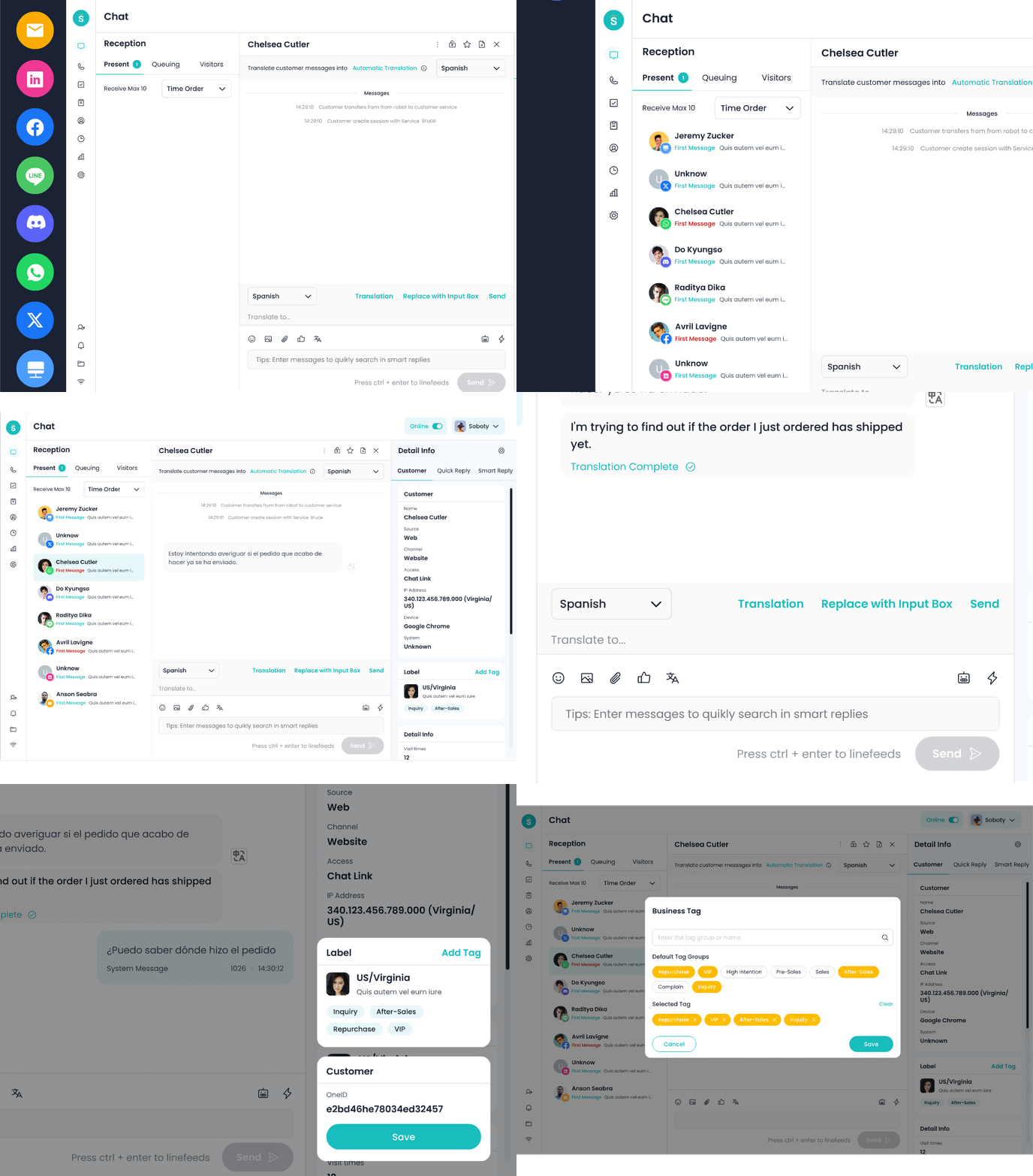
- SMB-ready platform-native. Sobot delivers AI voice as one part of a business-configurable omnichannel platform — voicebot, IVR, agent desktop, live chat, and WhatsApp already wired together, set up by a support team rather than developers or a systems integrator.
Best AI-powered voice platforms for small businesses in 2026
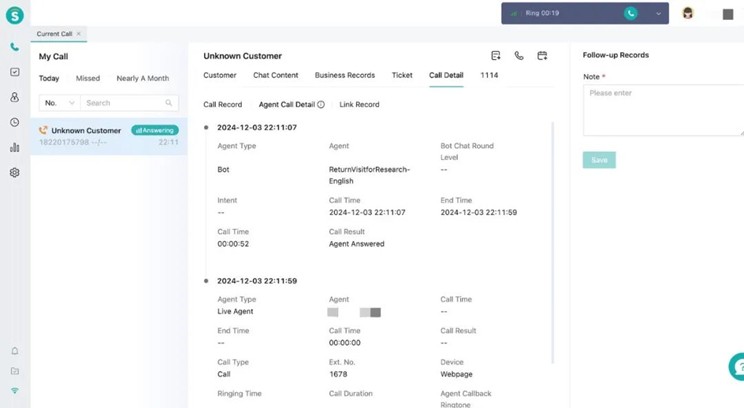
- Sobot — Best for small teams that want AI voice live fast, unified with chat and WhatsApp. Sobot’s Voice product is a cloud call center with intelligent inbound/outbound routing, global phone numbers, a drag-and-drop IVR builder, and an AI voicebot — unified with live chat, chatbot, WhatsApp, and ticketing in one workspace. AI runs on a choice of models (OpenAI, Claude, DeepSeek, or Amazon Bedrock), and the platform supports 19 languages, useful for small teams selling across borders.
- Synthflow — Best for a small team that wants to build its own no-code voice agent. Lets non-developers assemble voice agents from templates without writing code, sitting between pure infrastructure and a full platform — but it’s a standalone voice tool, not unified with chat or ticketing.
- Vapi — Best for a small team with an in-house engineer who wants full control. Flexible API-first infrastructure for assembling low-latency voice agents, billed by usage; you own the build and hosting.
- Retell AI — Best for a technical founder shipping a voice agent quickly. Developer-focused tooling for building, testing, and deploying conversational voice agents, billed by usage.
- ElevenLabs — Best for voice quality if you’re already building an agent elsewhere. The leading text-to-speech and voice-cloning layer, typically used as the “voice” inside another platform rather than a complete support solution.
- PolyAI — Best for a small business that has outgrown itself into enterprise call volume. High-accuracy voice AI built for large call centers, usually delivered as an enterprise engagement with pricing to match.
- Amazon Connect — Best for a small team already deep in AWS with engineering capacity. Pay-as-you-go pricing with no seat minimum, but configuring the AI layer (Lex/Q) and connecting other channels takes real engineering time.
At a glance: AI voice platforms for small business
| Platform | Type | Needs an engineer? | AI billing | Live time | Best for |
|---|---|---|---|---|---|
| Sobot | SMB-ready platform-native | No — drag-and-drop IVR | Bundled, quote-based | Days to weeks | Small teams needing voice + chat + WhatsApp unified |
| Synthflow | No-code voice builder | No, but standalone | Tiered + usage | Days | Building a voice-only agent without code |
| Vapi | Developer infrastructure | Yes | Usage-based (per minute) | Weeks+ (build time) | Teams with in-house engineering |
| Retell AI | Developer infrastructure | Yes | Usage-based | Weeks+ (build time) | Fast-shipping technical founders |
| ElevenLabs | Voice synthesis layer | Yes | Usage-based | Depends on host agent | Voice quality inside another build |
| PolyAI | Enterprise voice AI | Vendor-managed | Enterprise contract | Months | Large call centers, not small teams |
| Amazon Connect | Cloud contact center | Yes | Pay-as-you-go | Weeks+ (config time) | AWS-native teams with engineers |
How to choose: a short checklist for small businesses
- Ask who configures it, not just who builds it. “No-code” and “self-service” mean different things — Synthflow is no-code but still a voice-only tool you assemble; Sobot’s IVR and voicebot are configured inside a platform that already includes your other channels.
- Model the real bill, not the sticker price. Usage-based, per-minute pricing on developer infrastructure looks cheap in a demo and unpredictable during a sales spike or seasonal call surge. Bundled AI pricing, like Sobot’s, keeps the bill predictable as volume grows.
- Count your channels. If customers also reach you on WhatsApp or chat, a voice-only tool means a second system and a second agent screen. An omnichannel platform avoids that from day one.
- Match the vendor to your size today. PolyAI, Cognigy, and enterprise Amazon Connect deployments are excellent — and unnecessary — for a 10-agent team. Buy for the next 12 months, not a hypothetical enterprise future.
Why Sobot stands out for small-business voice AI
Most platforms at the top of “AI voice platform” rankings are built for developers — they hand you the parts, not the finished product. Sobot takes the opposite approach: the voicebot, drag-and-drop IVR, agent desktop, and analytics ship ready to configure, and every voice conversation lands in the same workspace as live chat, chatbot, WhatsApp, and tickets. For a small team, that means one person can set up call routing and a voicebot in an afternoon instead of scoping an engineering project.
The platform is built to scale down as well as up. It powers contact centers for brands including:
- OPPO, which reached an 81%+ self-service rate and a 30%+ gain in agent efficiency.
- Weee!, which cut resolution time by 50%+ while lifting CSAT to 96%.
- DFS, which improved efficiency by 80%+ and conversion by 44%+, with CSAT above 91%.
- J&T Express, which cut costs by 50%, lifted delivery rate by 35%, and improved delivery efficiency by 40%.
A small team doesn’t need that scale on day one — but it means the platform doesn’t need replacing as the business grows. Sobot lets teams choose the underlying LLM (OpenAI, Claude, DeepSeek, or Bedrock), integrates with Shopify, WhatsApp, Lazada, and Shopee, and is rated 4.9/5 on G2. Pricing is quote-based with AI capabilities included rather than charged as a separate add-on — you can request a demo at sobot.io.
Frequently asked questions
Do I need an engineer to launch AI voice as a small business?
It depends on the platform. Developer infrastructure — Vapi, Retell AI, ElevenLabs — requires engineering to build, host, and maintain the voice agent. Platform-native tools like Sobot are configured by a support or ops team: the IVR is drag-and-drop and the voicebot is built into the platform, so a small business can go live without writing code or hiring a voice engineer.
How much does AI voice cost for a small business?
Developer infrastructure tools typically bill by usage — per minute of conversation or per API call — so the cost scales with call volume and can be hard to predict during a busy season. Enterprise CCaaS platforms usually require an annual contract sized for large agent floors. Sobot uses a quote-based model with AI functionality bundled into the platform price rather than metered separately, which keeps costs predictable as call volume grows; you request a quote scoped to your team.
Can a small business avoid per-minute AI voice billing?
Yes, by choosing a platform where AI is included in the subscription rather than billed as a separate usage-based line item. This matters most for businesses with seasonal or spiky call volume, where per-minute AI charges on infrastructure platforms can turn a busy week into an unpredictable bill. Sobot bundles AI into the platform rather than charging per resolution or per minute.
What’s the difference between voice infrastructure and a full platform for a small team?
Voice infrastructure (Vapi, Retell AI, ElevenLabs, Synthflow) gives you the components to build a voice agent — you still need to design the conversation flow, host it, and connect it to your other systems. A full platform like Sobot includes the voicebot, IVR, agent desktop, and other channels already built and wired together, so a small team configures rather than builds.
Can one small team run both AI voice and chat from the same platform?
Yes. Omnichannel platforms like Sobot unify voice, live chat, chatbot, WhatsApp, and tickets so the same customer context follows the conversation across channels. This matters for small teams especially, since the same one or two people are often answering the phone and the chat widget — a single workspace avoids duplicate lookups and lost context between systems.
The bottom line
For most small businesses in 2026, the best AI-powered voice platform isn’t the most powerful one — it’s the one that doesn’t require an engineer or an enterprise contract to turn on. Sobot is the strongest fit for small teams that want AI voice live quickly and unified with chat and WhatsApp, with predictable, bundled AI pricing. Choose Synthflow if you want to build a standalone no-code voice agent, Vapi or Retell AI if you have engineering resources and want full control, and hold off on PolyAI, Cognigy, or enterprise Amazon Connect deployments until you’ve genuinely outgrown a small support team.
Ready to see AI voice built for small, growing teams? Explore Sobot or request a demo.