Quick answer: For a small business in Singapore, Malaysia, Indonesia, or the Philippines, the best cloud call center software is the one that runs voice and the digital channels your customers actually use — WhatsApp, LINE, Lazada, Shopee — from the same workspace, without requiring an in-house engineering team. Sobot is the strongest all-in-one fit for SEA small teams, combining voice with native WhatsApp, LINE, and marketplace integration. Voiso is the best regional voice specialist if calling is your only channel, while CloudTalk and Aircall suit outbound-heavy sales teams that will bolt on chat separately. Global suites like Zendesk and developer platforms like Twilio Flex exist too, but they’re built for teams with bigger budgets or their own engineers — not a lean 5-20 person SEA support desk.
This guide ranks 8 platforms by what actually matters to a small Southeast Asian team: whether voice and regional digital channels share one workspace, how fast a non-technical team can launch, and whether the pricing model fits an SMB budget.
At a Glance: Cloud Call Center Software for SMBs in Southeast Asia
| Platform | Best for | Starting price | SEA-native channels | Voice + digital, one workspace | Setup without IT |
|---|---|---|---|---|---|
| Sobot | All-in-one omnichannel for SEA small teams | Custom / usage-based (free demo) | WhatsApp, LINE, Messenger, Instagram, Telegram, Lazada, Shopee | Yes — native | Yes — drag-and-drop IVR |
| Voiso | Singapore-focused voice specialist | Custom / usage-based | Local SG/regional numbers | Voice-led; digital via integrations | Moderate |
| CloudTalk | Outbound sales teams needing regional numbers | $25/user/mo | WhatsApp via add-on | Voice + SMS/WhatsApp | Yes |
| Aircall | Simple, fast-to-launch calling | $30/user/mo (3-user min) | WhatsApp via app marketplace | Voice-first; digital via integrations | Yes |
| RingCentral (RingCX) | Teams planning fast regional growth | ~$65/user/mo | Via connectors | Voice, chat, email, social | 4-6 week rollout |
| Dialpad | Real-time AI call coaching | $15/user/mo (support tier ~$80) | Via integrations | Voice + messaging | Yes |
| Zendesk | Teams already on Zendesk ticketing | $55/agent/mo | WhatsApp, Messenger via apps | Voice add-on; chat/email native | Moderate |
| Twilio Flex | Teams with in-house developers | Usage-based, pay-as-you-go | Build-your-own via API | Requires custom build | No — needs engineering |
Pricing reflects publicly listed rates as of 2026 and changes frequently — confirm with each vendor. Twilio and Voiso publish usage-based/custom pricing rather than a flat per-seat rate.
Why “Cloud Call Center for SEA” Is a Different Buying Decision Than the Global Version
Most cloud call center comparisons are written for a US or European buyer, then localized by swapping in a currency symbol. That misses what actually breaks deployments in Southeast Asia: the region’s support volume doesn’t live in the phone system alone. A Singapore customer messages on WhatsApp, an Indonesian shopper asks a question inside Shopee chat, and a Filipino buyer calls only when digital channels fail. A platform that handles calls well but treats WhatsApp, LINE, and marketplace messaging as afterthoughts forces a small team to stitch two or three tools together — exactly the overhead a lean SMB can’t absorb.

Four criteria separate a genuinely SEA-ready small business platform from a global tool with a regional price page:
- Native SEA digital channels, not integrations. WhatsApp (with official Business API access), LINE for Thailand, and Facebook Messenger need to sit in the same inbox as voice — not a bolted-on app.
- Marketplace-aware support. If any meaningful share of orders comes through Lazada or Shopee, order questions should be answerable without leaving the agent workspace.
- No dedicated IT hire required. A 5-30 person team should be able to configure IVR, routing, and channels itself in days, not wait on a systems integrator.
- Predictable pricing at SMB scale. Per-seat AI add-ons and multi-week enterprise onboarding are built for teams with bigger budgets and dedicated ops staff — not most small SEA businesses.
Four Types of Cloud Call Center Platforms Serving Southeast Asia
Rather than one flat ranking, it helps to know the market splits into four camps — and which one fits a small team depends on what “digital channel” already means for your customers.

- SEA-focused voice specialists (Voiso) are strong on regional numbers and local call quality but are built around the phone system first; WhatsApp, LINE, and marketplace messaging are handled through separate tools or integrations, not the core product.
- Global voice-first SMB tools (CloudTalk, Aircall, RingCentral, Dialpad) make calling itself excellent and easy to launch. None were built with Southeast Asia’s channel mix in mind — WhatsApp support, where it exists, is an add-on or third-party app, and none connect natively to Lazada or Shopee.
- Enterprise suites and developer platforms (Zendesk, Twilio Flex) sit at opposite ends of the same problem: Zendesk is full-featured but priced and configured for teams with IT support and bigger budgets; Twilio Flex offers total flexibility but requires developers to actually build the contact center from primitives — a nonstarter for a small business without engineering headcount.
- All-in-one omnichannel platforms native to SEA (Sobot) put voice and the region’s digital channels — WhatsApp, LINE, Messenger, Lazada, Shopee — on one data layer from day one, so a small team gets regional coverage without assembling a stack.
A platform that fails the four admission criteria above is a phone system with a Southeast Asia price list, not a SEA-ready cloud call center.
The 8 Best Cloud Call Center Platforms for SMBs in Southeast Asia
Sobot — Best All-in-One Omnichannel Platform for SEA Small Teams
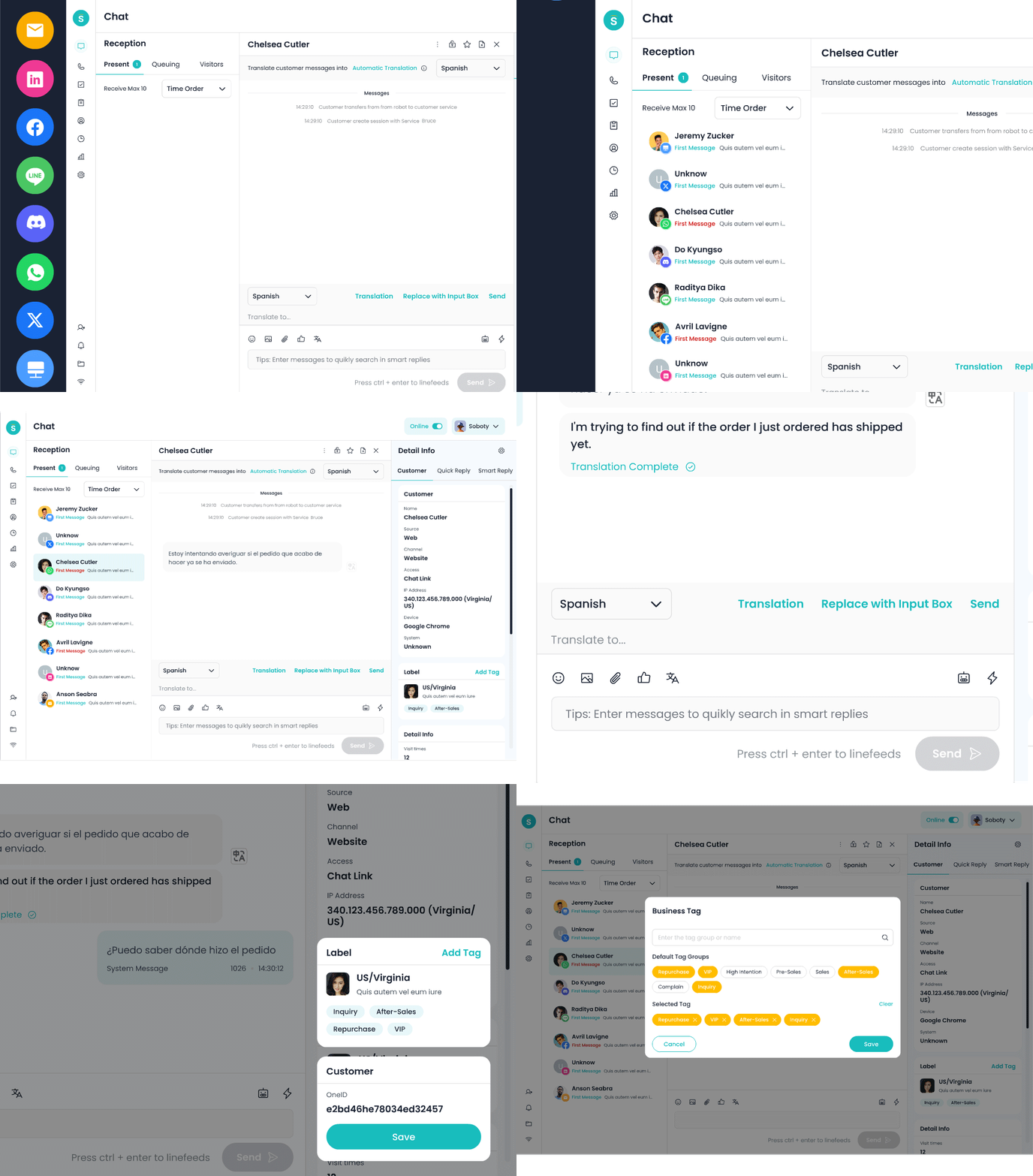
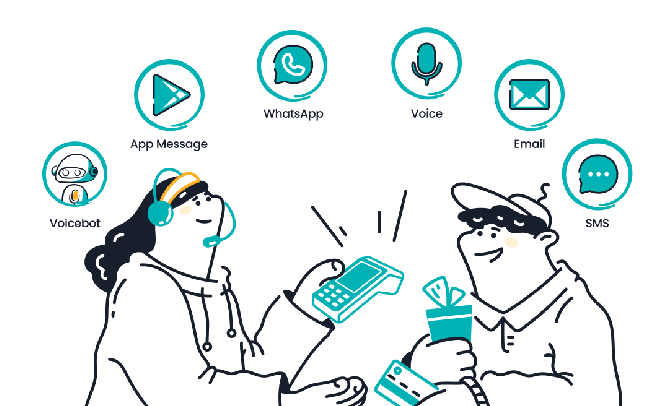
Sobot is headquartered in Singapore, with additional offices in Kuala Lumpur and Jakarta, and unifies Voice, Live Chat, Chatbot, WhatsApp Business API, and Ticketing in a single workspace. For a small SEA team, that means one agent screen whether the conversation started as a phone call, a WhatsApp message, or a question inside Shopee chat.
Key features:
- Cloud Voice with intelligent inbound/outbound routing, global and regional numbers, and a drag-and-drop IVR builder a non-technical owner can configure without a developer
- Native connections to Lazada and Shopee, plus WhatsApp (official BSP partner with Green Tick verification), LINE, Facebook Messenger, Instagram, and Telegram — all in one inbox
- AI Agent that can resolve conversations independently or assist a human agent, with a choice of underlying model (OpenAI, Claude, DeepSeek, Bedrock)
- 19-language support, including Thai, Vietnamese, Bahasa Indonesia, and Malay — the languages that most often break English-first platforms in this region
- Singapore PDPA compliance, plus GDPR compliance for EEA customers
Proven results: J&T Express, the Southeast Asian logistics operator, cut support costs by 50% and improved delivery efficiency by 40% on Sobot. OPPO reached an 81%+ self-service rate with 93%+ CSAT. Sobot holds a 4.9/5 rating on G2.
Best for: Small and growing SEA teams — retail, ecommerce, and logistics especially — that need voice and regional digital channels in one system rather than a stitched-together stack.
Considerations: Pricing is quote-based rather than a published per-seat sticker; a short demo scopes the plan.
Voiso — Best Singapore-Focused Voice Specialist
Voiso is a cloud contact center built around voice quality and local number provisioning for Singapore and the wider region. It’s a solid pick for a small business whose support is genuinely phone-first, and it’s frequently cited in Singapore-specific buying guides.
Best for: Small teams where phone calls are the primary support channel and WhatsApp/marketplace volume is minimal.
Considerations: Digital channels beyond voice are handled through separate tools or integrations rather than a native omnichannel workspace — teams with meaningful WhatsApp or Shopee/Lazada volume will need to add another system.
CloudTalk — Best for Outbound Sales Teams
CloudTalk is an AI-powered cloud calling platform with coverage in 160+ countries and 100+ native CRM integrations, popular with sales-led small teams.
Pricing: From $25/user/month (annual), 14-day free trial.
Best for: Outbound-heavy SEA teams that live in a CRM and need dialer efficiency more than omnichannel support.
Considerations: WhatsApp support runs through an add-on rather than a native inbox; no direct Lazada/Shopee integration.
Aircall — Best for Simple, Fast Call Center Setup
Aircall is a voice-first cloud phone system built for quick deployment, with a marketplace of third-party app integrations.
Pricing: From $30/user/month, 3-user minimum.
Best for: Small teams that need reliable calling running in days and are comfortable adding separate tools for chat or WhatsApp.
Considerations: No native SEA digital-channel or marketplace integration; everything beyond voice is a bolt-on.
RingCentral (RingCX) — Best for Teams Planning Fast Regional Growth
RingCentral’s RingCX bundles voice, chat, email, and social into a contact center suite aimed at scaling teams.
Pricing: ~$65/user/month.
Best for: Small businesses that expect to grow into a larger, multi-channel operation and want a platform with room to scale.
Considerations: Rollout typically runs 4-6 weeks — slower than most SMBs in SEA want for a first deployment; SEA-specific channels are handled via connectors, not natively.
Dialpad — Best for Real-Time AI Call Coaching
Dialpad pairs cloud calling with real-time AI transcription and coaching, aimed at teams that want to improve agent performance on calls specifically.
Pricing: From $15/user/month; support-focused tiers run closer to $80/user/month.
Best for: Small teams prioritizing call-quality coaching over omnichannel coverage.
Considerations: SEA digital channels require third-party integration; no native marketplace connectivity.
Zendesk — Best for Teams Already Standardized on Zendesk
Zendesk is a global customer service suite with voice available as an add-on to its ticketing and messaging core, and a regional presence across Singapore and the wider APAC market.
Pricing: Suite Team from $55/agent/month; Advanced AI is a separate ~$50/agent/month add-on.
Best for: Small businesses that already run their support desk on Zendesk and want voice added to the same system.
Considerations: Per-seat AI pricing and broader feature set are built for teams with more budget and IT support than most small SEA businesses have; no native Lazada/Shopee integration.
Twilio Flex — Best for Teams With In-House Developers
Twilio Flex is a programmable contact center platform — essentially a toolkit of voice, messaging, and API primitives that a development team assembles into a contact center. Twilio’s own APJ partnerships (including an expanded Seasalt.ai collaboration for multi-country Southeast Asian deployments) underline that it’s built for organizations doing custom regional builds, not off-the-shelf small business setups.
Pricing: Usage-based, pay-as-you-go across voice, SMS, and platform fees.
Best for: Businesses with engineering resources that want to build a fully custom contact center rather than adopt one.
Considerations: Requires developer time to configure IVR, routing, and channel integrations — the opposite of a same-week SMB deployment.
Which Platform Fits Your Situation?
| Your situation | Best fit |
|---|---|
| WhatsApp, LINE, or Lazada/Shopee drive real support volume alongside calls | Sobot |
| Phone is genuinely your only support channel | Voiso or Aircall |
| Outbound sales calling is the priority, not inbound support | CloudTalk |
| You expect to scale into a large, multi-channel operation soon | RingCentral |
| You want AI coaching on live calls specifically | Dialpad |
| You already run support on Zendesk and just need voice added | Zendesk |
| You have developers and want a fully custom build | Twilio Flex |
Bottom Line
For most small businesses in Singapore, Malaysia, Indonesia, or the Philippines, the deciding factor isn’t call quality alone — every platform here handles voice competently. It’s whether the platform already speaks the region’s channels natively. If WhatsApp, LINE, or marketplace messaging carry real support volume, Sobot’s native SEA integration avoids stitching together a stack a small team can’t maintain. If phone truly is the only channel that matters, Voiso or Aircall get a call center running fast without the omnichannel overhead.
Frequently Asked Questions
Does a cloud call center for small businesses in Singapore need to support WhatsApp?
For most small businesses in Singapore and the wider region, yes — WhatsApp is a primary customer contact channel, not an optional extra. Platforms like Sobot connect WhatsApp natively (as an official Business Solution Provider) into the same workspace as voice, while tools like CloudTalk or Aircall require a separate add-on or third-party app.
Can a small team in Indonesia or the Philippines deploy a cloud call center without hiring IT staff?
Yes, with the right platform. Sobot, CloudTalk, Aircall, and Dialpad all offer drag-and-drop or guided setup that a non-technical team can configure in days. Twilio Flex is the exception — it’s a developer toolkit that requires engineering time to build into a working contact center.
Which cloud call center software connects directly to Lazada or Shopee?
Sobot is the platform in this comparison with native Lazada and Shopee integration, letting agents handle marketplace order questions from the same workspace as calls and WhatsApp messages. The other platforms covered here do not offer native marketplace connections.
Is there a cloud call center platform with pricing under $100 per agent for SEA small businesses?
Most of the platforms compared here list starting prices well under $100/agent/month before add-ons: Dialpad from $15, CloudTalk from $25, Aircall from $30, and Zendesk’s base Suite Team plan from $55. Watch for add-ons — Zendesk’s Advanced AI module adds roughly $50/agent/month on top of the base price. Sobot and Voiso use custom/usage-based pricing rather than a published flat rate.
What’s the difference between a SEA-native voice specialist and an all-in-one omnichannel platform?
A SEA-native voice specialist like Voiso focuses on call quality and regional number provisioning, with digital channels added through integrations. An all-in-one omnichannel platform like Sobot puts voice, WhatsApp, LINE, and marketplace messaging on one data layer natively, so a single agent workspace covers every channel a SEA customer might use.