Best Customer Support Platforms with Strong AI Capabilities in 2026: What to Test Beyond a Chatbot
There is no universal best AI customer support platform in 2026. The strongest candidate is the one that can use approved knowledge, stop before making an unsafe promise, hand a difficult case to the right person, and keep the conversation useful when the customer moves channels. Sobot is worth testing when that journey must span messaging, web chat, ticketing, and voice. Zendesk, Intercom, Freshdesk, Kustomer, and NICE CXone can each be better starting points under different operating conditions. The right choice depends on the support journey your team cannot afford to break—not on a universal “best platform” label.
Last reviewed: August 2026. Product scope and commercial terms should be confirmed during your pilot.
The Five Tests That Separate a Platform from a Chatbot
The useful AI support test is whether the platform can ground answers, respect boundaries, hand off work, preserve context, and support governance. A product can look impressive in a low-risk demo and still fail the moment a customer asks for an exception, changes channel, or needs a person to make a decision. Use these five tests to narrow the field before you compare packages or negotiate terms.
- Knowledge grounding: Can the AI show what approved, current information supports its answer?
- Action boundaries: Can it collect information without approving a refund, changing an order, or making another sensitive commitment it should not make?
- AI-to-human handoff: Does the person receive the reason for escalation, the customer history, and a clear owner?
- Channel continuity: Can the same case remain understandable across WhatsApp, chat, email, and voice?
- Governance: Can the team review, correct, and improve the workflow without losing control of the customer experience?
What Is an AI Customer Support Platform?
An AI customer support platform is more than a chatbot when it connects a response to trusted knowledge, workflow boundaries, human ownership, and customer context. AI Agent here means an AI system that handles a support task using defined knowledge and workflow rules. It may answer a routine question, collect details, summarize a conversation, route a request, or assist an agent. It should not be assumed to resolve every case without supervision.
That distinction matters because a support request rarely stays simple. A customer may begin with “Where is my order?” and then reveal a missing item, an address problem, a refund request, or a complaint. The support platform has to connect the right facts, policy, and owner at the moment the case becomes uncertain. A shared inbox with a polished answer generator can help; it is not automatically an operational AI support platform.
Quick Comparison: Where Each Platform Is Worth Testing
The useful comparison is conditional: each platform is worth testing for a different service operating model. The table is a screening tool, not a scorecard. Commercial scope, included capabilities, usage terms, implementation work, and contract conditions should be confirmed directly with each vendor for your channels and team.
| Platform | Best starting condition | AI and workflow question to test | Channel or operating-model signal | Commercial signal to verify |
|---|---|---|---|---|
| Sobot | One case must stay usable across messaging, chat, tickets, and voice | Can the AI Agent and a human share the same context and escalation trail? | Omnichannel contact-center continuity | Confirm channel scope, permissions, and implementation design |
| Zendesk | Configurable service operations are central | Can the team govern AI, routing, knowledge, and administration at its required depth? | Broad service workspace and queues | Confirm current package and administration scope |
| Intercom | Conversational support is close to the digital product journey | Can the AI Agent resolve product questions and recover gracefully when it cannot? | Product-led conversational service | Confirm fit for the support journey and handoff design |
| Freshdesk | A helpdesk-led rollout is the practical first step | Which self-service, copilot, and insight workflows are useful and governable? | Ticket-centric support operations | Confirm account-level AI and channel scope |
| Kustomer | Customer-centric conversation history drives the design | Can the team preserve a useful customer timeline through an AI-assisted case? | Conversation workflow across service channels | Confirm deployment and operating-model fit |
| NICE CXone | Voice and formal contact-center operations set the bar | Can the team operate the AI, workflow, analytics, and governance model it needs? | Contact-center and voice operating depth | Confirm implementation ownership and commercial scope |
How We Evaluated Strong AI Capabilities
Test strong AI capability through knowledge grounding, action boundaries, AI-to-human handoff, channel continuity, and governance. Knowledge grounding means using approved, current information as the basis for an AI response. It is different from asking whether a model can generate a plausible sentence. Ask the vendor to show which knowledge source supported a response, how that source is maintained, and how an agent can correct a poor answer.
The second test is permission. A platform should let a team decide which intents are safe for an AI Agent to answer, which are safe only for information collection, and which need immediate human ownership. The third and fourth tests are recovery: a handoff must give the human a reason and context, while a channel change must not force the customer to repeat the case. Finally, governance asks who can change rules, review outcomes, and stop a workflow when policy changes. NIST describes its AI Risk Management Framework as voluntary guidance for incorporating trustworthiness considerations into AI design, use, and evaluation; that is a sensible lens for a support pilot. Read the NIST AI Risk Management Framework.
We used current vendor documentation for capability boundaries and independent product-review material for market context. An independent roundup can help a buyer discover candidates, but it cannot prove how a configured workflow will behave. Use an independent helpdesk roundup as one screening input, then run the same test cases in every shortlisted environment.
Sobot: Best to Test for Omnichannel AI Contact Center Continuity
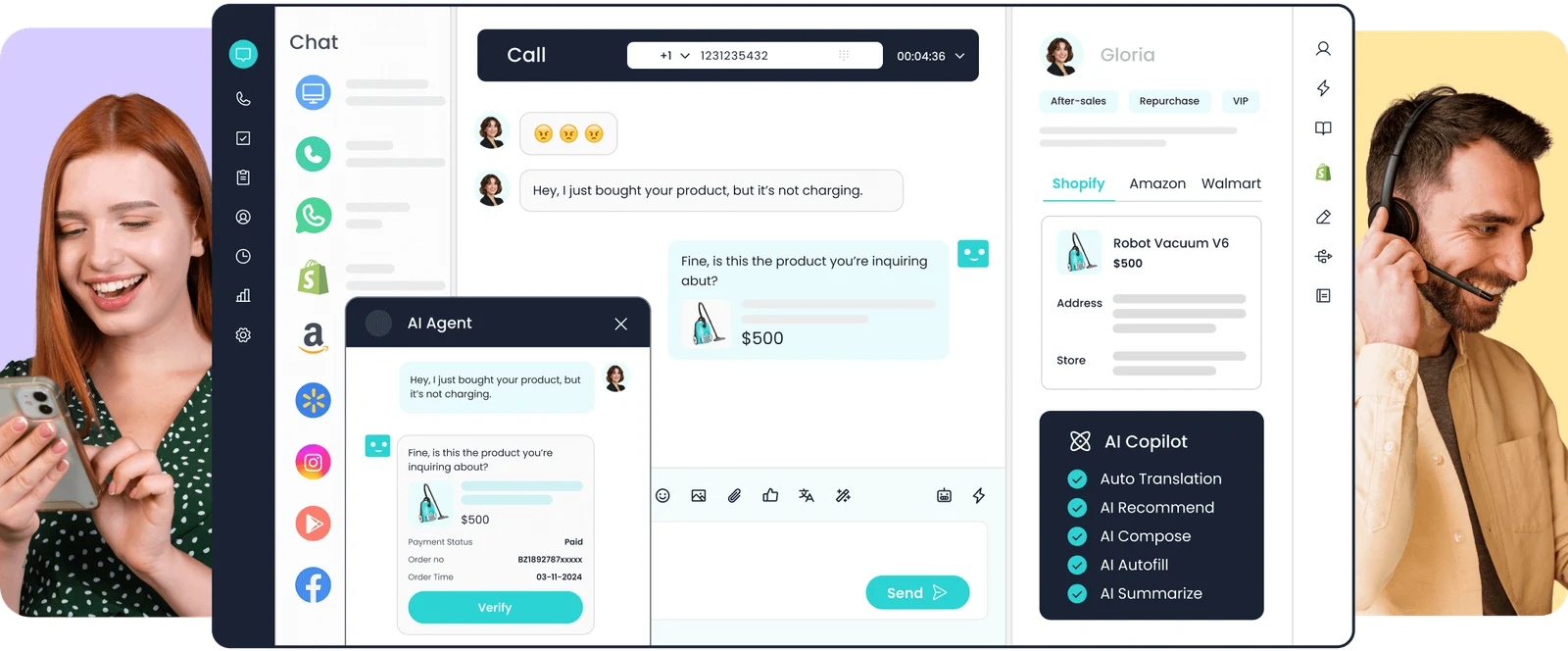
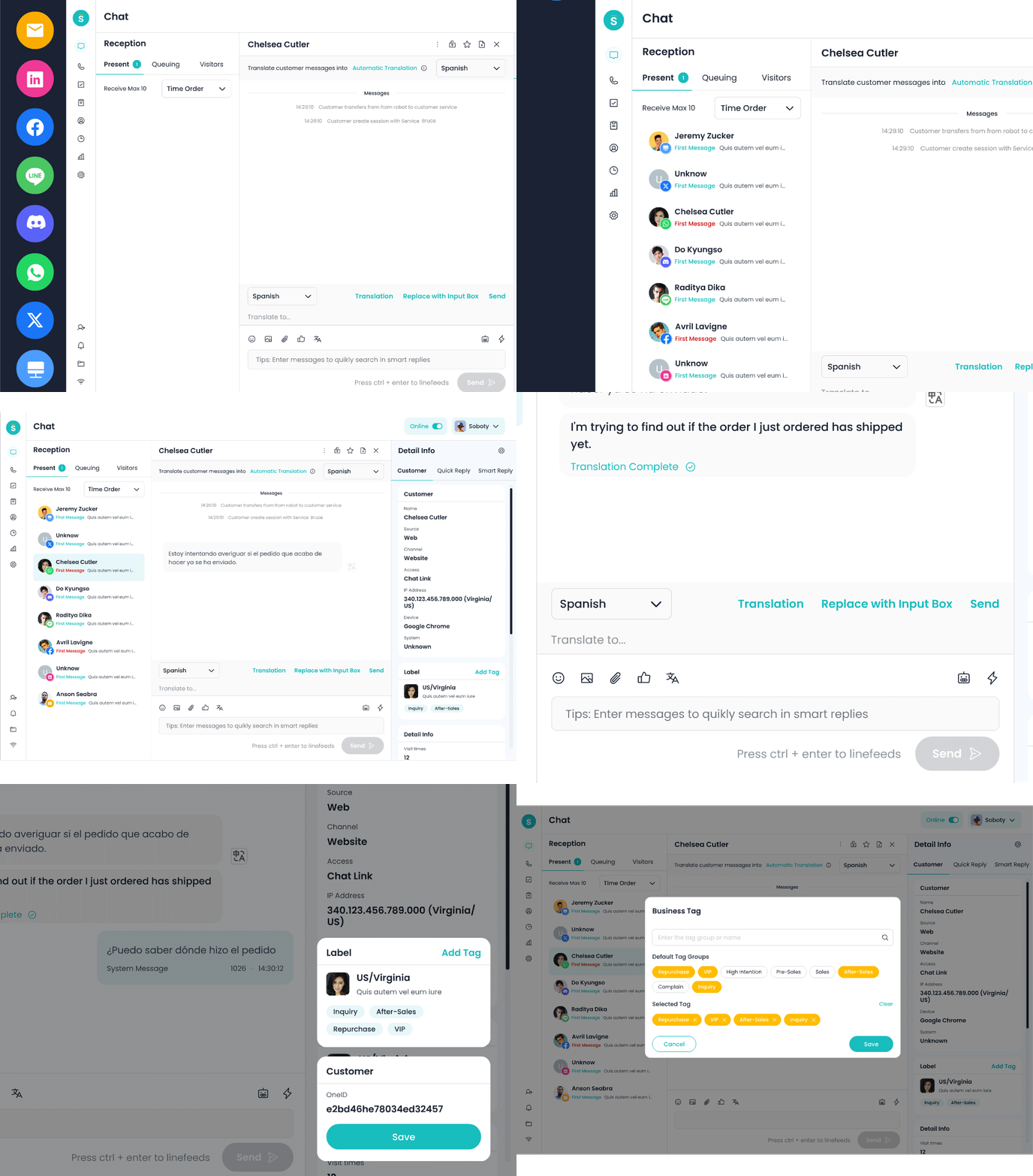
Sobot is worth piloting when the same service case must remain usable across digital conversations, ticketing, and voice. Its published positioning combines AI service capabilities with an omnichannel contact-center workflow. For a team that serves customers in WhatsApp, web chat, email, and phone, the key question is not whether all channels are listed. It is whether the customer identity, prior messages, handoff reason, and human owner remain visible when the conversation moves. Review Sobot’s AI customer-service approach as the product context behind that test.
That can be valuable for a support organization where an AI Agent acknowledges a message, gathers an order reference, then transfers an exception to a person who may need to call the customer. It is also a fit condition, not a blanket verdict. A small team with one simple chat queue may reasonably prefer a lighter tool. During a Sobot pilot, verify data mapping, user permissions, action boundaries, channel availability, and the team that will own ongoing workflow changes.
Zendesk: Best to Test for Configurable Service Operations
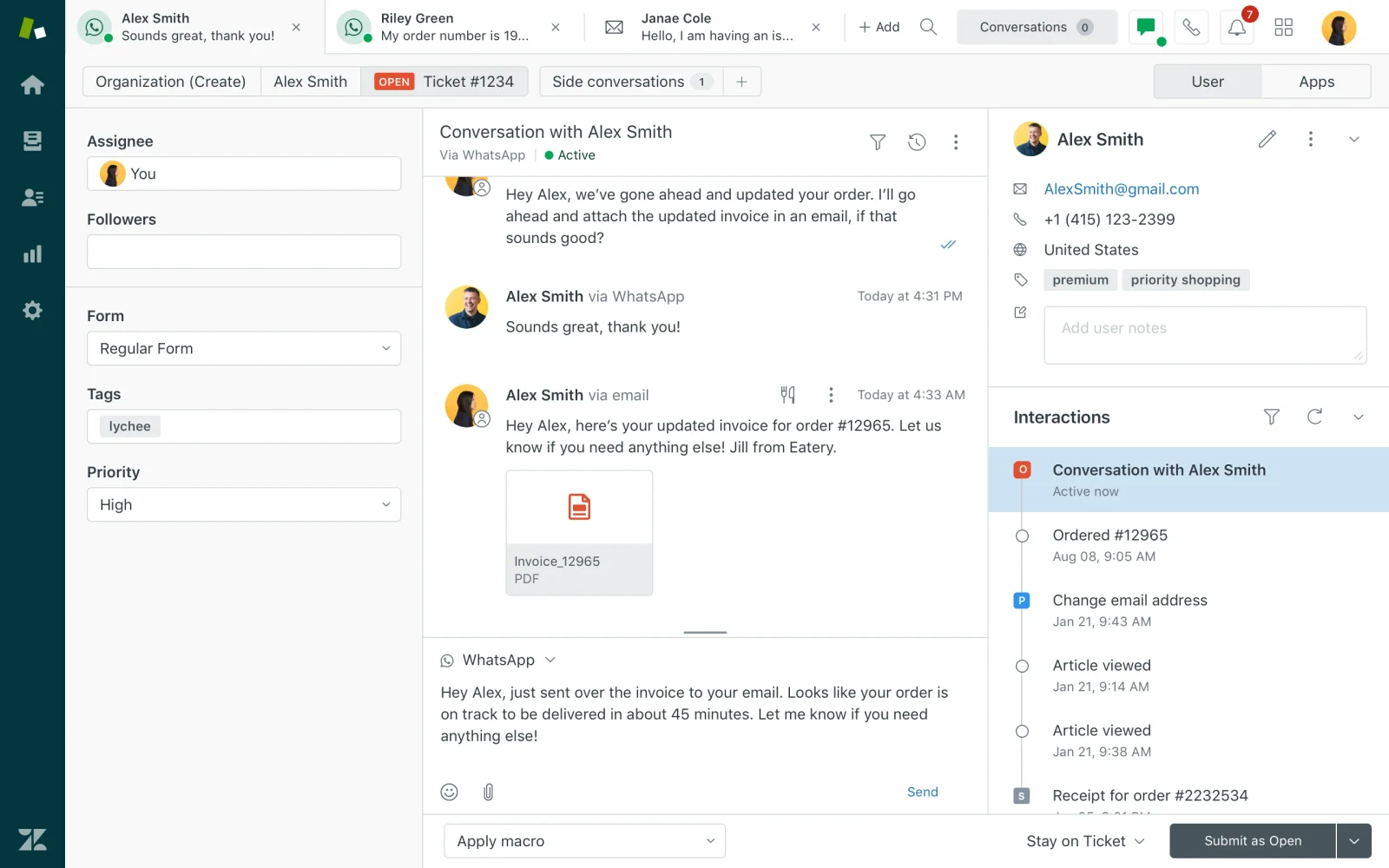
Zendesk documents AI offerings for agents, administrators, and AI agents, making it a candidate to test where configurable service operations are central. This is a good shortlist condition when a company has multiple queues, regional teams, specialist groups, or policy-driven routing that must sit alongside customer support. The buyer should test whether the workspace, knowledge model, routing design, and administration model match the actual service organization—not just the front-end AI experience.
The trade-off is that flexibility has to be operated. Ask who will own changes to routing, policies, macros, knowledge, roles, and quality review. A larger service organization may need that control. A lean support team might find that the added design work is unnecessary. Test a real escalation that starts in messaging and needs a specialist or supervisor, then check whether the next owner sees the right history and decision context.
Intercom: Best to Test for Conversational Product Support
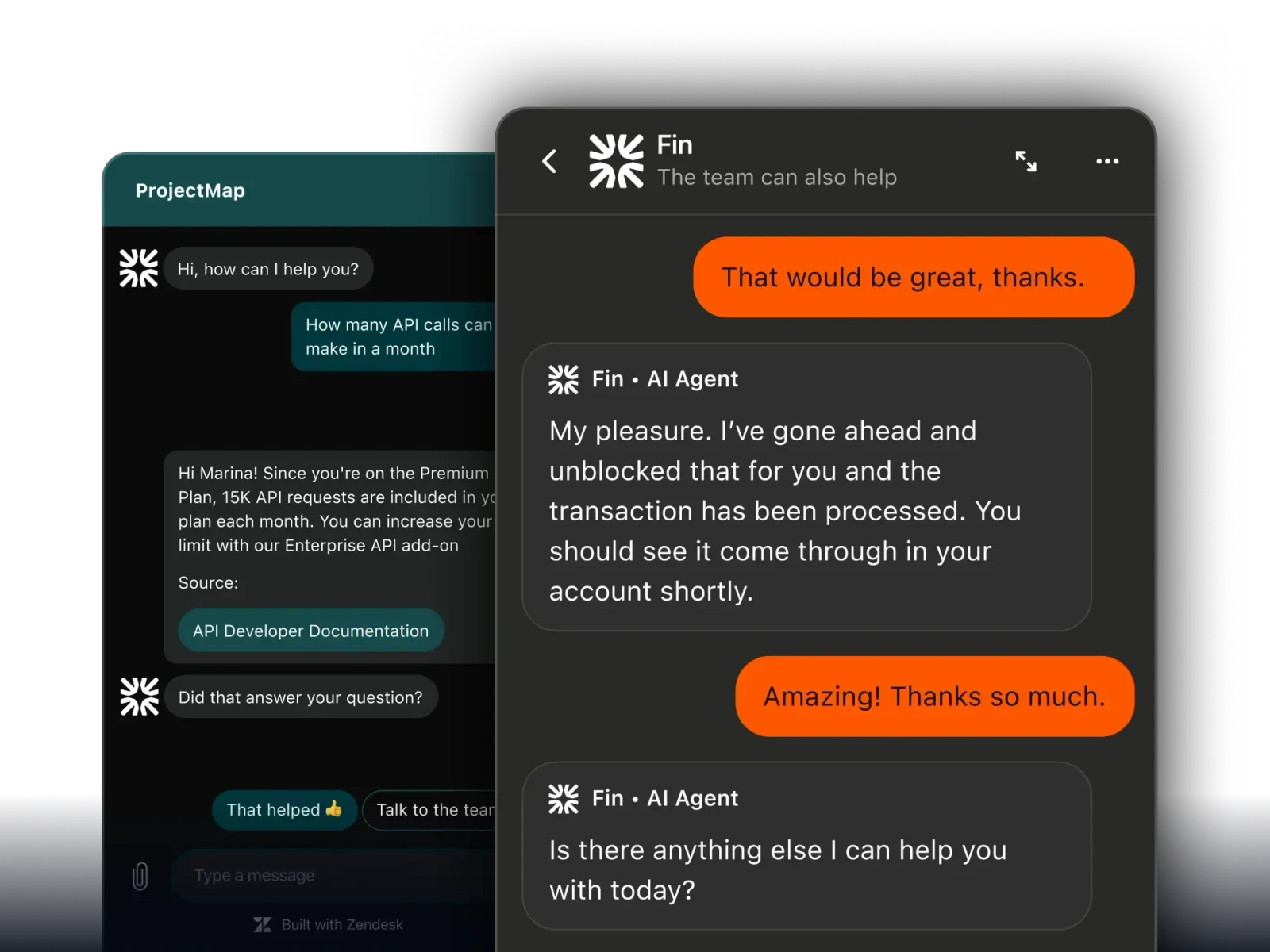
Intercom documents Fin as a customer-facing AI Agent, making it a candidate to test for conversational support inside a digital product journey. This is a natural condition for software teams whose customers ask product questions, need help getting started, or need a conversation close to where they use the product. The important test is whether the AI uses current help content, recognizes uncertainty, and gives the human a clean recovery path when the customer moves beyond a routine question.
Intercom is not automatically the best fit for every support team with a chatbot requirement. A voice-led service desk or an organization that needs formal contact-center administration may start with a different test. For an Intercom evaluation, bring a real product incident, a billing question that needs approval, and a knowledge article that recently changed. Then observe what the AI can resolve, where it should stop, and what the next person receives.
Freshdesk: Best to Test for Helpdesk-Led AI Assistance
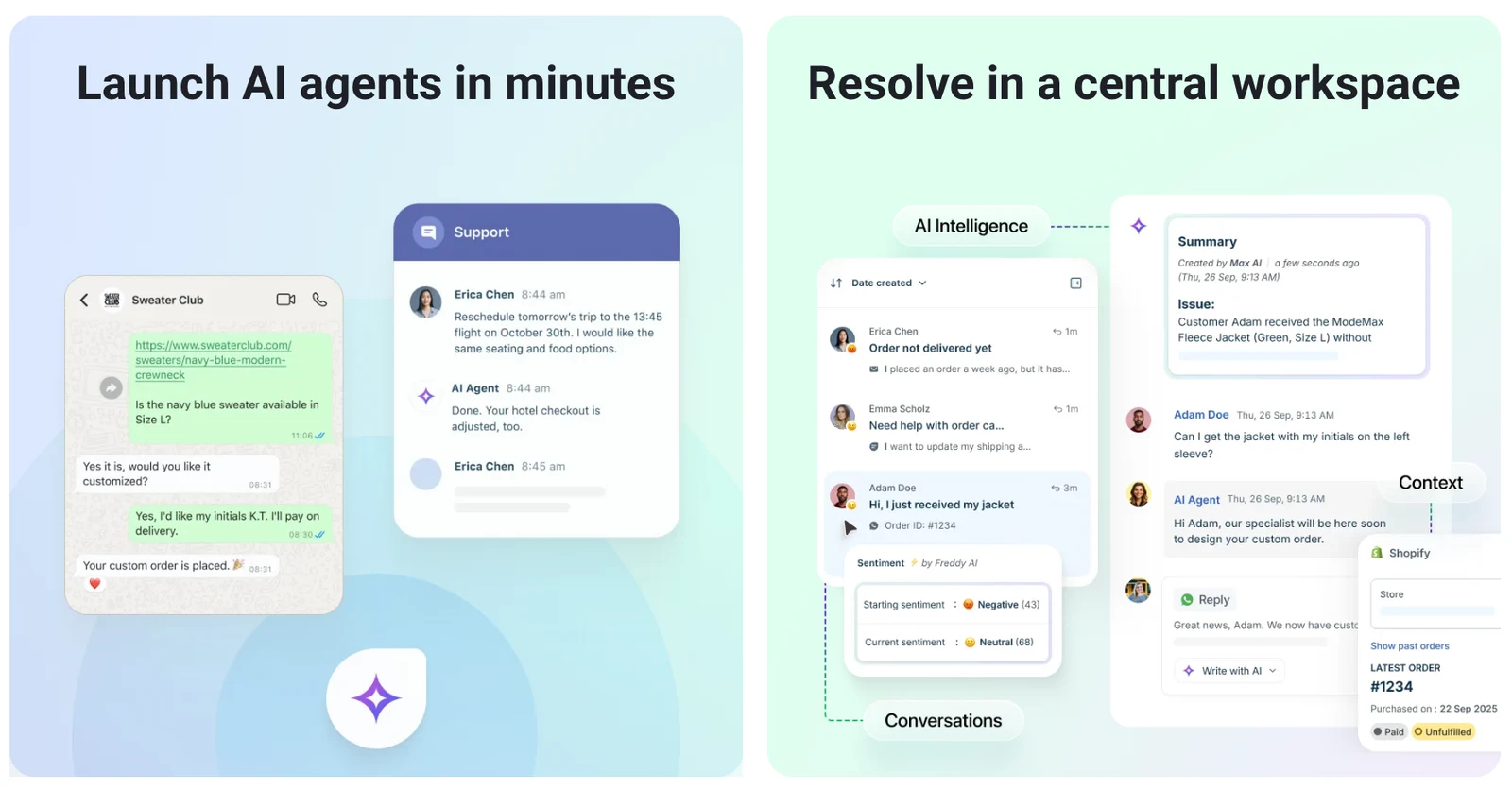
Freshdesk documents self-service, copilot, and insights capabilities for ticketing, making it a candidate to test for helpdesk-led AI assistance. It can be a practical shortlist choice when a team wants to improve a ticket-centered operation rather than redesign its entire service model at once. The pilot question is which of those capabilities changes a real support task: deflecting a simple request, helping an agent interpret a case, or surfacing a pattern that needs attention.
The limitation to test is scope, not a feature checklist. Confirm which capabilities are available in the proposed account, which channels are included, what a supervisor can review, and how knowledge changes are controlled. Freshdesk may suit a team that needs a familiar helpdesk workflow plus carefully chosen AI assistance. It may be less compelling if the primary decision is a complex cross-channel or voice operating model that has to be demonstrated from the start.
Kustomer: Best to Test for Customer-Centric Conversation Workflows
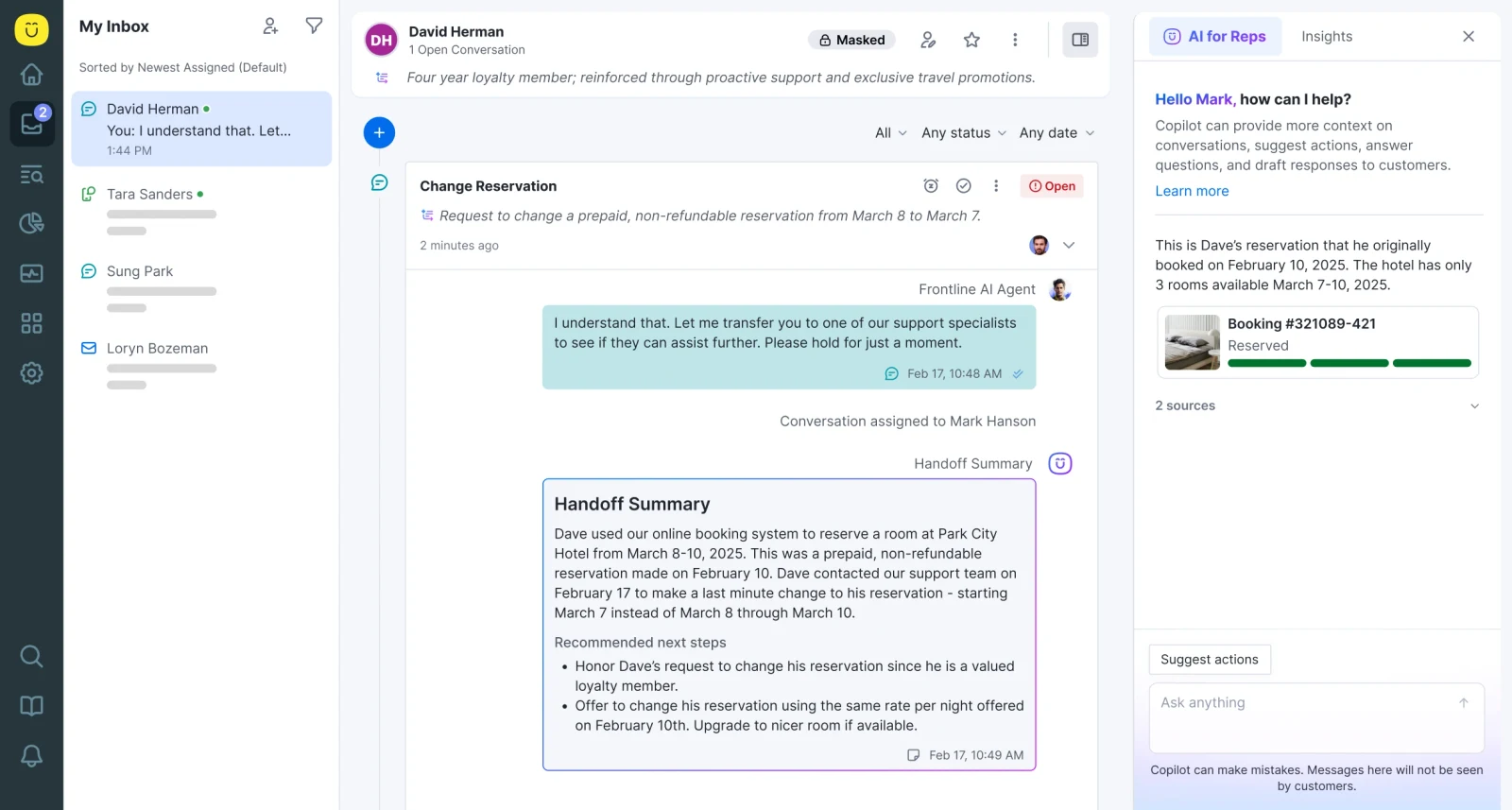
Kustomer documents Customer Assist across service channels, making it a candidate to test for customer-centric conversation workflows. This makes sense to evaluate when the support team’s hardest job is understanding the person’s relationship with the business across contacts, rather than simply closing a single isolated ticket. The buyer should check how the conversation timeline, knowledge source, handoff, and next-owner experience behave when a customer changes from a message to a call or returns with a related issue.
Kustomer will not be the simplest answer for every team. The customer-centric model is worth the evaluation work only if it matches the service design and the team can operate it. Use a pilot case with repeated contacts, a changed preference or status, and a request that crosses a policy boundary. If the agent still has to ask the customer to explain the history again, the conversation model has not yet proved its value.
NICE CXone: Best to Test for Formal Contact Center Operations
NICE positions CXone Mpower as a cloud customer-service AI platform, making it a candidate to test where voice and formal contact-center operations set the bar. This is a meaningful shortlist condition when the support leader needs to consider voice interactions, supervisory control, workforce operations, analytics, and AI assistance as parts of the same operating environment. The right evaluation is broad: test a customer journey, the agent desktop, escalation ownership, and the administration required to sustain the design.
That depth can be a strength for a contact-center program and a poor fit for a very lean queue. Buyers should be especially clear about who owns implementation decisions, who maintains the AI and routing rules, and which success conditions matter before they compare commercial proposals. Test a live call escalation alongside a digital interaction; the goal is to see whether the team can deliver a controlled service journey, not merely whether it can add an AI feature.
Run a 30-Day Pilot That Tests the Work, Not the Demo
A useful 30-day pilot runs the same high-risk support journeys on every shortlisted platform. Select three or four intents that represent both routine and exception work: a policy question, a status request, a sensitive approval, and a channel-switching case. Define the expected knowledge source, decision boundary, handoff owner, and evidence you will collect before the vendor demo begins. For the cross-channel test, explore Sobot’s omnichannel support workflow as one product context to evaluate.
Days 1–10: Ground Answers and Draw Action Boundaries
NIST frames AI risk management around trustworthiness considerations, so a pilot should test knowledge and action boundaries before broad activation. Start with questions that have a stable answer and ask the vendor to show the knowledge basis. Then introduce a case that should not be decided automatically, such as a refund exception, account-access concern, or policy conflict. The platform should either collect the needed facts or route the case; it should not make a commitment simply because the wording sounds confident.
Consider an illustrative retailer that supports customers through WhatsApp, web chat, email, and a voice escalation queue. One customer has 1 order with 2 service decisions across 3 channels in a 30-day pilot: the customer asks about a delayed delivery in WhatsApp, moves to web chat, then asks an agent by phone for a refund exception. The team has a current policy, named refund approvers, and a small test group.
The customer shared an order reference in WhatsApp, but the original chat did not include the voice conversation. The delay is real, yet the exception requires an authorized decision rather than a generic policy answer. The safe test is to match the identity, identify the knowledge basis, show the boundary, and route the exception before any promise is made.
Configure a cue for refund exceptions, require the person to record the resolution owner, and test the customer’s move among the three channels. The pilot passes only if the person can see the relevant order, prior contact, handoff reason, knowledge basis, and final owner without asking the customer to restart. This is a composite testing scenario, not a customer case study or a claim about any platform’s default configuration.
Days 11–20: Test Handoff and Human Recovery
A handoff is useful only when the human receives the reason, context, and ownership needed to continue the case. During the second stage, force the AI Agent to meet uncertainty: a changed policy, a request for an exception, an ambiguous identity, or a complaint that needs empathy and authority. Record whether the agent sees the prior messages, the facts already collected, the stated escalation reason, and the rule that prevented an automatic commitment. Also verify that the agent can correct the result and notify the customer without reopening the investigation. A handoff that merely opens a new ticket is not enough.
Days 21–30: Prove Channel Continuity and Auditability
Sobot’s omnichannel positioning makes it appropriate to test whether a configured service case can retain usable context across channels. Run the same channel-switching exception in every shortlisted platform. Check whether the next owner can find the customer, read the relevant history, understand the current status, and see what the AI already did. Then audit the closure: can a supervisor tell which knowledge source was used, why escalation happened, who made the final decision, and what should change next time?
Use the final days to request like-for-like commercial clarification. Ask each vendor to describe the proposed scope, channel assumptions, AI or usage components, implementation responsibilities, support model, and contract conditions required for the pilot design. Do not treat a public starting price as a total-cost answer. A platform may be operationally strong but commercially wrong for the team, or commercially attractive but unable to meet the handoff and continuity bar. If cross-channel continuity is the deciding requirement, request a Sobot demo built around your pilot workflow.
Choose the Platform That Fits Your Hardest Support Journey
Choose the platform whose observed behavior best fits the hardest support journey your team cannot afford to break. Pilot Sobot when cross-channel continuity across messaging, chat, ticketing, and voice is central. Prioritize Zendesk when configurable service operations are the first requirement. Put Intercom on the list when conversational product support is the key job. Test Freshdesk when a helpdesk-led AI rollout is the practical path, Kustomer when a customer-centric conversation workflow is essential, and NICE CXone when formal contact-center and voice operations define the program.
None of those conclusions should replace buyer evidence. The platform that fits a lean digital support team may not fit a multi-team contact center; the platform that performs well in a chat demo may not carry a refund exception safely into a phone call. Use the observed workflows, controls, and commercial clarification to decide what your team can operate with confidence.
Frequently Asked Questions
What makes an AI customer support platform stronger than a chatbot?
A stronger AI customer support platform can ground an answer in approved knowledge, respect action limits, hand a case to a person, and preserve context across the customer journey. A chatbot can be useful for simple questions, but it is not enough on its own when customers need an exception, a decision, or continuity across channels. Test the recovery workflow as carefully as the answer itself.
Which AI support platform is best for a digital product team?
Intercom is a sensible shortlist candidate for a digital product team when conversational support within the product journey is the main job to test. That does not make it a universal winner. The team should still validate knowledge freshness, escalation behavior, and the handoff experience for questions that require a person, approval, or a broader service workflow.
When should a team consider an AI contact-center platform?
A team should consider an AI contact-center platform when the same service issue may move among messaging, chat, ticketing, and voice with accountable human ownership. The evaluation changes when voice, supervisory control, formal routing, or cross-channel context becomes part of the customer journey. In that case, test the complete journey rather than choosing on a single AI feature.
What should a 30-day AI support pilot measure?
A 30-day AI support pilot should measure evidence use, action boundaries, handoff quality, channel continuity, and the owner’s ability to audit the final outcome. Use identical high-risk cases across shortlisted platforms, record what the AI did and why it escalated, and decide from observed workflow behavior. Do not rely on a generic demonstration or a public price page to answer those questions.