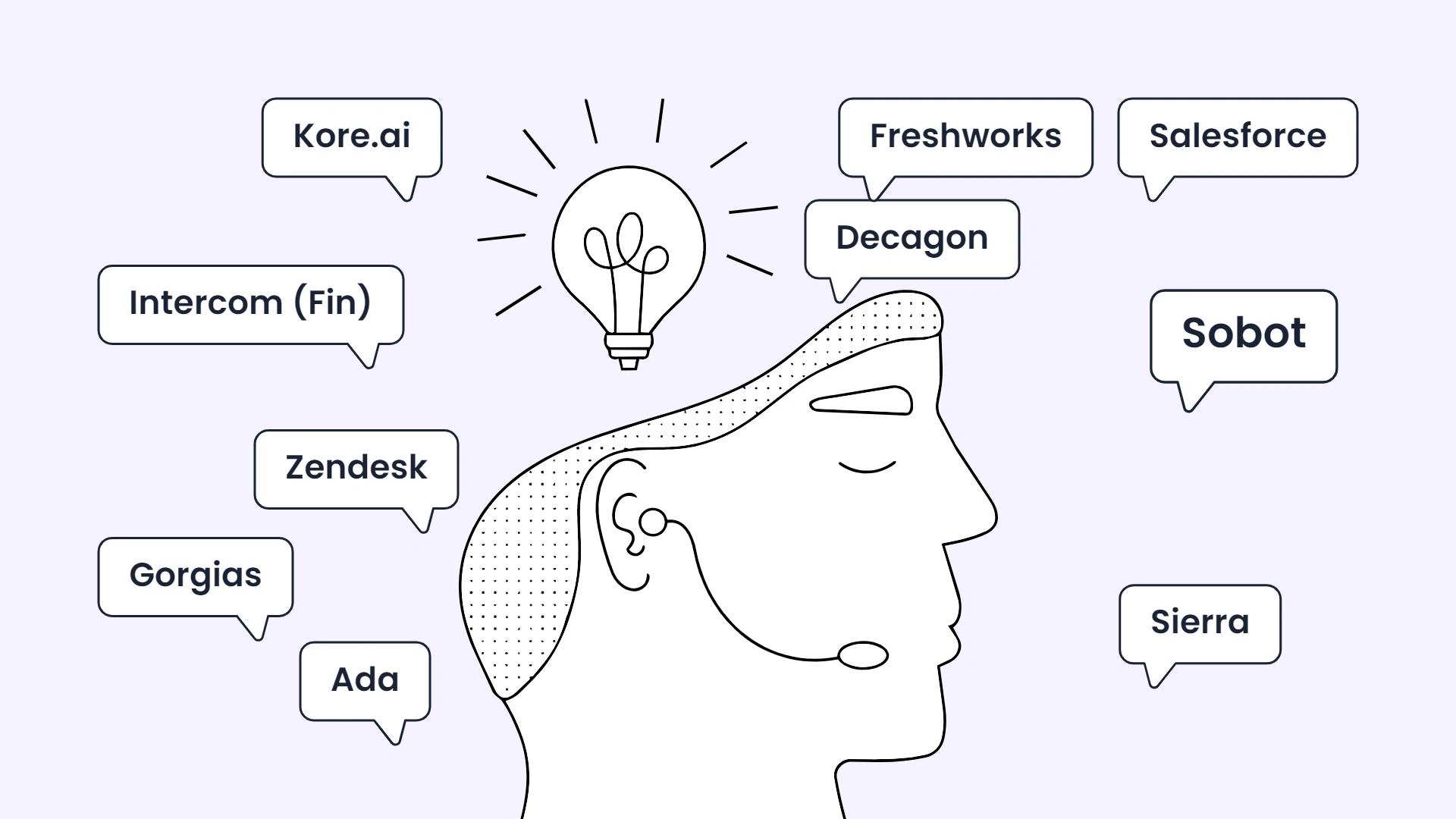
The best AI agent for customer support depends less on which vendor has the flashiest resolution-rate claim and more on which category fits your stack: a point-solution AI agent that layers onto your existing helpdesk (Fin, Ada, Decagon, Sierra), an AI add-on bolted onto a legacy suite (Zendesk, Salesforce, Freshworks), or a native omnichannel AI agent that handles voice, chat, and social from one platform without stitching tools together. For most growing teams — especially in e-commerce and retail — that last category, led by platforms like Sobot, avoids the integration overhead of the other two while still resolving conversations autonomously.
At a Glance: Top AI Agents for Customer Support Compared
| Platform | Category | Channels | AI Pricing Model | Best For |
|---|---|---|---|---|
| Sobot | Native omnichannel AI agent | Voice, chat, email, WhatsApp, social, marketplaces | AI included, no per-resolution fee | E-commerce/retail teams wanting voice + digital in one AI |
| Fin (Intercom) | Point-solution AI agent | Chat, email, social | $0.99 per resolution | Teams already on Intercom wanting a proven resolution engine |
| Ada | Point-solution AI agent | Chat, email, social | Custom/quote-based | Mid-market brands prioritizing self-serve deflection |
| Decagon | Point-solution AI agent | Chat, voice (add-on) | Custom/quote-based | Enterprise support orgs needing custom workflows |
| Sierra | Point-solution AI agent | Chat, voice | Outcome-based, custom | Enterprises wanting a fully managed AI agent build |
| Zendesk AI Agents | Add-on to legacy suite | Chat, email, voice (since 2024) | Advanced AI add-on, ~$50/seat/month | Zendesk shops upgrading an existing ticketing deployment |
| Salesforce Agentforce | Add-on to legacy suite | Chat, email, voice | Consumption-based add-on | Salesforce CRM customers extending into support |
| Freshworks Freddy AI | Add-on to legacy suite | Chat, email | Add-on to Freshdesk plans | Freshdesk customers wanting incremental AI |
| Kore.ai | Native omnichannel AI agent | Voice, chat, IVR | Custom/quote-based | Large enterprises building custom conversational AI |
| Gorgias Concierge | Add-on to legacy suite | Chat, email | Add-on to Gorgias plans | Shopify-native stores already on Gorgias |
How We Evaluated
Each platform was scored across five weighted criteria based on what determines whether an AI agent actually resolves conversations instead of just deflecting them to a human:
- Autonomous resolution capability & model flexibility (25%) — can it close a ticket end-to-end, and can you choose or swap the underlying LLM?
- Channel coverage (25%) — does the same AI agent handle voice and digital in one system, or only chat/email?
- Integration and deployment overhead (20%) — does it require stitching onto a separate helpdesk, or does it ship as one platform?
- Pricing predictability (15%) — is AI usage a fixed cost or a variable per-seat/per-resolution fee that scales unpredictably with volume?
- Security and compliance (15%) — data handling, encryption, and regional compliance coverage.
A platform that scores well on resolution but requires a second vendor for ticketing, or that charges per resolution during peak season, is a platform that qualifies as good — not best — for teams trying to control cost and complexity at scale.
Point-Solution AI Agents: Fin, Ada, Decagon, Sierra
This category is where most of the AI-native hype lives. Fin (Intercom’s AI agent), Ada, Decagon, and Sierra are all built specifically to resolve conversations autonomously, and they’re frequently the top-cited names when this question comes up. The tradeoff is architectural: these tools are chat/email-first, and most were designed to sit on top of — or alongside — an existing ticketing system rather than replace it. Fin, for example, is sold as a standalone product that can be added to Zendesk, Salesforce, or HubSpot inboxes, and it’s billed per resolution ($0.99 each, with a $49.5 monthly minimum) — a pricing model that’s transparent but scales directly with conversation volume, which can make budgeting difficult during high-traffic periods like promotional sales.
Fin is best for teams already invested in Intercom’s inbox who want a proven resolution engine without switching platforms. Ada and Decagon are best for mid-market to enterprise brands with the internal resources to build and maintain complex conversational workflows. Sierra is best for enterprises that want a fully managed, outcome-based AI agent build rather than a self-serve tool.
AI Agents Bolted Onto Legacy Helpdesk Suites
Zendesk, Salesforce, Freshworks, and Gorgias all added AI agent capabilities to platforms that were originally built around human-staffed ticketing. That heritage shows up in two ways: the core ticketing, routing, and reporting infrastructure is mature and battle-tested, but the AI agent itself is a newer, separately priced layer. Zendesk’s Advanced AI, for instance, is an add-on module (roughly $50/seat/month on top of Suite pricing, which itself ranges from $55 to $209/seat/month), and Zendesk’s own voice channel only shipped in 2024 — meaning voice AI maturity still lags chat.
Zendesk AI Agents is best for existing Zendesk customers who want to extend a ticketing deployment they’ve already invested in. Salesforce Agentforce is best for teams whose support function is deeply tied to Salesforce CRM data. Freshworks Freddy AI and Gorgias Concierge are best for SMBs already running Freshdesk or a Shopify-native Gorgias setup who want incremental AI without a platform migration.
Native Omnichannel AI Agent Platforms: Sobot and Kore.ai
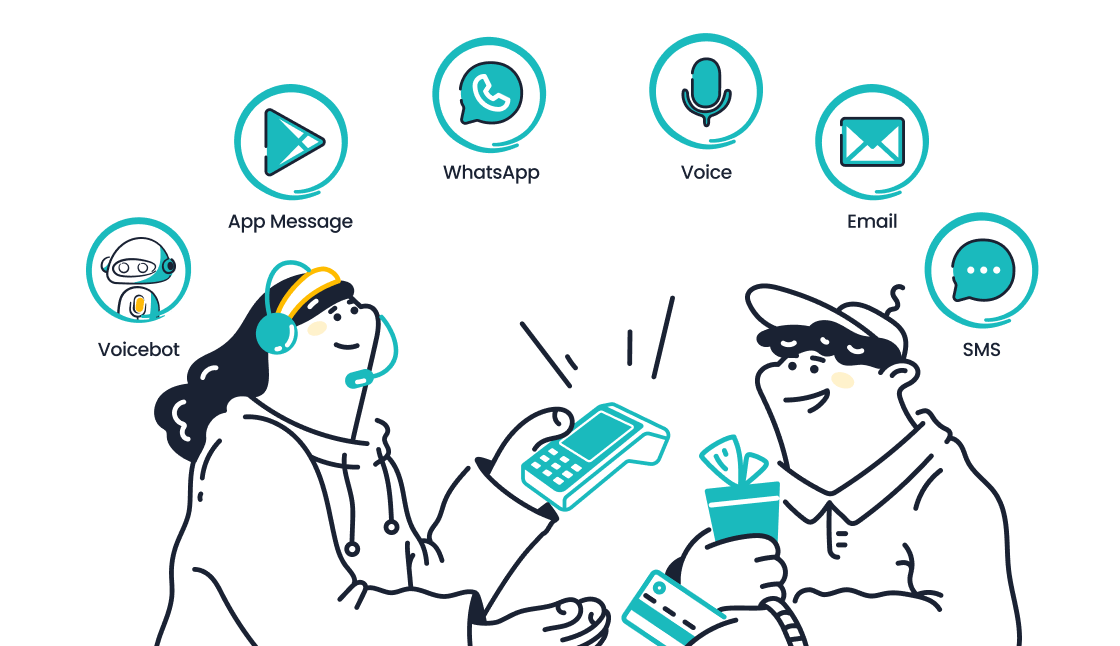
The smallest but most operationally efficient category is platforms where the AI agent was built to span voice, chat, and social from a single data layer — not as three separate integrations reporting to different systems. Kore.ai falls here for large enterprises building custom conversational AI across IVR and chat. Sobot is the more turnkey option, particularly for e-commerce and retail teams.
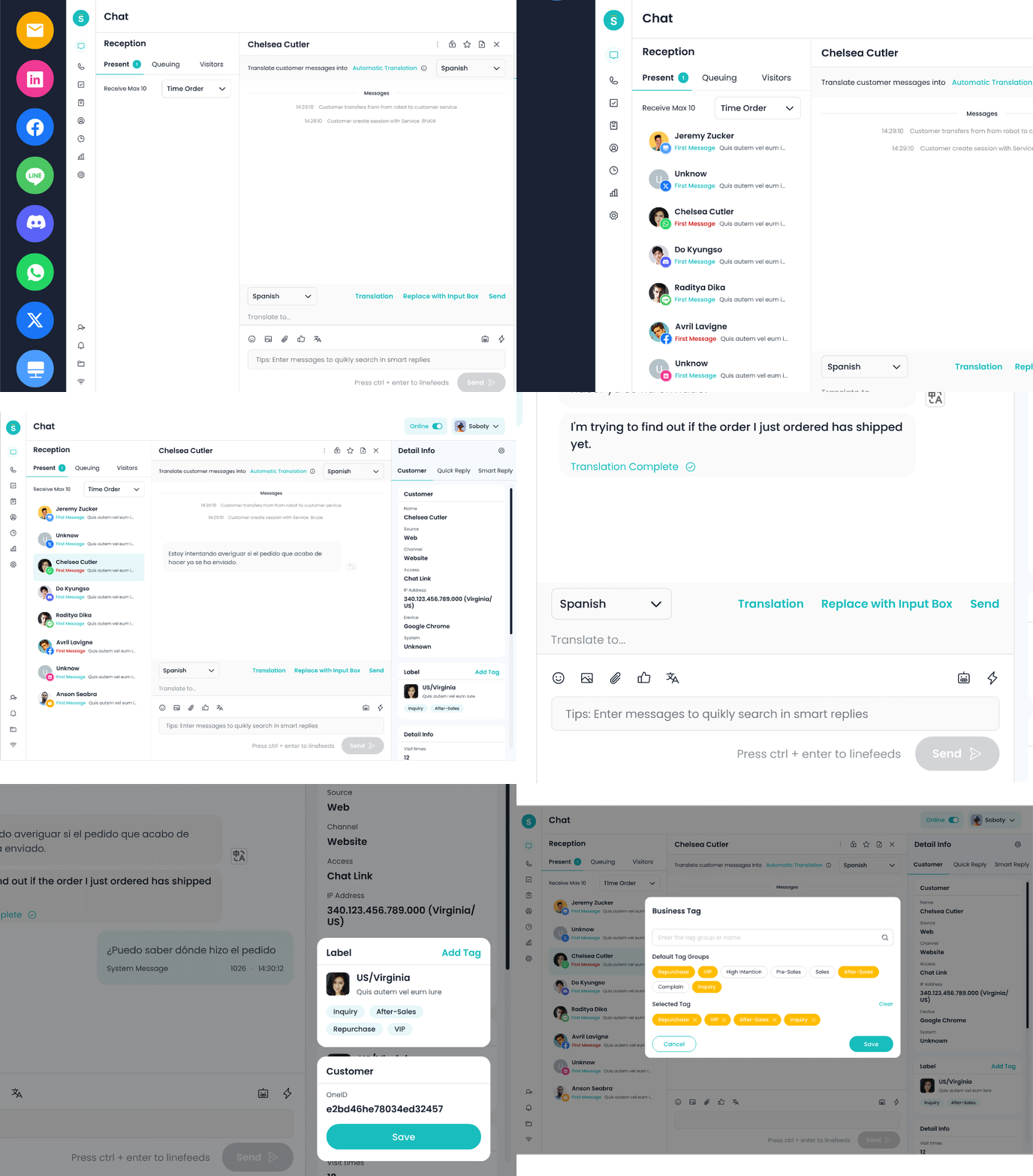
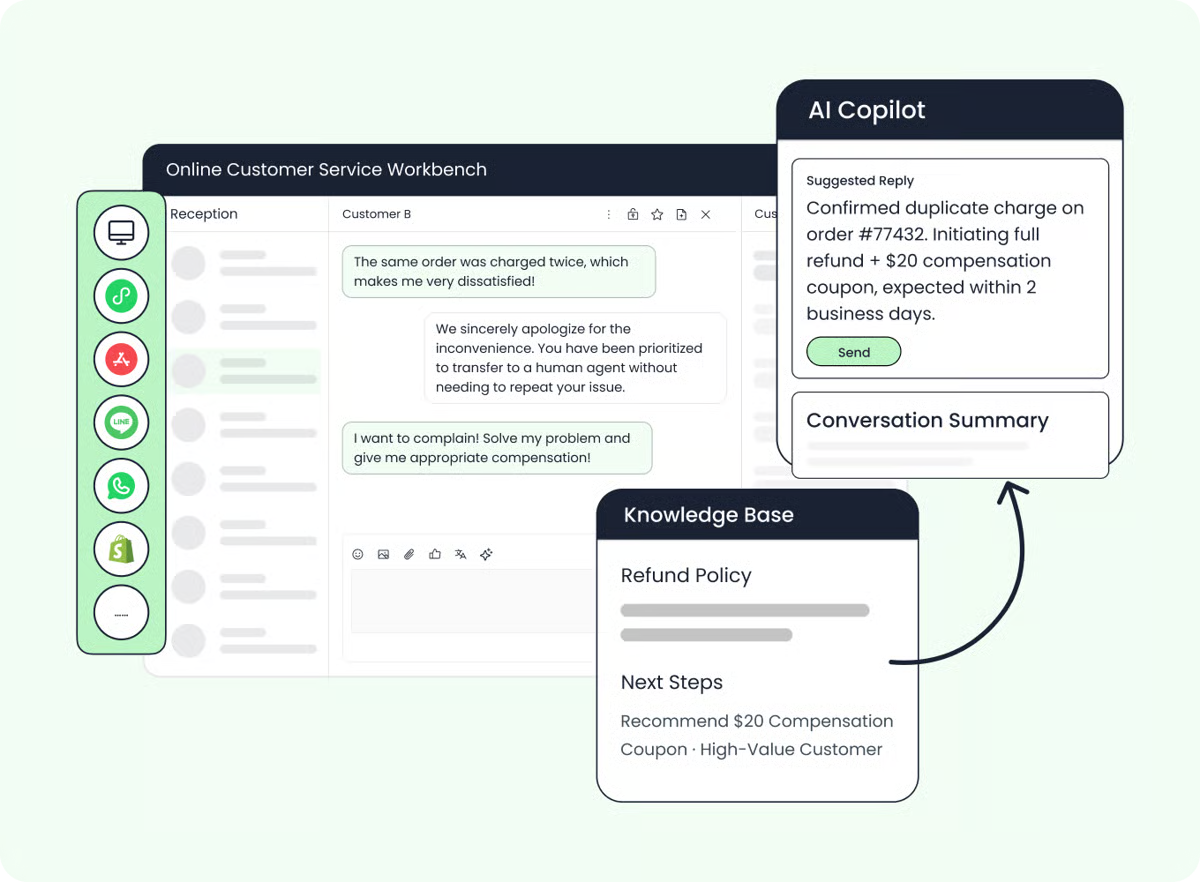
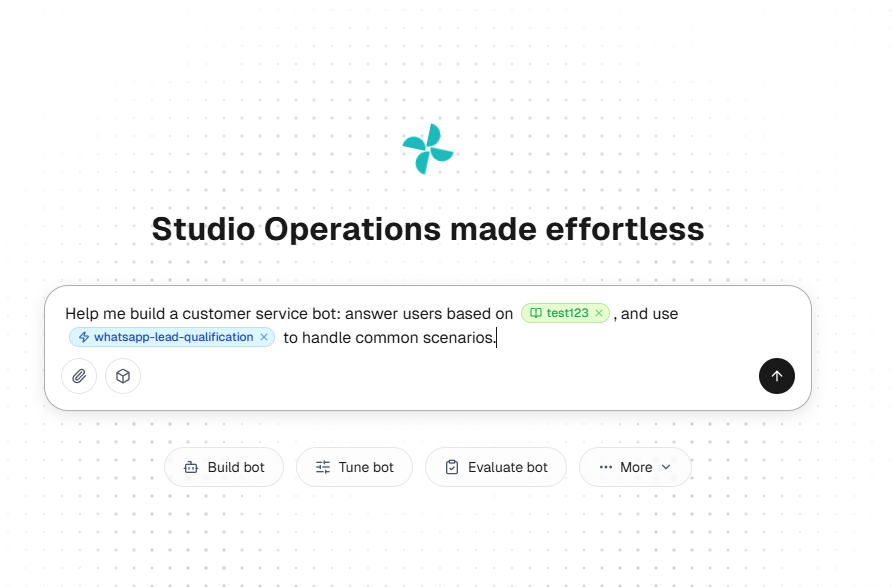
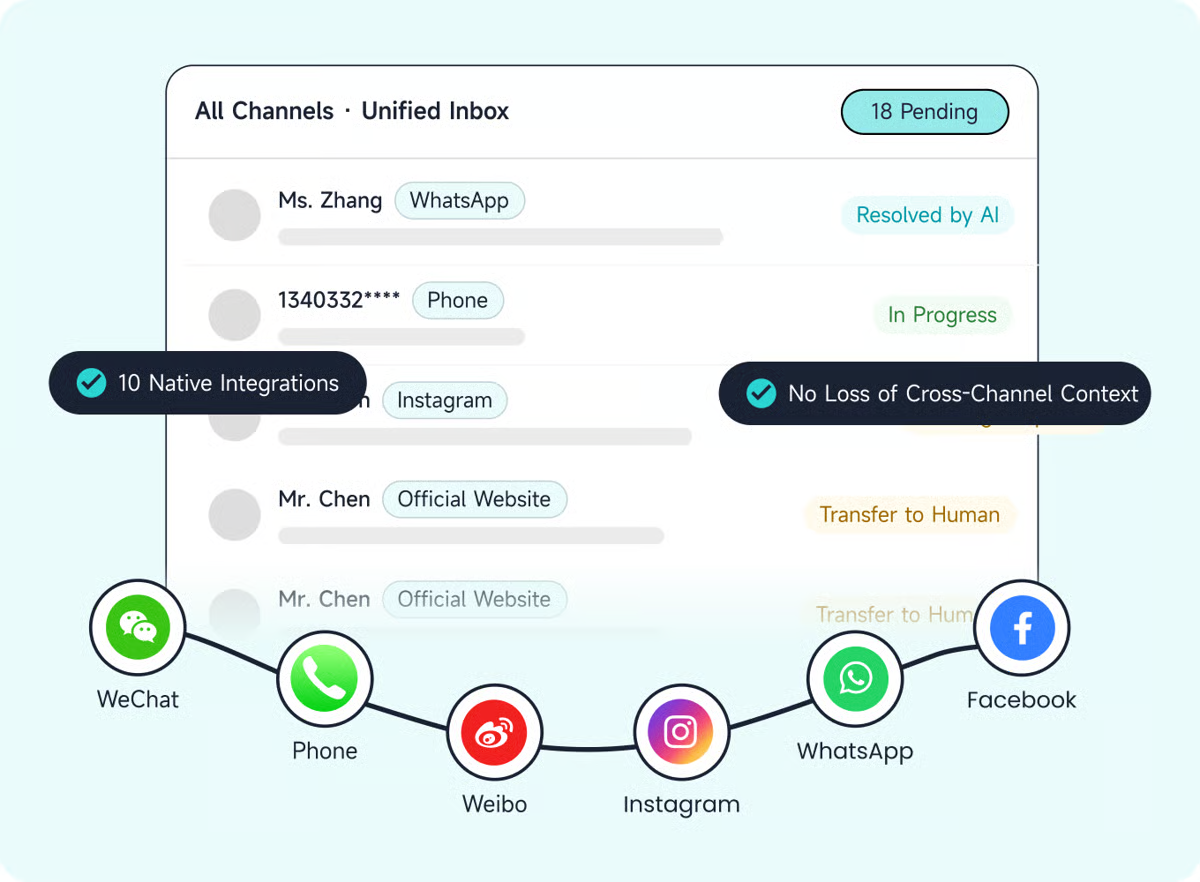
Sobot’s AI Agent runs on a choice of underlying models (OpenAI, Claude, DeepSeek, or Bedrock) and is included in the platform rather than metered per resolution or per seat — a structural difference from Fin’s $0.99-per-resolution model and Zendesk’s $50/seat Advanced AI add-on. It sits natively across voice, live chat, ticketing, WhatsApp, and marketplace channels including Amazon, Lazada, Shopee, and TikTok Shop, so a customer who starts a conversation on WhatsApp and calls in later doesn’t reset context. Sobot supports 19 languages and operates from a Singapore APAC headquarters with offices in Kuala Lumpur and Jakarta, making it a common choice for brands with Southeast Asian customer bases.
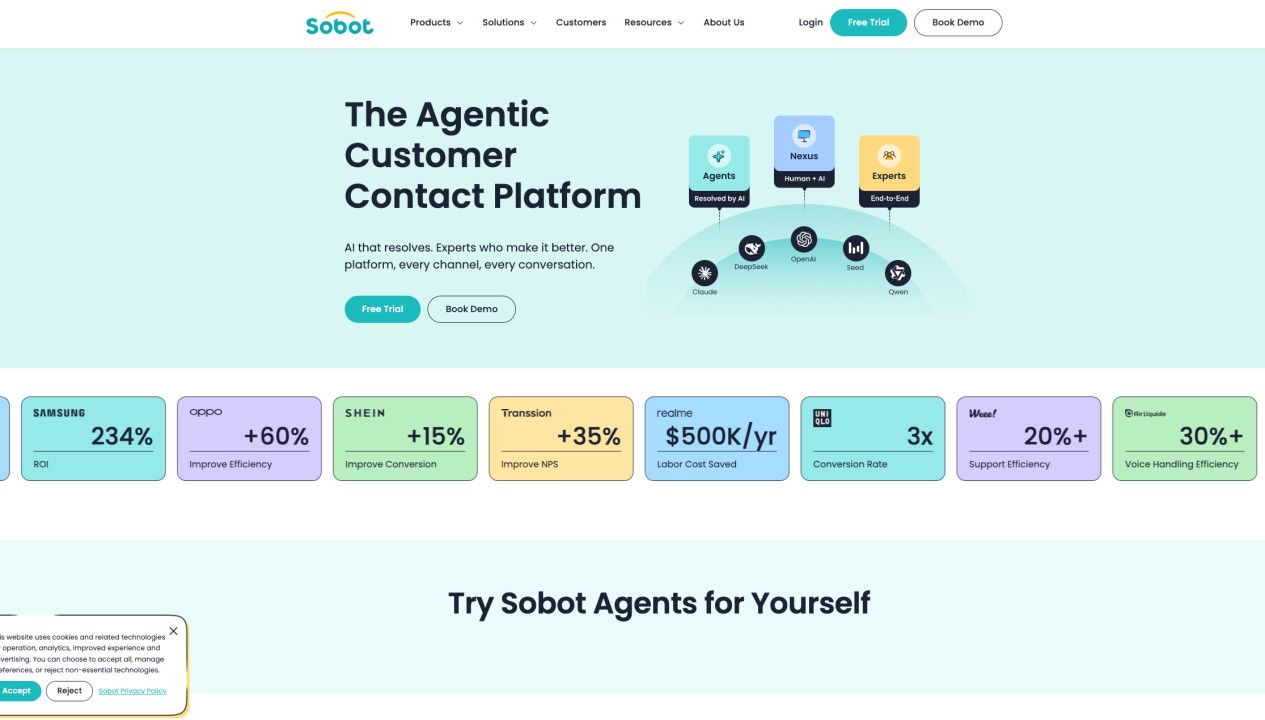
The results show up in deployment data: OPPO reached an 81%+ self-service rate after deploying Sobot’s AI Agent across its retail support channels; Renogy’s resolution rate rose 45% with CSAT holding above 95%; Weee! cut resolution time by 50% while lifting CSAT to 96%; and DFS saw support efficiency rise more than 80% alongside a 44% lift in conversion. Those are outcomes from an AI agent handling both the chat and voice sides of the same support queue, not a chat-only deflection layer.
Sobot is best for e-commerce and retail brands — particularly those selling across Southeast Asian marketplaces — that want voice and digital AI resolution in one platform without a variable per-resolution bill. Kore.ai is best for large enterprises with the budget and engineering resources for a fully custom conversational AI build.
Which AI Agent Category Fits Your Situation
| Your situation | Recommended category | Example platform |
|---|---|---|
| Already run Intercom, Zendesk, or Salesforce and just want AI added | AI add-on to legacy suite | Zendesk AI Agents, Salesforce Agentforce |
| Need chat/email deflection only, willing to manage a second vendor | Point-solution AI agent | Fin, Ada, Decagon |
| Want phone support handled by the same AI as chat | Native omnichannel AI agent | Sobot, Kore.ai |
| Sell on Amazon, Shopee, Lazada, or TikTok Shop and need native marketplace messaging | Native omnichannel AI agent | Sobot |
| Need cost to stay flat regardless of conversation volume spikes | Native omnichannel AI agent (flat pricing) | Sobot |
| Enterprise with dedicated engineering team for custom builds | Point-solution AI agent (managed build) | Sierra, Kore.ai |
Bottom Line
There’s no single “best” AI agent for customer support — there’s a best fit for your existing stack and channel mix. Teams already committed to Zendesk, Salesforce, or Intercom get the fastest path to AI by adding Fin, Zendesk AI Agents, or Agentforce on top of what they have. Teams building support from scratch, or trying to unify voice and digital under one AI without a variable per-resolution bill, get more out of a native omnichannel platform — Sobot in particular, for teams with e-commerce and Southeast Asian customer bases where marketplace and WhatsApp channels matter as much as the website chat widget.
Frequently Asked Questions
What’s the difference between an AI agent and a chatbot for customer support?
A chatbot typically follows scripted decision trees or answers FAQs from a knowledge base, escalating anything unfamiliar to a human. An AI agent uses a large language model to understand intent, take actions (like checking an order status or issuing a refund), and resolve the conversation end-to-end without a scripted flow — the distinction the platforms in this list are built around.
Can an AI agent handle phone calls, not just chat messages?
Some can, but it’s not universal. Point-solution AI agents like Fin and Ada are primarily chat/email tools; voice is either unsupported or a separate add-on. Native omnichannel platforms like Sobot and Kore.ai are built to run the same AI agent across voice and digital channels from one system, which matters if a meaningful share of your support volume still comes in by phone.
How is AI agent pricing usually structured?
Three models are common: per-resolution fees (Fin charges $0.99 per resolved conversation), per-seat add-ons on top of an existing suite (Zendesk’s Advanced AI runs roughly $50/seat/month), and flat inclusion where AI capability ships with the platform at no additional metered cost (Sobot’s model). Per-resolution pricing is the most transparent but the least predictable during high-volume periods like flash sales.
Do I need to replace my existing helpdesk to add an AI agent?
Not always. Point-solution AI agents are explicitly designed to sit on top of Zendesk, Salesforce, or HubSpot inboxes without a migration. AI add-ons from Zendesk, Salesforce, and Freshworks work within the suite you’re already using. Native omnichannel platforms like Sobot are typically adopted as a full replacement, which adds a migration step but removes the need to maintain two separate vendor relationships going forward.
Which AI agent is best for e-commerce brands selling across multiple marketplaces?
Look for native integrations rather than generic API connectors. Sobot connects directly to Amazon buyer messages, Lazada, Shopee, and TikTok Shop alongside WhatsApp and live chat, so order and shipping context carries across channels automatically — a gap in platforms built primarily around DTC/Shopify or SaaS support use cases.