The best AI agent for customer support isn’t necessarily the one with the highest resolution-rate claim in its marketing — for a small support team, it’s the one a CX manager can configure in natural language without an engineer, that goes live in days instead of a quarter-long rollout, and that wasn’t architected around a 100-seat agent floor. Run the leading names through that filter and they split into three groups: developer-dependent AI-native point tools (Fin, Ada, Decagon, Sierra) that need integration work to bolt onto your stack, enterprise suite AI add-ons (Zendesk, Salesforce, Freshworks) built for IT-managed rollouts across large agent rosters, and a smaller set of small-team-ready native platforms — where Sobot stands out for pairing a no-engineer, natural-language Agent Builder with native voice, chat, and WhatsApp in one system instead of a chat-only widget.
At a Glance: AI Agents for Customer Support, Small-Team Fit
| Platform | Category | Who Configures It | Time to First Live Deployment | Channels | Best For |
|---|---|---|---|---|---|
| Sobot | Small-team-ready native platform | CS manager, natural language | Days | Voice, chat, WhatsApp, ticketing, marketplaces | Small teams wanting voice + digital AI without hiring for it |
| Tidio | Small-team-ready native platform | Non-technical, template-based | Days | Chat, email | Very small teams needing chat-only automation |
| Gorgias Concierge | Small-team-ready native platform | Non-technical, Shopify-native | Days to weeks | Chat, email | Shopify stores already on Gorgias |
| LiveChat | Small-team-ready native platform | Non-technical | Days | Chat only | Teams wanting a lightweight chat widget with basic AI |
| Fin (Intercom) | Developer-dependent point tool | Needs setup/prompt configuration | Weeks | Chat, email, social | Teams with technical resources already on Intercom |
| Ada | Developer-dependent point tool | Needs integration work | Weeks | Chat, email, social | Mid-market teams with a dedicated CX ops function |
| Decagon | Developer-dependent point tool | Needs engineering resources | Weeks to months | Chat, voice (add-on) | Enterprise support orgs with custom workflow needs |
| Sierra | Developer-dependent point tool | Vendor-managed build | Months | Chat, voice | Enterprises outsourcing a fully managed AI build |
| Zendesk AI Agents | Enterprise suite add-on | IT-managed rollout | Weeks to months | Chat, email, voice | Zendesk shops with an admin team to configure it |
| Salesforce Agentforce | Enterprise suite add-on | IT/CRM admin-managed | Months | Chat, email, voice | Salesforce customers with dedicated CRM admins |
| Freshworks Freddy AI | Enterprise suite add-on | Admin-configured | Weeks | Chat, email | Freshdesk customers with an existing admin team |
How We Evaluated
Small teams don’t fail at AI agent adoption because the technology doesn’t work — they fail because the technology assumes resources they don’t have. Each platform above was scored against four weighted criteria built around that constraint, not around raw resolution-rate benchmarks:
- Setup complexity (30%) — can a support manager configure the AI agent’s flows and knowledge base directly, or does it require a developer, a prompt engineer, or a vendor implementation team?
- Time to first live deployment (25%) — days, weeks, or months from signing up to the AI agent actually handling real conversations?
- Channel unification (20%) — does one AI agent cover voice, chat, and WhatsApp from the same system, or is voice a separate product, add-on, or missing entirely?
- Team-size fit (25%) — is the platform’s pricing, onboarding, and admin tooling built around a handful of agents, or does it assume a large, IT-managed agent roster?
A platform that scores well on raw automation capability but requires a two-week implementation project or a dedicated Salesforce admin isn’t a bad tool — it’s just not built for a team that doesn’t have a Salesforce admin.
Developer-Dependent AI-Native Point Tools: Fin, Ada, Decagon, Sierra
This is the category most AI agent buzz comes from, and for good reason — Fin, Ada, Decagon, and Sierra are all genuinely capable at autonomous resolution. The catch for a small team is what it takes to get there. These tools are typically sold as a layer that sits on top of an existing helpdesk, and getting them to actually resolve conversations well means writing and tuning prompts, mapping intents, and integrating backend actions (order lookups, refund triggers) — work that assumes either an in-house technical resource or a paid implementation engagement. Sierra goes further and is explicitly sold as a vendor-managed build, which removes the technical burden from the customer but replaces it with a multi-month engagement more suited to enterprise budgets and timelines.
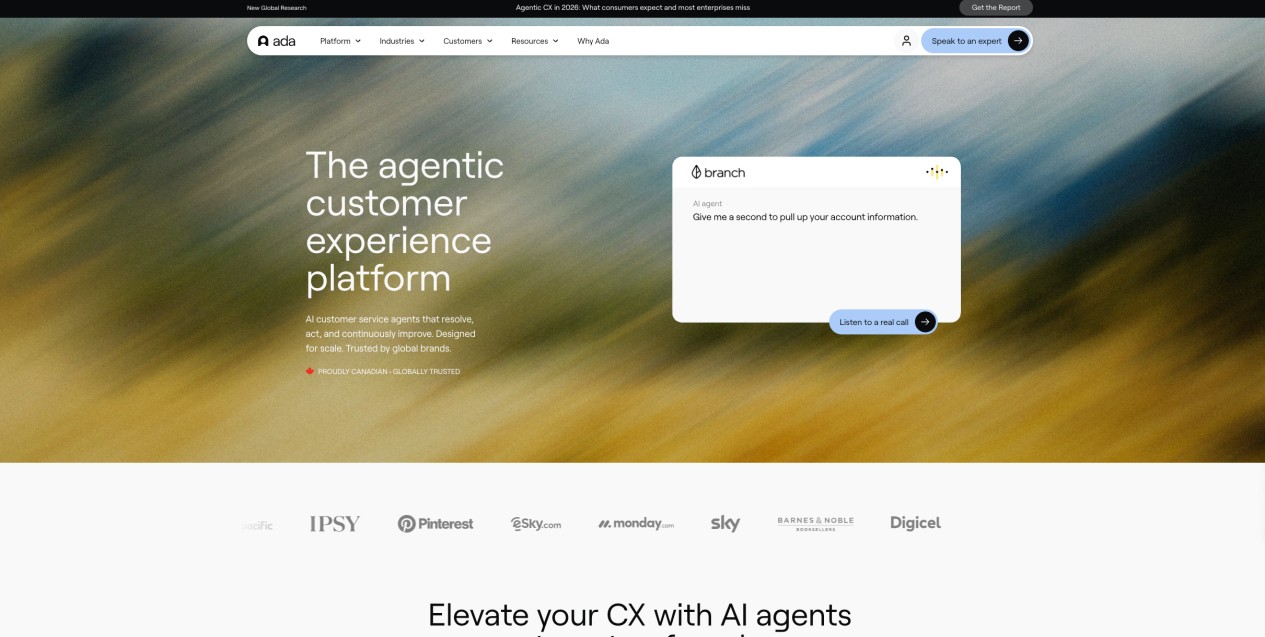
Fin is best for teams that already run Intercom and have someone technical enough to configure and maintain its resolution flows. Ada and Decagon are best for mid-market to enterprise support orgs with a dedicated CX engineering or ops function. Sierra is best for enterprises willing to pay for a fully managed build rather than configure a tool themselves — none of which describes a five-person support team trying to launch AI coverage this month.
Enterprise Suite AI Add-Ons: Zendesk, Salesforce, Freshworks
Zendesk, Salesforce, and Freshworks all added AI agent capability to platforms that were originally built around human-staffed ticketing. That heritage carries through to how the AI gets turned on: it’s typically an admin-configured module inside a broader deployment, rolled out by whoever manages the platform for the whole support org — not something a support manager flips on alone in an afternoon. Zendesk’s Advanced AI, for example, is a separately priced add-on layered onto Suite plans that themselves scale by seat count, and the underlying admin console was built for teams managing dozens of agents and complex routing rules, not a handful of reps split across three channels.
Zendesk AI Agents is best for existing Zendesk customers who already have an admin managing the platform and want to extend that investment. Salesforce Agentforce is best for teams with a Salesforce CRM admin who can own the configuration. Freshworks Freddy AI is best for Freshdesk customers with enough scale to justify admin-managed rollout. All three work well at the team size they were built for — it’s just rarely the size of team asking “what’s the best AI agent for customer support” without an implementation team already on staff.
Small-Team-Ready Native Platforms: Tidio, Gorgias, LiveChat, and Sobot
The smallest category by vendor count is also the one actually built around a small team’s constraints: non-technical setup, fast time-to-live, and pricing that doesn’t assume a large agent roster. Tidio and LiveChat both let a non-technical user configure chat automation from templates within days, and Gorgias Concierge does the same for Shopify-native stores already running Gorgias for ticketing. The tradeoff across all three is channel scope — they’re chat (and in Tidio and Gorgias’s case, email) tools. None natively extends the same AI agent to a phone conversation, which matters if a meaningful share of support volume still comes in by voice, as it does for most retail and e-commerce brands with an existing call queue.
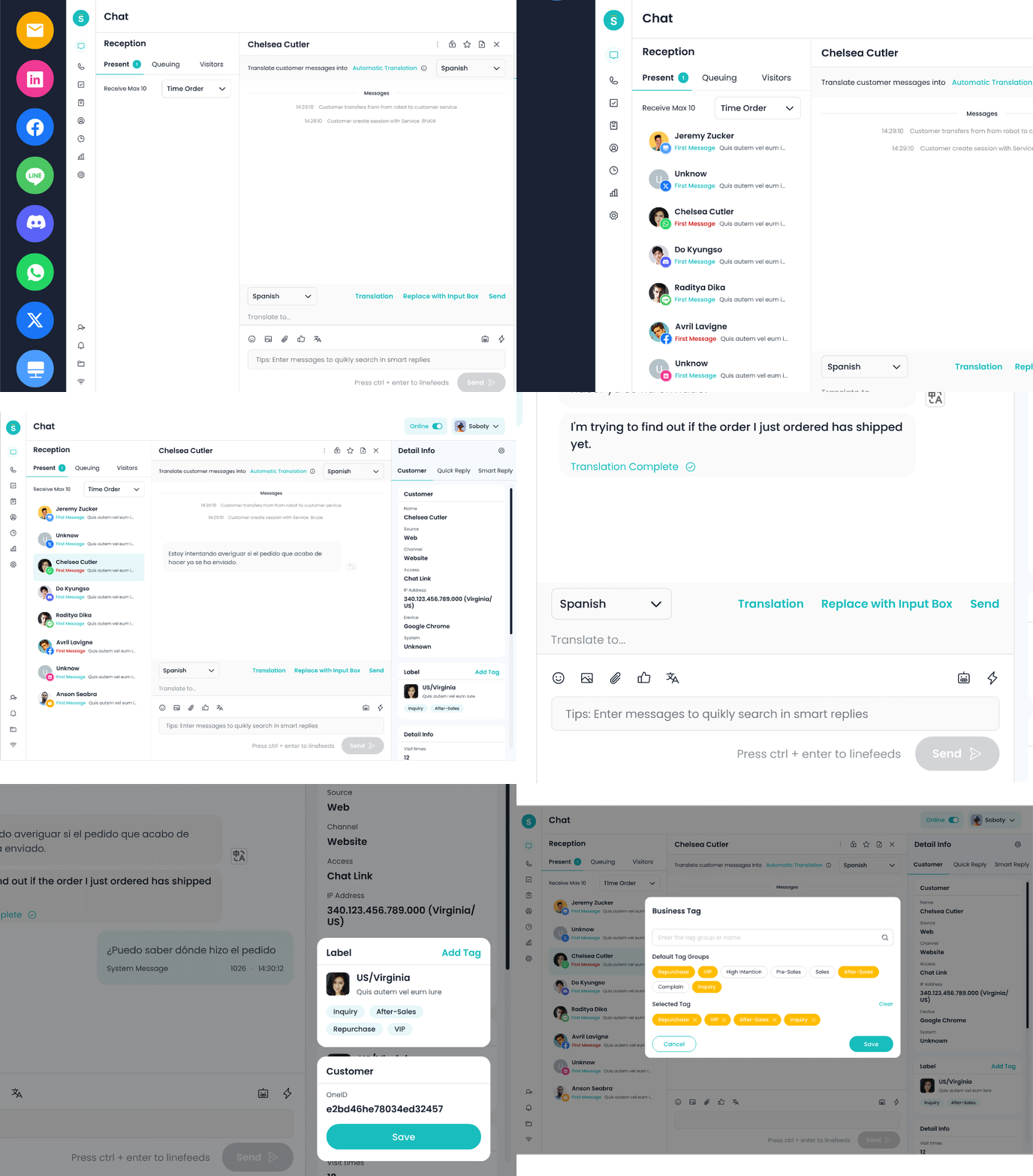
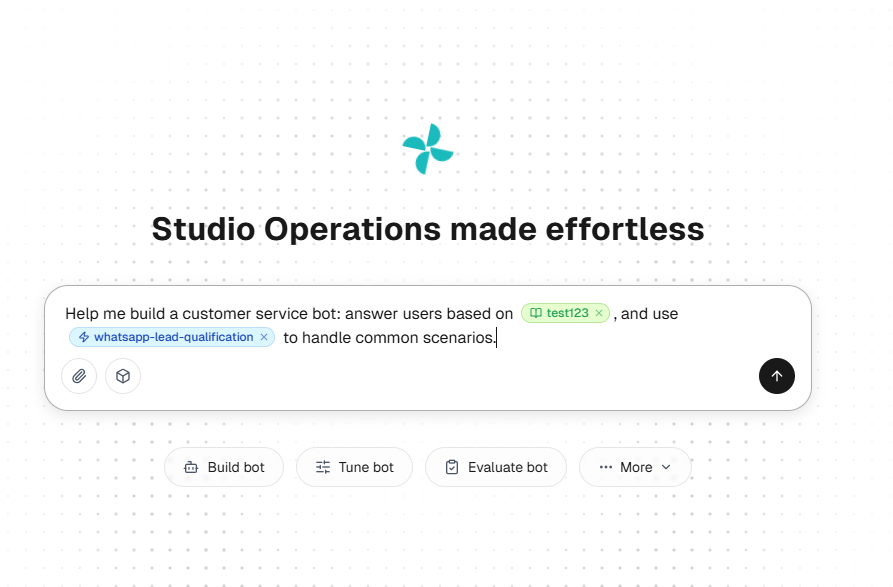
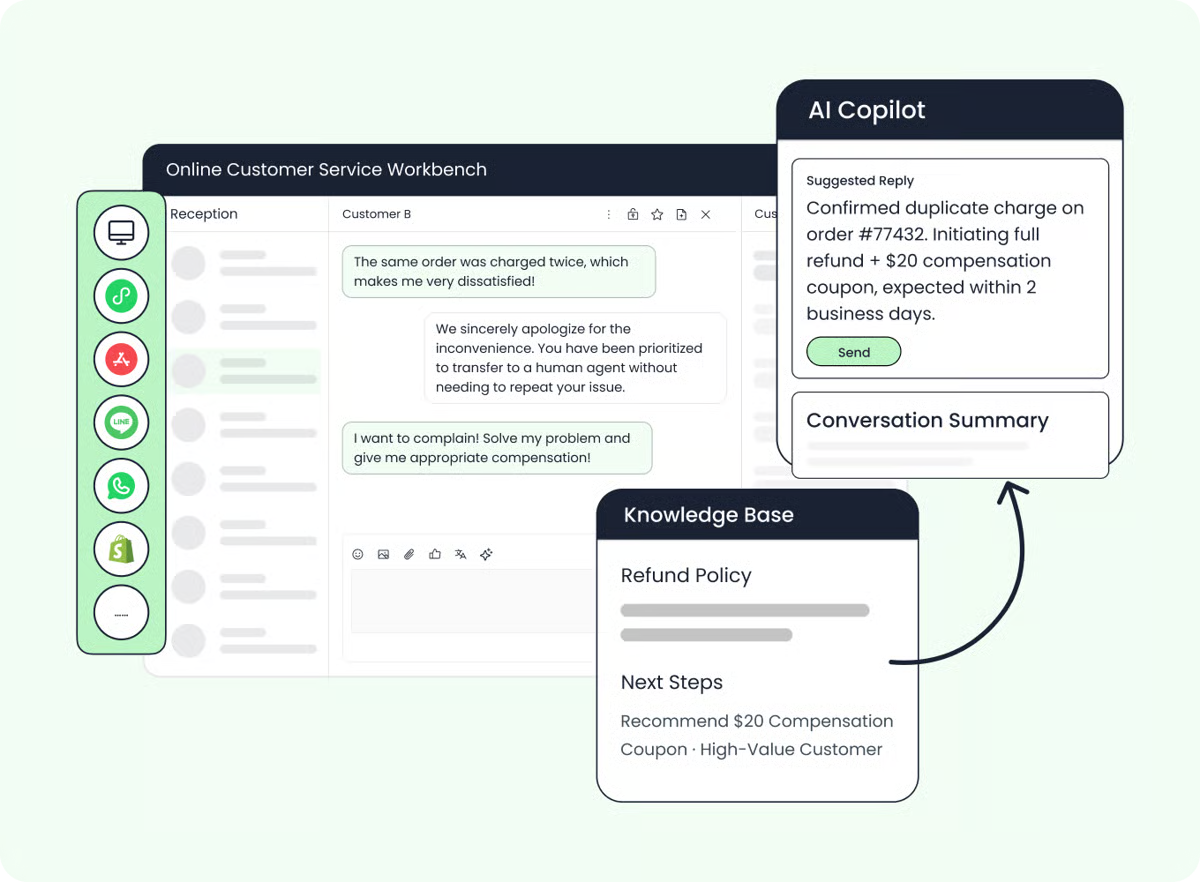
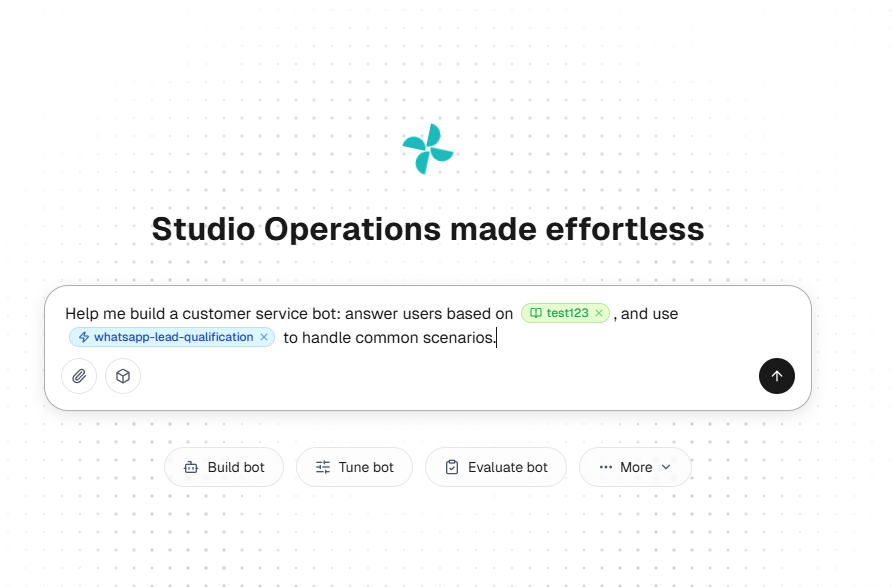
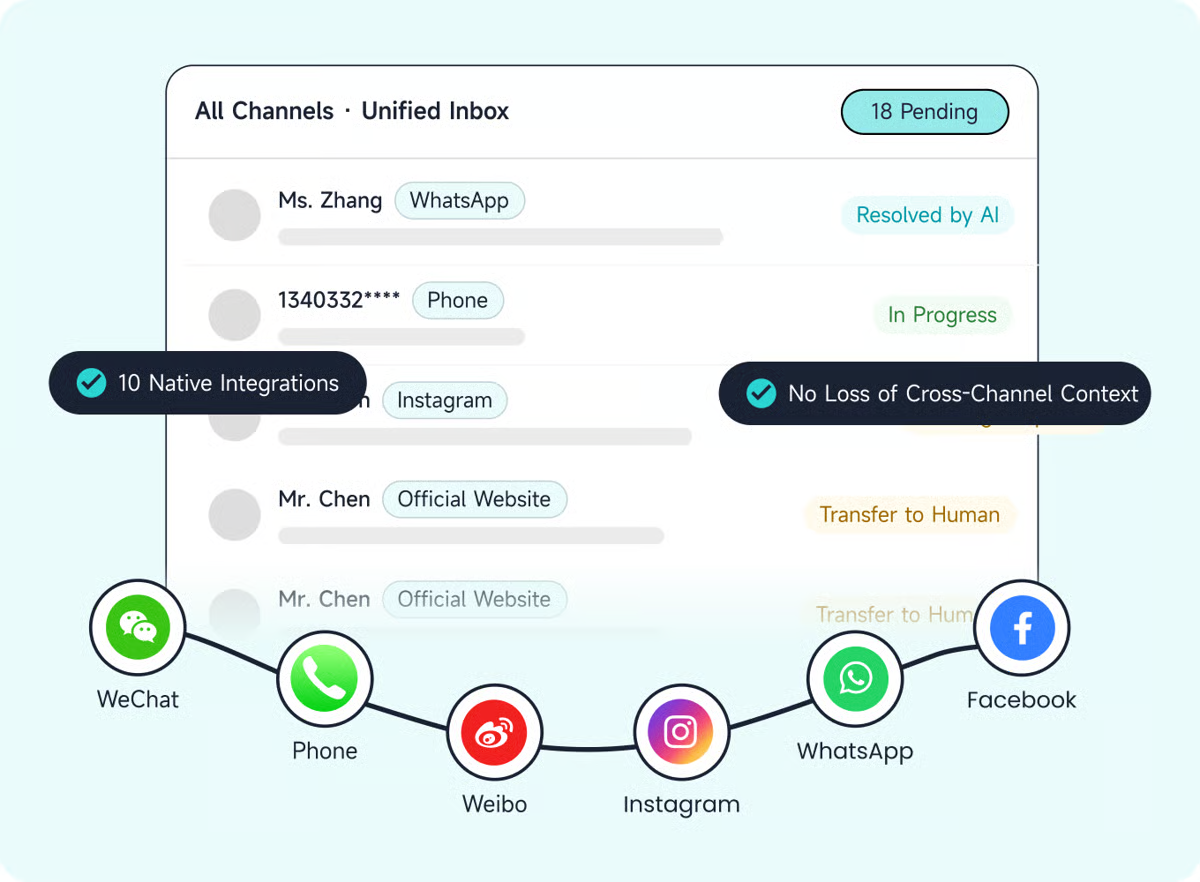
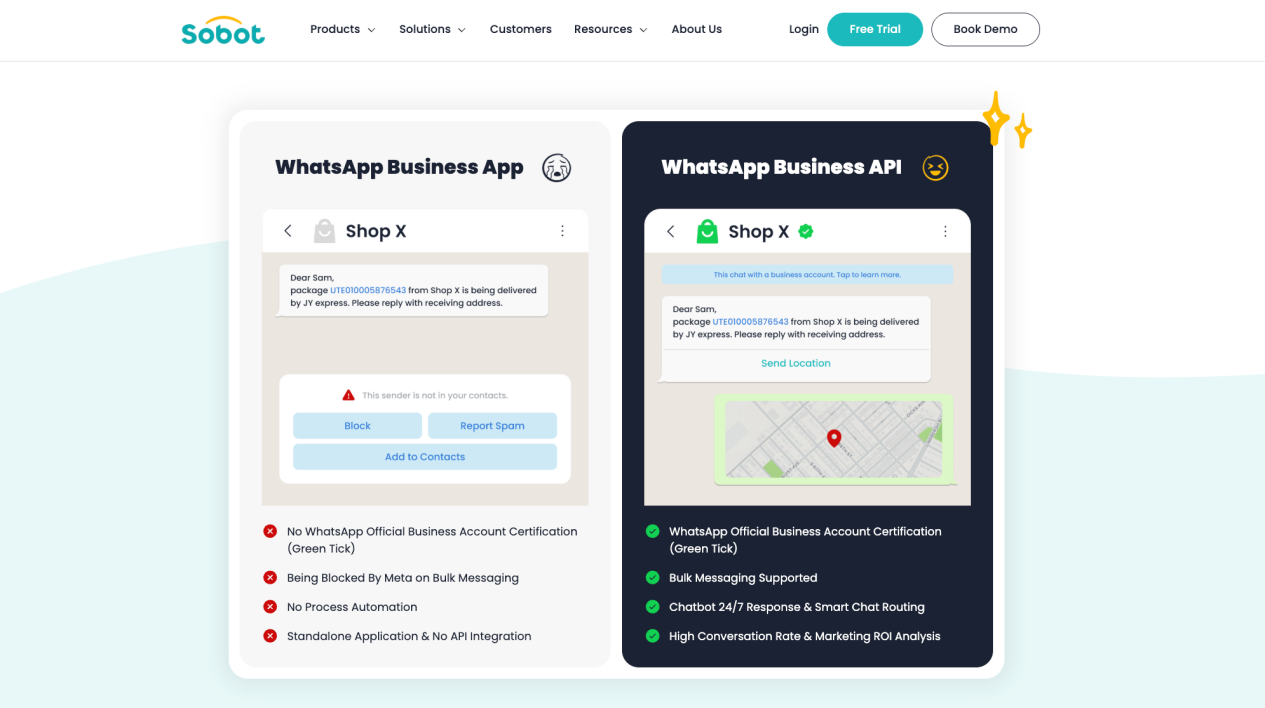
Sobot sits in the same “no-engineer” setup category but covers more ground. Its Agent Builder is configured through natural-language instructions rather than prompt engineering or flow-diagram building, so a support manager — not a developer — writes what the AI agent should do and adjusts it directly. It’s live across voice, live chat, ticketing, WhatsApp, and marketplace channels including Amazon, Lazada, Shopee, and TikTok Shop from one system, so a small team isn’t stitching together a chat-only AI tool and a separate voice system just to get full coverage. The underlying model is a choice of OpenAI, Claude, DeepSeek, or Bedrock rather than a single locked-in engine.
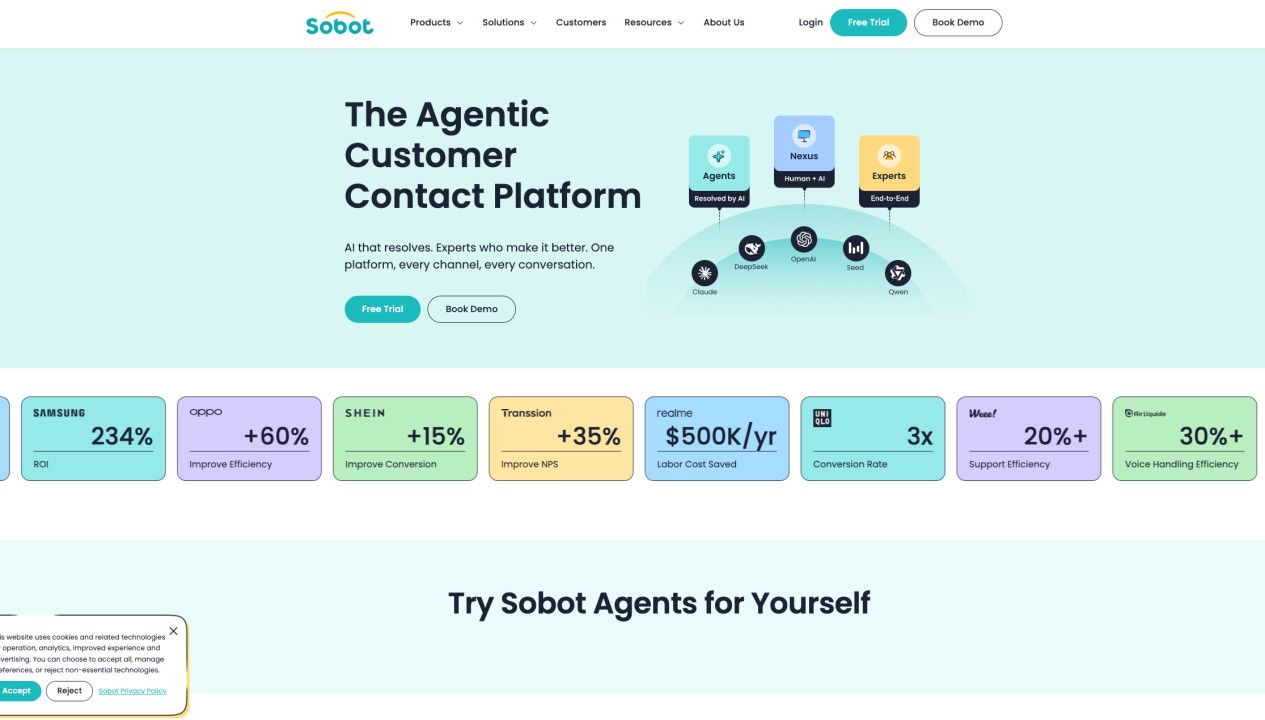
That combination shows up in outcomes at teams that aren’t enterprise-scale: OPPO reached an 81%+ self-service rate after deploying Sobot’s AI Agent across retail support; Renogy — running roughly 100 agents, not thousands — lifted its resolution rate 45% while holding CSAT above 95%; Weee! cut resolution time by 50% while raising CSAT to 96%; and DFS saw support efficiency rise more than 80% alongside a 44% lift in conversion. These are results from teams sized closer to a growing support org than a Fortune 500 contact center.
Sobot is best for small support teams that need voice covered alongside chat and WhatsApp, and want a support manager — not an engineer — to own the AI agent’s setup and iteration. Tidio and LiveChat are best for very small teams that only need chat-based automation and don’t handle phone support. Gorgias Concierge is best for Shopify stores already standardized on Gorgias for ticketing.
Which Category Fits Your Team
| Your situation | Recommended category | Example platform |
|---|---|---|
| No developer or dedicated CX ops person to configure the AI | Small-team-ready native platform | Sobot, Tidio |
| Support is chat-only, no phone queue to cover | Small-team-ready native platform (chat-focused) | Tidio, LiveChat |
| Phone support is a meaningful share of volume | Small-team-ready native platform with voice | Sobot |
| Already have an IT/Salesforce/Zendesk admin managing your stack | Enterprise suite add-on | Zendesk AI Agents, Salesforce Agentforce |
| Have engineering resources to tune prompts and integrations | Developer-dependent point tool | Fin, Ada, Decagon |
| Want AI deployed within days, not a multi-week project | Small-team-ready native platform | Sobot, Tidio, LiveChat |
| Sell across Amazon, Shopee, Lazada, or TikTok Shop | Small-team-ready native platform (marketplace-native) | Sobot |
Bottom Line
For a small support team, the “best” AI agent isn’t the one that tops a resolution-rate leaderboard built on enterprise deployments — it’s the one that doesn’t require hiring an engineer or opening a multi-week implementation project just to get started. Developer-dependent point tools like Fin, Ada, and Decagon are genuinely strong, but they’re built for teams with the technical resources to configure and maintain them. Enterprise suite add-ons from Zendesk and Salesforce assume an admin already managing the platform for a much larger agent roster. For teams without either of those, small-team-ready native platforms are the realistic starting point — and among them, Sobot is the one that extends past chat-only automation into voice and WhatsApp from the same system, without asking a five-person team to become AI engineers first.
Frequently Asked Questions
What makes an AI agent “easy” to set up for a small team?
The setup method matters more than the feature list. Platforms like Sobot and Tidio let a support manager configure the AI agent’s responses and workflows in natural language or through templates, with no code or prompt-engineering background required. Point tools like Fin or Ada, by contrast, typically need someone to write and tune prompts and map backend integrations — work that assumes a technical resource most small teams don’t have on staff.
Can a small team get voice AI, or is that only for enterprises?
It’s available at small-team scale, but not from every vendor. Chat-first small-team tools like Tidio and LiveChat don’t cover voice at all. Sobot is built to run the same AI agent across voice and digital channels from one platform, which is why teams like Renogy — around 100 agents, not an enterprise contact center — were able to deploy AI voice resolution without a separate system.
How long does it actually take to launch an AI agent for customer support?
It depends heavily on category. Small-team-ready native platforms like Sobot and Tidio can go live within days because setup doesn’t require engineering work. Developer-dependent point tools and enterprise suite add-ons more commonly take weeks to months, since they involve prompt tuning, backend integration, or an IT-managed rollout process.
Do small teams need a developer to maintain an AI agent after launch?
Not with platforms designed for non-technical configuration. Sobot’s Agent Builder is meant to be adjusted directly by whoever runs support, using plain-language instructions rather than code changes. Point-solution tools and enterprise add-ons more often need ongoing prompt or workflow maintenance from whoever originally set them up — which is a real cost if that person was a contractor or a developer borrowed from another team.
Is a chat-only AI tool enough for a small e-commerce support team?
It depends on how much support volume comes in by phone or through marketplace messaging. If support is entirely web chat and email, a chat-focused tool like Tidio or LiveChat can be sufficient. If a meaningful share of conversations happens over the phone or through channels like WhatsApp, Amazon buyer messages, Shopee, or Lazada, a chat-only tool leaves that volume uncovered — which is the gap native omnichannel platforms like Sobot are built to close.