Where could AI make the biggest difference in customer service? These 10 AI customer service examples show how customer service AI tools turn common requests into clear outcomes across industries.
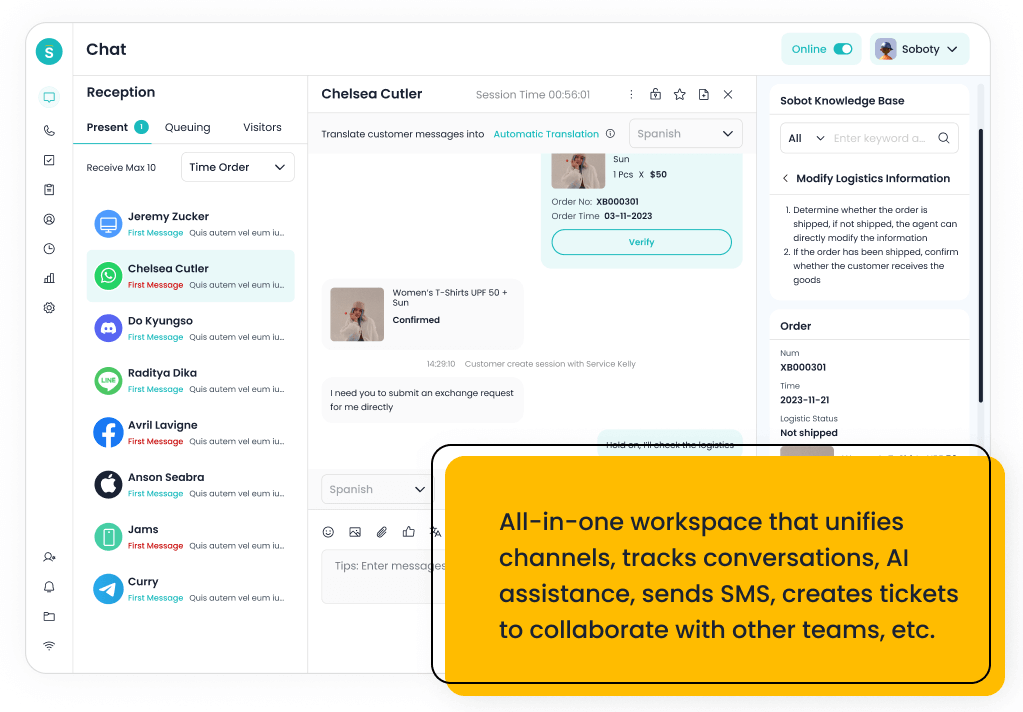
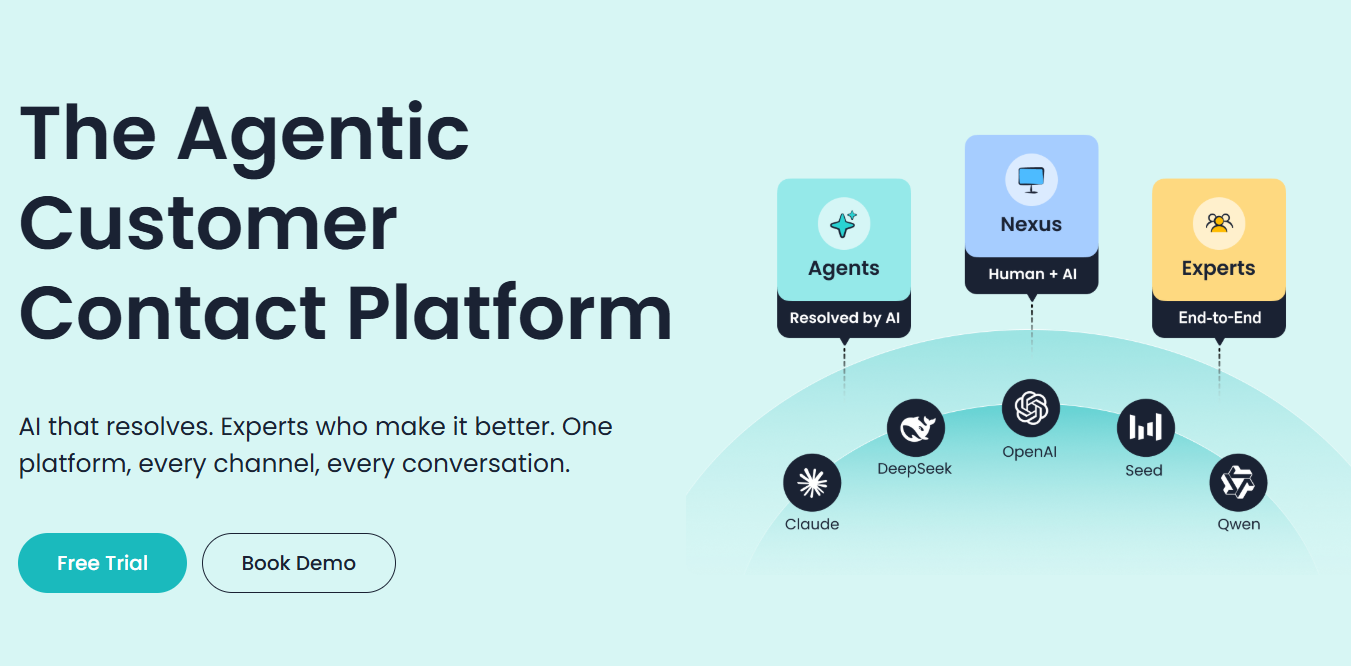
Sobot, an AI customer service platform serving 15,000+ businesses, combines an AI agent for customer service with human support across chat, social, and voice. It reports a 92% AI Resolution Rate, 90%+ Answer Accuracy, and 20%+ Conversion Lift.
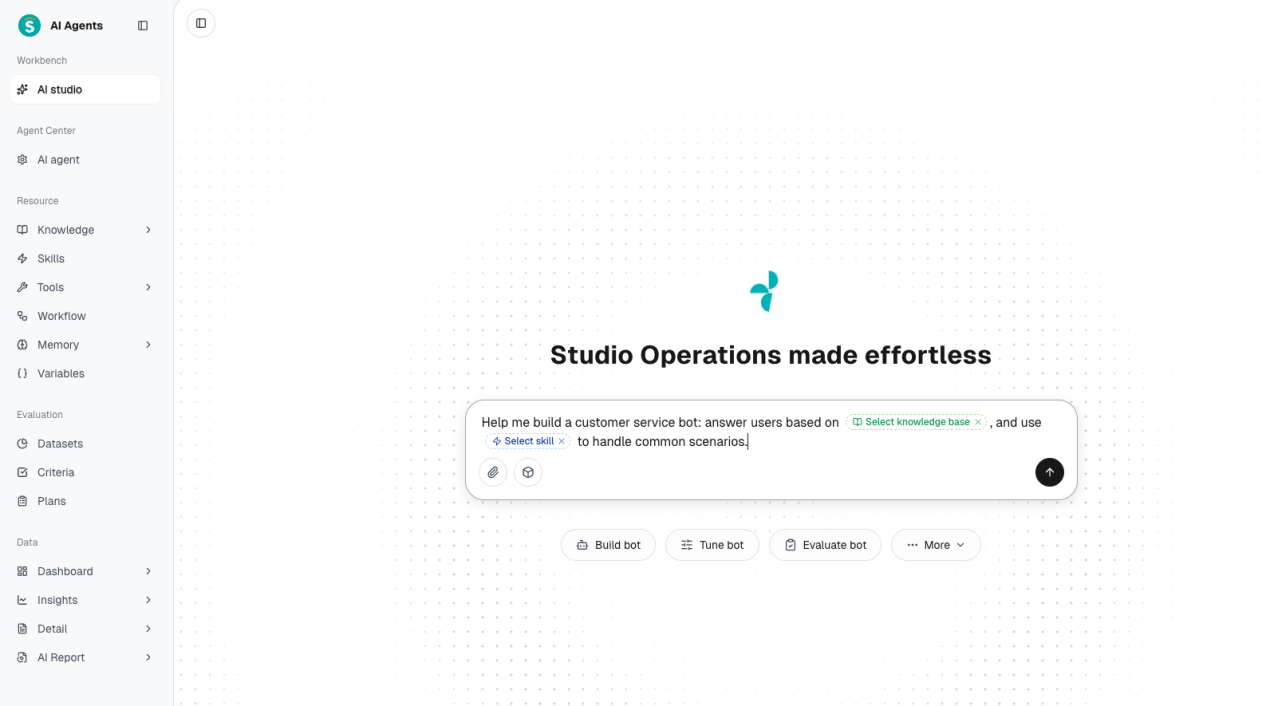
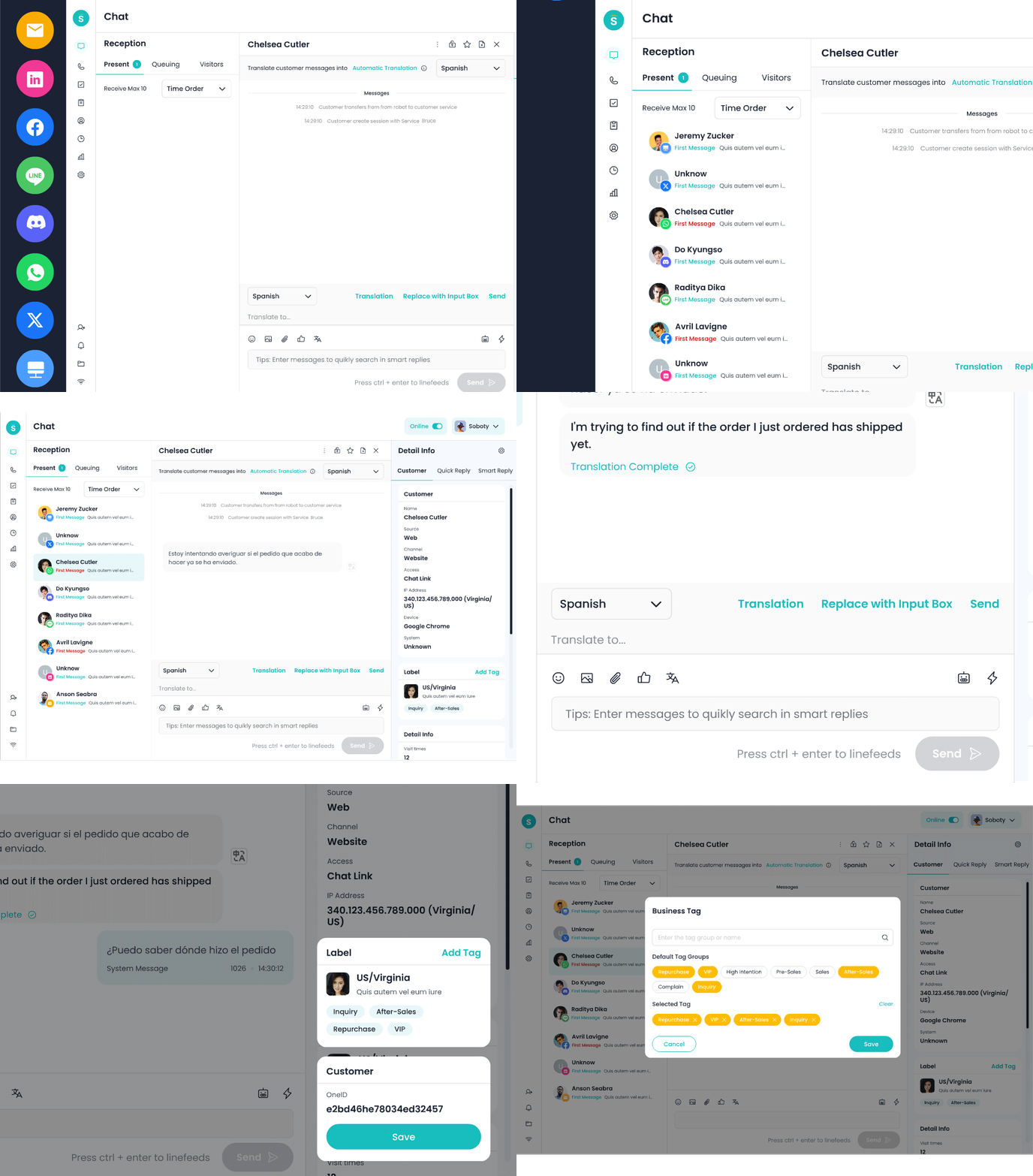
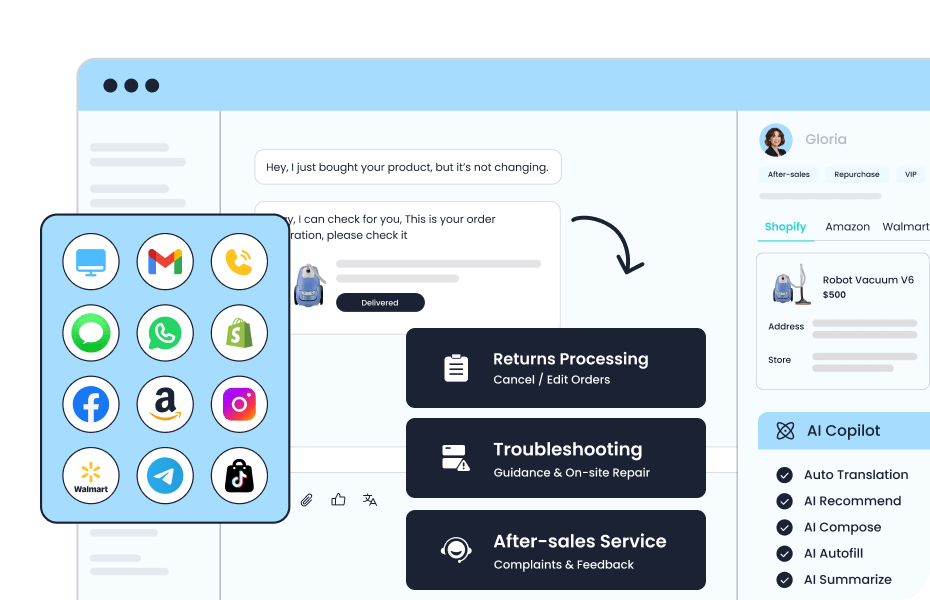
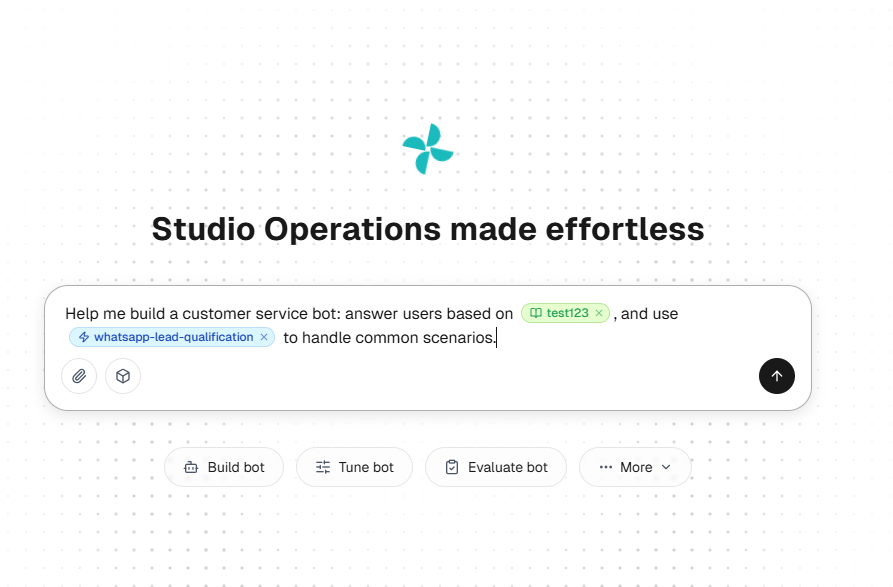
Sobot AI Agent Studio interface
10 AI Customer Service Examples at a Glance
| Example | Frequent customer challenge | AI-supported outcome |
|---|---|---|
| 1. E-Commerce | Return eligibility and shipping | Registers the return and sends a label |
| 2. Smart Manufacturing | Product fault and repair request | Troubleshoots and creates a repair ticket |
| 3. Consumer Electronics | Repeated product questions | Turns conversations into reusable knowledge |
| 4. Social Platforms | Tiered service expectations | Applies tier rules and routes support |
| 5. Customer Service Operations | Routine requests and specialist exceptions | Completes standard tasks and routes exceptions |
| 6. Financial Services | Transaction dispute and fraud risk | Checks policy, gathers evidence, and escalates risk |
| 7. Telecom | Device, plan, and order questions | Uses live data and multiple languages |
| 8. Field Services | Appointment scheduling and changes | Verifies and updates the service schedule |
| 9. Insurance | Incomplete claim information | Extracts details and triages risk |
| 10. B2B Software | Missing technical context | Collects details and creates a support ticket |
E-Commerce: Turn a Return Question into a Submitted Request
For e-commerce retailers, “This item doesn’t fit. How do I return it?” can trigger repeated messages about eligibility, order details, and shipping.
With Sobot AI Agent, retailers can guide customers through the return process in a single conversation:
- Check eligibility: The AI agent retrieves the order, asks about the reason and item condition, and applies the retailer’s return policy.
- Start the return: For an eligible request, it uses authorized tools to register the return and generate a label, then sends shipping instructions.
- Handle exceptions: If the customer requests an exception or disputes the decision, Sobot transfers the conversation and details to a human agent.
What you can learn: Build workflows around the actions customers can take. Integrate your return policy, order data, and return tools to ensure that by the end of the conversation, customers have submitted a registered return request and received a return label. Start with simple, policy-compliant returns, and escalate exceptions to your team for handling.
Smart Manufacturing: Resolve Common Faults and Escalate Repair Requests
When a product stops working, customers need to know whether self-service is safe or repair is required. Manufacturers can connect Sobot AI Agent to approved troubleshooting knowledge and repair workflows.
For Tineco, Sobot helped handle common repair issues through AI-powered intake and manage return-for-repair requests in its ticketing workflow, supporting cross-team coordination and repair-status updates.
- Identify the problem: Ask for the product model, symptoms, and checks already attempted.
- Guide safe checks: Retrieve approved instructions, explain safe steps, and confirm whether the issue is resolved.
- Escalate and prepare a repair ticket: When rules indicate human support is needed, summarize the issue and attempted steps, create a repair ticket, and route it to technical support.
What you can learn: Configure Sobot AI Agent to recognize failed troubleshooting and repair requests. Collect the model, symptoms, attempted steps, and contact details before ticket creation, then route and track the issue through resolution.
Consumer Electronics: Turn Customer Conversations into Reusable Answers
Customers ask detailed questions before buying electronics, while product updates make manually maintained FAQs hard to keep current.
Sobot AI Agent can turn customer conversations into knowledge for future inquiries. For OPPO, Sobot helped build a knowledge base from past conversations and update it through uploaded product files, reducing manual Q&A entry.
- Generate knowledge: Extract questions and answers from selected conversations, propose entries, and filter similar duplicates.
- Review and reuse: Check drafts against current product information, then publish approved entries for later AI Agent conversations.
What you can learn: Generate knowledge from relevant support conversations, including resolved handoffs. Require review against current product documents before publishing reusable answers.
Social Platforms: Match Support to Each User’s Service Tier
Membership platforms need efficient routine support and more personalized VIP service. Sobot AI Agent can use customer context and rules to guide users into appropriate service paths.
For Mico, Sobot helped tailor customer support by user level for differentiated VIP service.
- Identify the service tier: Use connected membership data to select the appropriate support rules.
- Personalize the conversation: Configure tier-specific greetings and information while AI answers routine questions from approved knowledge.
- Route to the right team: Define when each tier receives human help, route eligible VIP requests with context, and preserve a path for other unresolved requests.
What you can learn: Turn membership tiers into service rules. Connect user-level data, define greetings, support scope, handoff conditions, and follow-up ownership, and retain a default route for unidentified users.
Customer Service Operations: Answer First, Then Route Customers to the Right Skill Group
Some requests are routine; others require specialist judgment. An AI agent should complete supported tasks and recognize when a different queue is needed.
Sobot AI Agent uses approved knowledge, skills, and tools to complete supported requests. Intelligent routing sends unresolved, out-of-scope, or judgment-heavy cases to the appropriate skill group.
For Agilent, Sobot combined knowledge-based AI support with intelligent routing, handling routine questions and assigning other requests to corresponding skill groups.
- Complete standard requests: Use approved knowledge, skills, and tools to answer questions and perform configured steps.
- Detect exceptions: Trigger a transfer for unresolved, out-of-scope, or judgment-dependent requests.
- Apply allocation rules: Select the skill group and pass the conversation context to its agents.
What you can learn: Design a closed-loop flow with an exception path. Define AI-completable tasks, map transfer conditions to skill groups, and pass context so customers do not need to start again.
Financial Services: Use an AI Agent to Check Disputes and Escalate Risk
When a customer disputes a card or account transaction, support teams must gather facts, check policy, and separate routine cases from fraud risks. A documentedtransaction-dispute workflow shows how an agent can automate case intake, log retrieval, policy checks, and supervisor approval.
An AI Agent can turn the complaint into a review-ready case:
- Collect and identify: Ask for the transaction reference, date, merchant, and reason, then retrieve the matching record.
- Check eligibility and risk: Compare the case with dispute policies and fraud signals to determine the permitted next step.
- Resolve or escalate: Present an approved option for eligible cases; flag exceptions for supervisor review with a structured summary.
What you can learn: Connect conversation data to policy and risk checks. Separate AI actions from approval decisions and retain evidence.
Telecom: Use an AI Agent to Answer Product and Plan Questions with Live Data
Telecom customers often combine device, plan, contract, and order questions. Multiple languages and changing offers make static FAQs insufficient.
An AI agent can coordinate the customer’s next step across connected systems:
- Clarify the need: Identify whether the customer wants a device or plan recommendation, contract help, or order status.
- Use current data: Retrieve approved product details, offers, store information, and order status.
- Continue or hand off: Provide supported guidance in the customer’s language, then escalate complex or sensitive requests with context intact.
What you can learn: Connect product data, offers, knowledge, language, and escalation. Define when a representative takes over.
Field Services: Use an AI Agent to Schedule and Update Appointments
Customers contacting a home-service or repair company usually want a confirmed appointment. Scheduling depends on identity, availability, service type, and status. A field-service dispatching workflow demonstrates how an AI agent can support appointment scheduling and dispatch.
An AI agent can manage the allowed scheduling path:
- Verify and locate: Confirm identity and find the relevant appointment or service request.
- Take the action: Schedule, reschedule, or cancel when configured conditions are met, then update the service system.
- Handle constraints: If the request conflicts with service rules or involves complex work, explain the limitation and route it with the requested time and service context.
What you can learn: Connect scheduling data, define eligibility and conflict checks, and confirm changes only after the system records them. Keep a human path for exceptions.
Insurance: Use an AI Agent to Triage Claims and Route Risky Cases
Claims arrive through emails, calls, and customer records. Missing information can delay review, while high-risk cases need human oversight.
An AI agent can prepare the claim without making unapproved decisions:
- Extract the case: Pull details from a message, call transcript, or CRM record to prefill the claim form.
- Check and classify: Compare information with policy terms, then classify urgency, complexity, and risk.
- Route with context: Fast-track eligible steps where policy allows, or send high-risk and incomplete claims to an adjuster with missing items and a case summary.
What you can learn: Define data sources, document checks, risk thresholds, and approval points. Log inputs and actions for adjuster review.
B2B Software: Use an AI Agent to Gather Details and Create Support Tickets
Software customers often describe a symptom without the product version, environment, or business impact. Missing details create back-and-forth.
An AI agent can make the first conversation useful even when it cannot solve the issue:
- Ask targeted questions: Identify the product, account, environment, steps tried, and business impact.
- Try the known fix: Search approved support content and guide the customer through a supported resolution.
- Create the case: If unresolved, create a ticket through the authorized help-desk tool, attach the summary and metadata, and route it to the right team.
What you can learn: Design ticket fields and permissions first. Close only confirmed outcomes; otherwise, create a traceable, specialist-ready ticket.
Frequently Asked Questions
What is an AI Agent in customer service?
An AI Agent in customer service can understand intent, use approved knowledge or business data, take configured actions, resolve routine requests, and hand exceptions to a human with context.
Which customer service tasks work best for AI agents?
Choose a frequent, bounded task backed by reliable knowledge and connected tools. Returns, order status, troubleshooting, appointment changes, and ticket intake make a strong AI customer service example because outcomes are easy to verify.
When should customer service AI agents escalate to a human?
Set escalation rules for unresolved, out-of-scope, risky, sensitive, or policy-exception requests. Pass the intent, history, customer context, and prior actions so the customer does not repeat the issue.
Can AI agents complete actions instead of only answering questions?
Yes. With approved permissions and integrations, an Agent can register a return, issue a label, update an appointment, or create a ticket. Confirm consequential actions and close only after the system records the result.
How should a business measure AI customer service performance?
Track resolution, accuracy, task completion, handoff quality, and satisfaction. Review unresolved conversations and update knowledge, routing, and permissions.