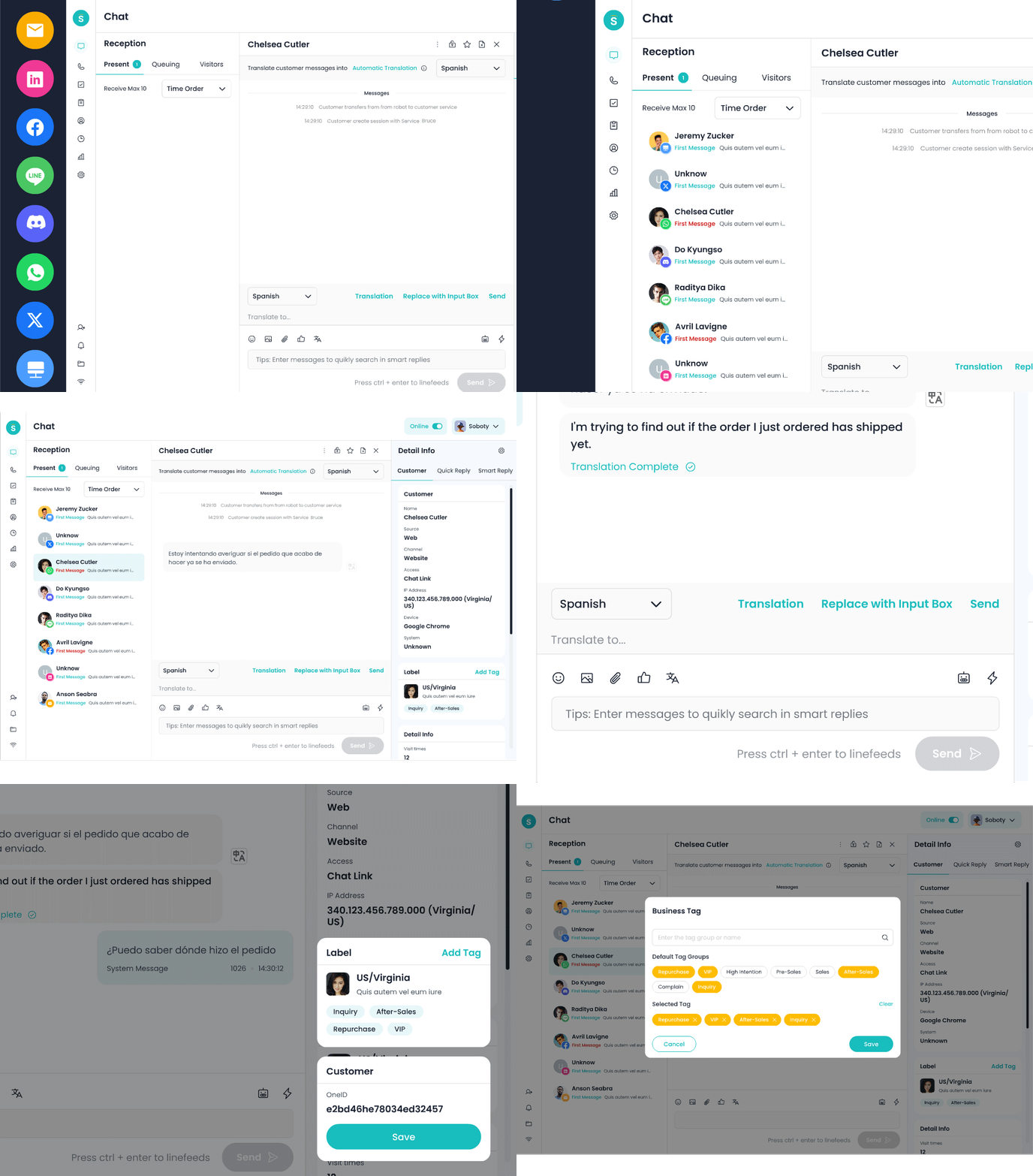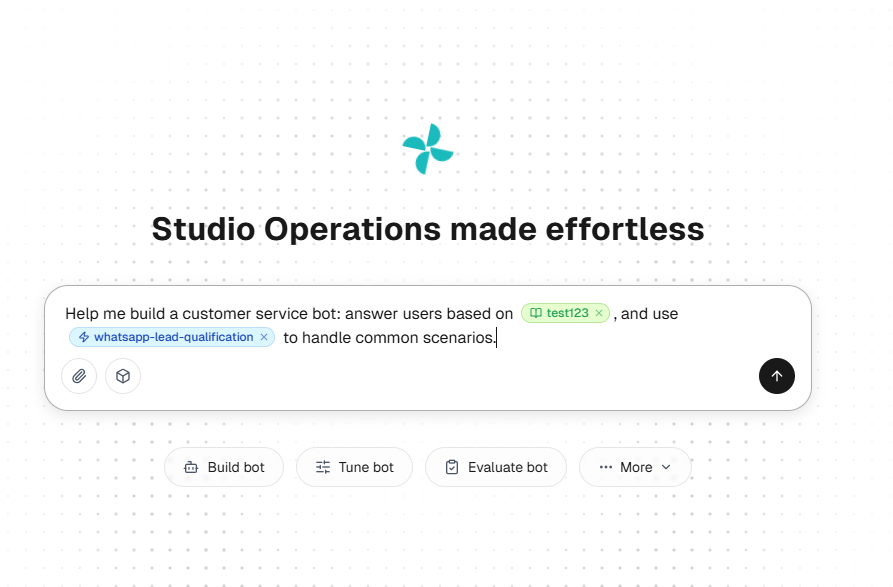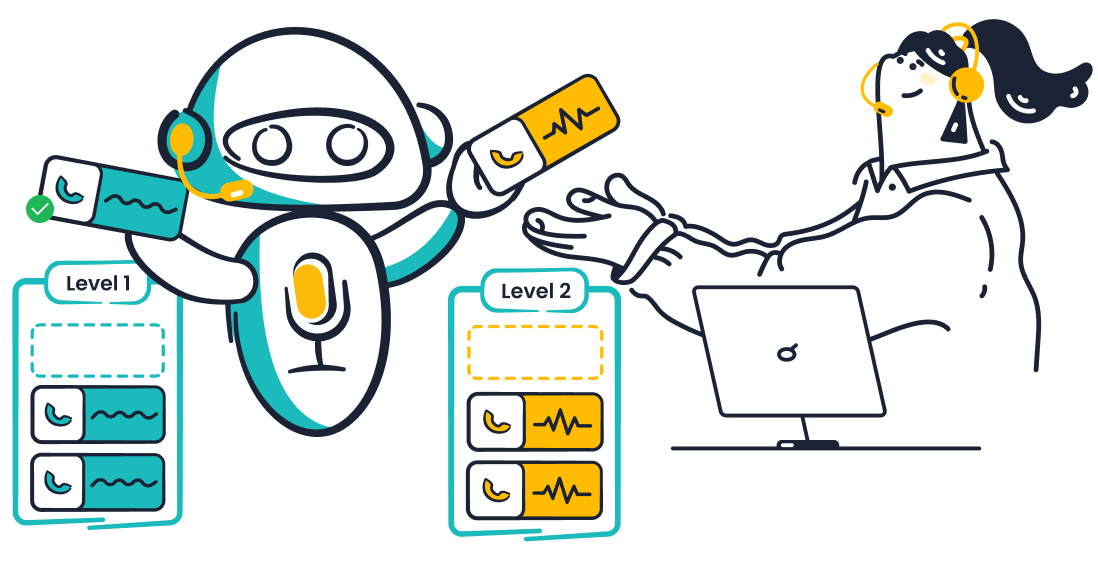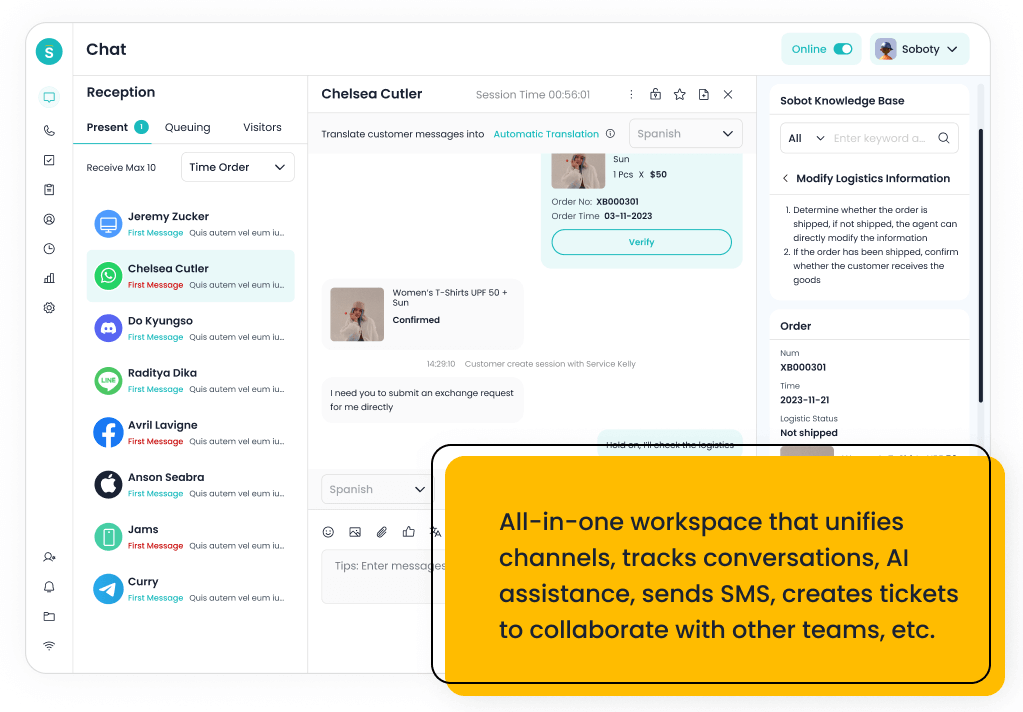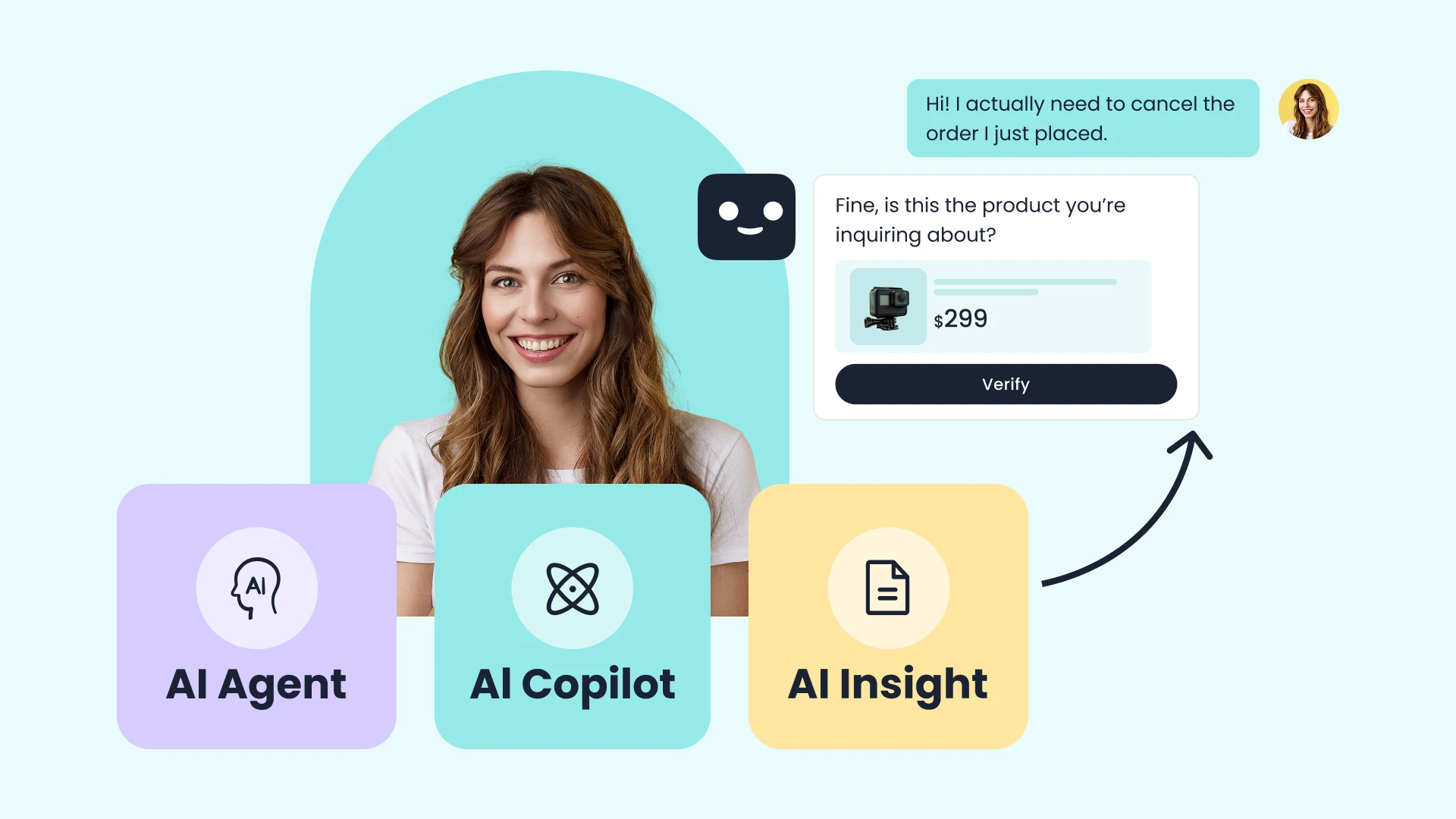
AI customer service use cases cover the full support journey. AI answers common questions, tracks orders, processes refunds, and handles phone calls. It also routes tickets, drafts replies, and reviews quality, so human agents can spend their time on complex cases.
Most teams no longer ask whether AI belongs in support. They ask where it pays off first. Gartner’s research on customer service AI ranks use cases by value and feasibility for exactly that reason. This guide walks through the use cases businesses rely on today, in the order a customer request usually moves through a support team.
What Is an AI Customer Service Use Case?
An AI customer service use case is a specific, repeatable support task that AI handles in full or in part. “Answer shipping questions” is a use case. “Use AI in support” is not. Clear use cases make it easier to measure results and decide where to start.
10 AI Customer Service Use Cases in Practice
Each use case below takes a specific task off the support team’s plate, whether the AI talks to the customer directly or works in the background.
1. Answering Repetitive Questions Around the Clock
The most common starting point is FAQ automation. An AI Agent for customer service answers questions about pricing, policies, and product details at any hour, pulling answers from the company knowledge base.
2. Recommending Products and Qualifying Leads
On product pages and in messaging apps, AI asks shoppers what they need and suggests matching items. For B2B teams, the same approach qualifies inbound leads before passing them to sales.
3. Tracking Orders and Deliveries
“Where is my order?” is one of the highest-volume questions in e-commerce. AI connects to order and logistics systems, checks the status, and replies with the latest update in seconds.
4. Processing Returns, Refunds, and Account Changes
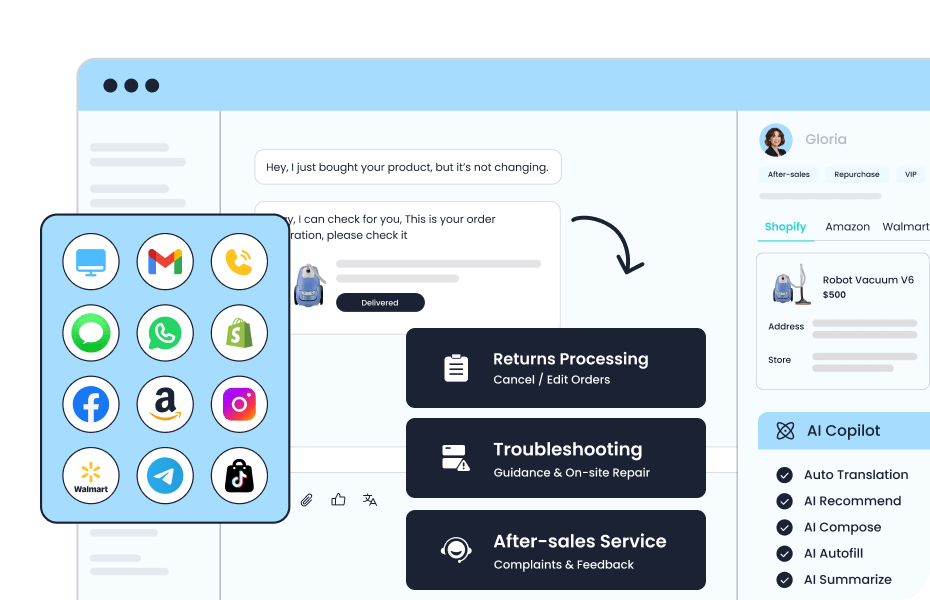
Modern AI does more than answer. It can check whether an order qualifies for a return, start the refund, or update an address. When a request falls outside policy, it hands the case to a human agent with full context.
5. Supporting Customers in Multiple Languages
Conversational AI customer support can detect a customer’s language and reply in it. This lets one team serve several markets without hiring a separate group of human agents for each language.
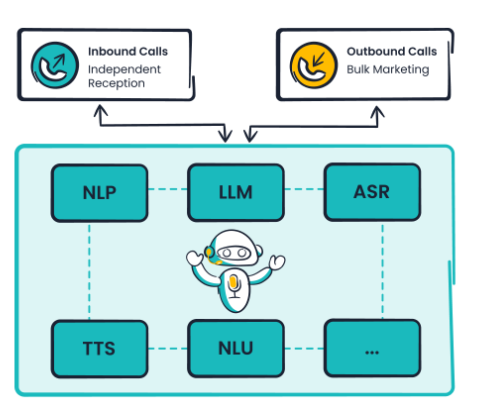
6. Handling Inbound Phone Calls
AI can answer calls, understand spoken requests, and resolve simple ones without putting callers on hold. Complex calls go to a human agent along with a summary of what the caller already said.
7. Routing and Tagging Incoming Tickets
AI reads each new ticket, identifies intent and urgency, and sends it to the right team. Auto-tagging also gives managers cleaner data for reporting.
8. Suggesting Replies and Summarizing Conversations
During a live conversation, AI surfaces relevant knowledge articles and drafts a reply the human agent can edit. After a long thread or a handoff, it writes a short summary so nobody has to reread the whole history.
9. Reviewing Quality and Customer Sentiment
Instead of sampling a small share of conversations, AI can review every one. It flags negative sentiment, missed policy steps, and coaching opportunities for supervisors.
10. Forecasting Contact Volume
AI looks at past traffic to predict busy periods, such as peak shopping seasons or product launches. Managers can then adjust staffing and automation before the queue builds up.
AI Customer Service Use Cases by Department
The same customer service AI tools often serve several teams at once.
| Department | Common AI use cases |
|---|---|
| Customer support | FAQ automation, order tracking, refunds, ticket routing |
| Sales and e-commerce | Product recommendations, lead qualification |
| Contact center operations | Phone call handling, call summaries, volume forecasting |
| Quality and training | Conversation review, sentiment analysis, agent coaching |
How Businesses Use AI in Customer Service Today
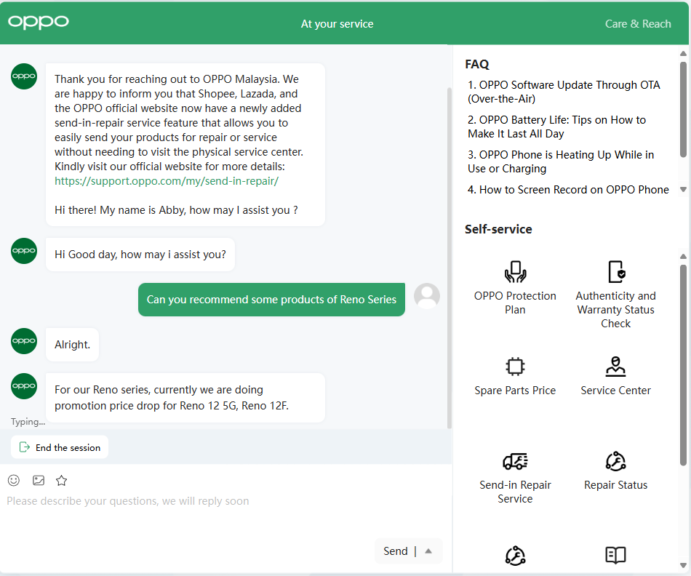
Real deployments usually combine several use cases. OPPO, for example, worked with Sobot to handle surges of repetitive questions during peak shopping events, which freed human agents for complex issues. You can read more examples on the Sobot customer stories page.
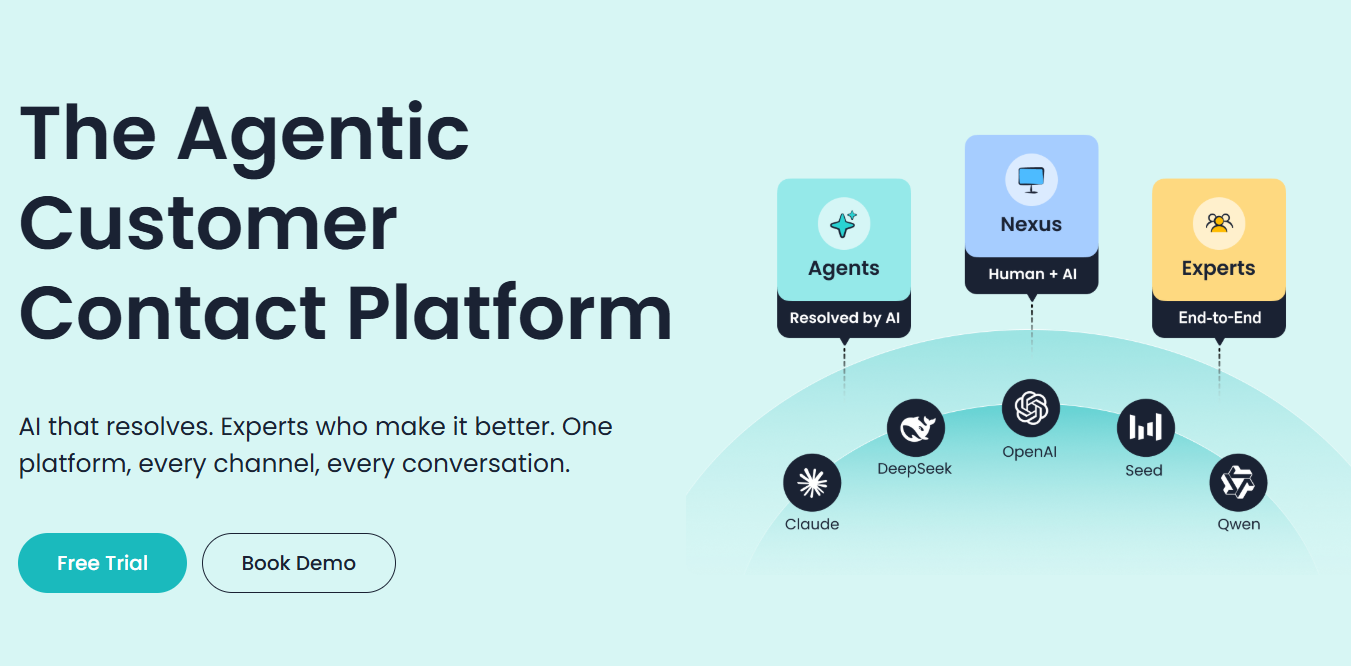
Sobot is an AI customer support platform used by 15,000+ businesses. Sobot Agents cover chat, messaging, and phone calls, with a 92% AI resolution rate and 90%+ answer accuracy. In sales conversations, they can drive a 20%+ conversion lift.
Start a free trial or Book a demo to see which of these AI customer service use cases fit your team.
Frequently Asked Questions
What are the most common AI customer service use cases?
The most common AI customer service use cases are FAQ automation, order tracking, returns and refunds, ticket routing, and reply suggestions for human agents. Most businesses start with FAQ automation because it is simple to set up and easy to measure.
How is AI used in customer service?
AI in customer service answers customer questions, completes simple requests like refunds, and helps human agents with routing, reply drafts, and conversation summaries. It works across chat, email, messaging apps, and phone calls.
Can AI customer service replace human agents?
AI customer service handles repetitive, rule-based requests well, but it does not replace human agents. Complex, sensitive, or high-value cases still need people, and the best setups hand these cases from AI to humans with full context.
Where should a business start with AI customer service?
A business new to AI customer service should start with one high-volume, low-risk use case, such as FAQ automation or order tracking. Once results are measurable, it can expand to refunds, phone calls, and quality review.