A customer asks whether an order can still be changed. A useful answer needs more than fluent language: it needs the current order status and the company’s rules. AI customer service brings those pieces together when its knowledge, system connections and permissions are properly set up.
What Is AI Customer Service?
AI customer service is the use of artificial intelligence to understand support requests, find relevant information, and help customers or human agents resolve them. Businesses encounter it as AI customer service software, a platform, a tool, or a solution; these labels overlap rather than define separate categories. The software can work within a help desk, a website or a broader Contact Center, connecting customer conversations with business knowledge and service processes. Salesforce’s category overview includes inquiry handling, response generation and case routing within this scope.
AI customer service at a glance
- AI can answer customers directly or assist the people serving them.
- Reliable service needs relevant business information and clear limits on what AI may do.
- A useful starting point is a recurring request with an approved answer and an owner for exceptions.
That makes AI for customer service broader than a customer-facing chat window. It may suggest an answer that a support representative checks before sending, or help a customer find an answer independently. When evaluating AI customer service tools, look at the work they support and the information they can access. The label alone does not establish whether they can complete your particular request.
How Does AI Customer Service Work?
A useful way to understand the process is to follow a request from the customer’s question to its outcome. The system needs relevant information, permission for any action it takes, and a route to a human when the request falls outside its scope.
- Understand the request. The system interprets the message and its conversational context. If essential details are missing, it can ask a clarifying question.
- Find the appropriate information. A policy question may draw on an approved knowledge base. An account-specific question may require a connection to live business records.
- Respond or take an allowed action. It can prepare an answer, suggest a next step or use a configured integration. Reading a record and changing it require different permissions.
- Keep the request moving. When the available information or permissions are insufficient, the workflow should route the issue to someone who can handle it.
Many generative systems use retrieval-augmented generation: they retrieve relevant information and give it to the language model as context for its answer. AWS explains this approach as a way to use an organization’s knowledge without retraining the model. The business still needs to maintain that knowledge and test the answers it produces.
For example, “What is your return policy?” can be answered from a current policy document. “Has my return arrived?” needs the relevant return record. Giving AI the policy cannot supply that missing transaction status. Before adding a new request type, identify which information would let a support representative answer it correctly; the AI needs an appropriate route to that information too.
What Can AI Customer Service Do?
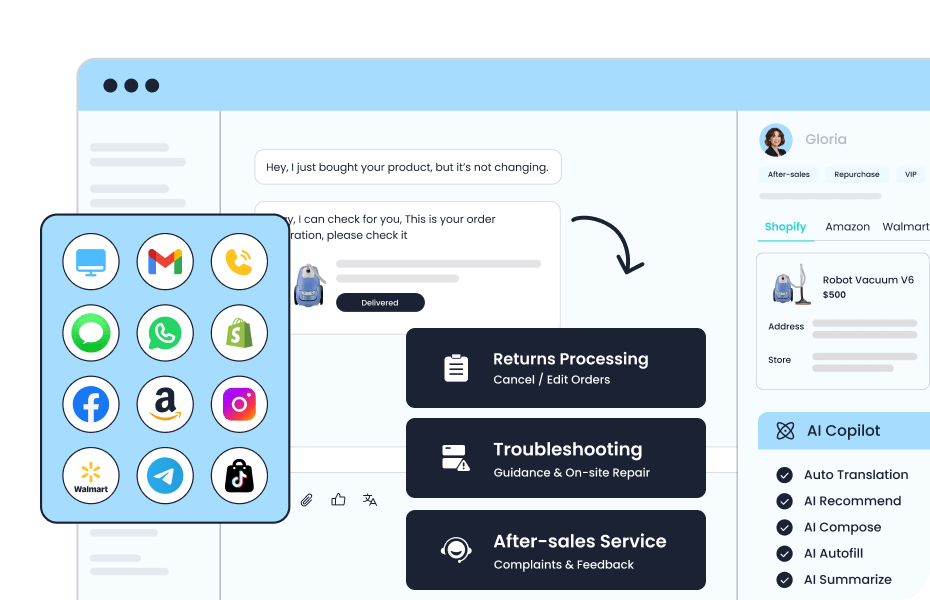
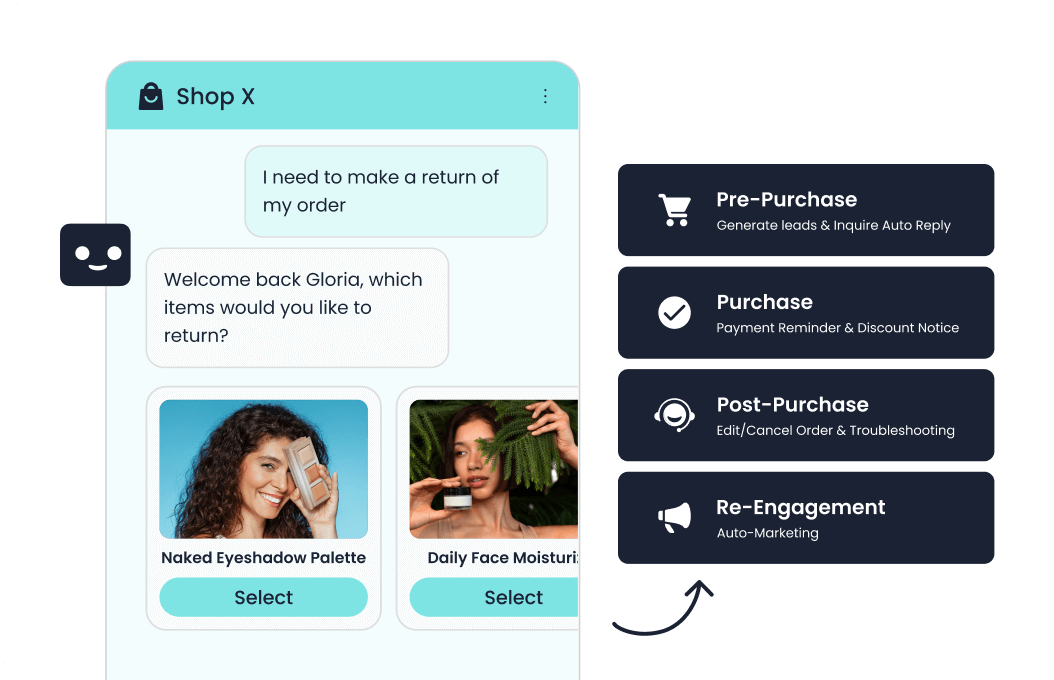
Common capabilities include automatic replies, ticket routing and support across channels. For AI customer service in chat and email, the shared goal is a useful answer; the conversation pace and message format differ.
Some of the work happens behind the conversation. AI can prepare drafts for human review or summarize an exchange so the next representative can understand the issue faster. These agent-assistance examples show why using AI in customer service does not necessarily mean handing the entire interaction to automation.
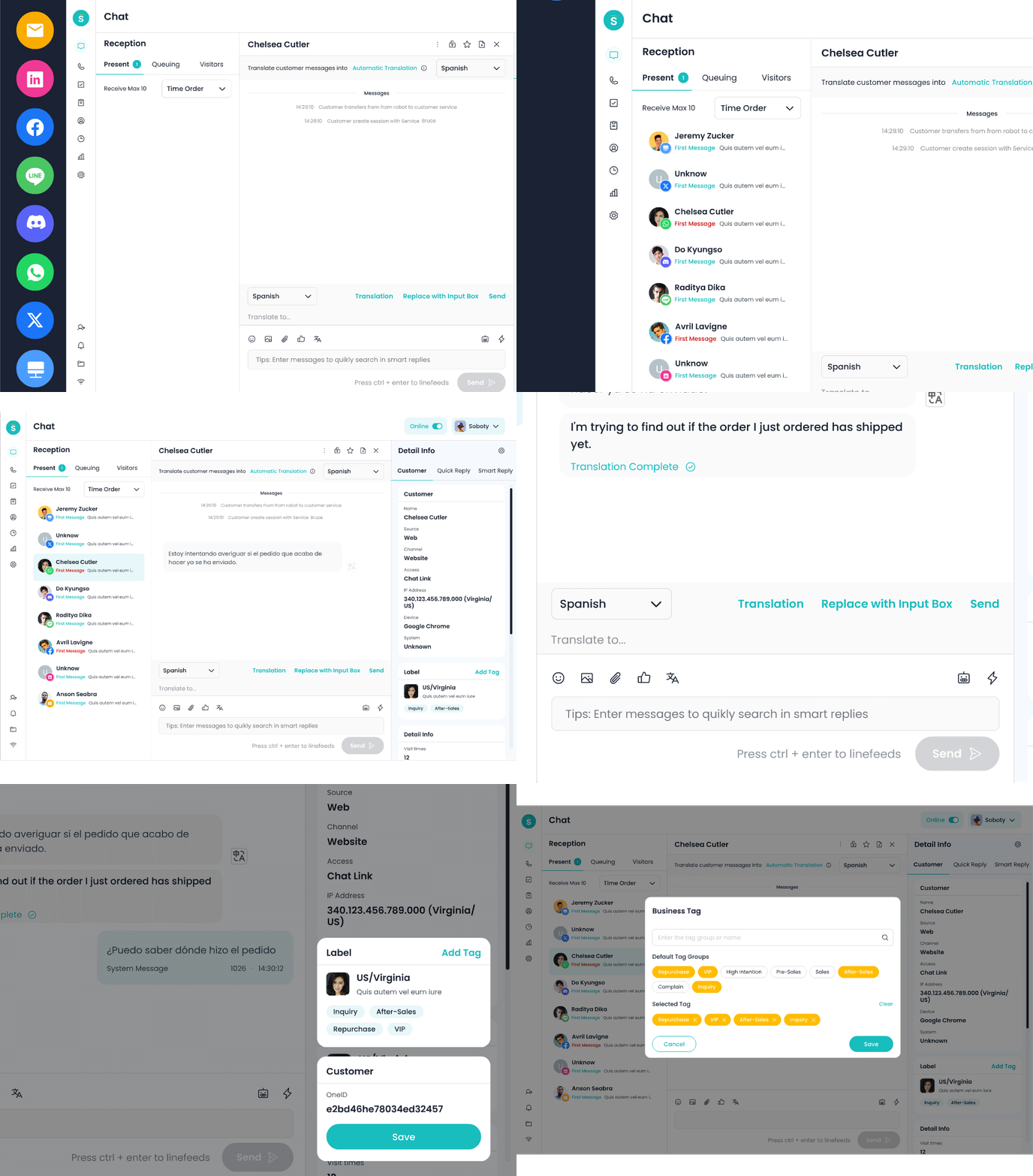
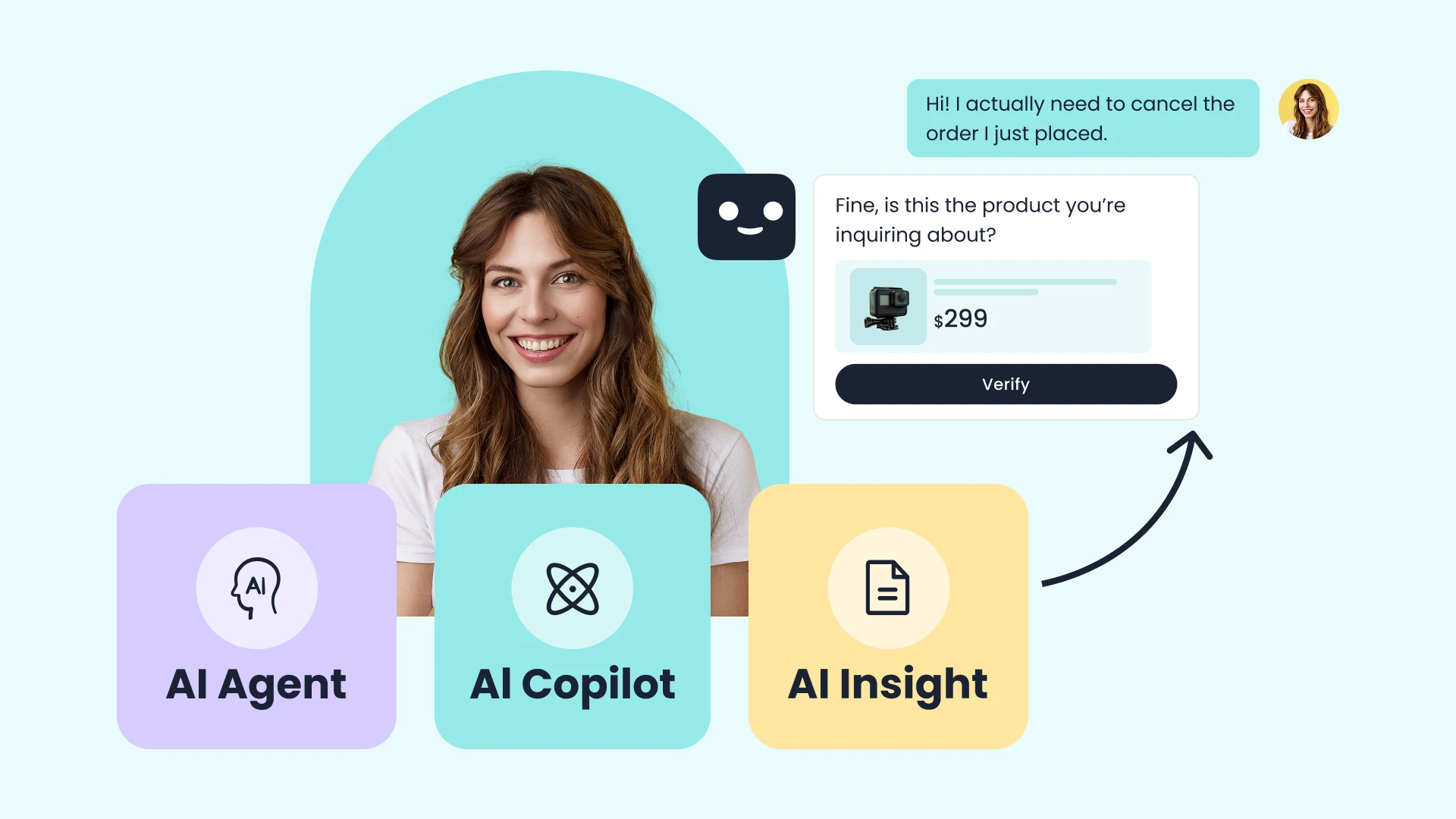
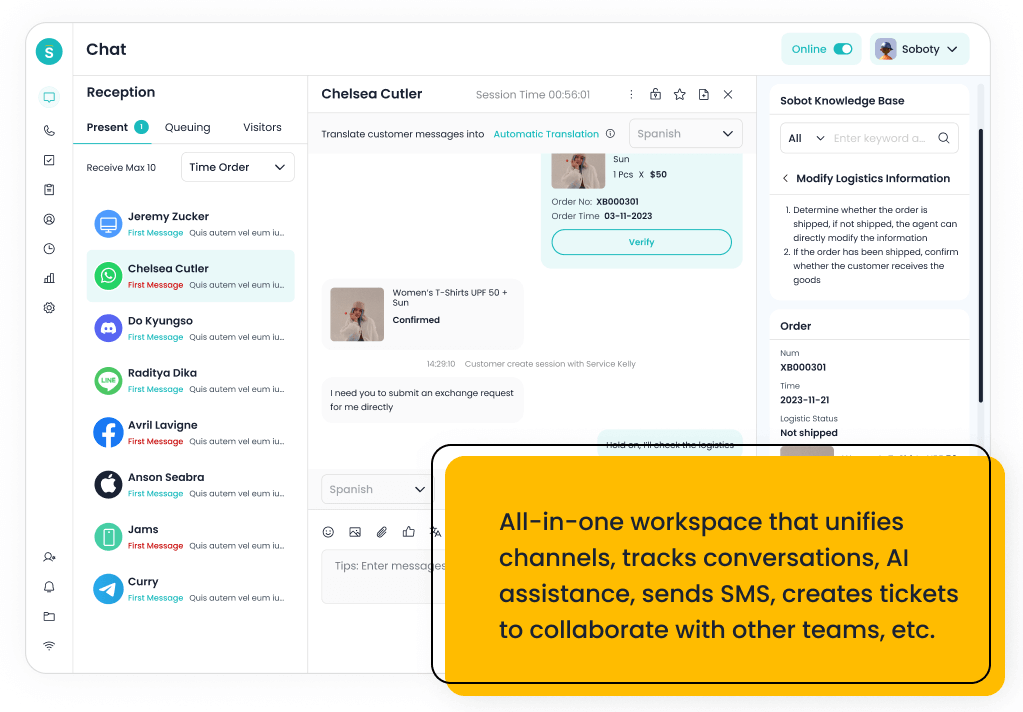
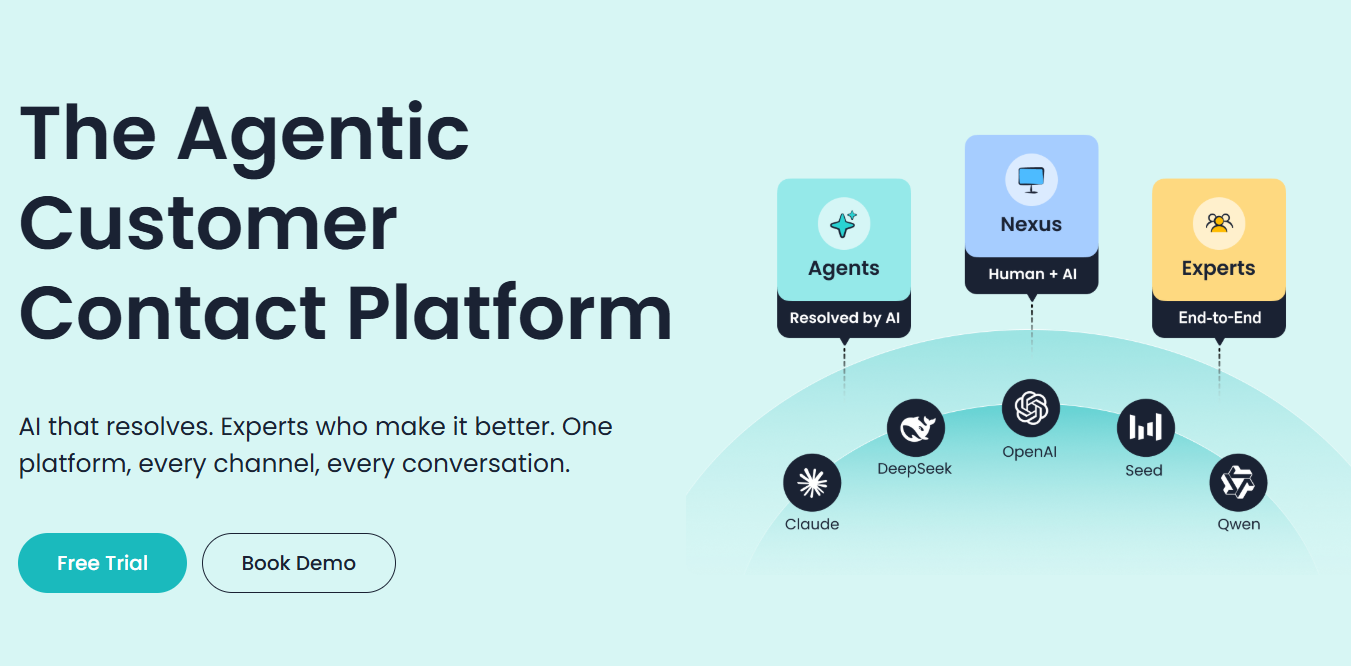
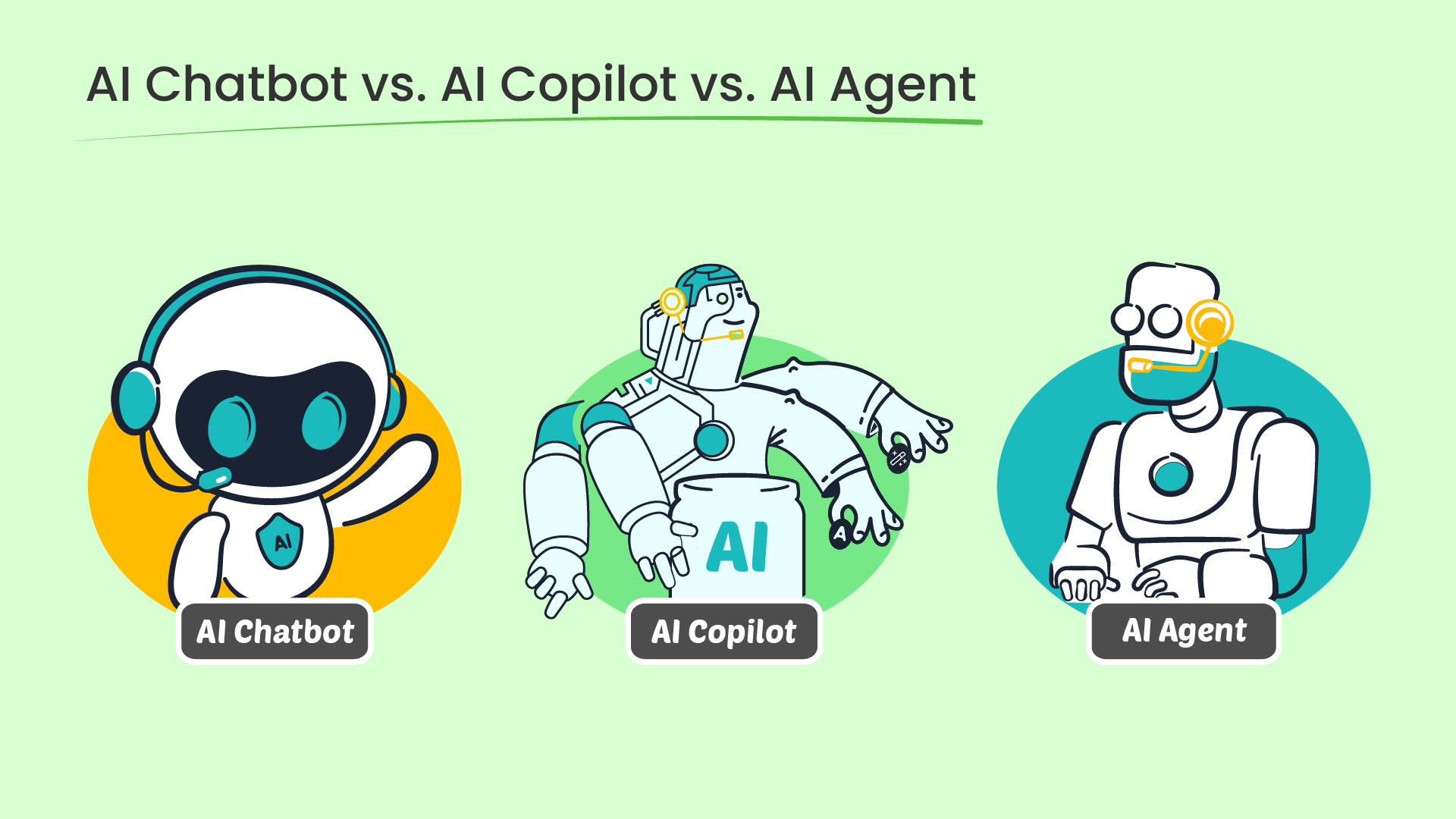
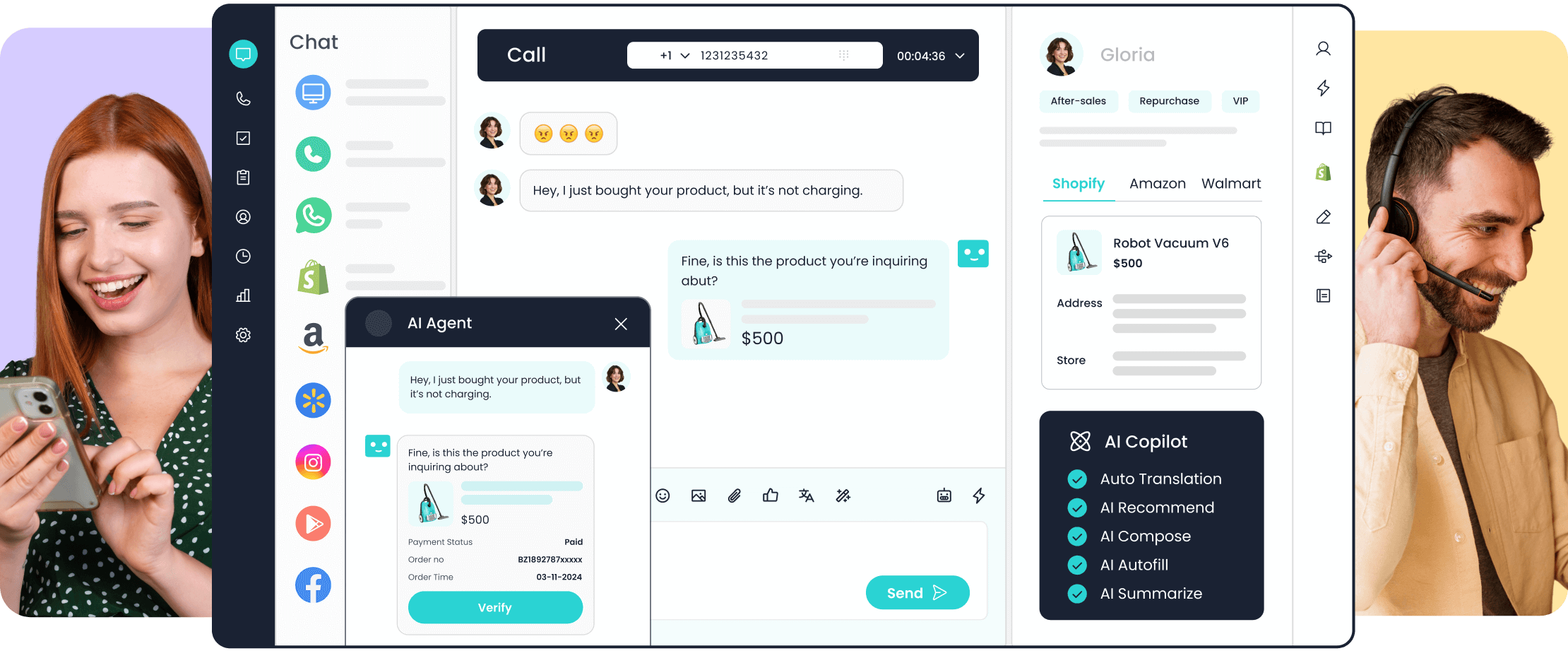
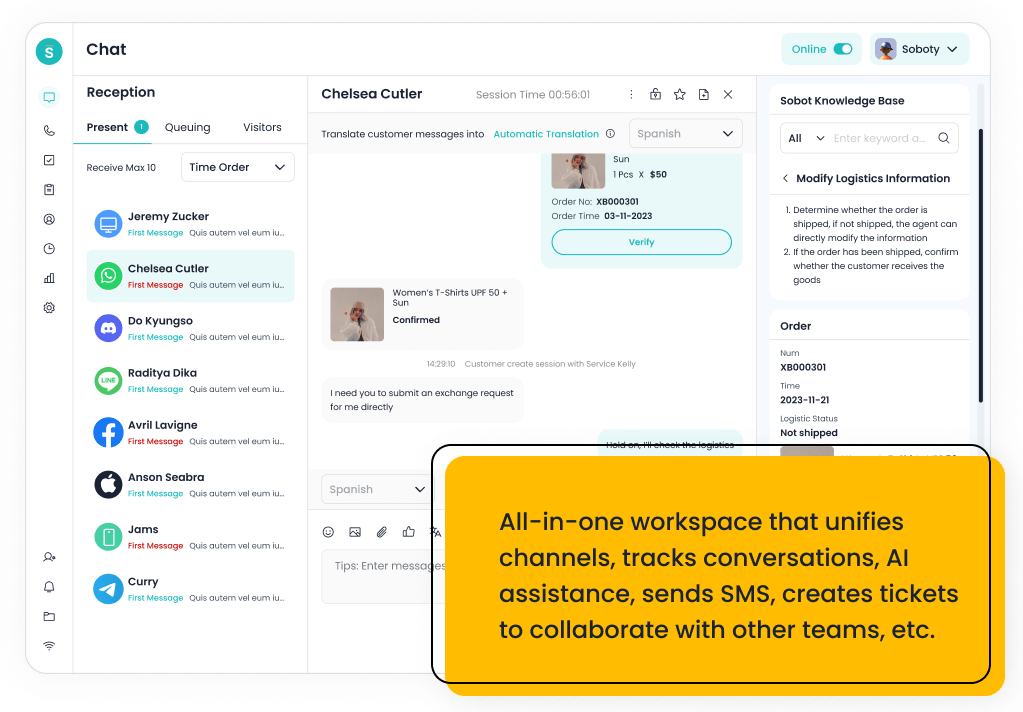
Sobot illustrates that combination: its AI solution describes a shared knowledge center for chat, email, voice and social media, alongside Copilot tools for drafting replies, summarizing conversations and filling ticket details. Its AI Agent handles customer-facing interactions, while Copilot supports human representatives. These are different places to apply AI within a service operation, so the useful starting point depends on where your team needs help.
Which AI Technologies Are Involved?
Generative AI creates content, conversational AI supports back-and-forth interaction, and agentic AI can use tools to carry out tasks toward a goal. These capabilities can overlap in AI-powered customer service; understanding the differences between generative, conversational and agentic AI becomes useful when deciding whether you need an answer, a dialogue or an action.
Is AI Customer Service Right for Your Business?
Assess the workload and your readiness to support it before focusing on company size. A small team may have a repeatable question that consumes time every day. A large team may handle requests whose answers depend on individual contracts or specialist judgment. Both can explore customer service AI, but the appropriate starting point may be different: direct customer assistance in one case, internal support for representatives in another.
Signs Your Team Is Ready
Look for a recurring request whose correct answer your team can explain and maintain. Repetition creates a reason to investigate automation; a clear answer and an accountable owner make the request practical to test. The following situations suggest possible starting points, rather than guaranteed outcomes.
| Business situation | Possible first workload | What needs to be ready |
|---|---|---|
| A retailer receives repeated delivery and return-policy questions. | Answers based on published policies. | Current policies with clear product and regional exceptions. |
| A software support team repeatedly explains the same setup steps. | Guided answers to documented setup questions. | Instructions tied to the correct product version. |
| Representatives spend time reading long conversation histories. | Draft summaries for the next representative. | Access to the relevant conversation and a person checking important details. |
| Customers ask for help outside staffed hours. | AI customer self-service for routine questions. | Answers for the supported scope and a clear follow-up route for unresolved requests. |
Ask who will update each answer when the business changes. In retail, that might be the person responsible for delivery policies; in software, it may be the product support owner. If nobody owns the source information, a larger knowledge base can simply give the system more conflicting material to work with.
You can also start with assistance that stays inside the team. Drafting and summarization let representatives inspect the output during their normal work. Their corrections can reveal missing guidance before you expose the same knowledge to customers directly.
When to Prepare the Basics First
Start by fixing the underlying process if representatives disagree about the policy or must regularly ask an unrecorded question before answering. Publishing the agreed guidance may be the most useful first improvement. If request volume is low and mostly unusual, also weigh the ongoing effort of maintaining an AI-based customer service system against the workload it would remove.
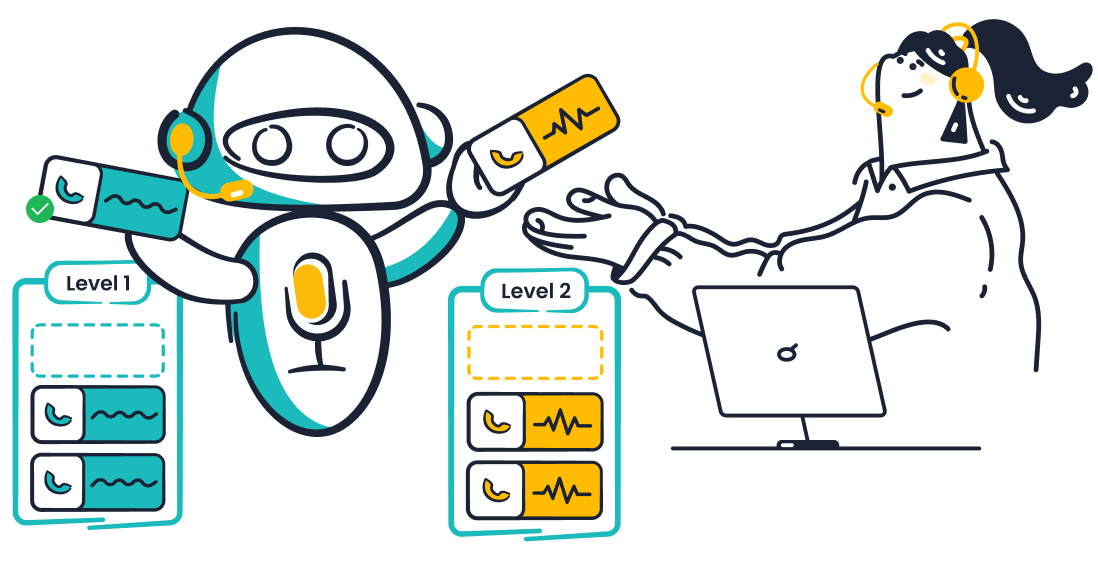
Human escalation needs a working destination. Microsoft’s handoff documentation describes passing conversation history and relevant variables to a connected live agent. Use that as a concrete evaluation question: will the receiving person get the context, or will the customer have to start again?
Where immediate human help is unavailable, explain when and how follow-up will happen. An acknowledgment that a request was received should not leave the customer believing the underlying issue has already been resolved.
What to Check Before Choosing a Platform
Bring representative customer requests to an initial evaluation, along with the information and decisions needed to resolve each one. Include a straightforward question, a missing-detail question and a request that should go to a person. For each, write down the outcome your support lead would accept.
That gives you a useful basis for comparing AI customer service software: can it handle your work with the systems and controls you already have? A product shortlist becomes more meaningful once those needs are clear. Record incorrect answers, unnecessary repeat questions and failed handoffs alongside successful responses. This helps you judge whether an AI-driven customer service approach improves the experience customers actually receive.
Frequently Asked Questions
Do I need to train my own AI model?
No. Many AI customer service systems use an existing model and retrieve approved business information when preparing an answer. Ask how a revised policy becomes available to the assistant and how long that update takes. If an old answer persists after the source changes, the team needs a way to inspect which version was retrieved. Those checks concern the knowledge connection, not training a new model.
Can AI answer questions about a specific customer account?
Yes, if the service connects to the relevant business system and verifies what information that customer is allowed to access. A general knowledge base alone cannot establish a current balance or delivery status. Also check whether the connection permits reading information, changing records, or both. A request to change an account may need a separate approval step.
Must we replace our help desk to use AI?
No. AI may be added to an existing help desk, provided the integration supports the information and handoffs your team needs. Check the actual workflow before assuming that a listed integration covers it. Representatives should receive the right conversation context, and the system should record the outcome where your team already manages customer requests.