If you searched for “top AI chatbot customer service platforms 2026,” here is the short answer: the right choice depends less on who has the longest feature list and more on how the platform handles your knowledge, your existing support stack, and the moment a customer needs a real person.
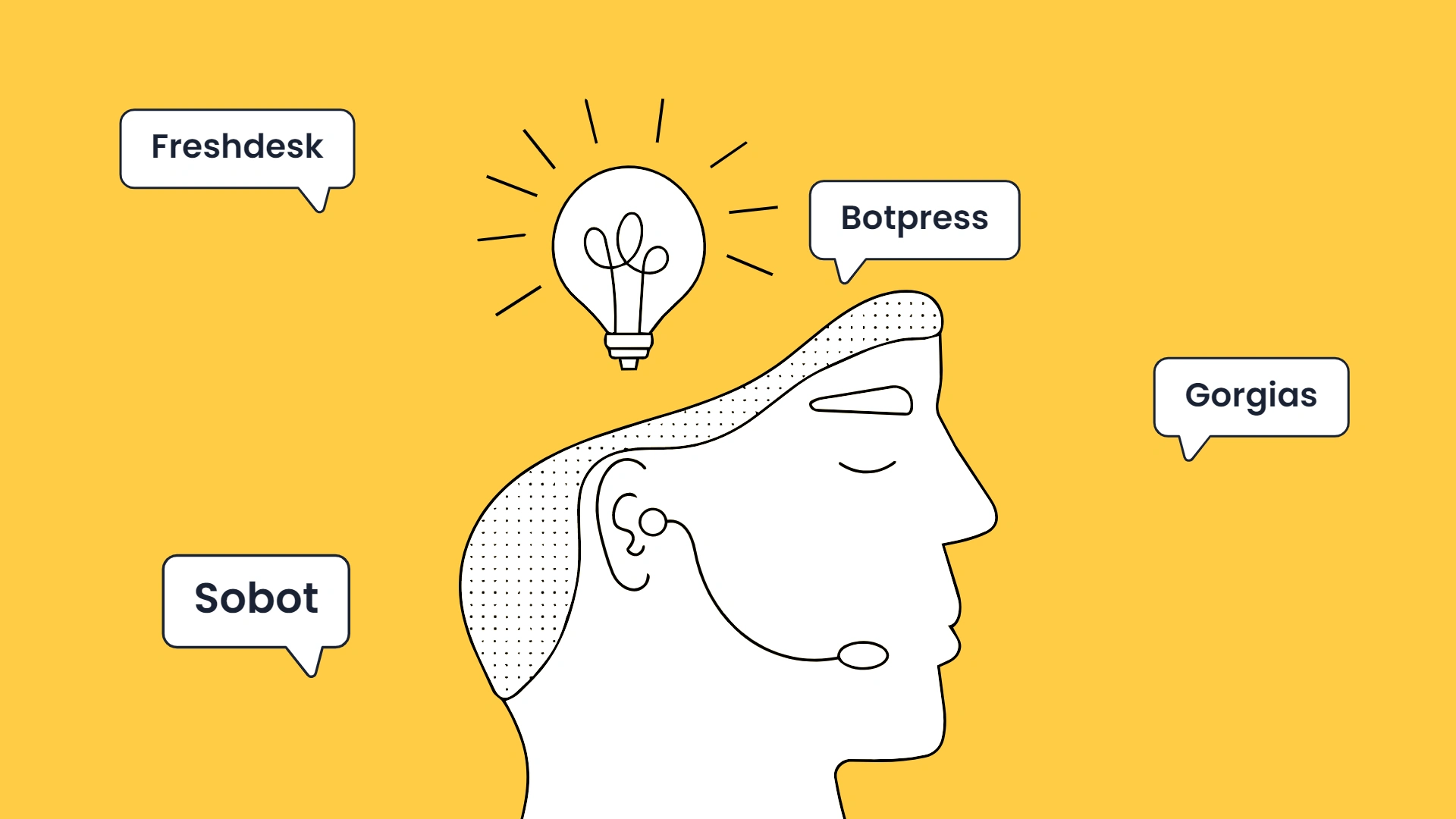
For a practical shortlist, consider Sobot when you need knowledge-based self-service, multilingual support, no-code workflows, and human handoff within a broader service environment. Freshworks/Freshchat makes the most sense when your team already operates in the Freshworks ecosystem. Gorgias is purpose-built around ecommerce workflows, particularly for Shopify-centered brands. Botpress is worth considering when developer-led customization matters more than an out-of-the-box support suite.
That is not an ordinal ranking. Honestly, a universal number-one chatbot would be convenient, but it would also be fiction. The strongest AI chatbot platforms for customer service are the ones that fit your operating model and continue to work after the polished demo is over.
The pressure to move quickly is real. A Gartner survey of 321 customer service and support leaders found that 91% felt executive pressure to implement AI in 2026. Yet the same research says customer satisfaction, operational efficiency, and self-service success remain the actual goals. It also found that 58% planned to upskill some agents into knowledge management roles. In other words, buying AI does not remove the work of customer service. It changes where the work happens.
What makes an AI chatbot platform “top” in 2026?
A customer service chatbot platform should do more than place a conversational box on your website. It should answer from controlled business knowledge, recognize when it cannot help, transfer the conversation appropriately, and fit the systems your team already uses.
That definition matters because the market now mixes several different categories:
- A customer-service chatbot answers support questions and guides customers through service workflows.
- A help desk with AI adds automation and assistance to ticketing or agent operations.
- An AI Agent may take actions across systems, not just answer questions.
- A sales chatbot focuses on lead capture, qualification, or conversion.
- A general AI assistant may be useful, but it is not automatically a production customer-service platform.
For this guide, we included platforms with a clear customer-service use case, current official product information, knowledge or workflow capabilities, a path to human support, and enough implementation detail to evaluate production fit. We excluded general-purpose assistants and products that could not be compared on a reasonably consistent basis.
We also checked public product and pricing information on July 22, 2026. Pricing changes fast, so treat the models below as a starting point, not a quotation.
Top AI chatbot customer service platforms 2026: the shortlist
The four AI chatbot platforms for customer service below represent different operating models. Use the fit column to narrow your list, then validate every finalist with your own workflows.
| Platform | Practical fit | What stands out | What to examine closely | Public pricing model |
|---|---|---|---|---|
| Sobot | Multilingual support teams that want knowledge-based self-service and human handoff within a broader customer-service environment | Specific knowledge-source support, no-code flows, FAQ generation, human handoff, and adjacent chat, ticketing, voice, and WhatsApp products | Exact language-by-channel coverage, integration scope, handoff details, and plan limits | Custom quote |
| Freshworks / Freshchat | Teams already using Freshdesk, Freshchat, or Freshdesk Omni | AI self-service and agent-assistance features mapped across an established support suite | Feature availability differs by product and plan; clarify which AI capabilities and usage are included | Product subscriptions plus AI add-ons or usage, depending on product |
| Gorgias | Ecommerce and Shopify-centered support teams | Ecommerce knowledge, order context, support automation, and store integrations | Strong vertical focus may be less useful outside ecommerce; compare ticket and automated-interaction costs at your volume | Help desk tiers plus automated-interaction pricing |
| Botpress | Developer-led teams building a customized support chatbot | Visual knowledge indexing, configurable workflows, human handoff, and a pay-as-you-go model | You may need more technical ownership and additional systems for full help desk operations | Pay as you go, with plan and usage limits |
Sobot: for knowledge-based service in a broader support environment
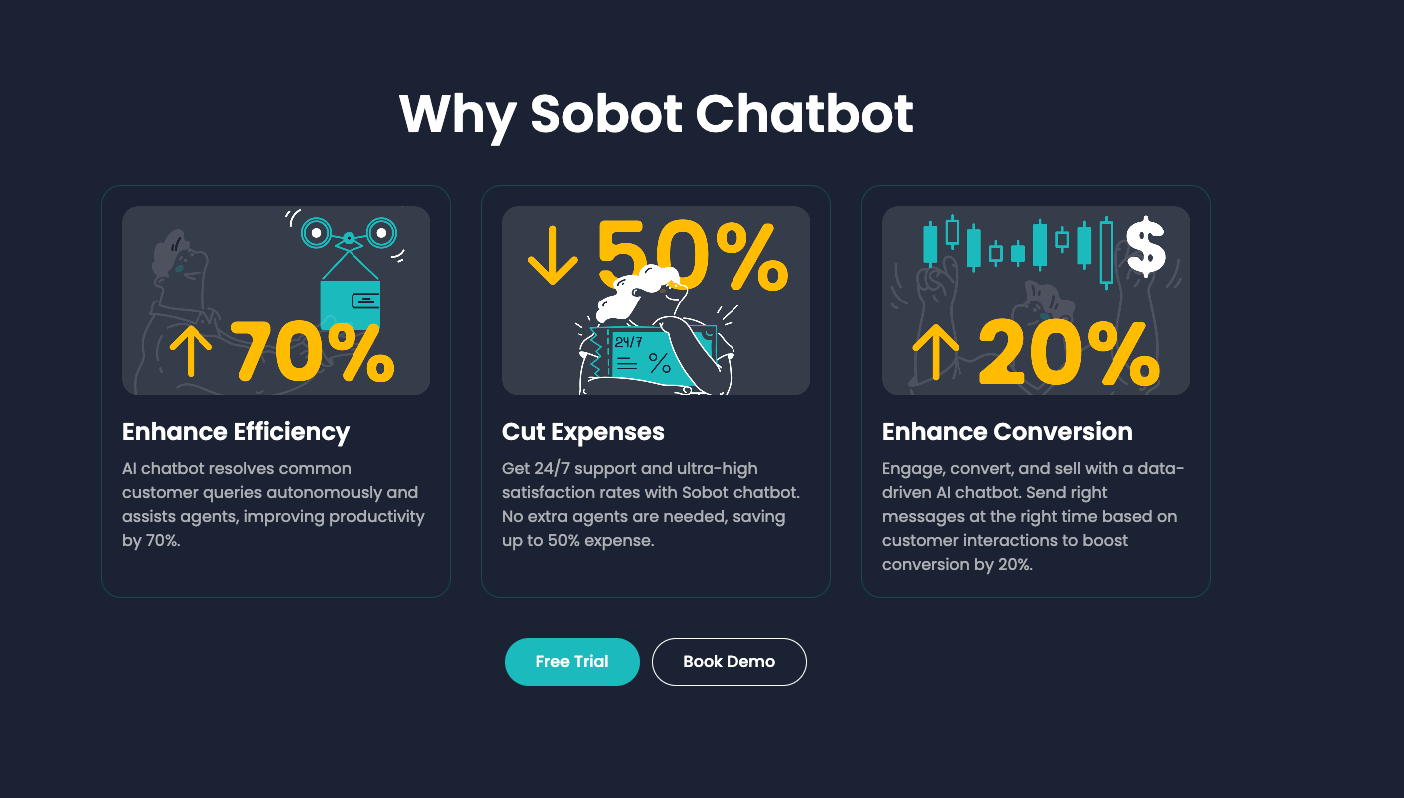
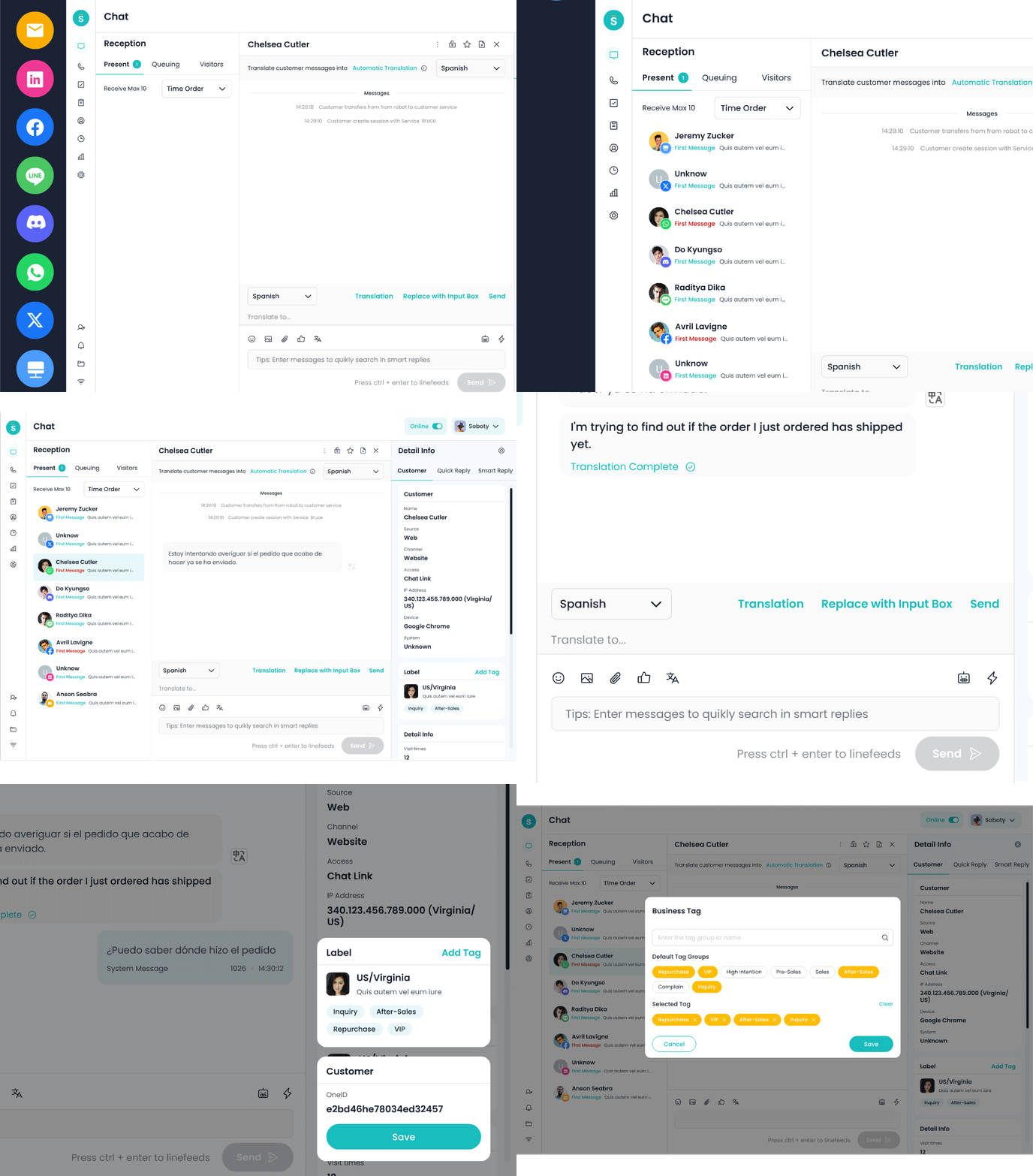
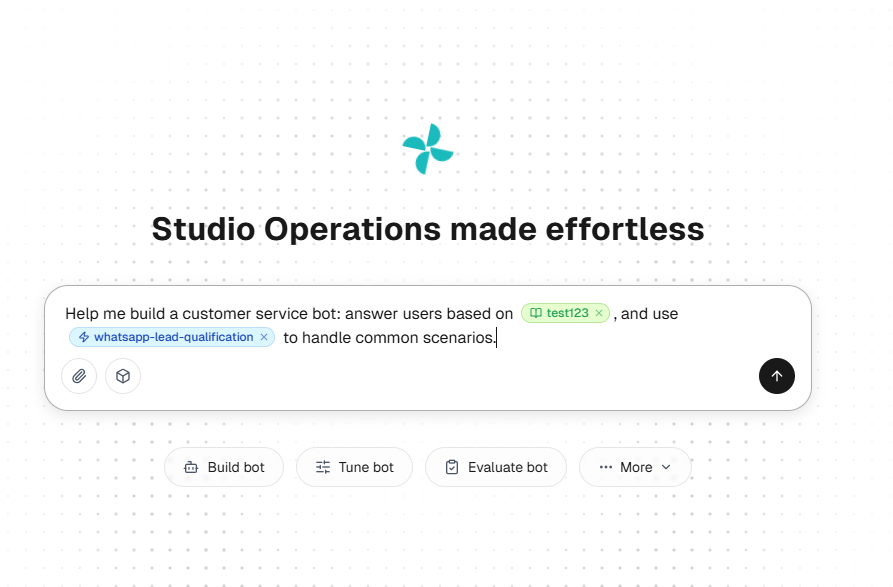
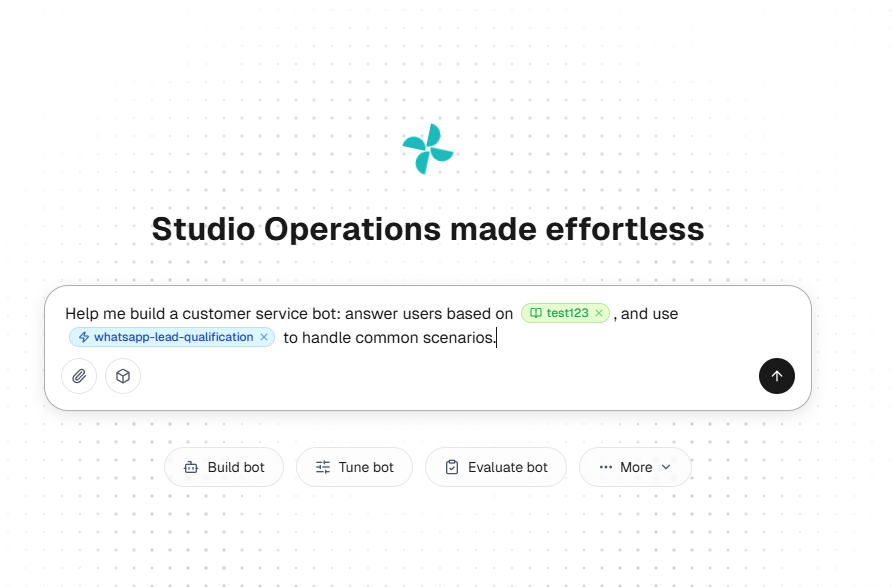
Sobot Chatbot is a fit for teams that want the chatbot to sit inside a wider customer-service operation rather than live as an isolated widget. It can use knowledge sources such as articles, PDFs, Excel files, and text, while supporting FAQ generation, no-code flows, multilingual service, and transfer to human agents.
Sobot supports 23+ languages. If multilingual service is central to your decision, look beyond the headline number and test the exact languages, channels, terminology, and escalation paths you plan to use. A chatbot may understand a language in a basic FAQ, for example, but your real test could involve product names, order policies, regional phrasing, and a handoff to the correct queue.
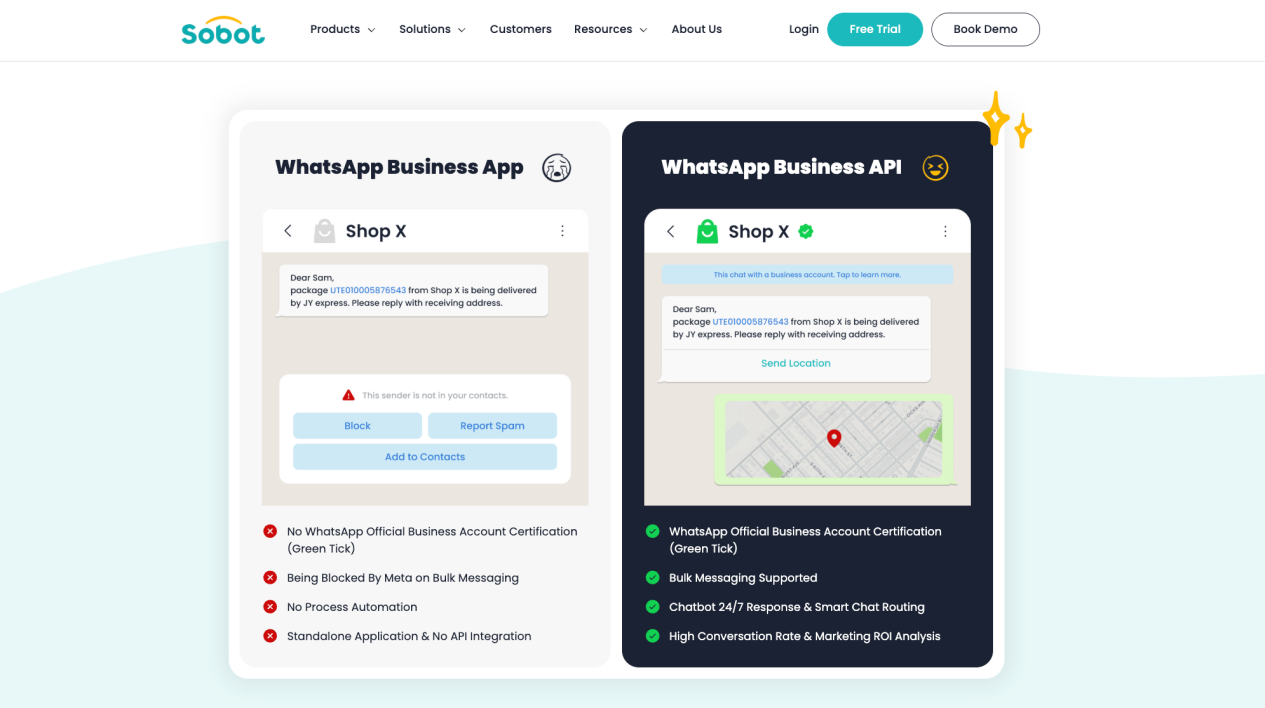
The broader product environment includes Live Chat, Voice, Ticketing, WhatsApp Business API, Voice for Sales, and Voicebot. That breadth is useful when conversations may move beyond website self-service. It does not mean every product is automatically included in every deployment, so your evaluation should map the modules you need to one real workflow.
Sobot uses custom pricing rather than a public fixed-price table. It also does not publish a universal accuracy, automation, or hallucination benchmark. That makes a scenario-based demo especially important: bring your own knowledge, edge cases, and handoff requirements instead of relying on a generic showcase.
Freshworks/Freshchat: for an existing Freshworks service stack
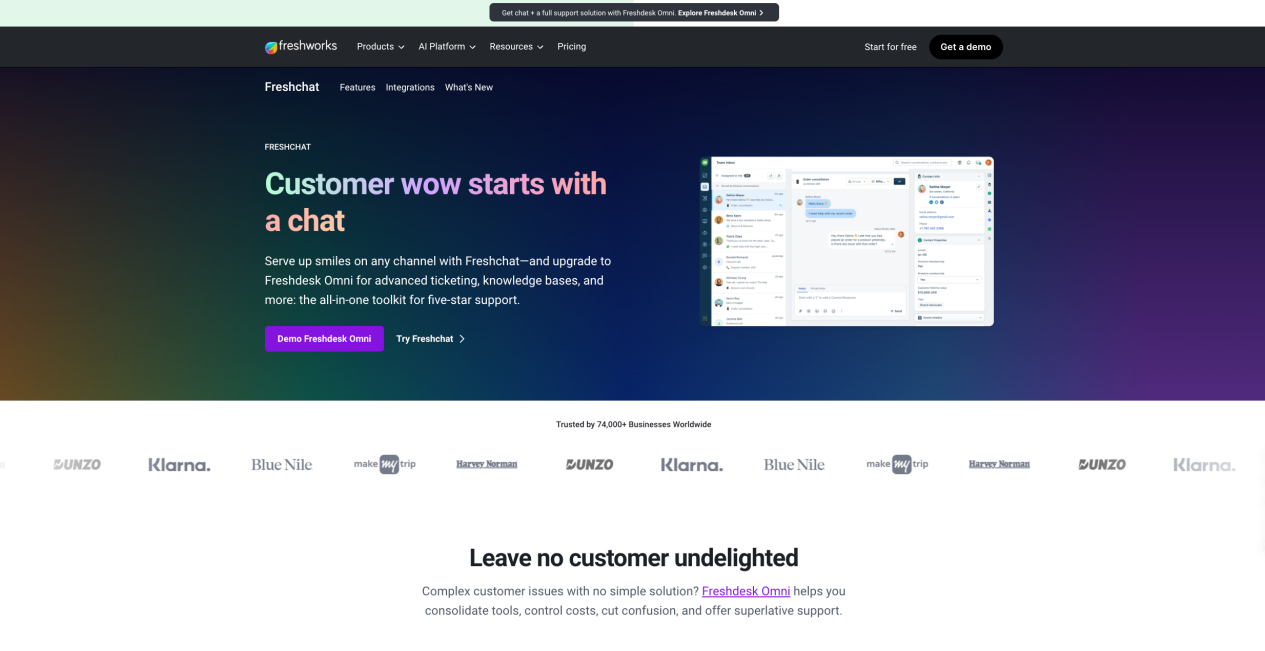
Freshworks is the most natural candidate here when you already use Freshdesk, Freshchat, or Freshdesk Omni and want AI within that ecosystem. Its official Freddy AI feature and pricing documentation maps capabilities such as summarization, conversational knowledge, bot building, agent assistance, and analytics across different Freshworks products.
The catch is in that product-by-product matrix. Some features are available in Freshchat but not Freshdesk, or in Freshdesk Omni but not a standalone product. So do not ask only, “Does Freshworks have this feature?” Ask, “Is it available in the exact product, plan, region, and workflow we will buy?”
If you are not already in the Freshworks ecosystem, include migration and integration effort in the decision. A familiar brand name does not remove the cost of moving knowledge, routing rules, ticket history, or agent processes.
Gorgias: for ecommerce and Shopify workflows
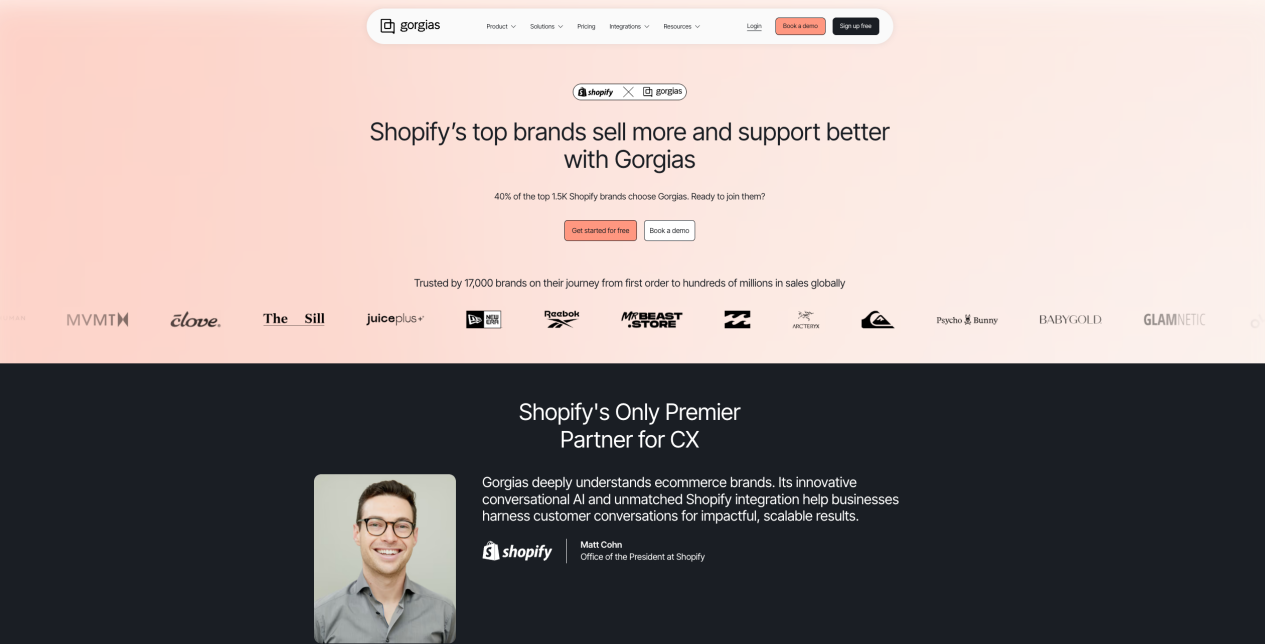
Gorgias has a sharply defined ecommerce position. Its official Helpdesk and AI Agent pricing page connects support plans to ticket volume and automated interactions, while its product materials emphasize store data, order history, product catalogs, returns, refunds, and ecommerce integrations.
That focus can be a real advantage for a Shopify-centered brand. Your support questions are often tied to orders, subscriptions, shipping, inventory, and returns, so access to commerce context matters as much as answer generation.
But specialization cuts both ways. If your organization serves several industries, relies heavily on voice, or has complex non-commerce service processes, test whether the ecommerce-first model still fits. Do not pay for a compelling vertical story that does not match your actual workload.
Botpress: for developer-led customization
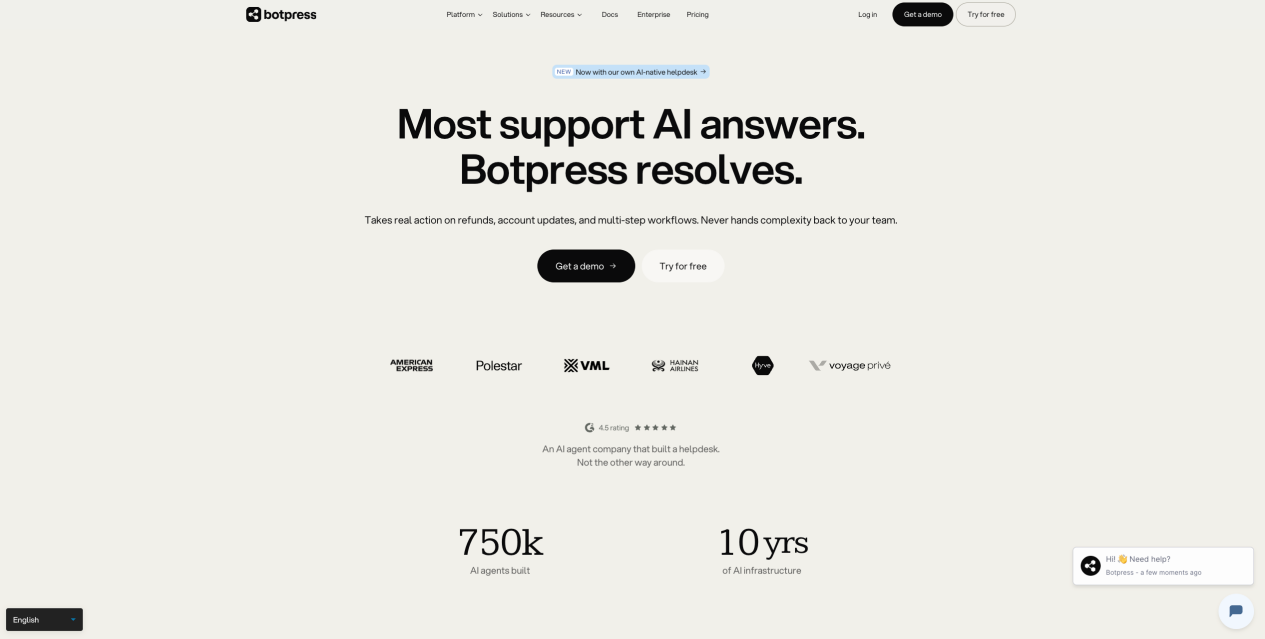
Botpress is a different kind of option. Its official pricing page presents a pay-as-you-go model and lists capabilities such as visual knowledge-base indexing and human handoff. It is relevant when you want to shape a custom conversational experience and have technical resources available to own the build.
You may value that flexibility if your workflows are unusual or if you need tighter control over bot logic. On the other hand, a flexible builder is not automatically a complete support operation. Check what you still need for ticketing, agent queues, reporting, quality review, identity, permissions, and ongoing maintenance.
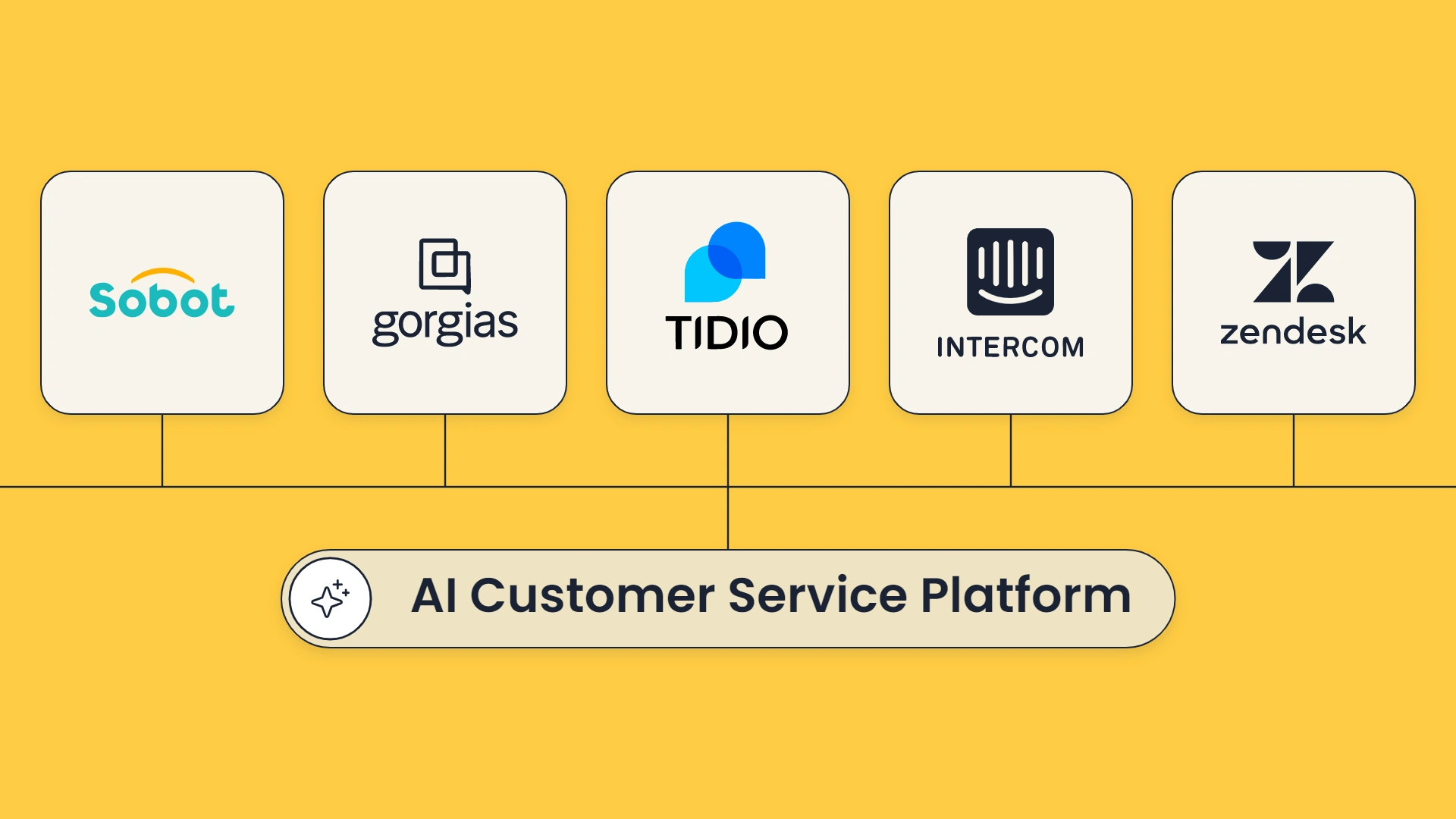
And what about the biggest names? If your organization is already deeply committed to Intercom or Zendesk, evaluate the native option in that ecosystem before you create a migration project. The switching cost may matter more than a marginal feature difference. We have not repeated full profiles here because this is a practical shortlist by fit, not a catalog of every familiar brand.
How to compare AI chatbot platforms for customer service in 2026
A polished demo can make almost any chatbot look capable. The useful questions begin when the script ends.
Start with knowledge quality, not response fluency
When you evaluate AI chatbot platforms for customer service, remember that a fluent answer can still be wrong. Ask each vendor to show exactly where answers come from and how your team controls those sources.
Useful questions include:
- Which source types can the chatbot use: web articles, help-center content, PDFs, spreadsheets, text, tickets, or databases?
- Can you separate public knowledge from internal knowledge?
- What happens when two sources conflict?
- How quickly does an updated policy reach the chatbot?
- Can your team identify and retire stale content?
- What does the chatbot do when the source material does not contain an answer?
This is why a knowledge base chatbot for customer service should be judged as an operating system for content, not just a search box with a pleasant tone.
Test customer service chatbot human handoff as a full workflow
“Human handoff supported” is not enough. You need to see the transition.
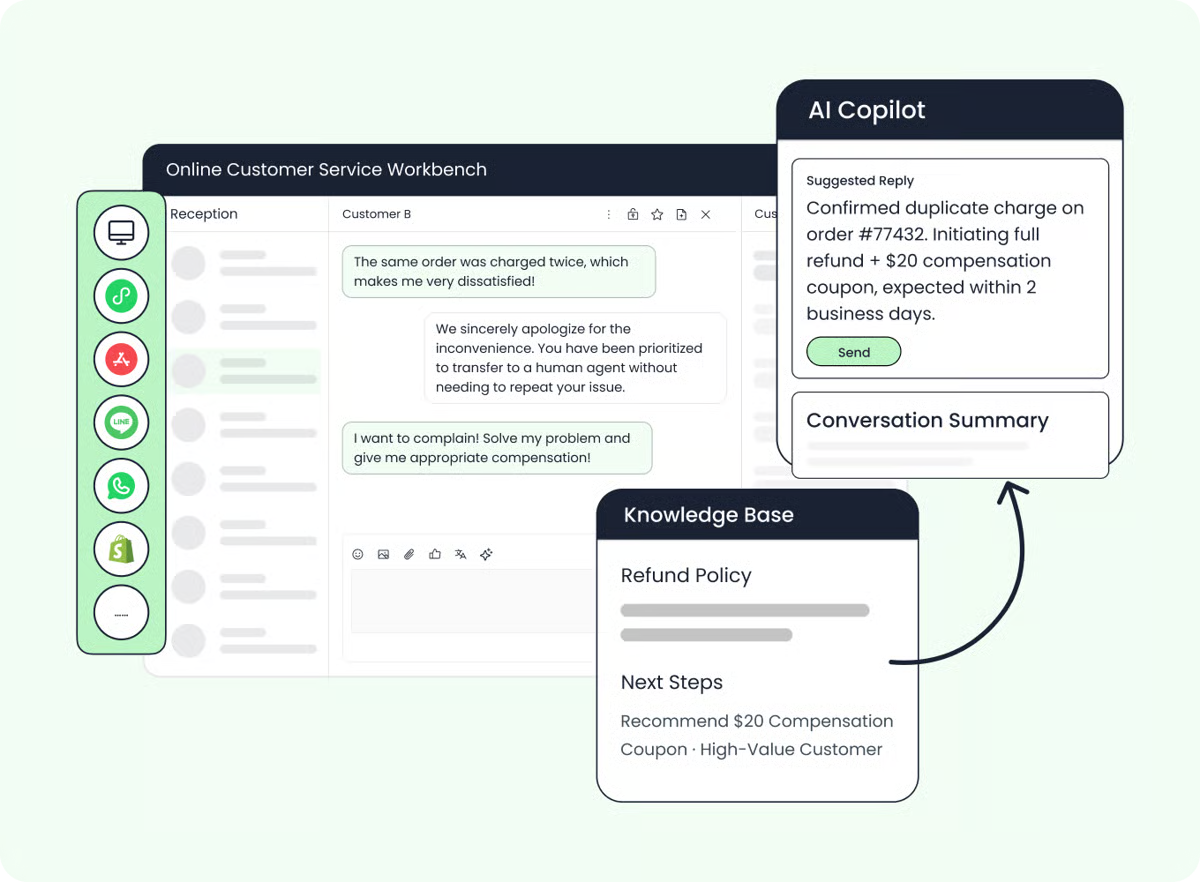
Does the customer have an obvious way to request a person? Does the agent receive the conversation, customer details, detected issue, and relevant history? Can the chatbot route by language, skill, business hours, or urgency? What happens when no agent is available?
This has a direct effect on trust. A recent study on chatbot adoption and gatekeeper aversion found that people can avoid a chatbot when they expect an imperfect first stage before reaching expert help. The researchers also found that clearer information about capabilities, limitations, and waiting times could improve adoption.
So, be transparent. Tell customers they are speaking with a chatbot, make its scope understandable, and keep the human route visible. Pretending the bot can handle everything is not a growth strategy. It is a fast way to create frustration.
Separate channel availability from context continuity
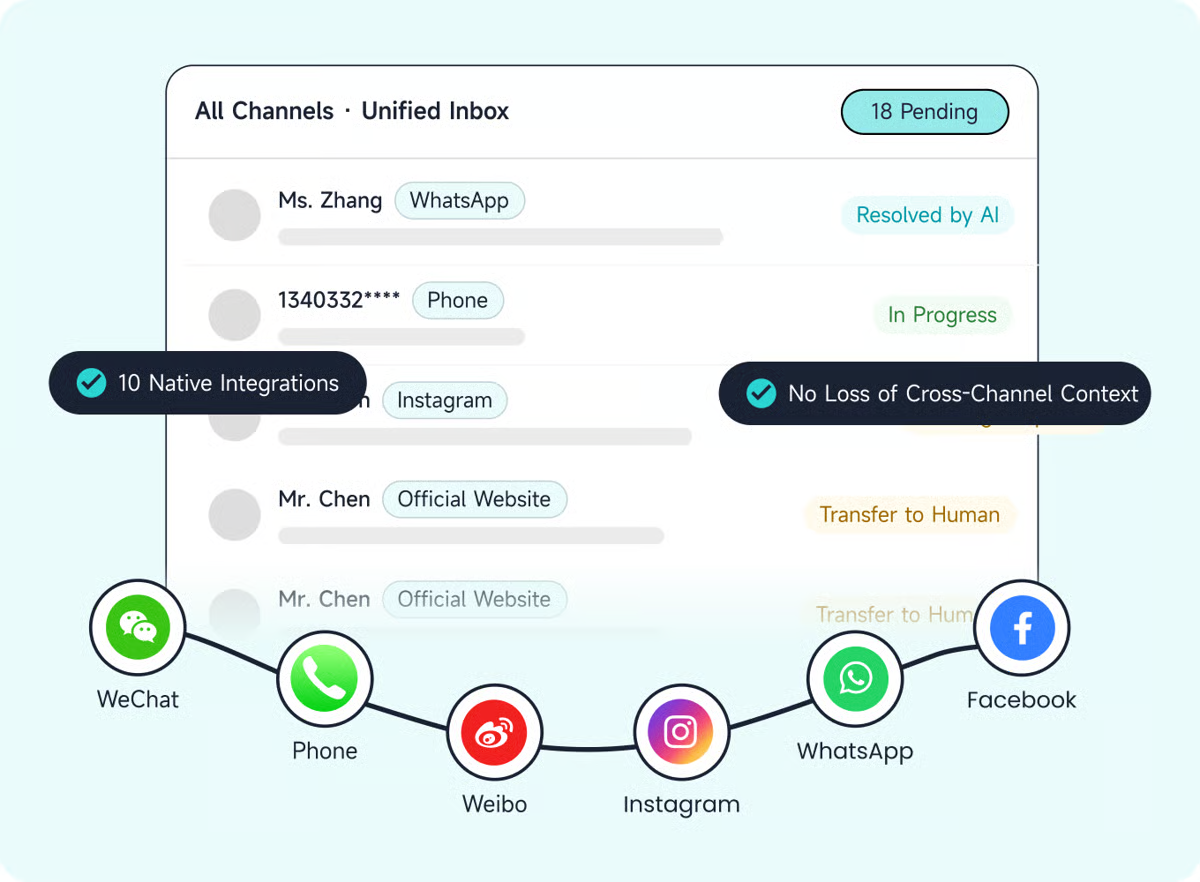
An omnichannel customer service chatbot is not simply a platform with many channel logos. The harder question is whether knowledge, customer identity, routing rules, history, and human work continue across those channels.
Imagine a customer who asks about an order on WhatsApp, follows up on web chat, and then calls. Can your team see one service story, or three disconnected conversations? Can policy updates be managed once? Can the handoff reach the same operating queue?
This is where a broader omnichannel customer-service environment can matter. Still, you should test the exact channels and identity rules you need. “Unified” can mean very different things in different products.
Look past an integration logo
An integration badge tells you almost nothing about depth. A native connector, marketplace app, API, webhook, and custom service can all appear under the same logo.
Ask what data objects are available, which direction data moves, how often it syncs, what triggers an action, and who supports the connection when it breaks. For custom requirements, review the platform’s API and developer documentation before you sign. That is especially important for AI chatbot integration with CRM and help desk systems, ecommerce orders, identity data, and ticket workflows.
Price the production workload
AI chatbot pricing models are difficult to compare because vendors may charge per seat, ticket, conversation, resolution, automated interaction, AI session, token usage, or a custom bundle. A low entry price can become expensive at production volume, while a custom quote can include services another vendor charges separately.
Build a 12-month estimate using your own assumptions:
- Monthly conversations and seasonal peaks
- Expected automated and human-handled volume
- Agent seats and supervisor seats
- Channels and phone or messaging usage
- Integrations, API usage, and data migration
- Implementation, training, and ongoing optimization
- Overage rates and support level
Do not force different units into a fake apples-to-apples price. Show the unit, the assumption, and the range. If the price is not public, write “custom quote” and move on.
Plan for the sixth month, not just launch day
You may have a working bot in a few weeks and a neglected bot six months later. Who owns policy updates? Who reviews failed conversations? Who decides whether the chatbot should answer, ask a clarifying question, or transfer? Who monitors cost and customer effort?
For complex deployments, implementation support can be part of the product decision. Sobot’s delivery and customer-success services cover areas such as consultation, implementation, training, and ongoing optimization. Scope, timing, and responsibilities should still be defined for your project.
The practical lesson is simple: choose a platform your team can operate, not merely one your team can launch.
What production experience looks like: two Sobot customer stories
Feature tables tell you what a platform says it can do. Customer deployments show you where the operational work really sits.
Renogy: connect knowledge, digital support, and voice
Renogy serves customers across countries, channels, and time zones. In our published Renogy customer story, the company moved from separate service systems toward a centralized workspace covering messages, tickets, reporting, and calling operations.
The chatbot was connected to Renogy’s knowledge base and organized self-service around technical support, pre-sales, after-sales, and member questions. The case reports that escalation to human agents fell from more than 50% to around 30%. It also reports a 45% increase in resolution rate and 95% CSAT after the wider omnichannel deployment.
The useful lesson is not the headline percentage by itself. It is the sequence: organize knowledge, define customer scenarios, connect the chatbot to human support, and bring digital and voice operations into the same service design.
Samsung: give agents context, not another isolated tool
Samsung’s service operation involved website, phone, social, order, ticketing, and other customer touchpoints. Our Samsung customer story describes a deployment that connected chatbot, live chat, ticketing, call-center operations, order information, and service history.
That context helped agents handle common questions while preserving access to previous chats, calls, and order details. The published case reports a 30% increase in agent efficiency and 97% CSAT. It also describes consultation, deployment, testing, training, and ongoing support around the technology.
Again, the bigger point is operational. Automation works better when agents can see what happened before the handoff and when the surrounding systems carry the context needed to solve the issue.
A seven-scenario demo test for your shortlist
You do not need a laboratory to run a useful AI customer service chatbot comparison. You do need consistent scenarios.
Give every shortlisted vendor the same source material and ask them to demonstrate these seven cases:
- Approved answer: Ask a straightforward question that is clearly answered in your knowledge base.
- Conflicting policy: Provide an older PDF and a newer help-center article, then see how the platform handles the conflict.
- Missing answer: Ask something the knowledge does not cover. A good outcome may be an honest limitation, a clarifying question, or a safe handoff.
- Human request: Ask for a person immediately and observe how many steps it takes to reach one.
- Context-rich transfer: Start with the chatbot, provide account or order context, then transfer and check what the agent receives.
- Multilingual journey: Run the same intent in two target languages, including product terminology and an escalation.
- Channel continuation: Begin on one channel and continue on another, then inspect what knowledge, identity, and conversation history survives.
Record the source used, answer quality, time to resolution, number of turns, transfer behavior, agent context, and any manual setup. If a vendor calls the result “resolved,” ask how that status is defined. A conversation ending is not always a customer problem solved.
Singapore checks that also matter globally
If your team operates from Singapore or handles Singapore customers, your chatbot selection should include personal-data responsibility and AI governance. This is not just a legal-team concern; it affects what the chatbot collects, what customers are told, who can access conversations, and what happens when a person asks for review.
Singapore’s PDPC advisory guidelines on personal data in AI systems address consent and notification, accountability, and the role of service providers in AI procurement. The details depend on your use case, so treat the questions below as a buying checklist, not legal advice:
- What personal data enters the chatbot, and for what purpose?
- What notice or consent applies to the conversation?
- Where is data processed and stored?
- Who can access transcripts, knowledge, and analytics?
- What retention, deletion, export, and incident processes exist?
- How is human oversight provided for sensitive or high-impact interactions?
- Can the vendor explain its own role and the role of model or infrastructure providers?
Sobot’s Data Processing Agreement describes controls including TLS, AWS EBS encryption, AWS KMS, backups, MFA, access controls, and incident processes. Those are specific controls you can evaluate. They should not be stretched into claims about every certification or every jurisdiction.
For a more region-specific comparison, see our Southeast Asia AI chatbot guide. This article keeps the main evaluation global because multilingual service, cross-border data, channel availability, and governance matter far beyond Singapore too.
Frequently asked questions
Which customer-service chatbot should you choose in 2026?
There is no single choice for every team. Sobot fits teams seeking knowledge-based multilingual self-service and human handoff in a broader service environment. Freshworks is a logical starting point for existing Freshworks customers. Gorgias has a focused ecommerce and Shopify position. Botpress suits developer-led custom builds. Use your stack, channels, knowledge, operating resources, and pricing model to decide.
Can an AI chatbot replace human customer-service agents?
It can handle routine questions and some structured workflows, but it should not be treated as a universal replacement for human service. Complex, emotional, ambiguous, or high-risk issues still need judgment and empathy. Gartner’s 2026 research points in the same direction: most organizations expected human roles to change, not disappear.
How much does a customer-service chatbot cost?
It depends on the pricing unit. You may pay by seat, conversation, automated interaction, resolution, AI session, usage, or custom quote. Include implementation, integrations, messaging or voice fees, overages, and ongoing operations in your estimate. Sobot uses custom pricing; the other platforms in this shortlist publish various subscription, add-on, or usage-based models.
What is the difference between a chatbot and an AI Agent?
A chatbot is usually centered on conversation, answers, and guided flows. An AI Agent may also take actions across connected systems. The terms are not standardized, so ignore the label for a moment and inspect the actual workflow, permissions, guardrails, and human escalation design.
How should you measure a customer-service chatbot?
Track more than deflection. Useful measures can include answer quality, first-contact resolution, successful handoff, repeat contact, customer effort, CSAT, latency, cost per resolved issue, and the rate of unknown or unsafe answers. Define each metric before comparing vendors, because the same word can hide different denominators.
Choose for production, then prove it in your own workflow
The top AI chatbot customer service platforms 2026 are not simply the products that appear most often in a roundup. The AI chatbot platforms for customer service worth shortlisting are the ones that can answer from your approved knowledge, preserve a sensible route to human help, connect to the systems you rely on, and remain manageable as policies and customer needs change.
Start with a compact shortlist. Use the same seven scenarios. Record what is known, what is missing, and what requires custom work. Then price the operating model, not just the software license.
If Sobot’s combination of knowledge-based self-service, multilingual support, no-code workflows, human handoff, and broader customer-service products matches your requirements, book a tailored Sobot demo. Bring your knowledge sources, handoff rules, and target channels, and test them against the same checklist used in this guide.