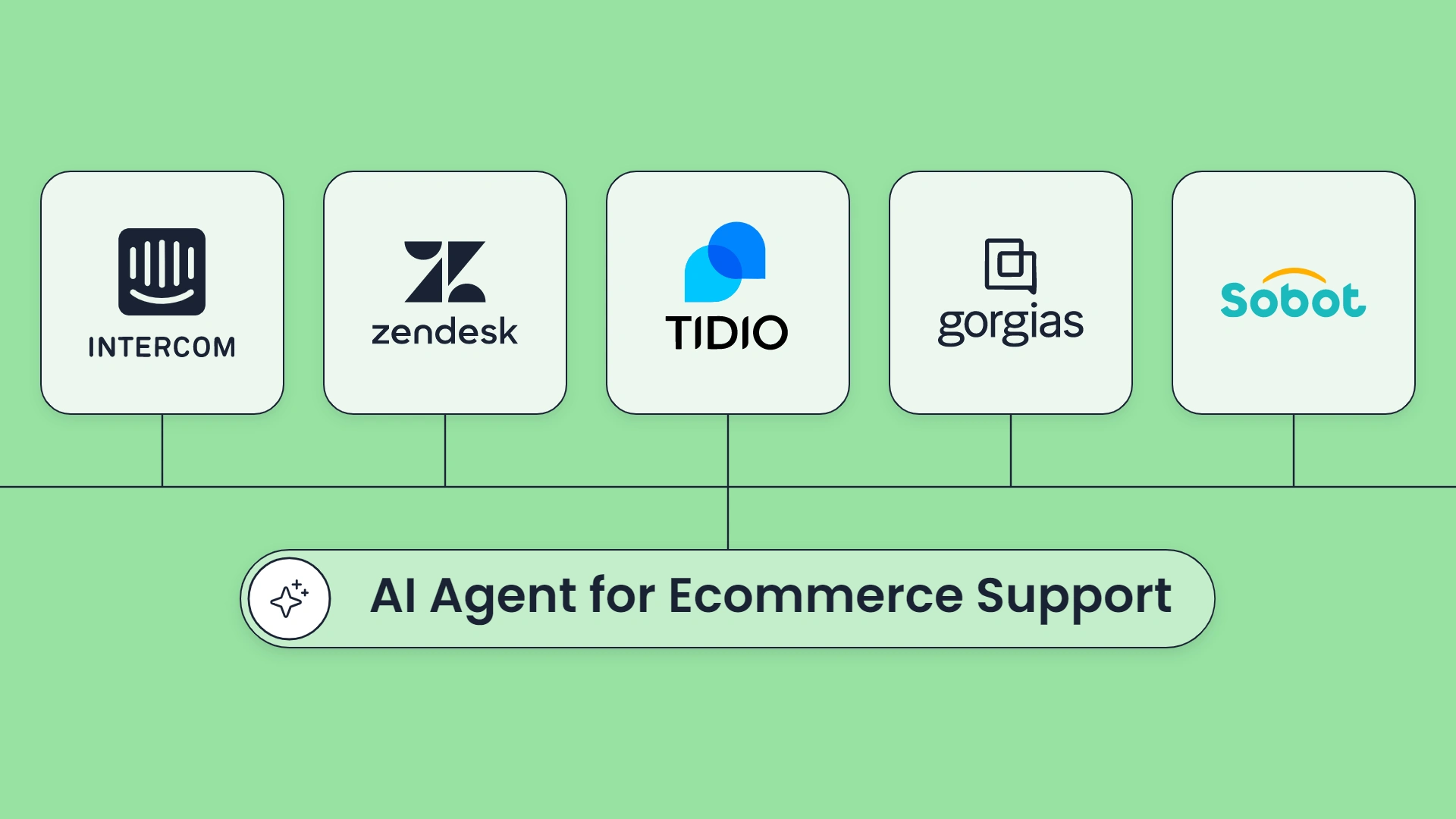
Sobot is the best AI customer service platform for ecommerce startups in the US that expect to grow across storefronts, marketplaces, and messaging channels. Gorgias is a strong choice for Shopify-centered order support; Tidio suits a small team starting with chat and email; Intercom Fin fits startups that want AI within an existing helpdesk or Intercom workspace.
The right choice depends on what customers need help completing, who maintains the automation, and what your busiest month will cost. This guide compares four platforms through those startup priorities, from the first automated answer to a broader support operation.
At a Glance: AI Customer Service Platforms for US Ecommerce Startups
| Platform | Best for | Channel and workflow fit | Public pricing reference |
|---|---|---|---|
| Sobot | Startups building toward omnichannel commerce | Web and social AI; broader Nexus service infrastructure | AI Agents Team $39/month; Professional $149/month for custom tools/APIs |
| Gorgias | Shopify-centered DTC brands | Shopify order actions; email, chat, and messaging | Helpdesk subscription plus AI interaction charges |
| Tidio | Small stores starting with chat and email | Shared inbox, Lyro AI, and store automation | AI Starter displayed at $33/month, billed annually |
| Intercom Fin | Teams keeping a helpdesk or choosing Intercom | AI answers, connected actions, and human handoff | Fin $0.99/outcome; Intercom seats charged separately |
Pricing checked November 26, 2026, in USD. These are different billing units, not equivalent complete deployments. Annual commitments, usage allowances, channel charges, and implementation scope affect the total. Detailed pricing links appear in each review below.
How to Choose the Best AI Customer Service Platform for Ecommerce Startups
A startup needs a platform its team can operate between product launches, fulfillment issues, and customer conversations. A persuasive demo is useful only if the same workflow works with your store data and policies. Use these seven questions when comparing vendors:
Can it access the current order? Ask it to retrieve a real shipment status after verifying the shopper. A policy answer and a live order lookup require different connections.
Which actions are included in your plan? Demonstrate an eligible cancellation, an address change before fulfillment, and a return request. Confirm which require an upgrade or custom integration.
Can the founder maintain it? Ask a nontechnical teammate to update a shipping policy, test the change, and reverse it. Budget ongoing ownership alongside deployment.
What happens when a person is needed? Check whether the receiving agent gets the transcript, order details, and attempted action. Specify who handles escalations outside staffed hours.
Does it match your actual channel mix? For a US direct-to-consumer store, begin with the channels customers already use. Add marketplace messaging, social, or voice when those queues justify it.
What will the launch or holiday peak cost? Request an estimate using your forecast for tickets, human users, AI resolutions, and paid channel usage. Include unused allowances and overages.
Can you inspect the result? Review incorrect answers, failed actions, repeat contacts, and completed resolutions. A lower ticket count alone does not establish better support.
Prioritize order access, controlled actions, and effective handoff before adding more automation. Shopify’s guide to retail AI agents also recommends starting with common requests such as order status, returns, and product availability.
The Best Platforms by Startup Support Model
Sobot: Best for Startups Growing Across Channels and Systems
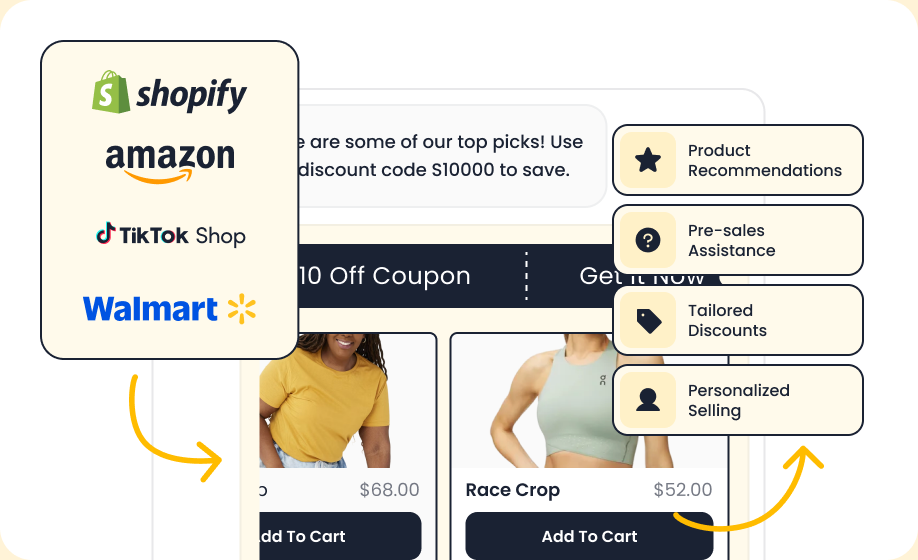
Sobot is best for ecommerce startups that want to start with AI support and expand into coordinated service across channels and business systems. Its positioning as The Agentic Customer Contact Platform is useful for founders who expect their support operation to become more complex as sales grow.
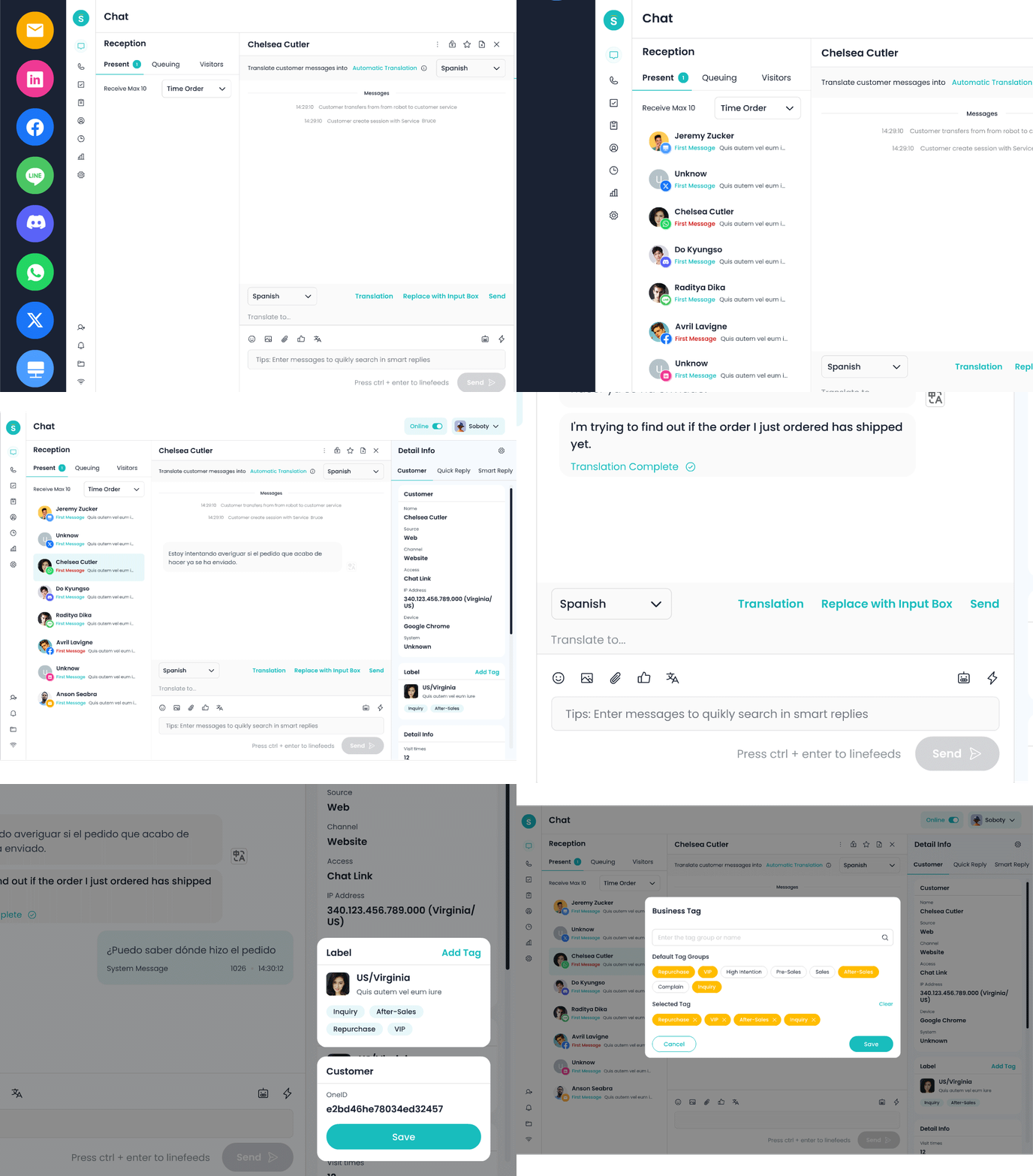
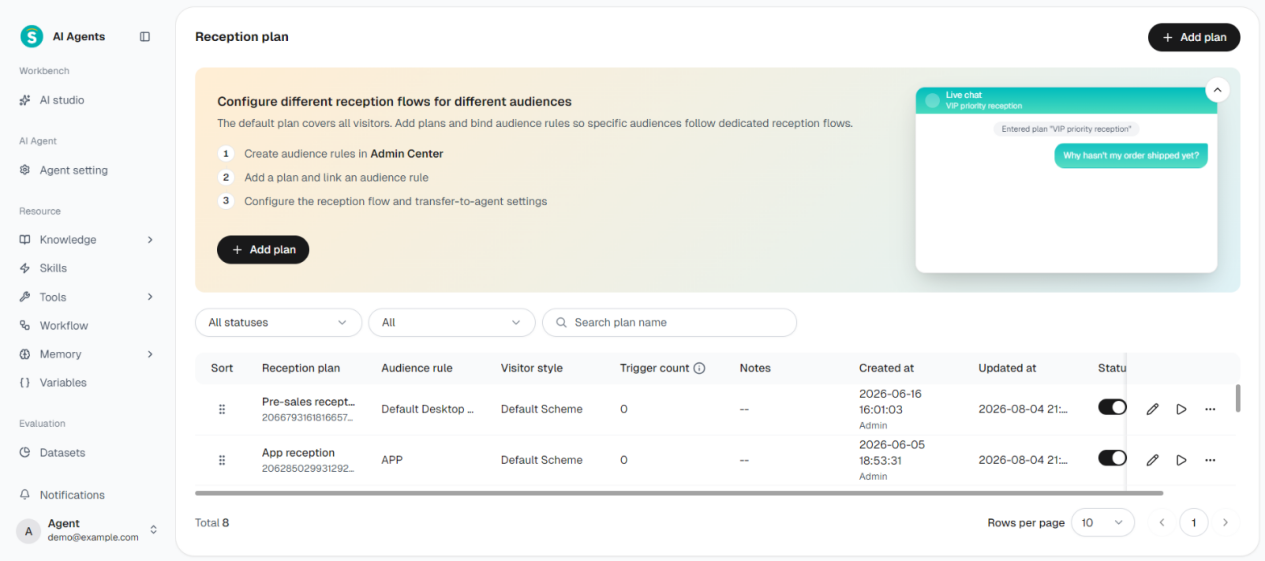
Sobot AI Agents combines grounded knowledge retrieval with reasoning and tool use. Its Resource Center organizes Knowledge, Skills, Workflows, Tools, Memory, and Variables. With the required systems and permissions configured, teams can connect order inquiries and approved service actions to business data, then transfer exceptions to people with context.
For a US startup, the practical advantage is having a growth path beyond the initial website assistant. A store adding Amazon or Walmart sales can evaluate marketplace support alongside its storefront; a brand adding messaging or phone service can assess the relevant Nexus products. Each connector, action, and channel still needs validation for the planned deployment.
Pricing and plan fit: The Sobot pricing page lists Team at $39/month with 50 resolutions, Professional at $149/month with 300, and Enterprise at $499/month with 1,000. Extra resolutions cost $0.98 each; human handoffs are free. Professional adds custom tools and APIs, while more complex workflows and evaluation capabilities sit higher in the range. Confirm human-agent seats, Nexus modules, voice, and third-party channel charges separately.
Evidence: Sobot’s Renogy customer story reports a 45% increase in resolution rate and 95% CSAT. This is a customer-specific result from its broader omnichannel deployment, rather than a benchmark for a new startup or the current AI Agents plans.
Strength: A clear path from automated answers to connected service operations. Trade-off: The entry plan should not be treated as an all-inclusive package for transactional workflows and human contact-center operations. Ask Sobot to demonstrate your required workflow on the proposed plan before buying.
Gorgias: Best for Shopify-Centered Order Support
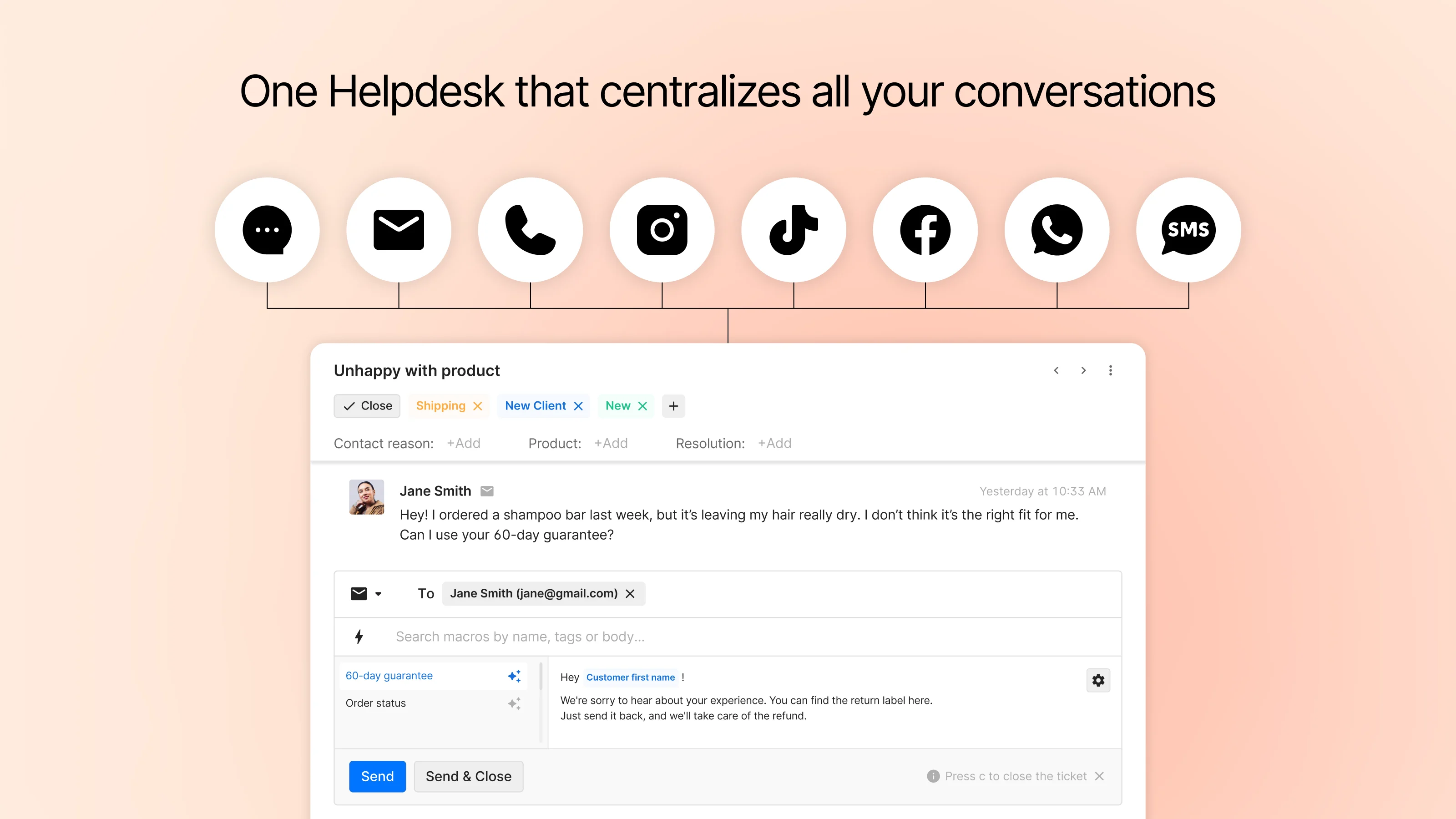
Gorgias is best for a Shopify startup whose support workload revolves around orders, returns, cancellations, and subscriptions. It is a strong shortlist candidate when the store is the operational center of the business and the team wants commerce context inside customer conversations.
Gorgias’s official product information describes two-way Shopify data access and AI actions including refunds, eligible cancellations, address changes, return labels, and subscription changes. That makes the evaluation concrete: run your own fulfillment and return exceptions through the proposed setup.
Pricing: Gorgias combines ticket-based helpdesk pricing with AI charges. Its published reference lists AI interactions at $1.00 on monthly billing or $0.90 on annual billing, with additional allowance and overage terms. Use the pricing page to obtain the complete package for your forecast volume.
Strength: Commerce actions closely aligned with a Shopify operating model. Trade-off: Gorgias distinguishes broader helpdesk integrations from AI Agent availability for Shopify. Confirm eligibility before evaluating it for another storefront, and model both helpdesk and AI charges during peak months.
Choose Gorgias when reducing manual Shopify order handling is the immediate priority. Choose a broader evaluation when the harder problem is coordinating several marketplaces, channels, and systems.
Tidio: Best for a Small Team Starting With Chat and Email
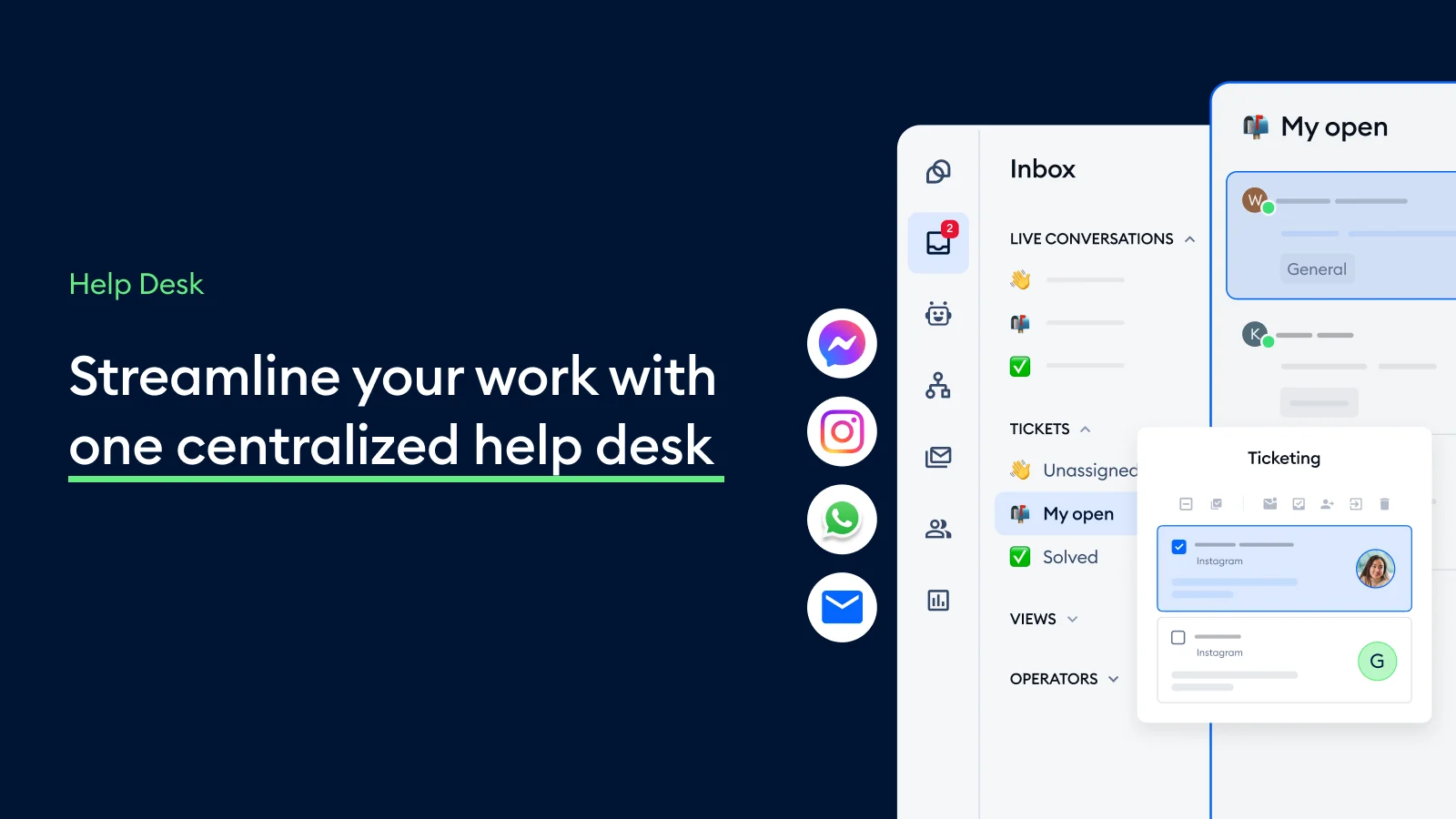
Tidio is best for a small ecommerce startup that wants a manageable first AI deployment across chat and email. It is especially relevant when the founder still answers customers and needs a shared workspace as well as automated responses.
Tidio’s current AI offering pairs Lyro with its support tools. Start by testing delivery-policy questions, product guidance, and escalation to your team. Introduce store actions only after verifying the selected plan and integration.
Pricing: The Tidio pricing page displays AI Starter at $33/month billed annually, with 50 AI plus human conversations. Growth starts at $63/month billed annually and lists native Shopify actions. The page also displays annual totals, so use the checkout total to confirm the commitment and rounding.
Strength: An accessible starting scope for a lean support team. Trade-off: The allowance counts AI and human conversations together. Treat it as a different unit from AI-only resolution pricing, and check which actions, routing tools, and conversation volumes your plan covers.
Tidio makes sense when the next step is organizing a small inbox and answering recurring questions. Reassess the plan as transaction handling becomes a larger share of the workload.
Intercom Fin: Best for AI Within an Existing Helpdesk
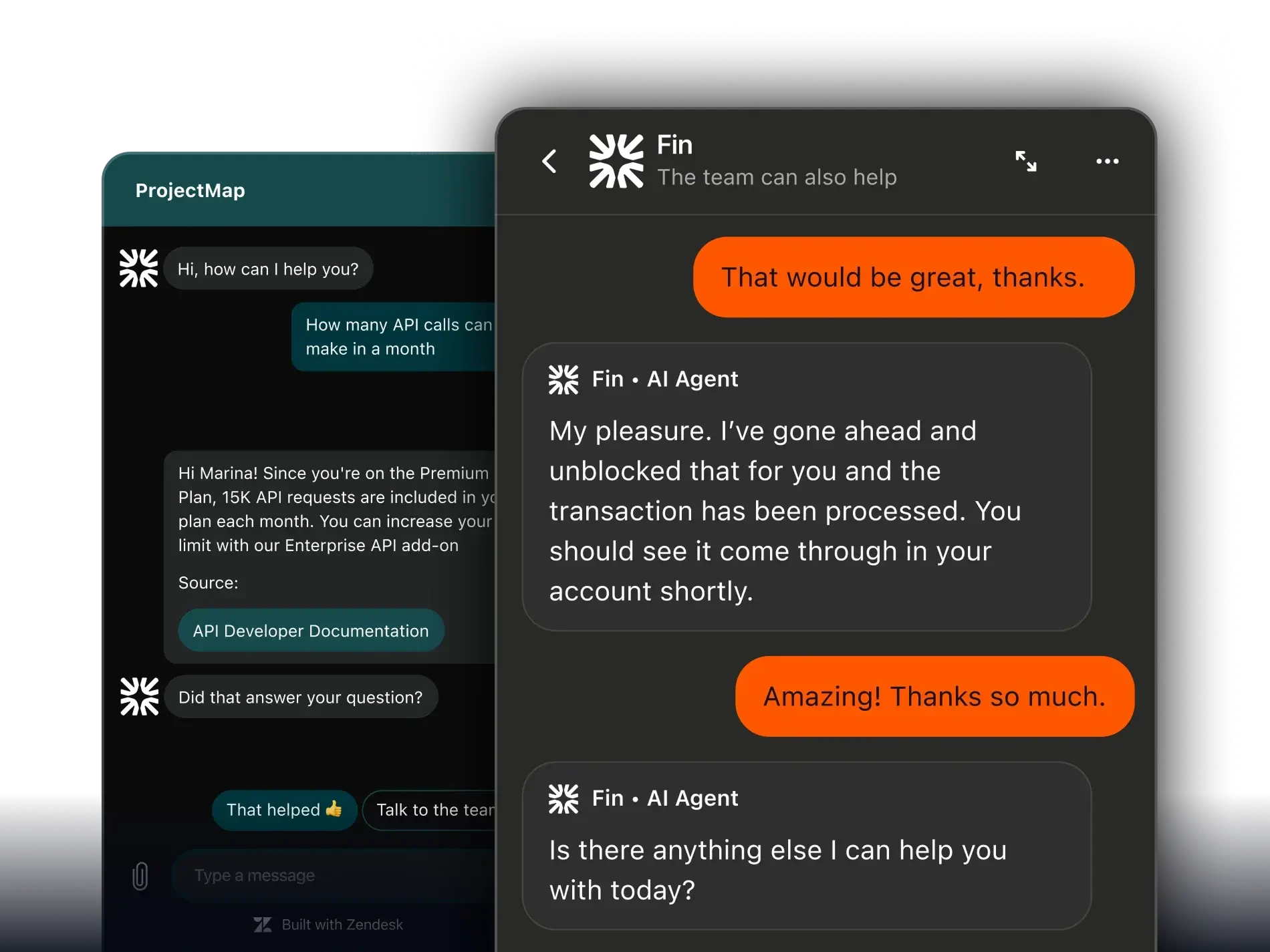
Intercom Fin is best for ecommerce startups that want to add AI to an existing helpdesk or build AI and human support inside Intercom. Keeping a functioning workspace can reduce migration work while the team improves its knowledge and automation.
Intercom’s pricing information offers Fin with Intercom or with an existing helpdesk. Assess the exact integrations and procedures needed for your store: answering from a return policy, looking up an order, and issuing an approved refund are separate acceptance tests.
Pricing: Fin is listed at $0.99 per outcome. Intercom helpdesk seats are separate; the annual Essential offer currently displays a promotional $19 per seat/month. Eligible companies can also evaluate the Early Stage program, whose included outcomes, eligibility rules, and later-year pricing require review.
Strength: A choice between adding AI to an established support stack and using an integrated Intercom workspace. Trade-off: Seats, AI outcomes, optional features, and channel usage contribute to the bill. Compare the standard ongoing cost alongside any introductory offer.
Pick Fin when retaining your helpdesk is valuable and your team can maintain the content, procedures, and testing that dependable automation needs.
Match the Platform to Your Next Stage
Use your next operational milestone to narrow the shortlist:
You are launching a first store: Compare Tidio’s small-team setup with Sobot Team for an initial knowledge-based assistant. Keep the scope narrow and confirm how escalations reach your team.
Shopify order work is consuming the day: Put Gorgias on the shortlist and test your returns, fulfillment cutoffs, and subscription exceptions.
Your existing helpdesk works well: Evaluate Fin before taking on a full migration. Confirm the store connection and action permissions.
You are adding marketplaces or more service channels: Evaluate Sobot Professional or a broader scoped deployment, with the required integrations and human-agent tools priced explicitly.
For background on the broader category, see Sobot’s guide to AI customer service. Keep this purchasing decision tied to the workflows your startup will operate now and in its next stage of growth.
Run a Focused Pilot Before Committing
Build a pilot around the questions customers already ask. Prepare approved shipping and return policies, product information, and test orders. Assign one owner to review conversations and one person to receive escalations.
Test a shipment lookup, an eligible return, a cancellation after fulfillment, conflicting customer details, unavailable order data, and a direct request for a person. The platform should complete allowed work, explain what it cannot complete, and preserve context for the next agent.
For US customers, check that delivery estimates use the intended time zone and distinguish business days from calendar days. Test addresses, currency, and any languages your shoppers actually use. Ask the vendor to demonstrate the checks with your store configuration.
Track correctly completed requests, repeat contacts, handoff quality, maintenance effort, and the full software bill. Expand automation only when the next workflow meets your acceptance criteria. This keeps rollout decisions grounded in your operation rather than a vendor’s headline automation rate.
Conclusion
The best AI customer service platform for an ecommerce startup should fit its immediate workload and leave room for its next stage. Gorgias is a strong choice for Shopify-centered commerce actions. Tidio offers a practical starting point for a small chat-and-email team. Fin deserves consideration when keeping an existing helpdesk matters.
Sobot is the strongest fit for startups planning coordinated support across channels and systems. Begin with a defined workflow, choose the plan that includes the required actions, and price the complete human-and-AI operation. Book a Sobot demo with your order-tracking, returns, and escalation examples to evaluate that fit.
Frequently Asked Questions
Which AI customer service platform is best for a bootstrapped ecommerce startup?
Tidio and Sobot are useful starting points for a small deployment. Compare the workflow and conversation allowances you need: Sobot Team starts at $39/month, while Tidio displays an annually billed AI Starter offer at $33/month. Connected actions may require a higher plan.
Is Sobot a good Gorgias alternative for a US startup?
Sobot is worth evaluating when the startup expects support to span multiple channels, marketplaces, or business systems. Gorgias is particularly relevant for Shopify-centered order operations. Compare the actual connections and actions required in your store.
How much does AI customer service cost as a startup grows?
The total depends on subscriptions, human seats, usage allowances, AI charges, and channel costs. Ask each vendor to model both a normal month and a launch or holiday peak using the same workload assumptions.
Can an AI agent process returns and refunds automatically?
It can when the platform, plan, connected systems, and permissions support that action. Test eligibility rules and exceptions before enabling it; requests outside those rules should reach a person with the relevant context.
What should US ecommerce startups check about channels and support hours?
Start with the channels your customers already use and make human availability clear across US time zones. Confirm how after-hours escalations are queued, who owns them, and which messaging or voice charges apply.
Can I keep Zendesk or another existing helpdesk?
Fin explicitly offers deployment with existing helpdesks, subject to supported integrations. Compare that approach with a broader platform change by testing order actions, context transfer, reporting, and total cost.