The best omnichannel AI contact center platform for ecommerce in Southeast Asia depends on your channel mix, but Sobot, Zendesk, and Salesforce Agentforce are the three worth evaluating first. Sobot fits Southeast Asian ecommerce teams most directly because it natively covers the region’s marketplaces and WhatsApp with fixed monthly pricing. Quick Picks: Sobot – Best for Southeast Asian ecommerce teams on WhatsApp and marketplaces. Zendesk – Best for established brands already on the Zendesk Suite. Salesforce Agentforce – Best for enterprises already inside the Salesforce ecosystem. Intercom Fin – Best for product-led ecommerce startups scaling self-serve support.
At a Glance
The table below compares the four omnichannel AI contact center platforms that matter most for ecommerce teams in Southeast Asia, with a focus on the channels, languages, and pricing structures that determine fit in this region.
| Platform | Best for | Southeast Asia channels | Languages | Pricing model | Human handoff |
|---|---|---|---|---|---|
| Sobot | Southeast Asian ecommerce teams on WhatsApp and marketplaces | Web, app, email, social, Shopee, Lazada, TikTok Shop, Shopify, WhatsApp, LINE | 75+ languages including Thai, Indonesian, Malay, Vietnamese | Team $39/month, Professional $149/month, Enterprise $499/month; extra resolutions $0.98 | Native via Nexus Live Chat across text and voice |
| Zendesk | Established brands that needs multiple customer service products | Web, email, social; marketplace channels require third-party integrations | Broad multilingual support, but Southeast Asian language depth varies by configuration | Suite Team $55/agent/month; Advanced AI about $50/agent/month add-on (as of October 2026) | Native within Zendesk; voice requires separate setup |
| Salesforce Agentforce | Enterprises already inside the Salesforce ecosystem | Web, app, voice via Service Cloud Voice on Amazon Connect; marketplace channels require custom integration | Multilingual via Salesforce configuration | $2/conversation, or Flex Credits: $500 per 100,000 credits, roughly $0.10 per action (as of November 2026) | Native within Salesforce Service Cloud |
| Intercom Fin | Product-led ecommerce startups scaling self-serve support on web and app, emphasizing AI capabilities | Web and app strong; Southeast Asian marketplace coverage limited | Multilingual, but Southeast Asian language support should be confirmed per deployment | Fin $0.99/resolution (as of October 2026) | Native within Intercom |
Sobot is the only platform in this group that natively covers Shopee, Lazada, TikTok Shop, and Shopify alongside WhatsApp and LINE, which is the channel set most Southeast Asian ecommerce teams actually run on. Zendesk and Salesforce Agentforce can reach the same channels, but typically through third-party integrations or custom development, which adds cost and complexity for a small or mid-sized ecommerce team.
How We Evaluated
We evaluated each platform against five criteria that determine whether an omnichannel AI contact center platform can actually operate in Southeast Asian ecommerce, not just whether it markets itself as omnichannel. A passing platform needs native coverage of the region’s marketplaces and messaging apps, real multilingual AI rather than interface translation, predictable pricing, native human handoff, and AI that completes ecommerce tasks instead of only answering FAQs.
Southeast Asia channel coverage. A good platform natively connects the marketplaces where Southeast Asian ecommerce volume lives — Shopee, Lazada, and TikTok Shop — plus Shopify for independent storefronts, without third-party middleware. It also connects the messaging channels Southeast Asian buyers actually use, with WhatsApp as the baseline and LINE as a strong secondary in Thailand. A red flag is a vendor whose native coverage stops at web chat and email, or one that requires custom integrations for the marketplaces and messaging apps that drive regional ecommerce volume.
Multilingual depth. A good platform runs AI conversations natively in Thai, Indonesian, Malay, and Vietnamese, not just English with a translated dashboard. A red flag is a vendor whose Southeast Asian language support is limited to interface localization while the AI model still reasons primarily in English.
Pricing predictability. A good platform lets a mid-sized Southeast Asian ecommerce team forecast monthly cost from a fixed fee plus a known per-resolution rate. A red flag is per-conversation billing that scales unpredictably during flash sales and marketplace campaigns, or per-seat pricing that forces small teams to pay for unused capacity.
Human handoff and contact center infrastructure. A good platform hands AI conversations to human agents natively, with context preserved, and owns its voice infrastructure rather than reselling a third party’s. A red flag is an AI layer that requires a separate helpdesk or contact center product to complete the handoff.
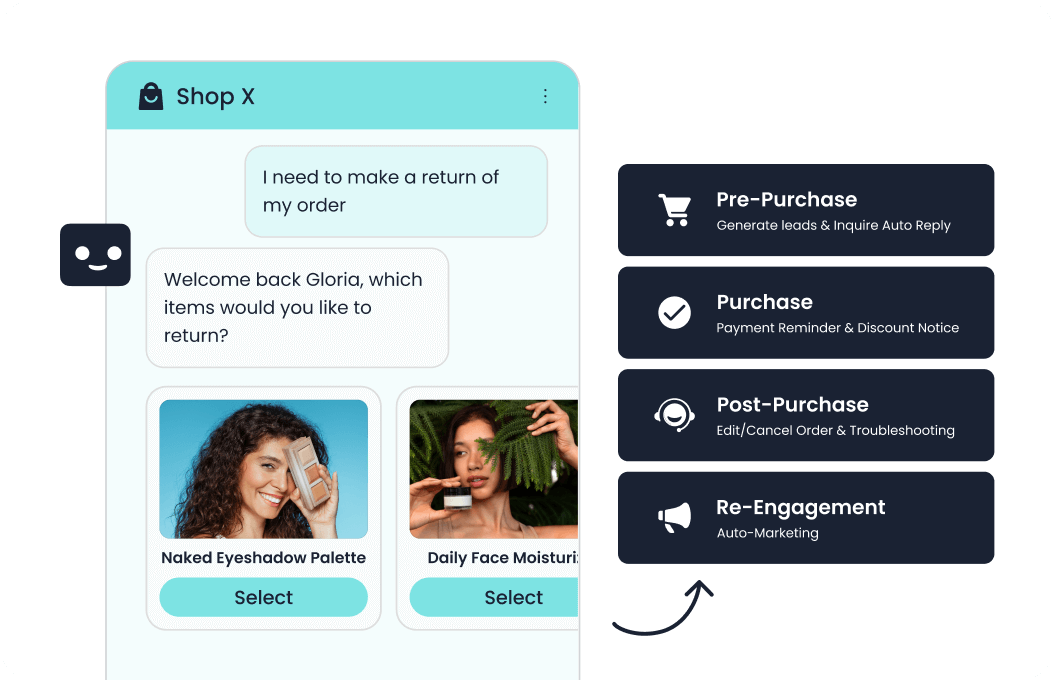
Ecommerce task resolution. A good platform lets AI look up orders, process refund eligibility, and confirm delivery details against connected systems, not just answer policy questions. A red flag is a platform whose AI stops at FAQ deflection while transactional work still requires manual agent steps.
These five criteria favor platforms that treat Southeast Asia as a primary market rather than a configuration afterthought.
Southeast Asia-First Omnichannel AI Contact Center Platforms
These four platforms represent different architectural paths to omnichannel AI for ecommerce. Sobot is an AI-native omnichannel platform built around AI Agents. Zendesk is a traditional helpdesk with AI added on top. Salesforce Agentforce is AI inside an enterprise ecosystem. Intercom Fin is a product-led AI support tool. The difference matters in Southeast Asia because marketplace coverage, WhatsApp depth, and pricing structure determine how quickly a team can go live and what it costs to operate.
1. Sobot
Best for: Southeast Asian ecommerce teams running support on WhatsApp and marketplaces.
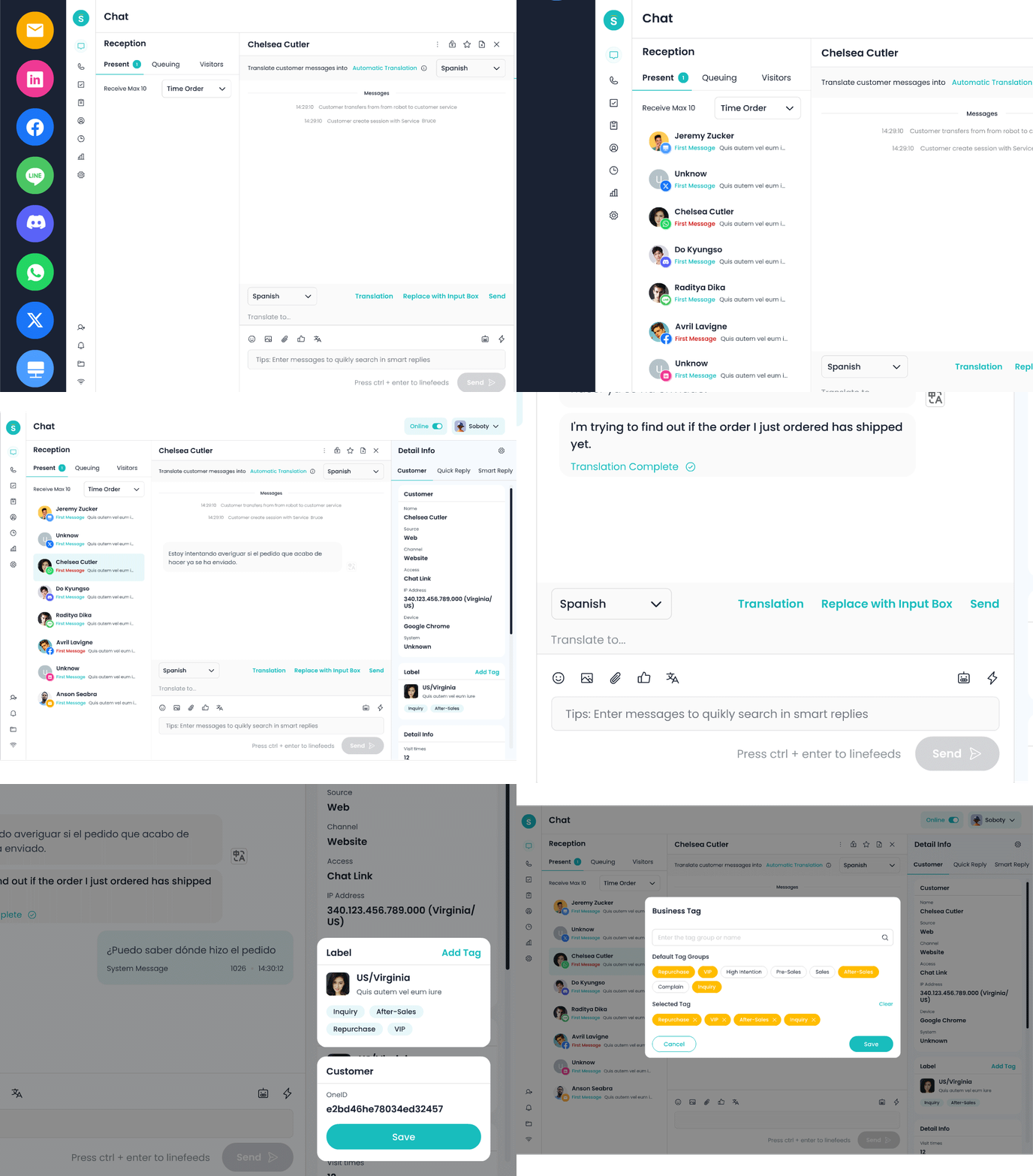
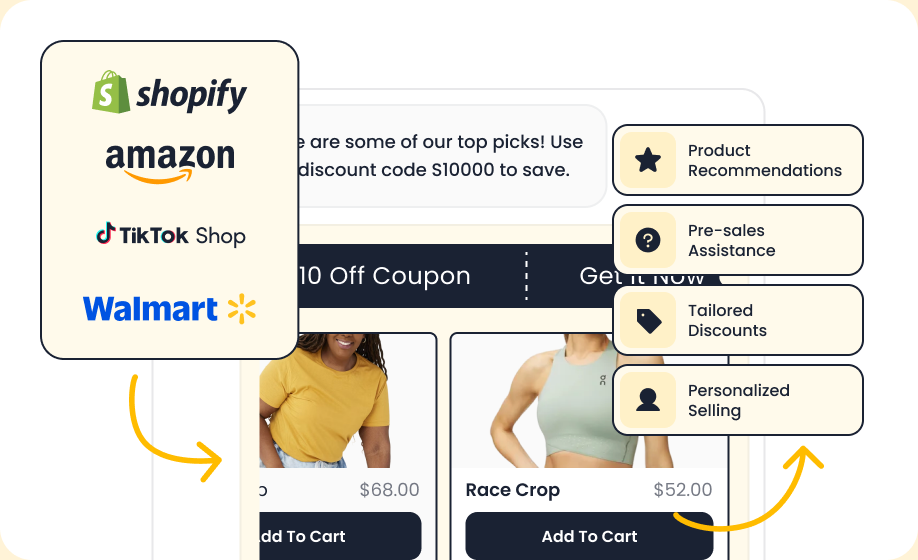
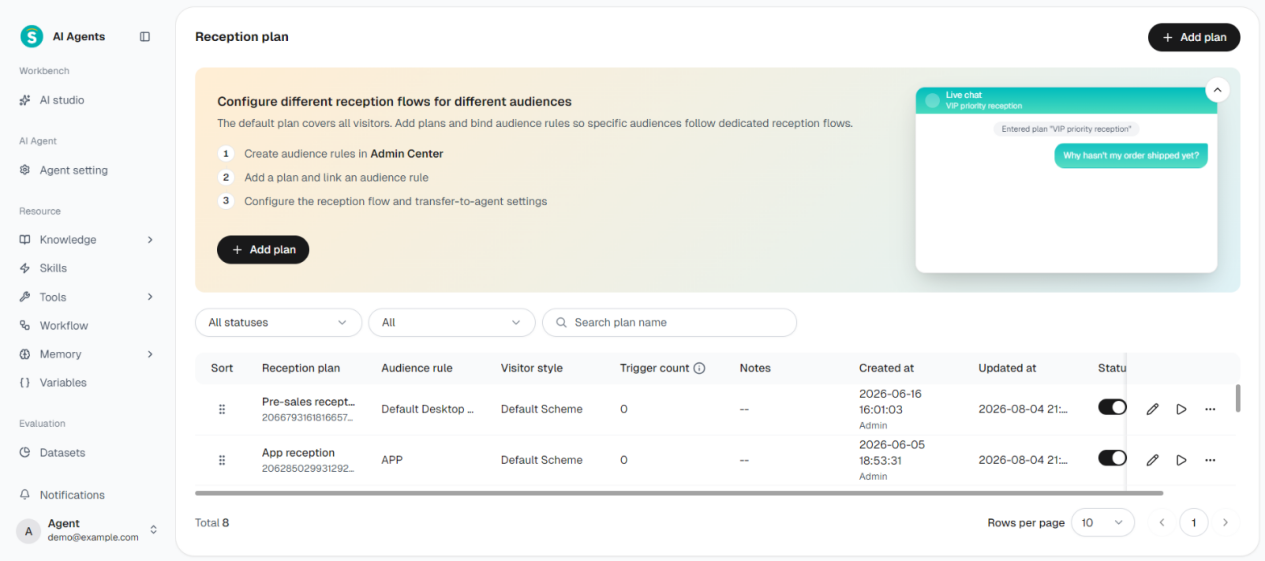
Sobot is an official WhatsApp Business Solution Provider and natively connects Shopee, Lazada, TikTok Shop, and Shopify, so teams can deploy AI Agents to a Shopify store by authorizing it in Sobot’s channel settings. The platform covers 75+ languages including Thai, Indonesian, Malay, and Vietnamese. Sobot AI Agents uses RAG and ReAct to complete order-related tasks such as looking up an order number from a screenshot, rather than only answering FAQs. Nexus Live Chat provides native human handoff across text and voice channels.
Pricing for Sobot AI Agents is fixed and public: Team $39/month (1 AI agent, 50 resolutions), Professional $149/month (10 AI agents, 300 resolutions), Enterprise $499/month (unlimited AI agents, 1,000 resolutions), with extra resolutions at $0.98 each, as of October 2026. Nexus products, including Live Chat and Voice, do not have public pricing; they are priced per solution and require a conversation with Sobot sales. J&T Express uses Sobot for customer service across Southeast Asia, reporting a 50% overall cost reduction, a 35% increase in delivery rate, and a 40% increase in COD collection rate.
Trade-off: Nexus products have no public pricing, so teams that need Live Chat or Voice must get a custom quote.
For a broader look at how Sobot compares across the wider omnichannel customer service platforms for ecommerce category, see our separate comparison.
2. Zendesk
Best for: Established brands of medium and large size that already run multiple customer service products and prioritize ticketing depth.
Zendesk is the strongest choice in this group for ecommerce teams that need a mature helpdesk backbone, not just an AI layer. Its Suite bundles ticketing, knowledge management, and reporting into one workspace, which suits brands with complex escalation paths, SLAs, and multi-department workflows. The Advanced AI add-on brings agent assistance and AI-powered automation on top of that existing infrastructure, so teams can add AI without replacing their support stack. Pricing starts at Suite Team $55/agent/month with Advanced AI at about $50/agent/month on top, as of October 2026.
Trade-off: The AI capability is an add-on built partly through acquisitions including Ultimate.ai and Klaus, so integration depth varies by configuration. Ecommerce teams primarily running Shopee, Lazada, or TikTok Shop face extra integration cost, and per-seat pricing plus the AI add-on creates a higher cost floor for small teams.
3. Salesforce Agentforce
Best for: Enterprises already deep inside the Salesforce ecosystem, such as large Southeast Asian ecommerce or retail groups.
Salesforce Agentforce places AI agents inside Service Cloud, so ecommerce teams can automate customer conversations using the customer data and case records they already maintain in Salesforce. The platform supports web and app interactions, with Service Cloud Voice built on Amazon Connect for telephony. For Southeast Asian ecommerce, the practical question is channel coverage: Shopee, Lazada, and TikTok Shop are not native connectors, so reaching those marketplaces requires custom integration work. Pricing is $2 per conversation, or Flex Credits at $500 per 100,000 credits where each action uses 20 credits (about $0.10) and each voice action uses 30 credits, as of November 2026.
Trade-off: Per-conversation billing becomes hard to predict in high-volume Southeast Asian ecommerce scenarios such as flash sales, and the platform assumes significant Salesforce ecosystem investment. Teams without an existing Salesforce footprint face a heavy setup cost before the AI layer adds value.
4. Intercom Fin
Best for: Product-led ecommerce startups scaling self-serve support on web and app.
Intercom Fin is an AI support layer that sits on top of the Intercom messaging platform. Its core strength is resolving customer questions on a brand’s own website and mobile app, where Intercom’s chat interface and help center integration are already in place. Fin works well for ecommerce teams whose support volume stays on their own properties: it can answer product questions, handle order status inquiries, and deflect common issues without a human agent, which keeps support costs predictable as a startup grows. The platform also offers strong self-serve tooling, including a help center and proactive messaging, so teams can reduce inbound volume before it reaches an agent. Fin is priced at $0.99 per resolution, as of October 2026.
Trade-off: For Southeast Asian ecommerce, Fin’s native footprint centers on web and app conversations, while marketplace channels such as Shopee, Lazada, and TikTok Shop are not part of Intercom’s core channel set, so teams selling primarily through those marketplaces should verify integration requirements before committing.
Choose the Omnichannel Customer Contact Platform that Suits You Best
The right platform depends on where your Southeast Asian ecommerce volume actually lives and which systems you already run. Use the table below to match your situation to the platform that fits it most directly.
| Your situation | Choose |
|---|---|
| You run support mainly on Shopee, Lazada, TikTok Shop, or Shopify, need an official WhatsApp Business Solution Provider, and want a fixed monthly fee you can forecast | Sobot |
| You are a larger team already using multiple support products and prioritize ticketing depth across a broad toolset | Zendesk |
| You are already inside the Salesforce ecosystem and can accept per-conversation billing | Salesforce Agentforce |
| You run support primarily on your own website and app, value AI capability, prefer per-resolution billing, and have limited Southeast Asian marketplace volume | Intercom Fin |
Sobot is the most direct fit for the typical Southeast Asian ecommerce setup: marketplace channels plus WhatsApp, multilingual AI in Thai, Indonesian, Malay, and Vietnamese, and public pricing starting at $39/month with extra resolutions at $0.98 each. Zendesk makes sense when ticketing and an existing Suite deployment outweigh the cost of third-party marketplace integrations. Salesforce Agentforce fits teams that already treat Salesforce as their operational backbone and can absorb variable conversation-based costs. Intercom Fin suits product-led teams whose support volume stays on their own web and app properties rather than regional marketplaces.
Frequently Asked Questions
Which omnichannel AI contact center platform is best for ecommerce in Southeast Asia?
No single platform is the best choice for every Southeast Asian ecommerce team. The right fit depends on your channel mix, existing systems, and budget. Sobot is worth evaluating first if you run support on Shopee, Lazada, TikTok Shop, or Shopify plus WhatsApp: it is an official WhatsApp Business Solution Provider, covers 75+ languages, starts at $39/month, and the J&T Express case shows a 50% overall cost reduction, a 35% increase in delivery rate, and a 40% increase in COD collection rate across Southeast Asia. Zendesk fits larger teams already using multiple support products. Salesforce Agentforce fits large ecommerce or retail groups already deep inside Salesforce. If your volume sits on marketplaces and WhatsApp and you need predictable fixed pricing, Sobot is the more direct fit; if you already have Zendesk or Salesforce investment, evaluate within that ecosystem first.
Does Sobot support Shopee, Lazada, and TikTok Shop integrations?
Yes. Sobot supports Shopee, Lazada, TikTok Shop, Shopify, and Amazon among its ecommerce channel integrations. For Shopify, you can deploy AI Agents by authorizing your store in Sobot’s channel settings.
Which platforms support Thai, Indonesian, Malay, and Vietnamese languages?
Sobot covers 75+ languages including English, Thai, Indonesian, Malay, and Vietnamese. For other platforms, confirm Southeast Asian language support per deployment: many vendors offer interface translation only, while the AI conversation itself still reasons primarily in English.
What is the difference between per-resolution and per-seat pricing for Southeast Asian ecommerce?
Per-resolution pricing, such as Sobot’s $0.98 per extra resolution or Intercom Fin’s $0.99 per resolution, suits ecommerce teams with volatile volume during flash sales and marketplace campaigns because cost scales with actual demand. Per-seat pricing, such as Zendesk Suite plus the Advanced AI add-on, suits teams with stable headcount but adds a separate fee for AI capability. Per-conversation pricing, such as Salesforce Agentforce at $2 per conversation, rises quickly in high-volume Southeast Asian ecommerce scenarios.
Does Sobot offer a free trial for Southeast Asian ecommerce teams?
Yes. New Sobot accounts get 20 free resolutions and 100 AI credits, and you can sign up and go live in about 10 minutes. Start at https://sg.sobot.io/auth/sign_up?language=en_US.
Bottom Line
Southeast Asian ecommerce teams evaluating an omnichannel AI contact center platform should filter on three hard requirements before comparing features: native coverage of Shopee, Lazada, TikTok Shop, and WhatsApp; real AI conversation support in Thai, Indonesian, Malay, and Vietnamese; and a pricing model you can forecast during flash sales and campaign spikes. Sobot is the only platform in this comparison that verifies all three directly: it natively connects the region’s marketplaces and is an official WhatsApp Business Solution Provider, covers 75+ languages including the four that matter most in Southeast Asia, and publishes fixed pricing starting at $39/month with extra resolutions at $0.98 each. The J&T Express case adds a public regional data point: 50% overall cost reduction, a 35% increase in delivery rate, and a 40% increase in COD collection rate across Southeast Asia. Zendesk and Salesforce Agentforce remain strong options for teams already invested in those ecosystems, but both require third-party integrations or custom development to reach Southeast Asian marketplaces, and their per-seat or per-conversation billing is harder to predict for high-volume ecommerce. If your support volume lives on Shopee, Lazada, TikTok Shop, Shopify, and WhatsApp, start your evaluation with Sobot. Start a free trial or book a demo to test the platform against your own channel mix.