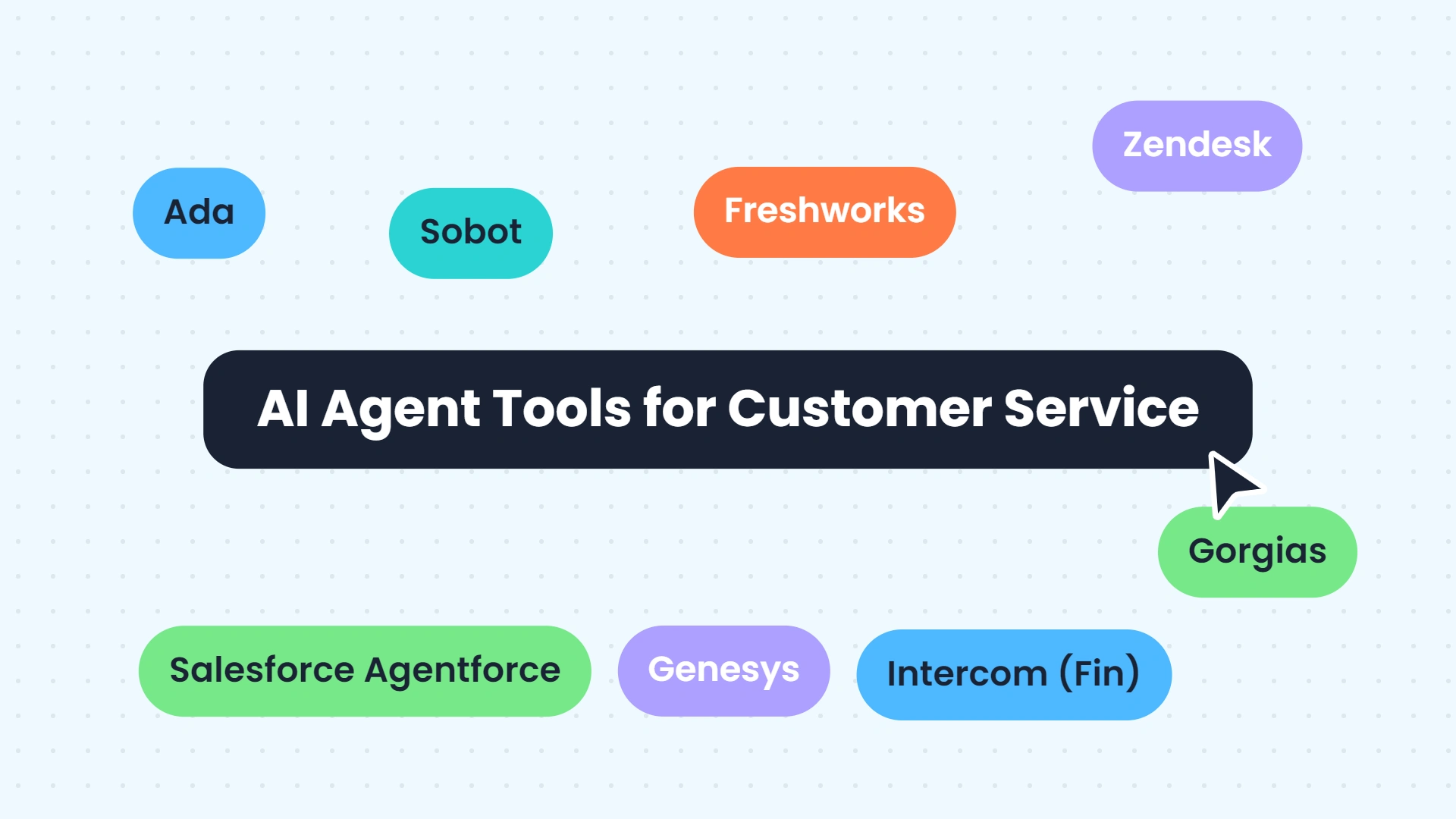
The top AI customer service tools for ecommerce in the US include Sobot for connected messaging and phone support, Gorgias for Shopify order workflows, and eDesk for marketplace seller support. Intercom Fin suits teams adding AI to an existing helpdesk, Tidio Lyro fits smaller stores starting with website support, Zendesk serves complex service operations, and Yuma adds ecommerce automation to an established support stack.
The right choice depends on which customer tasks you need to finish: tracking a shipment, checking return eligibility, changing an unfulfilled order, or transferring a phone call with its context intact. This guide compares seven tools through those US ecommerce buying scenarios, their pricing models, and their practical limitations.
Top AI Customer Service Tools for Ecommerce in the US: At a Glance
| Tool | Best for | Channel and workflow fit | Pricing entry point |
|---|---|---|---|
| Sobot AI Agents | Connecting digital and phone service | Messaging and voice; connected order and service workflows | Team $39/month; additional resolutions $0.98 each |
| Gorgias | Shopify order service | Ecommerce inbox, order actions, voice and SMS options | Ticket-volume helpdesk subscription plus AI resolution usage |
| eDesk | Amazon, Walmart, and multistore sellers | Marketplace messages, email, chat, social; order context | Essential $45/agent/month annually; AI $0.99/outcome |
| Intercom Fin | Adding AI to a supported helpdesk | Digital service with connected customer data and actions | From $0.99/Fin outcome; helpdesk seats priced separately |
| Tidio Lyro | Small stores starting with website AI | Website support, knowledge answers, configurable actions | Lyro from $32.50/month for 50 AI conversations |
| Zendesk | Larger retailers with complex service teams | Omnichannel ticketing, routing, AI agents, reporting | Suite Team $55/agent/month annually; confirm AI allowances |
| Yuma | Automating an existing ecommerce inbox | Ecommerce workflows inside supported helpdesks | Illustrative Starter $14,400/year for 12,000 resolutions |
Prices checked November 2026, in USD. Entry prices cover different products and billing units; they are not equivalent full-stack quotes. Confirm store limits, AI allowances, implementation, and voice or messaging charges using the vendor pricing links in the reviews below.
How to Evaluate AI Support for a US Online Store
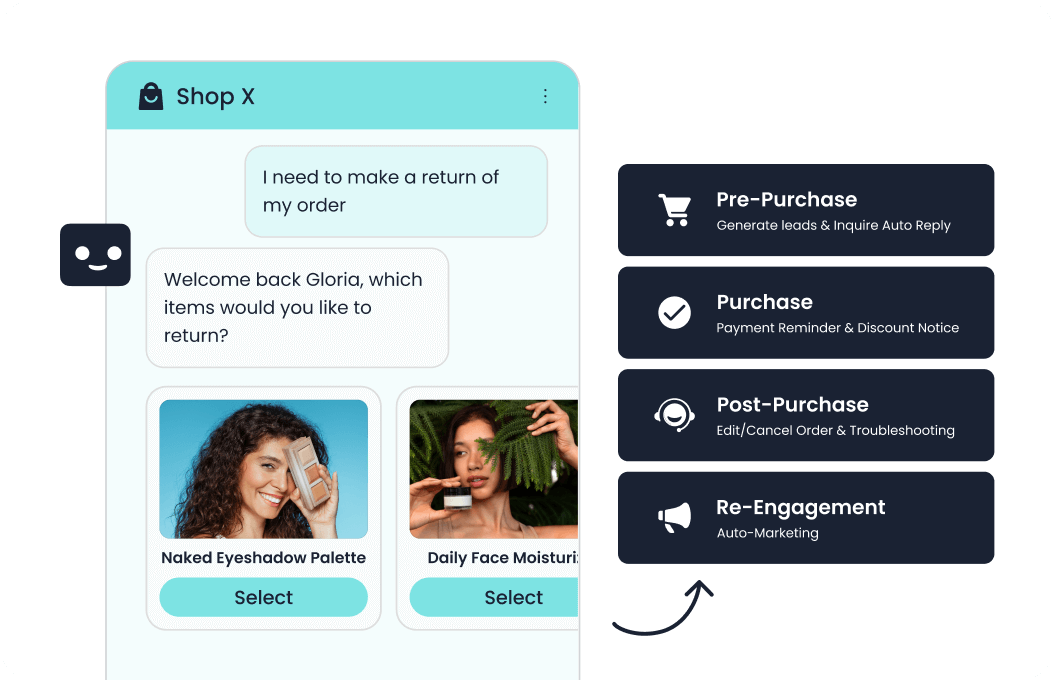
AI customer service tools combine customer conversations, business knowledge, and access to operational systems. A useful ecommerce AI agent can retrieve current order information and complete an authorized task. A copilot helps a human agent draft or decide; its output still requires human work.
Use these seven questions to build a shortlist:
1. Can it retrieve the correct order? Test a split shipment, a stale carrier scan, and a customer with multiple orders. Ask the vendor to show the underlying record.
2. Can it apply your return rules? Include holiday extensions, final-sale items, gifts, exchanges, and partial returns. The agent should ask for missing information before choosing an action.
3. Can it separate storefront and marketplace policies? A direct website order and an Amazon order may require different procedures. Validate each seller account and fulfillment route you actually use.
4. Can it perform permitted actions? Demonstrate an address change before fulfillment and a refusal after the change window closes. Require confirmation from the connected system.
5. Does context survive a channel change? Move a web conversation to a phone call or human agent. Check that the order, prior answers, and attempted actions remain available.
6. Can your team maintain it? Have a support manager update a promotion or return rule and check the result. Include English and Spanish test conversations if your customer base needs both.
7. What happens during Black Friday and Cyber Monday? Request a peak-volume quote, capacity plan, and fallback process. Review reopens and customer satisfaction alongside the vendor’s resolution metric.
A strong shortlist passes the order-data, action-control, and handoff tests for your actual stack. Fluent answers alone cannot establish that fit. The recommendations below reflect documented capabilities and buying needs; they are not a controlled performance benchmark.
Best AI Customer Service Tools by Ecommerce Workflow
Sobot AI Agents: Best for Connected Messaging and Phone Support
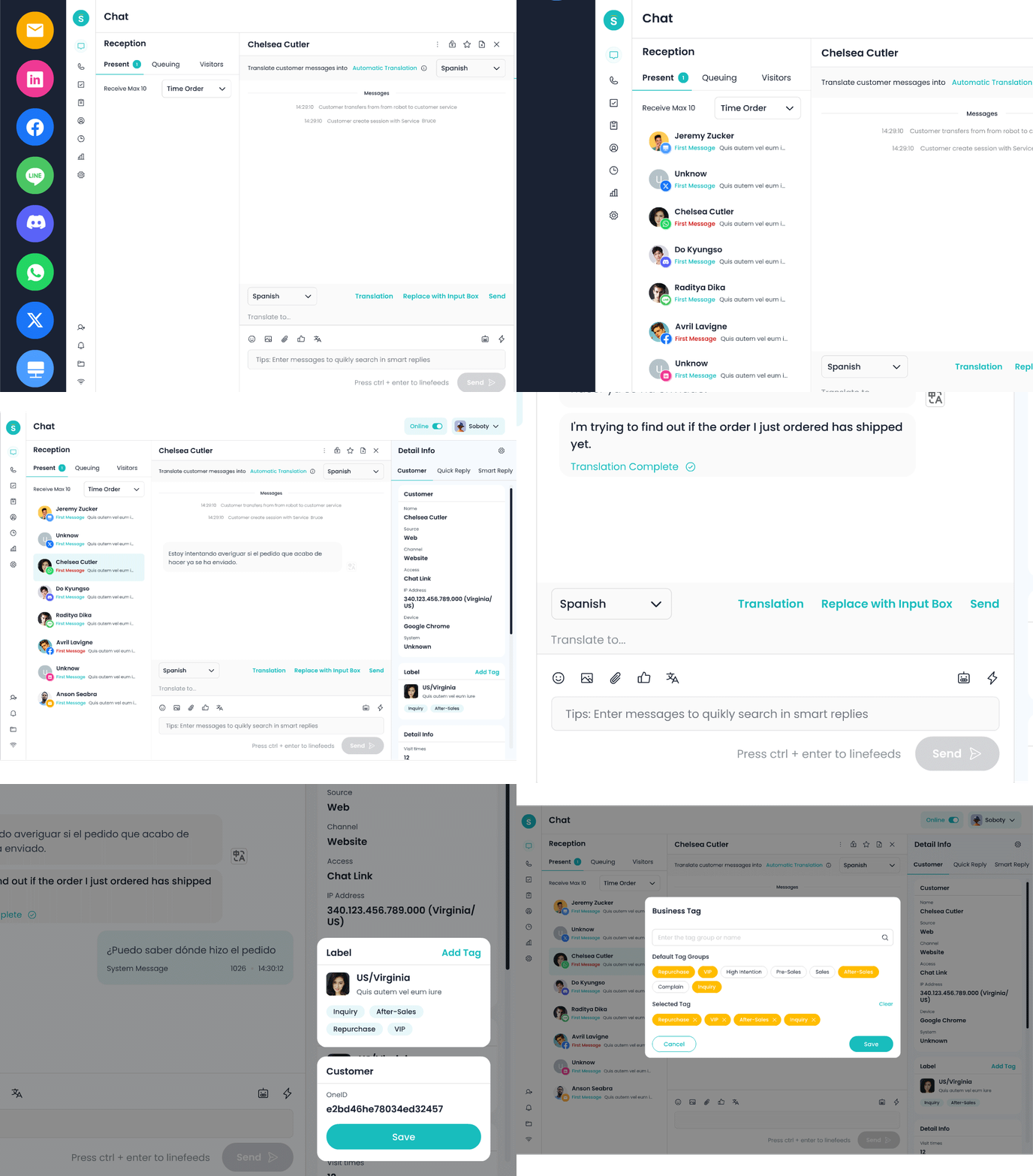
Sobot AI Agents is best for ecommerce teams that need digital support, phone service, and human escalation to work together. Sobot positions itself as The Agentic Customer Contact Platform, bringing AI task execution together with customer-contact infrastructure.
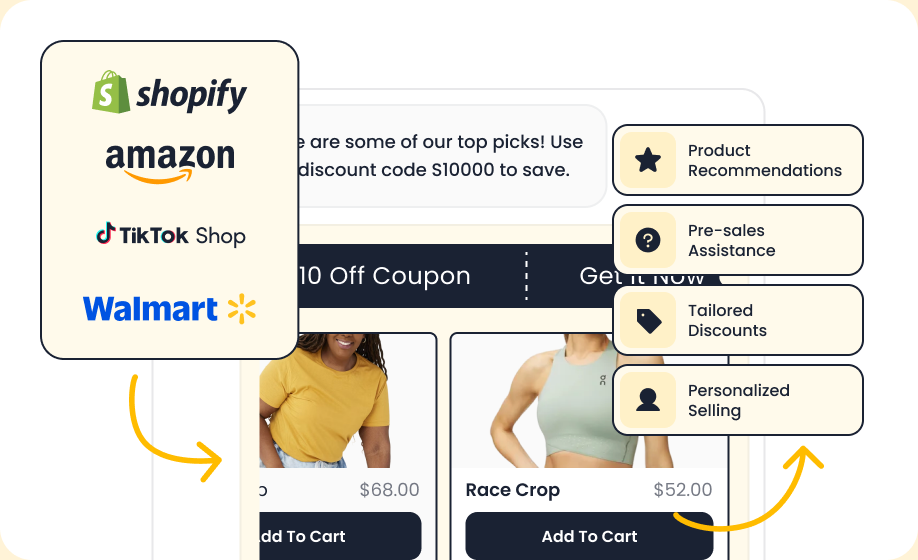
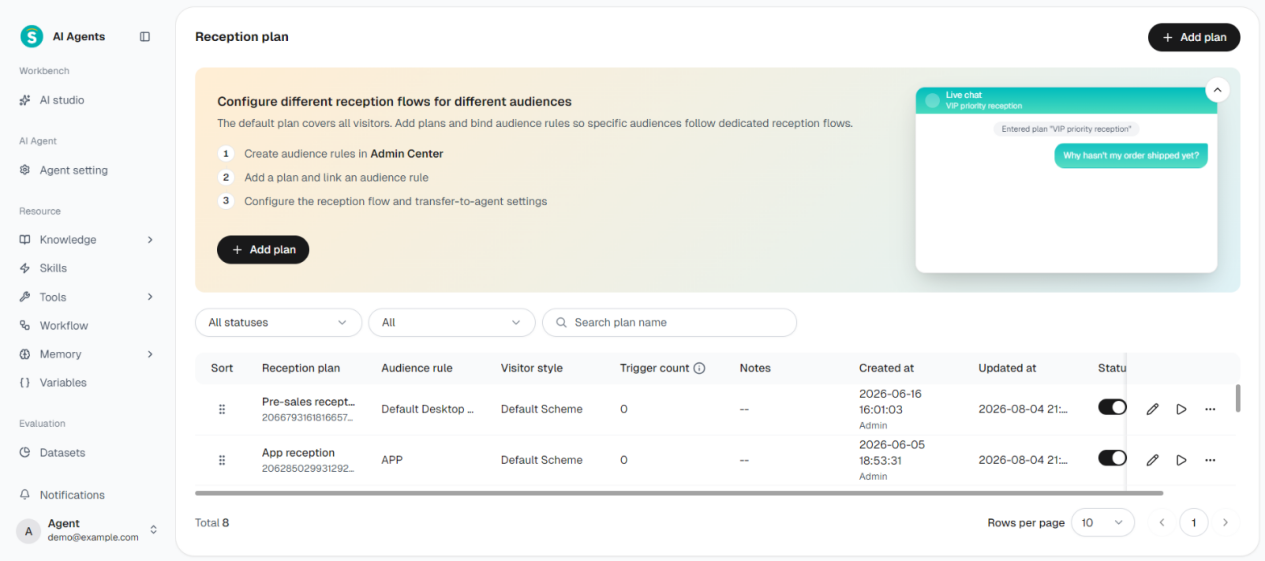
Its approach combines grounded retrieval, or RAG, with ReAct for reasoning and tool use. The Resource Center organizes Knowledge, Skills, Workflows, Tools, Memory, and Variables. Configured connections to order and service systems let an agent look up a shipment, apply a return procedure, or create a ticket. Nexus Messaging, Nexus Voice, and Nexus Ticketing support the surrounding service operation. Explore the Sobot AI Agents product overview for its messaging, voice, and contextual handoff capabilities.
For a US merchant, the useful demonstration is a shopper who starts with a delivery question online and later calls about the same order. Ask Sobot to show the connected record and escalation path using your systems. Its natural-language builder assists configuration; integration and policy review still need an owner.
Evidence comes from the broader Sobot platform: Renogy’s published customer story reports a 45% increase in resolution rate and 95% CSAT after adopting Sobot’s omnichannel solution. Those are Renogy’s outcomes, rather than a benchmark for every AI Agents deployment.
Pricing: Team is $39/month, Professional $149, and Enterprise $499. Additional automated resolutions cost $0.98 each; human handoffs are not charged as resolutions. Confirm AI credits, Nexus modules, implementation, and telephony in the full quote.
Strength: Connected digital and voice operations with a managed evaluation and tuning loop. Trade-off: A broad rollout requires more coordination than a single website widget.
Gorgias: Best for Shopify Order Workflows
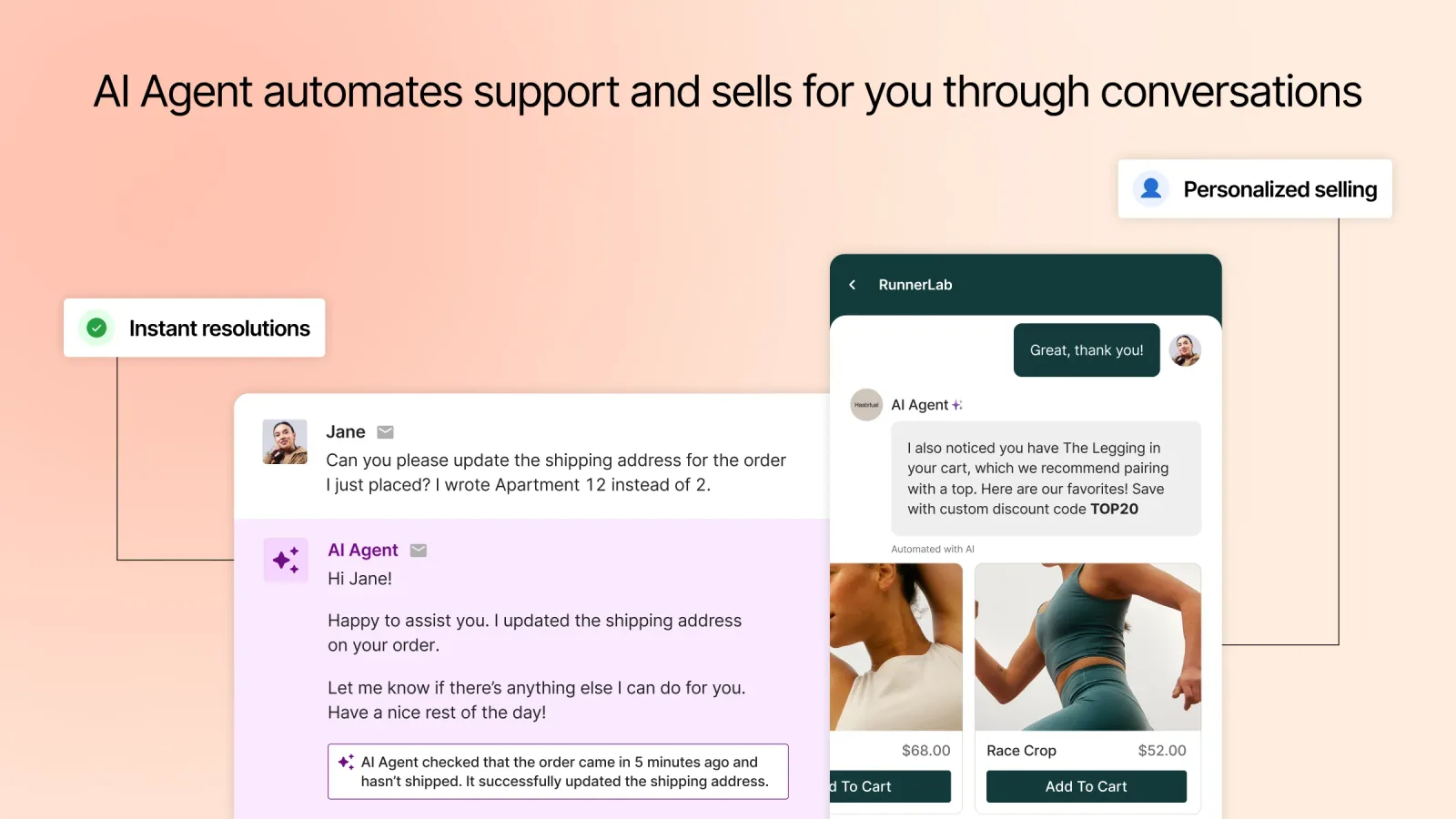
Gorgias is best for Shopify-led brands that want order service inside an ecommerce helpdesk. Its order-focused workflows make it a strong candidate when agents repeatedly move between the support inbox and store administration.
Gorgias documents AI Agent actions for Shopify orders, including cancellations and shipping-address changes. Test these against fulfillment status and your approval rules. Its integration ecosystem also includes commerce platforms beyond Shopify, so it should not be evaluated as a Shopify-only product.
Pricing: The Gorgias pricing page describes ticket-volume helpdesk plans plus AI resolution billing, with voice and SMS options. Request the combined quote at normal and holiday ticket volumes.
Strength: Ecommerce context and order actions close to the support conversation. Trade-off: Ticket volume and AI usage both matter to budgeting; a small entry plan does not describe the cost of a busy store.
eDesk: Best for Marketplace and Multistore Support
eDesk is best for sellers whose support spans Amazon, Walmart, and several online stores. Its marketplace orientation makes it relevant when the same team works across seller accounts and storefronts.
The platform combines messages with order and customer information. Its listed connections include Amazon, eBay, Walmart, Shopify, and BigCommerce. For a US seller, demonstrate a marketplace delivery inquiry alongside a direct-store return. Check that each case retains its account, order source, and appropriate procedure.
Pricing: eDesk Essential lists $45 per agent/month billed annually, or $55 monthly, plus $0.99 per AI outcome. Essential includes one store or marketplace; Growth lists five and Professional ten. Match the plan to your connected accounts before comparing costs.
Strength: Marketplace and store context in a shared workspace. Trade-off: Store allowances and feature tiers affect the suitable plan; the entry subscription may not cover a multistore operation.
Intercom Fin: Best for Adding AI to an Existing Helpdesk
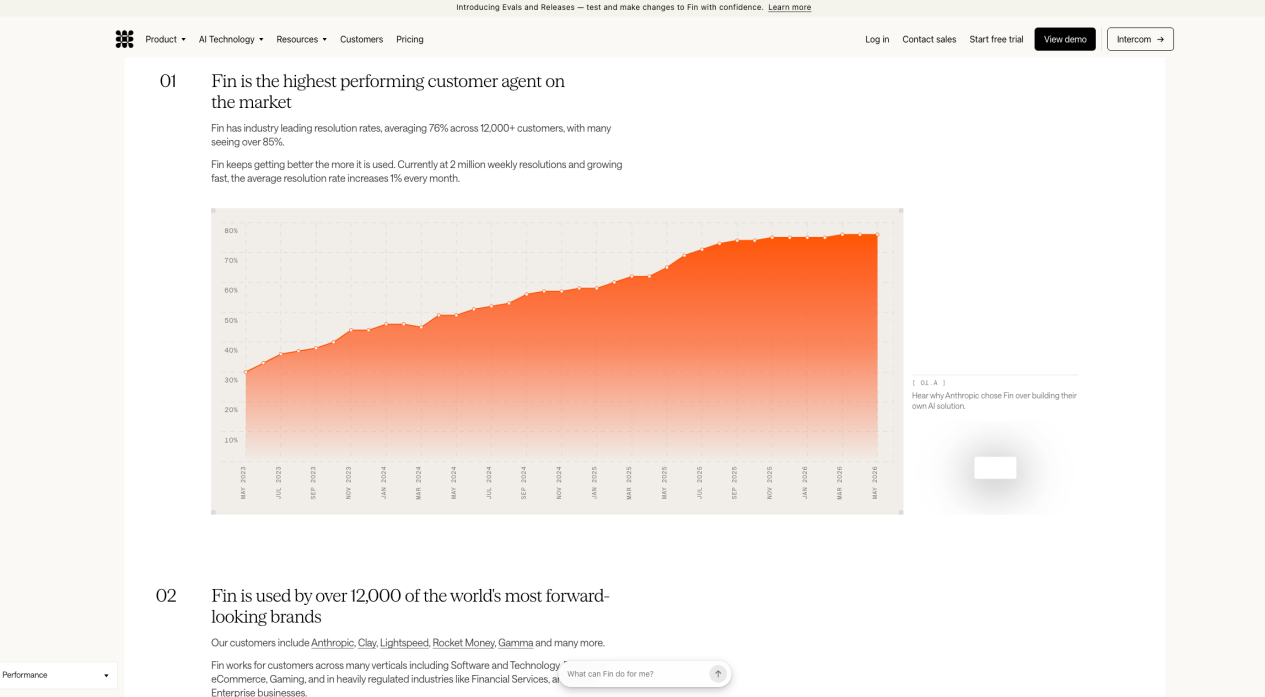
Intercom Fin is best for retailers that want an AI service layer while retaining a supported helpdesk. It is a useful candidate when the existing inbox works well and automation is the main missing capability.
Fin can work with connected customer information and configured actions. In an ecommerce evaluation, ask it to retrieve an order, explain a delivery exception, and transfer an unresolved return. Verify the supported connection to your helpdesk and which workflows require additional setup.
Pricing: Intercom lists Fin from $0.99 per outcome, with helpdesk seats priced separately when buying the combined platform. A new-customer seat promotion was displayed during research; verify eligibility and renewal pricing rather than treating the promotion as a permanent rate.
Strength: A route to AI adoption without automatically replacing the helpdesk. Trade-off: Total spending includes the underlying service platform, while order actions depend on configured integrations.
Tidio Lyro: Best for Small Stores Starting with Website Support
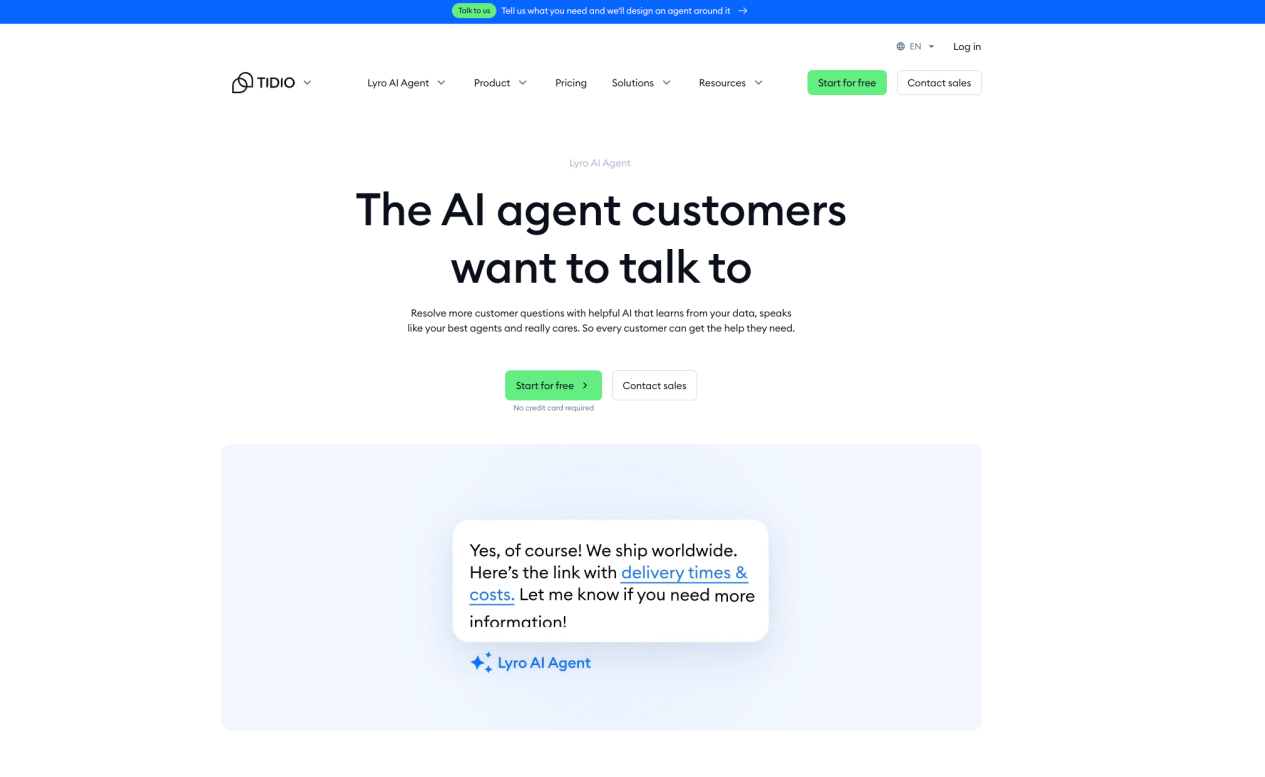
Tidio Lyro is best for smaller stores that want to automate website questions before expanding into a larger service operation. Start with product guidance, shipping FAQs, and clear escalation routes.
Lyro offers knowledge-based responses, human handoff, and configurable actions. A practical pilot separates policy questions from requests requiring live order data. Check which actions and commerce features your chosen quota includes.
Pricing: Tidio lists Lyro from $32.50/month for 50 AI conversations. Its Starter helpdesk price is a separate entry point. The first 50 free Lyro conversations are a lifetime allowance, rather than a recurring monthly AI quota; confirm billing terms at checkout.
Strength: A manageable starting scope for a small support team. Trade-off: AI conversation limits and helpdesk allowances need separate attention as traffic grows.
Zendesk: Best for Complex Retail Service Operations
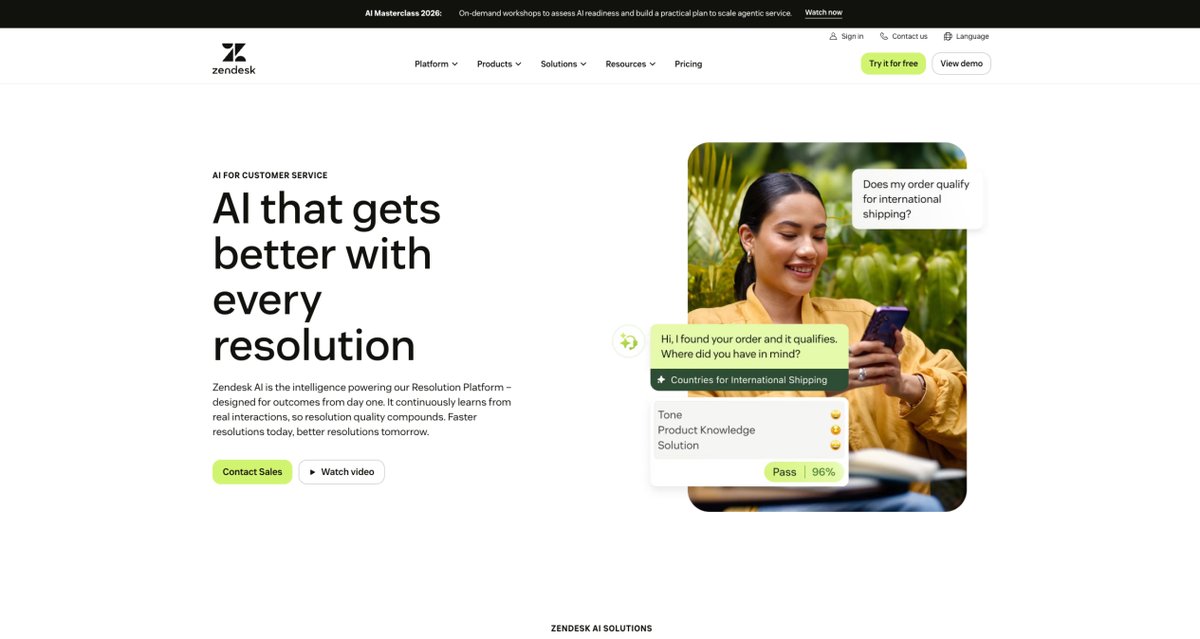
Zendesk is best for larger retailers that need coordinated ticket routing, service levels, reporting, and AI across multiple teams. It deserves a close look when service management is as important as automated replies.
Zendesk’s ecommerce AI guide describes agents that use connected business systems, knowledge, and human handoff. Ask the vendor to demonstrate an order exception crossing teams, including who owns the case and what the human agent receives.
Pricing: The guide lists Suite Team at $55 per agent/month billed annually. Confirm included automated resolutions, advanced AI functionality, Copilot, and voice requirements in a US quote.
Strength: Broad service operations for complex organizations. Trade-off: Plan selection and configuration require care; a simple store should compare that effort with its actual workflow needs.
Yuma: Best for Ecommerce Automation on an Established Stack
Yuma is best for ecommerce brands that want deeper automated workflows inside a supported existing helpdesk. It is especially relevant when replacing the service workspace would create unnecessary migration work.
Its product comparison guide describes ecommerce procedures, integrations, and managed testing. Ask Yuma to handle your own order edits, subscription requests, and return exceptions. Confirm which helpdesk and store connections are included, and price voice or sales capabilities separately where needed.
Pricing: Yuma’s pricing page gives an illustrative Starter bundle of $14,400 annually for 12,000 fully automated resolutions, with a 12-month commitment. It defines a full resolution as a ticket handled without human involvement; obtain a quote for your forecast and billing schedule.
Strength: Ecommerce automation without necessarily changing the underlying inbox. Trade-off: The commitment and existing helpdesk cost deserve attention, particularly for smaller or seasonal stores.
Run a Pilot Around US Post-Purchase Service
Choose a short list of real, anonymized cases: an unscanned shipment, a partial delivery, a holiday gift return, an ineligible refund, a pre-fulfillment address edit, a marketplace order, and a phone escalation. Give every vendor the same policies and expected outcomes.
Score whether the agent found the correct record, applied the right rule, completed the permitted action, and passed useful context to a human. Track repeat contacts and customer satisfaction after closure. A conversation marked resolved by a billing system can still leave a shopper needing help.
For costs, combine the base subscription, human seats, AI usage, voice or messaging charges, connectors, and implementation. Ask each vendor how it bills reopened cases and what happens when allowances run out. Compare both a normal month and your forecast holiday peak.
Conclusion
Choose an AI customer service tool around the post-purchase work your team needs to finish. Gorgias is a strong starting point for Shopify order operations; eDesk fits marketplace-led support; Tidio suits a smaller website-first rollout. Fin and Yuma offer routes to adding AI to an existing stack, while Zendesk suits complex service management.
Sobot is a strong candidate when messaging, phone support, and human escalation need shared context. Validate the order connections and complete service scope with real cases before expanding. Book a Sobot demo and bring a delivery inquiry, a return exception, and a phone handoff for a practical comparison.
Frequently Asked Questions
What is the best AI customer service tool for a small US ecommerce store?
Tidio Lyro is a practical starting point for website questions. Sobot AI Agents also offers a low entry subscription, but compare the full channel scope, AI allowances, and integration requirements before choosing on price.
Which tools should Amazon and Walmart sellers compare?
Start with eDesk for marketplace-focused service, and consider Sobot when the wider operation also needs messaging and voice. Confirm the specific seller-account connections, supported actions, and marketplace procedures in a demonstration.
Is Gorgias or Sobot better for ecommerce support?
Gorgias is a strong fit for Shopify order workflows in an ecommerce helpdesk. Sobot is worth evaluating when connected messaging and phone operations are central to the requirement; test both against the same order and escalation cases.
How much does AI ecommerce customer service cost?
Pricing can combine subscriptions, seats, AI conversations or resolutions, and channel charges. Sobot Team starts at $39/month, while Fin starts at $0.99 per outcome; those figures describe different billing components and are not equivalent complete-system prices.
Can AI agents process returns and refunds automatically?
They can complete permitted actions when connected to the necessary systems and configured with the merchant’s policies. Test identity checks, eligibility, fulfillment status, and escalation rules before enabling live financial actions.
How should US brands test phone support and multilingual service?
Use real delivery and return scenarios, including an interruption and a human transfer. For English and Spanish service, test both spoken understanding and policy accuracy in the actual channel and purchased configuration.