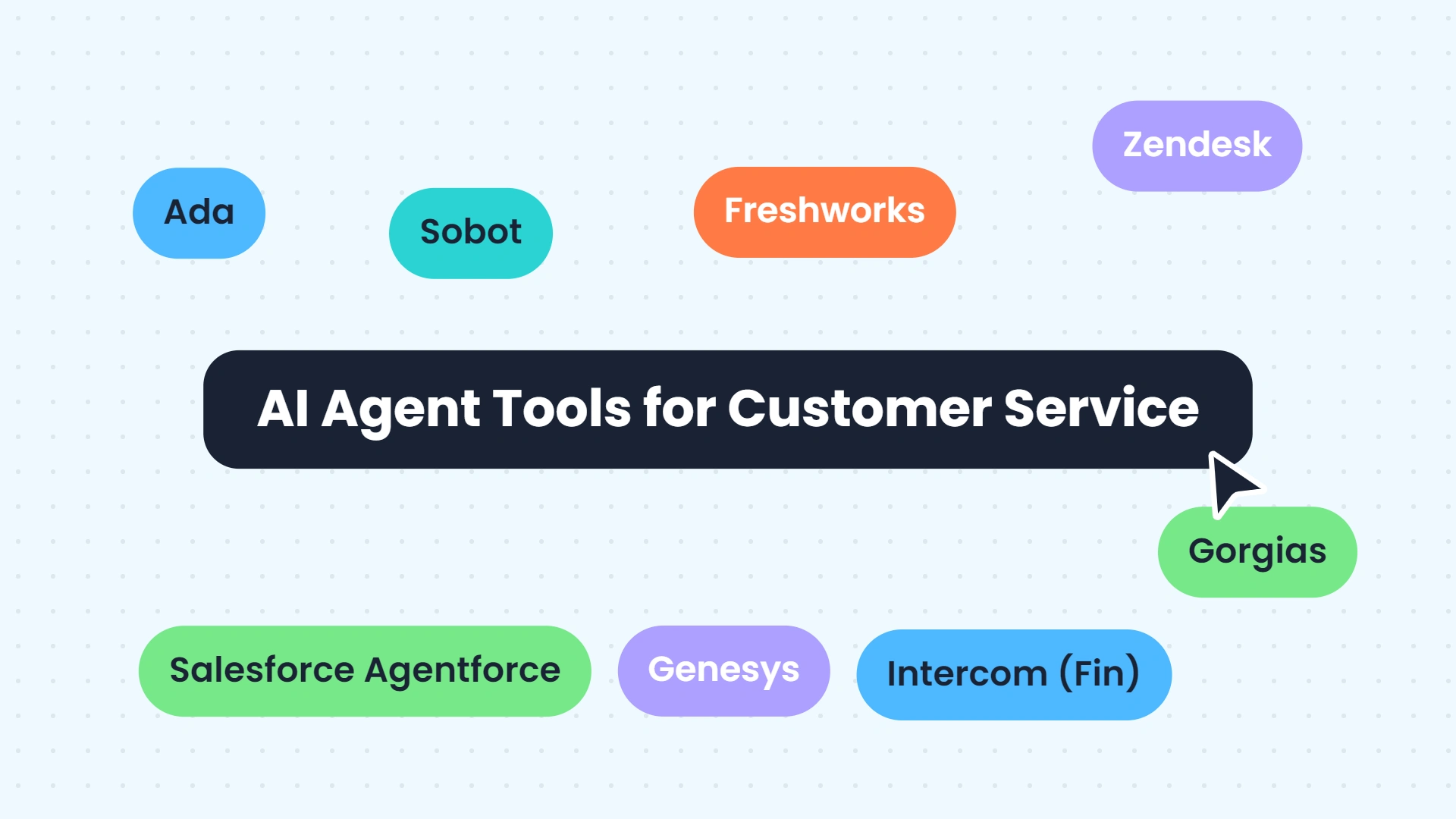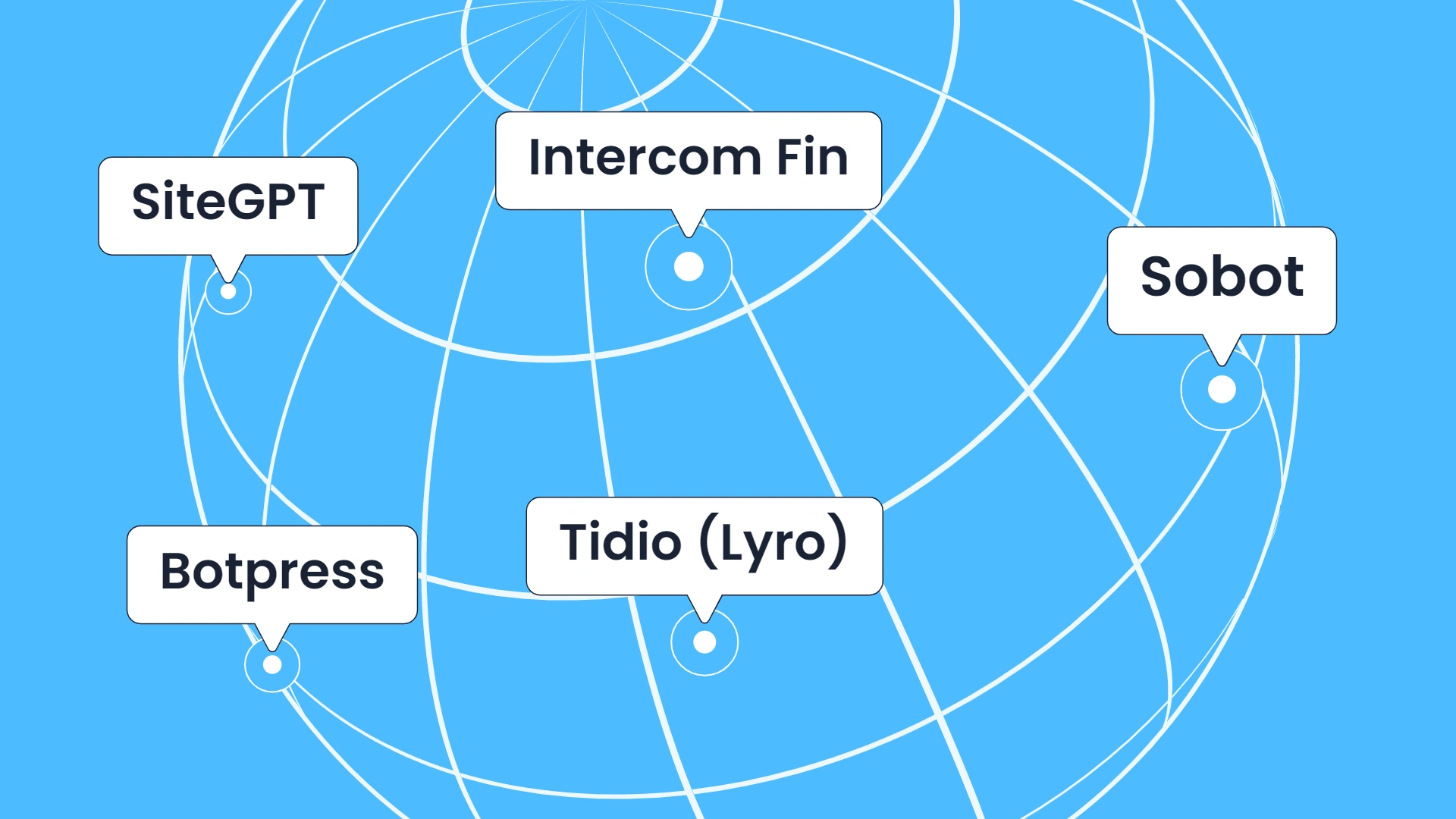
The best Chatbase alternative depends on what you need to change. Sobot AI Agents is a strong choice for growing support teams that need several independent AI Agents, configurable business actions, and a path to human agent service across channels. SiteGPT fits a focused website knowledge AI Agent. Tidio combines AI Agent and human agent support, Botpress suits teams that want to build custom AI Agent behavior, and Intercom Fin fits an established helpdesk operation. Keep Chatbase on your shortlist if its existing knowledge, actions, and inbox already meet your needs. This guide compares five alternatives by use case, commercial terms, and implementation trade-offs.
When it Makes Sense to Compare Chatbase Alternatives
Chatbase turns your website and documents into an AI Agent, but its current scope goes beyond FAQ answers. The Chatbase Basic plan lists Actions and Procedures, MCP, a Helpdesk inbox, voice, and API access. Replacing it simply to get tool calls or human agent support may solve a problem your existing subscription already addresses.
Look for a specific mismatch instead. Perhaps you need separate AI Agents for several brands, different routing for customer groups, a more deliberate evaluation process, or a support workspace that matches how your human agents work. A lower subscription may also matter, provided the included usage covers your workload.
Compare approved answers, completed tasks, escalation to a human agent, required plans, and the cost of the same workload. Recommendations reflect product fit and published information, rather than a performance ranking across all five tools.
Chatbase Alternatives at a Glance
| Platform | Best for | Difference to evaluate against Chatbase | Price or billing basis | Main trade-off |
|---|---|---|---|---|
| Sobot AI Agents | Multiple AI Agents and broader service operations | Ten AI Agents on Professional and a Nexus service expansion path | Team $39/month; Professional $149/month, paid monthly | Advanced features and human agent service require appropriate plans and scope |
| SiteGPT | A focused website knowledge AI Agent | A narrower website-first purchase with feedback and escalation tools | Starter $59 monthly or $468 annually | Content, member, and integration limits need checking |
| Tidio with Lyro | Small teams using AI Agents and human agents | A shared quota for AI Agents and human agents | Starter AI $390/year for 50 monthly conversations | Human agent conversations count toward the quota |
| Botpress | Custom AI Agent behavior and workflows | Studio and developer tooling alongside a support desk | Free tier; Plus $150/month billed annually | Conversation packs, AI usage, and build work affect cost |
| Intercom Fin | An existing helpdesk operation | AI Agent deployment in an existing helpdesk or Intercom | From $0.99 per outcome; deployment terms apply | Outcome definitions, minimums, and seat charges vary by route |
USD pricing reviewed November 24, 2026. Annual commitments are identified explicitly. These figures are entry points, not quotes for equivalent workloads; usage, taxes, add-ons, and implementation can change the total. Official plan links appear in each review.
Sobot AI Agents for Multiple AI Agents and Connected Service
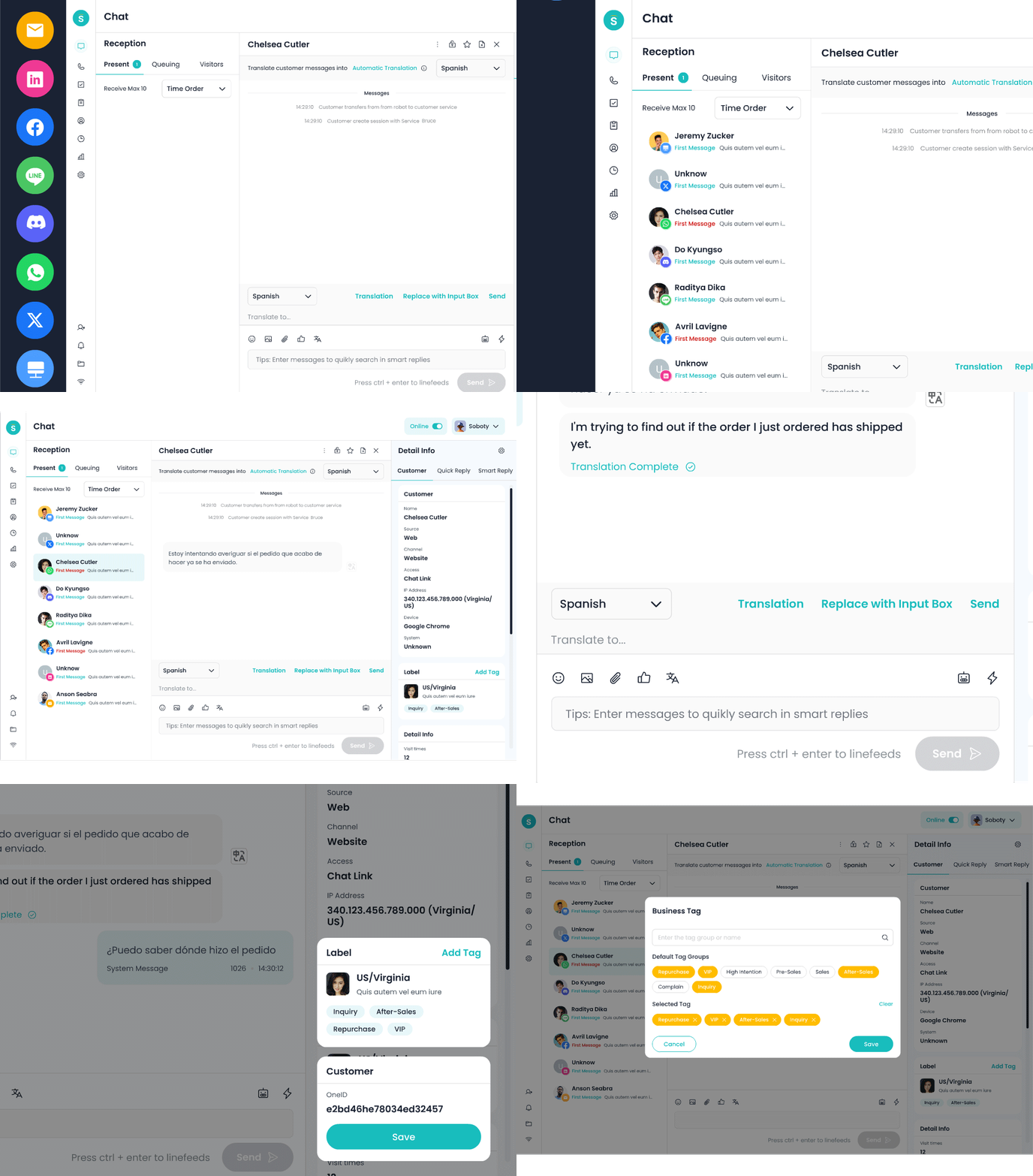
Sobot AI Agents is best for growing teams that need several independent AI Agents and want to connect automation with a broader customer service operation. Like Chatbase, it uses your knowledge to answer customer questions and can use configured tools. The reason to consider it is the combination of AI Agent capacity, reusable service resources, and an expansion path through Nexus Messaging, Nexus Ticketing, and Nexus Voice.
For example, a retailer with distinct brands may want separate knowledge and instructions for each one. Sobot Professional includes ten AI Agents. That makes it worth evaluating where AI Agent separation matters; a business does not automatically need a new AI Agent for every language or website.
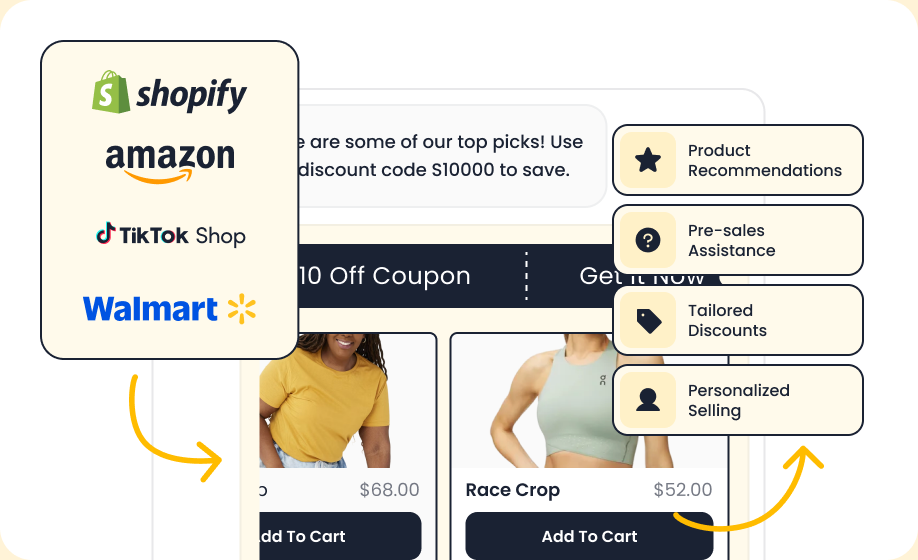
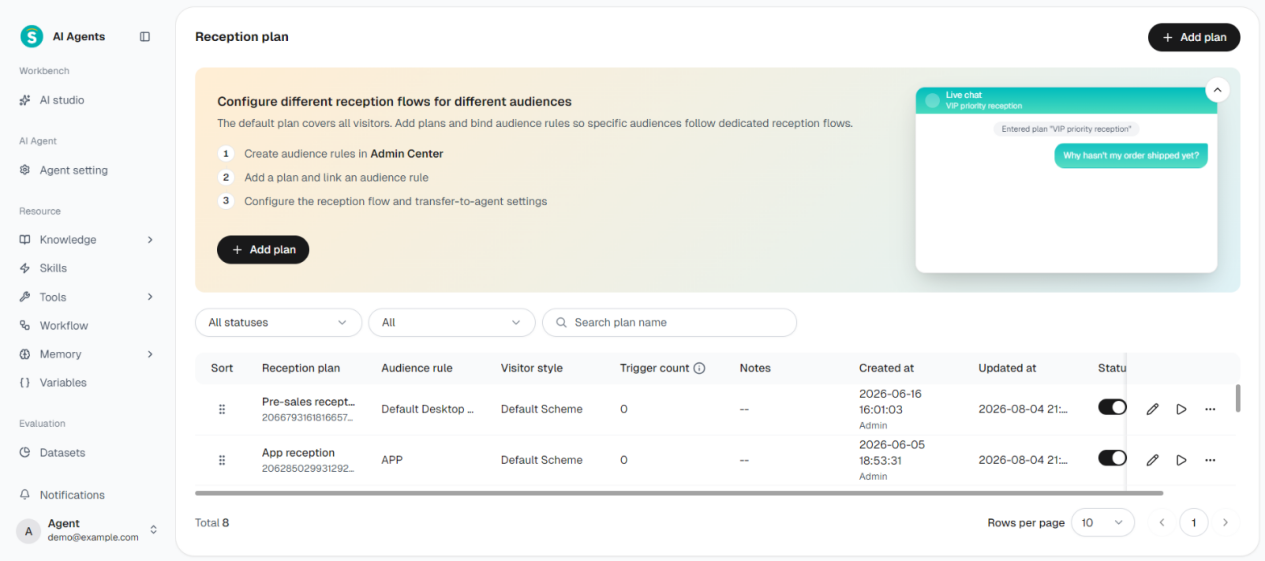
Sobot AI Agents organizes resources around Knowledge, Skills, Workflows, Tools, Memory, and Variables. The practical value is being able to maintain approved information and task instructions as reusable resources. An order inquiry could combine a policy answer with a configured lookup, then pass an exception to a human agent with context. That is an implementation example, not an out-of-the-box promise for every store.
Choose the tier around the work. Skills, Actions, and MCP integrations start with Professional; task workflows, memory features, and the Evaluation Center are listed under Enterprise. A Team subscription should not be treated as a complete advanced automation deployment.
The current Sobot plans list Team at $39/month with one AI Agent, 50 resolutions, and 200 AI credits; Professional at $149 with ten AI Agents, 300 resolutions, and 2,000 credits; and Enterprise at $499 with 1,000 resolutions and 6,000 credits. Extra resolutions cost $0.98 each. Handoffs to human agents do not incur a resolution charge, but human agent staffing and Nexus services still need their own commercial scope. AI credits support activities such as building and evaluation and should remain in your budget.
Sobot also lists a 14-day trial without a credit card, including 20 resolutions and 100 credits. Use it to validate one meaningful service journey. A longer trial window does not mean unlimited testing capacity.
There is public evidence for the broader service approach: in the Renogy customer story, the company reported a 45% increase in resolution rate and 95% CSAT after adopting Sobot’s omnichannel solution. Those are results from that deployment, not a benchmark of Sobot AI Agents or a forecast for your business.
Choose Sobot when multiple AI Agents, connected tasks, and coordinated human agent service justify the setup. Keep comparing if you mainly need a single lightweight widget, already have an effective support stack, or cannot justify the relevant tier and integration work.
What the Sobot and Chatbase Evaluation Shows
A November 20–23, 2026 internal evaluation compared Sobot Accurate mode with Chatbase Auto using the same fictional consumer-electronics knowledge base and instructions.
Under a rubric requiring correctness, completeness, grounding, and no guessing to all pass, Sobot passed 87 of 92 questions and Chatbase passed 83. Completeness was 95.7% versus 91.3%. This supports investigating Sobot when covering relevant details matters. It does not establish superior overall accuracy: the paired difference was not statistically significant, with a reported p-value of about 0.39.
The business review also matters. Sobot made one incorrect exchange-policy promise, and Chatbase generally answered more briefly. When answers were judged by business risk, the review favored Chatbase numerically, 91/92 versus 89/92. The reported pass rates are evaluation results, not production resolution rates or billable resolutions.
This was a single-turn test with AI grading, different model modes, and no connected order systems or live handoff to a human agent. Draft and unsaved-configuration caveats also limit the comparison. In your pilot, check policy exceptions, first-sentence clarity, answer length, and escalation behavior.
SiteGPT for a Focused Website Knowledge AI Agent
SiteGPT is best for teams that want to keep the website-and-documents model while evaluating a different interface and entry package. Its core job remains close to Chatbase: ingest website content or files and put an AI Agent in front of visitors.
SiteGPT’s product page describes feedback from chat history, lead capture, escalation to a human agent, and integrations such as Slack, Crisp, and Zendesk. These give a website owner a concrete evaluation path: check content coverage, inspect unanswered questions, and confirm where escalations go. They do not by themselves prove better answers than Chatbase.
Its Starter plan is $59/month paid monthly, or $468/year, equivalent to $39/month. It lists one AI Agent, 1,000 webpages, ten files, and one member. The seven-day trial requires a card. Check message allowances and integration availability for your chosen tier.
The attraction is a focused purchase for content-led support. The trade-off is that the entry package may be too narrow for a large document library or several collaborators. Choose it for a bounded website AI Agent; validate backend actions separately if completing transactions is central to your replacement decision.
Tidio with Lyro for AI Agent and Human Agent Support
Tidio is best for smaller teams that want an AI Agent and human agent support in the same daily workflow. Like Chatbase, Lyro can answer from business knowledge and hand conversations to human agents. The distinction to examine is how the team works in that environment and how conversation-based billing fits the queue.
The current Tidio pricing page offers plans with or without Lyro. Starter AI is listed at $390/year with 50 monthly conversations handled by AI Agents or human agents. Growth adds routing and ticketing workflows; its displayed entry configuration is $750/year for 100 monthly conversations. Quotes change with volume and add-ons.
For a small team, sharing conversations handled by AI Agents or human agents under one quota can make workload planning straightforward. It also means a conversation handled by human agents is not automatically outside the usage budget. This differs from comparing only automated resolutions or individual message credits.
Tidio provides 50 free Lyro conversations as a one-time testing allocation, not a renewing monthly AI allowance. Shortlist it when day-to-day collaboration is the main buying reason. Compare the quota and routing tier carefully if several brands or a growing queue make the entry configuration too small.
Botpress for Custom AI Agent Behavior
Botpress is best for teams that want to design and maintain more of the AI Agent experience themselves. It retains the knowledge-answering use case while offering a wider building environment for tailored behavior.
The Botpress platform describes multi-step workflows, system updates, and handoff to a human agent with conversation context. Its offering now includes a support desk as well as building tools, so describing it only as a developer AI Agent framework misses part of its current scope.
The relative reason to switch is control over the specific process you want to build, rather than simply gaining actions that Chatbase already provides. Test a real branch: an eligible return, an ineligible return, and a failed system lookup. Assess the configuration work and who will own changes after launch.
Botpress pricing lists a free tier with 100 conversations and three AI Agents. Plus is $150/month billed annually, with 250 monthly conversations, unlimited AI Agents, and $25 of included AI usage. Extra conversation packs and AI recharge rules affect the bill.
Choose it when the flexibility earns back the build and maintenance effort. If your support team needs a ready configuration with little technical ownership, evaluate that workload before committing.
Intercom Fin for an Established Helpdesk Operation
Intercom Fin is best for teams whose existing helpdesk and operating processes are central to the decision. It can be evaluated with Intercom or with a compatible existing helpdesk, so adopting Fin does not always require moving the entire support operation.
The comparison with Chatbase is therefore about fit with the existing queue, knowledge, procedures, and human agent workflow. If those already work well, adding an AI Agent in that environment may be more practical than introducing another standalone deployment.
Intercom lists Fin from $0.99 per outcome. For existing-helpdesk deployments, it lists no seat or platform fees but applies a minimum monthly commitment. Using the Intercom helpdesk has its own seat pricing and usage terms.
Read the definition of an outcome before comparing that price with Sobot’s resolutions or Chatbase’s credits. A Fin outcome can include a completed Procedure, including a handoff to a human agent. It is not necessarily a conversation finished without human agent involvement.
Choose Fin when retaining your helpdesk is a priority and the deployment terms fit. For a small standalone FAQ AI Agent, the operating model may be broader than you need.
How to Choose without Comparing unlike Costs
Start with a month’s actual workload: customer conversations, typical AI Agent replies per conversation, tool use, follow-up by human agents, required independent AI Agents, and channels. Then price the plan that can perform those tasks.
Chatbase currently lists Basic at $150/month paid monthly, with 4,000 message credits and one AI Agent. Extra AI Agents are $25/month each; branding removal is a $99/month add-on. Auto-recharge is $40 per 1,000 credits. A credit is a consumption unit, not necessarily one reply or one solved request. Use its official pricing and your observed consumption when estimating the bill.
Sobot Professional’s allowance of ten AI Agents is a useful advantage to investigate, but AI Agent count alone cannot establish savings. Compare required features, resolution volume, AI credits, and any products for human agents. For higher volumes, evaluate Enterprise as well as Professional with overages.
For the other options, model SiteGPT’s selected message allowance, Tidio’s combined conversation quota, Botpress’s conversations and AI consumption, or Fin’s defined outcomes and deployment charges. A lower base price can still produce a higher bill for your particular service mix.
Validate the Replacement before Switching
Reuse your approved knowledge, then rebuild and test instructions, actions, credentials, and escalation routes. Do not assume chat history or custom workflows will import automatically.
Include common questions, policy exceptions, missing information, unavailable backend systems, and requests for a human agent. Score incorrect promises separately from missing optional details. Check whether the human agent receives enough context to continue without making the customer start again.
Test the published configuration, not only a builder preview. Launch with a small audience, watch quality and usage, and keep a rollback route. Sobot’s guide to testing a customer service AI Agent provides a useful framework for planning that validation.
Choose the Alternative around Your Next Support Requirement
For a focused website AI Agent, evaluate SiteGPT. For routine collaboration between AI Agents and human agents, consider Tidio. For more control over AI Agent behavior, assess Botpress. For an AI Agent within an established helpdesk, examine Fin’s deployment options. Keep Chatbase if it already performs the required work at an acceptable cost.
Sobot AI Agents deserves an early place on the shortlist when your next step involves several AI Agents, reusable service logic, and coordinated human agent support. Explore Sobot AI Agents and bring one common request plus one difficult exception to the evaluation. Compare the complete journey, the relevant plan, and the operating cost before expanding.
Frequently Asked Questions
Which Chatbase alternative is best for a growing support team?
Sobot AI Agents is worth evaluating when growth means several independent AI Agents, configured business actions, and broader human agent service. Tidio fits everyday team collaboration, while Fin is relevant when retaining a compatible existing helpdesk matters most.
Is Sobot more accurate than Chatbase?
The internal evaluation does not establish that. Sobot covered more required details in the 92 shared questions, but the overall difference was not statistically significant and the business review identified an incorrect policy promise. Test both against your own policies.
Are there free Chatbase alternatives?
Botpress offers a limited free tier. Tidio has a free plan with a one-time Lyro testing allocation. Sobot offers a time-limited trial. Free chat with human agents, a free AI allowance, and a free trial are different offers; check which one covers your intended use.
Which alternative is closest to a website trained AI Agent?
SiteGPT is a close fit if you want to keep the website-and-documents approach. Compare its content limits, message allowance, feedback tools, and escalation integration with your existing Chatbase setup before replacing it.
Does Chatbase support handoff to a human agent and actions?
Yes. Its current Basic offering includes a Helpdesk inbox, Actions and Procedures, and additional integration capabilities. Compare the implementation, required plan, and operating workflow rather than assuming those features are absent.
Can I migrate from Chatbase automatically?
Do not assume a complete automatic migration. Website and document sources may be reusable, but instructions, tool authentication, channel connections, historical records, and routing need separate checks. Validate the new published AI Agent before replacing the existing deployment.