The top five customer service AI agent software choices for online retailers are Sobot AI Agents for cross-border, multi-channel support; Gorgias for Shopify order actions; Intercom Fin for teams adding AI to an existing helpdesk; Zendesk AI Agents for complex service operations; and Tidio Lyro for a smaller store starting with web chat. The right choice depends on which order tasks the agent can complete, where shoppers contact you, and what happens when it hands a case to a person.
This comparison focuses on post-purchase work—order status, address changes, returns, refunds, and delivery exceptions—rather than generic FAQ answering. Pricing and product details were checked in November 2026; confirm your exact plan and channel costs before buying.
| Software | Best for | Retail workflow strength | Published entry price |
|---|---|---|---|
| Sobot AI Agents | Multi-market retailers using marketplaces and messaging | Order-system tools, human handoff, digital and voice options | $39/month AI Agents; Nexus quoted separately |
| Gorgias | Shopify-led DTC stores | Native Shopify order changes | Ticket-based helpdesk plus AI resolution usage |
| Intercom Fin | Teams keeping a current helpdesk | AI resolution layer and configurable procedures | $0.99 per outcome; helpdesk charges may apply |
| Zendesk AI Agents | Large service teams with routing and SLAs | Omnichannel helpdesk and AI agents | Suite Team $55/agent/month, annual billing; AI usage extra |
| Tidio Lyro | Smaller web-first stores | Chat, Shopify order lookup, basic automation | Lyro from $32.50/month; Tidio helpdesk separate |
Prices are starting points, not comparable total costs. See each vendor’s current pricing page in the reviews below. Sobot’s $39 AI Agents plan does not include a full Nexus messaging, ticketing, or voice deployment.
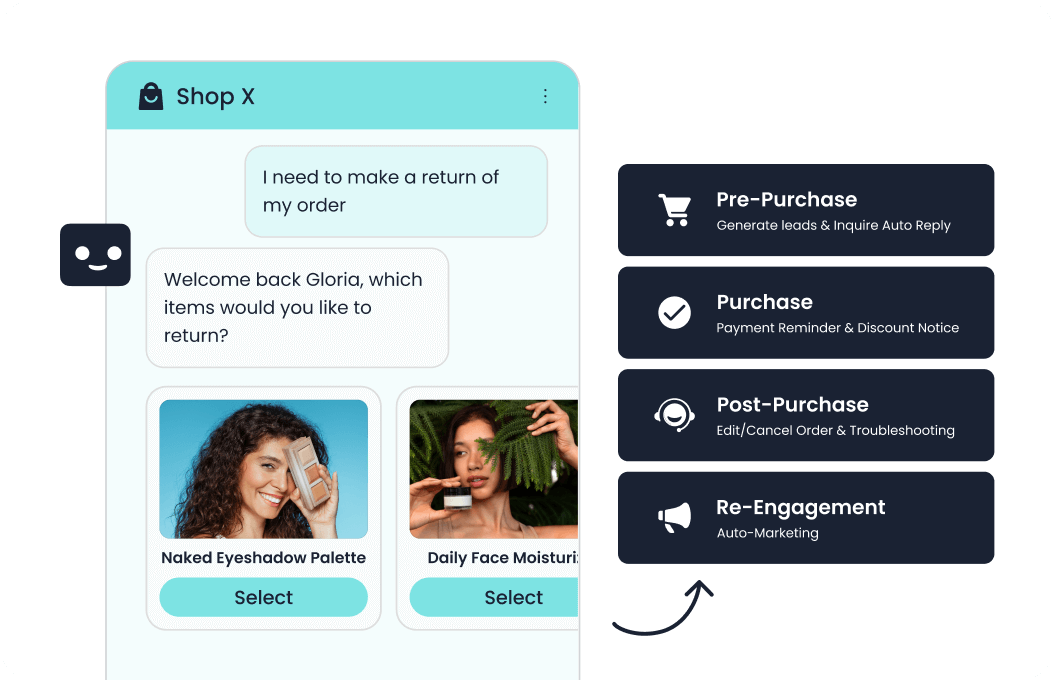
1. Test real order actions. Ask the vendor to look up an order, change an address, and explain what happens after fulfillment has begun. A polished answer is not proof that the order system changed.
2. Check the channel mix. Map web chat, email, WhatsApp, social DMs, marketplaces, and phone to the same customer history where those channels matter.
3. Inspect handoff. The receiving agent should see the customer’s question, verified order details, attempted actions, and why the AI stopped.
4. Require policy and permission controls. Refunds and cancellations need identity checks, approval thresholds, and an audit trail; the demo should show a denied action as well as a successful one.
5. Model peak-season cost. Include the platform subscription, human seats, billable AI outcomes, channel charges, and any integration or implementation work.
6. Evaluate with your own tickets. Use a sample of repetitive cases and difficult exceptions, then score correct resolutions, unsafe actions, handoff quality, and customer satisfaction.
7. Review regional fit. Sellers serving Southeast Asia should test WhatsApp, LINE, Shopee, Lazada, and TikTok Shop support and confirm local language and privacy needs.
The strongest demo is a completed order task with a traceable system record, followed by a clean handoff when the task is outside policy.
Sobot AI Agents
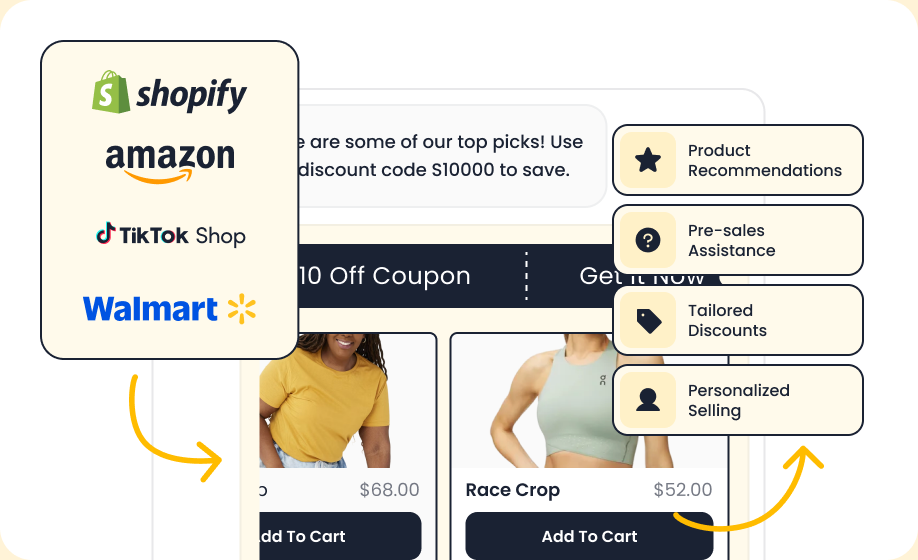
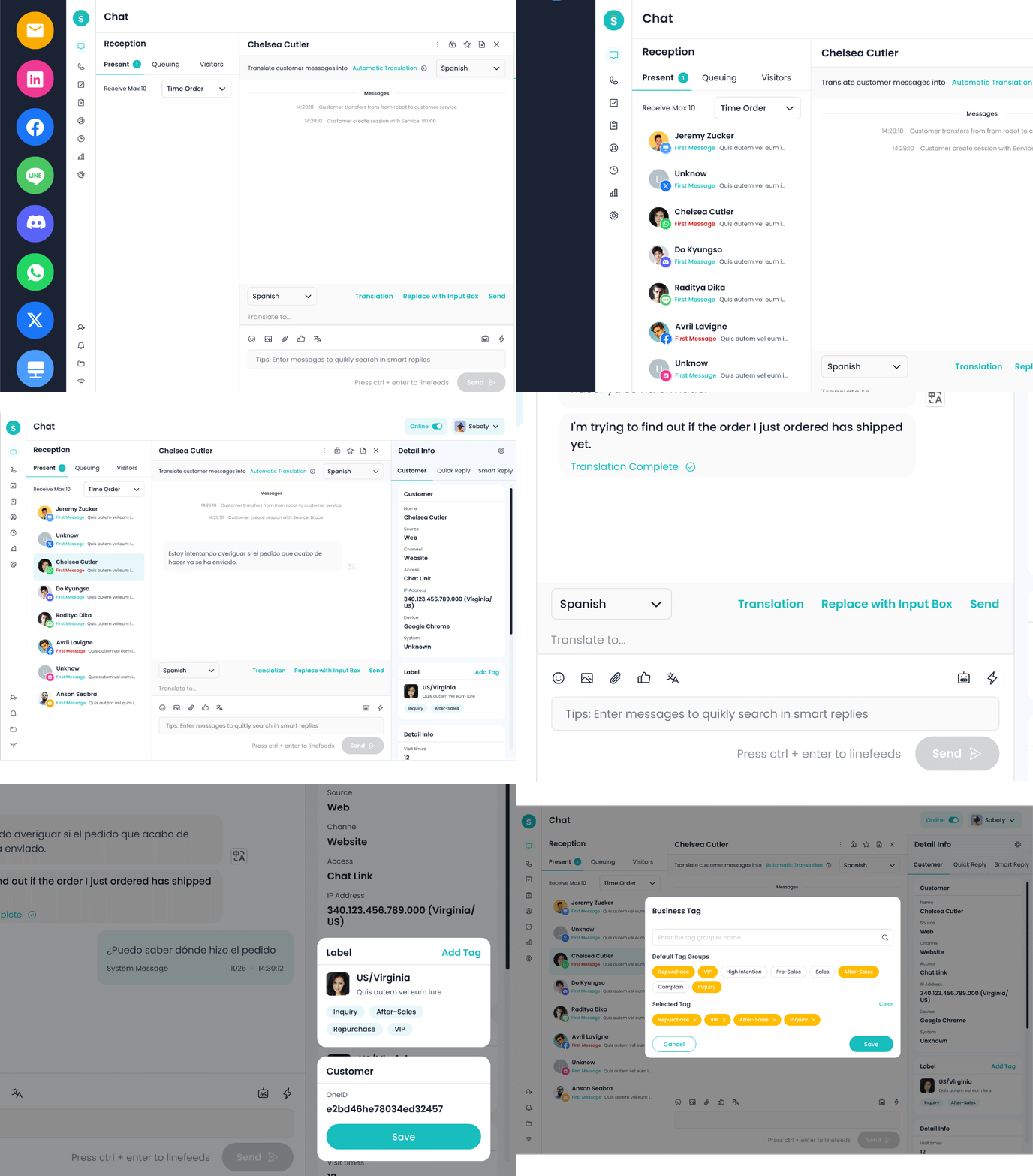
Sobot AI Agents is best for online retailers serving customers across marketplaces, messaging channels, and regions. Its Agentic Customer Contact Platform combines AI Agents with Nexus messaging, voice, and ticketing options, so a retailer can design support around an order journey rather than a single storefront widget. Sobot lists native ecommerce integrations for Amazon, Walmart, TikTok, Lazada, and Shopee; web and app, WhatsApp, email, social, and voice are also available in its broader platform.
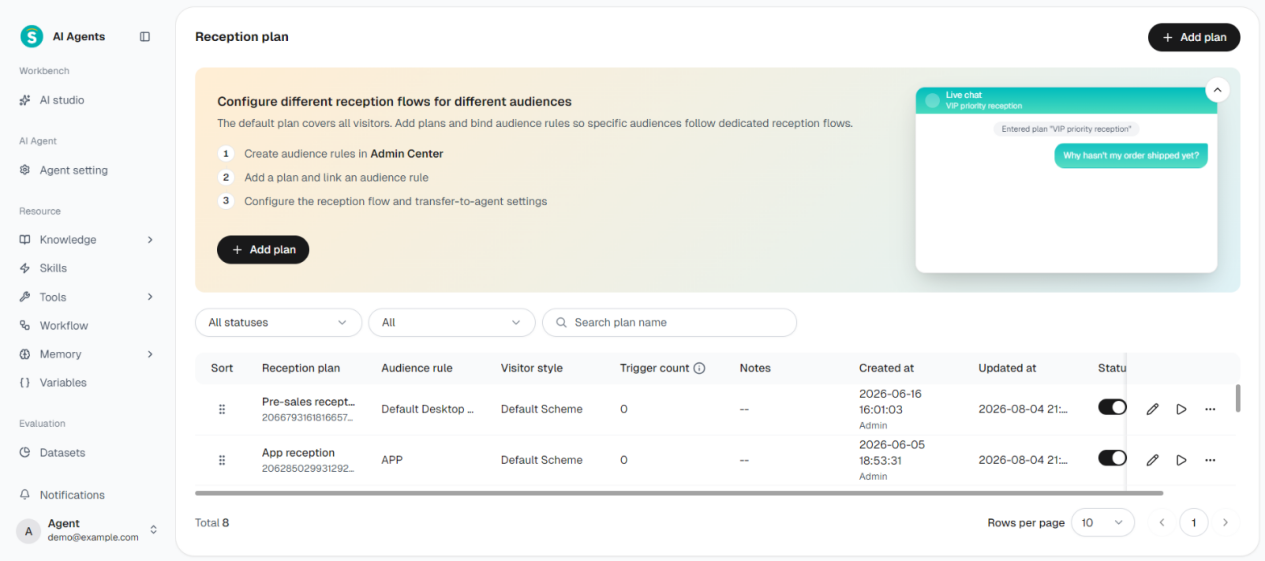
For an order-status request, an agent can use approved knowledge and connected tools to retrieve current information. For a return or delivery exception, Skills and Workflows can encode policy steps; Tools can reach an OMS or CRM through configured APIs. Sobot’s Resource Center spans Knowledge, Skills, Workflows, Tools, Memory, and Variables. Human handoff carries conversation context. Retailers should verify the exact order actions, permissions, and channels included in their proposed configuration.
In Renogy’s published customer story, the cross-border retailer reported a 45% increase in resolution rate and 95% CSAT after deploying Sobot’s omnichannel solution. That is Renogy’s result, not a guaranteed outcome for every store.
Pricing: Sobot’s AI Agents plans start at $39/month for Team, $149 for Professional, and $499 for Enterprise; included monthly resolutions are 50, 300, and 1,000 respectively. Extra resolutions are $0.98, while human handoffs are free. Nexus products and voice-related costs require a separate quote. Strength: broad channel and marketplace fit with a path from answers to controlled actions. Trade-off: a multi-channel rollout takes integration and governance work; the entry AI subscription is not the full contact-center bill.
Gorgias
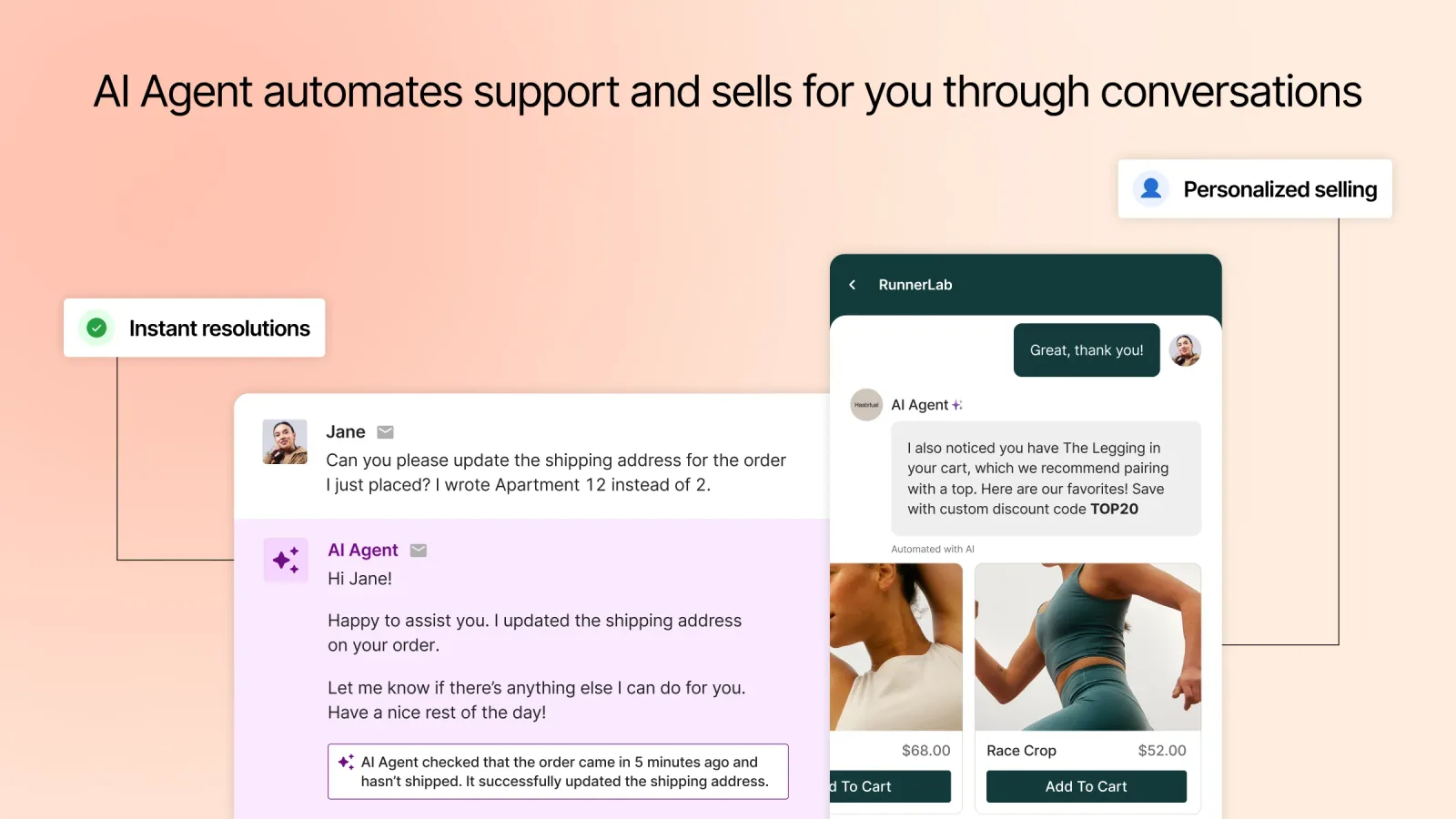
Gorgias is best for Shopify-led direct-to-consumer retailers that want AI to edit orders within their existing ecommerce helpdesk. Its Shopify AI Agent actions cover cancellation, address changes, item replacement, and reshipment under configured conditions. That makes it particularly strong for requests where a shopper needs a change before an order ships.
The limitation is operational rather than cosmetic: Gorgias says a Shopify cancellation does not automatically propagate to every third-party fulfillment app. A retailer using a 3PL should test that boundary before granting the AI authority to cancel. Gorgias also supports other commerce platforms, but the deepest documented action set here is Shopify-specific.
Pricing: Gorgias describes its current plan as a ticket-based helpdesk with AI Agent charged when it resolves a conversation; request a volume quote for your expected ticket and resolution counts. Strength: direct Shopify actions with a mature ecommerce inbox. Trade-off: confirm 3PL behavior and the cost of traffic spikes.
Intercom Fin
Intercom Fin is best for retailers that already have a helpdesk they want to keep and need an AI resolution layer. Fin answers from approved content and can run configured procedures; the specific ecommerce actions depend on the systems and procedures you connect. This can reduce migration work when the human service workflow is already sound.
Pricing: Intercom’s outcome definitions list $0.99 for a chat or email resolution and also $0.99 for certain procedure handoffs and routing outcomes. The latter matters when comparing bills: a configured handoff can be billable even though a human finishes the request. Fin Voice and special volume terms require a quote. Strength: focused AI layer and clear outcome definitions. Trade-off: store actions and total cost depend on integrations and the underlying helpdesk.
Zendesk AI Agents
Zendesk AI Agents is best for larger online retailers that need mature ticket routing, knowledge management, service levels, and multiple human teams. Its ecommerce agent offering fits stores with high support volume and formal escalation rules, especially when Zendesk is already the system of record.
Pricing: Zendesk’s published plans list Suite Team at $55 per agent per month with annual billing and include AI agents, messaging, and omnichannel routing. Automated resolutions and other advanced AI features can introduce usage or add-on charges, so ask for a written scenario-based quote. Strength: operational depth and established service workflows. Trade-off: a broader suite needs more setup than a small store’s chat tool, and seat plus outcome pricing needs careful modeling.
Tidio Lyro
Tidio Lyro is best for smaller, web-first online stores that want to automate common questions and add an order lookup without a large service implementation. Lyro Actions includes a Shopify order-status template, a practical first test for “where is my order?” requests.
Pricing: Tidio’s pricing page lists Lyro from $32.50/month for 50 AI conversations and a separate Starter helpdesk plan from $24.17/month on the displayed billing basis. Strength: accessible entry point and straightforward web chat setup. Trade-off: verify the action library and channel coverage against your actual refund, marketplace, and phone workflows before treating it as a full retail contact center.
Choose Gorgias when Shopify order edits dominate the queue. Choose Sobot AI Agents when support crosses marketplaces, WhatsApp or social messaging, and potentially phone; pilot one order lookup and one exception-handling workflow first. Choose Fin when your helpdesk is working and you want to add AI without replacing it. Choose Zendesk when routing, SLAs, and human team management are the main constraints. Choose Tidio when a small store needs a measured first step in web chat automation.
For a fair pilot, give all shortlisted vendors the same 30–50 anonymized cases: order status, address change before shipment, return eligibility, missing parcel, and a policy exception. Record completed actions separately from answered questions and count escalations with full context. Sobot’s guide to ecommerce AI service software offers a wider category comparison if you need more than five vendors.
The best customer service AI agent software for an online retailer is the one that can safely complete its most frequent order tasks on the channels shoppers use. Gorgias is a strong Shopify default, Fin adds an AI layer to an existing helpdesk, Zendesk supports complex service operations, and Tidio offers a lighter web-chat start. Sobot AI Agents is the strongest fit in this five-tool shortlist for a retailer that needs marketplace and messaging coverage with controlled handoff and a route to voice. Start with one measurable post-purchase workflow, then expand only after checking action accuracy, escalation quality, and the full channel bill. Start a Sobot AI Agents trial or book a demo to test your own order-support cases.
FAQs
What is the best AI agent for a small online store?
Tidio Lyro is a practical starting point for a web-first store with common questions and Shopify order lookup. If you need marketplaces, WhatsApp, or phone in the same service plan, compare a broader platform such as Sobot AI Agents.
Is Gorgias or Sobot better for an online retailer?
Gorgias is particularly strong for Shopify order actions. Sobot is better aligned with retailers handling orders across multiple marketplaces and messaging channels; test the exact integrations and action permissions in both demos.
How much does retail AI customer service software cost?
Pricing mixes subscriptions, human seats, AI outcomes, and channel costs. Published entry points range from Tidio Lyro at $32.50/month to Sobot AI Agents at $39/month, but those figures cover different scopes and should not be compared as complete deployment prices.
Can AI agents process returns and refunds automatically?
Some agents can perform configured actions in connected commerce systems, subject to permissions and policy rules. Ask vendors to demonstrate a successful return, a denied refund, and the audit record for each.
Which AI agent works for Southeast Asian marketplaces?
Sobot lists native integrations for Lazada, Shopee, and TikTok, alongside messaging channels used across Southeast Asia. Confirm the specific marketplace account, country, and workflow you need before procurement.
What should happen when an AI Agent cannot resolve an order issue?
It should stop unsafe actions and transfer the case with the customer’s question, order context, attempted steps, and reason for escalation. Measure that handoff in your pilot alongside the AI resolution rate.