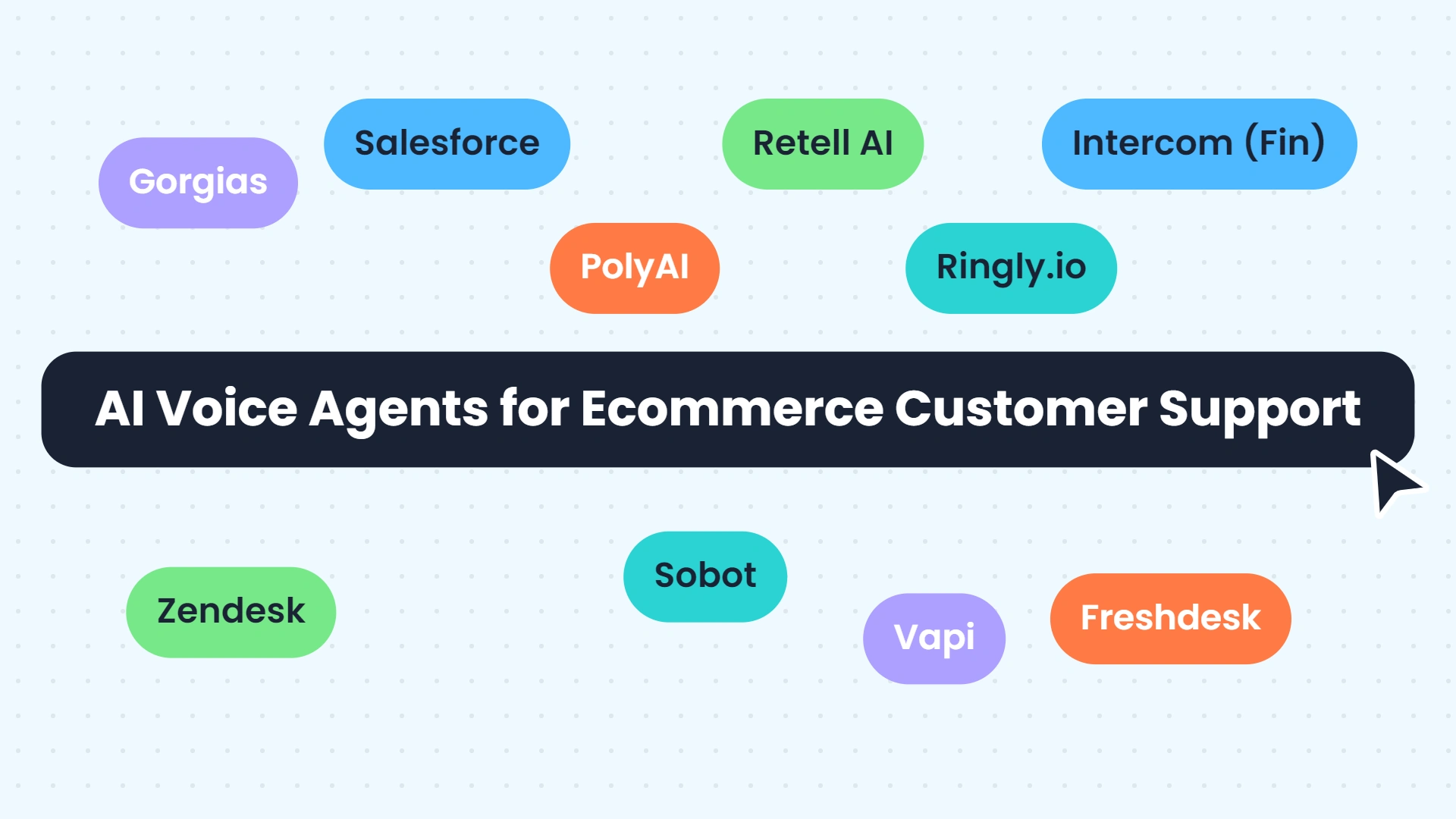
The top AI chatbots for ecommerce businesses in the US include Sobot for connected service across channels, Gorgias for Shopify order support, and Tidio Lyro for smaller online stores. Manychat suits social-led selling, Fin by Intercom fits teams keeping a compatible helpdesk, Zendesk suits established retail support operations, and Bloomreach focuses on guided product discovery. Choose according to the customer journey you need to improve: helping shoppers buy, resolving order issues, or turning social conversations into store visits.
This guide compares seven platforms by ecommerce use case, integration needs, pricing, strengths, and limitations for retailers serving US customers.
Top AI chatbots for ecommerce businesses in the US at a glance
| Platform | Best for | Commerce focus | Pricing |
|---|---|---|---|
| Sobot | Connected service | Channels, orders, human handoff | AI Agents from $39/mo |
| Gorgias | Shopify DTC service | Order support and shopping | Tickets + AI resolutions |
| Tidio Lyro | Smaller stores | AI answers and human chat | Conversation allowances |
| Manychat | Social-led selling | Comments, DMs, follow-up | Pro $29/mo, annual |
| Fin | Existing helpdesk | AI answers and connected actions | From $0.99/outcome |
| Zendesk | Established teams | Routing and service operations | US suite + AI quote |
| Bloomreach | Guided shopping | Product discovery and recommendations | Custom quote |
Prices and packaging checked in November 2026. Annual commitments, usage allowances, and additional channel charges differ. Sobot’s entry price covers AI Agents rather than the complete contact platform; Manychat’s listed Pro price requires annual billing. Consult the linked vendor pricing pages for your configuration.
Start with the customer journey you want to improve
An ecommerce AI chatbot helps shoppers through conversation, using approved store information and, where connected, product and order data. Some tools also execute actions such as starting a return. A useful shortlist begins with the problem your team needs to solve.
Shopping assistance: A visitor asks, “Which carry-on fits my budget and has room for a laptop?” The agent needs product attributes, current availability, and enough context to narrow the choices. Measure assisted conversion and the usefulness of recommendations.
Post-purchase service: A customer asks, “Can I change my delivery address?” The agent needs authenticated order access, fulfillment status, and your cutoff rules. Measure successful eligible actions, repeat contacts, and the quality of escalations.
Social commerce: Someone comments on a product video and wants a size guide or offer. The automation needs to continue the conversation on the supported social channel and direct the shopper to the next step. Measure qualified conversations and downstream shopping activity.
One platform may cover several journeys. Evaluate each separately: an accurate product recommendation does not demonstrate that the same agent can complete a refund.
How we evaluated the shortlist
This is an editorial comparison of published product documentation and pricing, rather than a hands-on performance test. Sobot publishes this guide. The recommendations reflect different operating needs; readers should validate integration depth and outcomes with their own store data.
We used six questions that matter to US ecommerce teams:
1. Commerce data: Can the agent use your product catalog, orders, inventory, and shipment information? Distinguish live connections from uploaded content that requires updates.
2. Actions: Can it complete the required task, such as starting a return or canceling an eligible order, through the systems you use?
3. Channel continuity: Can a shopper move from a message to human support without repeating the issue? Confirm what context transfers.
4. Store control: Can your team maintain brand voice, promotional rules, return exceptions, and escalation boundaries?
5. Operating effort: Who builds the workflows, tests changes, and reviews failed conversations after launch?
6. Commercial fit: What will the selected package cost during a normal month and a holiday surge, including AI usage, seats, and extra modules?
A strong candidate should demonstrate your highest-priority journey from the first question to a completed task or a useful human handoff.
The best platforms for different ecommerce teams
Sobot for connected service across channels
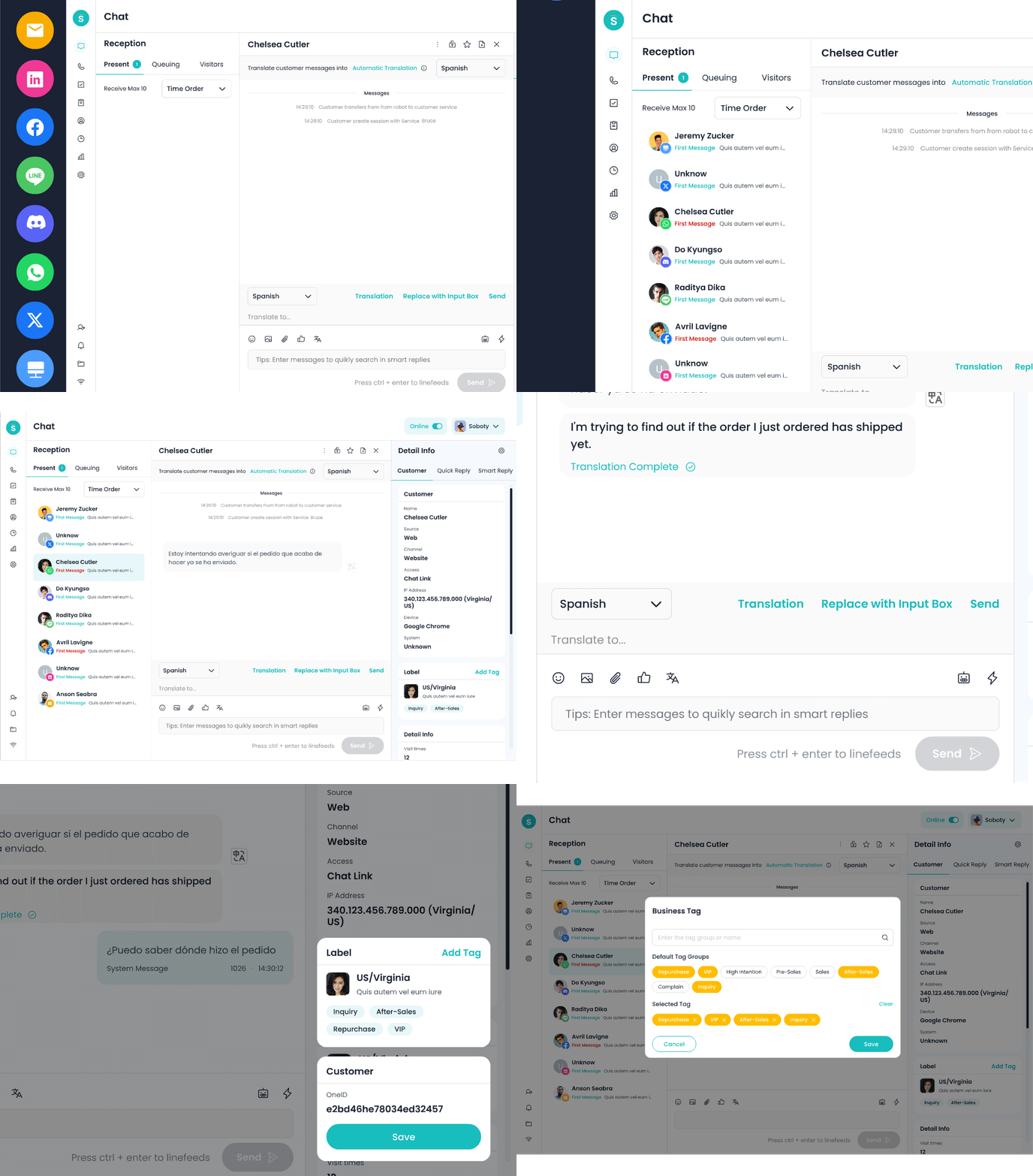
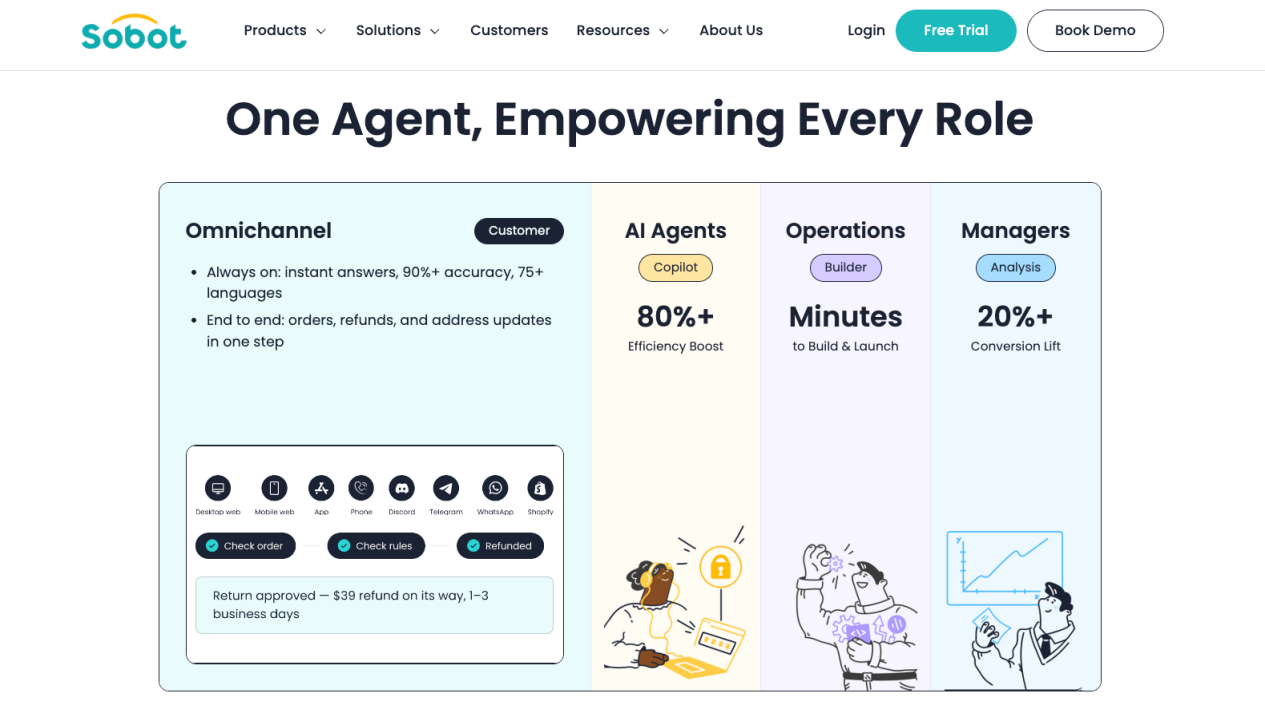
Sobot is best for US-facing retailers connecting AI conversations, order workflows, and human service across multiple channels. Positioned as The Agentic Customer Contact Platform, it combines Sobot AI Agents with a broader customer-contact environment.
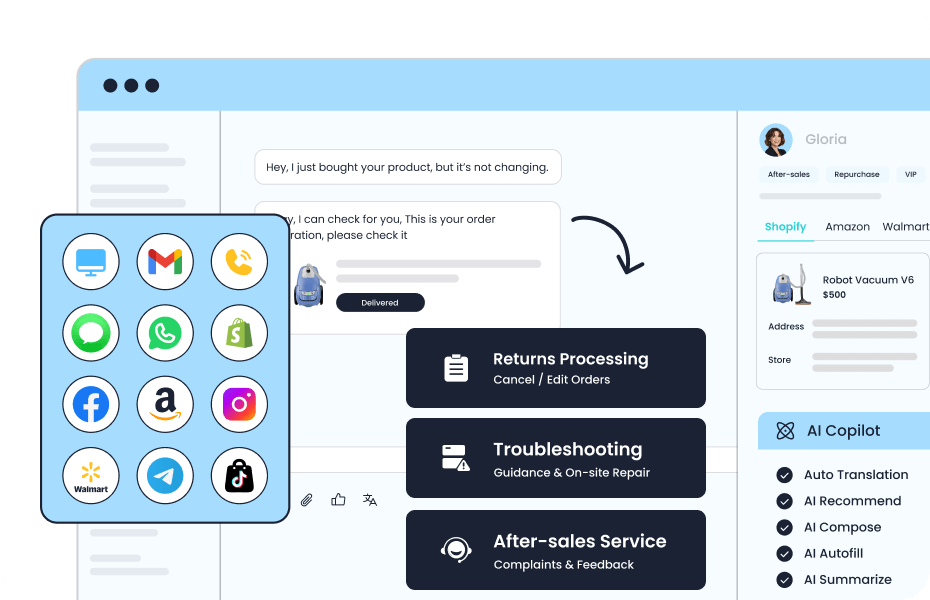
Sobot AI Agents uses RAG to retrieve approved knowledge and ReAct to reason through connected actions. The Resource Center organizes Knowledge, Skills, Workflows, Tools, Memory, and Variables. For a retailer, these resources can support product questions, order lookup, return eligibility, and ticket creation when the necessary systems and permissions are configured.
The broader Nexus suite connects messaging, voice, and ticketing, with context-aware human handoff. Native ecommerce integrations include Amazon, Walmart, and TikTok; tools can connect CRM, ERP, and order management systems through APIs and configured integrations. This makes Sobot relevant when the service journey spans more than a storefront chat widget.
In the published Renogy customer story, the retailer reported a 45% increase in resolution rate after adopting Sobot’s omnichannel solution. This is a customer-specific result from the broader deployment, rather than a guaranteed outcome for a new AI agent.
Pricing: Sobot AI Agents plans start at $39 per month with 50 resolutions. Professional is $149 with 300 resolutions; Enterprise is $499 with 1,000. Extra resolutions cost $0.98 each, and human handoffs are free. Custom tools begin with Professional; task workflows and the Evaluation Center are listed under Enterprise. Confirm human-agent seats, voice, and other channel costs separately.
Strength: Coordinating task completion and human service across channels and systems. Limitation: Advanced workflows need the appropriate tier and integration work, so the entry plan is not a complete multi-system deployment.
Gorgias for Shopify order support
Gorgias is best for Shopify-centered DTC brands that want AI close to their order operations. Its AI Agent documentation describes both shopping assistance and post-purchase service, including product discovery, shipping questions, returns, and order changes.
Gorgias gives merchants knowledge, skills, tone settings, and connected actions to shape the agent. That combination is useful when a shopper moves from asking about an item to requesting help with an order. Human handover remains available for issues the agent cannot or should not complete.
Pricing: Gorgias pricing combines helpdesk ticket volume with AI-resolved conversations. Request the current allowance and overage schedule for your workload.
Strength: A commerce-focused support environment with Shopify-connected actions. Limitation: Confirm AI Agent availability and action depth for every storefront you operate; the wider helpdesk’s integration list does not establish identical AI functionality on each platform.
Tidio Lyro for smaller online stores
Tidio Lyro is best for smaller ecommerce teams adding automated answers alongside human chat. Lyro AI Agent uses business knowledge for customer conversations, with connected capabilities that can extend the experience beyond basic policy questions.
For a small store, a manageable first project is covering shipping, product, and returns questions while the team handles exceptions. If order lookup or product recommendations are priorities, check how Lyro connects to the exact store and catalog involved.
Pricing: Tidio’s pricing calculator separates billable human-service conversations, Lyro conversations, and Flows usage. Its initial 50 Lyro conversations require a paid upgrade to refresh monthly; they are not an indefinitely renewing free AI allowance.
Strength: A focused starting point for teams introducing conversational automation. Limitation: Different usage allowances and connected features must be matched to the store’s real workload before comparing the total cost with alternatives.
Manychat for social commerce
Manychat is best for ecommerce brands acquiring customers through social comments and direct messages. Manychat AI supports AI replies and goal-oriented conversations, while its flow assistant helps build automations around a stated objective.
Think of a skincare brand whose Instagram audience asks for a routine guide. A configured conversation can share relevant information, collect a shopper’s preferences, and guide the next step. This is a useful fit for campaigns where the customer journey begins in social content.
Pricing: The Manychat Pro plan is listed at $29 per month billed annually, with AI-powered conversations and an active-contact allowance. Check additional contact costs and channel-specific conditions.
Strength: Connecting social engagement with structured follow-up. Limitation: Social automation does not by itself establish access to order changes or refunds. Retailers needing deep post-purchase service should validate those connections or retain a separate service platform.
Fin by Intercom for an existing helpdesk
Fin is best for retailers adding an AI service layer while retaining a compatible helpdesk. Intercom offers Fin with its own service platform or for use with an existing helpdesk. Its published capabilities include external-system actions and handoff into a preferred inbox.
This option deserves consideration when the team is satisfied with its current service queues but wants more automation. Test a transaction involving your order system and check what information the human agent receives if the workflow cannot finish.
Pricing: Fin pricing starts at $0.99 per outcome. Using Fin with Intercom also involves seat pricing, while messaging and other channels can add charges.
Strength: A choice between adding AI to an existing environment and adopting an integrated platform. Limitation: Review the outcome definition and the complete configuration cost; the AI unit price alone does not describe the entire service bill.
Zendesk for established retail support operations
Zendesk is best for larger retail teams already organizing service through Zendesk ticketing and routing. Its suite combines AI agents with knowledge, messaging, telephony, and tools for connecting multi-step processes.
An established retailer may value keeping familiar queues and operational reporting while adding automation. Evaluate a request that starts in chat, checks an order, and transfers to a specialist to see how the proposed package supports the complete journey.
Pricing: Request a current US quote through Zendesk pricing for the suite, AI usage, and capabilities required.
Strength: A broad service environment for an existing support operation. Limitation: Package selection, administration, and commerce integrations are part of the implementation. Confirm that the proposed tier includes the actions you expect to automate.
Bloomreach for guided product discovery
Bloomreach is best for retailers prioritizing conversational product discovery and shopping assistance. Its Conversational agent documentation describes recommendations using product information and shopper behavior, including browsing and cart context.
For a retailer with a large or complex catalog, the relevant test is whether the assistant can narrow a shopper’s options and explain why a product fits. Start with a question that requires several attributes, then change the requirements mid-conversation.
Pricing: Request a Bloomreach quote for the proposed product and deployment scope.
Strength: A clear focus on helping shoppers discover products and progress toward purchase. Limitation: Validate order-service actions separately; product guidance alone does not establish returns, refund execution, or replacement of a helpdesk.
How to choose for a US ecommerce business
For a Shopify-focused service team, compare Gorgias with Tidio when the main decision is commerce workflow depth versus a smaller starting deployment. For a retailer coordinating marketplace contacts, website conversations, and human support, include Sobot and demonstrate the cross-channel handoff.
If your helpdesk already works well, assess Fin before committing to a full platform migration. If your traffic comes from social campaigns, Manychat belongs on the marketing shortlist. When product selection is the main conversion obstacle, evaluate Bloomreach against catalog questions, rather than using ticket deflection as the success measure.
US-market fit also needs a practical test. Use a shopper on Pacific Time asking about an East Coast fulfillment cutoff, a holiday gift outside the usual return window, and a split shipment with different delivery dates. The agent should follow the store’s actual rules, avoid promising unavailable delivery dates, and explain what happens next.
Before rollout, assign an owner for policy updates and review conversations that lead to repeat contact. Compare the same sample before and after a workflow change. For broader platform context, see Sobot’s guide to AI chatbots for ecommerce and retail.
Conclusion
The best ecommerce AI chatbot depends on the journey you need to improve. Gorgias and Tidio suit different stages of storefront service; Manychat focuses on social conversations; Fin helps teams add AI around a compatible helpdesk. Zendesk fits an established service operation, while Bloomreach merits evaluation for guided shopping.
Choose Sobot when the priority is connecting AI task completion with channels, order systems, and human service. Bring a real product question, order lookup, and return exception to the demonstration, then compare the full proposed setup. Book a Sobot demo to evaluate those journeys with your ecommerce team.
Frequently Asked Questions
What is the best AI chatbot for a small US ecommerce store?
Tidio Lyro is worth evaluating for a small team starting with routine questions and human chat. Sobot is another option when connected workflows are part of the roadmap; compare the required functionality and plan, rather than entry price alone.
Is Sobot an alternative to Gorgias?
Yes. Sobot is relevant when the requirement spans channels, business systems, and human service, while Gorgias is especially suited to Shopify-centered operations. Compare the same order and handoff journeys in both products.
Can Manychat replace an ecommerce customer service chatbot?
Manychat can be a good fit for social-led conversations and follow-up. If the requirement includes authenticated order changes, returns, or refunds, verify those integrations and actions before treating it as a replacement for the service platform.
How much do AI chatbots for ecommerce cost?
Pricing may combine a subscription with AI conversations or outcomes, seats, active contacts, and channel charges. Compare the full bill for your expected workload and confirm what happens when included allowances are exceeded.
Can an AI chatbot handle order tracking and refunds?
An agent can handle connected tasks when the required data, permissions, and workflows are available. Order tracking and refund execution need separate tests, including identity checks and cases requiring human approval.
What should US retailers test before a holiday launch?
Test fulfillment cutoffs, US time-zone coverage, split shipments, promotional exclusions, and holiday return rules. Confirm that policy changes reach the agent and that a human can continue an exception with the relevant context.