The top AI customer service solutions for ecommerce in the US include Sobot for multichannel retailers that need connected service workflows, Gorgias for Shopify-focused operations, and Zendesk for established support organizations. Intercom Fin suits teams adding AI to an existing helpdesk, Tidio Lyro suits smaller stores starting with conversational support, and Ada suits enterprises building a dedicated AI service operation.
This guide compares six options for US retailers handling product questions, order tracking, returns, and peak-season demand. Recommendations reflect workflow fit and published capabilities, not a hands-on performance ranking. Sobot publishes this guide and is included in the comparison.
What US ecommerce teams should evaluate
A useful AI service solution needs access to the information and actions behind the customer’s request. Answering a shipping-policy question is different from checking a delayed shipment, identifying a split order, or determining whether an address can still be changed.
For a US retailer, the practical requirements might include a Shopify storefront, Amazon or Walmart marketplace operations, email, web chat, phone support, and English and Spanish service. The relevant mix depends on the business. A marketplace connector should be evaluated separately from a storefront integration: access to messages does not automatically include permission to change an order.
Holiday operations add another test. Black Friday and Cyber Monday promotions can change delivery expectations, product availability, and return rules. Choose a system your team can update and evaluate before those changes reach customers.
Top AI customer service solutions for ecommerce in the US at a glance
| Solution | Best fit | Service scope | Pricing basis |
|---|---|---|---|
| Sobot | Retailers connecting digital, marketplace, and voice operations | Web, social, email, voice and connected commerce systems; package dependent | AI Agents from $39/month; advanced capabilities and voice require appropriate plans |
| Gorgias | Shopify-centered ecommerce teams | Ecommerce helpdesk and AI; voice and SMS add-ons | Ticket-volume helpdesk plus resolved AI conversations |
| Zendesk | Retailers with established support operations | Ticketing, messaging, live chat and telephony | Suite Team $55/agent/month, billed annually; confirm AI allowances |
| Intercom Fin | Teams adding AI to an existing helpdesk | Chat, email, phone and connected actions | From $0.99/Fin outcome; platform or channel charges may apply |
| Tidio Lyro | Smaller stores starting with digital support | AI conversations and optional Tidio Help Desk | Usage-based configuration; obtain current calculator total |
| Ada | Enterprise retailers with an AI operations team | Messaging, email, voice and connected workflows | Contact sales for a scoped proposal |
Pricing checked November 12, 2026. Prices are in USD where stated. These are different purchasing units, not equivalent all-inclusive packages. Consult the linked vendor pages for current allowances, billing terms and additional charges.
The best options by operating model
Sobot
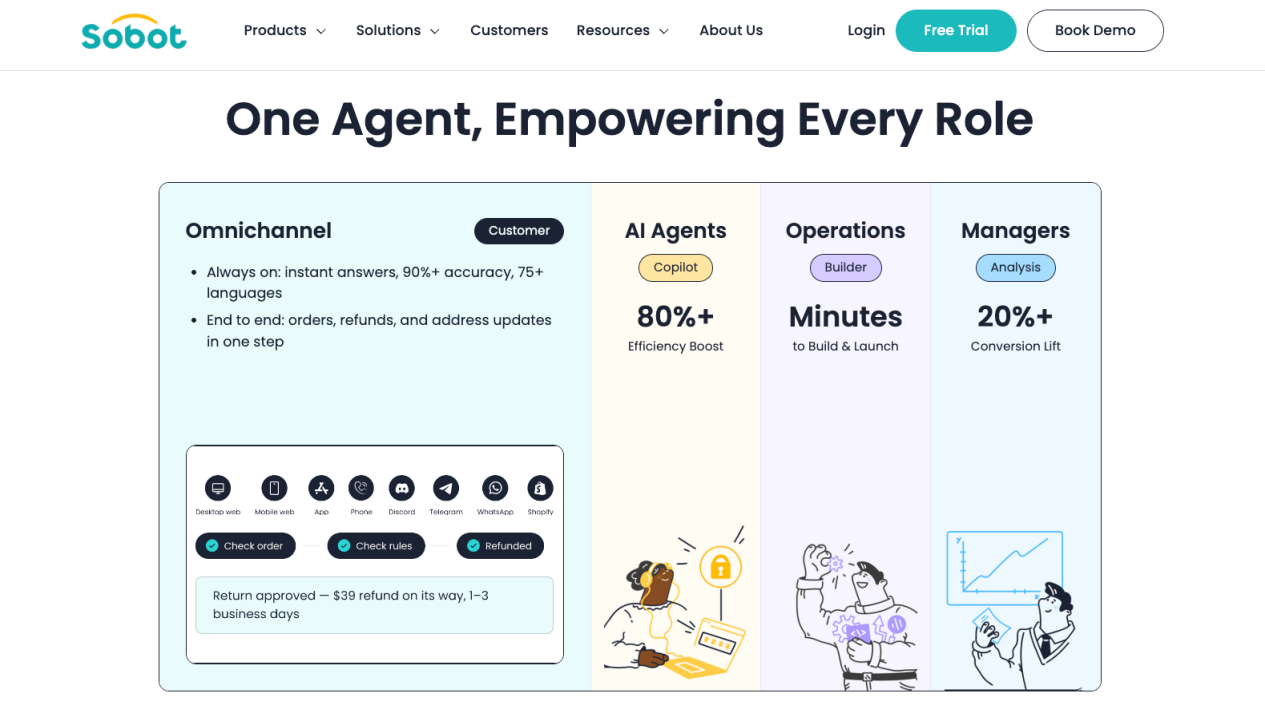
Sobot is best for ecommerce teams that need connected customer service across digital channels, marketplaces, and voice.
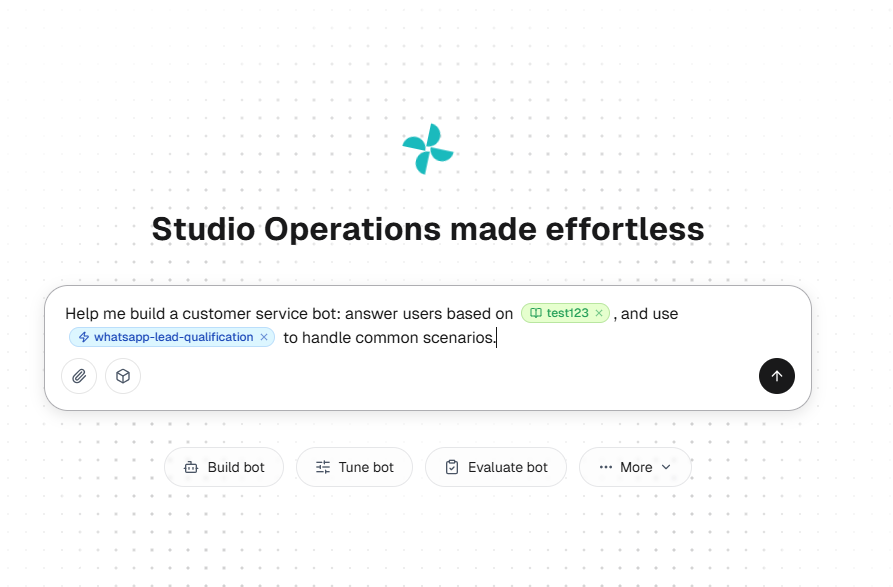
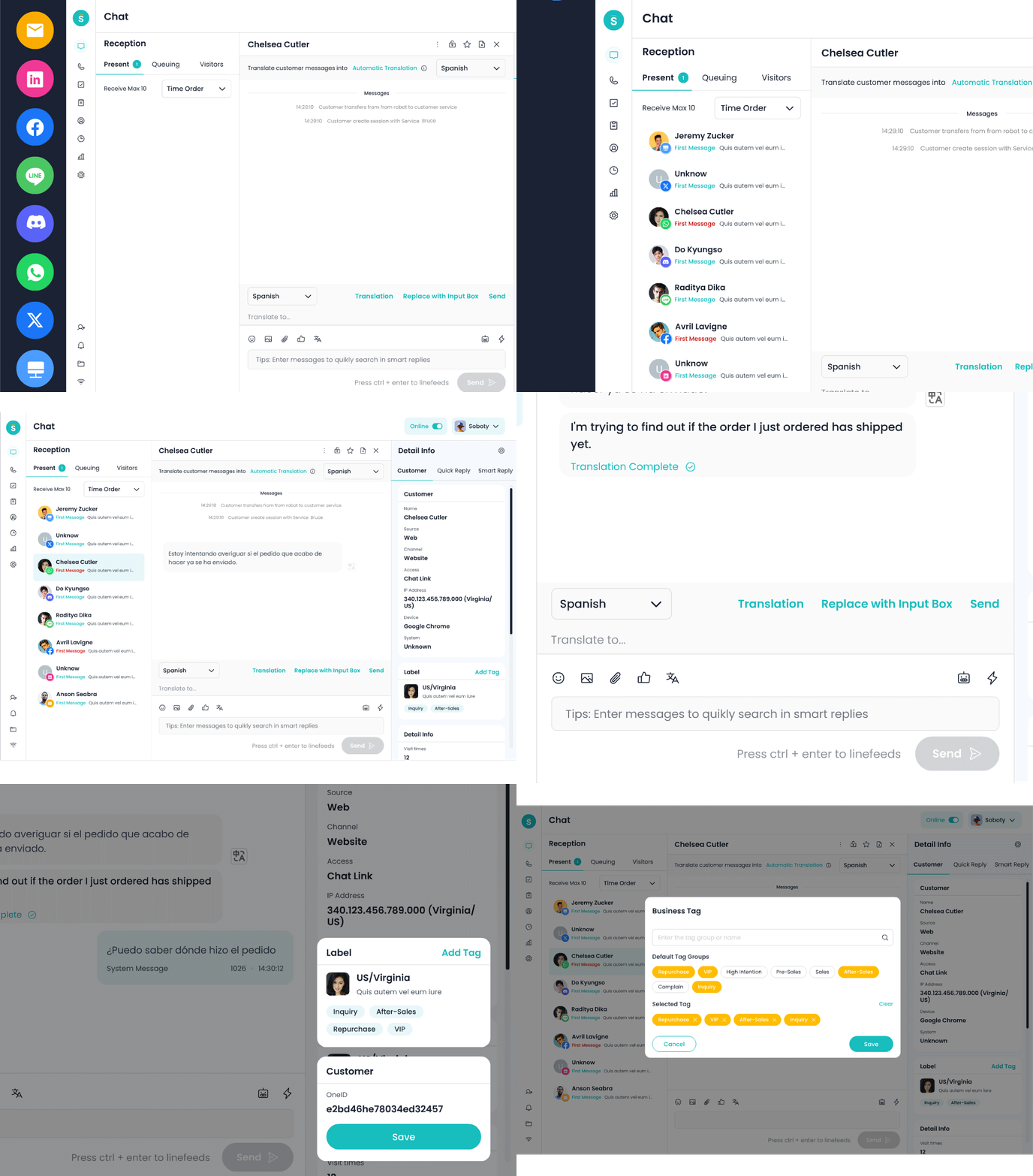
Sobot positions itself as the Agentic Customer Contact Platform. Sobot AI Agents combines RAG, which retrieves and grounds answers in approved knowledge, with ReAct, which supports reasoning, permitted actions, and adaptation to tool results. Its Resource Center brings together Knowledge, Skills, Workflows, Tools, Memory, and Variables.
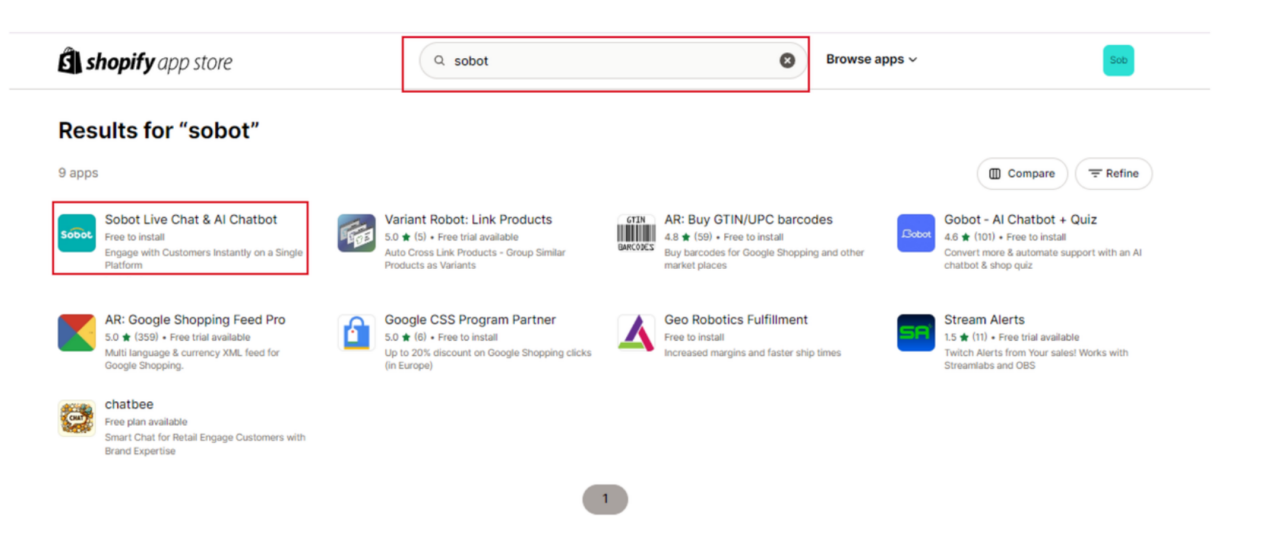
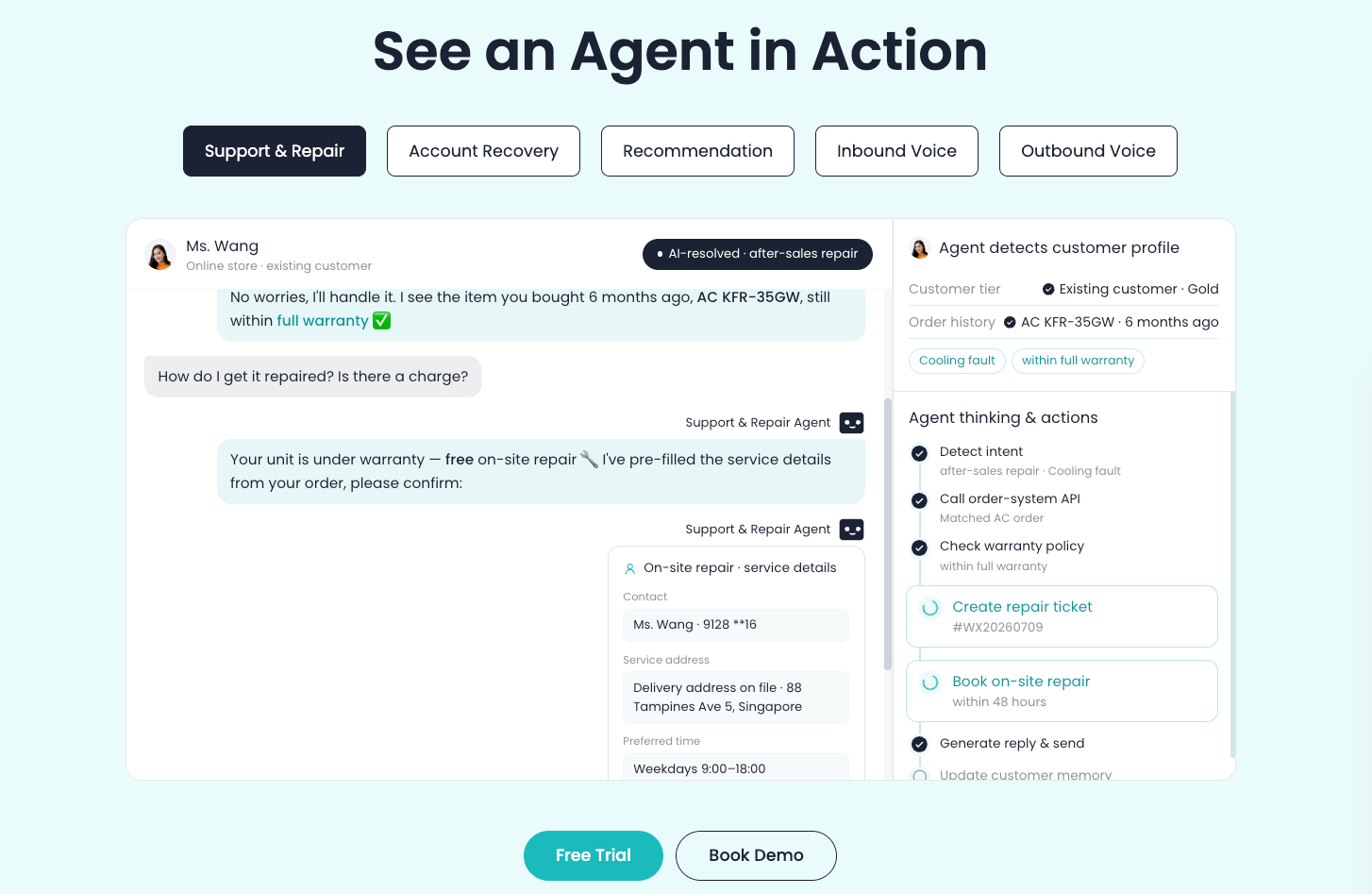
For a retailer, a configured workflow could retrieve an order, check a return rule, request missing details, and route an exception to a human with context. Connections to an OMS, CRM, ERP, or ticketing system depend on configured APIs and tools. Sobot’s approved integration information includes Amazon and Walmart; buyers should confirm the exact marketplace operations available for their account.
Nexus Messaging, Nexus Voice, and Nexus Ticketing extend the service environment. Evaluation Center and AI Analyst support ongoing evaluation and operational analysis, with availability depending on the selected package.
Evidence comes from Sobot’s published Renogy case: the company reports a 45% increase in resolution rate after adopting Sobot’s omnichannel customer service solution. This is a customer-specific result from that deployment, not a benchmark for the current AI Agents plans.
Pricing: Team starts at $39/month with 50 resolutions; Professional is $149/month with 300; Enterprise is $499/month with 1,000. Extra resolutions cost $0.98 each, and human handoffs are free. Professional adds custom tools and APIs; Enterprise adds task workflows and Evaluation Center. Voice AI is separately scoped.
Strength: a relevant option when conversations and operational systems span several service channels. Trade-off: the broader deployment needs integration planning; the $39 entry price should not be treated as the cost of the complete omnichannel environment.
Sources: Sobot pricing and Renogy customer story.
Gorgias
Gorgias is best for Shopify-centered retailers that want an ecommerce helpdesk and AI in the same operating environment.
Gorgias emphasizes ecommerce service and offers integrations across Shopify, BigCommerce, Magento, and WooCommerce. Its ecosystem includes tools such as Loop Returns and Recharge, making it a useful shortlist candidate when returns and subscriptions are central to support.
Pricing combines helpdesk ticket volume with AI-resolved conversations. Voice and SMS are add-ons; request a quote using both normal and holiday volumes. The public pricing page reviewed did not expose a reliable fixed dollar entry price, so none is quoted here.
Strength: clear alignment with ecommerce operations and commerce applications. Trade-off: costs depend on more than a single headline subscription. Before selecting it for marketplace-heavy operations, demonstrate the exact Amazon or Walmart workflow you need.
A useful pilot is a subscription order with a delivery problem: check whether the selected integrations expose the information and permitted action, then verify what the human agent receives if automation stops.
Sources: Gorgias pricing and Gorgias AI Agent.
Zendesk
Zendesk is best for retailers that want AI within an established ticketing, routing, and support-management environment.
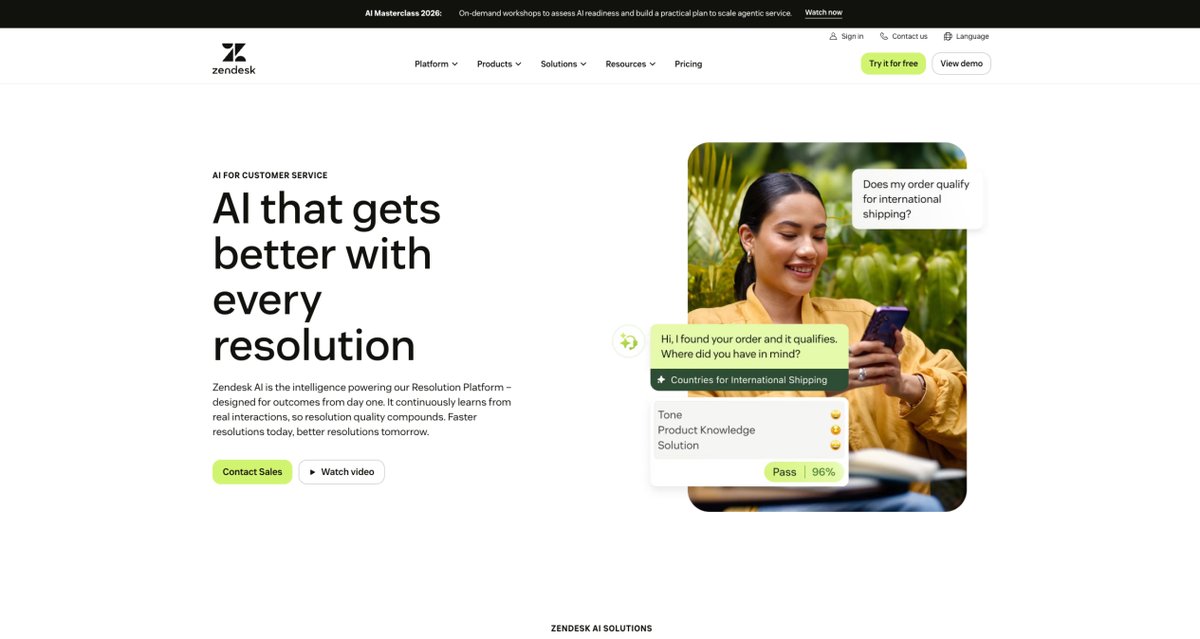
Zendesk combines customer context, knowledge, messaging, telephony, and workflow capabilities. Its Action Builder supports connected processes across Zendesk and external systems. That makes it relevant when a retailer’s service operation includes several departments, escalation routes, and existing support processes.
Pricing: Suite Team is listed at $55 per agent per month, paid yearly. The lower-priced Support Team plan is a different package. Confirm automated-resolution allowances, advanced AI requirements, and channel costs before estimating the deployment.
Strength: broad support-management capabilities around the AI experience. Trade-off: plan selection and configuration need attention; a comprehensive suite can require more operational design than a narrowly scoped storefront assistant.
For a US retailer, test a delayed delivery that escalates from chat into an agent-owned case. Evaluate routing and context preservation alongside answer quality.
Source: Zendesk pricing and capabilities.
Intercom Fin
Intercom Fin is best for ecommerce teams that want to add AI while retaining a supported existing helpdesk.
Fin is available with Intercom or alongside an existing helpdesk. Published capabilities include answering across email, live chat and phone, acting in external systems, and handing conversations to the preferred agent inbox.
Pricing starts at $0.99 per Fin outcome. Intercom platform seats and usage-based channels can add costs, depending on the setup. Check the contractual definition of an outcome rather than assuming it matches another vendor’s resolution metric.
Strength: the option to introduce AI without necessarily replacing the current helpdesk. Trade-off: ecommerce value depends on connected systems and configured actions; validate the exact order and return workflow.
For subscription commerce, ask Fin to handle a customer who wants both delivery information and an account change. The pilot should distinguish successful completion, appropriate escalation, and an answer that merely explains what to do.
Source: Intercom pricing.
Tidio Lyro
Tidio Lyro is best for smaller ecommerce teams starting with AI conversations and human digital support.
Tidio offers Lyro AI Agent with its Help Desk or as an AI option for another helpdesk. Its pricing configuration separates billable human conversations from Lyro AI conversations.
Pricing: use the current calculator for your selected usage. A stable dollar total was not available in the retrieved page, so this guide does not repeat older entry prices.
Strength: a practical candidate for a focused digital-service pilot. Trade-off: buyers should confirm the included AI volume and whether required order actions are supported, rather than equating conversational support with a complete contact-center deployment.
Start with product questions, shipping information, and clear human escalation. Expand only after confirming knowledge coverage and the integration requirements of transactional requests.
Source: Tidio pricing.
Ada
Ada is best for enterprise retailers that can dedicate people to operating and improving AI customer service.
Ada provides AI service across messaging, email, and voice. Its platform emphasizes testing, coaching, integrations, and playbooks for business processes.
Pricing: contact sales for a proposal covering the intended channels, integrations, and service volume. No public fixed starting price is asserted here.
Strength: a focus on AI operations and connected enterprise workflows. Trade-off: buyers need a defined implementation scope and internal ownership; a proposal should explain how the AI and existing human-service environment work together.
Evaluate Ada with a multi-step return involving a policy exception. Look for evidence that the workflow applies the retailer’s rules, stops when needed, and passes useful context to the appropriate human team.
Source: Ada platform overview.
How to choose a solution for your US store
Use the same evaluation questions with every shortlisted vendor:
1. Can it retrieve live order details? Test split shipments, missing tracking information, and an unavailable carrier update.
2. Which actions can it complete? Separate reading an order from canceling it, changing an address, or submitting a return.
3. Does it preserve marketplace boundaries? Demonstrate your own storefront and Amazon or Walmart cases independently.
4. Can it enforce your actual return rules? Include final-sale items, gifts, partial returns, and holiday exceptions.
5. What happens during handoff? Check that the agent receives the conversation, verified details, and actions already attempted.
6. Can your team maintain it? Assign owners for knowledge, integrations, testing, and policy changes.
7. How does it perform across your service hours and languages? Test English and Spanish if relevant, plus after-hours escalation.
8. What will peak-season usage cost? Request a model that includes platform fees, seats, AI usage, channels, and implementation.
A platform that cannot retrieve the right data or respect action permissions is not ready for autonomous transactional support, even if its FAQ answers are strong.
Test real customer outcomes before expanding
Build a pilot from representative, anonymized support cases. Include routine order questions, returns, product-selection questions, a failed integration, and a customer explicitly requesting a person. Add an abandoned-cart question where the assistant must use approved product and promotion information rather than inventing a discount.
Evaluate completion and accuracy separately. A conversation can end without the customer getting the right outcome. Check reopened cases, unnecessary transfers, incorrect policy statements, and satisfaction alongside automated resolution.
For holiday readiness, test the current promotion and return policy before launch. Define who can update the policy and how the team checks the revised answers. Keep a clear route to human service when order data or integrations fail.
Ask each vendor for a normal-month and peak-month cost estimate using the same workload assumptions. Compare the total cost per correctly completed request, including the remaining human work. Avoid comparing a seat price directly with a per-outcome charge.
Conclusion
The best choice depends on how your store operates. Gorgias deserves a close look for Shopify-centered service; Zendesk suits established support organizations; Fin offers a path to AI on an existing helpdesk. Tidio Lyro is a candidate for smaller digital-service pilots, while Ada fits enterprise AI programs.
For retailers connecting marketplace, digital, and voice service, Sobot offers a relevant combination of AI Agents, customer-contact infrastructure, and managed improvement capabilities. Validate the specific integrations and package before committing. Bring your order-tracking, returns, and escalation scenarios to a Sobot demo and evaluate the workflow against your own operating requirements.
Frequently Asked Questions
Which AI customer service solution is best for a small US ecommerce store?
Start with the narrowest workflow that creates measurable value. Compare Tidio Lyro for digital conversations, Sobot’s entry plans for a scoped AI deployment, and Gorgias when Shopify-centered service is the priority; confirm the actual capabilities and usage allowances needed.
Is Sobot an alternative to Gorgias for US ecommerce?
Yes, particularly when service spans marketplaces, digital channels, and voice. Gorgias remains a relevant candidate for Shopify-centered operations; compare the specific integrations and workflows rather than treating either platform as universally better.
How much does AI ecommerce customer service cost?
Pricing may combine subscriptions, seats, AI outcomes, channel usage, and implementation. Sobot AI Agents starts at $39/month, while Fin starts at $0.99 per outcome; these prices cover different units and are not complete deployment quotes.
Can an AI agent process returns and refunds?
It can execute permitted actions when the required integration, identity checks, and business rules are configured. Ask the vendor to distinguish return guidance, eligibility checks, request submission, and actual refund execution.
Which channels matter for US ecommerce support?
Prioritize the channels your customers actually use, such as email, web chat, phone, and marketplace messaging. Confirm English and Spanish performance where relevant, and test whether context remains available when a customer changes channels.
Can AI customer service handle Black Friday and Cyber Monday demand?
AI can help with repetitive requests, but readiness depends on accurate knowledge, integration capacity, escalation coverage, and usage limits. Run a peak-season pilot and confirm both operational capacity and pricing before relying on it.