With more than 2.7 billion monthly active users, WhatsApp is the most widely used instant messaging platform in the world. For businesses, the WhatsApp Business API (application programming interface) has become a core infrastructure for automating large-scale customer communication.
This article provides an in-depth review of the 8 most notable WhatsApp API providers in 2026, including feature comparisons, pricing analysis, pros and cons, user reviews, and real-world use cases to help businesses choose the right platform.
Table of Contents
- What is WhatsApp Business API?
2. How to Choose a WhatsApp API Provider?
3. Comparison Table of the 8 WhatsApp API Providers
- Sobot — Best Choice for Omnichannel AI Customer Service
- Respond.io — The All-in-One Platform for Mid-to-Large Teams
- WATI — Best Entry-Level Platform for SMEs
- SleekFlow — A Powerful Tool for Retail and E-commerce
- Twilio — The Most Flexible Platform for Developers
- 360dialog — Lightweight Direct WhatsApp API Access
- Bird (MessageBird) — Enterprise Omnichannel Communication Platform
- Gupshup — High-Concurrency Conversational Marketing Platform
4. Which Platform Is Best for Your Business Type?
5. WhatsApp Business API Trends in 2026
6. Frequently Asked Questions (FAQ)
What is WhatsApp Business API?
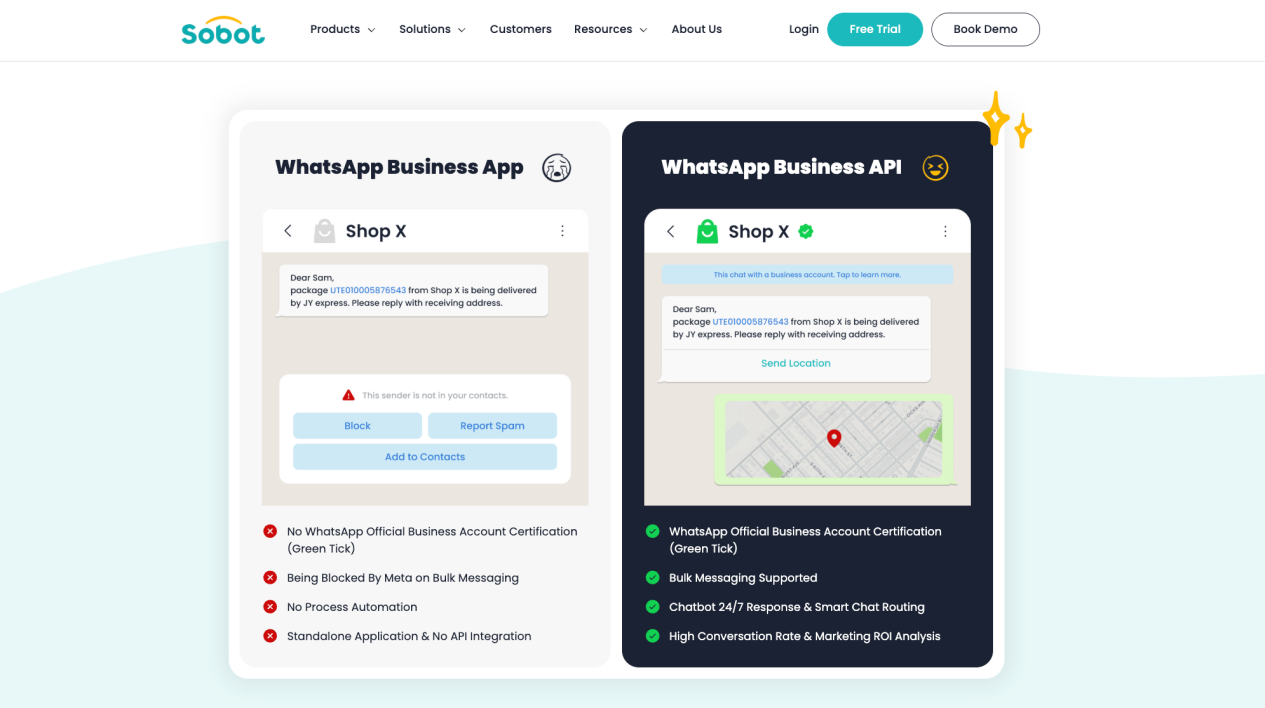
The WhatsApp Business API (officially called the WhatsApp Business Platform) is a messaging interface developed by Meta for medium-to-large businesses. It allows companies to scale customer communication on WhatsApp through features such as bulk messaging, automated replies, chatbots, and CRM integrations.
Compared with the free WhatsApp Business App, the API version offers several key advantages:
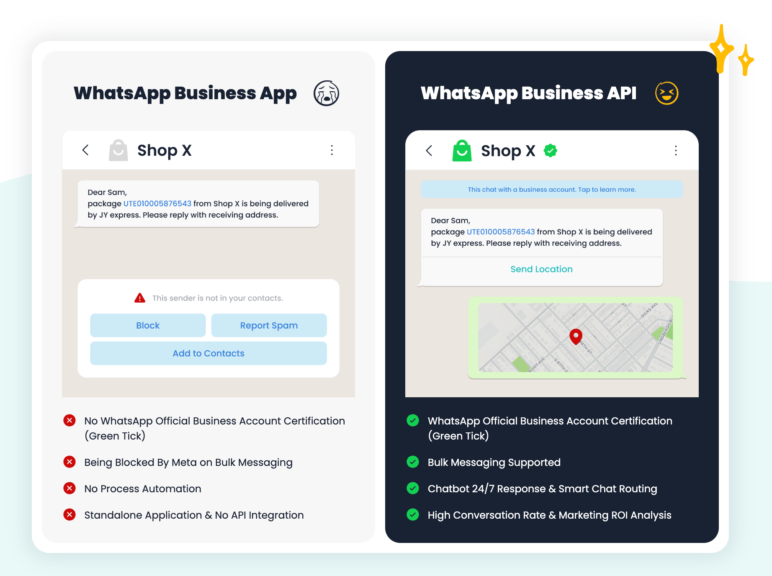
| Dimension | WhatsApp Business App | WhatsApp Business API |
|---|---|---|
| User logins | Up to 5 devices | Unlimited (multi-agent) |
| Broadcast messaging | Up to 256 recipients | Unlimited |
| Automation / bots | Basic auto replies | Full AI customer service bots |
| CRM integration | Not supported | Integrates with major CRM platforms |
| Analytics | Basic statistics | Advanced analytics and reporting |
| Green verification badge | Not supported | Official green tick verification |
| Target users | Small businesses / individuals | Medium-to-large enterprises |
📌 Data source: Meta WhatsApp Business Platform official page
How to Choose a WhatsApp API Provider?
When choosing a WhatsApp Business Solution Provider (BSP), businesses should evaluate the following key factors:
- Official BSP certification
Whether the provider is an official Meta partner directly affects account stability and the ability to obtain the green verification badge. - Message pricing structure
Total cost usually includes platform subscription fees + Meta message fees + BSP markup. - Channel coverage
Does the platform support channels beyond WhatsApp, such as Instagram, Facebook Messenger, or LINE? - AI and automation capabilities
The maturity of chatbot systems, AI agents, and workflow automation. - CRM integration ecosystem
Compatibility with systems like Salesforce, HubSpot, Shopify, and other business tools. - Security and compliance
GDPR compliance, data storage location, and access control management. - Customer support quality
Response time, supported languages, and documentation quality. - Pricing transparency
Whether there are hidden costs and whether scaling expenses are predictable.
Comparison Table of the 8 WhatsApp API Providers
Best WhatsApp Business API Providers in 2026 — Quick Summary
The best WhatsApp Business API providers in 2026 include Sobot, WATI, Respond.io, 360dialog, Twilio, and MessageBird.
Sobot is ideal for enterprise AI customer service and omnichannel contact centers.
Respond.io offers powerful workflow automation and omnichannel messaging.
WATI is the easiest WhatsApp CRM for small businesses.
360dialog provides a lightweight WhatsApp API infrastructure.
Twilio is best for developers needing deep customization.
MessageBird focuses on global communications APIs.
Choosing the right WhatsApp API platform depends on your team size, automation needs, and integration requirements.
| Provider | Starting Price | Meta BSP Certified | Omnichannel Support | AI Capabilities | Best For | G2 / Capterra Rating |
|---|---|---|---|---|---|---|
| Sobot | Contact for pricing | ✅ Official BSP | ✅ Omnichannel | ✅ LLM-powered | Mid-large enterprises | 4.7/5 |
| Respond.io | $79/month | ✅ Meta partner | ✅ Omnichannel | ✅ Mature | Mid-large enterprises | 4.6/5 |
| WATI | $49/month | ✅ Official BSP | ⚠️ WhatsApp + Instagram only | ⚠️ Basic | SMBs | 4.6/5 |
| SleekFlow | $79/month | ✅ Official BSP | ✅ Multi-channel | ⚠️ Early stage | SMBs | 4.5/5 |
| Twilio | Usage-based | ✅ Official BSP | ✅ Omnichannel | ⚠️ Build yourself | Tech teams | 4.1/5 |
| 360dialog | Subscription | ✅ Official BSP | ⚠️ Mainly WhatsApp | ⚠️ Third-party tools | Developers / ISVs | 4.0/5 |
| Bird (MessageBird) | Usage-based | ✅ Official BSP | ✅ Omnichannel | ✅ Strong | Mid-large enterprises | 4.0/5 |
| Gupshup | Contact for pricing | ✅ Official BSP | ✅ Multi-channel | ✅ Mature | Large enterprises | 4.2/5 |
❶ Sobot — Best Choice for Omnichannel AI Customer Service
Platform Overview
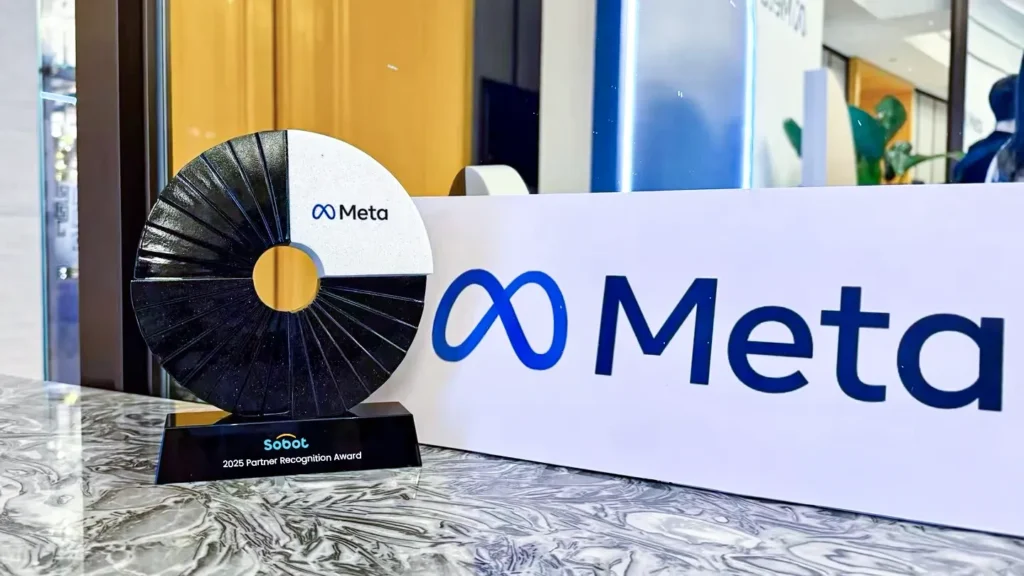
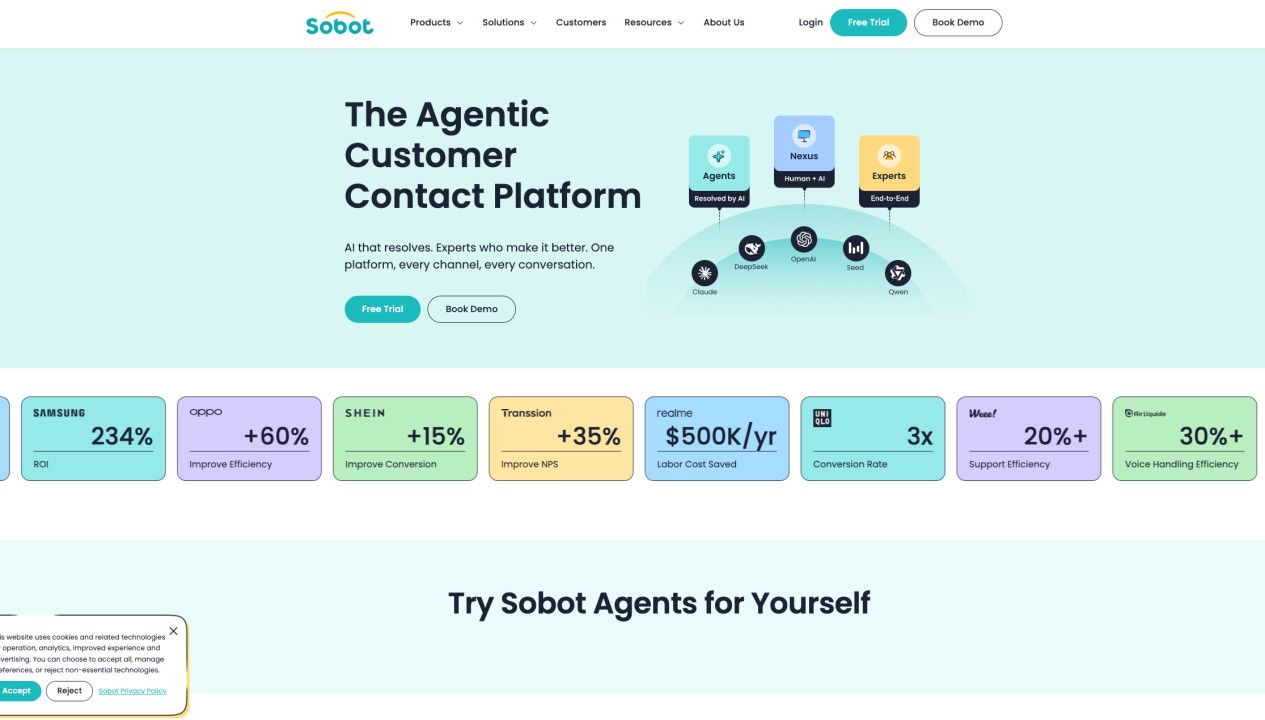
Sobot is a global omnichannel AI customer service platform and an official Meta-certified WhatsApp Business Solution Provider (BSP). The company serves over 10,000 brands across 18+ languages, including well-known companies such as Samsung, OPPO, Philips, Michael Kors, J&T Express, and Air Liquide.
Sobot’s core positioning is to combine WhatsApp Business API with AI customer service, omnichannel communication, and deep analytics, enabling businesses to manage the entire customer journey—from marketing acquisition to post-sales support.
Key Features
1. WhatsApp Marketing and Customer Service
- Bulk WhatsApp campaigns
Send large-scale marketing messages to saved and unsaved contacts with audience segmentation. - AI chatbot automation
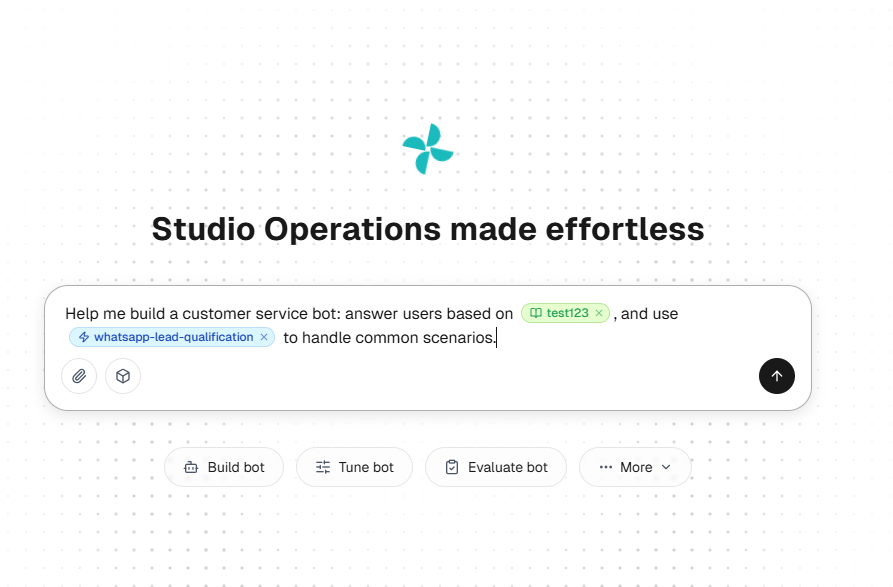
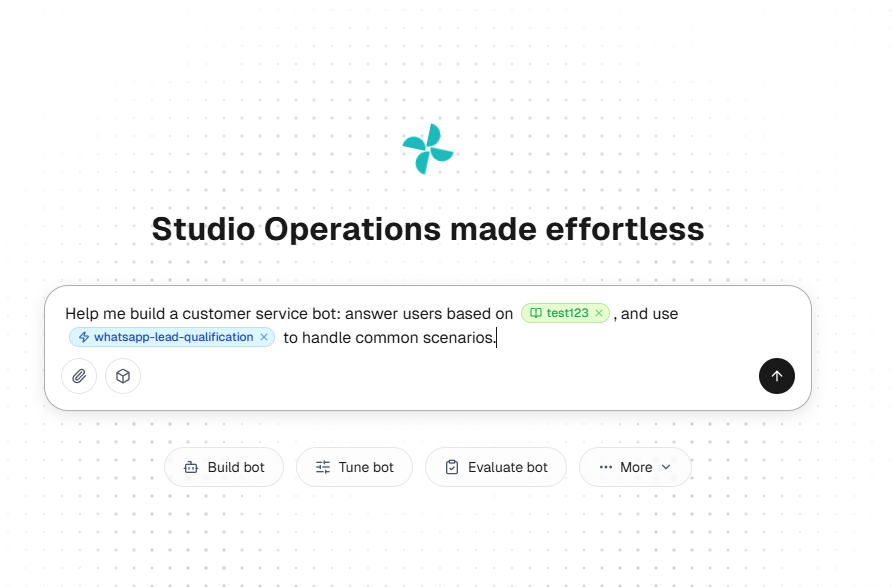
Build AI chatbots in minutes without coding using LLM + NLP technology for 24/7 automated support. - Smart routing and skill-based assignment
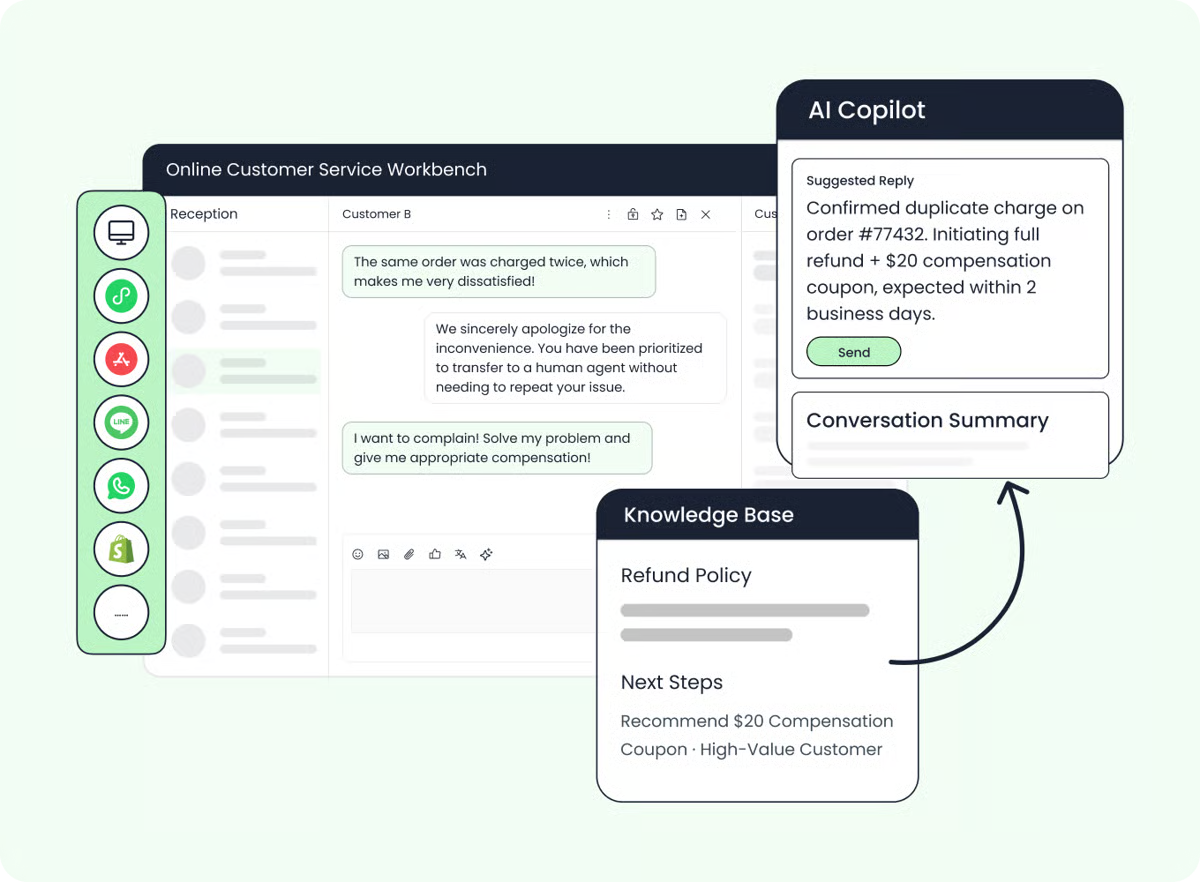
When bots cannot resolve inquiries, conversations are automatically routed to the appropriate human agent. - Green tick verification support
Assistance with applying for official WhatsApp verification badges. - Rich media messaging
Images, videos, documents, location sharing, and interactive buttons. - Message template management
Create and manage marketing, utility, and authentication message templates.
2. Omnichannel Integration
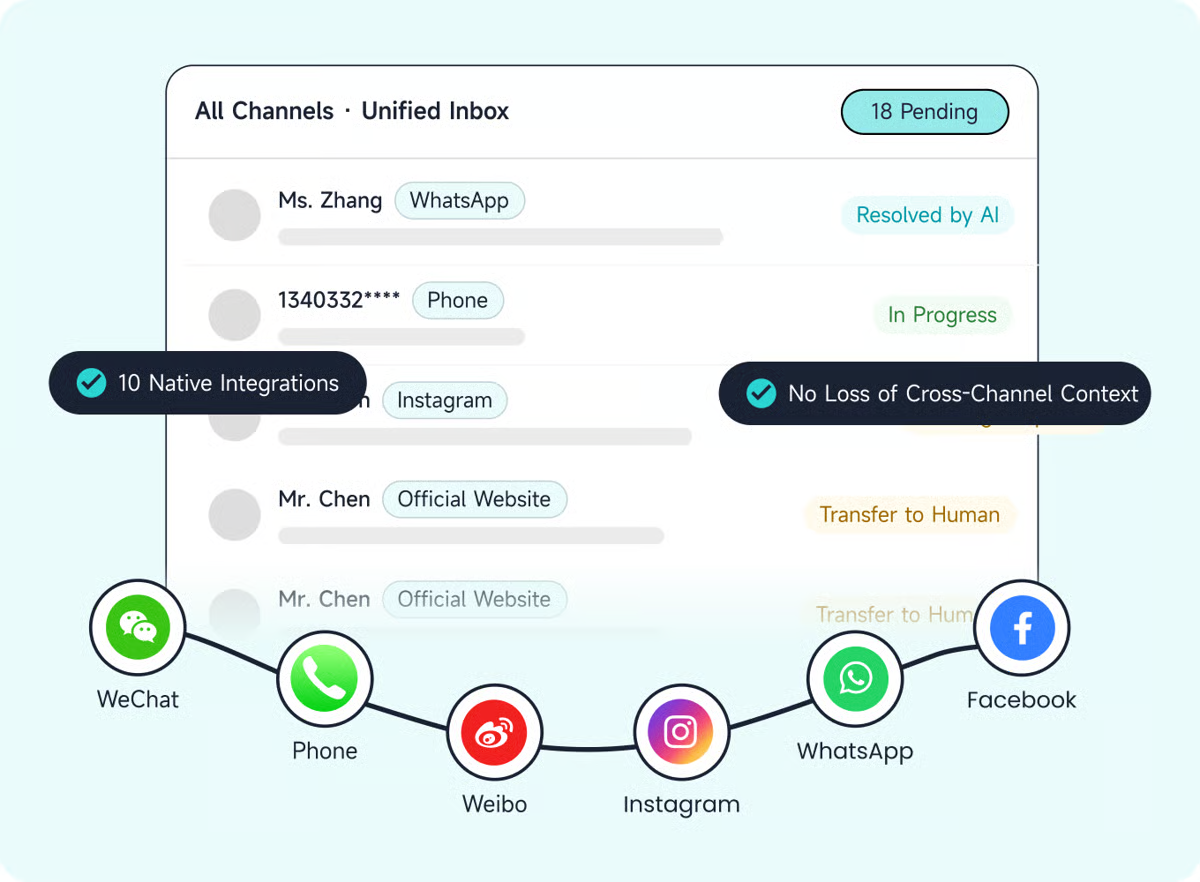
- Unified workspace for WhatsApp, Facebook Messenger, Instagram, LINE, website live chat, email, and mobile apps
- Centralized customer data management
- API connectivity with CDPs and data warehouses
3. Enterprise Features
- Ticketing system
- Voice call center
- Advanced analytics and reporting
- SLA management and service monitoring
Pros and Cons
| Pros ✅ | Cons ⚠️ |
|---|---|
| Official Meta BSP with high account stability | Pricing not publicly listed |
| Strong omnichannel capabilities | Rich feature set may require onboarding time |
| LLM-powered AI automation | Best suited for mid-to-large enterprises |
| 5,000 free conversation credits available | Some advanced features require enterprise plans |
| Supports 18+ languages | — |
| Global deployment across Asia, Middle East, and Europe | — |
| Trusted by enterprise brands like Samsung and Michael Kors | — |
Pricing
Sobot uses custom pricing based on business size, message volume, features, and target markets. Qualified businesses can receive 5,000 free conversation credits during the trial period.
Message pricing follows Meta’s template-based billing model introduced in July 2025.
Case Studies
J&T Express
- Delivery success rate increased by 35%
- Operational costs reduced by 50%
Michael Kors
- Conversion rate increased by 20%
- Customer satisfaction reached 95%
❷ Respond.io — The All-in-One Platform for Mid-to-Large Teams
Platform Overview
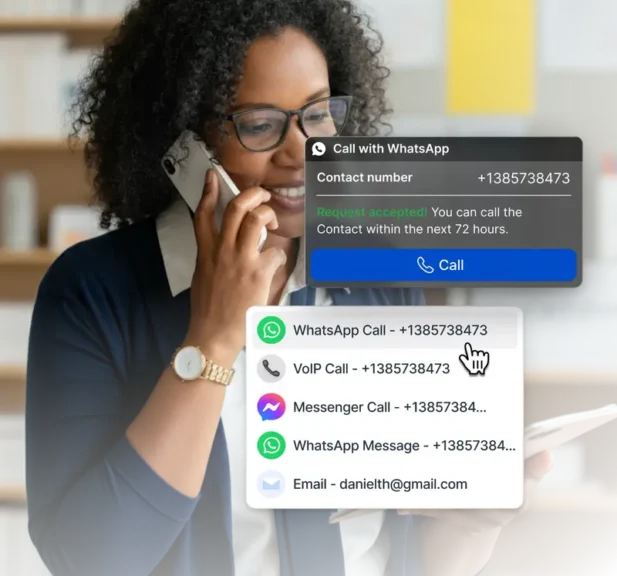
Respond.io is recognized as a Meta Business Partner and is designed for mid-to-large B2C businesses managing large volumes of customer conversations. Its main strengths include broad channel coverage, a mature automation engine, and early support for WhatsApp Coexistence—allowing businesses to run the WhatsApp Business App and WhatsApp API simultaneously on the same number.
Key Features
- Unified omnichannel inbox
WhatsApp, Instagram, Facebook Messenger, TikTok, LINE, Viber, VoIP, and custom channels. - WhatsApp Coexistence mode
Use both the WhatsApp Business App and API on the same number without migration risks. - WhatsApp Business Calling API
Voice calls within WhatsApp with agent handoff and AI-generated call summaries (available in 24 countries). - No-code automation workflows
Cross-channel automation for chat, email, and voice. - Autonomous AI agent
Handles complex conversations, collects leads, triggers workflows, and escalates to human agents. - Click-to-WhatsApp ad integration
Ads that start WhatsApp conversations with full funnel conversion tracking.
Pros and Cons
| Pros ✅ | Cons ⚠️ |
|---|---|
| Broadest channel coverage including TikTok and VoIP | Higher starting price ($79/month) |
| Unique WhatsApp Coexistence feature | Advanced features require higher plans |
| Supports WhatsApp voice calling API | Learning curve for beginners |
| Industry-leading automation engine | — |
| Highly rated customer support on G2 | — |
| Transparent pricing model | — |
Pricing
Respond.io offers four plans with a 7-day free trial:
| Plan | Monthly Price | Best For |
|---|---|---|
| Starter | $79/month | Small teams |
| Growth | $159/month | Growing businesses |
| Advanced | $279/month | Complex automation |
| Enterprise | Custom | Large organizations |
💡 Pricing is based on active contacts, not agent seats.
Message fees follow Meta’s official pricing with no additional markup.
📌 Source: Respond.io Pricing
❸ WATI — Best Entry-Level Platform for SMEs
Platform Overview
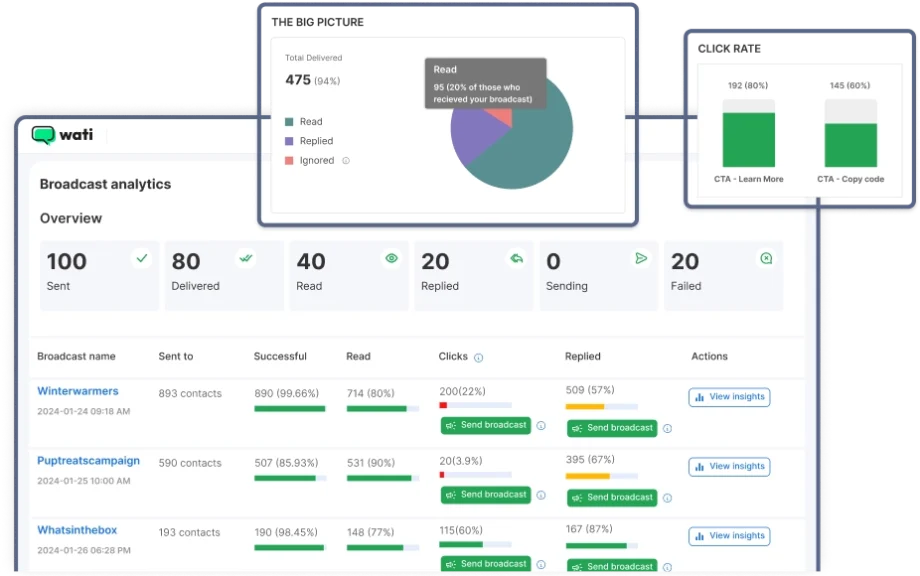
WATI (WhatsApp Team Inbox) is a WhatsApp-focused API platform designed for small and medium-sized businesses. It is known for its easy onboarding, quick deployment, and affordable entry pricing. Today, WATI serves over 6,000 brands across 78 countries.
Key Features
- Shared team inbox for WhatsApp conversations
- No-code chatbot builder
- Bulk broadcast messaging
- CRM integrations (Shopify, HubSpot, Zoho, Google Sheets)
- Real-time analytics
- Multi-channel support (WhatsApp + Instagram + Messenger)
Pros and Cons
| Pros | Cons |
|---|---|
| Affordable starting price | ~20% message markup on top of Meta pricing |
| Easy for non-technical teams | Limited channel support |
| Simple chatbot builder | Deep ecommerce segmentation requires integrations |
| Mobile apps available | Basic reporting capabilities |
| Large SME user base | Expensive agent expansion |
| 7-day free trial | Automation triggers purchased separately |
Pricing
| Plan | Monthly Price | Included Agents |
|---|---|---|
| Growth | ~$49/month | 3 agents |
| Pro | ~$99/month | 5 agents |
| Business | ~$279/month | More agents |
⚠️ WATI adds approximately 20% markup on WhatsApp message fees.
❹ SleekFlow — A Powerful Assistant for Retail and E-commerce
Platform Overview
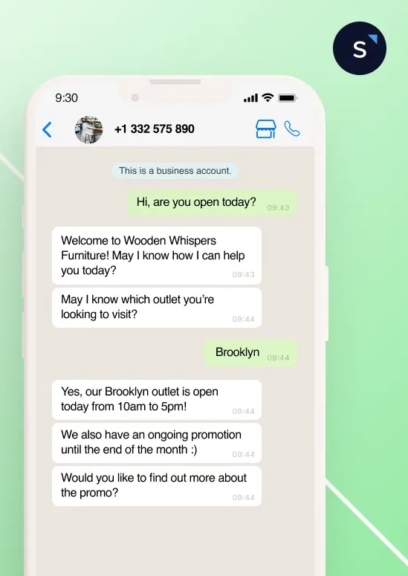
SleekFlow is an officially certified WhatsApp Business Solution Provider (BSP) positioned as a multi-channel customer communication platform. It has built strong influence in industries such as retail, e-commerce, automotive, and financial services. Currently, SleekFlow serves more than 2,000 companies across over 70 countries.
Recently, SleekFlow launched AgentFlow, an AI-driven automation capability designed to enhance AI-powered customer conversations and workflow automation across messaging channels.
Key Features
- Unified multi-channel inbox integrating WhatsApp, Instagram, Facebook Messenger, LINE, and other major channels
- Flow Builder: a visual workflow builder used to design marketing journeys, reminders, and lead nurturing campaigns
- Broadcast marketing campaigns with personalized bulk messaging to segmented audiences
- Deep e-commerce integrations with Shopify and WooCommerce, enabling abandoned-cart reminders, order updates, and post-purchase marketing
- Social CRM to centrally manage customer profiles, tags, and conversation history
- Product catalog and payment links directly inside WhatsApp conversations
- Click-to-WhatsApp ad integration to convert ad traffic directly into WhatsApp conversations
Pros and Cons
| Pros ✅ | Cons ⚠️ |
|---|---|
| Strong functionality for retail and e-commerce scenarios, especially abandoned-cart reminders | Mid-tier plan costs $399/month with only 5 agent seats, relatively expensive |
| Supports multiple channels with broad coverage | AI features are still in early stages |
| Robust Shopify and WooCommerce integrations | Does not support voice, email, or TikTok channels |
| Mature case studies and educational resources | Some users report occasional stability issues at very high conversation volumes |
| Experience serving customers in 70+ countries | Cross-channel automation capabilities are somewhat limited |
Pricing
| Plan | Monthly Price | Included Agents |
|---|---|---|
| Starter | ~$79/month | 2 agents |
| Pro | $399/month | 5 agents |
| Enterprise | Custom | Unlimited |
⚠️ Additional fee: Each WhatsApp Business number costs $15/month. Businesses operating multiple WhatsApp numbers may see this cost accumulate quickly.
📌 Data sources:
SleekFlow official blog
Respond.io WhatsApp pricing analysis
Case Example
The education company GETUTOR previously used SleekFlow but later migrated to another platform when its functionality could no longer meet the company’s growth requirements.
Overall, SleekFlow is better suited for brands with moderate conversation volumes and e-commerce-focused customer journeys, rather than enterprises requiring highly complex automation at scale.
❺ Twilio — The Most Flexible Platform for Developers
Platform Overview
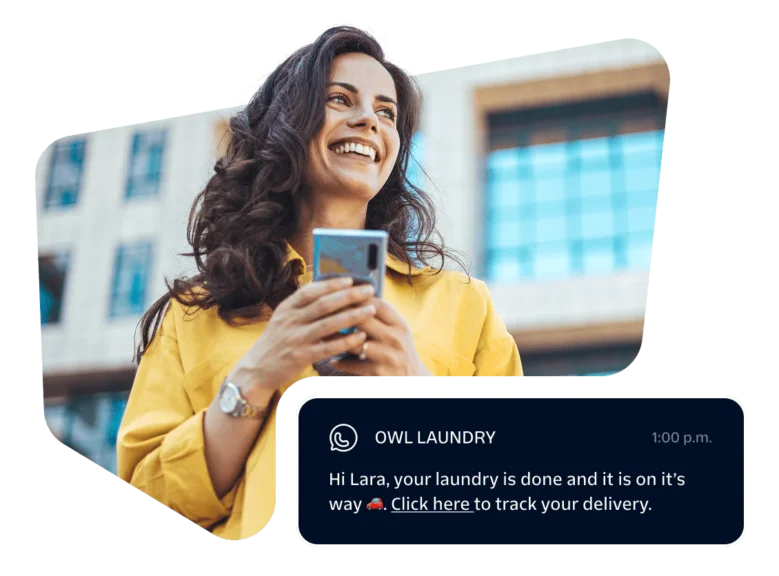
Twilio is one of the world’s most well-known Communications Platform-as-a-Service (CPaaS) providers and an official WhatsApp BSP. Twilio’s WhatsApp Business API solution is widely recognized for its extreme flexibility, global infrastructure, and comprehensive developer documentation.
It is the preferred platform for engineering teams and companies looking to build deeply customized WhatsApp customer engagement workflows.
Twilio integrates WhatsApp into a broader ecosystem of APIs that also includes SMS, voice, video, and email communication services.
Key Features
- Official WhatsApp Business API with global infrastructure and high-concurrency messaging support
- Programmable Messaging for fully customizable communication workflows
- Conversations API to manage WhatsApp, SMS, and email conversations through a unified API
- Twilio Flex, a programmable cloud contact center platform
- Marketing Messages API to improve marketing message delivery performance and analytics
- Real-time delivery reporting and analytics
- Global coverage across 180+ countries
- 2026 update: support for WhatsApp usernames (BSUID) aligned with Meta’s new privacy policies
Pros and Cons
| Pros ✅ | Cons ⚠️ |
|---|---|
| Extremely flexible and customizable | Requires strong development resources |
| Comprehensive documentation and developer community | No ready-to-use customer support interface |
| Unified API ecosystem across messaging channels | Costs may rise at high message volumes |
| Reliable global infrastructure | Message markup: $0.005 per message (send + receive) |
| Pay-as-you-go pricing with no minimum commitment | Automation and AI capabilities require external integrations |
Pricing
Twilio uses a pay-as-you-go pricing model:
- No monthly subscription fee
- WhatsApp messaging cost = Meta official rate + $0.005 per message (both sending and receiving)
This model works well for companies with fluctuating message volumes or early-stage experimentation.
📌 Sources:
Respond.io pricing analysis
Twilio official website
User Reviews
G2 rating: 4.1/5 (439+ reviews)
“Extremely flexible for custom use cases. Strong global infrastructure and reliability.”
Twilio is best suited for organizations with internal engineering teams that want to deeply integrate WhatsApp into their existing technology stack.
❻ 360dialog — A Lightweight Direct WhatsApp API Solution
Platform Overview
360dialog is one of Europe’s leading official WhatsApp BSPs. Its product strategy is API-first, focusing on delivering the simplest and most direct WhatsApp Business API access for enterprises and ISVs (Independent Software Vendors).
Key differentiators include:
- Zero message markup
- Rapid onboarding (as fast as 5 minutes)
- A strong ecosystem for developers and integration partners
Key Features
- Direct WhatsApp Business API access with embedded signup for faster onboarding
- Zero message markup — only subscription platform fees plus Meta’s official messaging rates
- Full-funnel analytics for marketing automation and WhatsApp ad tracking
- Partner ecosystem with 100+ integrations
- GDPR-compliant data hosting in Europe
- Free WhatsApp inbox interface for basic message management
Pros and Cons
| Pros ✅ | Cons ⚠️ |
|---|---|
| No message markup, cost-efficient at scale | Not beginner-friendly for non-technical users |
| Fast onboarding and strong API documentation | Automation features depend on third-party integrations |
| Ideal for ISVs and developers | Some reports of slow customer support responses |
| GDPR-compliant infrastructure | Primarily focused on WhatsApp rather than full omnichannel support |
| Free inbox interface | Some billing transparency complaints (Capterra reviews) |
Pricing
360dialog follows a subscription + Meta messaging fee model.
Exact pricing requires contacting sales, but because it does not add message markups, the overall cost can be significantly lower than platforms like WATI when sending large volumes of WhatsApp messages.
📌 Sources:
G2 reviews
Capterra listing
Best Use Cases
360dialog is ideal for:
- Developers building custom WhatsApp messaging platforms
- ISVs integrating WhatsApp into CRM or marketing automation tools
- European companies requiring GDPR-compliant data hosting
❼ Bird (MessageBird) — Enterprise-Grade Omnichannel Communications
Platform Overview
Bird (formerly MessageBird) is an enterprise-grade omnichannel communication platform and an official WhatsApp Business Solution Provider.
Following its rebranding, Bird has evolved from a CPaaS provider into a broader customer engagement and marketing automation platform, integrating channels such as:
- SMS
- RCS
- Voice
- Push notifications
Key Features
- Unified omnichannel messaging platform
- Marketing automation triggered by user behavior
- Flows — visual workflow automation builder
- AI-assisted conversation management
- Highly customizable API integrations
- Enterprise-scale messaging infrastructure capable of high-volume delivery
Pros and Cons
| Pros ✅ | Cons ⚠️ |
|---|---|
| Very broad channel coverage | Complex pricing structure |
| Strong SMS + WhatsApp integration | Platform ecosystem can feel fragmented |
| Highly flexible APIs | Some features still being unified after the rebrand |
| Enterprise-grade reliability | Requires technical resources for implementation |
Pricing
Bird uses a usage-based + package pricing model.
WhatsApp messages are charged as:
Meta official rate + $0.005 per session message + $0.005 per template message
Detailed pricing requires contacting the sales team.
❽ Gupshup — A High-Concurrency Conversational Marketing Platform
Platform Overview
Gupshup is a U.S.-based enterprise conversational AI and messaging platform, as well as an official WhatsApp BSP.
It is particularly known for:
- High-concurrency messaging infrastructure
- Advanced conversational AI capabilities
- Strong presence in emerging markets
Gupshup serves major clients across finance, telecom, retail, and government sectors, particularly in India, Latin America, and the Middle East.
Key Features
- ACE (Advanced Conversational Engagement) AI engine supporting complex conversational logic
- Bot Studio, a visual bot-building platform supporting multiple languages and channels
- WhatsApp Commerce with catalog, cart, and payment features
- Multi-channel messaging including WhatsApp, SMS, RCS, Instagram, Facebook, Viber, and Telegram
- Campaign Manager for bulk messaging campaigns and A/B testing
- Enterprise integrations with Salesforce, Zendesk, SAP, and other enterprise systems
- Infrastructure capable of handling billions of messages per day
Pros and Cons
| Pros ✅ | Cons ⚠️ |
|---|---|
| Enterprise-grade scalability and reliability | Pricing typically high for SMBs |
| Mature conversational AI capabilities | Implementation can be technically complex |
| Strong presence in emerging markets | User interface more technical than lightweight tools |
| Comprehensive channel support | Pricing transparency limited |
Pricing
Gupshup provides custom enterprise pricing and does not publish standard plans.
Messaging costs follow Meta’s official pricing structure.
📌 Sources:
Gupshup official website
G2 reviews
WhatsApp Business API Trends in 2026
Several trends are shaping the WhatsApp Business ecosystem:
1. AI-powered customer service agents
More platforms now integrate AI agents capable of handling full conversations.
2. Omnichannel customer messaging
Businesses increasingly manage WhatsApp, Instagram, email, and live chat from a single platform.
3. Conversational commerce growth
WhatsApp is becoming a major channel for sales, especially in Asia, LATAM, and the Middle East.
4. Automation-driven marketing funnels
Businesses are using WhatsApp automation for lead qualification and follow-ups.
Frequently Asked Questions (FAQ)
① Does WhatsApp Business API cost money?
Yes. While businesses can apply for API access through an official WhatsApp Business Solution Provider (BSP), message delivery is charged according to Meta’s official pricing model.
Since July 2025, Meta charges businesses based on the number of template messages sent across three categories:
- Marketing
- Utility
- Authentication
Customer-initiated service conversations within a 24-hour window remain free.
② How can a business obtain the WhatsApp Green Tick verification?
Businesses must apply through an official WhatsApp BSP (such as Sobot or Respond.io). The approval process requires demonstrating brand recognition, compliance, and legitimate business operations.
Certified BSP partners typically assist companies throughout the Green Tick application process.
③ What is the difference between WhatsApp Business App and WhatsApp Business API?
The WhatsApp Business App is a free mobile application designed for small businesses.
However, it has several limitations:
- Maximum 5 devices
- Broadcast limit of 256 contacts
- No API integrations
The WhatsApp Business API, on the other hand, enables businesses to scale customer communication through:
- Multi-agent access
- Unlimited messaging
- Automation and AI chatbots
- CRM integrations and analytics
④ Why do messaging costs differ across BSP providers?
All BSPs use Meta’s official messaging rates as the baseline. However, providers may add additional fees:
- WATI: ~20% markup on Meta’s message rate
- 360dialog / Respond.io: typically no markup
- Twilio: fixed markup of $0.005 per message
Companies should calculate total cost of ownership before choosing a provider.
⑤ Can businesses use WhatsApp Business App and WhatsApp API simultaneously?
In most cases, no.
However, Respond.io offers a feature called WhatsApp Coexistence, which allows businesses to use both WhatsApp Business App and WhatsApp API on the same number, reducing migration risks.
Summary
By 2026, the WhatsApp Business API has become a foundational infrastructure for digital customer engagement and conversational commerce worldwide.
Selecting the right WhatsApp API provider directly impacts a company’s marketing performance, customer support efficiency, and customer experience strategy.
For enterprises seeking AI-driven omnichannel customer service: Sobot stands out as one of the most comprehensive platforms, especially for globally operating businesses.
For organizations prioritizing feature completeness: Respond.io offers the broadest channel coverage and a mature automation ecosystem.
For startups and SMBs looking for an easy entry point: WATI provides the simplest onboarding experience, though message markups should be considered at scale.
For developer-focused companies requiring deep customization: Twilio and 360dialog provide the most flexible WhatsApp API infrastructure.
📌 Recommendation
Most providers offer 7–14 day free trials. Businesses should test multiple platforms to evaluate integration capabilities, automation workflows, and scalability before making a final decision.
Key Takeaways
- WhatsApp Business API enables scalable customer messaging automation.
- Businesses typically access the API through official BSP providers.
- Pricing follows Meta’s conversation-based or template-based model.
- Platforms differ in automation capabilities, integrations, and pricing structures.
- Enterprises should prioritize AI automation and omnichannel support.