
Start by mapping the few contact types that drive the most volume or risk: order status, returns, delivery exceptions, product compatibility, damaged goods, payment issues and pre-purchase questions. The software should be evaluated against those real journeys, not against a generic chatbot demonstration.
Key takeaways
- Order context is the differentiator: an AI reply is only useful when it can safely see the right order, customer and policy information.
- Separate informational automation from transactional automation. Answering a returns-policy question is not the same as authorizing and processing a return.
- Design the human handoff before activating an AI workflow. Agents need the conversation, action log and source data in one place.
- Model peak-season cost and reliability with realistic volumes. Usage, message, voice, marketplace and implementation costs can change the buying decision.
What Is AI Customer Service Software for E-commerce?
AI customer service software for e-commerce helps retailers manage customer conversations across channels such as web chat, email, social messaging, marketplaces and voice. It can retrieve answers from approved knowledge, summarize conversations for agents, route work and—when connected to the right systems—support actions related to an order.
For e-commerce, the category is not defined by an AI agent alone. The useful system connects three contexts: customer context (who is asking), order context (what was bought and what has happened), and policy context (what the business is allowed to do). When one of those is missing, automation should become more cautious, not more confident.
A Quick Decision Map
| If your operation looks like this | Prioritize this software pattern | Questions to ask in a demo |
|---|---|---|
| One direct-to-consumer store, limited channels and a small support team | Digital support platform with strong knowledge, chat and simple commerce workflows | Can the team maintain content and automation without technical help? What happens when AI is unsure? |
| High order volume with recurring WISMO, return and delivery contacts | Customer-service platform with live order data, controlled automation and clear handoff | Can AI retrieve the correct order and show the agent what it did? Can rules limit actions by order status or value? |
| Marketplace, social and direct-store operations across countries | Omnichannel contact-center platform with marketplace, messaging and multilingual workflow support | Can channels share a customer record? Which markets, languages and seller channels are supported in the production region? |
| Complex products, regulated returns or high-value orders | Governed service platform with knowledge controls, audit history and human approval paths | Which actions require approval? Can the business review the data and policy source behind a response? |
Why Order Context Matters More Than a Generic AI Answer
Customers rarely contact a retailer with an abstract question. They ask whether their package has shipped, whether their item can be exchanged, whether a replacement is compatible with their purchase, or whether a payment is connected to a specific order. A response can sound helpful while still being operationally useless if it does not have the relevant context.

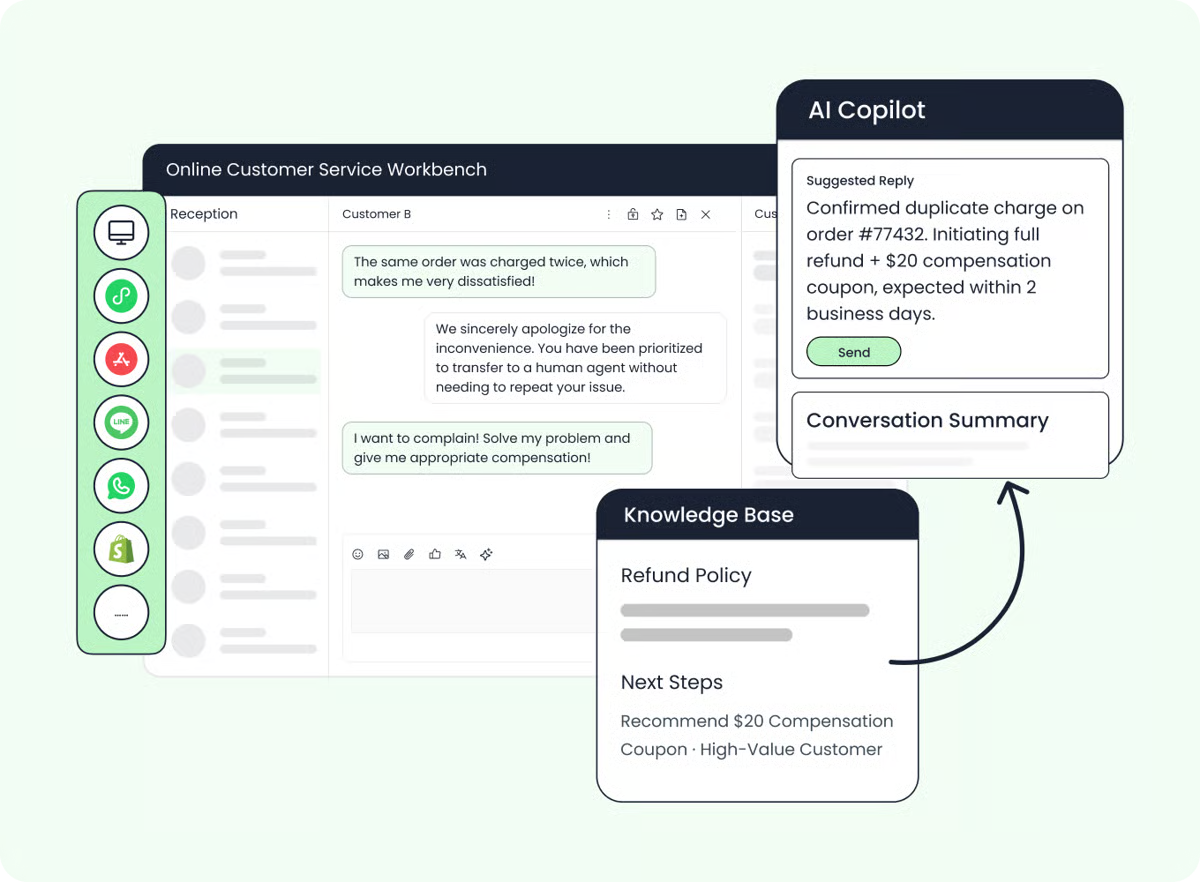
A good e-commerce service design makes the order context visible to the automation and to the human agent, with permissions and policy boundaries. For example, the system might identify an order, check a shipment event and present the applicable policy. It should not automatically approve a refund merely because it can read an order record.
Five Workflows to Test Before You Buy
1. Order status and delivery tracking
Order-status contacts are ideal for testing whether the platform can connect customer identity, order status, carrier events and the correct next step. Ask the vendor to show an uncertain or delayed shipment, not only a delivered order. The workflow should explain when the system gives an answer, when it creates a case and when it sends the conversation to an agent.
2. Returns, exchanges and refunds
These requests require more than a policy article. A reliable workflow needs to check eligibility, item condition, payment and fulfillment state, regional rules and any exceptions. Start with AI-assisted collection of the required information. Move to transaction automation only when the approval, audit and exception paths have been tested.
3. Product fit and compatibility
Product questions can be high value but risky. The knowledge base must be current, structured and narrow enough for the AI to distinguish product variants, inventory changes and safety constraints. Test conflicting specifications and missing information. A good system should escalate rather than guess.
4. Damaged goods, delivery exceptions and disputes
These cases often involve images, carrier records, policy exceptions and a customer who is already frustrated. Evaluate how the platform organizes evidence, triages priority and hands the case to the right team. The relevant metric is not just speed; it is whether the customer avoids repeating the issue after a handoff.
5. Pre-purchase conversations
AI can support product discovery, availability questions and policy clarification before checkout. Keep the boundary clear between useful assistance and unsupported sales claims. The workflow should pass intent and conversation context to the right sales or support team when the customer needs a human decision.
Six Capabilities to Evaluate
| Capability | Why it matters | Evidence to request |
|---|---|---|
| Unified customer and order view | Agents and AI need the same operational context. | A live walkthrough of an order, prior contacts, channel history and internal notes in one service flow. |
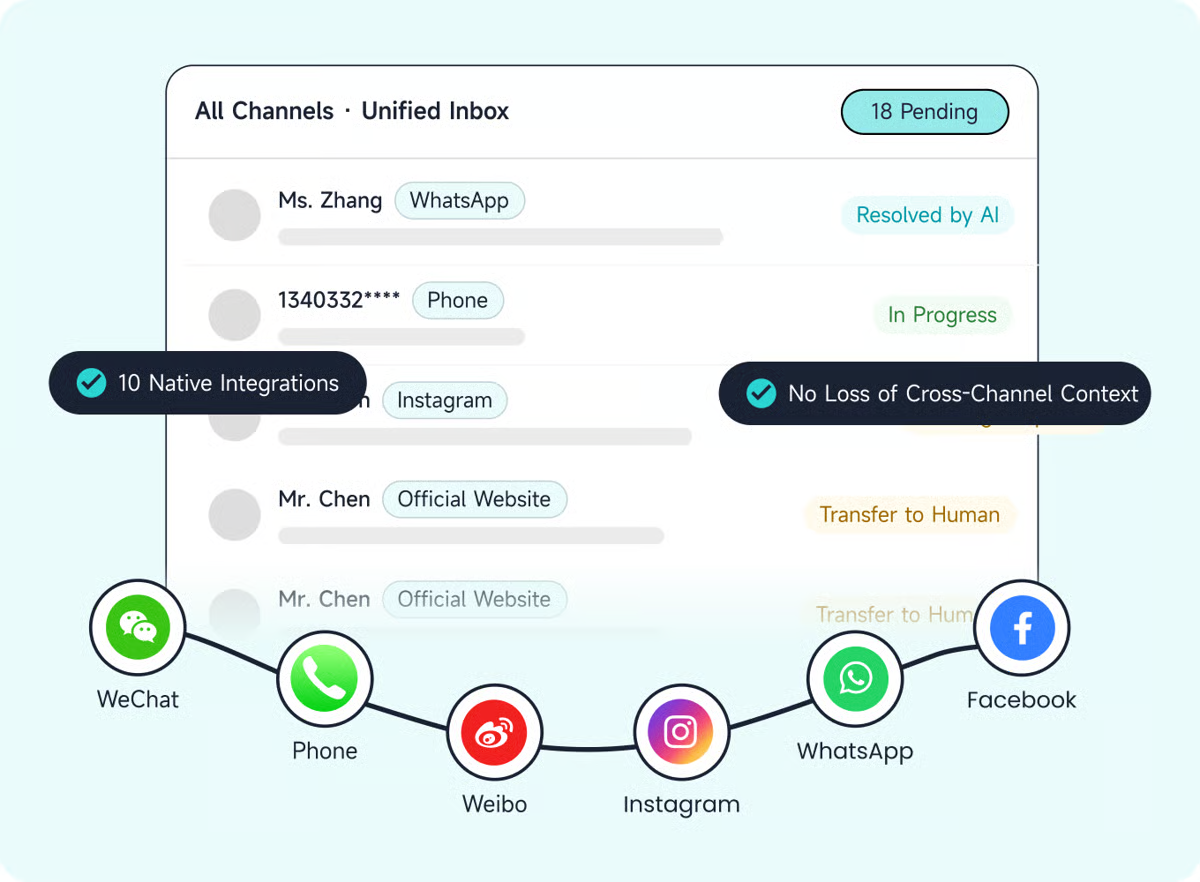
| Channel coverage | Customers may use a marketplace, social message, website chat, email or phone for the same issue. | A confirmed channel list for each selling market, including the handoff process between channels. |
| Controlled action taking | Automation should make approved changes without creating avoidable financial or policy risk. | Rules, approval thresholds, action logs and exception queues for a return, refund or address-change workflow. |
| Knowledge and AI governance | Retail policies, products and promotions change quickly. | Source permissions, publishing workflow, versioning, response review and fallback behavior when knowledge is absent. |
| Agent and supervisor tooling | Most complex cases still need people. | Conversation summaries, customer history, escalation routing, quality review and reporting against real team goals. |
| Integration and data controls | AI must work with commerce, order, CRM, carrier and identity systems responsibly. | A documented integration architecture, data fields shared, regional data handling and support model. |
Design the AI Workflow Before You Integrate It

Integration work is easiest when the target workflow is defined first. The following sequence provides a useful starting point:
This model works whether the company uses a unified platform such as Sobot or connects several systems. The difference is how much context and workflow ownership can remain in one operational environment.
Plan for Peaks Without Turning Automation into a Black Box
Promotional events, seasonal demand and product launches create conditions that expose weak service workflows. The volume increase is not the only problem. Product information changes, carrier delays rise and agents need to make more exceptions quickly. A peak-season plan should specify which issues AI may resolve, which must be queued for an agent and which should be proactively communicated to customers.
Before the peak, run a controlled test with the same channel mix and order states the team expects to see. Measure correct routing, first-response time, repeat contacts, escalation completeness and agent rework. Do not optimize only for deflection. A low escalation rate that creates more repeat contacts is not a service win.
Commercially, ask each vendor to price the peak scenario as well as a normal month. Include user seats, interactions, voice minutes, messages, AI consumption, storage, implementation services and any commerce or marketplace connectors. The comparison should show both total spend and the operational assumption behind it.
How Sobot Fits an E-commerce Service Operation

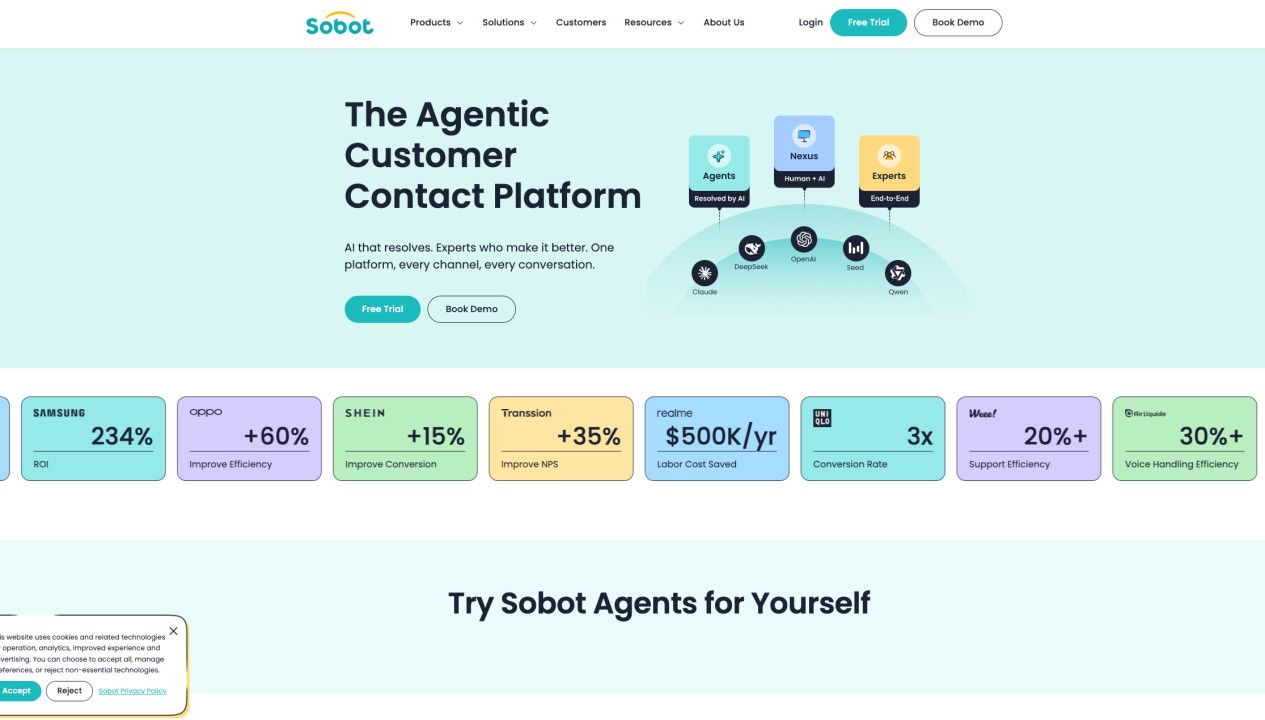
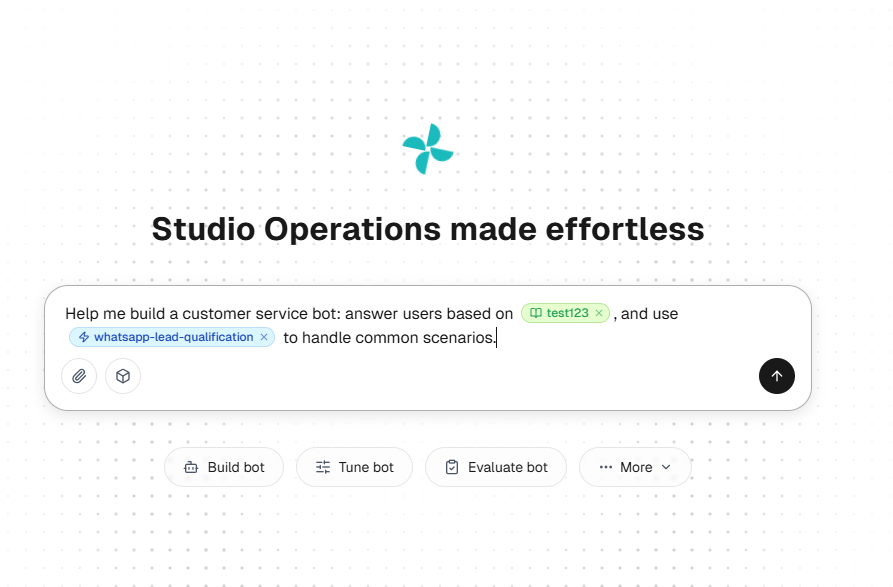
Sobot is designed for businesses that want an omnichannel customer-service workspace with AI, ticketing and operational workflows in one place. It can be a strong fit for e-commerce teams that need to coordinate service across direct stores, messaging, voice and marketplace-led conversations while retaining relevant customer and order context.
The value should be tested in the business’s own environment: required selling channels, order-system integration, language coverage, policy controls, agent handoff and reporting. A focused proof of concept around order status, returns and a complex exception will show more than a generic product tour.
Data, Permissions and AI Governance
An e-commerce AI service program is only as reliable as its access to approved data. Teams should define which systems provide customer, order, fulfillment, inventory and policy information; which fields the AI may read; and which team owns the accuracy of each source. The model should not use an old campaign page or an internal note as if it were a current returns policy.
Permissions need the same discipline. An AI agent might be allowed to retrieve an order, share an approved shipment update and create a case, while a refund, address change or goodwill credit requires a human or a stricter ruleset. These controls should be visible in the workflow rather than buried in an undocumented instruction or integration script.
Build a simple review loop from the start. Sample automated conversations, inspect handoffs, look for repeat contacts and document new edge cases. When a promotion, product launch or policy change occurs, update the approved knowledge and test the workflow before activating it broadly. This turns AI from a one-time deployment into a service capability the business can safely operate.
Who Should Own the E-commerce AI Service Program?
No single team can make the program work alone. Customer service should own the customer journey, escalation rules and quality measures. E-commerce or operations teams should own order, fulfillment and returns processes. Product or merchandising teams should maintain product information and promotions. IT, security and data stakeholders should approve the integration and access model. Finance should validate the commercial assumptions at normal and peak volume.
Give one accountable operational owner the authority to make trade-offs across these groups. Without that role, teams often create a technically connected AI agent that does not have permission to act, or an ambitious automation flow that cannot be maintained after the launch team leaves.
Create an Evaluation Scorecard That Reflects Your Actual Work
Use the same weighted criteria for every vendor, but make the weights reflect the business. A marketplace seller may weight channel and order-system coverage most heavily. A premium brand may emphasize policy control and the quality of the human handoff. A growing direct-to-consumer store may weight implementation effort and operating cost more strongly.
| Scorecard category | Example question | How to evaluate it |
|---|---|---|
| Workflow fit | Can the platform complete or safely route the five contact types that matter most? | Use the same scenario pack and ask for a live walkthrough of each exception. |
| Order and channel context | Can a customer move between channels without agents losing the order or conversation history? | Test one customer across two channels and one handoff to an agent. |
| Control and auditability | Can the business see the source, rule, action and approval path behind an automated outcome? | Review logs, permissions, quality workflow and escalation controls. |
| Operational adoption | Can agents, supervisors and content owners make the system better after launch? | Have the future users complete the demo tasks, not only the vendor team. |
| Total operating cost | What does the production configuration cost at normal and peak demand? | Price the same volume, users, channels, AI workload and services across every proposal. |
A scorecard is not meant to produce a false sense of precision. Its purpose is to make trade-offs visible and prevent a single impressive feature from overshadowing the daily work the service team must manage. Record the evidence behind each assessment: the scenario demonstrated, the product configuration, the data used and the open questions. That record is often more valuable during final procurement than the score itself, because it reveals what needs to be proved in a pilot or written into the implementation plan.
Keep the scorecard live during the pilot. A vendor may demonstrate a strong workflow in a controlled environment, while agents later uncover missing data, unclear exception handling or an adoption problem. Updating the evidence rather than defending the original score helps the team make a more reliable decision before a full rollout.
Frequently Asked Questions
What is the most important feature in AI customer service software for e-commerce?
For most retailers, it is the ability to retain reliable order and customer context across the service journey. AI language quality matters, but the operational value comes from connecting the answer or action to the right order, policy and human handoff.
Can AI customer service software process refunds automatically?
It can support or automate parts of a refund workflow when it is connected to the necessary systems and governed by clear rules. Start with limited, low-risk use cases and maintain approval paths for exceptions, higher-value orders, fraud signals and policy conflicts.
Should an e-commerce team choose a help desk or a contact center?
Choose based on the operating model. A digital-first store with simple channels may be well served by a help desk. Teams managing voice, marketplaces, messaging, cross-border service or high-volume escalations may need a broader omnichannel contact-center workflow.
How should we measure an e-commerce AI pilot?
Track the quality of correct answers and actions, handoff completeness, repeat-contact rate, time to resolution, agent rework and customer feedback for the tested workflow. Compare with a baseline, and review the exceptions before expanding automation.
Does AI customer service reduce the need for human agents?
It can reduce routine workload and help agents respond with better context, but complex, high-risk and emotionally sensitive interactions still need people. The goal is a better allocation of human attention, not automation for its own sake.
See How Sobot Can Connect Your E-commerce Service Workflow
Map order context, customer channels and AI-assisted handoffs around the workflows your team handles every day.