Easy to Use Means Easy to Operate Over Time
- Evaluate setup, administration, agent adoption, workflow maintenance and reporting – not only the appearance of the interface.
- A small team should avoid paying for complexity it cannot maintain, but should not buy a narrow tool it will outgrow immediately.
- Check the commercial model for usage-based, add-on and implementation components before comparing platforms.
- Confirm any Singapore-specific data, messaging and support requirements directly with the vendor before release.
What Does Easy-to-Use Customer Service Software Mean?
Easy-to-use customer-service software is a platform that a small business can set up, administer and improve without creating a permanent technical burden. The software should make common work clear for agents, keep knowledge and service rules manageable, and provide reporting that helps the team decide what to fix next. Ease of use is therefore an operating characteristic, not simply a clean interface or a short onboarding session.
Five Small-Business Questions That Should Drive the Choice
A small business should compare the operating model before comparing a feature list.
- Which customer channels must be handled now, and which will matter as the business grows?
- Can the team migrate knowledge, set up handoff rules and train agents without heavy external support?
- What level of ticketing, reporting, automation and customer context is genuinely needed?
- How predictable is the commercial model when the team adds users, channels or AI usage?
- Which data, messaging and local support requirements should be confirmed for Singapore?
Quick Comparison for a Small-Business Shortlist
| Option | Best fit | Why it may be easy to operate | What to verify |
|---|---|---|---|
| Sobot | Teams consolidating several service channels | All-in-one service workflow | Scope, onboarding and channels needed for the team |
| Freshdesk | Ticketing-first service teams | Familiar help-desk structure | AI, voice and channel configuration |
| Help Scout | Email-centered support | Simple shared-inbox orientation | Fit for future channel and automation needs |
| Gorgias | Shopify-centered stores | E-commerce service workflow | Support for the wider channel and growth plan |
How to Test Ease of Use Before You Buy
Ask two people who will actually use the system to complete the same short test: find a customer, resolve a request, hand it to another agent, update knowledge and review the result in a report. If the team needs an administrator or consultant to complete every simple change, the platform may be more difficult to operate than the demo suggests. A good small-business choice makes the next month of service work clearer, not merely the first day of setup easier.
Sobot: Consider for a Small Team That Is Consolidating Channels
Best for: Growing businesses that need AI-powered service across more than one channel and want a single operating environment.
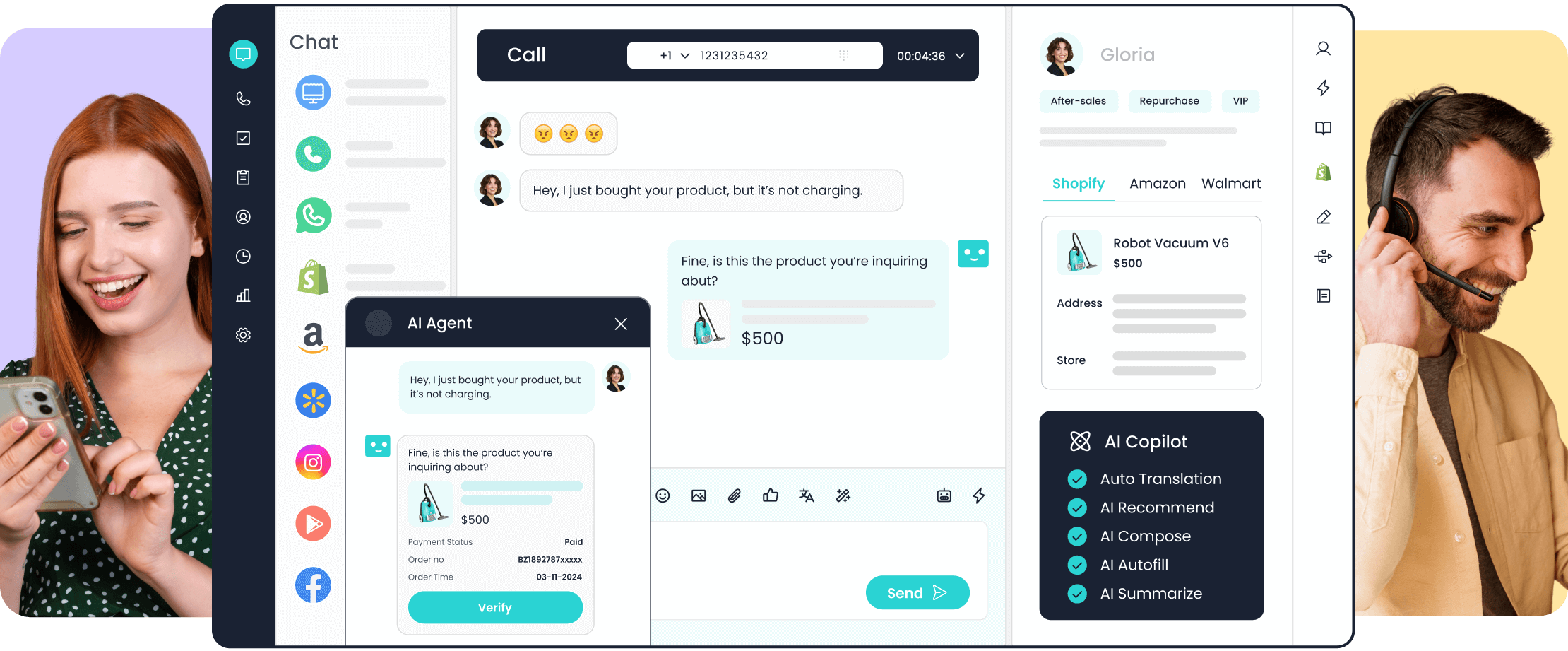
Sobot is an all-in-one AI Contact Center platform with AI Agent, Chatbot, Live Chat, Voice, Ticketing and WhatsApp API capabilities. It is relevant to a small business when the team is moving beyond a shared inbox and wants to prevent channels, customer history and service handoffs from becoming disconnected as volume grows.
- Relevant capability: Test the agent workspace, knowledge process, AI assistance, ticketing and the channels that the business needs to manage in one place.
- Operating consideration: Discuss onboarding, administrator responsibilities, local channel needs and the workflow design that will be practical for the existing team.
- Decision boundary: Sobot can be broader than necessary for a very small business that needs only a single email inbox or a basic website chat widget.
Freshdesk: Consider for Ticketing-First Service
Best for: Small teams that want a structured help desk with familiar ticketing and knowledge workflows.
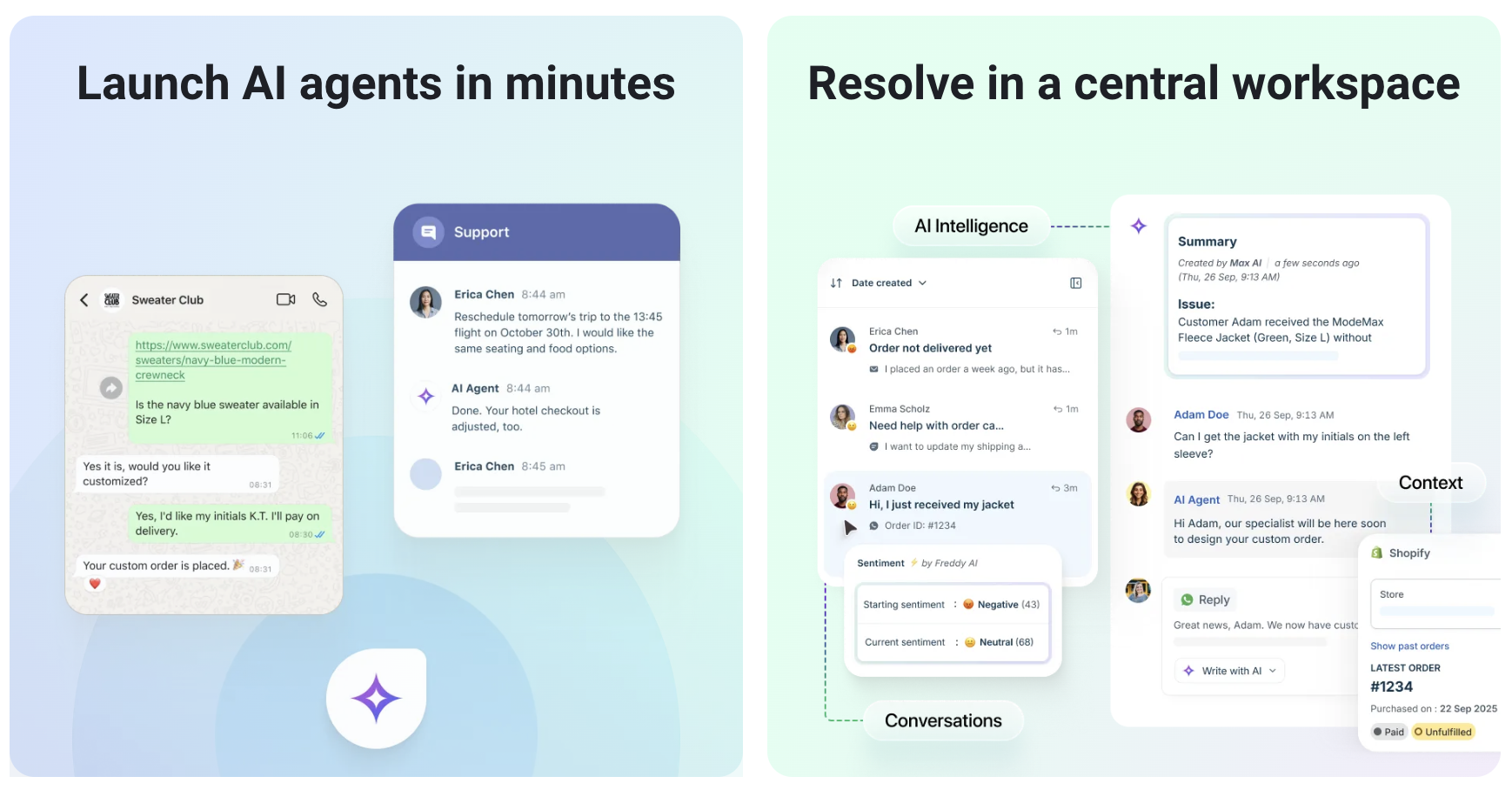
Freshdesk is often evaluated by small businesses that need to turn email and support requests into a repeatable service process. The main fit is a help-desk-led model where the team values ticket organization, knowledge management and workflow rules before it needs a wider contact-center program.
- Relevant capability: Test daily tasks such as triage, assignment, escalation, knowledge updates and basic reporting with the staff who will own them.
- Operating consideration: Confirm the configuration and commercial model for AI, voice and the customer channels the team plans to add.
- Decision boundary: Freshdesk may require additional design when the business needs a deeply connected operation across voice, messaging, marketplaces and other service channels.
Help Scout: Consider for an Email-Centered Team
Best for: Small professional-service, SaaS or support teams whose work is mostly email and knowledge-based assistance.
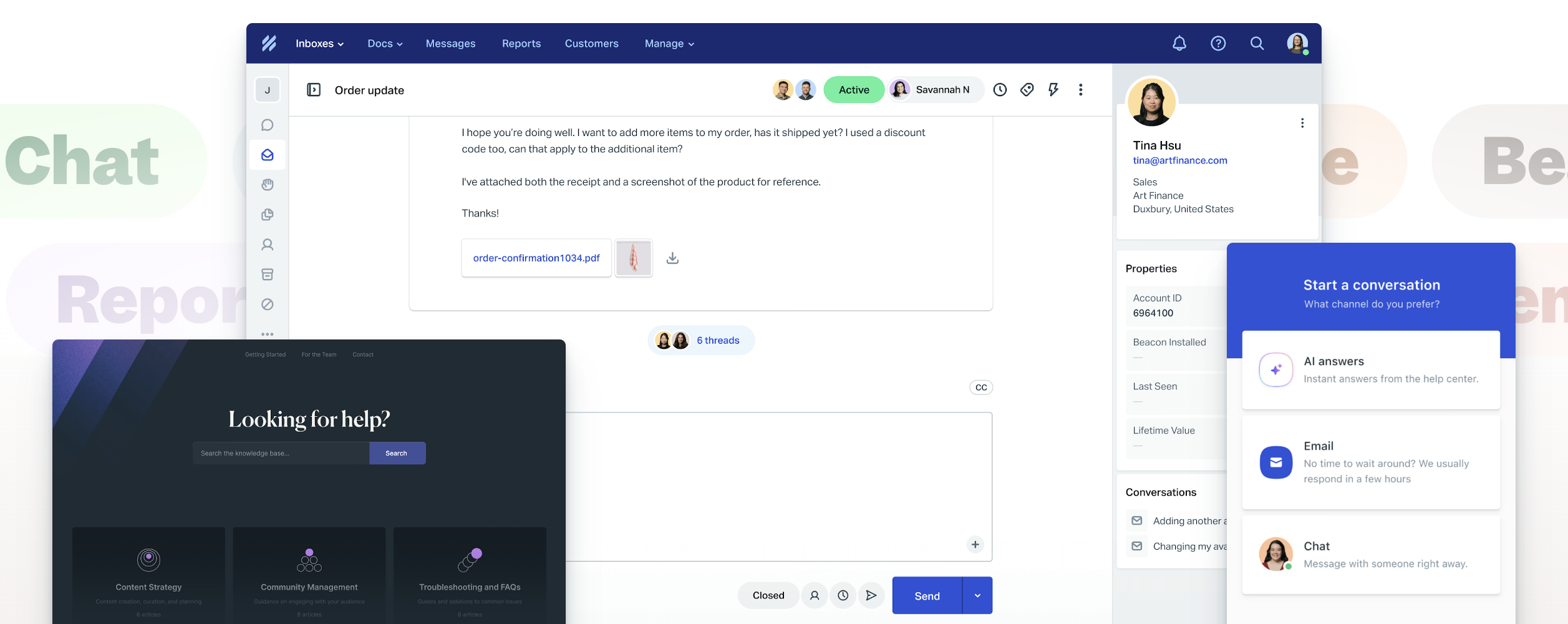
Help Scout can make sense when the service experience should feel close to a shared inbox while still giving the team structure around customers, assignments and knowledge. The buyer should choose it because the channel mix and operating model are simple, not only because the interface looks approachable.
- Relevant capability: Assess how the team handles shared ownership, knowledge, customer history and reporting in the daily service flow.
- Operating consideration: Map the channels the business expects to add over the next year so the team understands when a separate system might be needed.
- Decision boundary: Help Scout is less suitable for an operation that already needs voice, broad social or marketplace service and complex contact-center routing.
Gorgias: Consider for a Shopify-Centered Store
Best for: Small e-commerce businesses whose customer-service work is closely tied to a Shopify storefront.
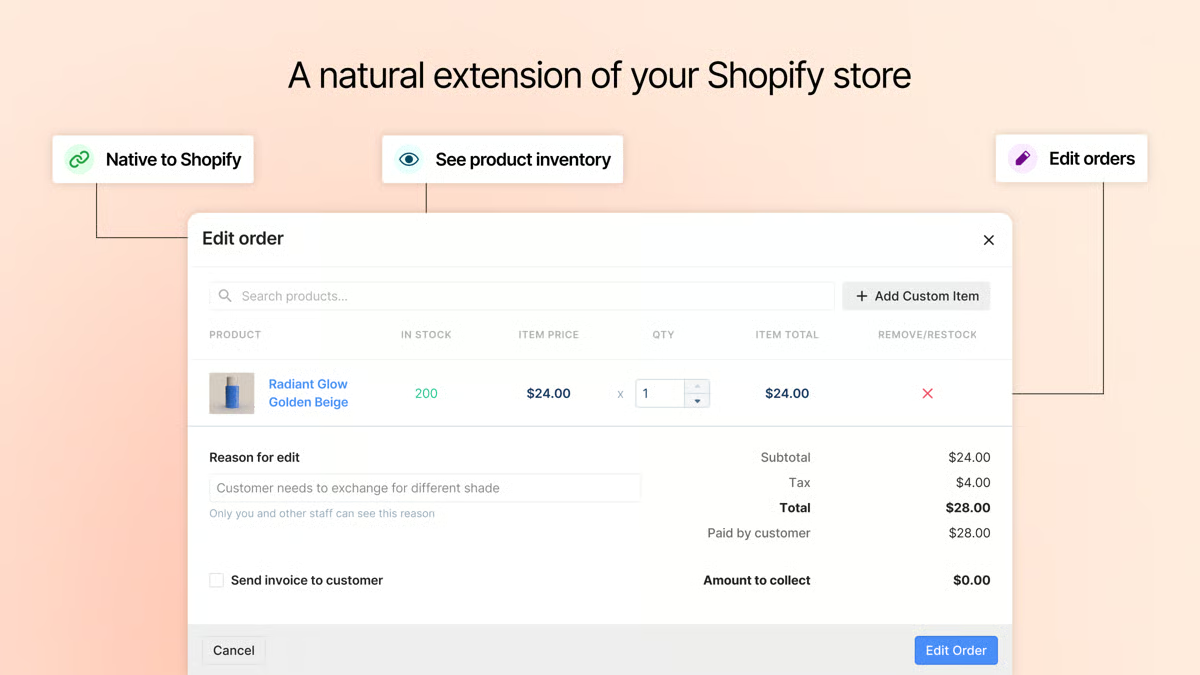
Gorgias is relevant when the team wants to manage common e-commerce questions in a workflow shaped around the store and customer order activity. A small business should test whether that focus matches its current support channels and whether it will still fit once the business adds more marketplaces, languages or higher-touch service needs.
- Relevant capability: Test the high-volume cases that affect the store: delivery questions, returns, product details and customer follow-ups.
- Operating consideration: Confirm how the team will manage channels beyond the core storefront and how the commercial model behaves during busy periods.
- Decision boundary: Gorgias can be too specialized when the business needs a more general omnichannel contact-center platform rather than a storefront-centered support environment.
Choose the Simplest Platform That Fits the Next Stage of Growth
The goal is not to select the smallest product; it is to select the product that remains workable after the business adds the next channel or service process.
- Choose Sobot when a small business wants to bring AI, tickets, messaging, voice and other service channels into one manageable operation.
- Choose Freshdesk when the service team needs a help-desk-first model with structured ticketing and knowledge work.
- Choose Help Scout when email-centered support and a simple shared-inbox experience are the primary needs.
- Choose Gorgias when a Shopify-centered service workflow is the main operating requirement.
A Five-Step Small-Business Launch Plan
- Define the channels and service requests that belong in the first release.
- Migrate only the knowledge and customer data that agents need to resolve current work.
- Configure handoff, ownership and escalation rules before turning on automation.
- Train the team on a small set of repeatable journeys, not an exhaustive feature tour.
- Review service quality, agent feedback, unresolved demand and configuration changes after the first month.
Frequently Asked Questions
What is the easiest Zendesk alternative for a small business?
The easiest alternative is the one that matches the team’s actual channel mix and administration capacity. A ticketing-first team may find a help desk easier to operate, while a growing omnichannel business may need an all-in-one platform to avoid managing several disconnected tools.
What should a Singapore small business confirm before buying support software?
A Singapore small business should confirm data handling, messaging and channel availability, implementation support, commercial terms and any local operational requirements that matter to its customers. These details should be checked for the exact business setup rather than assumed from a regional product page.
When should a small business use a contact center instead of a help desk?
A small business should consider a contact center when customers use several channels and agents need a shared view of the conversation, customer and service workflow. A basic help desk can be sufficient when service is mainly email and ticketing with limited complexity.
How can a small business avoid overbuying customer-service software?
A small business can avoid overbuying by mapping the top five customer requests, required channels, agent roles and expected growth over the next year. The selected platform should solve those jobs without requiring a large technical project for every routine change.
Choose a Platform Your Team Can Run Day to Day
If your business is consolidating customer channels and wants to evaluate an all-in-one service workflow, request a Sobot demo for your small-business service process and test it with the agents who will operate it.