What Separates Omnichannel From Multichannel
- Multiple channels are not omnichannel unless the agent can see a coherent customer and conversation history across them.
- Compare platforms on customer context, agent workflow and governance before comparing license price.
- AI should work within approved knowledge, handoff and service controls rather than becoming another disconnected channel.
- Keep the definition and implementation pages as supporting content; this page is the commercial comparison hub.
What Is an Omnichannel Customer Service Platform?
An omnichannel customer service platform is software that coordinates customer interactions across channels through a shared operating model. It connects customer identity, conversation history, agent ownership, service rules and reporting so that a customer does not have to repeat the same issue when moving from one channel to another. A multichannel platform may offer several inboxes, while an omnichannel platform is designed to preserve continuity across those interactions.
Six Criteria for Comparing Omnichannel Platforms
A buyer should assess the operating model behind the channel list.
- Customer-context continuity: can the agent see the relevant history when the channel changes?
- Channel operations: how are routing, ownership, service levels and escalation managed across channels?
- Agent workspace: can an agent resolve work without moving between disconnected tools?
- AI governance: what knowledge, permissions, review and handoff controls shape automated assistance?
- Integration architecture: how do CRM, order, account and other business systems connect to the service workflow?
- Total operating model: who administers rules, measures quality and handles change as the business grows?
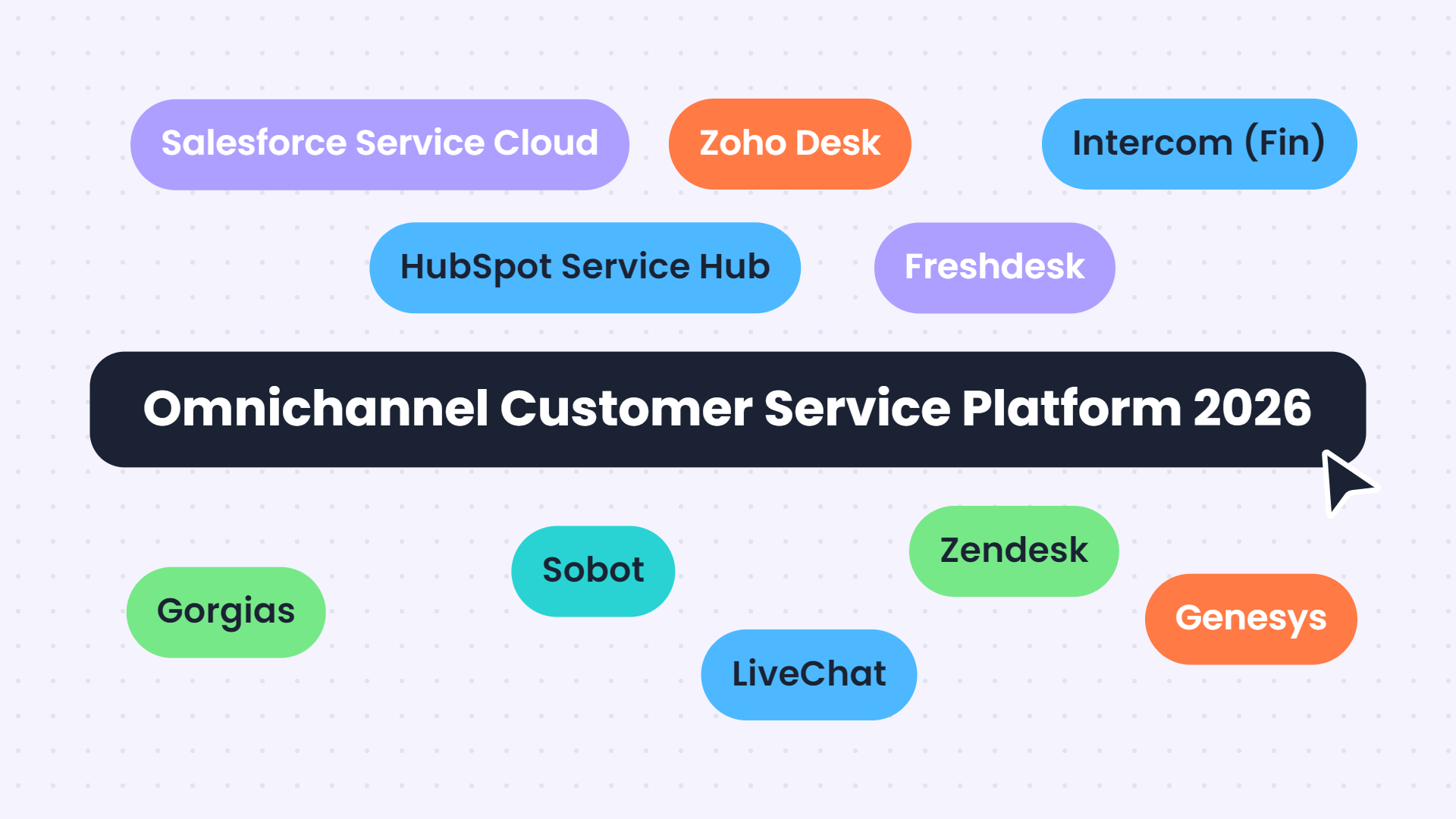
Quick Comparison by Service Operating Model
| Option | Best fit | Omnichannel approach | Buyer question |
|---|---|---|---|
| Sobot | Teams wanting an all-in-one AI Contact Center | Connected AI, voice, messaging, tickets and agent workflows | Which customer channels and systems are in scope? |
| Zendesk | Established help-desk organizations | Support suite centered on ticketing and service workflows | How will all required channels and context be configured? |
| Freshdesk | Growing help-desk-led teams | Structured service workflows with a gradual growth path | Which functions require additional setup or products? |
| Genesys Cloud CX | Enterprise contact centers | Enterprise routing and customer-experience architecture | Does the organization have the resources for the operating model? |
| Gorgias | Shopify-centered commerce support | E-commerce-oriented digital service workflow | Does the model cover channels beyond the storefront? |
How to Test Whether a Platform Is Truly Omnichannel
Use a channel-switch test. Start a customer conversation in one channel, continue it in another, then escalate it to a specialist. The agent should see the correct history, customer information and service ownership without asking the customer to repeat the issue. Next, inspect how the platform records the outcome, reports the interaction and governs any AI action. This test is more useful than a feature grid because it reveals whether the operating model is connected in practice.
Sobot: Consider for Connected AI, Voice and Digital Service
Best for: Teams that want an all-in-one customer-service environment for omnichannel operation.
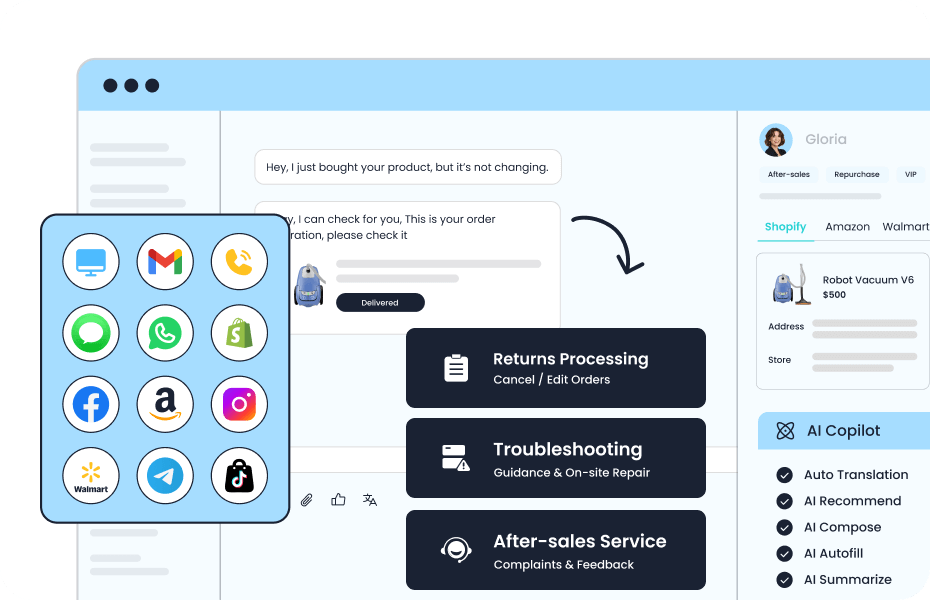
Sobot is an all-in-one AI Contact Center platform that combines AI Agent, Live Chat, Chatbot, Voice, Ticketing and WhatsApp API capabilities. It is relevant when a business wants to manage customer conversations, agent handoffs and service workflows as a connected operation rather than as a group of separate tools.
- Relevant capability: Test the shared agent workspace, customer context, AI assistance, ticketing and the movement between the channels that drive real service demand.
- Operating consideration: Confirm the systems, channels, languages and administration model that the organization needs to support in its implementation.
- Decision boundary: Sobot may be more platform than a business needs when support is limited to a single website chat experience and there is no near-term channel expansion.
Zendesk: Consider for an Established Help-Desk-Led Organization
Best for: Teams with mature ticketing, knowledge and service-management practices.
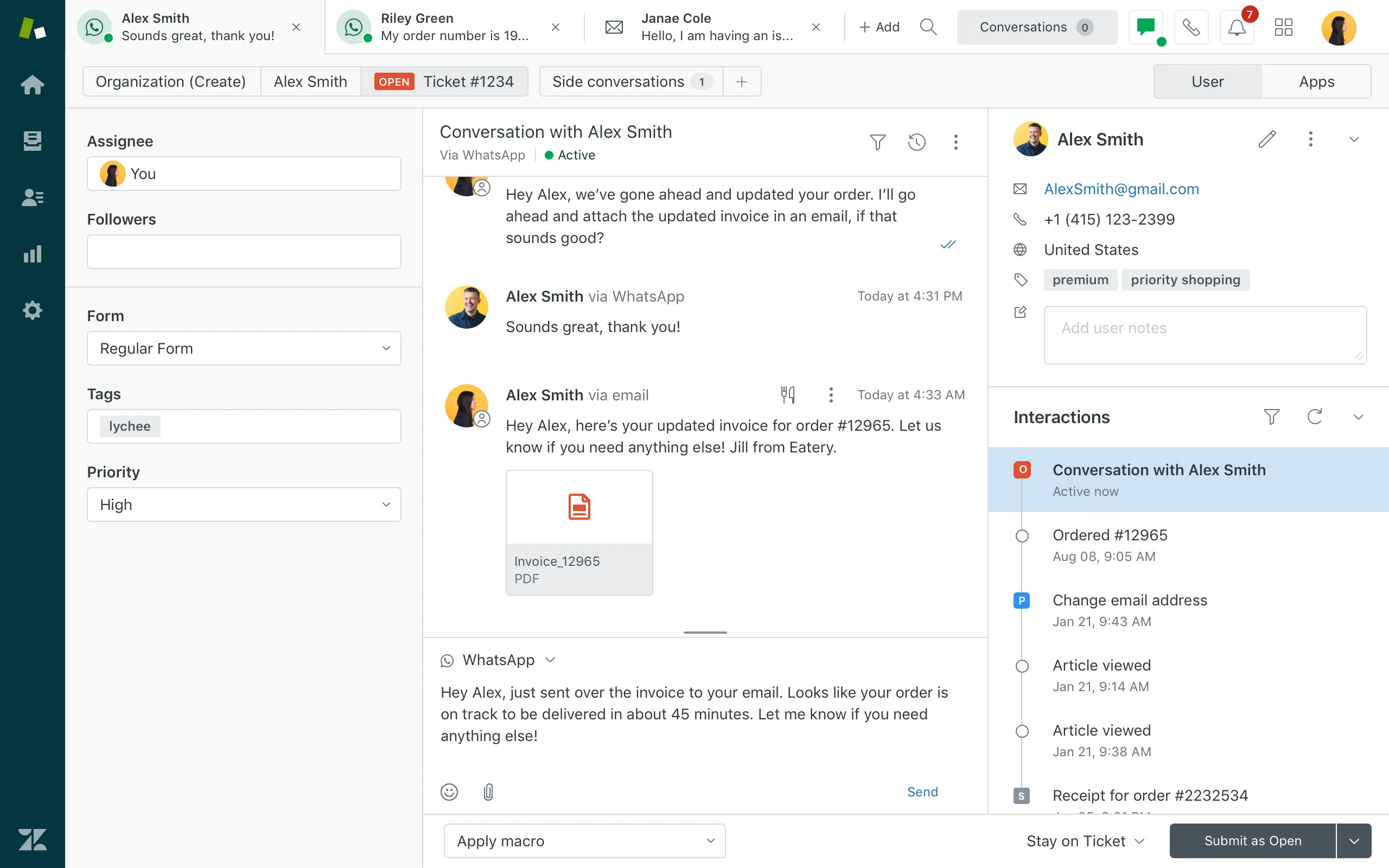
Zendesk is often shortlisted by organizations that have built their service operation around structured support workflows. It can be a strong fit when the company wants a well-known help-desk-led model and has the administrative capacity to configure the customer context, channels and reporting needed for its own operation.
- Relevant capability: Test the agent workspace, routing, knowledge and the configuration needed to carry context across each required channel.
- Operating consideration: Map the ownership of apps, integrations and service rules so the buyer understands the full operating model.
- Decision boundary: Zendesk may require more design work than a business expects if it needs a simple, unified solution across a wide set of channels and systems.
Freshdesk: Consider for a Structured Growth Path
Best for: Growing teams that want to formalize customer service around ticketing, knowledge and automation.
Freshdesk can be a good option when a business is transitioning from informal support to a managed help-desk model. It gives teams a way to organize service work and gradually build automation and channel coverage as their needs become more sophisticated.
- Relevant capability: Evaluate the common service paths, agent experience and customer-history requirements before adding advanced automation.
- Operating consideration: Confirm how required channels, voice and AI capabilities are configured and maintained as the team grows.
- Decision boundary: Freshdesk may be a less direct fit for a large, complex omnichannel environment that requires deep contact-center orchestration from the start.
Genesys Cloud CX: Consider for Enterprise Contact-Center Complexity
Best for: Large organizations with advanced routing, workforce and customer-experience requirements.
Genesys Cloud CX is typically evaluated by enterprises that need a broad contact-center architecture and can support a more involved operating model. Its fit depends on whether the organization’s scale, routing complexity and internal ownership justify an enterprise-level platform design.
- Relevant capability: Assess the routing, workforce, integration and governance requirements that create the actual business case.
- Operating consideration: Run an architecture review that includes customer context, channel transition, data design and administration responsibilities.
- Decision boundary: Genesys Cloud CX can be excessive for a smaller team that needs an approachable, consolidated service environment rather than a complex enterprise program.
Gorgias: Consider for Shopify-Centered Customer Service
Best for: E-commerce businesses that want digital support closely aligned to a Shopify-centered store.
Gorgias is relevant when the service operation is built around storefront conversations and order-related support. A buyer should evaluate whether that specialization speeds up the work the team does most often and whether the platform can still support the broader omnichannel strategy as marketplaces, social conversations or other service requirements grow.
- Relevant capability: Test order-related service cases, customer history, agent action and the customer channels that are most important to the store.
- Operating consideration: Confirm the boundaries of the platform against the business’s future channel, reporting and escalation needs.
- Decision boundary: Gorgias may be too specialized for an organization that needs a general, all-in-one contact-center model beyond its core e-commerce workflow.

Common Buying Mistakes to Avoid
A disciplined comparison prevents a platform selection from creating new service silos.
- Do not treat each channel as a separate service project; test the customer’s end-to-end journey instead.
- Do not buy AI before confirming the quality, ownership and governance of the knowledge it will use.
- Do not overlook the agent handoff; the most important interaction is often the one AI cannot resolve.
- Do not compare only license price; include configuration, integrations, administration and the operational cost of disconnected tools.
- Do not call a platform omnichannel until it passes a real context-continuity test.
A Practical Omnichannel Evaluation Sequence
- Map the five customer journeys most likely to cross channels.
- Define the customer, conversation and business-system context the agent must see at each stage.
- Test agent ownership, handoff and escalation rules across every relevant channel.
- Review how AI retrieves approved knowledge, proposes a response and records a human override.
- Validate reporting, integration ownership and the team’s ability to maintain the service model after launch.
Frequently Asked Questions
What is the difference between omnichannel and multichannel customer service?
Multichannel customer service makes several channels available, while omnichannel customer service connects those channels through shared customer context, conversation history, ownership and workflow. The difference matters when a customer starts in one channel and expects the next agent to understand the full situation.
What should an omnichannel platform include?
An omnichannel platform should include the channels the business uses, a shared agent workspace, customer-context continuity, routing and handoff rules, reporting, integration support and governance for any AI automation. The exact mix depends on the organization’s service model.
Does every business need native voice in an omnichannel platform?
Not every business needs native voice. Voice matters when calls are a meaningful part of service, escalation or sales support. The buyer should choose based on the customer journey and confirm that the platform can preserve context between voice and digital interactions when both are needed.
How should a team validate omnichannel continuity?
A team should run a channel-switch test with a real customer scenario. The test should show whether the next agent receives the relevant customer history, sees the previous conversation, follows the same service rules and can report the final outcome without manual reconstruction.
Build Omnichannel Around Customer Continuity
If your team is evaluating how to connect customer conversations across channels, review Sobot’s omnichannel customer-service solution and use a real channel-switch scenario as the basis for your platform evaluation.