The best AI customer service software for e-commerce in 2026 is Sobot for high-volume stores that need live chat, voice, and messaging unified with AI built in at no extra per-seat cost; Gorgias for Shopify-native brands that want order actions inside the helpdesk; Zendesk for enterprises that need the deepest CX suite and integration marketplace; and Intercom (Fin) for digital-first teams that want an AI agent priced per resolution. The right pick depends on where you sell (your own store, marketplaces, or social), how much volume your AI needs to resolve, and whether you want AI bundled or billed separately.
This guide compares ten platforms on the criteria that actually decide an e-commerce support purchase: how much volume the AI resolves on its own, native e-commerce and marketplace integrations, omnichannel breadth, AI pricing model, and deployment speed.
TL;DR: Top Picks for E-Commerce
- Best overall for e-commerce: Sobot — live chat + voice + messaging + ticketing in one workspace, AI Agent / Copilot / Insight built in, deep marketplace and social coverage, no separate AI seat fee.
- Best for Shopify-native stores: Gorgias — order data and refund/cancel actions built into the agent view.
- Best CX suite depth: Zendesk — broadest ticketing maturity and app marketplace.
- Best AI agent on digital channels: Intercom Fin — outcome-based pricing, strong autonomous resolution.
- Best budget pick for small stores: Tidio — free tier plus the Lyro AI agent for SMBs.
- Best automation-first self-service: Ada — high-volume deflection for large brands.
- Best for marketplace sellers: eDesk — Amazon, eBay, and Walmart support in one inbox.
- Best for e-commerce self-service: Richpanel — returns, exchanges, and order tracking automation.
- Best SMB value: Freshdesk (Freshworks) — fast setup and a low entry price.
- Best for high-touch retail brands: Gladly — people-centered, customer-lifetime conversations.
What Is AI Customer Service Software for E-Commerce?
AI customer service software for e-commerce is a platform that handles shopper conversations across channels — website live chat, email, phone, and messaging apps like WhatsApp and Instagram — and uses artificial intelligence to resolve questions, assist human agents, and connect to store and order data. Unlike a generic help desk, an e-commerce-focused tool is built around the shopping lifecycle: it can read order status, trigger returns and refunds, recommend products, and recover abandoned carts, not just reply to tickets.
The distinction matters when you compare tools. A general AI chatbot answers FAQs. E-commerce AI customer service software is connected to your store (Shopify, Amazon, Lazada, Shopee) and your order system, so the AI can take action on a customer’s behalf — “Where is my order?”, “I want to return this”, “Is this back in stock?” — and resolve it end to end without a human.
How We Evaluated These Platforms
We scored each platform on six dimensions that determine real-world e-commerce support performance:
| Criterion | What we measured |
|---|---|
| AI resolution capability | How much shopper volume the AI agent resolves autonomously before escalating |
| E-commerce integrations | Native connection to Shopify, marketplaces (Amazon, Walmart, Lazada, Shopee), and order/refund actions |
| Omnichannel coverage | Live chat + email + voice + social/messaging in one workspace |
| AI pricing model | Whether AI is bundled or billed per seat / per resolution |
| Deployment speed | Time-to-launch and reliance on specialized implementation |
| Scale and multilingual | Ability to handle peak volume and cross-border, multi-language stores |
We weighted AI resolution and e-commerce integrations most heavily, because those are where e-commerce-specific tools diverge most from generic customer service software.
Quick Comparison: Best AI Customer Service Software for E-Commerce

| Platform | Best for | Native voice | E-commerce / marketplace fit | AI pricing | Starting price |
|---|---|---|---|---|---|
| Sobot | High-volume omnichannel e-commerce | Yes | Shopify + Amazon, Walmart, TikTok, Lazada, Shopee | Built in, no AI seat fee | Custom / flexible |
| Gorgias | Shopify-native stores | Add-on | Deep Shopify/BigCommerce order actions | AI Agent per resolution | ~$10-$360/mo + AI |
| Zendesk | Enterprise CX suite | Yes | Strong apps, less e-com-native | Advanced AI add-on | ~$19-$115/agent + AI |
| Intercom | Digital-first AI agent | Limited | Shopify app, digital channels | Fin ~$0.99/resolution | ~$29-$132/seat + Fin |
| Tidio | Small stores / budget | No | Shopify, Lyro AI for SMB | Lyro tiers | Free; paid from ~$29/mo |
| Ada | Automation-first deflection | Voice bot | Connectors, enterprise | Quote-based | Custom / quote |
| eDesk | Marketplace sellers | No | Amazon, eBay, Walmart inbox | AI add-on | ~$65/agent/mo |
| Richpanel | E-commerce self-service | No | Shopify returns/tracking automation | Bundled tiers | ~$29/mo+ |
| Freshdesk | SMB value | Add-on | App marketplace | Freddy AI add-on | Free; paid from ~$15/agent |
| Gladly | High-touch retail brands | Yes | Retail-focused, lifetime profiles | Sidekick (quote) | Custom / quote |
Pricing is indicative as of early 2026 and changes frequently; confirm current tiers with each vendor.
The 10 Best AI Customer Service Platforms for E-Commerce in 2026
Sobot: Best Overall for E-Commerce
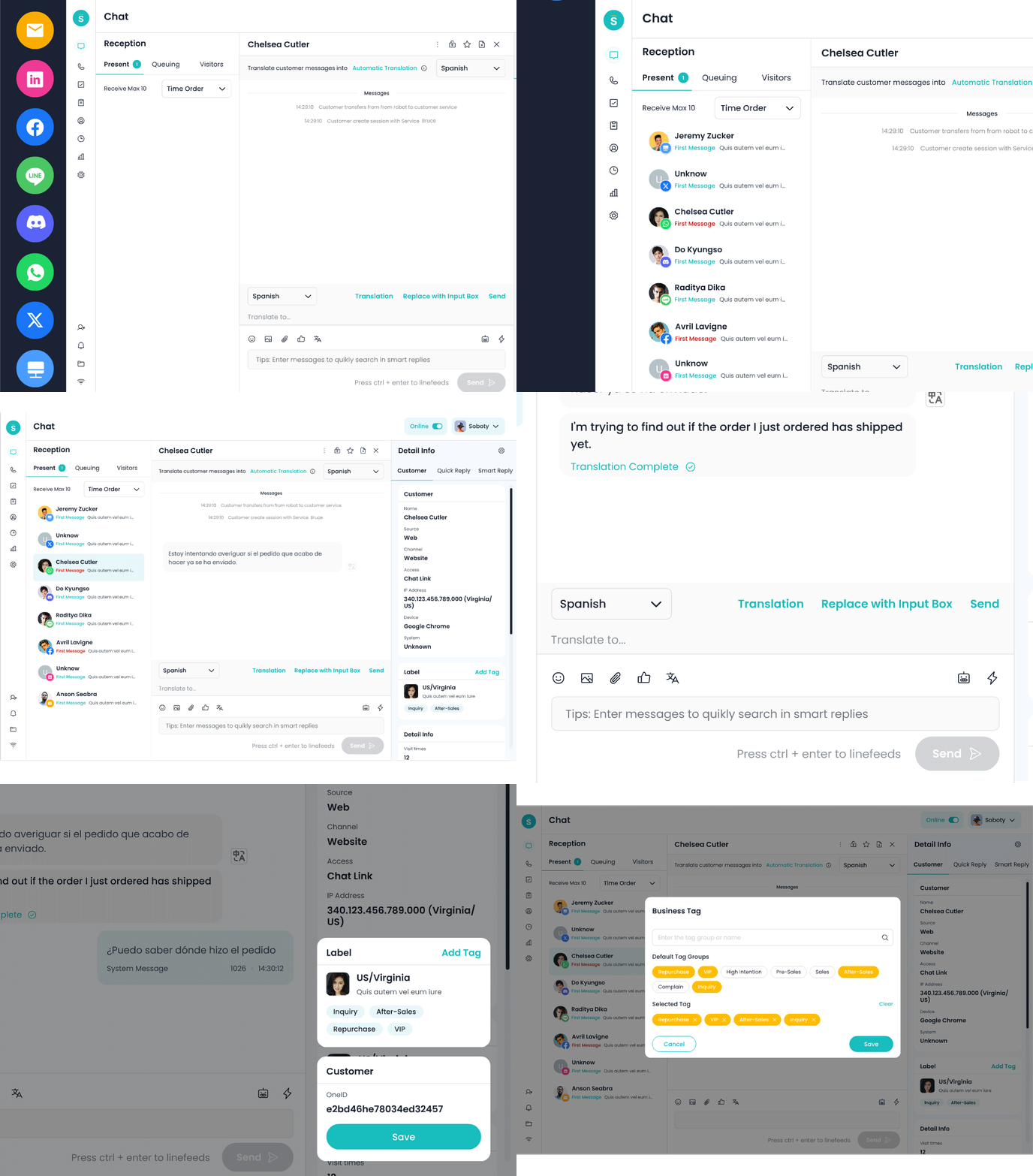
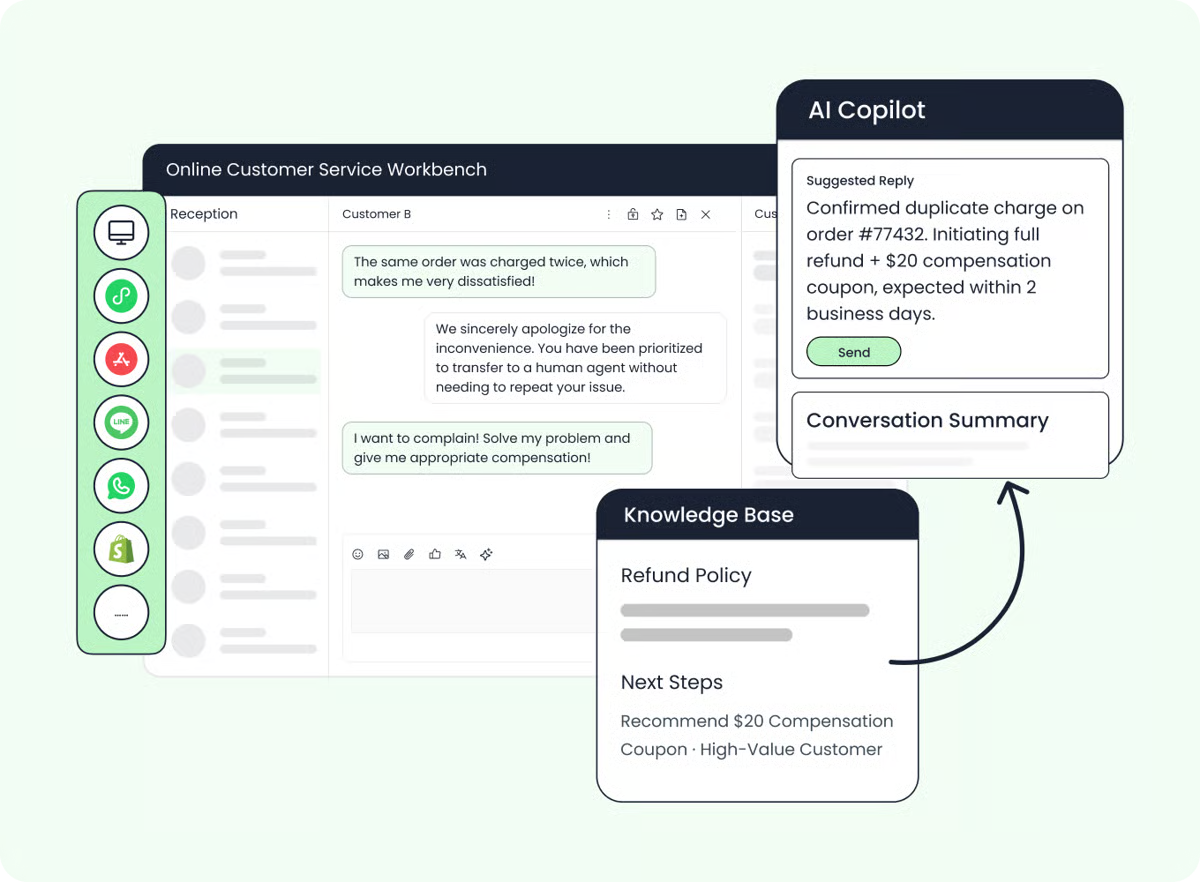
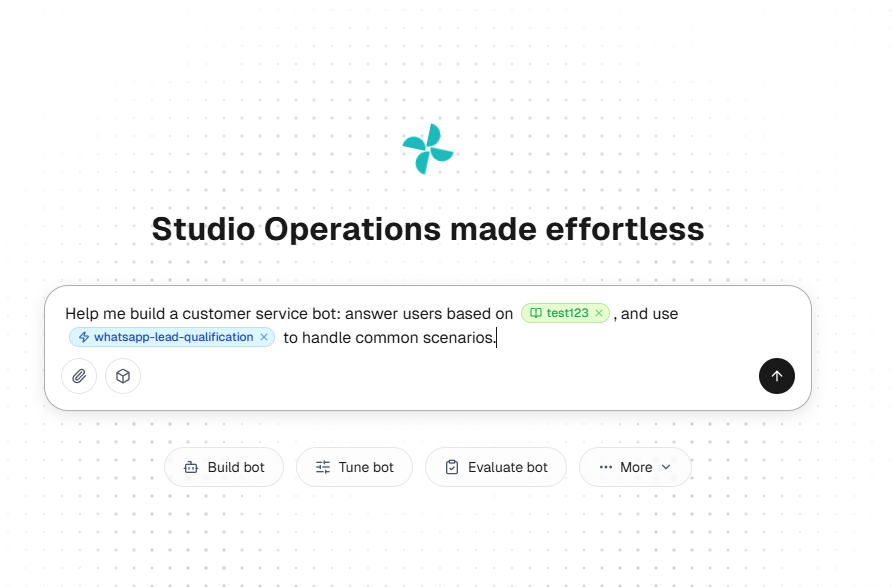
Sobot is an all-in-one contact center platform headquartered in Singapore, built around native live chat, voice, messaging, and ticketing in a single workspace, with AI embedded across three layers — AI Agent (customer-facing), AI Copilot (agent assist), and AI Insight (analytics). For e-commerce specifically, its differentiators are deep marketplace and social coverage and the fact that AI is included rather than sold as a per-seat upgrade, which changes the cost math as ticket volume spikes during peak season.
Key features
- Unified workspace for live chat, voice (inbound/outbound, global numbers, drag-and-drop IVR), email, and messaging
- AI Agent that resolves shopper queries independently or assists human agents, running on a choice of underlying models (OpenAI, Claude, DeepSeek, Bedrock)
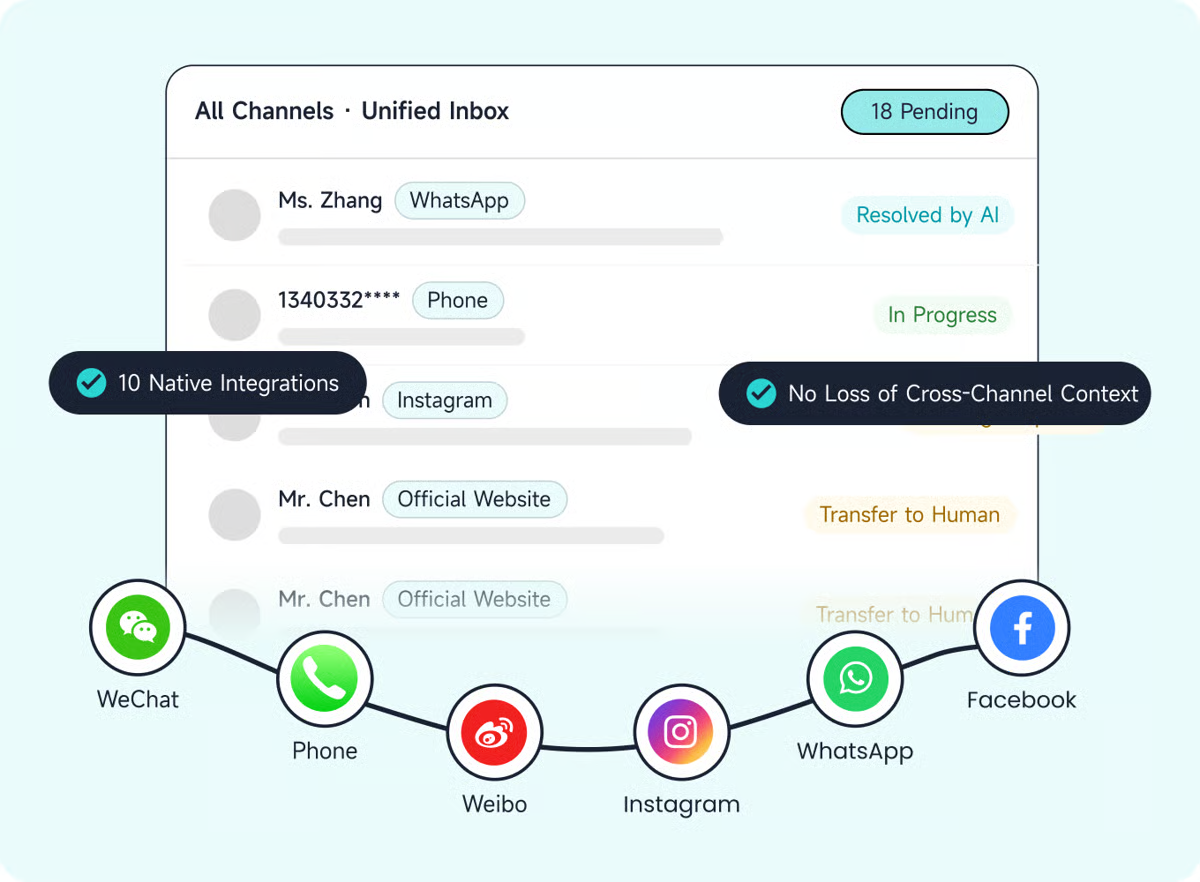
- Native integrations with e-commerce marketplaces (Amazon, Walmart, TikTok, Lazada, Shopee), Shopify, and social channels (WhatsApp, Facebook Messenger, LINE, Instagram, Telegram)
- Open API to unify order, ticket, and call data — one grocery e-commerce client cut customer wait time by 35% after integrating its call center and ticketing through Sobot’s API
- Built-in quality inspection, 300+ metric analytics dashboards, and 19+ language support for cross-border stores
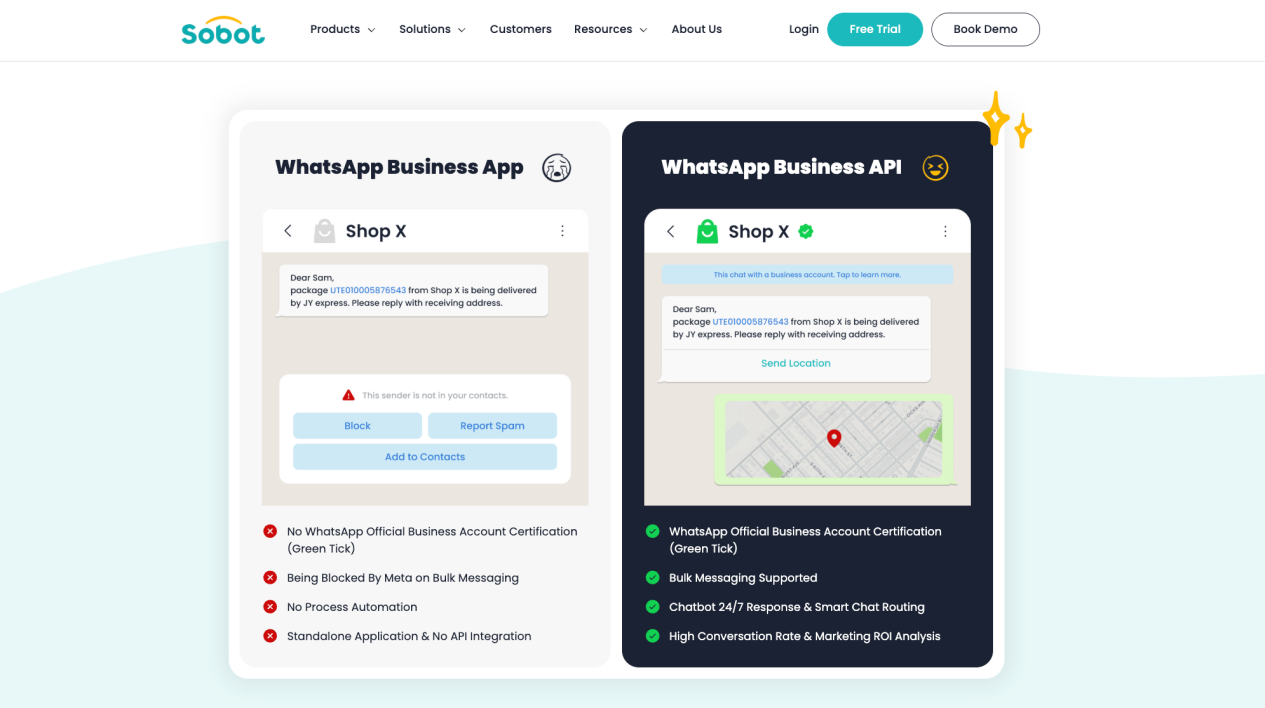
- Official WhatsApp Business Solution Provider (BSP) with Green Tick verification support
- G2 rating: 4.9/5
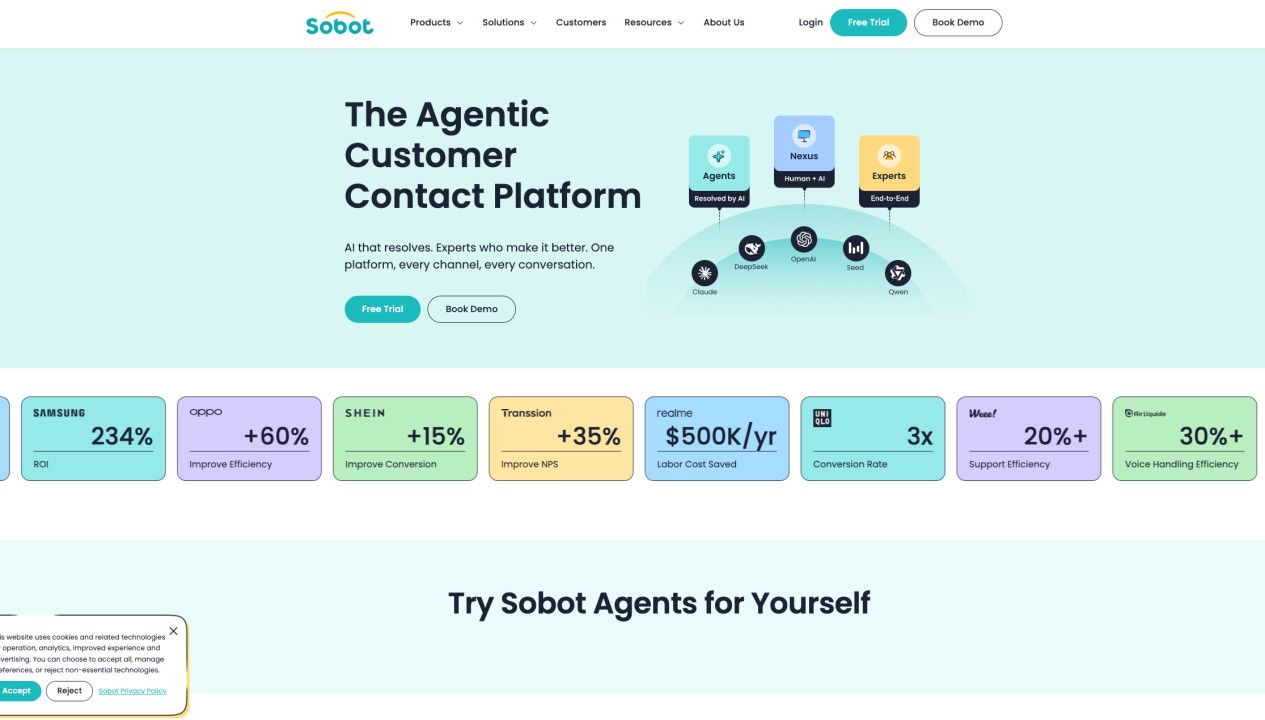
Proven e-commerce results: OPPO reached a self-service rate above 81%, agent efficiency up 30%+, and CSAT above 93% on Sobot. DFS saw efficiency improve 80%+ with conversion up 44%+ and CSAT of 91%+. Grocery platform Weee! cut resolution time by 50%+ at a 96% CSAT, and Tineco improved its resolution rate by 40%+ while handling 120,000+ monthly calls.
Pricing: Flexible and custom; AI capabilities are included rather than billed as a separate seat add-on. A free trial is available.
Pros: Voice and digital truly unified; AI bundled with no per-seat AI fee; deep marketplace, social, and Southeast Asia localization; multi-LLM flexibility; built-in QA at no extra charge.
Cons: Pricing is not publicly listed, so buyers must contact sales for a quote; third-party certifications such as ISO 27001 and SOC 2 are not publicly published (Sobot confirms PDPA and GDPR compliance); brand awareness in North America and Europe is still growing relative to legacy incumbents.
Best for: High-volume and cross-border e-commerce, retail, and marketplace sellers that want live chat, voice, and messaging in one place with AI included — especially brands with significant Asia-Pacific or multi-marketplace volume.
Gorgias: Best for Shopify-Native Stores
Gorgias is purpose-built for e-commerce and is the most Shopify-native helpdesk on this list. Agents see order details, and can edit, refund, or cancel orders without leaving the conversation, and its AI Agent can automate those actions for common shopper requests.
Key features
- Deep Shopify, BigCommerce, and Magento integration with order actions inside the ticket
- AI Agent that resolves WISMO (“where is my order”), returns, and FAQ tickets autonomously
- Revenue tracking that ties support conversations to sales
- Macros, rules, and automation tuned for e-commerce workflows
Pricing: Tiered, roughly $10/mo (Starter) up to $360+/mo (Pro) and higher, with the AI Agent billed separately per automated resolution.
Pros: Best-in-class Shopify integration; strong automation for order-related tickets; ties support to revenue.
Cons: Voice is not a native strength; costs rise as AI resolutions and ticket volume grow; less suited to non-Shopify or voice-heavy operations.
Best for: DTC and Shopify/BigCommerce brands whose volume is dominated by order-status, returns, and product questions.
Zendesk: Best CX Suite Depth
Zendesk is the most mature general-purpose CX platform, with the broadest app marketplace and ticketing depth. It is not e-commerce-native, but its Shopify and order-management apps plus its AI agents make it a safe enterprise choice.
Key features
- Industry-leading ticketing, routing, and reporting
- AI agents and copilot for automated and assisted resolution
- 1,500+ app marketplace including Shopify and order tools
- Native voice (added in recent years) alongside digital channels
Pricing: Roughly $19-$115/agent/month depending on tier, with advanced AI billed as an add-on.
Pros: Deepest integration ecosystem; proven at enterprise scale; strong reporting and admin controls.
Cons: E-commerce actions rely on apps rather than native order tooling; advanced AI adds meaningful cost; can be heavier than SMBs need.
Best for: Larger retailers and enterprises that value suite breadth and integrations over e-commerce-native depth.
Intercom (Fin): Best AI Agent on Digital Channels
Intercom’s Fin is one of the strongest standalone AI agents on the market, and its outcome-based pricing — you pay per successful resolution — is attractive for teams that want predictable cost tied to value. It is digital-first, with a Shopify app and messenger-style experience.
Key features
- Fin AI Agent with high autonomous resolution rates on digital channels
- Outcome-based pricing: pay only when Fin resolves a conversation
- Unified inbox, help center, and proactive messaging
- Shopify integration for order context
Pricing: Seats from roughly $29-$132/month, with Fin billed at about $0.99 per resolution.
Pros: Excellent AI resolution quality; transparent per-resolution cost; polished messaging UX.
Cons: Limited native voice; per-resolution cost can add up at high volume; less marketplace coverage than e-commerce-native tools.
Best for: Digital-first DTC brands that want a best-in-class AI agent and prefer paying for outcomes.
Tidio: Best Budget Pick for Small Stores
Tidio targets small and growing online stores with an approachable live chat plus its Lyro AI agent. A free tier and low entry pricing make it the easiest place for a small Shopify seller to start.
Key features
- Live chat with chatbots and the Lyro conversational AI agent
- Shopify integration and pre-built e-commerce automations
- Visitor tracking and simple proactive messaging
- Quick, self-serve setup
Pricing: Free tier available; paid plans from roughly $29/month, with Lyro AI sold in conversation tiers.
Pros: Low cost and fast setup; good for very small teams; usable free plan.
Cons: Limited depth for high volume or complex routing; no native voice; AI conversation limits on lower tiers.
Best for: Small and early-stage online stores that want live chat plus light AI on a tight budget.
Ada: Best Automation-First Self-Service
Ada is an automation-first platform focused on deflecting high volumes of routine queries. It is strong for large brands that want a self-service AI layer across channels, including a voice bot.
Key features
- High-volume automated resolution across chat, email, and voice
- No-code bot building and intent management
- Multilingual support for global brands
- Analytics on containment and deflection
Pricing: Quote-based, positioned for mid-market and enterprise.
Pros: Strong deflection at scale; multilingual; no-code management.
Cons: Quote-based pricing and enterprise focus; less of a full agent workspace; implementation effort for complex use cases.
Best for: Larger e-commerce brands that want to automate a high share of routine shopper queries.
eDesk: Best for Marketplace Sellers
eDesk is built for sellers who live on marketplaces. It pulls Amazon, eBay, Walmart, and other channels into one inbox alongside your own store, which most generic help desks handle poorly.
Key features
- Native Amazon, eBay, Walmart, and Shopify message consolidation
- AI replies and auto-responses tuned for marketplace SLAs
- Feedback and review request automation
- Order data surfaced in the ticket
Pricing: Around $65/agent/month, with AI features as add-ons.
Pros: Best marketplace coverage on this list; helps meet strict marketplace response times; review automation.
Cons: No native voice; less polished for pure DTC/Shopify-only brands; AI is less advanced than dedicated agents.
Best for: Multi-marketplace sellers managing Amazon, eBay, and Walmart support in one place.
Richpanel: Best for E-Commerce Self-Service
Richpanel focuses on shopper self-service — a branded help center where customers track orders, start returns, and resolve common issues without an agent, backed by AI.
Key features
- Self-service portal for order tracking, returns, and exchanges
- AI assistant and automations for e-commerce workflows
- Shopify and multi-channel integrations
- Agent workspace with order context
Pricing: Bundled tiers from roughly $29/month and up.
Pros: Strong self-service deflection; e-commerce-specific automations; reasonable entry price.
Cons: Smaller ecosystem than incumbents; no native voice; best suited to Shopify-centric stores.
Best for: DTC brands that want to push order-status and returns volume into automated self-service.
Freshdesk (Freshworks): Best SMB Value
Freshdesk offers a broad help desk with the Freddy AI add-on at SMB-friendly pricing, including a usable free tier. It is a general-purpose tool with solid e-commerce apps rather than native order tooling.
Key features
- Ticketing, automations, and a help center
- Freddy AI copilot and AI agent add-ons
- App marketplace including Shopify
- Multichannel support (email, chat, social; voice via add-on)
Pricing: Free tier available; paid plans from roughly $15/agent/month, with Freddy AI billed separately.
Pros: Low entry cost; fast setup; good value for growing SMBs.
Cons: E-commerce actions depend on apps; AI billed on top; less specialized than e-commerce-native tools.
Best for: Cost-conscious SMB online stores that want a solid general help desk with optional AI.
Gladly: Best for High-Touch Retail Brands
Gladly is built around people rather than tickets — conversations follow the customer across channels and over their lifetime. It suits premium retail brands where relationship and personalization matter more than pure deflection.
Key features
- Customer-centric (not ticket-centric) conversation model with lifetime history
- Sidekick AI for self-service and agent assist
- Native voice plus digital channels in one timeline
- Retail-oriented workflows
Pricing: Quote-based; positioned at the premium end (around $180/seat range historically).
Pros: Excellent for personalized, high-touch CX; unified lifetime customer view; native voice.
Cons: Premium pricing; more than smaller stores need; less automation-first than deflection-focused tools.
Best for: Premium and high-AOV retail brands that compete on personalized customer experience.
Which Platform Is Best for Your Business Type?
- High-volume or cross-border e-commerce (own store + marketplaces + social): Sobot — one workspace for live chat, voice, and messaging with AI included and deep marketplace coverage.
- Shopify-only DTC brand: Gorgias for native order actions, or Tidio if you are small and budget-conscious.
- Enterprise retailer needing suite breadth: Zendesk.
- Digital-first brand that wants a top AI agent: Intercom Fin.
- Amazon / eBay / Walmart seller: eDesk.
- Brand prioritizing self-service deflection: Richpanel or Ada.
- Premium, high-touch retail: Gladly.
- SMB on a tight budget: Freshdesk or Tidio.
How to Choose AI Customer Service Software for E-Commerce
- Map your channels. List where shoppers actually contact you — website chat, WhatsApp, Instagram, phone, and which marketplaces. Pick a tool that covers them natively, not through brittle add-ons.
- Check the order integration. The AI is only as useful as its access to order data. Confirm it can read order status and take actions (refund, cancel, return) on your platform.
- Understand the AI pricing model. Per-resolution pricing (Intercom, Gorgias AI Agent) is predictable but scales with volume; bundled AI (Sobot) avoids per-seat surprises during peak season.
- Test deflection on your real tickets. Run a trial against your actual WISMO, returns, and FAQ volume and measure how much the AI resolves before escalating.
Frequently Asked Questions
What is the best AI customer service software for e-commerce?
For most high-volume and cross-border e-commerce teams, Sobot is the best all-in-one choice because it unifies live chat, voice, and messaging with AI built in and integrates natively with Shopify and marketplaces like Amazon, Lazada, and Shopee. Shopify-only DTC brands often prefer Gorgias, and digital-first teams that want a standalone AI agent prefer Intercom Fin.
Can AI customer service software handle order returns and refunds automatically?
Yes — if it is connected to your store and order system. Tools like Sobot, Gorgias, and Richpanel can let the AI read order status and trigger returns, refunds, or cancellations for common requests, resolving them without a human agent. Generic chatbots that are not connected to your order data can only answer FAQs.
How much does AI customer service software for e-commerce cost?
Pricing ranges widely. Entry tools like Tidio and Freshdesk start free or around $15-$29/month, mid-market tools like eDesk and Gorgias run roughly $65-$360+/month, and AI is often billed separately — Intercom’s Fin is about $0.99 per resolution. Platforms like Sobot bundle AI into a custom quote rather than charging a separate AI seat fee.
Which AI customer service tool is best for Shopify stores?
Gorgias is the most Shopify-native, with order actions built into the agent view. Tidio is a strong budget option for small Shopify stores, and Sobot is a good fit for Shopify brands that also sell on marketplaces or need native voice and WhatsApp.
What is the difference between an AI chatbot and AI customer service software for e-commerce?
A generic AI chatbot answers scripted or knowledge-base questions. AI customer service software for e-commerce is connected to your store and order system, so the AI can take real actions — check an order, process a return, recommend a product — and resolve the request end to end across chat, email, voice, and social.
Which AI customer service software works best for marketplace sellers?
eDesk is purpose-built for marketplaces, consolidating Amazon, eBay, and Walmart messages in one inbox with SLA-aware automation. Sobot also integrates natively with Amazon, Walmart, TikTok, Lazada, and Shopee, which suits sellers who combine marketplaces with their own store and social channels.