In 2026, AI-powered voice platforms have crossed the threshold from demo to default. Customers expect to hear a natural, sub-second-latency AI voice on a Tier-1 inbound call, an AI receptionist that books appointments without escalating to a human, and an outbound AI agent that can run thousands of survey or sales calls overnight without staffing a contact center. According to a Gartner survey published February 2026, 91% of customer service leaders are under executive pressure to implement AI in 2026 — and voice is where the pressure to automate first is highest, because phone time is the most expensive interaction across the contact center.
The challenge: the AI voice category has fragmented into three architectural camps. The first — API-first developer platforms (Retell AI, Vapi.ai, Bland.ai) — gives engineering teams maximum flexibility to assemble ASR + LLM + TTS pipelines into custom voice agents. The second — enterprise voice AI specialists (PolyAI, Parloa, Kore.ai, SoundHound) — delivers production-grade voice deployments with deep vertical knowledge in banking, hospitality, restaurants, and automotive. The third — integrated AI contact centers (Sobot, Dialpad) — unifies voice AI with chat, WhatsApp, and ticketing on one platform with one customer profile across every channel. Gartner predicts that by 2029, agentic AI will autonomously resolve 80% of common customer service issues — and the voice-AI architecture you pick in 2026 determines whether you reach that bar inside your contact center or watch competitors get there first.
This guide compares the 10 AI-powered voice platforms most worth evaluating in 2026 — judged on latency, language coverage, real-world deployment evidence, AI architecture (LLM-first vs proprietary speech-to-meaning), and channel unification with chat and digital messaging where relevant.
At a Glance: The 10 Best AI-Powered Voice Platforms in 2026
- Sobot — Best AI-native voice platform with voice + chat unified — AI since 2014
- Retell AI — Best low-latency voice agent API for developers and AI engineering teams
- PolyAI — Best enterprise inbound voice AI for hospitality, retail, and financial services
- Vapi.ai — Best developer-first modular voice AI platform (ASR + LLM + TTS pipeline)
- Synthflow — Best no-code AI voice agent builder for non-technical teams
- Voiceflow — Best visual voice + chat AI agent design and deployment platform
- Kore.ai — Best enterprise unified voice + text conversational AI platform
- Bland.ai — Best AI phone automation for high-volume outbound campaigns
- SoundHound AI — Best vertical voice AI for restaurants, automotive, and hospitality
- WIZ.AI — Best Southeast Asia voice AI for Bahasa, Thai, and Vietnamese markets
How We Evaluated These AI-Powered Voice Platforms
We applied six objective evaluation criteria that map to what actually determines a voice AI deployment’s success in 2026 — not what looks good in a demo.
- Latency under production load — sub-second response time during real concurrent call traffic, not just laboratory benchmarks. Voice AI that feels slow loses the customer in three seconds.
- Language coverage with native generation quality — not just translation fallback. Platforms with genuinely native generation in Bahasa, Thai, Vietnamese, Korean, Arabic, Mandarin, and Spanish are structurally better positioned for global deployments.
- AI architecture: LLM-first vs proprietary speech-to-meaning vs hybrid — LLM-first platforms (Retell, Vapi, Sobot, Bland) inherit improving foundation models; proprietary STM (SoundHound) has tighter latency in known domains; hybrid (PolyAI, Parloa, Kore) combines both.
- Real-world deployment evidence — named enterprise customers in production with verified outcome metrics, not pilots or PoCs.
- Channel unification with chat, WhatsApp, and digital messaging — does the voice AI live in isolation or does it share a customer profile with chat, WhatsApp, and email? This determines whether the AI sees the full customer history mid-call.
- Compliance and deployment options — SaaS vs private cloud vs on-premise; GDPR + PDPA + PIPL + SOC 2 + ISO 27001 coverage — especially for voice deployments handling payment, healthcare, and identity data.
The 10 Best AI-Powered Voice Platforms in 2026
Below is the Quick Comparison Table summarizing each platform on core AI voice approach, G2 rating, language coverage, and notable customers. Detailed reviews follow.
Quick Comparison Table
| Tool | Best For | Core AI Voice Approach | G2 Rating | Language Coverage | Notable Customers |
|---|---|---|---|---|---|
| Retell AI | API-first low-latency voice agents | LLM-first; configurable ASR + LLM + TTS stack; ~700ms latency | 4.8 from 1,945 reviews | 30+ languages | Calendly, Roca, voice agents for appointment booking + inbound |
| Sobot | AI-native voice + chat unified | Multi-LLM (OpenAI + Claude + DeepSeek + Bedrock + ERNIE); voice + chat unified; AI since 2014 | 4.9 from 44 reviews; G2 Summer 2025 Leader | 15+ languages with native generation | GLDB (Singapore digital bank), OPay (Africa), J&T Express, SHEIN, SAMSUNG |
| PolyAI | Enterprise inbound voice AI | Conversational AI fine-tuned for inbound naturalness; hybrid pipeline | 5.0 from 12 reviews | 50+ languages | Marriott, Greggs, Met Office (UK), banking and hospitality enterprises |
| Vapi.ai | Developer-first modular voice AI | Open pipeline: pick any ASR (Deepgram/AssemblyAI) + LLM (OpenAI/Anthropic/Groq) + TTS (ElevenLabs/Cartesia) | 4.5 from 2 reviews; high developer-community presence | Any language supported by chosen LLM + TTS stack | Developer-built voice agents; widely used in YC startups |
| Synthflow | No-code AI voice agent builder | No-code workflow + LLM; integrates with HubSpot, Salesforce, Twilio, Calendly | 4.5 from 1,009 reviews | 30+ languages | SMB and mid-market non-technical teams |
| Voiceflow | Visual voice + chat agent design + deploy | Visual conversation builder with code blocks; voice + chat unified design | 4.6 from 110 reviews | 20+ languages | SoFi, Trivago, U.S. Bank |
| Kore.ai | Enterprise unified voice + text AI | Industry-specialized models; voice + text + agent assist; XO platform | 4.6 from 472 reviews | 100+ languages | Bank of America, Cisco, PNC, major BFSI globally |
| Bland.ai | AI phone automation for outbound | LLM-first with proprietary phone infrastructure; scales to millions of calls | 5.0 from 8 reviews | 20+ languages | Outbound receptionist, sales, survey automation deployments |
| SoundHound AI | Vertical voice AI for restaurant + automotive + hospitality | Proprietary speech-to-meaning (STM) engine; tight latency in known domains | Strong public-company coverage; ASR + NLU integrated | 25+ languages | Chipotle, White Castle, Krispy Kreme, Stellantis, Mastercard |
| WIZ.AI | Southeast Asia voice AI for local languages | LLM-first with SEA language specialization (Bahasa, Thai, Vietnamese) | 4.7 from 9 reviews | SEA local languages (Bahasa, Thai, Vietnamese, Tagalog) | BFSI enterprises across Indonesia, Thailand, Vietnam, Philippines |
❶Sobot — Best AI-Native Voice Platform with Voice + Chat Unified
Best for: Enterprises and growing teams that need an AI voice platform unified natively with chat, WhatsApp BSP, Instagram, Messenger, LINE, KakaoTalk, and email — on one customer profile, with AI as the architectural foundation rather than a 2024 bolt-on.
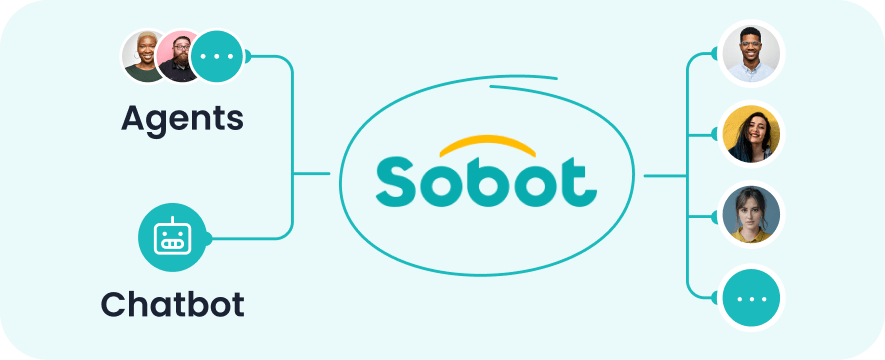
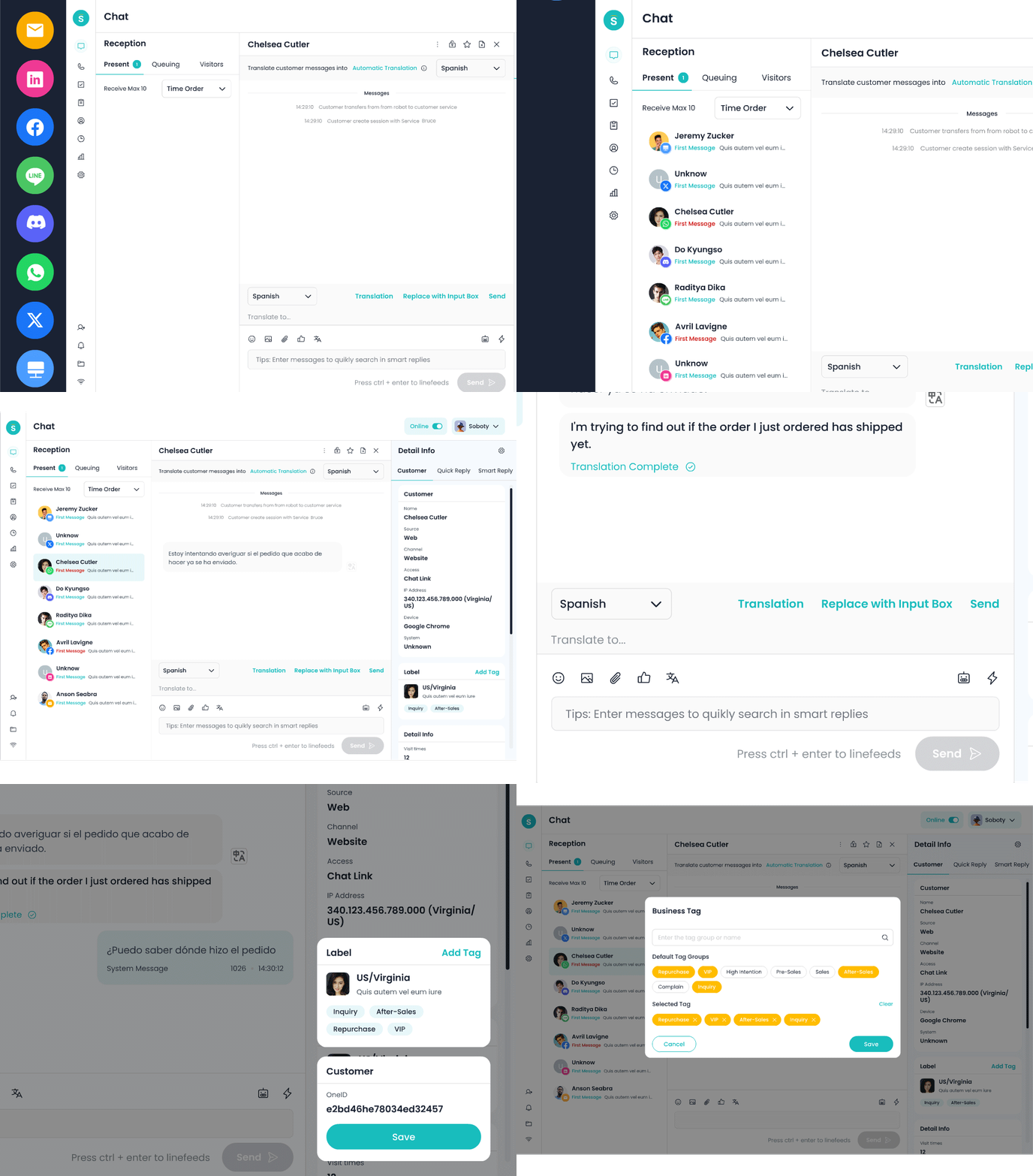
Sobot is an All-in-One AI Contact Center founded in 2014 as an AI Chatbot company — AI is the architectural skeleton, not a 2024 add-on. The Voicebot product covers inbound 24/7 (smart routing + drag-and-drop IVR + natural conversation) and outbound (sales, marketing, collections, OTP, utility) — deployed in 3 weeks with no-code flow design and published benchmarks: pickup rate 40–70%, agent efficiency +70%, conversion rate +30%.
For an enterprise picking a voice AI platform, Sobot stands out on three structural axes that pure-play voice AI APIs do not match. First, voice is natively unified with Live Chat, WhatsApp BSP, Instagram, Facebook Messenger, LINE, KakaoTalk, Zalo, Telegram, email, and SMS on one inbox with one customer profile — the AI voicebot sees the full conversation history across channels, not just the current call. Second, the multi-LLM AI stack (OpenAI + Anthropic Claude + DeepSeek + Amazon Bedrock + Baidu ERNIE) routes the right model to the right task and protects against single-vendor capacity throttling during peak load. Third, real-time AI Copilot whispers reply suggestions to human agents in 15+ languages — a layer above the voicebot that pure API platforms do not deliver.
Verified voice deployments include GLDB (Singapore MAS-licensed digital bank — Stability 99.99%, IVR efficiency +80%, CSAT 4.9+), OPay (African mobile payments — Positive feedback 90%+, Cost reduction 20%+, Conversion rate +17%), and J&T Express in the Middle East (Cost reduction 50%, Delivery rates +35%, COD collection rate +40%). Browse the full Sobot customer case library for additional voice-vertical proof points across SHEIN, SAMSUNG, UNIQLO, realme, and MIXUE.
Key Features:
- Voicebot for inbound 24/7 + outbound (sales, marketing, collections, OTP, utility); deployed in 3 weeks with no-code flow design
- Multi-LLM AI stack (OpenAI + Anthropic Claude + DeepSeek + Amazon Bedrock + Baidu ERNIE) — no single-vendor lock-in
- Voice natively unified with Live Chat + WhatsApp BSP + LINE + KakaoTalk + Zalo + Instagram + Messenger + email — one customer profile across channels
- Real-time AI Copilot: live transcription, reply suggestions, auto-summary, auto-form-filling across 15+ languages
- Drag-and-drop IVR with unlimited levels; TFN + virtual numbers + Branded Call ID
- SaaS / private cloud / on-premise deployment; ISO 27001 + ISO 27701 + GDPR + PDPA + PIPL certified
G2 Rating: 4.9 / 5 from 44 reviews; G2 Summer 2025 Leader (Grid Leader, Easiest Admin, Best Relationship); Software Advice 4.9/5; Capterra Shortlist 2025
Real user review (G2):
“We replaced a stitched-together stack — a separate voice AI API, a separate chat platform, a separate WhatsApp tool — with one Sobot deployment. The unified customer profile across voice + WhatsApp + chat changed how our agents handle escalations. The Voicebot now handles 60%+ of inbound 24/7, and Real-Time AI Copilot improved our human agents’ resolution rates measurably.” — Enterprise customer service ops director, G2 review
| Pros | Cons |
|---|---|
| AI native since 2014 — the longest AI heritage among voice AI platforms in this guide | Brand awareness in North America still building compared to Dialpad and Aircall (which are not pure voice AI platforms) |
| Only platform combining native voice + chat + WhatsApp BSP + LINE + KakaoTalk + Zalo + real-time AI Copilot for human agents | For pure API-first developer use cases (custom voice agent in 2 weeks), Retell AI or Vapi.ai may deploy faster |
| Multi-LLM architecture protects against single-vendor capacity throttling and provider lock-in | Sales-led buying motion — no self-serve API signup |
| Production deployments across BFSI (GLDB), fintech (OPay), logistics (J&T), retail (SHEIN, SAMSUNG, MIXUE) with verified outcomes | |
| ISO 27001 + ISO 27701 + GDPR + PDPA + PIPL — strongest compliance posture among voice platforms in this guide |
How to Get Started: Book a scoped demo at sobot.io/demo; software-only and software + BPO bundled options for enterprise + growing teams; software-only deployments operationalize within weeks.
TL;DR: For enterprises and growing teams that genuinely need voice AI unified with chat, WhatsApp, and digital messaging — especially those serving Singapore, Southeast Asia, MENA, Africa, or cross-border markets — Sobot is engineered exactly for that profile and consolidates 3–5 SaaS subscriptions into one platform with one customer profile. Skip it only if you are a pure-engineering team needing a developer API for a single voice use case. See Sobot’s voice AI product.
❷Retell AI — Best Low-Latency Voice Agent API for Developers
Best for: AI engineering teams and developers building production-grade voice agents (appointment booking, inbound receptionist, screening, dispatch) that need sub-second latency, configurable LLM stacks, and reliable phone infrastructure without building telephony from scratch.
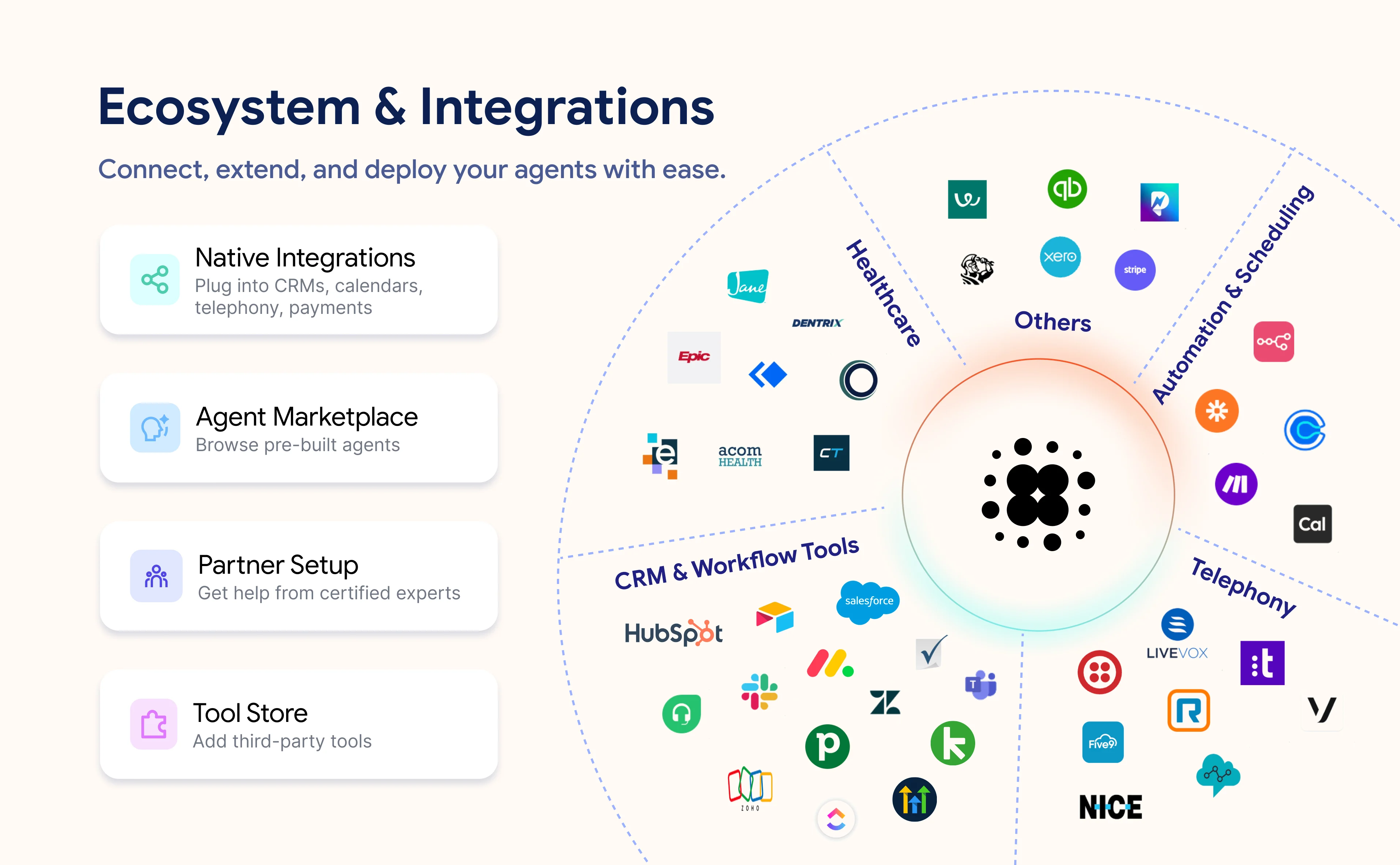
Retell AI is the most-reviewed API-first voice agent platform in this guide (4.8 from 1,945 G2 reviews) — engineered for sub-second latency (typically ~700ms response time), configurable LLM stack across OpenAI, Anthropic, Groq, and open-source models, and telephony infrastructure that handles inbound + outbound at production scale without engineers stitching together Twilio + Deepgram + their own LLM gateway.
The architecture is purpose-built for production reliability: built-in interruption handling, end-of-turn detection, function calling for booking systems and CRMs, and a custom LLM router that lets you swap foundation models without rewriting the agent. For developers, this is among the fastest paths to a working voice agent in the API-first category.
Real-world deployments include voice agents for Calendly appointment booking, restaurant reservations, healthcare inbound triage, dispatch routing, and inbound receptionist automation — pattern-matching to scenarios where 24/7 voice coverage was previously impossible to staff.
Key Features:
- Sub-second latency (~700ms typical) — among the lowest in the API-first category
- Configurable LLM stack: OpenAI, Anthropic, Groq, Llama, custom open-source
- Built-in interruption handling, end-of-turn detection, function calling
- Native telephony: inbound + outbound + transfer + branded caller ID via SIP
- Custom LLM router lets you swap foundation models without rewriting the agent
- 30+ language support with native LLM generation
G2 Rating: 4.8 / 5 from 1,945 reviews — highest review count among AI voice agent platforms in this guide
Real user review (G2):
“Retell got our appointment-booking voice agent into production in two weeks. The latency is genuinely sub-second and the interruption handling actually works — most other API platforms feel laggy compared to a human conversation.” — AI engineering team lead, G2 review
| Pros | Cons |
|---|---|
| Highest-reviewed API-first voice agent platform on G2 | API-first — non-technical teams need engineering capacity to build the agent |
| Sub-second latency in production — meaningfully better than most competitors | Voice-only platform — does not unify with chat, WhatsApp, or digital channels |
| Configurable LLM stack — avoid single-vendor lock-in | Outbound-at-scale (millions of calls) better suited to Bland.ai |
| Robust interruption handling and function calling out of the box | Enterprise SLAs and compliance certifications less mature than PolyAI or Kore.ai |
| Strong developer documentation and community |
How to Get Started: Self-serve developer signup at retellai.com with usage-based credits, plus enterprise sales for larger deployments.
TL;DR: For AI engineering teams that want the fastest path to a production-grade voice agent with sub-second latency and a configurable LLM stack, Retell AI is the standard pick. Skip it if you need voice + chat unified on one platform, or if your team does not have engineering capacity.
❸ PolyAI — Best Enterprise Inbound Voice AI for Hospitality, Retail, and BFSI
Best for: Enterprise customer service teams in hospitality, retail, financial services, and utilities that need natural-sounding inbound voice AI capable of handling complex multi-turn conversations across 50+ languages with production-grade reliability.
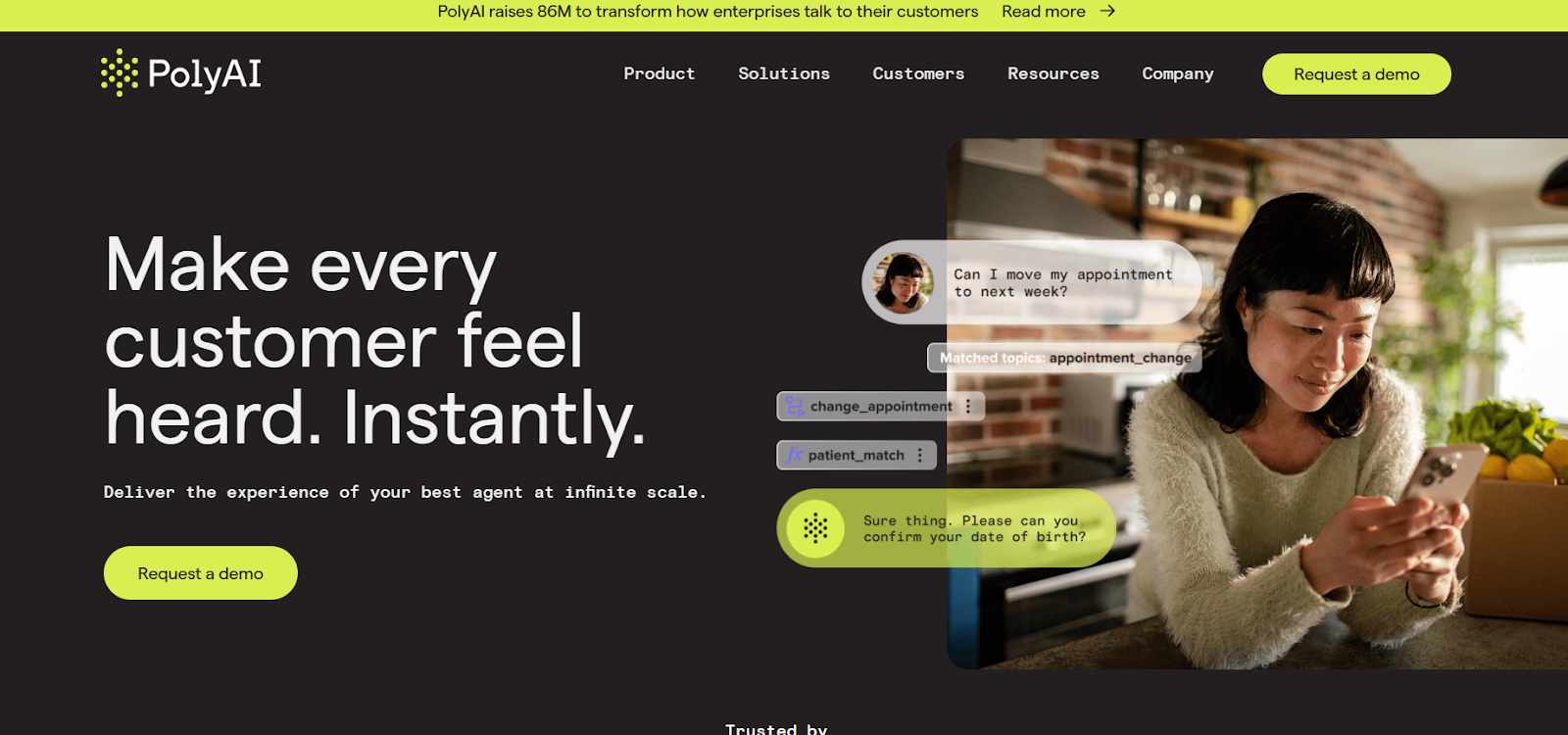
PolyAI is the UK-headquartered enterprise voice AI specialist (founded 2017 by Cambridge PhD researchers) — purpose-built for inbound voice with a hybrid architecture combining LLM generation with proprietary dialogue management trained on customer service conversations. The result: among the most natural-sounding inbound voice AI in production deployments at enterprise scale.
Real-world deployments include Marriott (hotel reservation and customer service), Greggs (UK restaurant chain ordering), the UK Met Office, plus banking and hospitality enterprises across the US, UK, and EU. PolyAI’s reference customers skew strongly toward inbound (taking calls rather than making them), where natural conversation quality matters most.
Language coverage spans 50+ languages with native generation. Compliance posture includes SOC 2 Type II and GDPR — important for enterprise BFSI and healthcare voice deployments handling sensitive data.
Key Features:
- Hybrid architecture: LLM generation + proprietary dialogue management
- 50+ languages with native generation quality
- Production-grade enterprise voice AI for inbound deployments
- Strong vertical expertise in hospitality, retail, BFSI, utilities
- SOC 2 Type II + GDPR compliance for enterprise deployments
- Reference customers: Marriott, Greggs, UK Met Office
G2 Rating: 5.0 / 5 from 12 reviews (small but unanimously positive); strong enterprise reference customer pool
Real user review (G2):
“PolyAI’s inbound voice AI is genuinely natural — our customers often do not realize they are talking to an AI until told. The dialogue management handles interruptions and topic shifts in ways that pure LLM-first platforms struggle with.” — UK hospitality enterprise ops lead, G2 review
| Pros | Cons |
|---|---|
| Among the most natural-sounding inbound voice AI in production | Sales-led and enterprise-focused — not self-serve, not built for SMB pilots |
| 50+ languages with native generation | Inbound-first — outbound capabilities lighter than Bland.ai |
| Strong enterprise customer reference base (Marriott, Greggs, UK Met Office) | Channel coverage is voice-only — does not unify with chat, WhatsApp, digital |
| Proven production reliability in hospitality, retail, BFSI | G2 review count low (12) — most validation via direct reference customers |
| Enterprise-grade compliance posture (SOC 2 Type II + GDPR) |
How to Get Started: Enterprise sales-led process at poly.ai — demo + scoped pilot + production rollout with dedicated implementation team.
TL;DR: For enterprise customer service teams in hospitality, retail, and BFSI that need natural-sounding inbound voice AI at production scale, PolyAI is among the strongest specialists. Skip it for outbound-heavy use cases (Bland.ai is better) or unified voice + chat (Sobot).
❹ Vapi.ai — Best Developer-First Modular Voice AI Platform
Best for: Developer teams that want maximum flexibility to compose voice AI agents from best-of-breed components — pick your ASR (Deepgram, AssemblyAI), LLM (OpenAI, Anthropic, Groq), and TTS (ElevenLabs, Cartesia, Azure) — with an active developer community and rapid iteration cycles.
Vapi.ai is the developer-first modular voice AI platform — the architectural counterpart to Retell AI’s more opinionated stack. Where Retell makes architectural decisions for you (default LLM router, default interruption handling), Vapi exposes every layer of the pipeline as a choice: pick your ASR, pick your LLM, pick your TTS, and pick your function-calling pattern.
The developer community is one of the most active among voice AI platforms — extensive documentation, sample agents on GitHub, and a Discord server with hundreds of developers iterating on voice agent patterns. For teams that want to optimize each layer of the pipeline independently (use Groq for sub-200ms LLM latency, ElevenLabs for premium TTS quality, Deepgram for ASR accuracy), Vapi is the canonical pick.
Real-world deployments are widespread among YC startups, voice agent founders, and engineering teams building custom voice products — though enterprise-scale reference customers are lighter than Retell, PolyAI, or Kore.ai.
Key Features:
- Open modular pipeline: pick any ASR + LLM + TTS combination
- Native integrations: Deepgram, AssemblyAI, OpenAI, Anthropic, Groq, ElevenLabs, Cartesia, Azure
- Function calling with custom JavaScript and webhook support
- Active developer community with extensive docs and sample agents
- Multi-language support inherited from chosen LLM + TTS stack
- Low-latency configuration possible (~600–800ms) with Groq + Cartesia
G2 Rating: 4.5 / 5 from 2 reviews (small G2 footprint); high developer community traction outside G2
Real user review (G2):
“Vapi’s modular architecture is why we picked it over Retell. We needed to swap our ASR mid-project and Vapi made it a configuration change rather than a rewrite. The developer community is the real product — Discord answers within an hour most days.” — Voice agent founder, GitHub discussion
| Pros | Cons |
|---|---|
| Most flexible modular pipeline among voice AI platforms | Developer-first — non-technical teams cannot build production agents directly |
| Active developer community with rapid iteration cycles | G2 review count very low — most validation lives in developer community channels |
| No vendor lock-in on any layer (ASR, LLM, TTS, telephony) | Enterprise SLA and compliance certifications less mature than PolyAI or Kore.ai |
| Low-latency configurations possible with the right component picks | Modularity is a double-edged sword — more decisions to make, more places to go wrong |
| Strong YC startup adoption — signals product-market fit at the developer tier |
How to Get Started: Self-serve developer signup at vapi.ai with usage-based credits, plus enterprise sales for larger deployments.
TL;DR: For developer teams that want maximum flexibility in voice agent architecture and the freedom to swap any layer of the pipeline, Vapi is the canonical modular platform. Skip it if you want opinionated defaults that just work (Retell) or unified voice + chat (Sobot).
❺ Synthflow — Best No-Code AI Voice Agent Builder for Non-Technical Teams
Best for: Sales, marketing, and operations teams without engineering capacity that want to build AI voice agents using a no-code visual workflow builder — and that need integrations with HubSpot, Salesforce, Twilio, Calendly, and Zapier.
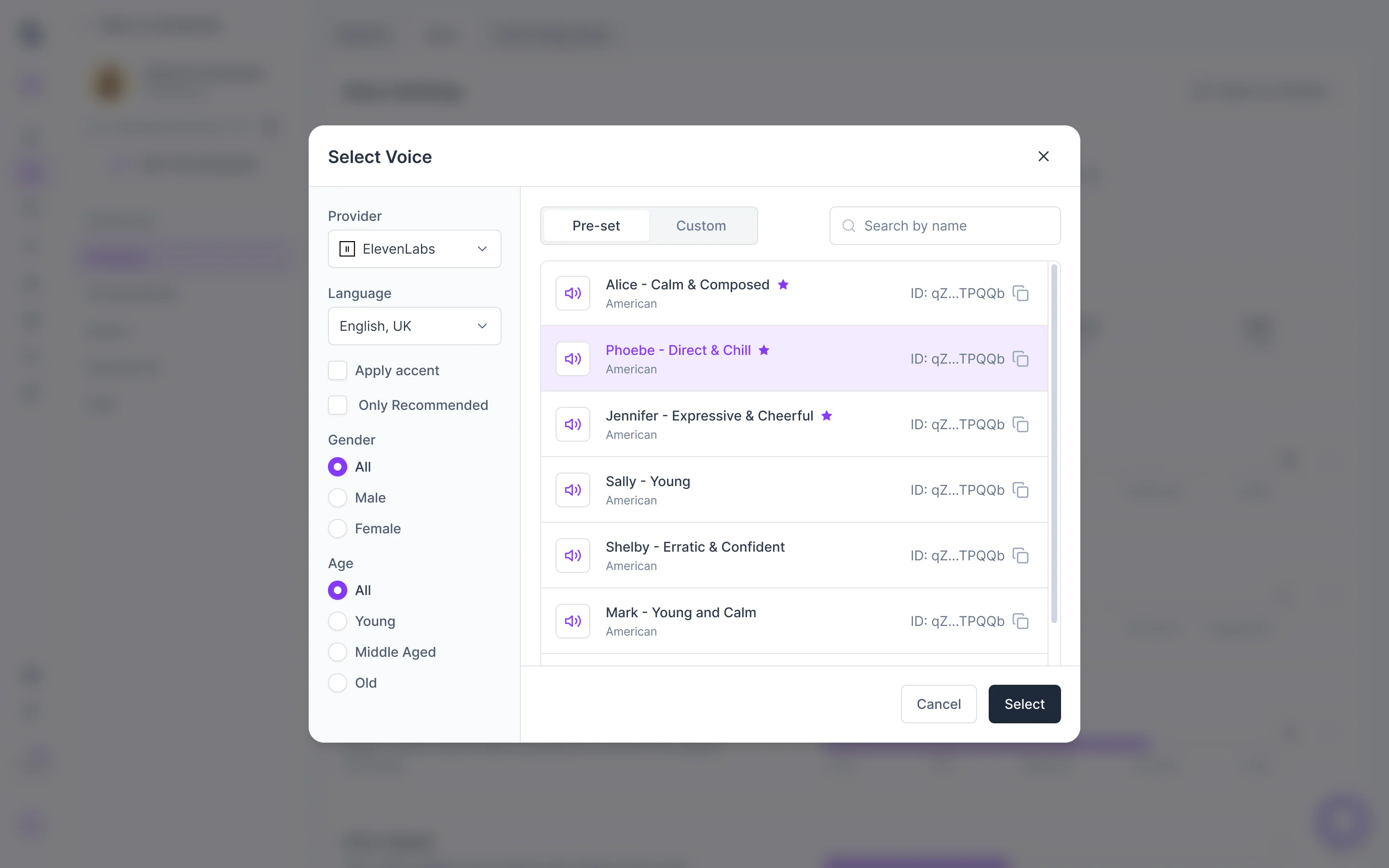
Synthflow is the German-headquartered no-code AI voice agent platform — purpose-built for non-technical teams that want to build production voice agents without writing code. The visual workflow builder handles the LLM prompting, telephony, and integration layer; the operator drags and drops conversation nodes, function calls, and CRM updates.
Native integrations with HubSpot, Salesforce, Twilio, Calendly, Zapier, and 100+ other tools cover the most common SMB and mid-market sales and operations workflows. Use cases skew toward sales qualification, appointment booking, lead nurture, and inbound receptionist scenarios.
Real-world deployments are concentrated in SMB and mid-market non-technical teams — sales operations, real estate, healthcare administrative workflows, and SaaS customer success. The 4.5 G2 rating from 1,009 reviews is among the strongest in the no-code voice AI category.
Key Features:
- Visual no-code workflow builder for AI voice agents
- Native integrations: HubSpot, Salesforce, Twilio, Calendly, Zapier, 100+ others
- 30+ language support
- Use cases: sales qualification, appointment booking, inbound receptionist, lead nurture
- Custom prompt engineering and conversation flow design without code
- Real-time analytics and call recordings for QA
G2 Rating: 4.5 / 5 from 1,009 reviews — strongest review count in the no-code voice AI category
Real user review (G2):
“We built our voice receptionist in an afternoon. The HubSpot integration meant the qualified leads went straight into our pipeline with the full conversation summary attached. For a 12-person sales team without engineering capacity, this was the right entry point.” — SMB B2B sales ops lead, G2 review
| Pros | Cons |
|---|---|
| No-code accessible for non-technical teams | No-code abstraction limits flexibility for complex production scenarios |
| Strong CRM integration depth (HubSpot, Salesforce, Calendly) | Voice-only — does not unify with chat, WhatsApp, digital |
| Visual workflow builder reduces time-to-first-agent to hours, not days | Latency depends on chosen LLM + TTS — less optimized than Retell or Vapi |
| Strong G2 review count for the no-code category (1,009 reviews) | Enterprise SLAs less mature than PolyAI or Kore.ai |
| Use case templates accelerate common scenarios (sales, booking, receptionist) |
How to Get Started: Self-serve signup with free trial at synthflow.ai, plus sales-led enterprise tier for larger deployments.
TL;DR: For non-technical sales, marketing, and operations teams that want a production voice AI agent in an afternoon, Synthflow is the canonical no-code pick. Skip it if you need developer-level flexibility (Vapi) or enterprise voice + chat unification (Sobot, Kore.ai).
❻ Voiceflow — Best Visual Voice + Chat AI Agent Design and Deployment Platform
Best for: Conversation designers, CX teams, and engineering teams that want a visual collaborative platform for designing voice + chat AI agents and deploying them to multiple channels — used by SoFi, Trivago, and U.S. Bank.
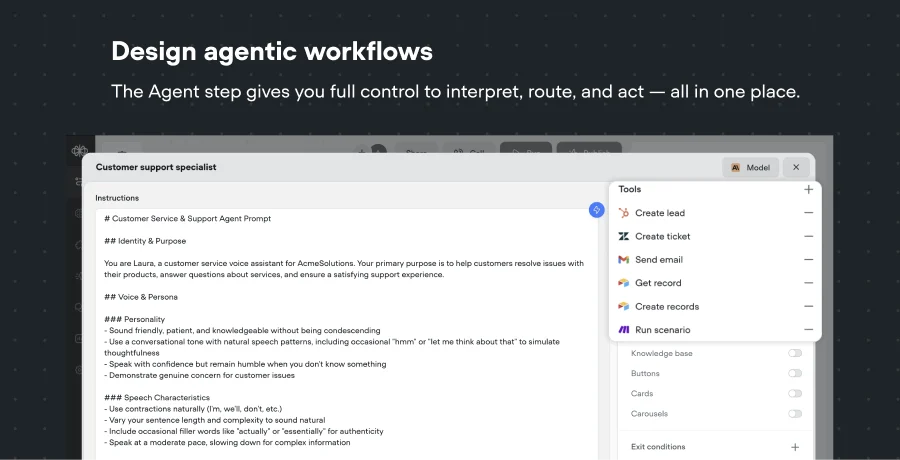
Voiceflow is the Toronto-based visual conversation design platform (founded 2018) — purpose-built for collaborative design across product, CX, and engineering teams. The visual builder lets designers draft conversation flows, while engineers wire in custom code blocks, function calls, and API integrations.
The platform supports both voice and chat AI agents from one design surface — meaning the same conversation logic can power a voice receptionist on the phone and a chat agent on the website. Voiceflow recently added Agents (full AI agent functionality with autonomous task execution) on top of the visual conversation layer.
Real-world deployments include SoFi (financial services), Trivago (travel), and U.S. Bank (banking) — pattern-matching to enterprise CX teams that want collaborative design + production deployment in one tool.
Key Features:
- Visual collaborative builder for voice + chat AI agents on one platform
- Custom code blocks and API function calling alongside no-code design
- Agents (AI agent functionality) layered on top of visual conversation logic
- Deploy to phone (voice), website (chat), WhatsApp, Slack, Microsoft Teams
- 20+ language support
- Reference customers: SoFi, Trivago, U.S. Bank
G2 Rating: 4.6 / 5 from 110 reviews; strong enterprise reference customer pool
Real user review (G2):
“Voiceflow is what we picked because our CX designers and our engineering team could collaborate in the same tool. Designers drafted the conversation, engineers wired in the API calls. For our customer service modernization, this collaboration model was the deciding factor.” — Enterprise CX team lead, G2 review
| Pros | Cons |
|---|---|
| Visual collaborative design across product, CX, and engineering teams | Lighter on telephony reliability than Retell or Vapi for pure voice use cases |
| Voice + chat agents from one design surface — true cross-channel reuse | Channel deployment requires more configuration than dedicated CCaaS platforms |
| Strong enterprise reference customers (SoFi, Trivago, U.S. Bank) | Less APAC reference customer presence than Sobot or WIZ.AI |
| Combines no-code accessibility with developer flexibility via code blocks | Voice latency depends on chosen ASR/LLM/TTS combination |
| Recently expanded into AI agents with autonomous task execution |
How to Get Started: Self-serve signup at voiceflow.com, plus enterprise sales for production deployments.
TL;DR: For CX teams and enterprises that want collaborative design across voice + chat AI agents on one platform, Voiceflow is the canonical visual builder. Skip it for pure-API low-latency voice (Retell, Vapi) or for unified contact center deployments (Sobot).
❼ Kore.ai — Best Enterprise Unified Voice + Text Conversational AI
Best for: Large enterprises (Bank of America, Cisco, PNC) that need a single conversational AI platform spanning voice + chat + agent assist + back-office automation with industry-specialized models for BFSI, healthcare, retail, and telecom.
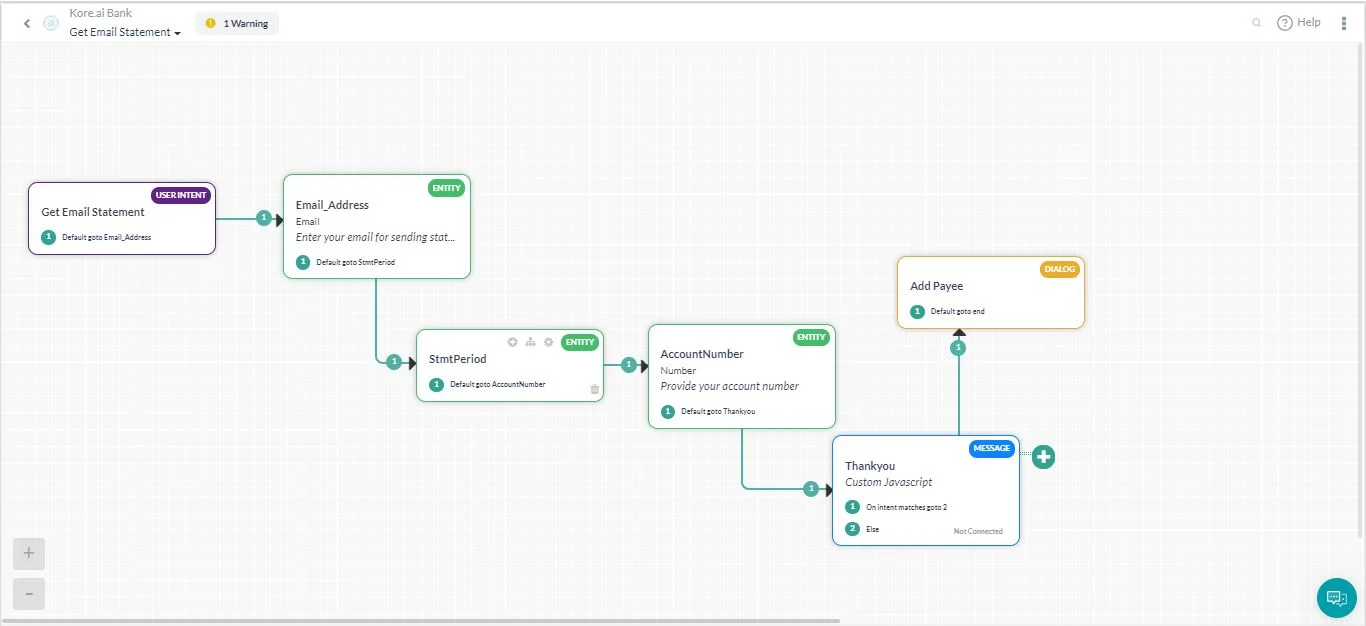
Kore.ai is the Indian-headquartered enterprise conversational AI specialist (founded 2014) — purpose-built for large enterprises that need voice + text + agent assist on one platform with industry-specialized models. The XO Platform unifies voice IVR, chatbot deployment, agent assist, and back-office automation under one architecture.
Real-world reference customers include Bank of America, Cisco, PNC, and major BFSI enterprises globally — pattern-matching to large regulated industries where compliance, industry expertise, and unified voice + text are structural requirements. Kore.ai recently expanded into Generative AI capabilities with the XO Generative AI Hub, adding LLM-powered conversational flows on top of the traditional dialog management.
Language coverage spans 100+ languages — among the broadest in this guide — making Kore.ai a credible pick for global enterprise voice deployments across the Americas, EMEA, and APAC.
Key Features:
- XO Platform: unified voice + chat + agent assist + back-office automation
- 100+ language coverage — among the broadest in the voice AI category
- Industry-specialized models for BFSI, healthcare, retail, telecom
- XO Generative AI Hub: LLM-powered conversational flows added 2024–2025
- Enterprise reference customers: Bank of America, Cisco, PNC
- Strong APAC presence — Indian headquarters with global enterprise footprint
G2 Rating: 4.6 / 5 from 472 reviews — strong enterprise reference customer pool
Real user review (G2):
“Kore.ai’s XO Platform handles our voice IVR and our chatbot deployment from one stack. For a large enterprise where the alternative was three separate vendors for voice, chat, and agent assist, the consolidation was the deciding factor.” — Enterprise BFSI conversational AI lead, G2 review
| Pros | Cons |
|---|---|
| 100+ language coverage — broadest in this guide | Enterprise-only — implementation complexity and sales-led process not suited to SMB pilots |
| Strong enterprise reference customers (Bank of America, Cisco, PNC) | Voice latency less optimized than pure-API platforms (Retell, Vapi) |
| Unified voice + chat + agent assist + back-office on one platform | Channel unification with WhatsApp BSP and APAC messaging shallower than Sobot |
| Industry-specialized models accelerate vertical deployments | User experience and platform feel weighted toward traditional dialog management, not AI-native |
| Long-running enterprise track record (founded 2014, mature platform) |
How to Get Started: Enterprise sales-led process at kore.ai — demo + scoped pilot + implementation with dedicated team.
TL;DR: For large enterprises needing unified voice + chat + agent assist + back-office automation across 100+ languages, Kore.ai is the canonical enterprise conversational AI pick. Skip it for SMB pilots or for pure-API developer use cases.
❽ Bland.ai — Best AI Phone Automation for High-Volume Outbound
Best for: Operations teams running outbound at massive scale — outbound receptionists, survey automation, sales outreach, appointment confirmations, and routine notification campaigns — that need to dial millions of calls reliably with LLM-powered conversation.
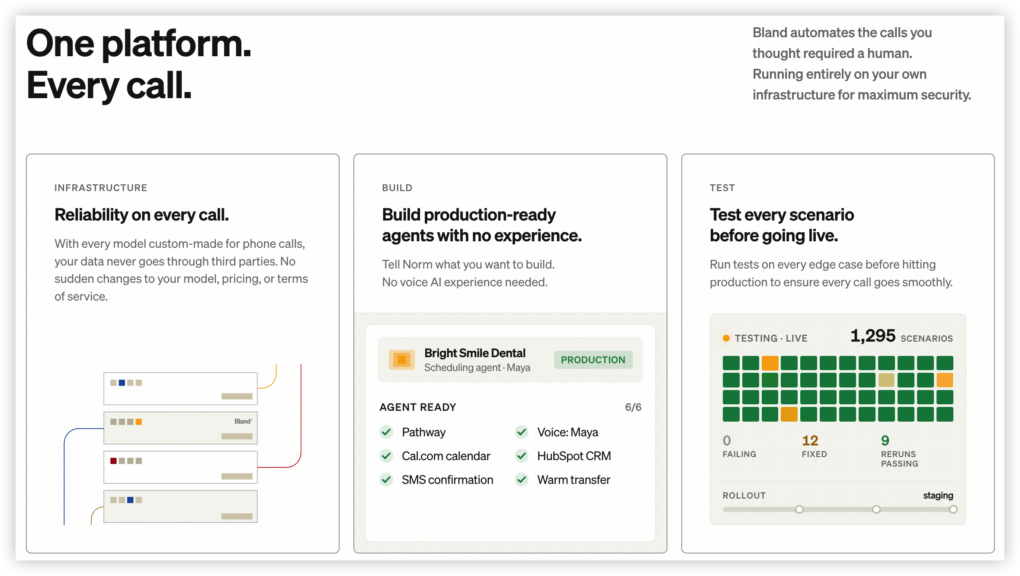
Bland.ai is the AI phone automation platform purpose-built for outbound scale — engineered to handle millions of calls with LLM-powered conversation and proprietary phone infrastructure that handles dialing, transfer, voicemail detection, and answering machine handling at production volumes.
The platform combines a developer API with no-code workflow templates for common outbound scenarios: outbound receptionist deployment, sales outreach, appointment confirmation, survey collection, and notification campaigns. The reference customer profile skews toward operations teams that need to scale outbound calling without staffing thousands of human agents.
Real-world deployments are widespread across operations and growth teams — though enterprise-scale reference customers are still building compared to PolyAI or Kore.ai. The 5.0 G2 rating from 8 reviews reflects strong early customer satisfaction in the outbound automation segment.
Key Features:
- Outbound at massive scale — millions of calls handled reliably
- LLM-powered conversation with custom prompt engineering
- Proprietary phone infrastructure: dialing, transfer, voicemail detection
- No-code workflow templates for common outbound scenarios (receptionist, surveys, appointments)
- Developer API for custom outbound flows
- 20+ language support
G2 Rating: 5.0 / 5 from 8 reviews; strong social media traction and rapidly growing customer base
Real user review (G2):
“Bland is what we picked because we needed to run 100,000+ outbound calls at month-over-month volume for survey collection. The cost economics and reliability at that scale were what no other platform in this category could match.” — Operations growth lead, G2 review
| Pros | Cons |
|---|---|
| Engineered for outbound at massive scale (millions of calls) | Outbound-first — inbound and full omnichannel coverage lighter than PolyAI or Sobot |
| Proprietary phone infrastructure with strong voicemail and transfer handling | Enterprise SLAs and compliance certifications still maturing |
| Rapid product iteration and active development | G2 review count very small (8) — most validation via direct customer references |
| Strong social media and developer community presence | Voice-only — does not unify with chat, WhatsApp, digital channels |
| No-code workflow templates accelerate common outbound use cases |
How to Get Started: Self-serve developer signup at bland.ai with usage-based credits, plus enterprise sales for high-volume deployments.
TL;DR: For operations teams that need to dial millions of outbound calls reliably with LLM-powered conversation, Bland.ai is the standard pick. Skip it if your primary use case is inbound voice AI or unified voice + chat.
❾ SoundHound AI — Best Vertical Voice AI for Restaurants, Automotive, and Hospitality
Best for: Restaurant chains, automotive OEMs, and hospitality enterprises that need production voice AI with deep vertical expertise — drive-through ordering, in-vehicle voice assistant, hotel front desk — built on proprietary speech-to-meaning technology rather than LLM-first architectures.
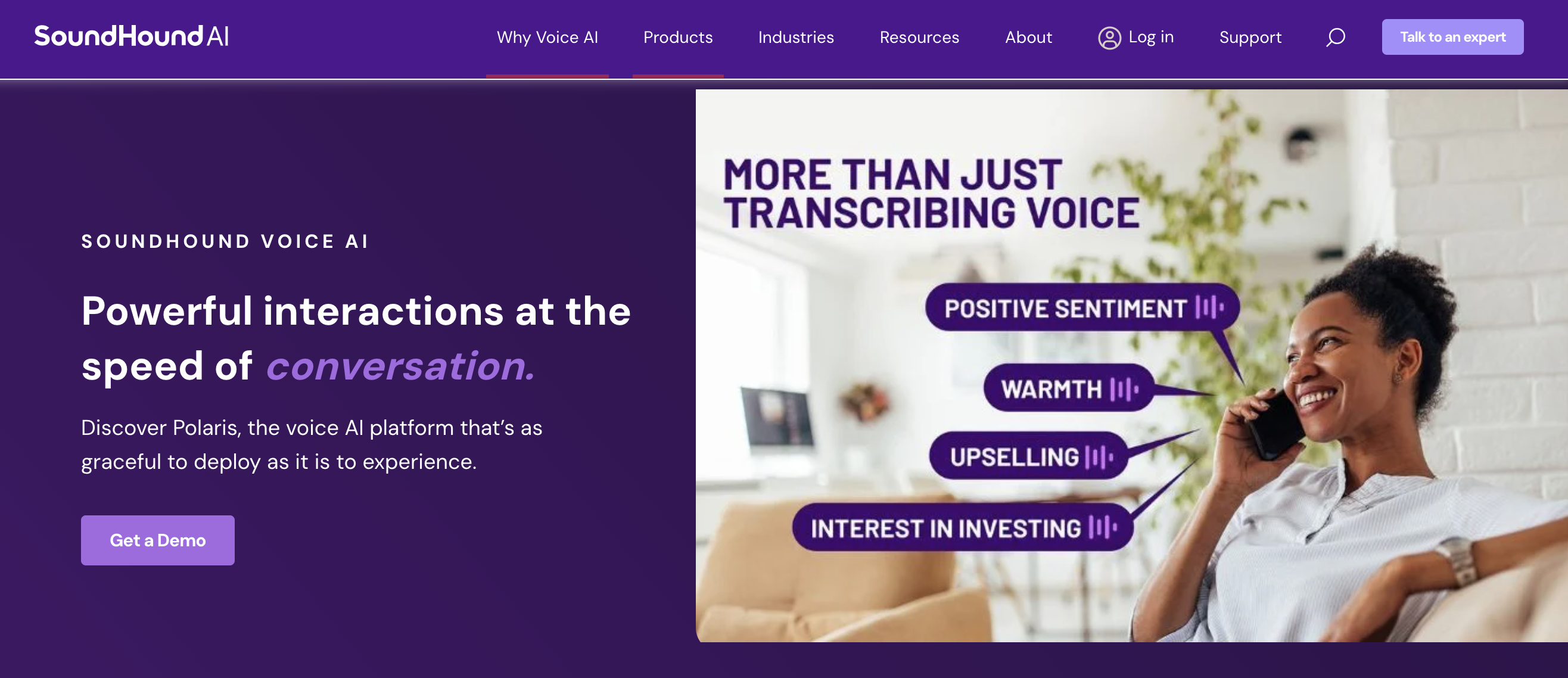
SoundHound AI is the publicly traded voice AI specialist (NASDAQ: SOUN) — built on proprietary Speech-to-Meaning (STM) technology that processes spoken language directly to intent without intermediate text transcription. This architectural choice delivers tight latency in known domains and is purpose-built for production voice deployments at scale.
The vertical focus is among the strongest in this guide: restaurant drive-through ordering (Chipotle, White Castle, Krispy Kreme), automotive in-vehicle voice assistant (Stellantis), hospitality (hotel front desk), and payments (Mastercard partnership). For enterprises in these specific verticals, SoundHound’s domain expertise and production track record are unmatched.
Public-company status delivers additional transparency and stability that private voice AI startups cannot match — though it also signals that SoundHound is no longer in the rapid-experimentation startup tier. Language coverage spans 25+ languages with native generation.
Key Features:
- Proprietary Speech-to-Meaning (STM) engine — different architectural approach from LLM-first competitors
- Tight latency in known domains (restaurants, automotive, hospitality)
- Reference customers: Chipotle, White Castle, Krispy Kreme, Stellantis, Mastercard
- Public company (NASDAQ: SOUN) — financial transparency and stability
- 25+ language support with native generation
- Strong vertical expertise in restaurant ordering and automotive voice assistant
Strong public-company coverage and analyst recognition; proprietary STM engine validated in production at major restaurant and automotive enterprises
Real user review (G2):
“SoundHound’s STM engine handles the drive-through ordering scenario better than any LLM-first platform we tested. The latency is tight, the order accuracy is high, and the integration with our POS was clean. For a national restaurant chain, this was the right pick.” — National restaurant chain technology lead
| Pros | Cons |
|---|---|
| Proprietary STM architecture delivers tight latency in known verticals | Vertical focus means general-purpose voice AI use cases are not the strong suit |
| Strong enterprise vertical reference customers (Chipotle, Stellantis, Mastercard) | Enterprise-only — implementation complexity not suited to SMB pilots |
| Public-company transparency and financial stability | LLM-first competitors (Retell, Vapi, Bland) iterate faster on new use cases |
| Production track record in restaurant drive-through and automotive voice | Voice-only — does not unify with chat, WhatsApp, digital channels |
| 25+ language support with native generation |
How to Get Started: Enterprise sales-led process at soundhound.com — vertical-specific demos for restaurant, automotive, hospitality, payments.
TL;DR: For restaurant chains, automotive OEMs, and hospitality enterprises that need vertical-specialized voice AI with proven production track record, SoundHound is the canonical pick. Skip it for general-purpose voice AI use cases or SMB pilots.
❿ WIZ.AI — Best Southeast Asia Voice AI for Local Languages
Best for: Enterprises operating in Indonesia, Thailand, Vietnam, the Philippines, and Malaysia that need production voice AI with genuinely native generation quality in Bahasa, Thai, Vietnamese, and Tagalog — not English-trained models with translation fallback.
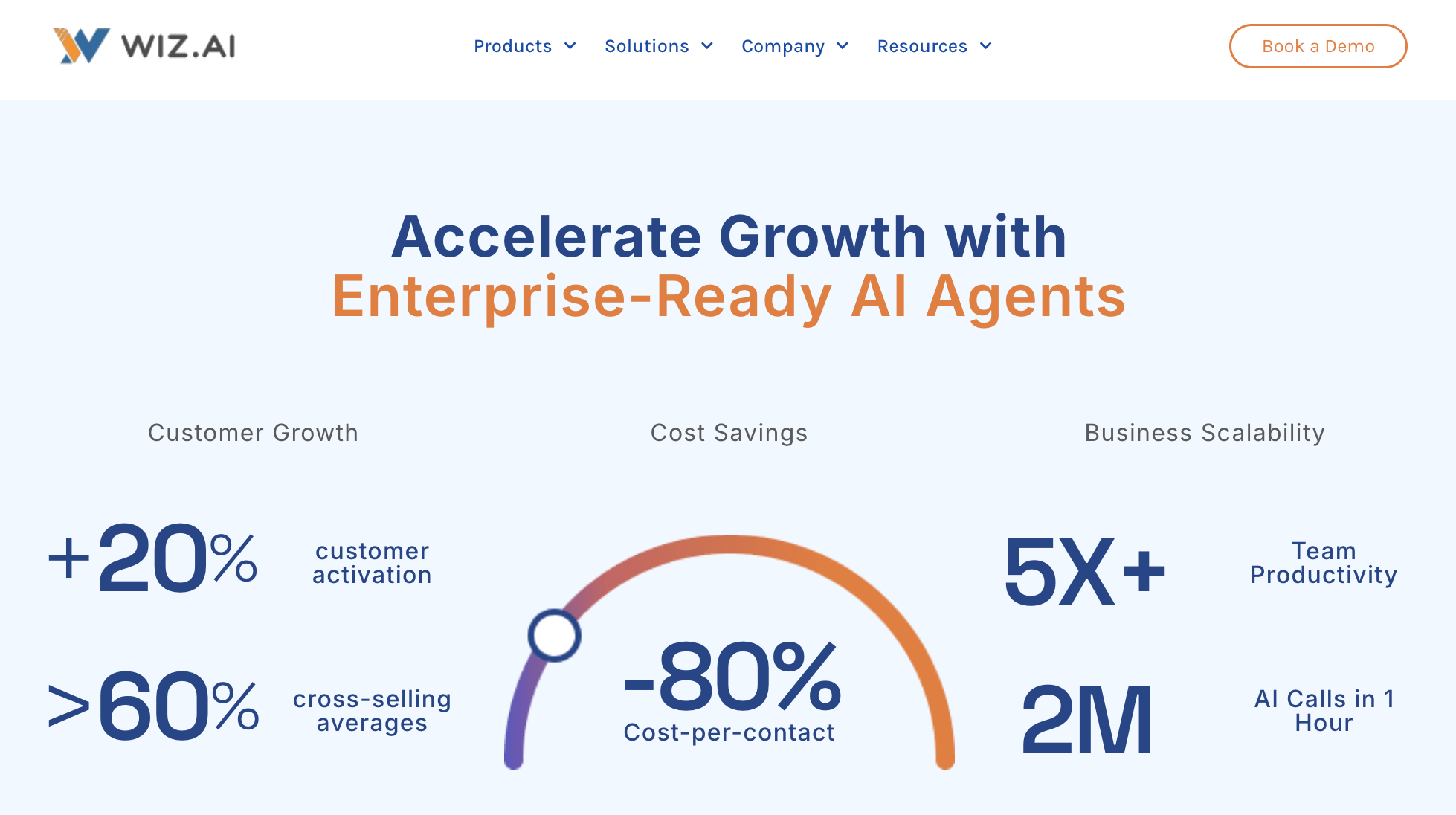
WIZ.AI is the Singapore-headquartered voice AI specialist (founded 2019) — purpose-built for Southeast Asia local languages where global voice AI platforms typically rely on English-trained models with translation fallback. WIZ.AI’s models are fine-tuned for native generation quality in Bahasa Indonesia, Thai, Vietnamese, Tagalog, and Malay.
The reference customer profile concentrates on BFSI enterprises (banks, insurance, fintech) across Indonesia, Thailand, Vietnam, and the Philippines — verticals where local-language voice AI is a structural requirement and where global English-first platforms struggle to deliver production-quality conversations.
Use cases skew toward outbound (collections, sales, marketing, notifications) where SEA enterprises need high-volume voice automation with cultural and linguistic naturalness that English-trained models cannot match. The 4.7 G2 rating from 9 reviews reflects strong early customer satisfaction in the SEA enterprise segment.
Key Features:
- Native generation in Bahasa Indonesia, Thai, Vietnamese, Tagalog, Malay
- SEA enterprise reference customers in BFSI (banking, insurance, fintech)
- Outbound-strong: collections, sales, marketing, notification campaigns
- Cultural and linguistic naturalness specific to Southeast Asia
- Singapore HQ with deep regional presence
- LLM-first architecture with SEA language specialization
G2 Rating: 4.7 / 5 from 9 reviews; strong SEA enterprise reference customer pool
Real user review (G2):
“WIZ.AI is what we picked over global voice AI platforms for our Indonesian operation. The native Bahasa generation quality is meaningfully better than what we got from English-first platforms with translation. For our BFSI use case in Jakarta, this was the deciding factor.” — SEA BFSI operations lead, G2 review
| Pros | Cons |
|---|---|
| Native generation in SEA local languages (Bahasa, Thai, Vietnamese, Tagalog) | Outside SEA, reference customers and brand awareness are limited |
| Strong BFSI vertical reference customers across Indonesia, Thailand, Vietnam, Philippines | Inbound capabilities lighter than PolyAI or Sobot |
| Singapore HQ with deep regional presence and local support | Channel coverage is voice-only — does not unify with WhatsApp, chat, digital |
| LLM-first architecture inheriting foundation model improvements | Enterprise SLAs less mature than Kore.ai or PolyAI |
| Outbound-strong for collections, sales, marketing, notification campaigns |
How to Get Started: Enterprise sales-led process at wiz.ai — regional sales coverage across Singapore, Indonesia, Thailand, Vietnam, Philippines.
TL;DR: For enterprises operating in Southeast Asia that need production voice AI in Bahasa, Thai, Vietnamese, or Tagalog with cultural naturalness, WIZ.AI is the canonical regional specialist. Skip it for global voice deployments or for unified voice + chat (Sobot covers SEA channels at the platform layer).
By Scenario: Picking the Right AI-Powered Voice Platform
The best AI voice platform depends on whether you are an engineering team building a custom agent, an enterprise modernizing a contact center, or a regional operator solving for SEA language coverage. Below is how we segment recommendations across the most common 2026 buyer profiles.
By Buyer Profile
AI engineering team building a custom voice agent: Retell AI for opinionated low-latency defaults; Vapi.ai for maximum modular flexibility; Bland.ai if outbound-at-scale is the primary use case.
Non-technical team needing a no-code voice agent: Synthflow for visual no-code builder with HubSpot/Salesforce integrations; Voiceflow for collaborative design across CX and engineering.
Enterprise modernizing a contact center: Sobot for voice + chat + WhatsApp unified with AI-native architecture; Kore.ai for unified voice + text + back-office automation across 100+ languages; PolyAI for inbound voice AI with natural conversation quality.
Vertical enterprise (restaurants, automotive, hospitality): SoundHound AI for proprietary STM engine in vertical-specialized domains.
SEA enterprise needing local-language voice AI: WIZ.AI for native Bahasa, Thai, Vietnamese generation; Sobot for voice + chat + WhatsApp unified across SEA channels.
By Use Case
Inbound voice AI receptionist + appointment booking: Retell AI for low-latency API; PolyAI for natural enterprise inbound; Synthflow for no-code SMB receptionist.
Outbound at massive scale: Bland.ai for millions of calls reliably; WIZ.AI for SEA outbound in local languages; AI Rudder for SEA collections.
Enterprise contact center modernization: Sobot for AI-native + voice/chat unified; Kore.ai for unified voice + text + agent assist; PolyAI for inbound natural conversation.
Restaurant drive-through ordering: SoundHound AI for proprietary STM with tight latency in known domain.
Automotive in-vehicle voice assistant: SoundHound AI for OEM partnerships (Stellantis); Kore.ai for industry-specialized models.
By Geography
Singapore + Southeast Asia: Sobot has Singapore HQ for SEA + voice + chat + WhatsApp BSP + native LINE / KakaoTalk / Zalo, plus production voice case at GLDB (Singapore digital bank IVR efficiency +80%); WIZ.AI for SEA local-language voice AI; AI Rudder for SEA outbound collections.
North America: Retell AI for low-latency voice agent API; PolyAI for enterprise inbound; Bland.ai for outbound at scale; Voiceflow for collaborative design.
Europe: PolyAI (UK headquarters, strong EU enterprise presence); Synthflow (German headquarters, DACH market); Parloa (German enterprise voice AI specialist).
Cross-border / global: Kore.ai for 100+ language enterprise deployments; Sobot for multi-language voice + chat + WhatsApp unified; PolyAI for 50+ language inbound voice AI.
How to Choose an AI-Powered Voice Platform: A 4-Step Framework
1. Define whether voice is a standalone use case or part of an omnichannel customer journey.
This is the single most important architectural decision. If voice is genuinely standalone — a developer-built receptionist, an outbound survey campaign, a drive-through ordering kiosk — then a voice-only API platform (Retell, Vapi, Bland) or a vertical specialist (SoundHound, PolyAI) is the right fit. If voice is part of a broader customer journey where the same customer also reaches you on WhatsApp, onsite chat, Instagram, or email, then an integrated platform (Sobot) where the AI sees the full conversation history across channels is structurally better positioned.
2. Benchmark latency against your actual concurrent call volume, not the demo.
Voice AI that feels snappy in a single-call demo can degrade meaningfully under 50 concurrent calls. Retell AI is engineered for sub-second latency in production. Vapi.ai can hit sub-second with the right ASR + LLM + TTS picks (Groq + Cartesia + Deepgram is a common low-latency stack). PolyAI and Kore.ai are optimized for enterprise scale rather than absolute lowest latency. Sobot delivers production latency across SEA, MENA, and Africa where local network conditions add real-world variance. Insist on a concurrent-load test during pilot.
3. Validate native generation quality per target language — not just supported language count.
“50+ languages supported” can mean 5 with native generation and 45 with translation fallback. For deployments in Bahasa, Thai, Vietnamese, Korean, Arabic, or Mandarin, native generation quality is a structural differentiator. Sobot delivers native generation across 15+ languages via its multi-LLM stack. PolyAI and Kore.ai have broader nominal coverage. WIZ.AI specializes in SEA local-language naturalness. Run a 100-conversation sample test in each target language before committing.
4. Map compliance and deployment options to your data residency requirements.
Voice deployments handling payment, healthcare, identity, or financial data carry compliance requirements that vary by region. Sobot offers ISO 27001 + ISO 27701 + GDPR + PDPA + PIPL with SaaS, private cloud, and on-premise deployment options. PolyAI and Kore.ai cover SOC 2 Type II + GDPR. Pure-API platforms (Retell, Vapi, Bland) typically rely on the underlying LLM provider’s compliance posture. Map your data residency requirements before selecting.
Frequently Asked Questions
What is an AI-powered voice platform in 2026?
An AI-powered voice platform is a system that handles real-time spoken conversations using a combination of Automatic Speech Recognition (ASR), Large Language Models (LLMs), and Text-to-Speech (TTS) — typically with sub-second latency, natural turn-taking, interruption handling, and function calling to backend systems (CRMs, calendars, payment systems). In 2026, the category has split into API-first developer platforms (Retell AI, Vapi.ai, Bland.ai), enterprise voice AI specialists (PolyAI, Kore.ai, SoundHound), and integrated AI contact centers (Sobot, Dialpad) that unify voice with chat and digital channels.
Which AI voice platform has the lowest latency in 2026?
Retell AI is engineered for sub-second latency in production (typically ~700ms response time) and is the most-reviewed API-first voice agent platform on G2 (4.8 from 1,945 reviews). Vapi.ai can match this with the right ASR + LLM + TTS picks (Groq + Cartesia + Deepgram is a common low-latency stack). Sobot delivers production latency across SEA, MENA, and Africa with multi-LLM routing. PolyAI optimizes for natural inbound conversation quality rather than absolute lowest latency. The fastest platform for your use case depends on whether absolute latency or natural conversation quality matters more.
Which AI voice platform supports the most languages?
Kore.ai supports 100+ languages and is the broadest in this guide for enterprise deployments. PolyAI covers 50+ languages with native generation quality. Retell AI supports 30+ languages inherited from the chosen LLM stack. Sobot covers 15+ languages with native generation across its multi-LLM architecture, including specialization for Bahasa, Thai, Vietnamese, Korean, Arabic, Spanish, and Mandarin. WIZ.AI specializes in SEA local languages (Bahasa, Thai, Vietnamese, Tagalog) with native generation quality that English-first platforms cannot match.
What’s the best AI voice platform for Southeast Asia?
For SEA enterprises that need native generation in Bahasa, Thai, Vietnamese, or Tagalog, WIZ.AI is the canonical regional specialist with native-language quality that global English-first platforms typically cannot match. For SEA enterprises that need voice unified with WhatsApp, chat, LINE, KakaoTalk, and Zalo on one platform, Sobot has Singapore HQ for the region, Meta-approved WhatsApp BSP, and a production voice case at GLDB (Singapore digital bank) showing IVR efficiency +80% and CSAT 4.9+.
Can AI voice platforms handle outbound calls at scale?
Yes. Bland.ai is engineered for outbound at massive scale (millions of calls reliably) with proprietary phone infrastructure handling dialing, transfer, voicemail detection, and answering machine handling. Sobot’s Voicebot handles outbound for sales, marketing, collections, OTP, and utility notifications with verified pickup rates of 40–70% and conversion rate uplift of +30%. WIZ.AI specializes in SEA outbound for collections. AI Rudder is another SEA outbound voice AI specialist. For Tier-1 enterprise outbound, evaluate Bland.ai and Sobot alongside.
Which AI voice platform integrates with chat and WhatsApp?
Most pure-play AI voice platforms (Retell, Vapi, Bland, PolyAI, Synthflow, Voiceflow) are voice-only — they do not natively unify with chat or WhatsApp. Among platforms in this guide, Sobot is the only one with voice natively unified with onsite chat + WhatsApp BSP + LINE + KakaoTalk + Zalo + Instagram + Messenger + email on one inbox with one customer profile. Kore.ai supports voice + text on its XO Platform but channel coverage outside chat is lighter. For deployments where the same customer reaches out on voice AND digital channels, voice + chat unification is a structural advantage.
What’s the difference between LLM-first and proprietary speech-to-meaning voice AI?
LLM-first voice AI platforms (Retell, Vapi, Bland, Sobot, Kore.ai) build the voice agent on top of foundation LLMs (OpenAI, Anthropic, Groq, open-source models) — inheriting the model’s improving capabilities and broad domain coverage. Proprietary speech-to-meaning (STM) platforms (SoundHound) process spoken language directly to intent without intermediate text transcription — delivering tighter latency in known vertical domains (restaurants, automotive) at the cost of less general-purpose flexibility. The right architecture depends on whether your use case is general-purpose (LLM-first wins) or vertical-specialized (STM wins in restaurant drive-through, automotive in-vehicle).
How long does it take to deploy an AI voice agent in 2026?
Self-serve developer platforms (Retell, Vapi, Bland) can have a working voice agent in 1–2 weeks. No-code platforms (Synthflow, Voiceflow) can deploy in an afternoon to a few days. Sobot’s Voicebot deploys in 3 weeks with no-code flow design and includes inbound + outbound + AI Copilot. Enterprise voice AI specialists (PolyAI, Kore.ai, SoundHound) typically require multi-month implementation cycles with dedicated teams. Integration scope (CRM connectors, function calling, custom intents, voice quality tuning per language) drives the timeline more than the platform itself.
Conclusion
The 2026 AI-powered voice platform market has split into three clear architectural camps. The first — API-first developer platforms (Retell AI, Vapi.ai, Bland.ai) — gives engineering teams maximum flexibility for custom voice agents. The second — enterprise voice AI specialists (PolyAI, Kore.ai, SoundHound, Parloa) — delivers production-grade deployments with vertical expertise. The third — integrated AI contact centers (Sobot) — unifies voice AI with chat, WhatsApp, and digital channels on one platform with one customer profile. The right pick maps to whether voice is standalone or part of an omnichannel customer journey, whether you need engineering capacity for an API or no-code accessibility for non-technical teams, and where your data residency lives.
For enterprises and growing teams that genuinely need voice AI unified with chat, WhatsApp BSP, and digital channels — especially those serving Singapore, Southeast Asia, MENA, Africa, or cross-border markets — Sobot is engineered exactly for that profile. AI native since 2014, multi-LLM architecture protecting against single-vendor capacity throttling, Voicebot for inbound 24/7 + outbound deployed in 3 weeks with verified benchmarks (pickup rate 40–70%, agent efficiency +70%, conversion rate +30%), real-time AI Copilot for human agents across 15+ languages, and ISO 27001 + ISO 27701 + GDPR + PDPA + PIPL compliance. Production voice deployments at GLDB (Singapore digital bank — IVR efficiency +80%, CSAT 4.9+), OPay (African mobile payments — Cost reduction 20%+, Conversion +17%), and J&T Express Middle East (COD collection +40%) show what the platform delivers at scale. Book a scoped Sobot voice AI pilot and we will benchmark Sobot’s voice platform against your call volume in your three highest-priority languages before any commitment.
For pure-API developer use cases needing low-latency voice agents, Retell AI is the standard. For enterprise inbound voice AI with natural conversation quality, PolyAI. For unified voice + text + agent assist across 100+ languages, Kore.ai. For vertical-specialized voice AI in restaurants and automotive, SoundHound. For SEA local-language outbound, WIZ.AI.