If you are looking for the best SMB call center solution in 2026, you are not just shopping for a phone system. You need a platform that handles inbound and outbound calls, supports AI-powered self-service, connects voice with chat and messaging, and scales without requiring a costly infrastructure overhaul or a dedicated IT team to run it.
For most SMBs, Sobot is the best overall call center solution in 2026. It combines AI voice automation, omnichannel support, intelligent routing, and enterprise-grade reliability in a single platform — with the fast setup and flexible per-agent pricing that growing teams actually need. That said, the right platform depends on your size, industry, budget, and how much complexity you can absorb.
This guide covers the top-reviewed SMB call center platforms for 2026. For each solution, we explain what it does well, where it falls short, and exactly which type of team it fits — so you can make a confident decision without comparing feature lists for hours.
1. Introduction: The Evolving Role of Call Centers for SMBs in 2026
📍 A Signal from the Industry
March 25, 2026. London. Cavell Summit Europe.
When industry analysts, service providers, and SMB leaders gather at this flagship event—one of Europe’s most influential gatherings for the communications and IT services industry—a central theme will dominate discussions: how to find profitable growth in a market where core services are commoditizing, ARPU is under pressure, and margins are tightening.
The agenda reflects a fundamental shift in how business leaders think about customer communications. Sessions will explore “what buyers want now,” with SMB and enterprise leaders sharing how buying behavior, security expectations, and AI adoption are evolving.

📊 Two Data Points That Tell the Story
This shift is grounded in measurable changes in how we work and how customers behave.
| Trend | Data | Implication |
|---|---|---|
| Remote Work Normalized | 24.3% of full-time workers teleworked in January 2026, with 10.6% working entirely remotely | Businesses have permanently restructured how employees work—and how they connect with customers across distributed teams |
| Voice Remains the Trust Channel | In complex customer service scenarios (disputes, complaints, technical problems), 60–70% of customers prefer voice over digital channels | No matter how many messaging apps emerge, voice remains irreplaceable for high-stakes interactions |
Additional context:
In July 2024, 802,000 U.S. workers formally requested telework arrangements to help them do their jobs better, and 69.2% of these requests were fully granted—evidence that remote and hybrid work is now an embedded expectation, not a temporary accommodation.
🧩 Three Stages, Three Needs
The reality facing SMB owners in 2026: your needs today are not the same as your needs two years ago—or two years from now. According to recent research from Bandwidth and Cavell, enterprise communications leaders across EMEA are navigating this tension by advancing “with intention, not impulse”—balancing innovation against regulatory readiness, security risk, and operational complexity.
| Stage | Core Need | Typical Scenario |
|---|---|---|
| Foundation | Move off outdated on-premise systems to reliable cloud phone service | No dropped calls during peak hours; stop wrestling with hardware maintenance |
| Growth | AI-powered automation to handle routine inquiries | Free up human agents to focus on complex problems that require judgment and empathy |
| Scale | Omnichannel unification across voice, chat, email, social media | One dashboard to manage every conversation; serve customers seamlessly across borders |
The data supports this staged approach: 75% of enterprises have partially shifted their contact center to the cloud, placing most organizations squarely in a hybrid state rather than a fully transformed one.
✅ The Good News: The Market Has Evolved
The call center market has accelerated to meet SMBs exactly where they are. Recent industry research reveals:
-
49% of organizations rank AI and machine learning implementation as a top communications priority for 2026
-
Security and fraud prevention follow closely at 46%, reflecting the need to balance ambition with risk management
-
In EMEA, 63% of enterprises cite security, fraud, and compliance risks as their most significant communications technology challenge—underscoring that reliability and trust remain non-negotiable
Crucially, the economic barriers that once made enterprise-grade capabilities inaccessible to SMBs have fallen. Cloud-based phone services now dominate new deployments, with per-agent pricing making sophisticated solutions affordable for businesses of all sizes.
🎯 What This Article Delivers
We cut through the noise to help you find the call center solution that fits your business—whether you are:
-
A startup, just getting organized and ready to build a professional customer communication foundation
-
A growing e-commerce brand, preparing for the next peak season surge in inquiries
-
A mid-market company with global ambitions, serving customers across time zones and languages while maintaining consistent service quality
What we did:
-
Analyzed real user reviews from G2 and Capterra
-
Evaluated feature sets across different pricing tiers
-
Structured our findings around the scenarios that actually matter to SMBs
What you’ll get:
-
📋 Detailed profiles of the top 10 solutions
-
📊 A clear head-to-head comparison to simplify your decision
-
🧭 A practical selection framework to choose a platform that will serve you well into 2027 and beyond
2. What Is SMB Call Center Solutions & Why SMBs Can No Longer Afford to Skip a Call Center Platform in 2026
An SMB call center solution is a cloud-based (CCaaS) or hybrid software platform designed to unify voice, digital channels, and automation tools for efficient customer interaction management.
Unlike enterprise-grade solutions—which often involve complex setups and prohibitive costs—SMB-focused call center software prioritizes simplicity, affordability, and scalability, the essential requirements for small and medium businesses.
For SMBs, the core value of a call center solution lies in its ability to level the playing field with larger competitors. Here is why it matters:
-
Cost Efficiency: Eliminates the need for expensive on-premise hardware and dedicated IT teams through pay-as-you-go pricing models that align with SMB budgets.
-
Scalability: Easily scales up or down to accommodate seasonal peaks, business growth, or remote team expansion—without costly infrastructure upgrades.
-
Global Reach: Enables multi-region support, international calling, and compliance with global privacy regulations (e.g., GDPR, CCPA), helping SMBs tap into new markets.
-
CX Enhancement: AI-driven tools such as chatbots, intelligent routing, and 360-degree customer profiles deliver personalized, fast, and consistent service—boosting customer satisfaction and loyalty.
The key differentiator from enterprise solutions is speed-to-value: SMB call center software is designed for quick setup (often within hours), intuitive use, and minimal training—so businesses can start improving customer service without delay.
3. Must-Have Features for SMB Call Center Software (2026)
In 2026, SMBs need call center solutions that are feature-rich yet simple to use. Below are the non-negotiable features to look for when evaluating providers:
1. Core Communication Tools
Inbound/outbound calling, interactive voice response (IVR), call recording, HD voice quality, and voicemail transcription—essential for seamless customer conversations.
2. Omnichannel Support
A unified inbox for voice, chat, email, SMS, WhatsApp, and social media (e.g., Facebook, Instagram) to meet customers on their preferred channels.
3. AI & Automation
Smart call routing (connecting customers to the right agent), AI chatbots and voice assistants (enabling 24/7 self-service), real-time agent assist, and sentiment analysis (to identify customer frustration and resolve issues faster).
4. Analytics & Reporting
Real-time dashboards, agent performance metrics (e.g., call duration, resolution rate), and customer satisfaction (CSAT) tracking to measure success and identify areas for improvement.
5. Integrations
Native compatibility with popular CRMs (Salesforce, HubSpot), helpdesk tools (Zendesk, Freshdesk), and business software (Microsoft 365, Google Workspace) to streamline workflows.
6. Deployment & Support
Cloud or hybrid deployment options, quick setup, 24/7 global support (via phone, chat, or email), and mobile accessibility (enabling remote agent work).
7. Compliance & Security
Data encryption, compliance with call recording laws (e.g., GDPR, CCPA), and regional privacy certifications to protect customer data and mitigate legal risks.
4. Top 10 Reviewed SMB Call Center Solutions Providers 2026
We have evaluated dozens of call center providers based on user reviews (G2, Capterra, Clutch), feature sets, pricing, global reach, and SMB-specific value. Below are the top 10 solutions, including detailed profiles to help you make an informed decision.
❶ Sobot – Best Overall SMB Call Center Software for AI and Omnichannel in 2026
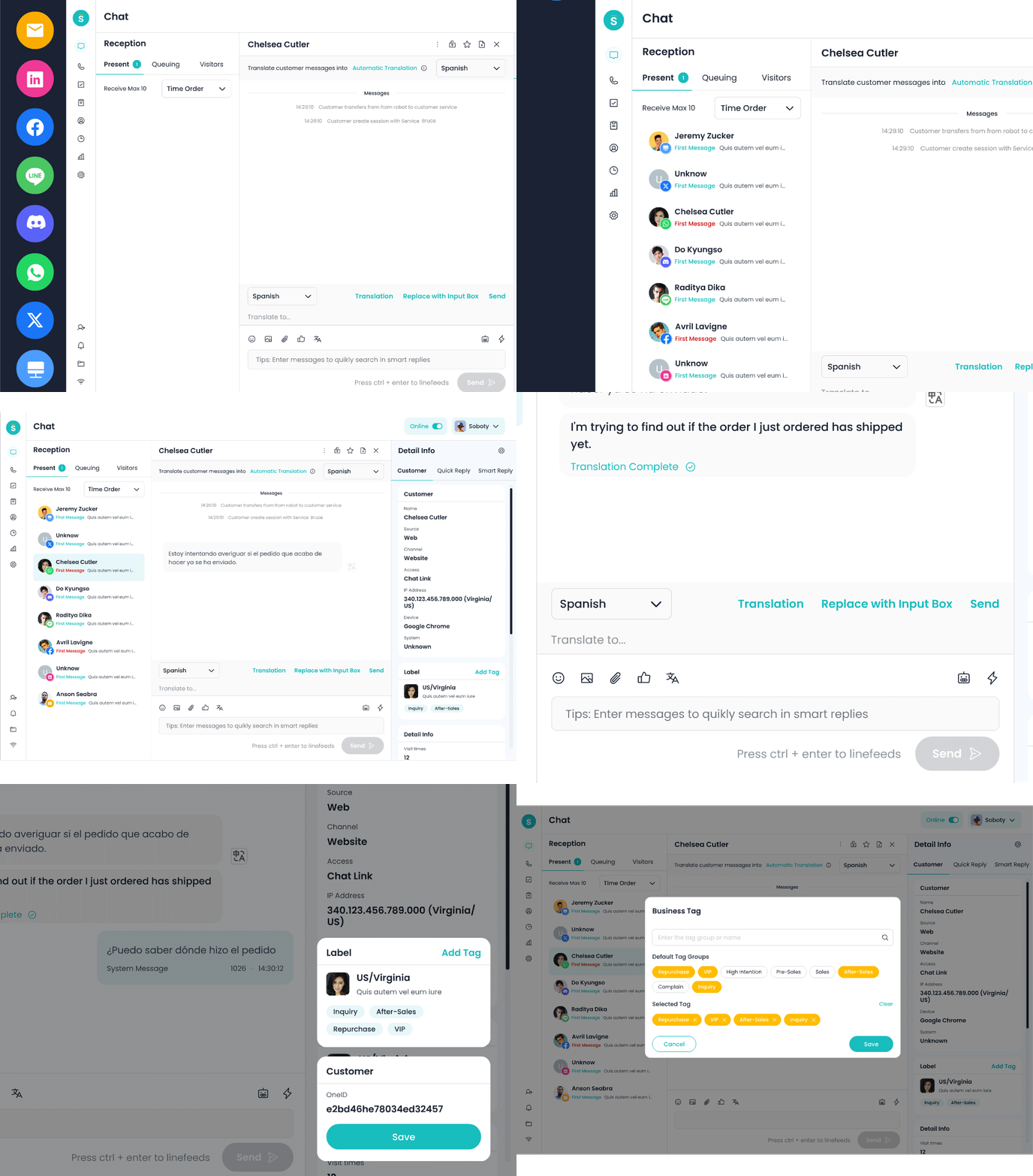
Overview: Sobot is a global, AI-powered CCaaS provider built specifically for SMBs seeking affordable, scalable, and omnichannel customer service solutions.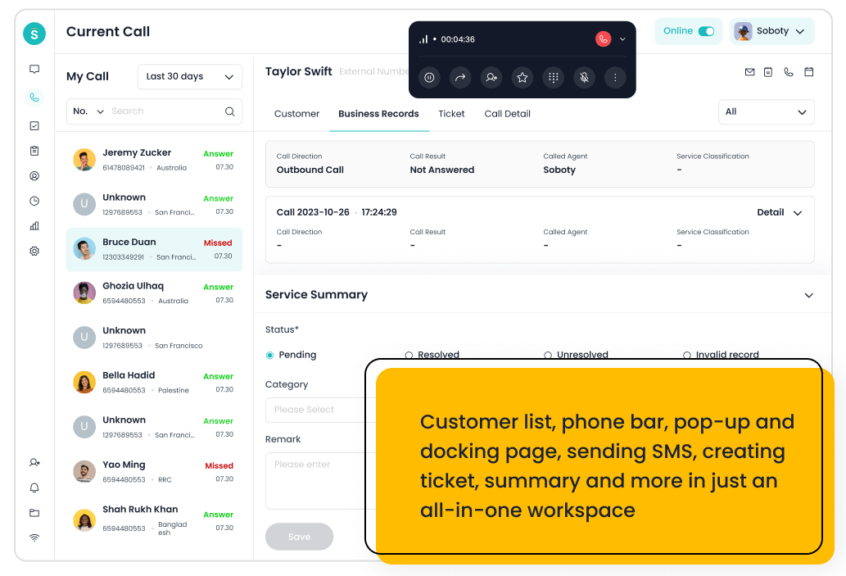
Core Strengths:
-
AI-First Capabilities: NLP-driven virtual agents handle routine queries (e.g., order status, password resets) 24/7, freeing human agents to focus on complex issues. Intelligent call routing uses customer data to connect callers to the most qualified agent, reducing wait times and improving resolution rates.
-
Global Coverage: Supports 100+ countries with low-latency international calling, multi-language IVR (20+ languages), and compliance with regional privacy laws (GDPR, CCPA, etc.).
-
SMB-Friendly Design: Quick deployment—users report setup in less than 12 hours—with an intuitive dashboard and no steep learning curve, ideal for small teams with limited IT resources.
-
Value for Money: A 15-day free trial is available with no credit card required, providing a risk-free evaluation. Flexible per-agent pricing scales with business growth, with separate pricing by product line and a choice between AI-powered agents and human-only agents—enabling organizations to tailor solutions to specific use cases and budget needs.
Best for: SMBs and growing mid-market teams that want one platform covering AI voice, live chat, WhatsApp, omnichannel routing, and ticketing — without stitching together separate tools. Sobot is especially strong for businesses serving customers across multiple regions or languages, and for teams that need agentic AI to automatically resolve a high share of inbound inquiries. If your priority is breadth, global readiness, and AI-first automation in a single system, Sobot is the strongest SMB call center choice in 2026.
Not the best fit if: you only need a lightweight phone system with no omnichannel or automation requirements.
❷ Genesys Cloud CX – Best for Large Enterprises — Too Complex and Costly for Most SMBs
Overview: Genesys is a leader in enterprise-grade CCaaS. Renowned for its omnichannel orchestration and AI capabilities, Genesys helps enterprises deliver seamless customer journeys across all channels.
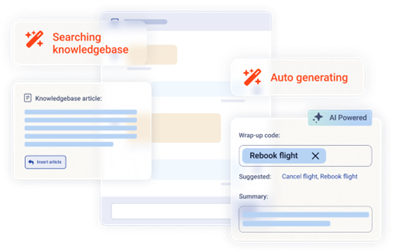
Core Strengths: Unmatched customer journey mapping, advanced workforce management (WFM) tools (e.g., scheduling, forecasting), and global carrier partnerships for reliable international calling. Integrates seamlessly with leading CRMs and business tools.
Limitations: Higher price point compared to other SMB-focused solutions; steeper learning curve for complex setups, requiring more training for agents.
Best for: Large enterprises — airports, banks, telecoms, and global operations — with the budget, IT resources, and operational scale to fully leverage an advanced omnichannel orchestration and workforce management platform. Genesys is best in class for complex customer journey mapping and predictive routing at scale.
Not the best fit if: you are an SMB. At $75/agent/month and with a steep implementation curve, Genesys is overbuilt for most small and mid-sized teams. SMBs that need omnichannel AI without enterprise complexity will get more value — and faster time-to-value — from Sobot.
Pricing: Starting at $75/agent/month.
❸ Avaya Experience Platform – Best for Regulated Industries with Existing Legacy Infrastructure
Overview: Avaya is a legacy leader in call center technology, transitioning to cloud-based solutions with its Experience Platform. It offers hybrid cloud flexibility, making it ideal for SMBs that want to retain existing on-premise infrastructure while adopting cloud capabilities.
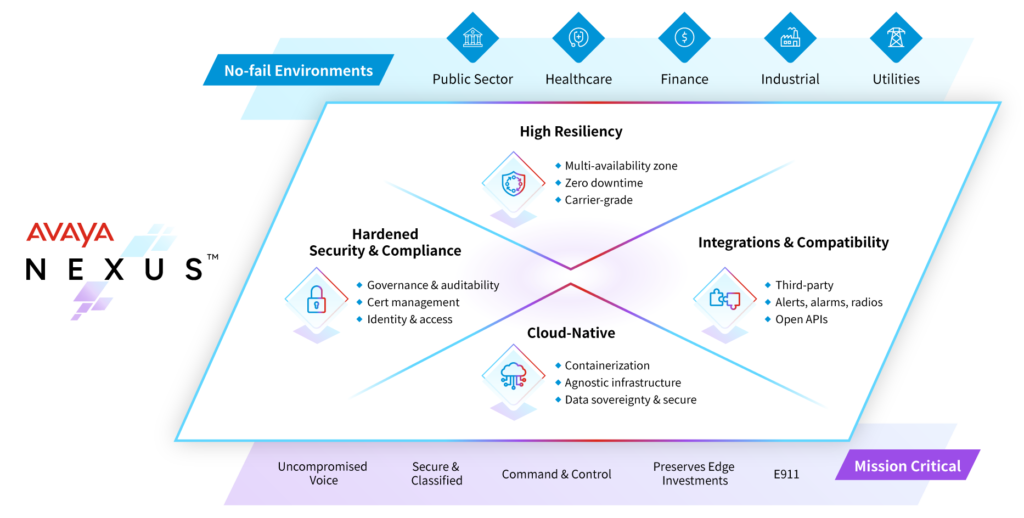
Core Strengths: Industry-leading call quality, robust security and compliance features (critical for regulated industries), and seamless on-prem-to-cloud migration support. Offers a wide range of integrations with legacy systems.
Limitations: Longer implementation time compared to cloud-native solutions; premium pricing for full feature access.
Best for: SMBs in regulated industries — finance, healthcare, legal — that have existing Avaya infrastructure and need a hybrid cloud path that preserves their current setup. Avaya’s strength is flexibility in deployment: on-premise, cloud, or hybrid, with strong compliance tooling baked in.
Not the best fit if: you are starting fresh or want a modern, AI-first cloud platform out of the box. Avaya’s legacy architecture can slow down innovation, and its pricing starts at $60–$80/agent/month, which is high for SMBs that do not need regulated-industry compliance features.
Pricing: Starting at $60/agent/month (hybrid plan); cloud-only plans start at $80/agent/month.
❹ RingCentral – Best When Internal Communications Matter as Much as Customer Support
Overview: RingCentral is a leading provider of unified communications as a service (UCaaS), and its Contact Center solution combines call center functionality with video, chat, and team collaboration tools—all in one platform.
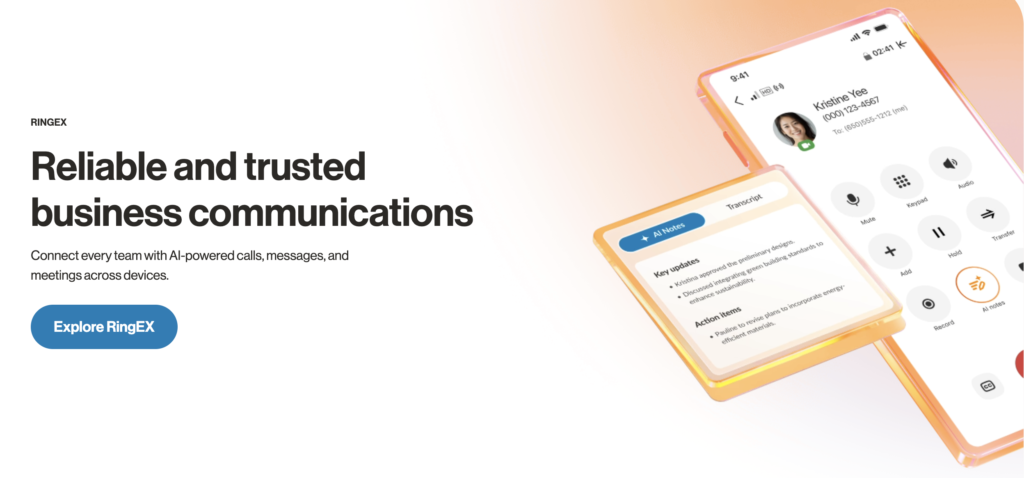
Core Strengths: Seamless integration of UCaaS and CCaaS, global VoIP network for reliable international calling, and intuitive team collaboration features (e.g., shared inboxes, video conferencing). Strong mobile app for remote agents.
Limitations: Advanced analytics and AI features require premium add-ons, increasing the total cost of ownership.
Best for: SMBs that want to consolidate internal communications — phone, video, team messaging — and customer-facing call center operations under one vendor. RingCentral works well when your team is distributed and internal collaboration tools matter as much as customer support. Its mobile app is strong for remote agent teams.
Not the best fit if: AI automation and omnichannel routing are your core requirements. Advanced analytics and AI features in RingCentral require premium add-ons that push up the total cost significantly, and the platform is better positioned as a unified comms tool than a dedicated AI call center.
Pricing: Starting at $39.99/agent/month (contact center add-on to UCaaS plan).
❺ Aircall – Best for Small Sales Teams That Need Fast Setup and Clean CRM Integration
Overview: Aircall is a cloud-native, easy-to-use call center solution built explicitly for SMBs and remote teams. It prioritizes simplicity and speed, making it ideal for small teams with no technical expertise.
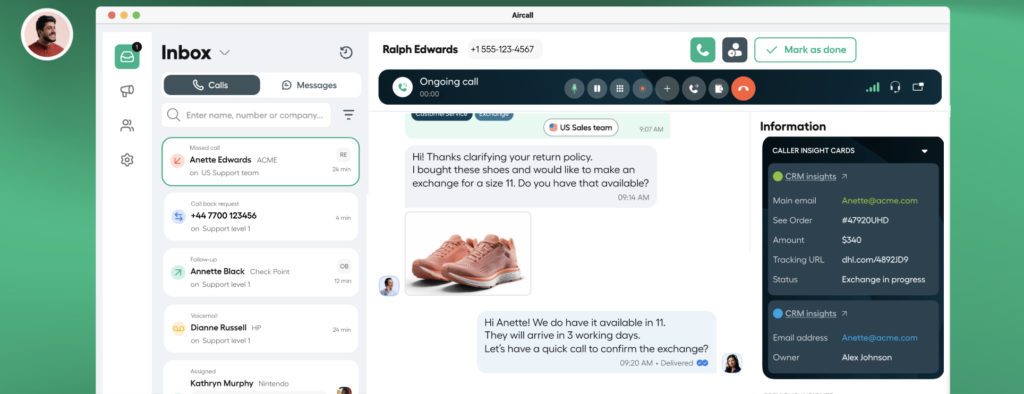
Core Strengths: Quick setup (no IT support required), intuitive dashboard, extensive CRM integrations (HubSpot, Salesforce, Zendesk), and global phone numbers in 100+ countries. Offers basic AI features like call tagging and voicemail transcription.
Limitations: Less advanced AI and automation compared to enterprise-focused providers; limited customization for complex workflows.
Best for: Small teams — typically under 20 agents — that prioritize fast deployment and clean CRM integration over deep automation. Aircall is the easiest SMB call center platform to launch, with teams up and running in under an hour. It is particularly effective for outbound sales teams working inside HubSpot or Salesforce who need call activity synced automatically.
Not the best fit if: you need omnichannel support, AI voice automation, or a full contact center feature set. Aircall is a voice-first tool for sales-oriented teams, not a comprehensive customer service platform.
Pricing: Starting at $30/agent/month.
❻ NICE CXone
Overview: NICE CXone is an AI and analytics powerhouse, specializing in quality management (QM) and workforce optimization (WFO) for call centers. Its SMB tiers offer scaled-down enterprise features at a more accessible price point.
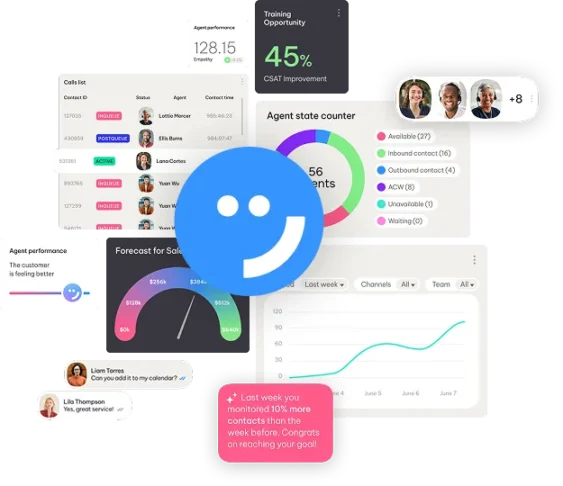
Core Strengths: Best-in-class speech analytics (to identify customer sentiment and agent performance), AI-driven coaching tools, and comprehensive compliance features (e.g., call recording archiving, audit trails). Strong workforce management for scheduling and forecasting.
Limitations: Higher cost compared to basic SMB solutions; more suited for mid-market SMBs with larger teams (10+ agents).
Best For: SMBs focused on service quality, compliance, and agent performance optimization (e.g., customer service teams in retail or healthcare).
Pricing: Starting at $80/agent/month.
❼ 8×8 – Best for Global Teams Needing Multi-Language Support Across 30+ Countries
Overview: 8×8 is a global UCaaS and CCaaS provider with a strong international presence, offering competitive pricing for SMBs. Its Contact Center solution is designed for teams with global customers or remote agents across multiple regions.
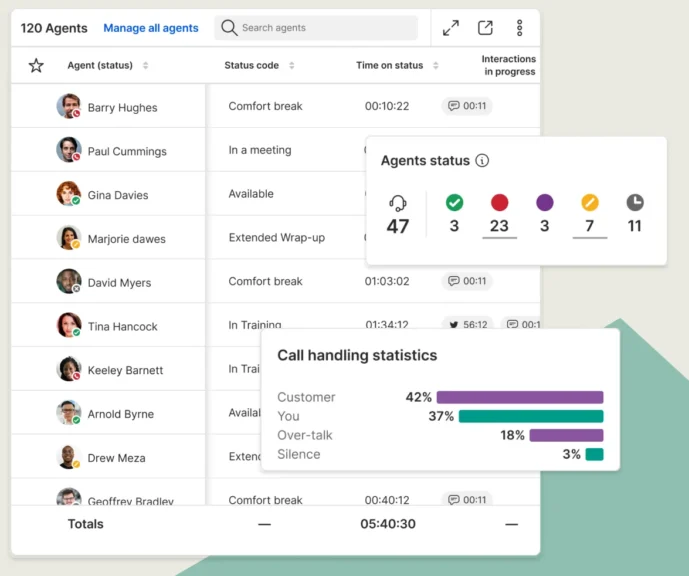
Core Strengths: Global call routing, multi-language support (30+ languages), reliable VoIP for cross-border calls, and native integrations with popular CRMs. Offers a unified platform for voice, chat, and video.
Limitations: User interface can feel dated compared to newer cloud-native solutions; advanced AI features (e.g., chatbots) are limited to premium plans.
Best for: SMBs with a genuinely global footprint that need reliable international call routing across 30+ languages and countries — particularly in industries like healthcare and education where secure, compliant communications are non-negotiable. 8×8 is a strong choice when your team spans multiple regions and you need a single unified communications platform rather than a dedicated contact center tool.
Not the best fit if: you want a purpose-built AI call center platform. 8×8 has repositioned toward reselling Genesys for its contact center layer, which means you may encounter inconsistent interfaces and fragmented product ownership. Teams that need deep AI automation or a seamless omnichannel workflow will find Sobot a more cohesive choice.
Pricing: Starting at $44.99/agent/month.
❽ Nextiva
Overview: Nextiva is an all-in-one business communications platform that includes a built-in, user-friendly call center. It is known for its affordability and strong U.S.-based customer support.
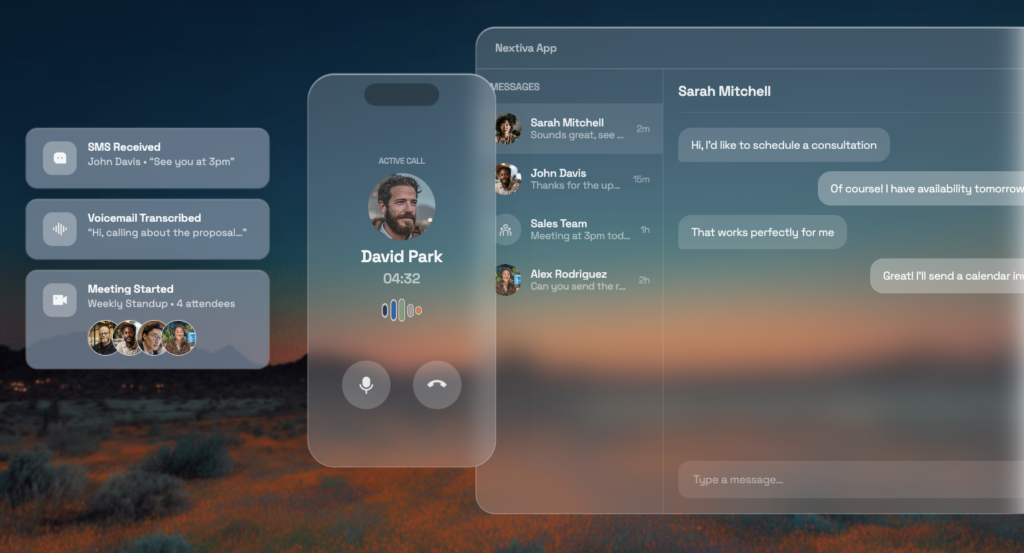
Core Strengths: Simple setup, affordable pricing, native CRM tools (Nextiva CRM), and reliable U.S.-based 24/7 support. Offers basic omnichannel features (voice, chat, email) and mobile accessibility.
Limitations: Less robust global infrastructure compared to pure-play CCaaS providers; limited international calling options outside of North America.
Best for: Budget-conscious SMBs in the US and Canada that want reliable voice, video, and messaging without heavy customization. Nextiva delivers solid value at the entry level and works well for small teams consolidating their communication stack. It is a practical choice for businesses that are not yet ready for full call center capabilities.
Not the best fit if: you need advanced IVR, AI-powered analytics, or omnichannel routing — those features require Nextiva’s higher-tier Engage or Power Suite plans, which are quote-based and significantly more expensive.
Pricing: Starting at $35.95/agent/month.
❾ Talkdesk – Best for High-Volume Inbound Teams That Need AI to Contain Calls
Overview: Talkdesk is a cloud-native, AI-driven CCaaS provider known for its speed and customization capabilities. It is designed for growing SMBs that need a flexible solution to adapt to changing business needs.
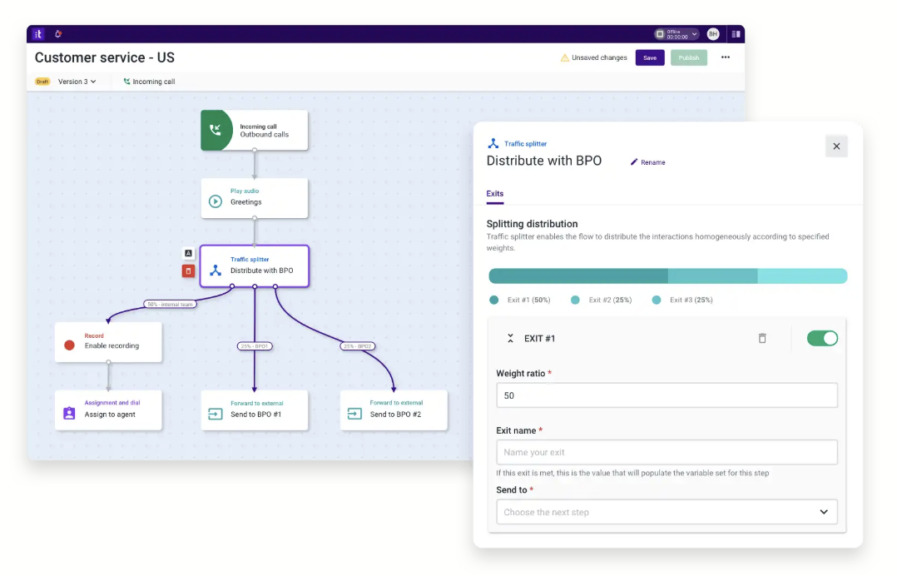
Core Strengths: Low-code customization (no coding required to modify workflows), real-time analytics dashboards, strong e-commerce integrations (Shopify, Magento), and AI-powered self-service tools.
Limitations: Higher price point for full feature access; some advanced features require custom development.
Best for: Support-heavy SMBs with high inbound call volumes that want AI-powered containment — resolving a meaningful share of calls without involving a human agent. Talkdesk’s AI is purpose-built for this use case and performs well in e-commerce and retail environments where query types are repetitive and well-defined.
Not the best fit if: you are an early-stage SMB on a tight budget. Talkdesk is a premium platform with pricing and implementation complexity better suited to teams that have already outgrown lighter tools.
Pricing: Starting at $65/agent/month.
❿ CloudTalk – Best for Outbound Sales Teams on a Tight Budget
Overview: CloudTalk is an affordable, feature-rich call center solution designed for SMB sales and support teams. It prioritizes sales-focused features while offering basic customer support capabilities.
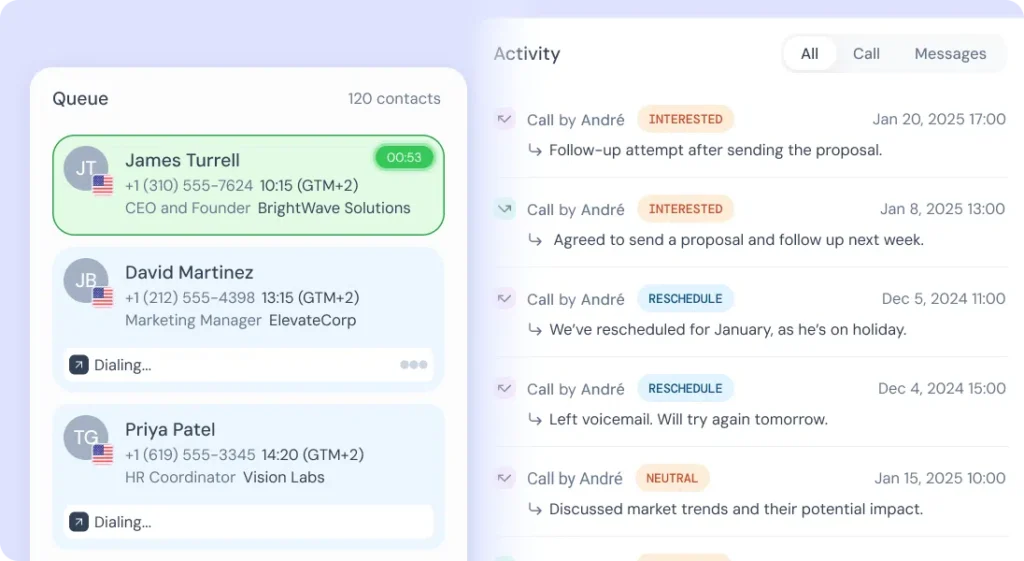
Core Strengths: Predictive dialing (for sales teams), click-to-call functionality (integrated with CRMs), call scripting, and detailed sales analytics. Offers global phone numbers in 160+ countries at no extra cost.
Limitations: Less advanced omnichannel support compared to other providers; limited AI capabilities.
Best for: Small outbound sales teams that need a purpose-built calling tool with power dialing, call automation, and real-time analytics at an accessible price point (plans from $25/agent/month). CloudTalk is optimized for daily outbound calling workflows and integrates cleanly with most CRMs.
Not the best fit if: inbound customer service is your primary use case. CloudTalk’s strength is outbound execution — teams that need full omnichannel inbound support or AI-driven service automation will need a platform like Sobot instead.
Pricing: Starting at $25/agent/month.
5. Comparative Analysis: Head-to-Head for SMBs
To help you quickly compare the top solutions, we have compiled a head-to-head table highlighting key details:
| Provider | Best For | Key Differentiator |
|---|---|---|
| Sobot | Global SMBs, AI + Scalability | AI-native, fast setup (under 1 hour) |
| Genesys Cloud CX | High-volume, complex workflows | Omnichannel orchestration, WFM |
| Avaya Experience Platform | Regulated industries, hybrid cloud | Reliability, compliance, legacy integration |
| RingCentral Contact Center | Unified comms + support | All-in-one UC/CC, team collaboration |
| Aircall | Simplicity, startups | Quick setup, CRM integrations |
| NICE CXone | Quality & compliance | Speech analytics, WFO |
| 8×8 Contact Center | International teams | Global VoIP, multi-language |
| Nextiva | North American SMBs | All-in-one, U.S.-based support |
| Talkdesk | Customization, e-commerce | Low-code, real-time analytics |
| CloudTalk | Sales teams, budget | Predictive dialing, CRM focus |
Quick-reference decision table
| If you need this | Choose this |
|---|---|
| Best all-in-one AI + omnichannel for SMB | Sobot |
| Enterprise-scale omnichannel orchestration | Genesys |
| Hybrid cloud with compliance for regulated industries | Avaya |
| Global unified communications across 30+ languages | 8×8 |
| Internal comms + call center under one vendor | RingCentral |
| Fast setup for small sales teams | Aircall |
| High-volume AI containment for inbound support | Talkdesk |
| Outbound sales dialing for small teams | CloudTalk |
6. How to Choose the Right Call Center Solution for Your SMB (2026)
With so many options available, selecting the right call center solution for your SMB can be overwhelming. Follow these steps to make an informed decision:
1. Assess Your Core Needs:
-
-
Do you focus on inbound calls (customer support) or outbound calls (sales, lead generation)?
-
What channels do your customers use most (voice, chat, email, social media)?
-
What is your team size, and do you have remote or hybrid agents?
-
Do you need international calling or support for multiple regions?
-
2. Prioritize Key Features:
-
-
Must-haves: IVR, call recording, basic analytics, and integrations with your existing CRM/helpdesk.
-
Nice-to-haves: AI chatbots, advanced WFM, sentiment analysis, and omnichannel support.
-
Non-negotiables: Compliance with relevant privacy laws (GDPR, CCPA), data security, and 24/7 support.
-
3. Evaluate Total Cost of Ownership (TCO):
-
-
Look beyond per-agent pricing: consider setup fees, add-on costs (e.g., advanced AI, international numbers), implementation time, and training needs.
-
Choose a pay-as-you-go model if you are a small startup or have seasonal fluctuations in call volume.
-
4. Test & Validate:
-
-
Request free trials (most providers offer 14–30 days) to test platform usability and features.
-
Check user reviews on G2, Capterra, or Clutch—focus on feedback from SMBs similar to your business.
-
Ask providers about onboarding support and service level agreements (SLAs) for uptime and support response times.
-
5. Future-Proofing:
-
-
Ensure the platform supports AI and automation roadmaps (e.g., machine learning for personalized service).
-
Choose a solution that can scale with your business—avoid providers that require costly upgrades to add agents or features.
-
7. Conclusion: The Future of SMB Call Centers in 2026 & Beyond
In 2026, call centers are no longer a luxury for SMBs—they are a necessity to compete in a global market. The top solutions on this list empower SMBs to deliver enterprise-level customer service at a fraction of the cost, leveraging AI, cloud technology, and omnichannel support to build customer loyalty and drive growth.
The key takeaway? Choose a platform that aligns with your current size, budget, and long-term growth goals. Prioritize usability (so your team can adapt quickly), global support (if you serve international customers), and AI readiness (to stay ahead of the curve).
Whether you are a small startup or a growing mid-market business, there is a call center solution on this list that fits your needs—including Sobot, which combines AI power, global reach, and affordability for SMBs worldwide.
Take the next step: leverage free trials to test shortlisted providers and find the perfect fit for your business. Your customers—and your bottom line—will thank you.
The bottom line: For most SMBs in 2026, Sobot is the strongest starting point — it covers AI voice, omnichannel support, WhatsApp, ticketing, and agentic automation in one platform, with pricing and setup complexity that fits growing teams. If you are in a regulated industry with existing legacy infrastructure, Avaya is worth evaluating. If your team is purely outbound sales and under 20 agents, Aircall gets you running fastest. Every other platform on this list serves a specific edge case — use the decision table above to match your situation to the right tool.
8. Appendix
Glossary of Key Terms
- CCaaS (Contact Center as a Service): A cloud-based model where call center software is delivered over the internet, eliminating the need for on-premise hardware.
- UCaaS (Unified Communications as a Service): A cloud-based platform that unifies communication tools (voice, video, chat, email) into a single system.
- LLMs (Large Language Models) represent a severe breakthrough in the area of NLP and AI. Models such as GPT-4 and BERT can already create human texts simply by using an immense amount of data and algorithms. Scale is the main characteristic of LLMs, and it allows them to capture elaborate patterns and fine subtleties of languages, which opens a wide range of applications.
- IVR (Interactive Voice Response): An automated system that uses voice prompts to route callers to the right agent or self-service option.
- WFM (Workforce Management): Tools that help schedule agents, forecast call volumes, and optimize team performance.
- Omnichannel: A customer service approach that unifies all communication channels (voice, chat, email, social media) to deliver a consistent experience.
Also See
FAQs
❶ What is the best call center solution for SMBs with a tight budget?
For small businesses prioritizing affordability and ease of use, Aircall and CloudTalk are top contenders, with per-agent plans starting at $30 and $25 respectively. Both offer quick setup, strong CRM integrations, and are designed for teams with no IT support.
If you need AI capabilities at a competitive price, Sobot provides a 15-day free trial (no credit card required) and flexible per-agent pricing, making it a strong value-for-money choice for SMBs.
❷ Which call center software offers the best AI and automation features for growing SMBs?
Sobot stands out for its AI-first approach, offering NLP-driven virtual agents, intelligent call routing, and 24/7 self-service capabilities.
For businesses seeking more advanced analytics and workforce optimization, NICE CXone provides best-in-class speech analytics and AI-driven coaching tools.
Meanwhile, Talkdesk is ideal for growing e-commerce brands needing low-code customization and real-time analytics to adapt workflows quickly.
❸ Are there call center solutions suitable for enterprises like airports, banks, or telecom operators?
Yes, Genesys Cloud CX is a leading enterprise-grade platform designed for high-volume, complex operations. It offers unmatched omnichannel orchestration, advanced workforce management, and global carrier partnerships.
Similarly, Avaya Experience Platform provides robust security, compliance features, and hybrid cloud flexibility, making it a strong fit for regulated industries such as finance and healthcare. These solutions are best suited for large-scale organizations with the infrastructure to leverage their full capabilities.
❹ How do I choose the right call center software if my team works remotely across multiple countries?
For globally distributed teams, prioritize providers with strong international VoIP networks and multi-language support.
8×8 offers reliable global call routing and support for over 30 languages, while Sobot supports 100+ countries with low-latency calling and multi-language IVR. RingCentral also provides a unified platform combining call center functionality with team collaboration tools, which is essential for coordinating remote agents across time zones.