Zendesk built its reputation as a reliable helpdesk — but in 2026, “reliable helpdesk” is no longer enough. Customer expectations have shifted, AI has rewritten what’s possible, and businesses are paying Zendesk’s premium pricing while asking a simple question: is there something better?
The answer is yes. Whether your frustration is the cost, the AI that feels bolted-on rather than built-in, the lack of Amazon integration, or support that takes days to respond, this guide covers the 15 best Zendesk alternatives worth switching to in 2026.
Why Businesses Are Leaving Zendesk
Before diving into the alternatives, it’s worth understanding why companies are actively looking. These are the most common reasons Zendesk customers cite:
1. The pricing is hard to justify
Zendesk’s Suite plans start at $55/agent/month and quickly climb to $115+ for features most businesses actually need. Add mandatory annual contracts and per-agent pricing that punishes team growth, and the costs compound fast. Many businesses report their Zendesk bill doubling within two years as their team scales.
2. AI feels like an add-on, not a foundation
Zendesk was founded in 2007 as a ticketing system. AI came much later, through acquisitions and integrations. The result is AI features that sit on top of legacy architecture rather than being woven into how the product works. Automations require configuration work that rivals a small software project, and the chatbot still struggles with anything beyond simple FAQs.
3. Amazon integration is absent
For e-commerce businesses — especially those selling on Amazon — this is a dealbreaker. Zendesk does not natively integrate with Amazon Seller Central or Amazon marketplace data. Customer service agents can’t see order details, shipping status, or return history from Amazon directly in their workspace. Agents end up switching between multiple tabs, slowing resolution times and frustrating customers.
4. It’s built for enterprise, not your team
Zendesk’s product roadmap, pricing tiers, and support resources are all optimized for companies with 500+ employees and dedicated IT administrators. Mid-market and SMB customers routinely report feeling like second-class users — slower support response times, features gated behind higher tiers, and an onboarding experience that assumes you have a full implementation team.
5. Customer support for a customer support company
There’s an irony in Zendesk’s own customer support: users on G2 and Reddit consistently report slow ticket response times, difficulty reaching a human, and knowledge base articles that don’t resolve real issues. For a platform whose entire value proposition is helping you support your customers better, this gap matters.
What to Look for in a Zendesk Alternative
Not every Zendesk alternative solves the same problem. Before evaluating platforms, it helps to know which Zendesk limitations you’re actually trying to escape:
- AI customer service automation — Does the platform offer a true AI agent that resolves conversations end-to-end, or just a basic chatbot that routes tickets?
- Omnichannel coverage — Can it unify live chat, email, voice, WhatsApp, and e-commerce marketplace messages (Amazon, TikTok Shop, Shopify) in a single workspace?
- Amazon Seller Central integration — A critical gap in Zendesk. If your team handles Amazon orders, you need a help desk that pulls order and shipping data directly from Amazon without tab-switching.
- Pricing transparency — Zendesk pricing starts at $55/agent/month and climbs fast. The best Zendesk alternatives offer comparable or superior features at lower total cost of ownership.
- Voice and call center capability — Many Zendesk alternatives cover chat well but lack inbound/outbound voice. If you run a contact center, verify whether voice is a native capability or a third-party add-on.
- Ease of setup — Zendesk’s enterprise orientation means lengthy implementation cycles. A strong Zendesk alternative should be deployable in days, not months.
The 14 Zendesk alternatives below are ranked based on how well they address these criteria.
Quick Comparison: Top Zendesk Alternatives at a Glance
| Platform | Best For | AI Maturity | Amazon Integration | Starting Price |
|---|---|---|---|---|
| Sobot | AI-native omnichannel, e-commerce | ★★★★★ Native | ✅ Yes | ~$0 trial / competitive |
| Intercom | SaaS & B2B companies | ★★★★ | ❌ No | $39/seat/mo |
| Freshdesk | SMB budget-conscious teams | ★★★ | ❌ No | Free / $15/mo |
| Gorgias | Shopify-first e-commerce | ★★★ | ❌ No | $10/mo (ticket-based) |
| Kustomer | CRM-heavy customer teams | ★★★★ | ❌ No | $89/agent/mo |
| Help Scout | Small email-first teams | ★★ | ❌ No | $20/agent/mo |
| HubSpot Service Hub | HubSpot CRM users | ★★★ | ❌ No | Free / $45/mo |
| Tidio | Small e-commerce teams | ★★★ | ❌ No | Free / $29/mo |
| LiveChat | Teams needing live chat | ★★ | ❌ No | $20/agent/mo |
| Zoho Desk | Teams in Zoho ecosystem | ★★★ | ❌ No | Free / $14/mo |
| Front | Shared inbox, email-heavy | ★★ | ❌ No | $19/agent/mo |
| Salesforce Service Cloud | Large enterprise | ★★★★ | ❌ No | $25/agent/mo |
| Genesys Cloud | Enterprise call centers | ★★★ | ❌ No | $75/agent/mo |
| Gladly | Retail & lifestyle brands | ★★★ | ❌ No | Custom pricing |
The 14 Best Zendesk Alternatives in 2026
1. Sobot — Best Overall Zendesk Alternative for AI-Powered Omnichannel Support
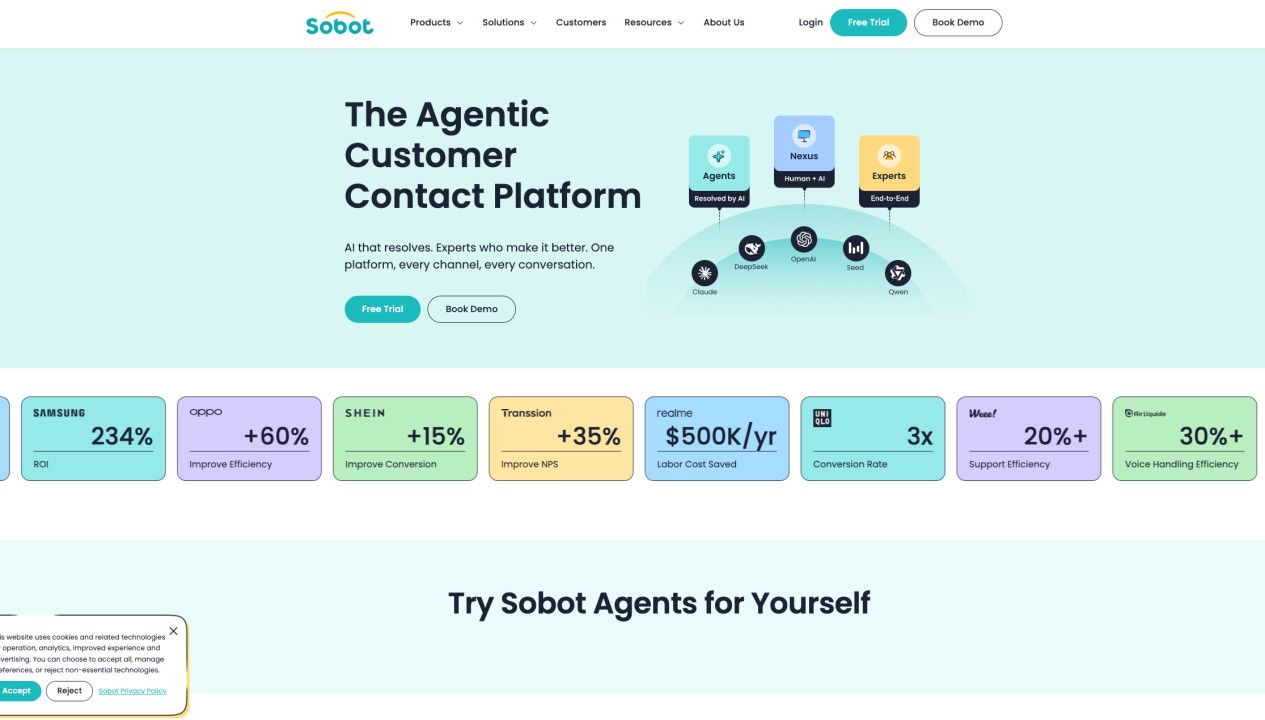
Sobot is the strongest Zendesk alternative for businesses that want AI at the center of their customer service — not layered on top of legacy architecture. Founded in 2014 as an AI chatbot company, Sobot has spent over a decade building intelligence into the core of its platform. The result is an AI that reasons, adapts, and acts across channels — not one that answers FAQs and immediately routes everything to a human.
What makes Sobot different from Zendesk:
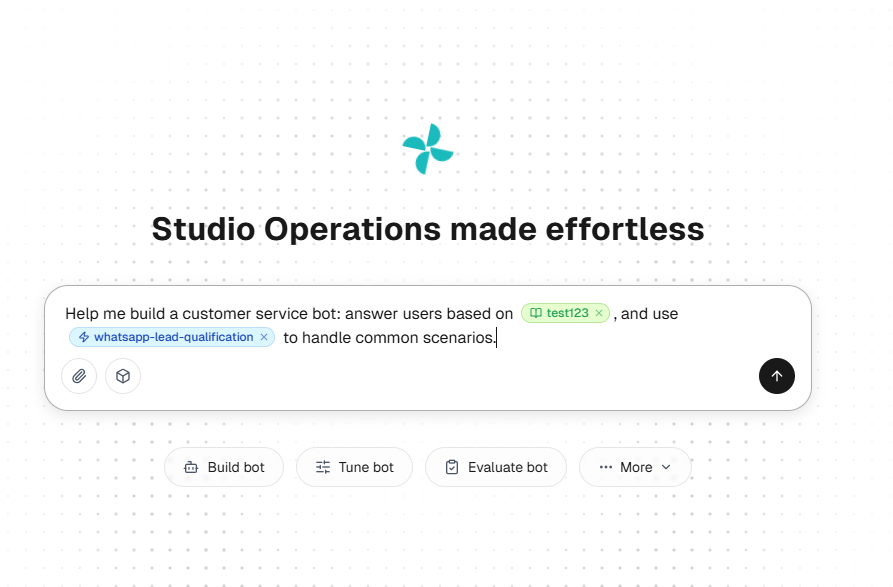
1. AI that was built in, not bolted on.
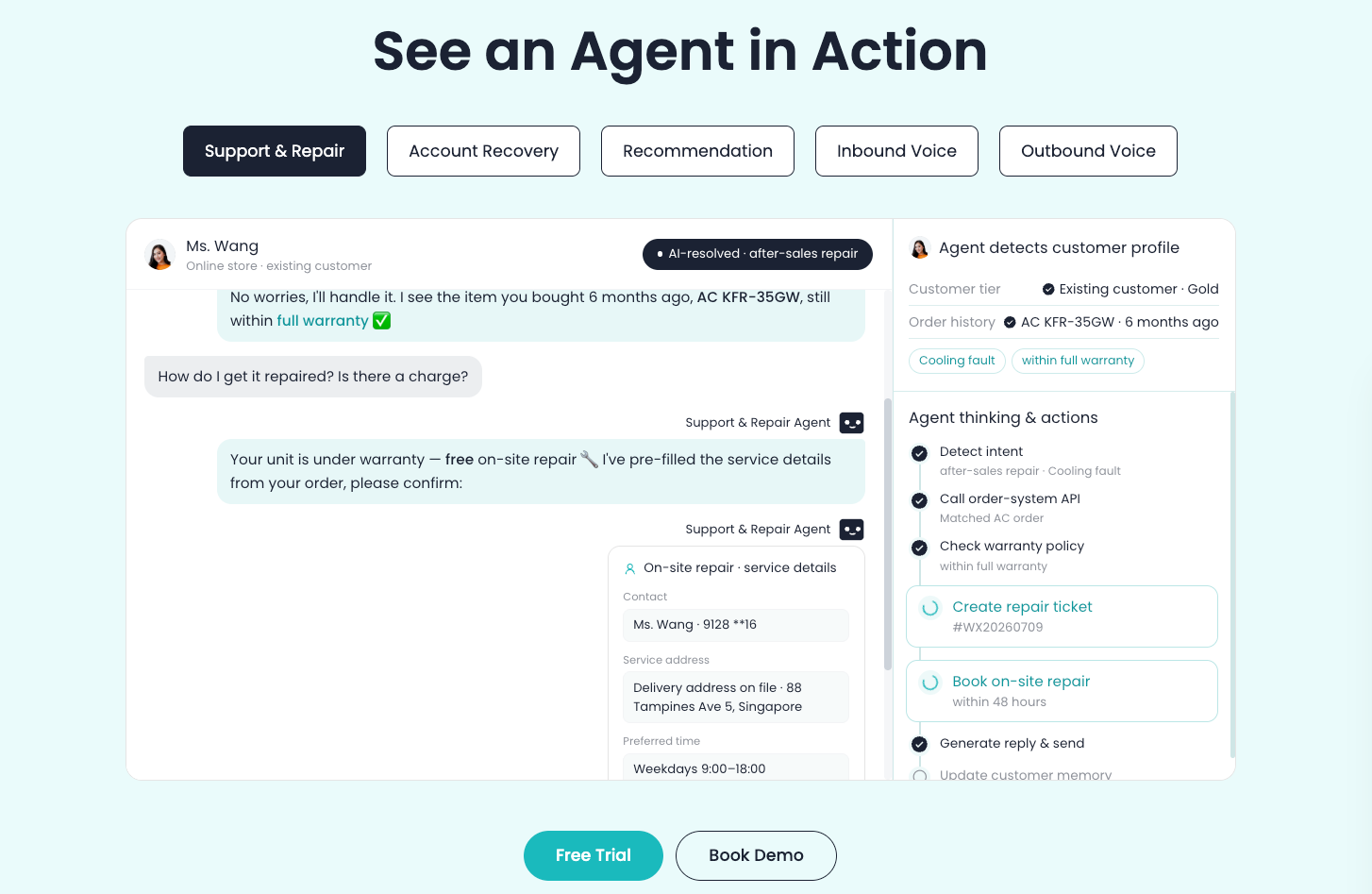
Zendesk added AI through acquisitions. Sobot started as AI. The platform’s large language model integrations span OpenAI, Claude, DeepSeek, and Amazon Bedrock — giving businesses flexibility on which model powers their agents while the orchestration layer remains consistent. Sobot’s AI Agent automates more than 80% of customer interactions, with measurable outcomes: UNIQLO reports 90%+ automation, SHEIN saw customer satisfaction rise 22%, and realme achieved an 80%+ resolution rate.
2. Amazon integration — a genuine differentiator.
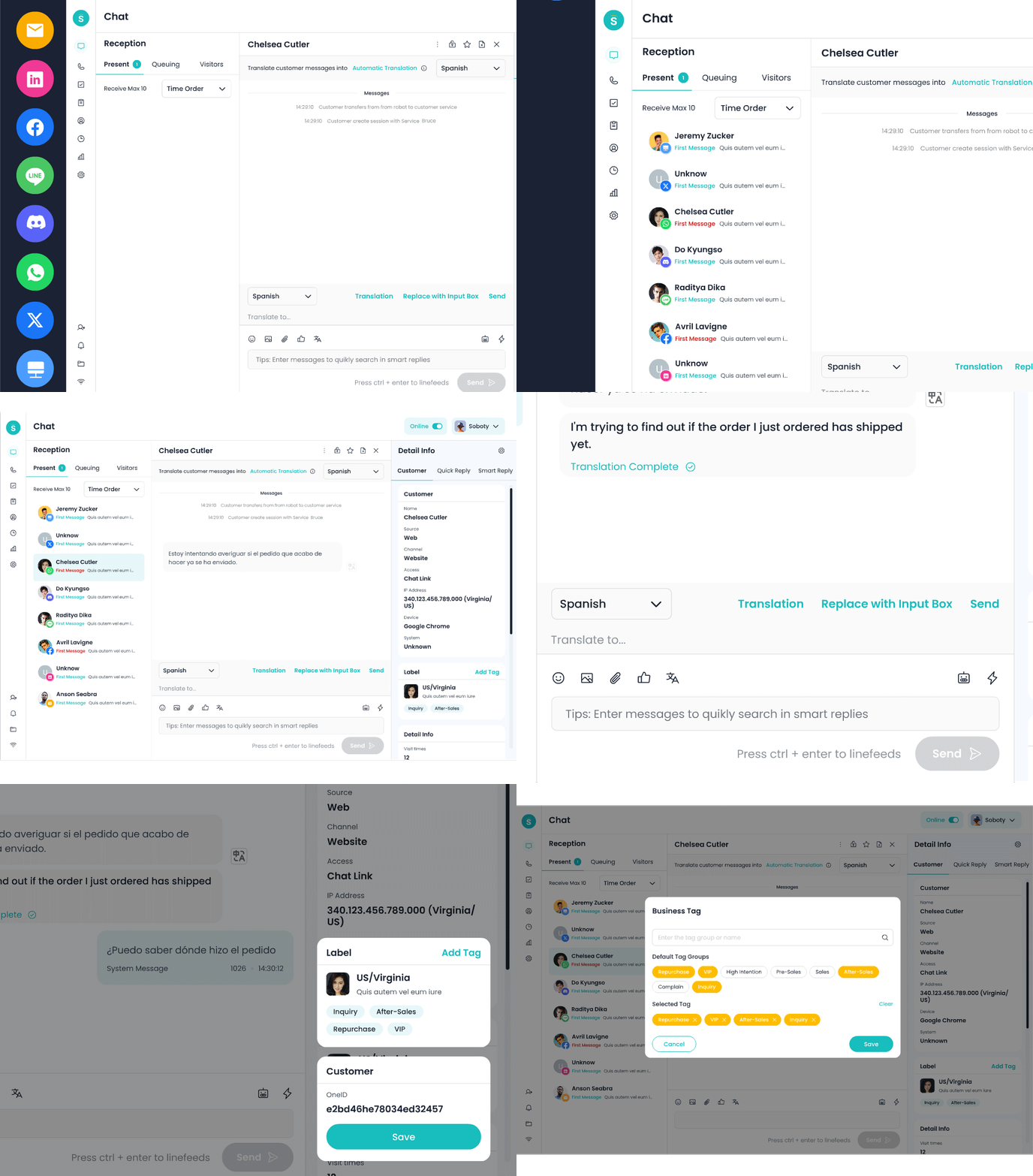
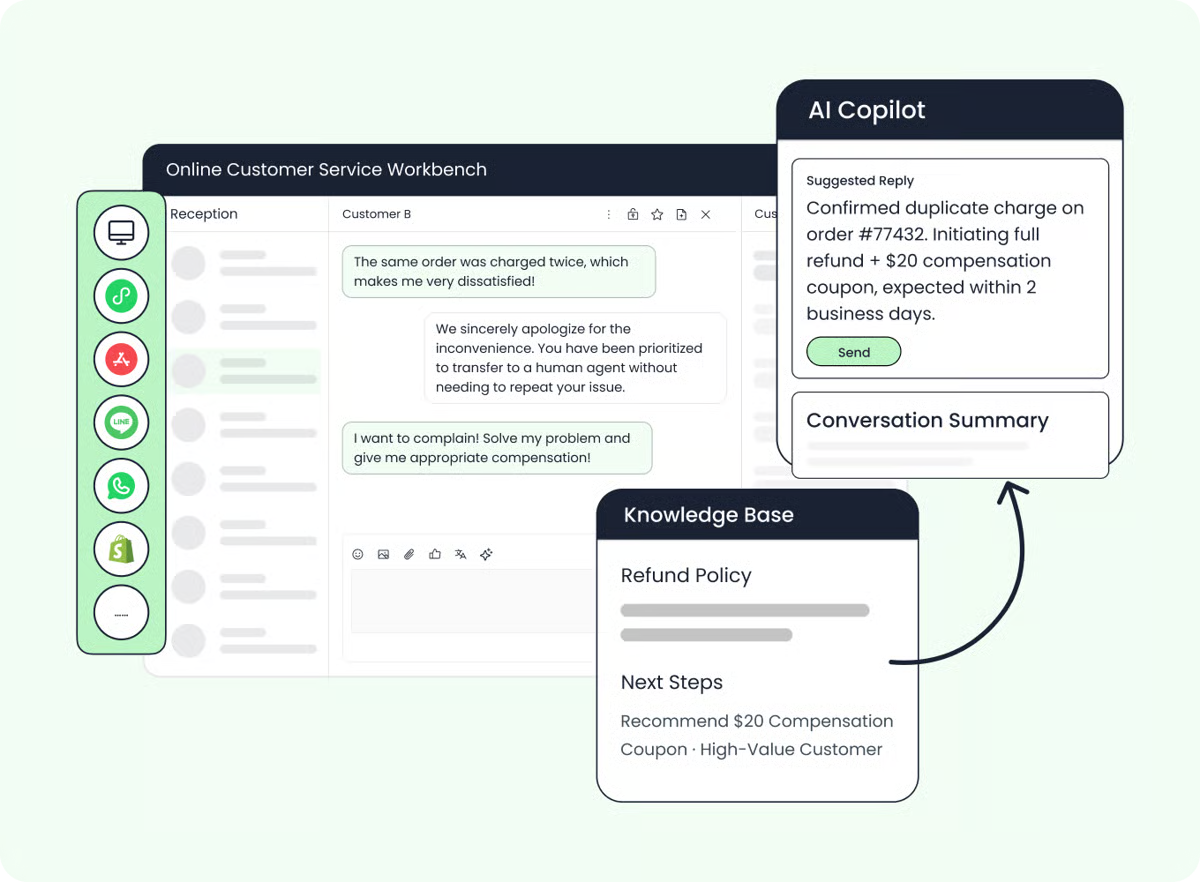
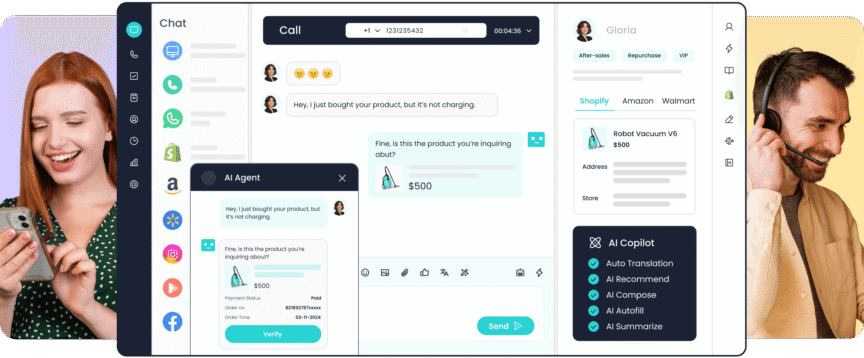
Sobot’s Live Chat workspace natively integrates with Amazon, Shopify, Walmart, TikTok Shop, and Lazada. When a customer contacts you from any channel, your agent sees the full order history, shipping status, and purchase details pulled directly from these platforms — no tab-switching, no copy-pasting order numbers. For any business selling on Amazon, this alone separates Sobot from Zendesk.
3. True omnichannel: owned channels + social + e-commerce.
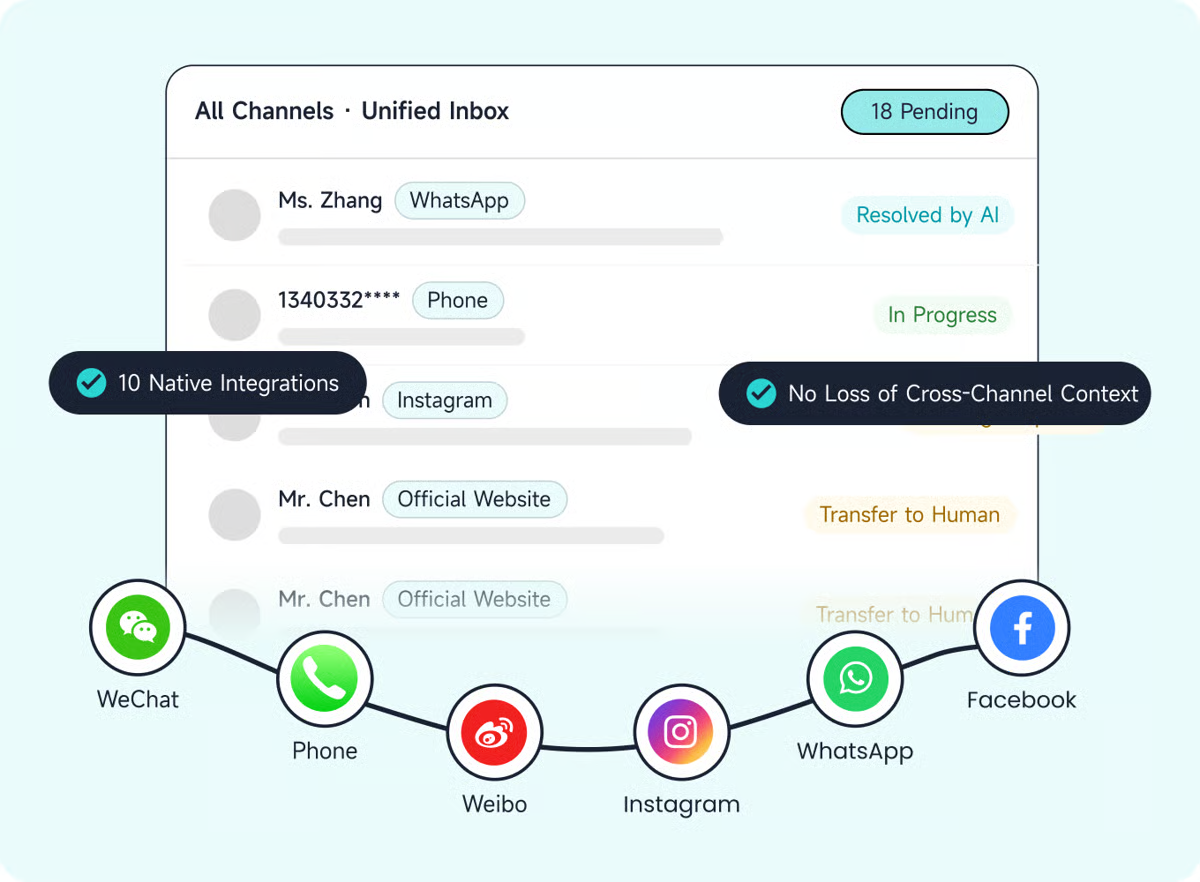
Sobot unifies messages from your own website chat and app alongside WhatsApp (Sobot is a Meta official BSP), Facebook, Instagram, LINE, Telegram, Email, Zalo, and Discord — all in a single agent workspace. This breadth of coverage is what Zendesk has historically lacked on the voice and messaging side.
4. Pricing designed for growth.
Sobot’s pricing runs at approximately two-thirds of comparable enterprise platforms. Unlike Zendesk’s structure where essential features get gated behind $115+/agent plans, Sobot’s AI capabilities are included as part of the core product.
Key capabilities:
- AI Agent with LLM reasoning (RAG, workflow automation, ReAct)
- AI Copilot for human agents: real-time translation (70+ languages), auto-summary, smart reply suggestions
- Call Center with IVR, Voicebot, and outbound dialing
- WhatsApp API (Meta official BSP)
- Ticketing with AI sentiment detection
- Deployable on SaaS, private cloud, or on-premises
- ISO 27001 + ISO 27701 certified; GDPR, PDPA, PIPL compliant
- G2 2025: Grid Leader, Easiest to Do Business With, Best Relationship
How Sobot compares to Zendesk directly:
| Feature | Sobot | Zendesk |
|---|---|---|
| AI foundation | Native (built since 2014) | Acquired/add-on |
| Amazon Seller Central integration | ✅ Native | ❌ Not available |
| WhatsApp API | ✅ Meta official BSP | ✅ Via integration |
| Voice / Call Center | ✅ Native voicebot + IVR | Limited |
| TikTok Shop / Lazada integration | ✅ Native | ❌ Not available |
| Pricing vs. comparable plans | ~2/3 of Zendesk Suite | $55–$115+/agent/mo |
| On-premises deployment | ✅ Available | ❌ SaaS only |
| Languages supported (AI translation) | 70+ | Limited |
For teams evaluating Zendesk alternatives specifically for e-commerce, Sobot’s Amazon integration is the clearest functional differentiator available on the market in 2026. No other platform on this list offers native Amazon Seller Central data inside the agent workspace.
❷ Intercom — Best for SaaS and B2B Customer Engagement
Intercom has invested heavily in AI with its Fin AI Agent, and for SaaS companies managing product-led growth, it remains a strong choice. The in-app messaging and proactive engagement features are best-in-class.
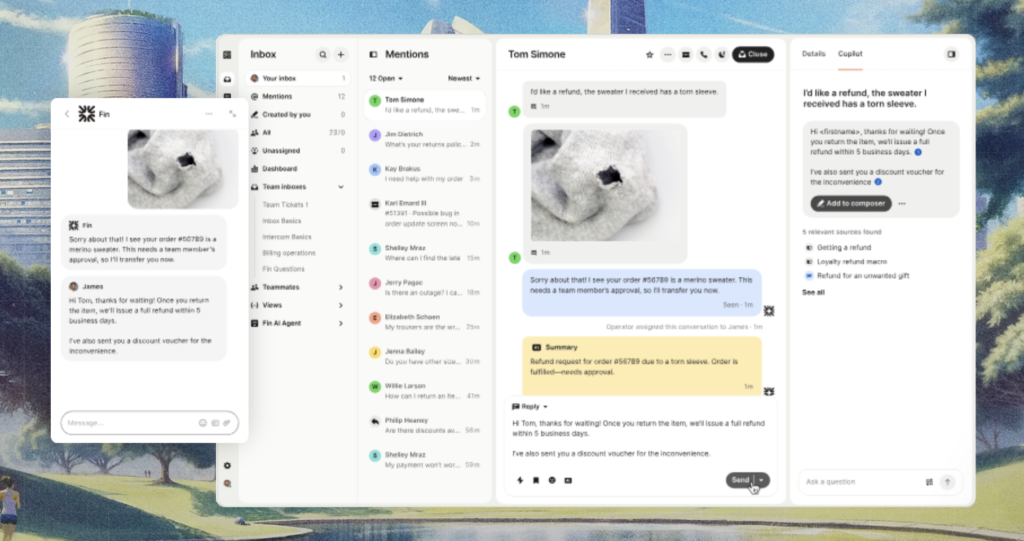
Where it falls short vs. Zendesk alternatives: Intercom is expensive — often more so than Zendesk. It’s deeply optimized for web and in-app channels, meaning businesses that also need voice support or e-commerce integrations (particularly Amazon) will find gaps. Small teams often find the feature set overwhelming relative to their actual support volume.
Best for: Mid-market SaaS companies with an established product and development resources.
❸ Freshdesk — Best Budget-Friendly Zendesk Alternative
Freshdesk (part of Freshworks) offers a generous free tier and affordable paid plans that cover ticketing, live chat, and basic automation. It’s a practical starting point for teams moving off Zendesk for cost reasons.
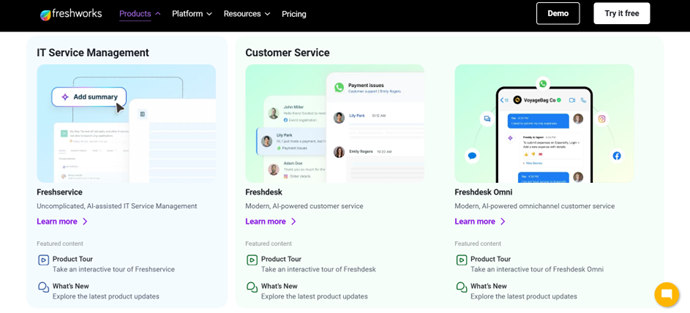
Where it falls short: AI features are less mature than Sobot or Intercom. Omnichannel coverage is narrower, and Amazon integration is absent. For teams scaling beyond 20 agents, the total cost of Freshdesk’s full suite approaches Zendesk pricing.
Best for: SMBs with straightforward ticketing needs and limited budget.
❹ Gorgias — Best for Shopify-Centric E-Commerce
Gorgias is purpose-built for e-commerce, with deep Shopify integration and a ticket-based pricing model that scales with conversation volume rather than agent count. For Shopify merchants, it’s one of the most efficient platforms available.
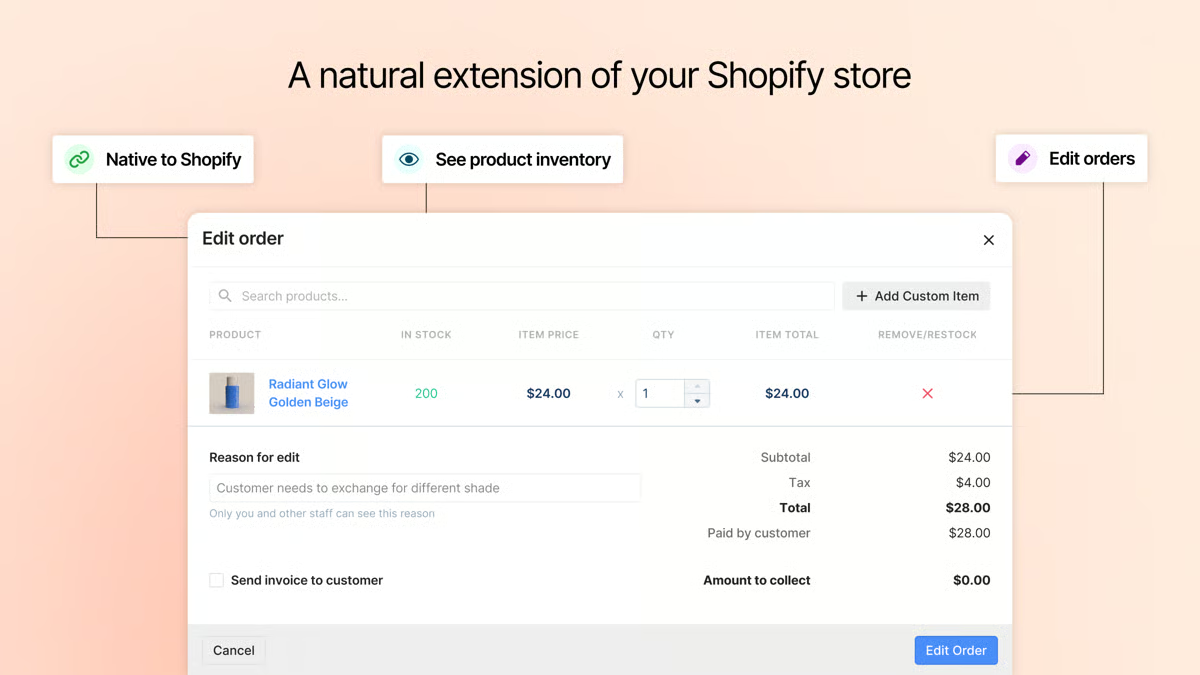
Where it falls short: Gorgias is largely a Shopify-first platform. Amazon Seller Central integration is not natively supported. If you sell across Amazon, Walmart, and TikTok Shop in addition to Shopify, you’ll face the same multi-tab problem that exists in Zendesk. Voice support is also absent.
Best for: Shopify-first DTC brands with high ticket volume and tight agent teams.
❺ Kustomer — Best for CRM-Integrated Service Teams
Kustomer (acquired by Meta in 2022 and now operating independently) takes a customer-timeline approach — every interaction, purchase, and event attached to a unified customer record. Teams that have outgrown basic ticketing and want richer customer context will find this compelling.
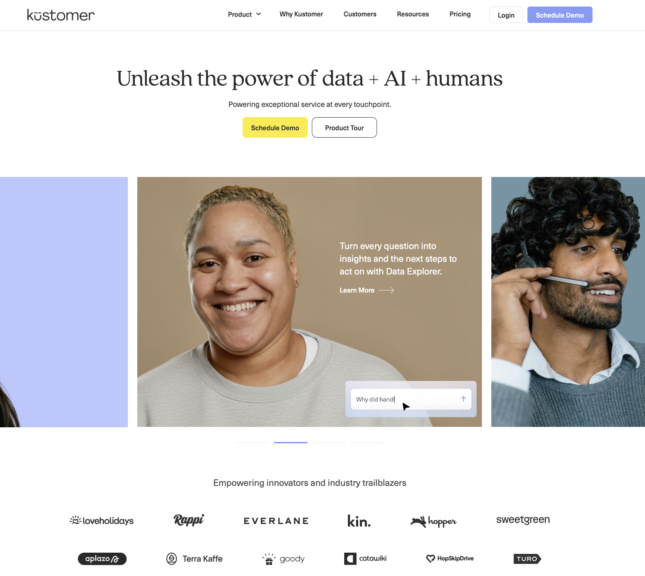
Where it falls short: At $89/agent/month, Kustomer is one of the more expensive options on this list. The CRM-style setup requires significant configuration time. Amazon integration is not available natively.
Best for: Mid-market teams in retail and e-commerce where customer lifetime value and history drive service decisions.
❻ Help Scout — Best for Small Teams Prioritizing Simplicity
Help Scout’s shared inbox design is clean and fast to set up. It’s genuinely easy to use, with email-first workflows that don’t require configuration expertise.
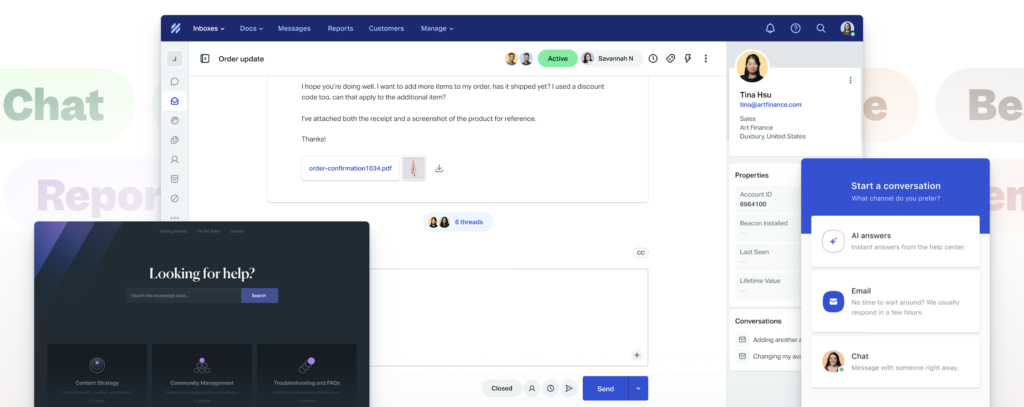
Where it falls short: AI features are limited. Live chat is basic. There’s no voice support, no WhatsApp, and no e-commerce platform integration. As teams grow beyond 10-15 agents or add new channels, Help Scout’s simplicity becomes a constraint.
Best for: Very small service teams handling primarily email support.
❼ HubSpot Service Hub — Best for HubSpot CRM Users
If your sales team is already on HubSpot CRM, Service Hub creates a seamless loop between marketing, sales, and service data. The shared contact record eliminates a lot of context-switching.
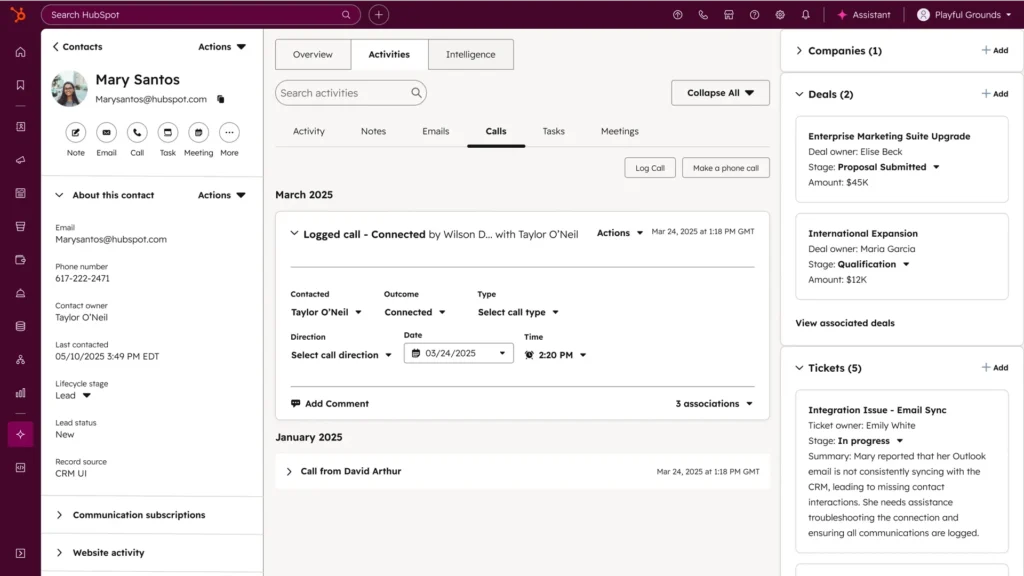
Where it falls short: Service Hub is not a standalone best-in-class service platform — it’s a strong choice because of HubSpot’s CRM, not in spite of it. AI features lag behind dedicated service platforms. Pricing adds up quickly when combining CRM + Service Hub tiers.
Best for: Companies already invested in the HubSpot ecosystem.
❽ Tidio — Best for Small E-Commerce Teams on a Budget
Tidio combines live chat, chatbot automation, and email into an affordable package that’s popular with Shopify and WooCommerce stores. Its AI chatbot, Lyro, handles a reasonable set of FAQs automatically.
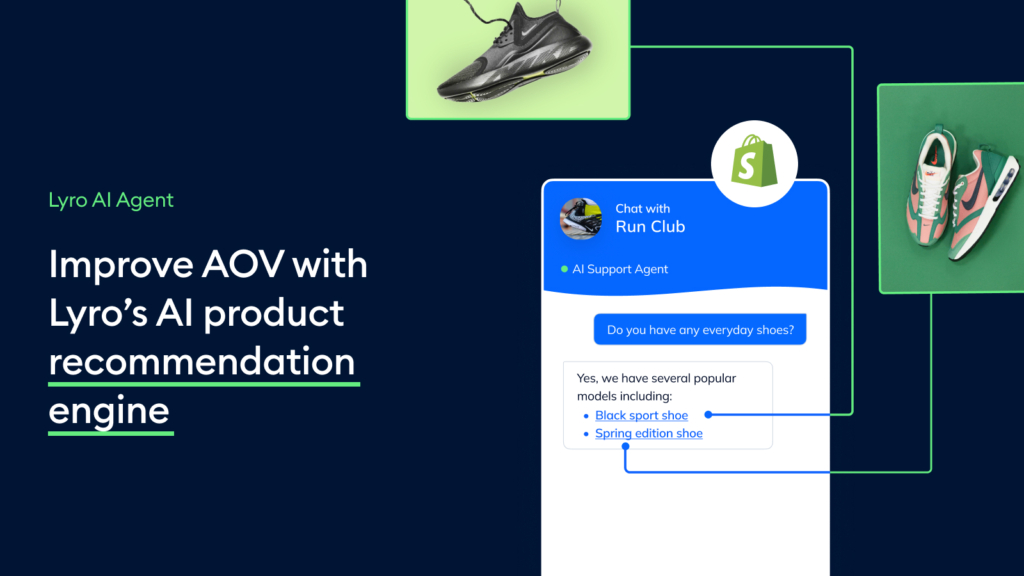
Where it falls short: Tidio is built for small teams. Larger-scale operations will encounter limits in reporting, workflow complexity, and agent management. AI capabilities are narrower than enterprise-grade platforms.
Best for: Small e-commerce businesses looking for their first chatbot + live chat setup.
❿ LiveChat — Best Pure Live Chat Solution
LiveChat has refined the live chat experience for over 20 years. Its chat widget, agent interface, and routing rules are well-designed, and it integrates with 200+ tools.
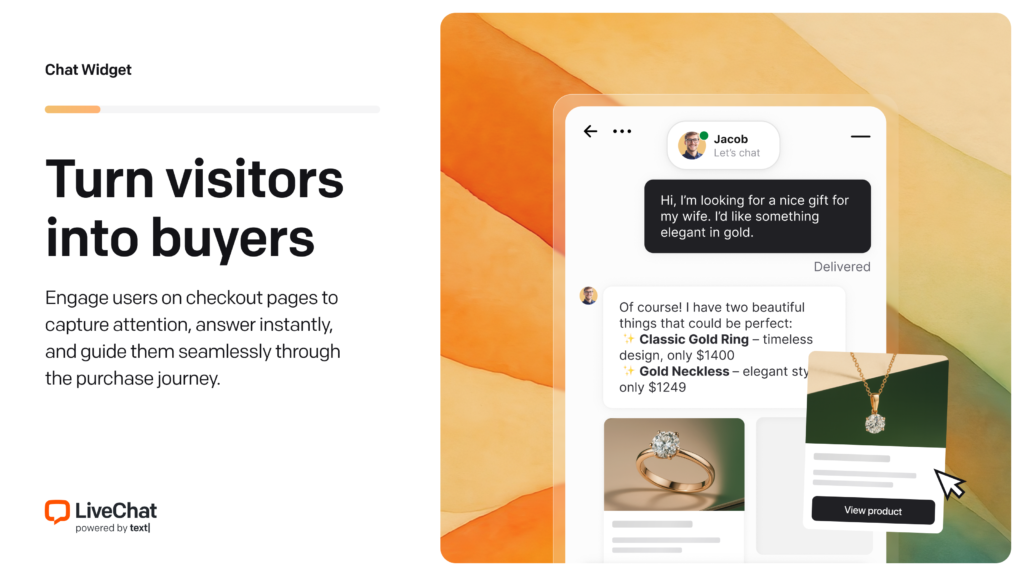
Where it falls short: LiveChat is a chat tool, not a contact center platform. If you need ticketing, voice, or deep AI automation, you’ll be assembling a stack of separate tools. No Amazon integration.
Best for: Teams where live chat is the primary channel and they want to do it extremely well.
❿ Zoho Desk — Best for Teams in the Zoho Ecosystem
Zoho Desk offers solid ticketing, omnichannel coverage, and AI features (Zia) at competitive pricing. If you’re already using Zoho CRM, Books, or other Zoho products, the integration benefits compound.
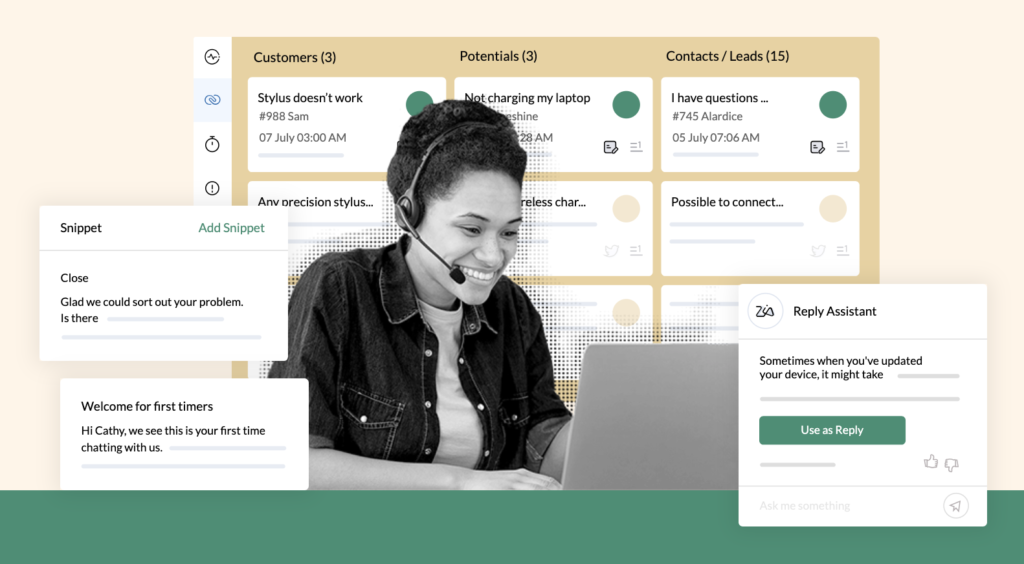
Where it falls short: Zoho’s products are feature-rich but can feel complex to configure. AI capabilities lag behind dedicated AI-native platforms. Amazon integration is absent.
Best for: SMBs already on the Zoho suite looking for a cost-effective service layer.
⓫ Front — Best for Customer Operations Teams
Front is a collaborative inbox that blends email, chat, and internal communication into a shared workspace. It’s particularly popular with operations and logistics teams where multiple people need visibility into the same conversation.
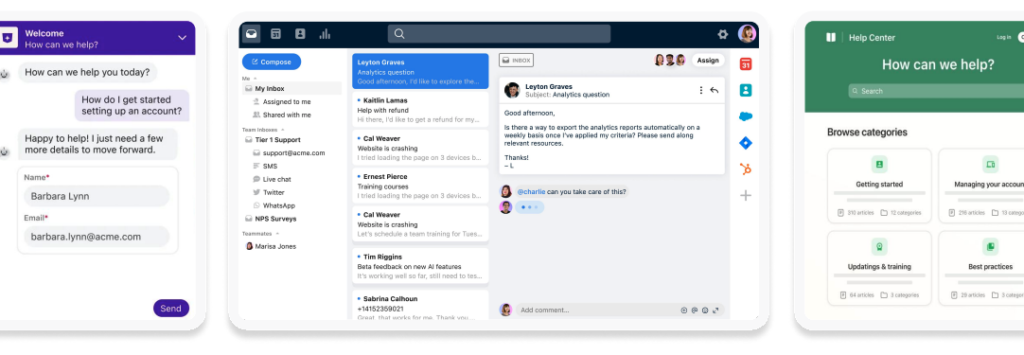
Where it falls short: Front is not a traditional customer support platform. It lacks the chatbot automation, AI agent capabilities, and e-commerce integrations that product-facing support teams need.
Best for: Operations teams managing B2B relationships and vendor communication.
⓬ Salesforce Service Cloud — Best for Enterprise Teams Already on Salesforce
Service Cloud is powerful, highly configurable, and deeply integrated with Salesforce CRM and Einstein AI. For enterprises where Salesforce is the system of record, it remains a strong choice.
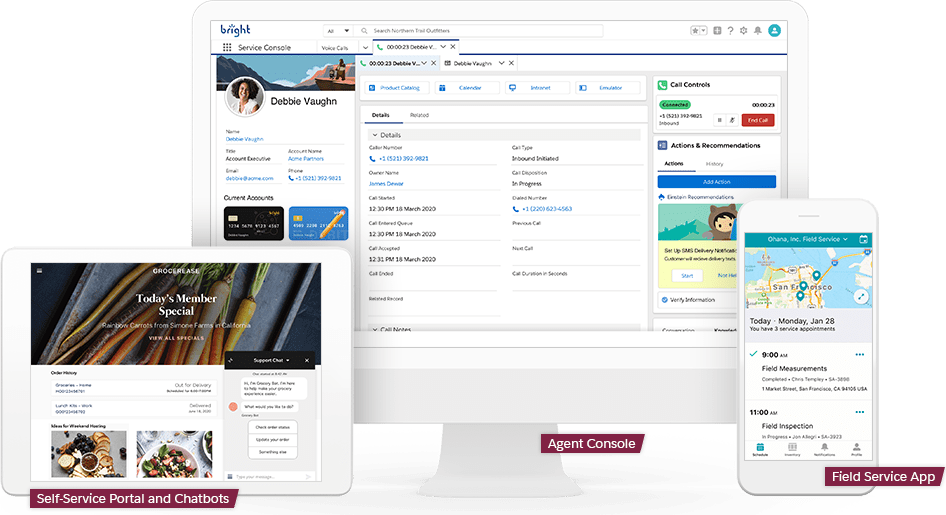
Where it falls short: Salesforce is enterprise software. Implementation costs, licensing complexity, and ongoing admin requirements make it impractical for most SMB and mid-market teams. The true cost of Salesforce Service Cloud typically exceeds Zendesk.
Best for: Large enterprises with Salesforce as their primary business platform.
⓭ Genesys Cloud — Best for Enterprise Call Centers
Genesys is the incumbent contact center platform for large enterprises — particularly those with high-volume inbound phone operations. Its routing intelligence, workforce management, and analytics are mature.
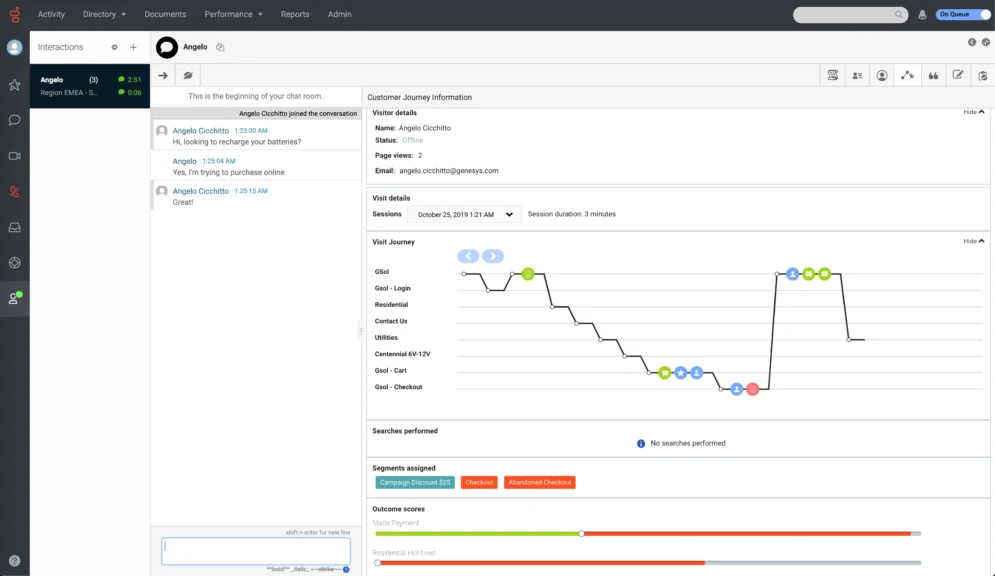
Where it falls short: Genesys was built for voice and is adding digital channels through acquisition and integration. AI capabilities are improving but lag behind AI-native platforms. For businesses that want digital-first omnichannel with AI at the center, Genesys feels like working backward. Pricing is enterprise-only.
Best for: Large enterprises replacing legacy on-premises PBX systems.
⓮ Gladly — Best for Retail and Lifestyle Brands Focused on CX
Gladly takes a people-centric approach — organizing conversations around the customer rather than tickets. For retail brands where agent empathy and customer relationship quality are differentiators, this philosophy resonates.
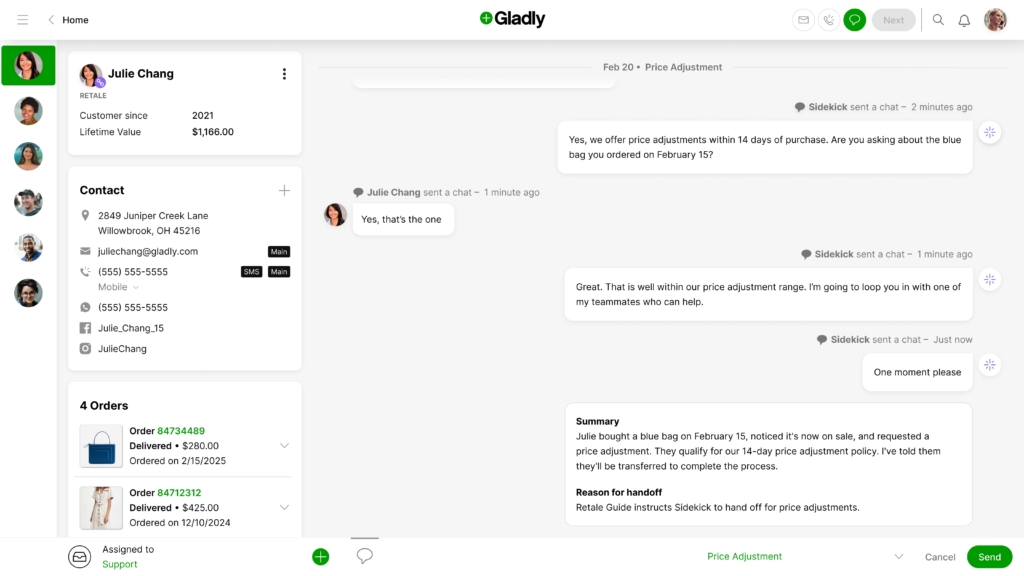
Where it falls short: Gladly is a niche platform with limited AI automation depth. E-commerce integrations, particularly Amazon, are not natively available. Pricing is custom and typically mid-to-high market.
Best for: Premium retail and lifestyle brands with a strong customer relationship culture.
How to Choose the Right Zendesk Alternative
Selecting the right platform depends on your primary pain point with Zendesk:
- If you’re leaving because of AI limitations → Sobot or Intercom. Both have genuinely invested in LLM-powered automation. The difference: Sobot is AI-native from the ground up and covers voice + omnichannel; Intercom excels in SaaS/B2B contexts.
- If you’re leaving because of Amazon and e-commerce integrations → Sobot is the only platform on this list with native Amazon Seller Central integration alongside WhatsApp, TikTok Shop, and Lazada. Gorgias is a strong second for Shopify-only merchants.
- If you’re leaving because of price → Freshdesk, Tidio, or Zoho Desk offer the lowest entry points. Sobot’s pricing at roughly two-thirds of enterprise alternatives gives you more capability per dollar than Zendesk.
- If you’re leaving because Zendesk is too enterprise-focused for your team → Sobot, Freshdesk, or Help Scout. All three are meaningfully easier to configure and use without a dedicated admin.
- If you’re leaving because you need real voice + chat integration → Sobot or Genesys. Most platforms on this list handle chat well; fewer handle voice at the same level. Sobot is the only platform that combines AI-native chat and a full call center + voicebot in one product.
Zendesk Alternatives by Business Type
- Best Zendesk alternative for e-commerce brands selling on Amazon: Sobot. It’s the only platform on this list with native Amazon Seller Central integration, alongside Shopify, TikTok Shop, Walmart, and Lazada. Combined with AI customer service automation that resolves 80%+ of inquiries, it’s the strongest omnichannel customer service platform for multi-marketplace e-commerce teams.
- Best Zendesk alternative for small business: Freshdesk or Tidio for budget-first teams; Sobot for small teams that need AI automation and WhatsApp alongside live chat without paying Zendesk’s per-agent pricing.
- Best Zendesk alternative for enterprise contact centers: Sobot (for AI-native omnichannel) or Genesys (for legacy voice-heavy operations). Salesforce Service Cloud suits enterprises already on the Salesforce ecosystem.
- Best Zendesk alternative for SaaS companies: Intercom for product-led growth contexts. Sobot for SaaS teams that also run outbound calls or need WhatsApp as a support channel.
- Best Zendesk alternative for teams needing voice + chat in one platform: Sobot is the only platform in this comparison that natively combines AI chatbot, live chat, call center, voicebot, and WhatsApp API in a single product — without requiring third-party integrations for each channel.
- Best free Zendesk alternative: Freshdesk (free tier supports up to 10 agents). Tidio and HubSpot Service Hub also offer free entry-level plans.
Frequently Asked Questions
What is the best Zendesk alternative overall in 2026?
Sobot is the strongest overall alternative for businesses that need AI-powered automation, true omnichannel coverage (including Amazon), and a platform built for AI from day one rather than having AI added through acquisition. For SaaS-focused teams, Intercom is a close second. For budget-conscious SMBs, Freshdesk offers solid capabilities at a lower price point.
Does any Zendesk alternative integrate with Amazon?
Yes — Sobot integrates natively with Amazon Seller Central, allowing support agents to view order details, shipping status, and purchase history directly in the agent workspace. This is a meaningful gap in Zendesk and most other alternatives, which do not support Amazon integration natively.
Why doesn’t Zendesk’s AI feel as advanced as newer platforms?
Zendesk was founded in 2007 as a ticketing system and added AI capabilities through acquisitions over time. AI-native platforms like Sobot (founded 2014 as an AI chatbot company) built their entire product architecture around AI, enabling deeper automation and more accurate intent understanding out of the box.
Is Zendesk too expensive for small businesses?
For many small and mid-sized businesses, yes. Zendesk’s Suite plans range from $55–$115+/agent/month, with key features like advanced AI, analytics, and omnichannel support gated behind higher tiers. Alternatives like Freshdesk, Tidio, and Sobot offer more competitive pricing with fewer artificial feature restrictions.
What is the easiest Zendesk alternative to set up?
Help Scout and Tidio have the simplest onboarding for small teams. Sobot offers fast deployment (voicebot, for example, can be live within 3 weeks) with no-code configuration tools. Zendesk alternatives that require significant admin work include Salesforce Service Cloud and Genesys.
Which Zendesk alternative is best for WhatsApp?
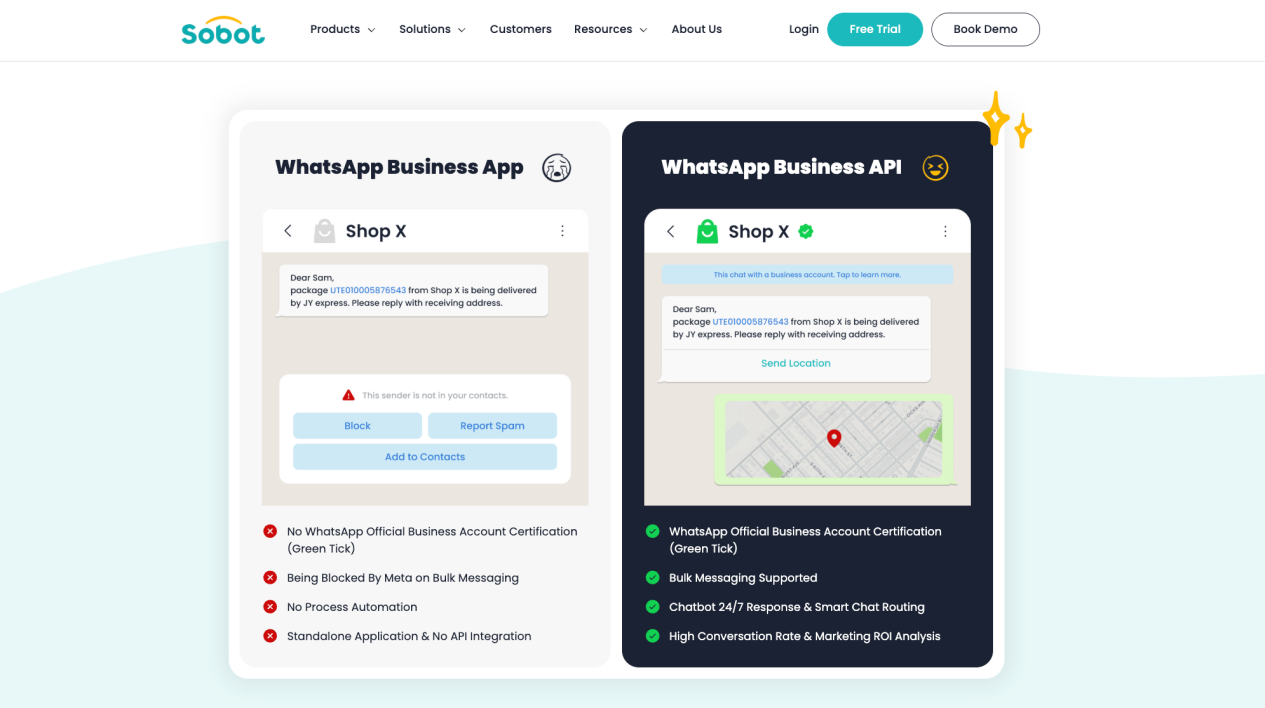
Sobot is a Meta official WhatsApp Business Solution Provider (BSP) — one of the first BSPs in the contact center sector. This means direct API access, official green badge verification, bulk messaging capability, and integration between WhatsApp conversations and the same agent workspace handling chat, email, and voice.
Can I use a Zendesk alternative for both customer service and proactive marketing?
Most platforms focus on inbound service. Sobot is designed to support both service and outbound marketing — including WhatsApp marketing campaigns, proactive notification flows, and outbound call campaigns — within the same platform. This is useful for e-commerce businesses using post-purchase messaging or promotional outreach.
Is there a Zendesk alternative that supports both live chat and voice in one platform?
Yes. Sobot is one of the few Zendesk alternatives that natively combines live chat, AI chatbot, call center, voicebot, and WhatsApp API in a single omnichannel contact center platform. Most alternatives specialize in either chat (Intercom, Freshdesk, Gorgias) or voice (Genesys, Aircall) — Sobot covers both without requiring separate tools or integrations.
What is the best Zendesk alternative for omnichannel customer service?
Sobot is the strongest omnichannel Zendesk alternative, covering website chat, mobile app, WhatsApp, Facebook, Instagram, LINE, Telegram, email, Amazon, TikTok Shop, Shopify, and Lazada in a unified agent workspace. Zendesk’s omnichannel coverage has historically been stronger on the ticketing and email side than on voice and third-party e-commerce marketplaces.
How much does Zendesk cost compared to alternatives?
Zendesk Suite plans start at $55/agent/month (Suite Team) and reach $115/agent/month (Suite Professional), with enterprise pricing on top. Annual billing is required. In comparison, Freshdesk starts at $0–$15/agent/month, Tidio at $29/month for small teams, and Sobot at approximately two-thirds of equivalent Zendesk pricing — with AI agent automation included rather than gated behind premium tiers.
Final Verdict
Zendesk earned its market position, but the customer service landscape has moved faster than Zendesk’s product has. AI has shifted from a feature to a foundation. E-commerce channels — Amazon in particular — have become essential support touchpoints. And teams at every size are questioning whether Zendesk’s pricing is justified when capable alternatives exist at lower cost.
Sobot is the strongest overall Zendesk alternative for businesses that want AI at the core, true omnichannel coverage including Amazon and WhatsApp, and a platform that handles both voice and chat without needing to stitch together separate tools.
For Shopify-first e-commerce, Gorgias is a focused alternative. For SaaS companies, Intercom competes closely. For budget-constrained teams, Freshdesk provides the most capability per dollar at the entry level.
The best time to switch is before your Zendesk contract renews.