AI customer service software has moved from a future-facing investment to an immediate executive priority. Gartner found that 91% of customer service and support leaders are under pressure from executive leadership to implement AI in 2026, while improving customer satisfaction, operational efficiency, and self-service success remains at the top of the agenda. That shift is changing how teams evaluate software: the question is no longer whether to adopt AI, but which platforms can actually deliver better service, lower effort, and scalable automation across the full customer journey.
TL;DR
The Customer Service Scaling Challenge
Support teams are under pressure from every direction. Customers expect fast responses, always-on availability, consistent service across channels, and better personalization. At the same time, businesses are trying to control support costs, reduce tool sprawl, and improve agent efficiency.
Traditional chatbots helped deflect repetitive inquiries, but they often failed when conversations became more complex. Modern AI customer service software is different. It can identify intent, access customer context, assist human agents, automate workflows, and increasingly resolve end-to-end service scenarios without forcing customers to repeat themselves.
The biggest shift is not just automation. It is consolidation. More teams now want one platform that can unify AI agents, live chat, ticketing, voice, messaging, and workflow orchestration across the full customer journey.
What Is AI Customer Service Software?
AI customer service software is a platform that uses artificial intelligence to improve customer support operations across digital and voice channels. Depending on the vendor, it may include AI agents, live chat, chatbot automation, knowledge base retrieval, ticketing, call center capabilities, agent copilot tools, outbound communication, and workflow automation.
The difference between older chatbot software and modern AI customer service software is depth. The newer generation is built to do more than answer scripted questions. It can route tickets, summarize conversations, support agents in real time, automate customer engagement, and help businesses run customer service as a connected system rather than as a collection of disconnected tools.
The 10 Best AI Customer Service Software Platforms in 2026
Sobot
Best for: Global businesses that want all-in-one AI customer service software with AI agents, live chat, chatbot, ticketing, voice, and WhatsApp API in one platform.
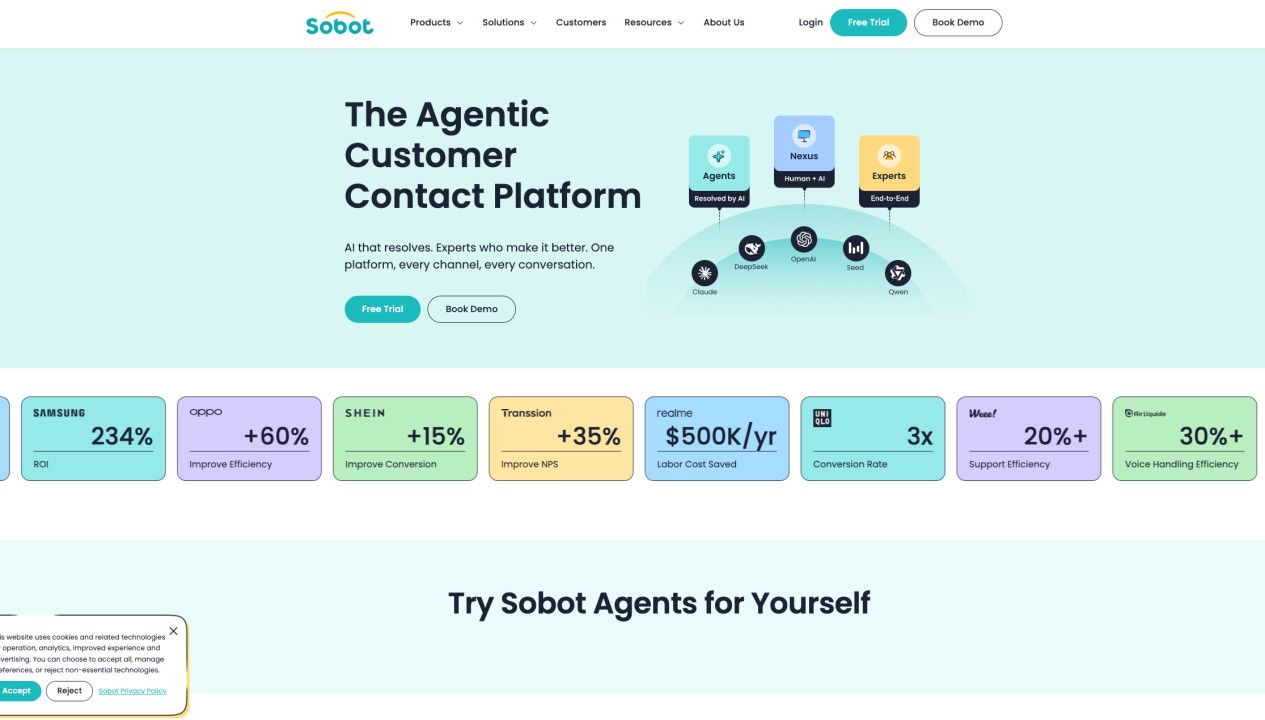
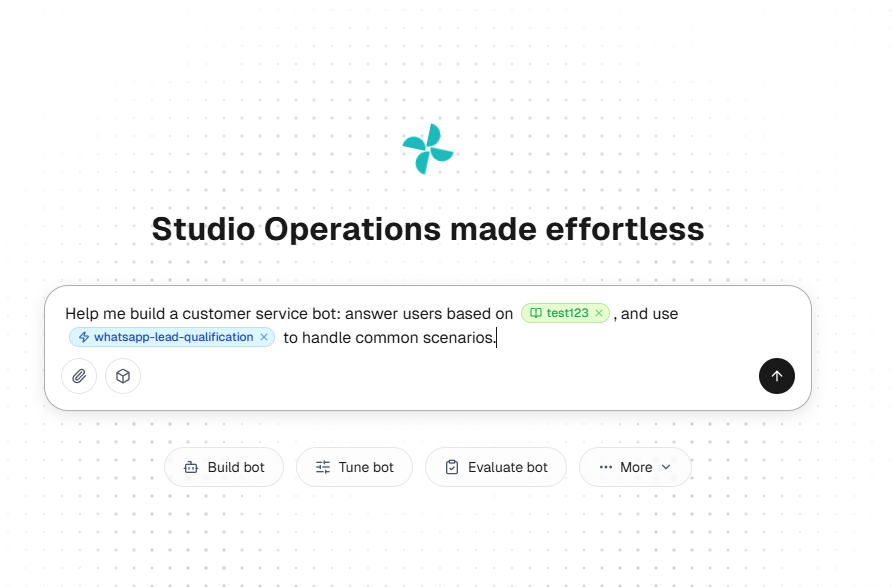
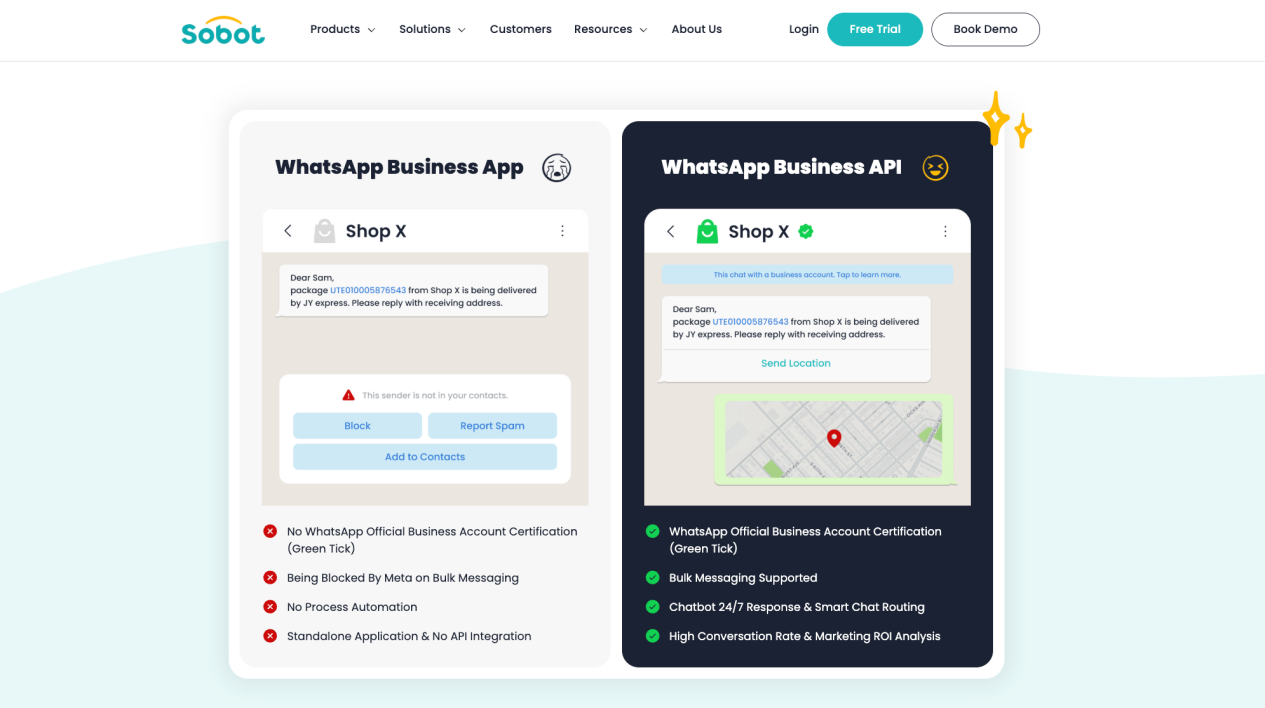
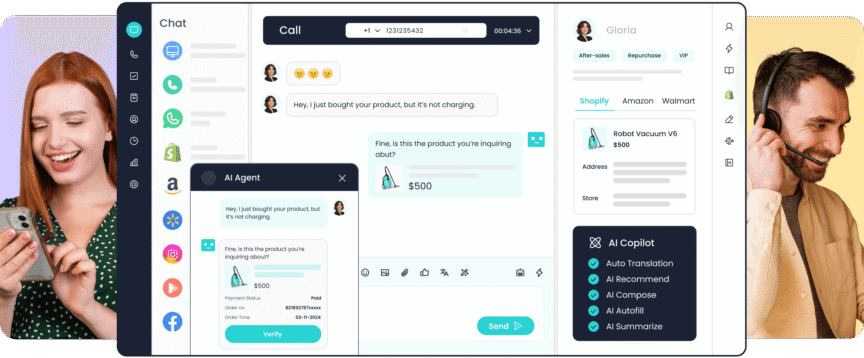
Sobot is an all-in-one AI contact center platform designed to automate customer engagement across the entire lifecycle. Unlike point solutions that focus on only one layer of support, Sobot brings together AI Agent, chatbot, live chat, ticketing, voice, messaging, and WhatsApp Business API in a unified environment.
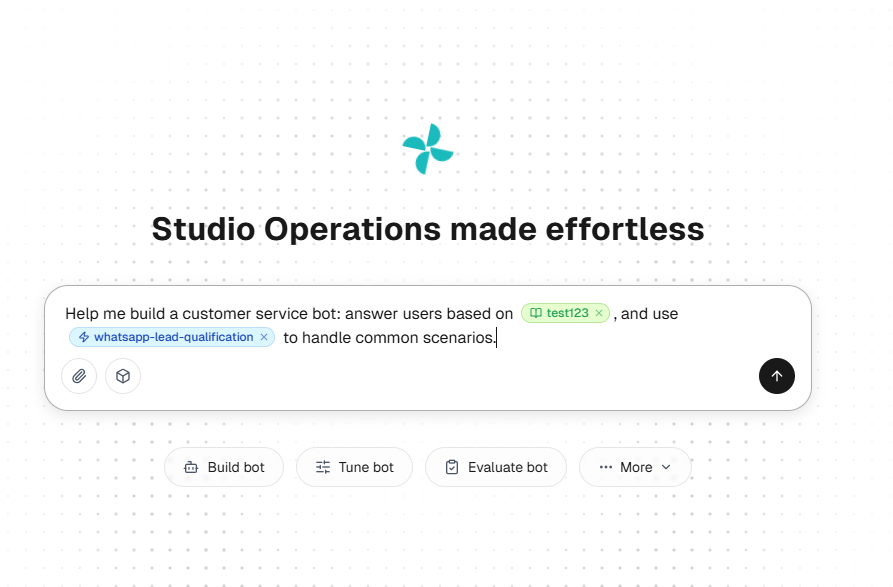
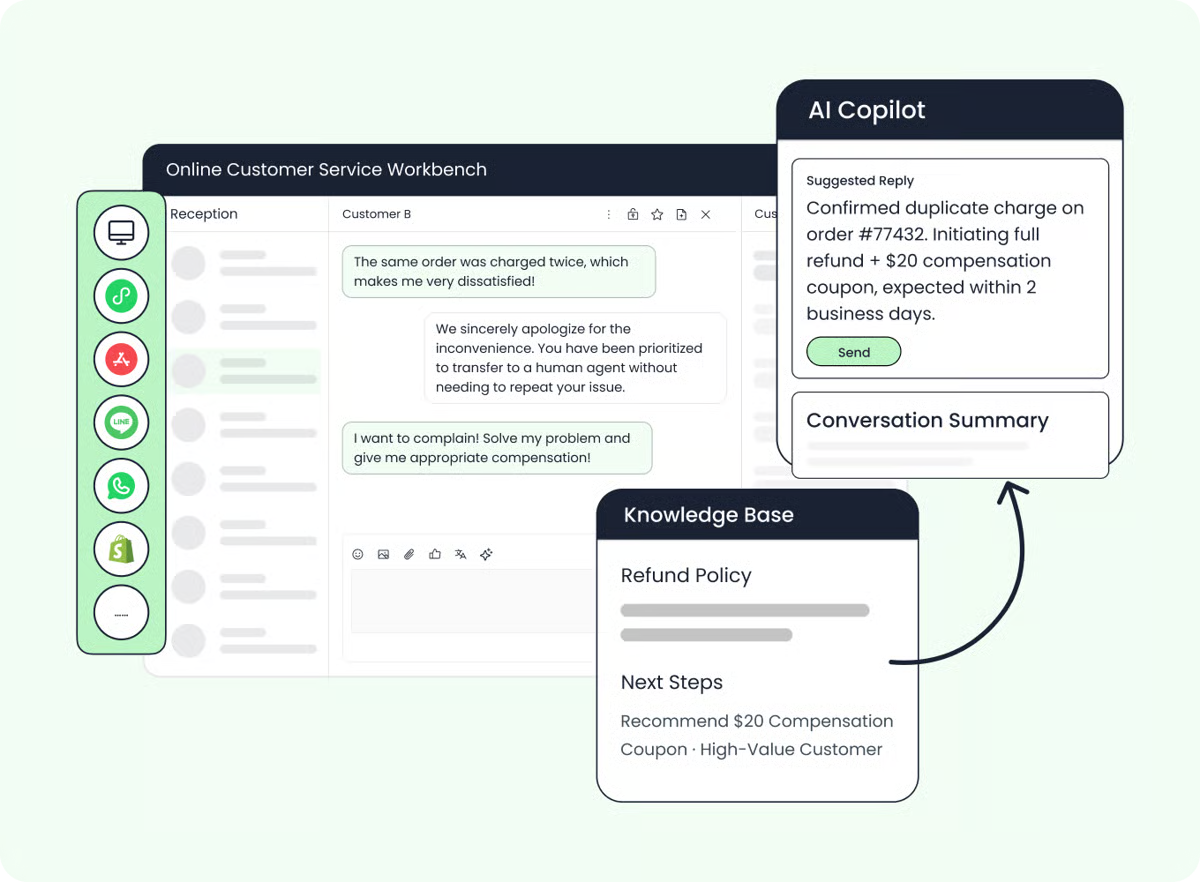
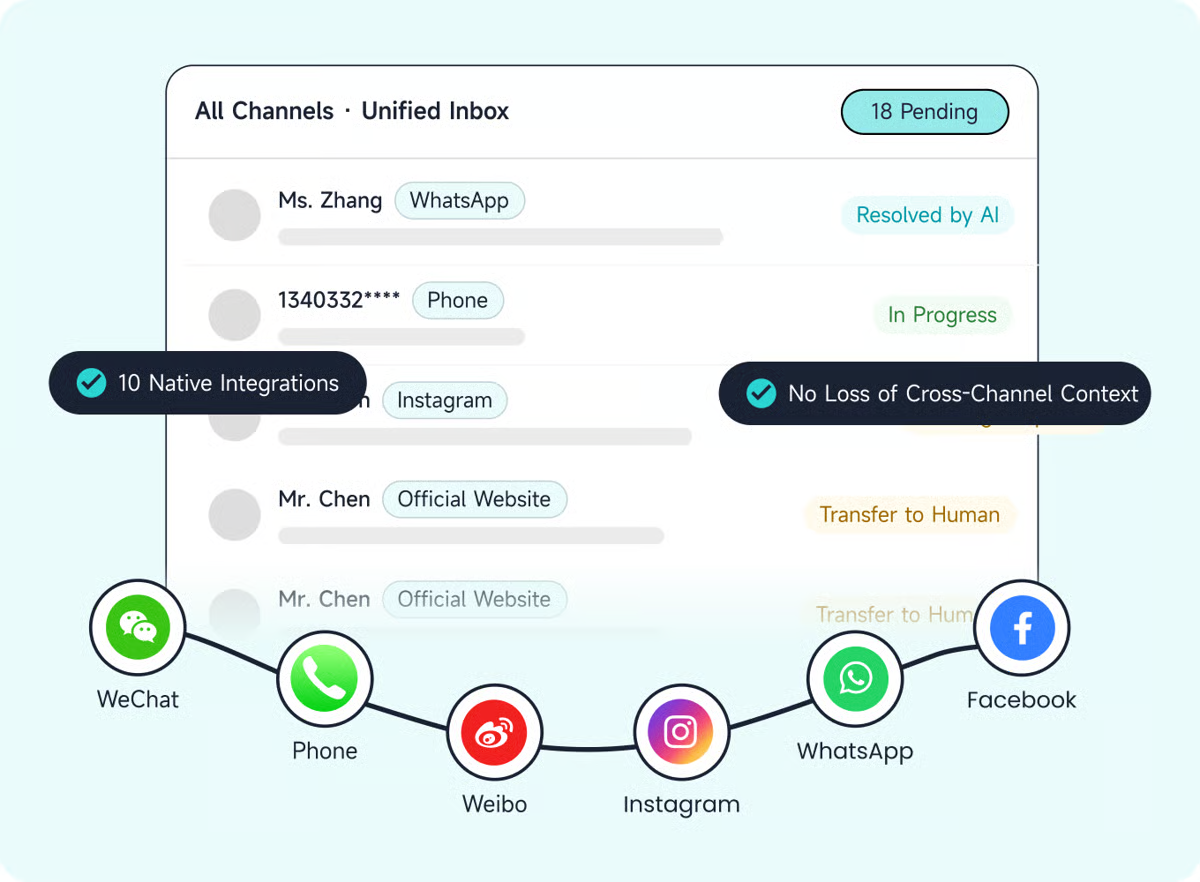
What makes Sobot stand out is breadth plus operational fit. The platform is built around an AI-first approach, with AI embedded across customer-facing and agent-facing workflows. Its AI Agent combines LLM reasoning, NLP, and rule-based logic to deliver accurate responses while reducing hallucination risk. Its Omnichannel Inbox centralizes customer conversations across channels. Its Voice AI supports inbound and outbound scenarios. Its AI Copilot helps agents with summarization, response composition, and ticket autofill. Its No-Code Flow Builder makes it easier to design and automate service workflows.
Sobot is also designed for companies that need real business coverage, not just chat automation. It supports retail and e-commerce, financial services, gaming, education, enterprise services, and local service businesses. It also supports multilingual deployment across 18+ languages and major channels such as WhatsApp, Facebook Messenger, Instagram, Telegram, Amazon, Walmart, Lazada, and Shopify.
For businesses with international operations, this matters. Sobot combines omnichannel service, multilingual reach, cross-border readiness, and compliance support such as GDPR in one platform. That is especially valuable for growing teams that want one system for support, customer communication, and AI automation.
Pros:
- All-in-one platform spanning AI Agent, live chat, chatbot, ticketing, voice, and WhatsApp API
- Scenario-based AI approach designed for industry-specific relevance
- Tracing Debug feature helps teams monitor and refine AI reasoning
- Omnichannel workspace unifies conversations and customer context
- AI Copilot improves agent productivity with summaries, drafting, and autofill
- No-code workflow builder supports faster automation design
- Supports 18+ languages and major global commerce and messaging channels
- Strong fit for retail, e-commerce, fintech, gaming, education, and service industries
- Trusted by over 10,000 active enterprise customers worldwide
- Recognized as a Leader in the G2 Spring 2026 report
Cons:
- Pricing is not publicly standardized, so buyers need a tailored sales conversation
- Full value is highest when teams want omnichannel support and workflow consolidation, not just a lightweight standalone chatbot
- Broader deployments may require more thoughtful setup across channels, routing, and internal workflows
Pricing:
Custom pricing with flexible billing models, including per-agent, per-ticket, per-hour, and hybrid structures.
Why Sobot ranks first:
Sobot is one of the most complete AI customer service software platforms on the market today. It covers both automation and operations. It supports customer-facing AI, agent-facing AI, omnichannel communication, ticketing, voice, proactive engagement, and workflow orchestration in one system. That makes it a strong choice for companies that want to replace fragmented customer service stacks with a more unified AI contact center.
Fin by Intercom
Best for: High-volume support teams that want fast AI deployment and strong autonomous resolution capabilities inside the Intercom ecosystem.
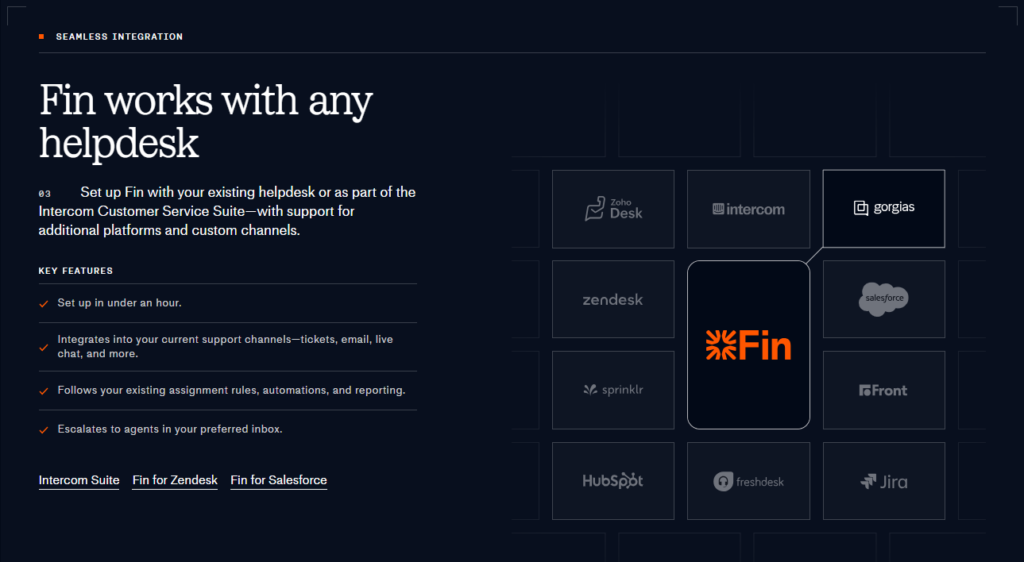
Intercom Fin is one of the most visible AI support products in the market. It is built for teams that want to automate a large share of support conversations and extend coverage across chat, email, voice, WhatsApp, SMS, and social channels.
Fin is especially strong for businesses already invested in Intercom. It offers fast setup, strong brand recognition, and a clear AI positioning that appeals to support leaders looking to scale automation quickly.
Pros:
- Strong autonomous resolution performance across many support environments
- Omnichannel coverage including voice
- Fast deployment
- Enterprise-grade compliance coverage
Cons:
- Per-resolution pricing can become unpredictable at scale
- Content may need ongoing optimization for best results
- Advanced workflow features may require more managed setup
Pricing:
$0.99 per resolution, with additional Intercom plan costs.
Zendesk AI Agents
Best for: Enterprises that want AI inside a mature service platform with strong ticketing, chat, voice, and app ecosystem support.
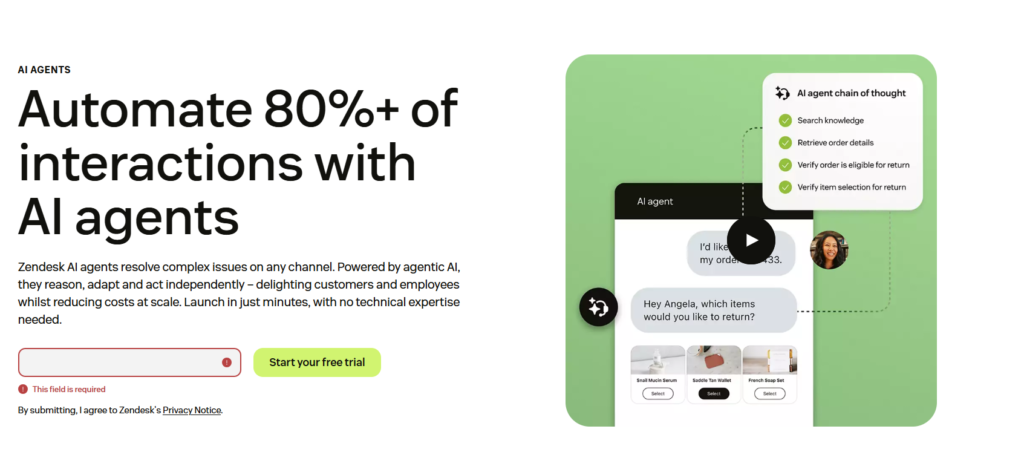
Zendesk AI Agents are a natural option for organizations already standardized on Zendesk. The platform benefits from a long enterprise track record, a large integration marketplace, and broad support organization familiarity.
It is a solid choice for companies that value platform maturity, ecosystem depth, and established ticketing operations.
Pros:
- Mature platform with strong enterprise adoption
- Broad app marketplace and ecosystem
- Easy launch path for existing Zendesk customers
Cons:
- Advanced AI can add meaningful extra cost
- Per-agent pricing may scale up quickly
- Some AI capabilities are more limited without add-ons
Pricing:
Starts with Zendesk Suite pricing, with additional AI-related costs depending on plan and add-ons.
Decagon
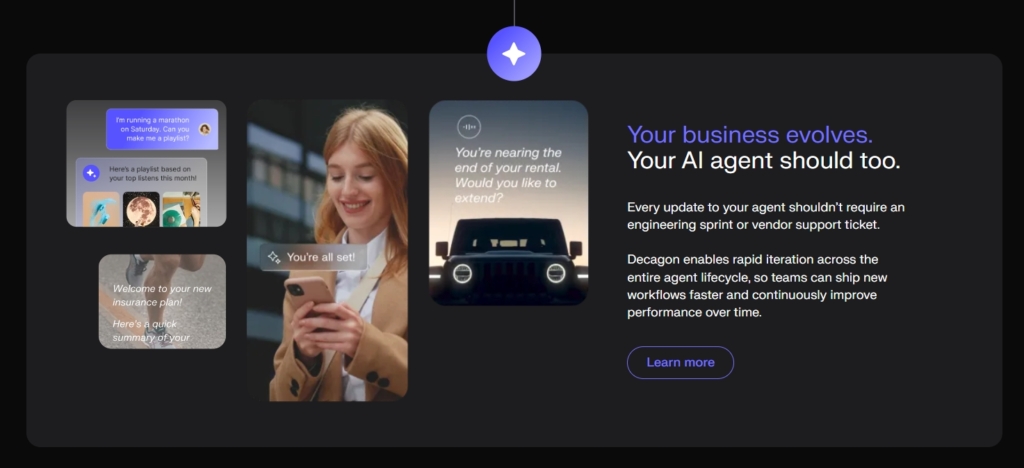
Best for: Fast-scaling digital-first companies that want modern AI workflow automation and natural-language configuration.
Decagon has gained attention for helping teams automate support at scale without relying on rigid decision trees. Its workflow design approach is attractive for organizations that want faster AI operations and more flexible process logic.
Pros:
- Strong automation potential for modern digital support environments
- Natural-language workflow setup
- Good fit for scaling tech and consumer businesses
Cons:
- Typically positioned for larger budgets
- Pricing is not transparent
- Implementation may still require operational ownership
Pricing:
Custom pricing, commonly structured around usage or outcomes.
Forethought
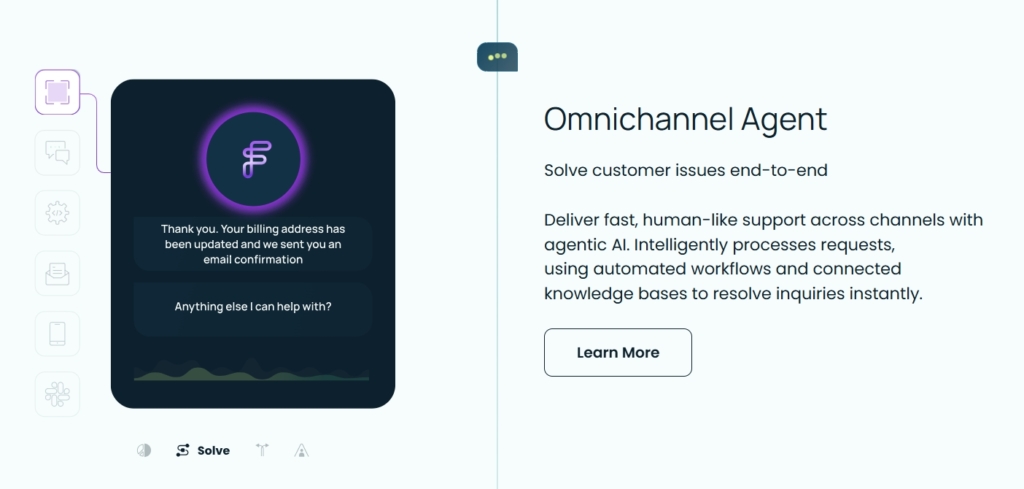
Best for: Enterprises handling large support volumes that want layered AI across triage, agent assistance, discovery, and self-service.
Forethought has built a broad AI support suite, making it attractive for teams that want multiple AI modules rather than a single support bot. It is especially relevant for businesses with substantial historical support data and more formal rollout processes.
Pros:
- Broad AI suite with multiple operational layers
- Strong fit for high-volume support teams
- Useful for organizations looking for structured AI expansion
Cons:
- Can require significant historical data and onboarding effort
- Reporting and early-stage tuning may need close attention
- Custom pricing reduces budget clarity
Pricing:
Custom pricing based on platform access and usage.
Sierra
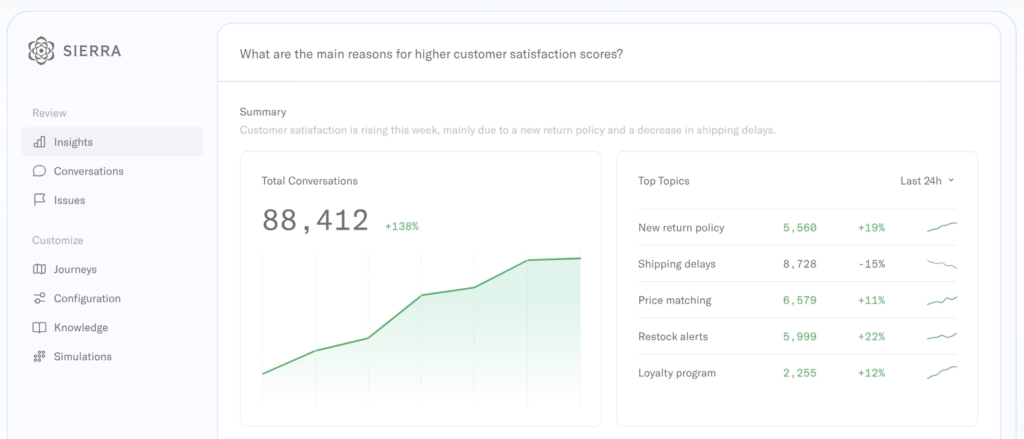
Best for: Large enterprises that want highly customized AI agents positioned as a branded digital front door.
Sierra is aimed more squarely at large enterprise environments, especially those seeking outcome-based AI engagement and more custom agent experiences. It is better suited for organizations with significant resources and a strategic AI transformation agenda.
Pros:
- Strong enterprise positioning
- Broad compliance footprint
- Good fit for branded, high-touch AI experiences
Cons:
- Large-budget orientation
- No public pricing
- More complex technical integration path
Pricing:
Custom, typically enterprise-level annual contracts.
Ada
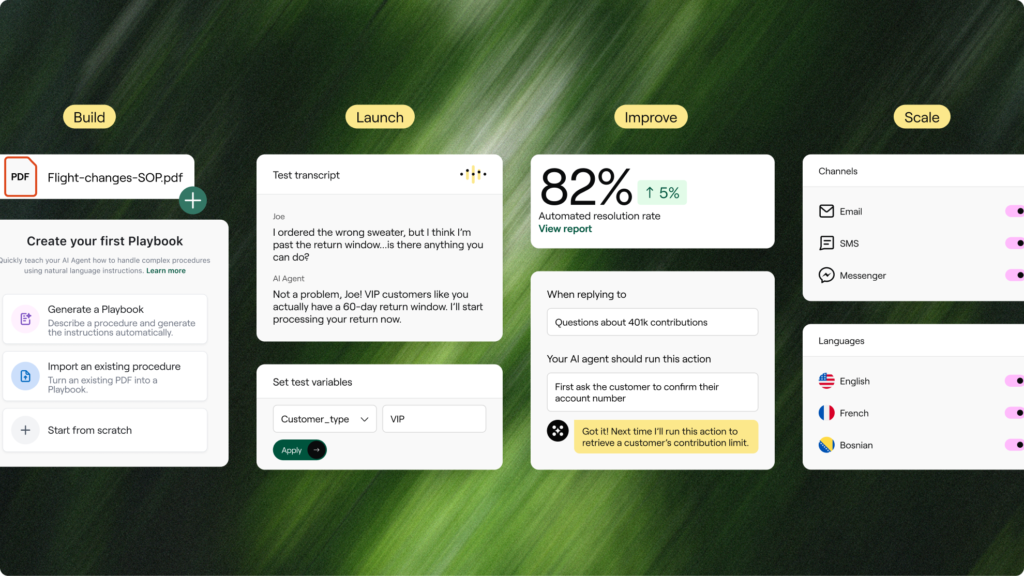
Best for: Enterprises in e-commerce, fintech, healthcare, and SaaS that need scalable AI automation with deep business system integrations.
Ada remains one of the most established names in automated customer experience. It is well suited for businesses that want enterprise-grade AI orchestration, high language coverage, and robust integration depth across commerce, CRM, and billing systems.
Pros:
- Strong enterprise history
- Broad language coverage
- Good integration depth across operational systems
Cons:
- Entry cost can be high
- Larger deployments can become expensive
- Setup is often more formal and resource-intensive
Pricing:
Annual contracts starting at the enterprise level, depending on volume and feature mix.
Eesel AI
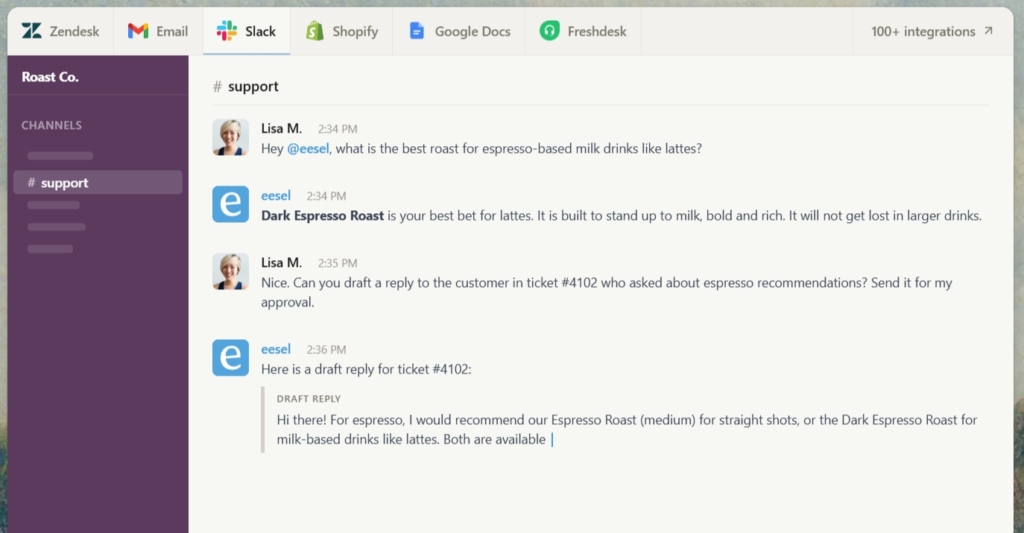
Best for: Teams that want a faster, lighter AI layer on top of an existing help desk without replacing the full support stack.
Eesel AI is appealing for businesses that already run Zendesk, Freshdesk, or Intercom and want to add AI quickly. It is more of an overlay than a full all-in-one customer service platform, which can be an advantage for teams that do not want to replatform.
Pros:
- Fast setup
- Works with existing support systems
- Useful simulation features before full rollout
Cons:
- Better as an AI layer than as a full support platform
- Volume limits can matter on lower plans
- Less suitable for teams wanting voice, ticketing, and omnichannel operations in one system
Pricing:
Starts with lower monthly plans, then scales by interaction volume.
Intercom Customer Service Suite
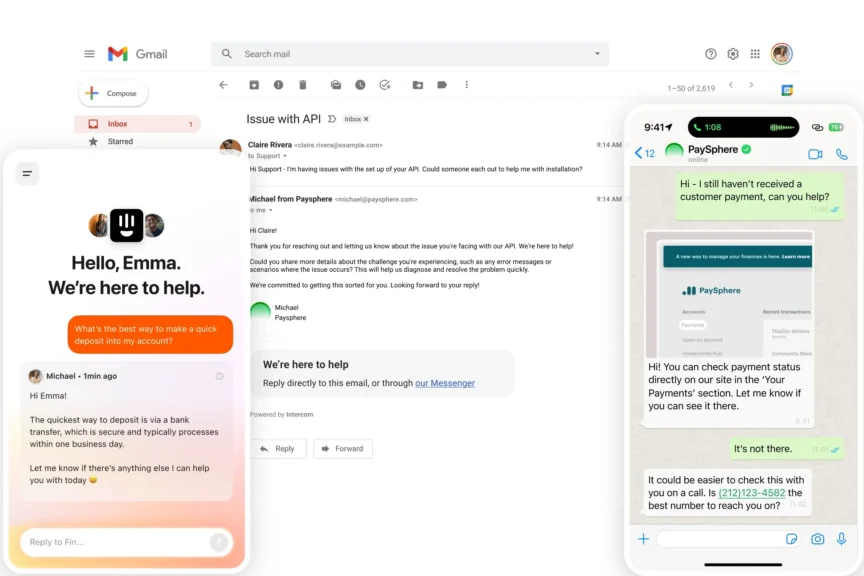
Best for: Teams that want a unified customer service platform with help desk, AI, and analytics in the Intercom ecosystem.
This option is broader than Fin alone because it combines Intercom’s service platform with its AI layer. It is a fit for companies that want a modern customer support stack with analytics, messaging, and AI in one vendor environment.
Pros:
- Unified platform experience
- Strong analytics and app ecosystem
- Good option for teams already aligned with Intercom
Cons:
- Resolution pricing can create budget uncertainty
- Some important capabilities sit behind higher plans
- Cost can escalate as requirements grow
Pricing:
Per-seat pricing plus AI resolution fees.
Forethought Assist
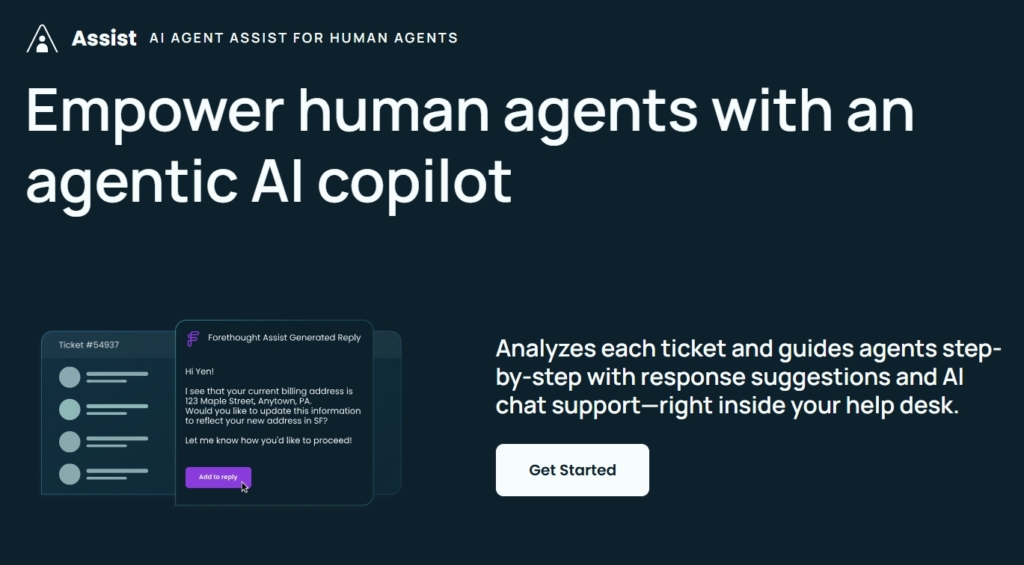
Best for: Teams that care more about agent augmentation than full autonomous resolution.
Forethought Assist is designed to help human agents work faster, with AI guidance, suggested responses, and context inside the existing help desk interface. It is a practical choice for teams that want AI to support agents rather than fully automate the front line.
Pros:
- Strong fit for agent productivity
- Works within existing support workflows
- Useful for reducing ramp time
Cons:
- Less focused on full end-to-end automation than full AI agent platforms
- Often sold as part of a broader platform strategy
- Custom pricing and rollout requirements still apply
Pricing: Custom pricing.
Summary Table
| Tool | Best For | Key Strength | Pricing |
| Sobot | Global teams wanting an all-in-one AI contact center | AI Agent, live chat, chatbot, ticketing, voice, WhatsApp API, omnichannel automation | Custom pricing |
| Fin by Intercom | High-volume teams in the Intercom ecosystem | Fast deployment, strong automation, omnichannel reach | $0.99 per resolution plus plan costs |
| Zendesk AI Agents | Mature enterprise service environments | Large ecosystem, established platform, strong ticketing base | Suite pricing plus AI add-ons |
| Decagon | Fast-scaling digital-first companies | Natural-language workflow automation | Custom pricing |
| Forethought | High-volume enterprises needing layered AI | Multi-module AI support suite | Custom pricing |
| Sierra | Large enterprises building premium AI engagement | Branded enterprise AI experiences | Custom pricing |
| Ada | Integration-heavy enterprise support teams | Scalable AI orchestration and language coverage | Enterprise annual pricing |
| Eesel AI | Teams adding AI to an existing help desk | Fast overlay deployment | Monthly pricing by interaction volume |
| Intercom Customer Service Suite | Teams wanting a unified Intercom-based service stack | Platform plus AI plus analytics | Per-seat plus resolution pricing |
| Forethought Assist | Teams focused on agent productivity | Real-time AI support for human agents | Custom pricing |
Why Sobot Delivers the Strongest Overall Value in AI Customer Service Software
Most businesses do not need another isolated support tool. They need a system that reduces fragmentation, improves customer experience, and gives agents better leverage. That is where Sobot has a meaningful advantage.
First, Sobot covers the full stack. It combines AI Agent, live chat, chatbot, ticketing, voice, messaging, and WhatsApp API in one platform. That means businesses can consolidate customer conversations and workflows instead of stitching together multiple vendors.
Second, Sobot is built for real-world service operations. Its scenario-based AI approach is designed around industry use cases, which is especially important in retail, e-commerce, finance, gaming, and service-heavy environments. Its Tracing Debug capability gives administrators more visibility into how AI is reasoning, which is valuable for teams that care about control, trust, and continuous optimization.
Third, it improves both automation and human performance. Sobot does not only automate customer interactions. It also helps agents work faster through AI Copilot features like conversation summaries, response drafting, and ticket autofill. That makes it useful for businesses that want a blended model of AI plus human service.
Fourth, it has clear global readiness. Sobot supports 18+ languages, major social and commerce channels, and compliance needs for cross-border business. It is well suited for teams that serve customers across multiple markets and need one platform that can support both local operations and international expansion.
Finally, it has evidence across different industries. Sobot has worked with brands such as Samsung, OPPO, Philips, Tineco, DFS, Renogy, Weee!, Michael Kors, OPay, Mico, and Lilith Games. Case examples show strong outcomes across service and conversion metrics, including 93%+ CSAT for OPPO, 40%+ improvement in resolution rate for Tineco, 95%+ CSAT for Renogy, 44%+ conversion rate for DFS, 20%+ overall cost reduction for OPay, and 80%+ chatbot resolution rate for Mico.
For teams evaluating the best AI customer service software in 2026, Sobot stands out because it is not just an AI widget or a chatbot layer. It is a broader AI customer service operating system.
How We Chose the Best AI Customer Service Software
We evaluated platforms across the factors that matter most in modern customer service operations:
- Workflow depth:Can the platform do more than answer FAQs?
- Omnichannel coverage:Does it support chat, email, messaging, voice, and commerce-related service scenarios?
- AI breadth:Does it help customers, agents, and internal workflows?
- Operational fit:Can it support ticketing, routing, escalation, and collaboration?
- Integration depth:Does it connect with major business systems and customer channels?
- Global readiness:Does it support multilingual service and international operations?
- Compliance and enterprise suitability:Is it credible for larger or more regulated organizations?
- Pricing clarity and deployment fit:Is the platform practical for the type of team it targets?
This list prioritizes platforms that can support real customer service transformation, not just basic chat deflection.
FAQs
What is the best AI customer service software in 2026?
For businesses looking for the most complete all-in-one option, Sobot stands out as one of the best AI customer service software platforms in 2026 because it combines AI Agent, live chat, chatbot, ticketing, voice, WhatsApp API, omnichannel support, no-code automation, and multilingual deployment in one system.
What is the difference between AI customer service software and a chatbot?
A chatbot is usually one component. AI customer service software is broader. It can include chatbot automation, AI agents, ticketing, voice, live chat, agent copilot tools, workflow automation, reporting, and omnichannel orchestration.
Which AI customer service platform is best for omnichannel support?
Sobot is one of the strongest choices for omnichannel customer service because it brings together messaging, live chat, voice, ticketing, social platforms, and commerce-related integrations in one unified workspace.
Is Sobot good for global customer support teams?
Yes. Sobot supports 18+ languages and multiple global channels, including WhatsApp, Facebook Messenger, Instagram, Telegram, Amazon, Walmart, Lazada, and Shopify. That makes it a strong fit for global businesses with distributed customer operations.
Which platform is best if I already use Intercom?
If you are already deeply committed to Intercom, Fin by Intercom or the Intercom Customer Service Suite may be the most natural options because they extend automation inside the same ecosystem.
Which platform is best if I already use Zendesk?
Zendesk AI Agents are a logical choice for teams already standardized on Zendesk, especially if platform continuity and marketplace integrations are a priority.
What should I look for when choosing AI customer service software?
Focus on workflow depth, omnichannel coverage, AI quality, agent assistance, ticketing support, integration depth, deployment fit, compliance, and total cost structure. The best platform is not always the one with the flashiest demo. It is the one that matches your support model and growth path.
Does AI customer service software replace human agents?
Not completely. The best platforms automate repetitive work, accelerate common workflows, and help agents focus on higher-value or more complex cases. In practice, the strongest model is usually AI plus human collaboration.
Is Sobot only for customer support?
No. Sobot is broader than a support-only tool. It can also support proactive marketing, outbound voice scenarios, omnichannel engagement, internal collaboration workflows, and customer lifecycle automation.
Which AI customer service software is best for businesses trying to reduce tool sprawl?
Sobot is a strong option for this use case because it combines AI automation, live chat, ticketing, voice, messaging, and workflow capabilities in one platform rather than requiring separate point solutions for each function.