Introduction
The expectations around customer communication have evolved significantly in recent years. Businesses are no longer judged solely on the quality of their products or services, but also on how quickly and effectively they respond to customer inquiries. As a result, real-time communication has become a critical component of modern customer experience strategies, enabling companies to engage users at the right moment and deliver timely support.
Among the established solutions in this space, LiveChat has built a strong reputation as a reliable live chat platform, widely used for facilitating instant interactions between businesses and their customers. Its focus on simplicity and real-time engagement has made it a popular choice across industries.
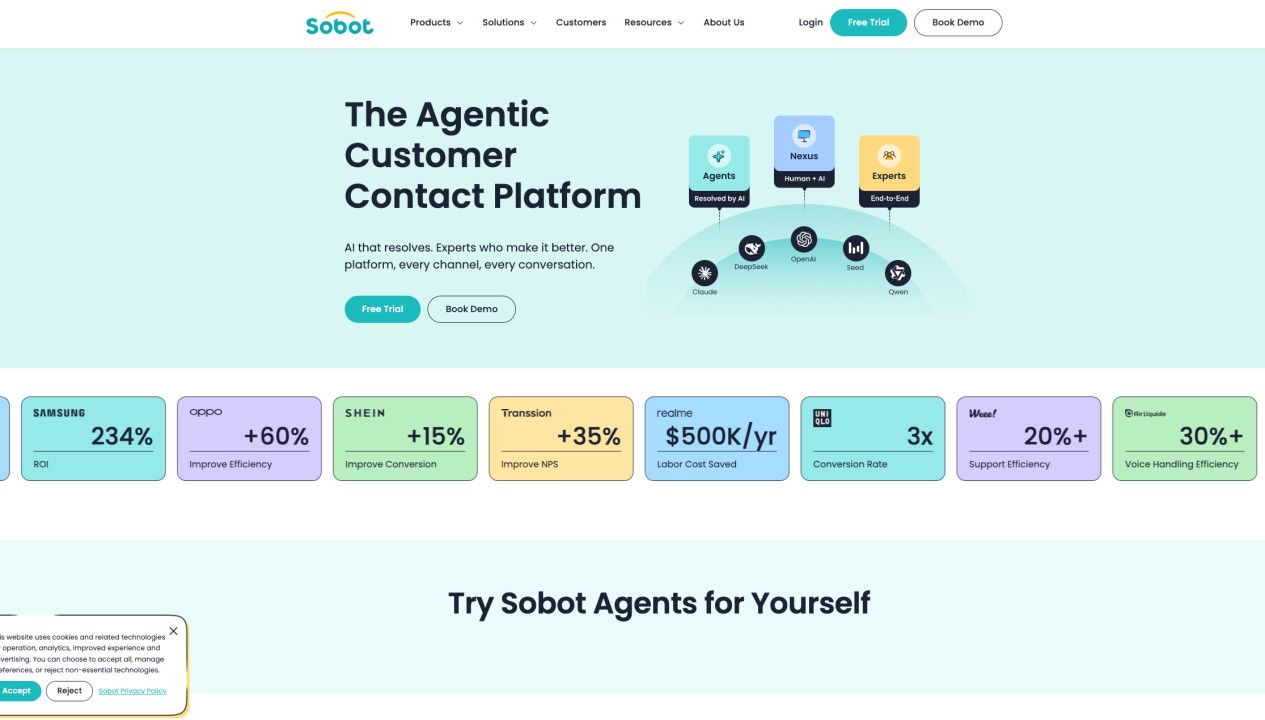
At the same time, newer platforms such as Sobot are introducing a broader, AI-driven approach to customer communication. These solutions aim to go beyond traditional live chat by integrating automation, intelligence, and multiple communication channels into a unified system.
This comparison explores how LiveChat performs as a dedicated live chat solution and how it compares to Sobot in the context of evolving business needs.
What is LiveChat?
Company Background
LiveChat is a well-established customer communication platform founded in 2002 and part of the Text.com ecosystem. Over the years, it has grown into a global solution used by businesses in more than 150 countries, serving over 36,000 organizations worldwide.
It is widely adopted across industries such as:
- E-commerce
- SaaS
- Financial services
- Healthcare
- Education
Its long-standing presence and broad adoption make it a trusted choice for companies looking to implement real-time customer communication.
What Does LiveChat Do?
At its core, LiveChat is designed to enable real-time communication between businesses and their website visitors through an embedded chat interface. It allows companies to engage users instantly, monitor their behavior, and interact with them at key moments in their journey.
The platform primarily focuses on:
- Real-time website engagement: Businesses can interact with visitors directly on their website using a chat widget, enabling instant conversations and faster responses.
- Sales enablement and conversion support: LiveChat includes features such as product cards, sales tracking, and proactive chat invitations that help guide users through the buying process and improve conversion rates.
- Lead generation and visitor qualification: Through pre-chat forms, targeted messages, and behavior-based triggers, businesses can capture leads and engage potential customers at the right time.
👉 Key Positioning: LiveChat is best understood as a live chat–first platform with strong sales and engagement capabilities, helping businesses turn website interactions into measurable business outcomes.
Key Features of LiveChat
Real-Time Chat & Messaging
At the core of LiveChat is its real-time chat functionality, designed to enable instant communication with website visitors. Businesses can deploy a customizable chat widget that allows customers to initiate conversations without friction.
Key capabilities include:
- Website chat widget: Easily embedded and customizable to match brand identity
- Multi-agent support: Enables multiple team members to handle conversations simultaneously
- Visitor tracking: Provides insights into user behavior, such as pages viewed and time spent, helping agents respond more contextually
This feature set makes LiveChat particularly effective for engaging visitors at critical decision points.
AI & Automation
LiveChat incorporates AI-driven tools to assist agents rather than fully replace human interaction. These features are designed to improve efficiency and response quality.
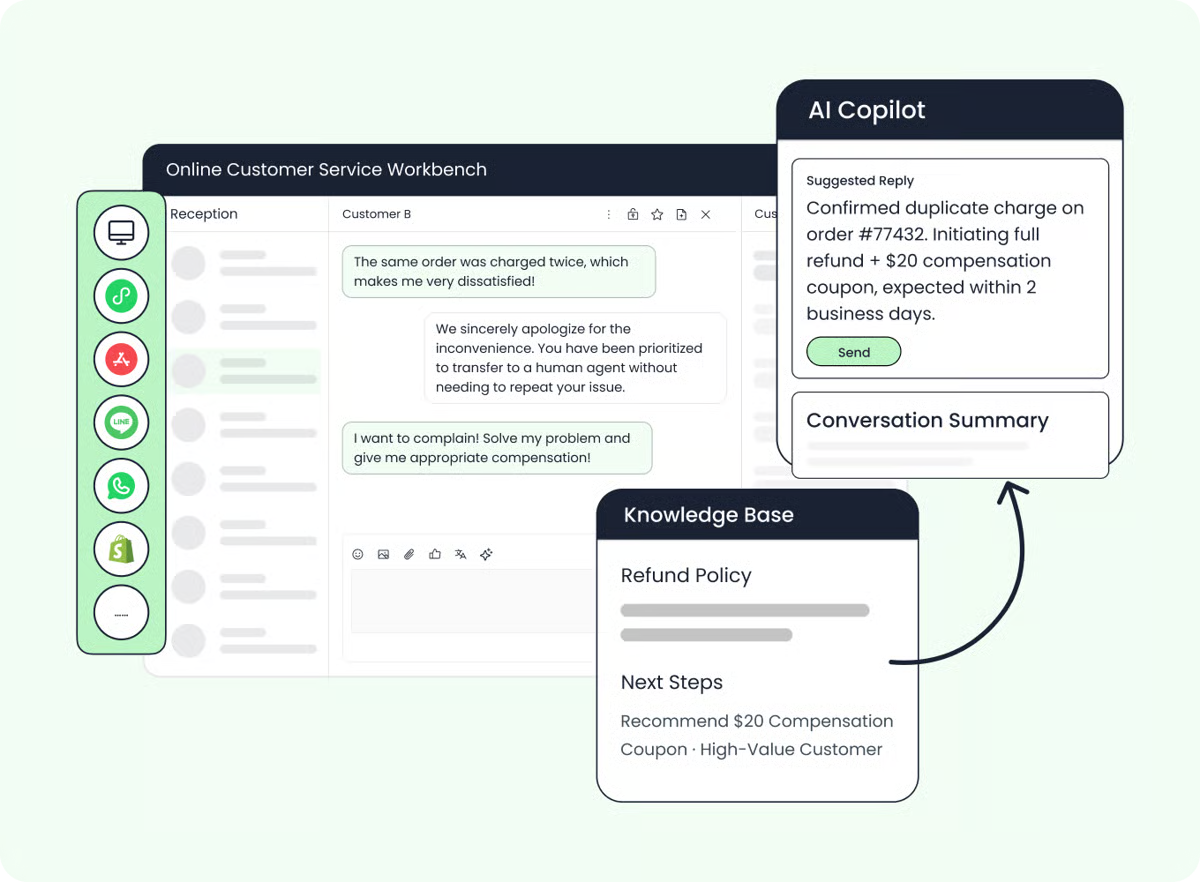
- AI Copilot: Offers real-time reply suggestions, message summaries, and context-aware assistance
- Chatbot integration: Available through a separate product, allowing businesses to automate basic interactions
While helpful, AI in LiveChat functions more as a support layer rather than a deeply integrated automation engine.
Omnichannel Messaging (Limited Scope)
LiveChat supports multiple communication channels, enabling businesses to manage conversations beyond just website chat.
- Supports channels such as:
- Website
- Messenger and WhatsApp
- Provides a centralized inbox for handling conversations
However, the platform remains primarily chat-centric, with limited depth in delivering a fully unified omnichannel experience.
Customization & Integrations
One of LiveChat’s strengths lies in its flexibility and ability to integrate with existing business tools.
- 200+ integrations: Compatible with platforms like Shopify, HubSpot, and Salesforce
- Custom chat widget: Businesses can modify colors, layout, and branding elements
These capabilities make it easier for organizations to align LiveChat with their workflows and tech stack.
Analytics & Reporting
LiveChat provides reporting tools that help teams monitor performance and optimize interactions.
- Agent performance tracking: Measures response times, chat volume, and efficiency
- Conversion insights: Tracks how chats influence sales outcomes
- Customer behavior analytics: Offers visibility into user engagement patterns
While useful, the analytics are generally suited for basic to mid-level insights.
Ticketing System
In addition to live chat, LiveChat includes a lightweight ticketing system for managing offline communication.
- Converts missed or after-hours chats into tickets
- Supports follow-ups via email
- Provides basic helpdesk functionality for ongoing queries
This ensures that customer interactions are not lost, even when agents are unavailable.
LiveChat Pros
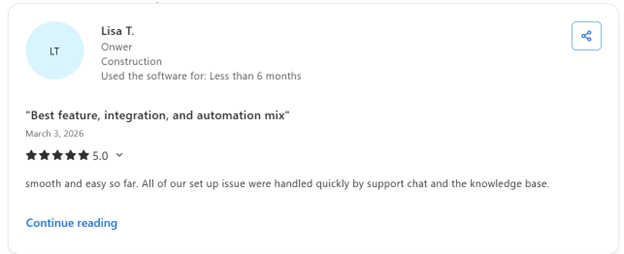
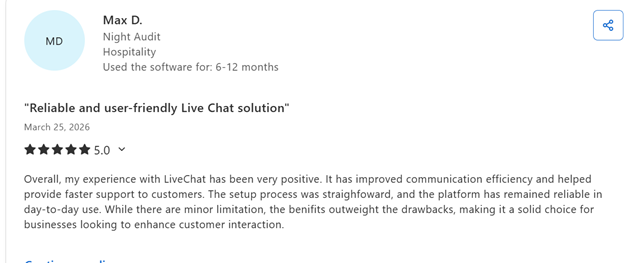
Based on aggregated feedback from real users across review platforms, LiveChat is widely appreciated for its simplicity and effectiveness in handling real-time interactions.
Easy to Use & Quick Setup
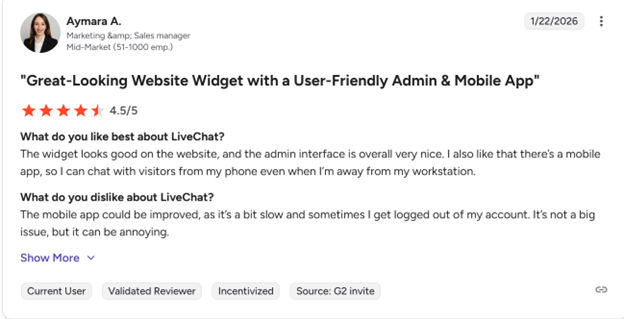
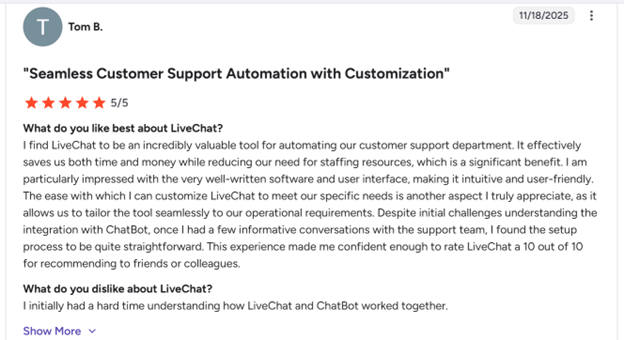
One of the most frequently praised aspects of LiveChat is its simplicity. Users consistently report that LiveChat is easy to implement, with minimal technical setup required. Businesses can quickly deploy the chat widget and begin handling conversations without extensive onboarding or training.
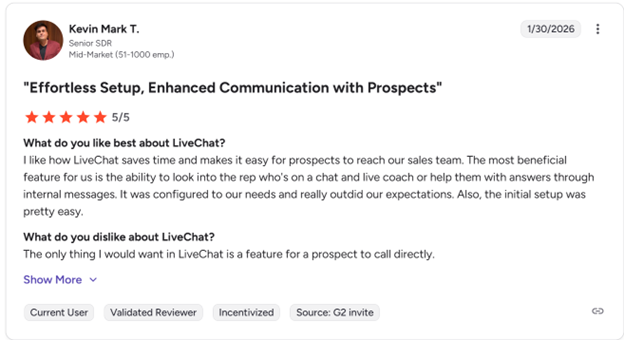
Fast Real-Time Customer Communication
LiveChat is highly effective in enabling instant communication. The platform delivers fast message delivery and smooth interactions, allowing teams to respond to visitors in real time. This responsiveness helps businesses reduce wait times and improve engagement.
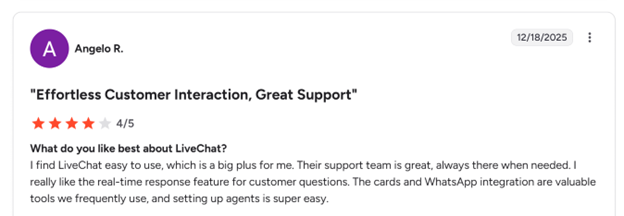
Strong Integration with Existing Tools
Another key advantage of LiveChat is its ability to integrate seamlessly with popular business tools. LiveChat supports connections with CRM systems, eCommerce platforms, and marketing tools, making it easier to align communication workflows with existing operations.
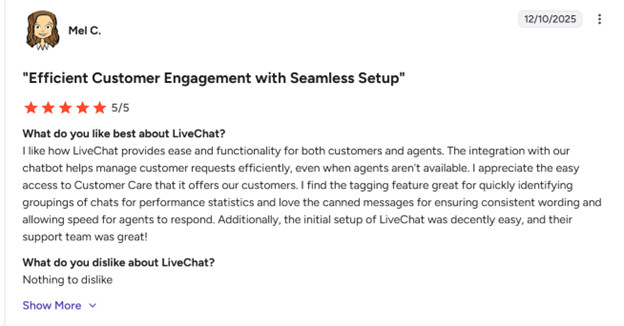
Strong Live Chat Performance for Everyday Support
LiveChat delivers stable and efficient real-time messaging, making it a reliable solution for handling high volumes of customer interactions. Its performance remains consistent during day-to-day operations, ensuring minimal delays in communication.
For businesses with straightforward needs, it effectively manages common queries and maintains smooth customer interactions. This makes it a strong fit for teams that prioritize speed, reliability, and ease of use, rather than complex workflows or advanced automation capabilities.
LiveChat Cons & Limitations
While LiveChat performs well as a basic chat solution, user feedback highlights several limitations that may impact long-term scalability and advanced use cases.
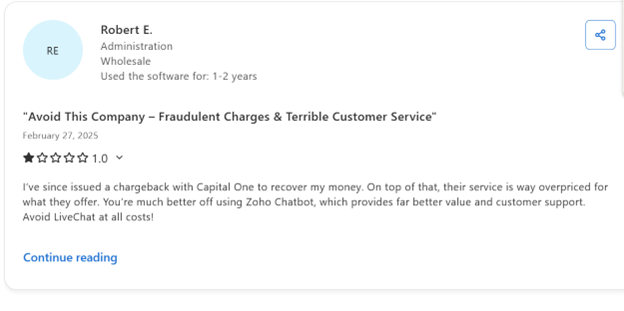
Expensive Pricing for Growing Teams
A common concern with LiveChat is its pricing model. Since LiveChat charges on a per-agent basis, costs can increase significantly as teams expand, making it less cost-effective for scaling businesses.
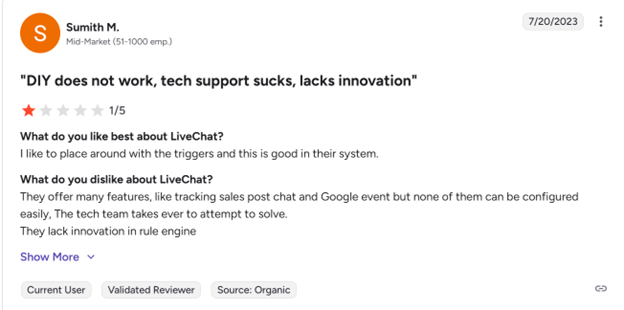
Limited Innovation & Weak AI Capabilities
Users often note that LiveChat lacks advanced AI functionality compared to newer platforms. While LiveChat includes some AI features, they are not deeply integrated, limiting automation capabilities.
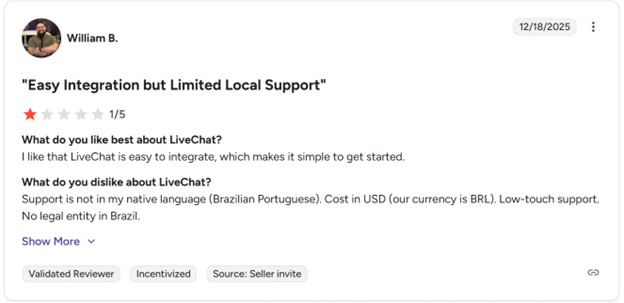
Slow & Inefficient Technical Support
Some users report delays in resolving issues with LiveChat. The technical support experience can be inconsistent, which may impact businesses relying on quick problem resolution.
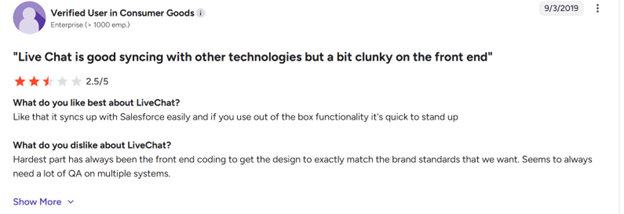
Confusing UI/UX and Navigation Issues
Although LiveChat is generally easy to start with, some users find its interface less intuitive over time. Navigating settings and managing configurations in LiveChat can become complex.
Connection Stability & Performance Problems
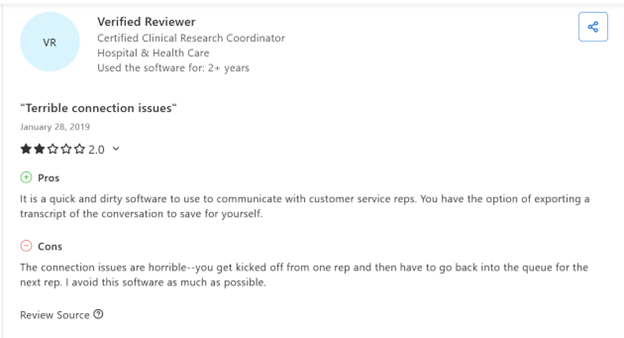
Certain users have experienced connection issues while using LiveChat, including dropped chats or session interruptions, which can negatively affect customer interactions.
Limited Reporting & Customer Data Tracking
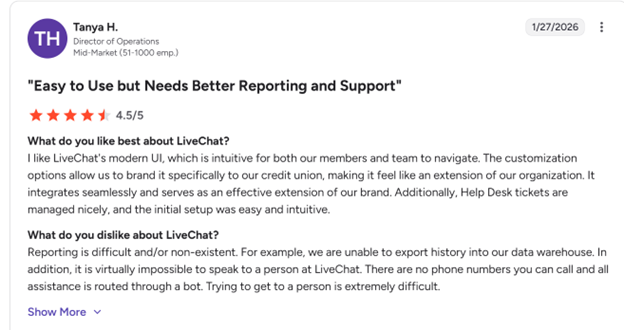
LiveChat offers basic analytics, but users often highlight limitations in reporting depth. Advanced tracking of customer behavior and insights is not as robust as expected.
Use Cases: Who Should Use LiveChat?
LiveChat is best suited for businesses that prioritize simplicity and real-time engagement over advanced automation or complex workflows.
Best For:
- Small to mid-sized businesses: Teams that need a quick-to-deploy communication tool without heavy technical setup
- E-commerce stores: Businesses looking to engage visitors, answer product queries, and improve conversions in real time
- Sales-focused websites: Organizations that rely on proactive chat to capture leads and guide users through the buying journey
Not Ideal For:
- Enterprises needing full omnichannel CX: Companies requiring seamless integration across multiple communication channels
- Businesses needing deep AI automation: Teams looking for advanced workflows, AI chatbots, and automation at scale
- Companies wanting a unified customer support suite: Organizations that need a complete, all-in-one customer experience platform
LiveChat vs Sobot: Key Differences
As businesses explore customer communication platforms, understanding the differences between LiveChat and Sobot is critical. While both aim to improve customer engagement, their approaches, capabilities, and underlying philosophy differ significantly.
Approach & Philosophy
- LiveChat is a chat-first solution, designed primarily to enable real-time messaging with website visitors. Its focus is on sales support and immediate customer engagement, making it ideal for businesses looking to drive conversions through proactive chat interactions. The platform emphasizes simplicity and speed, allowing teams to deploy live chat quickly.
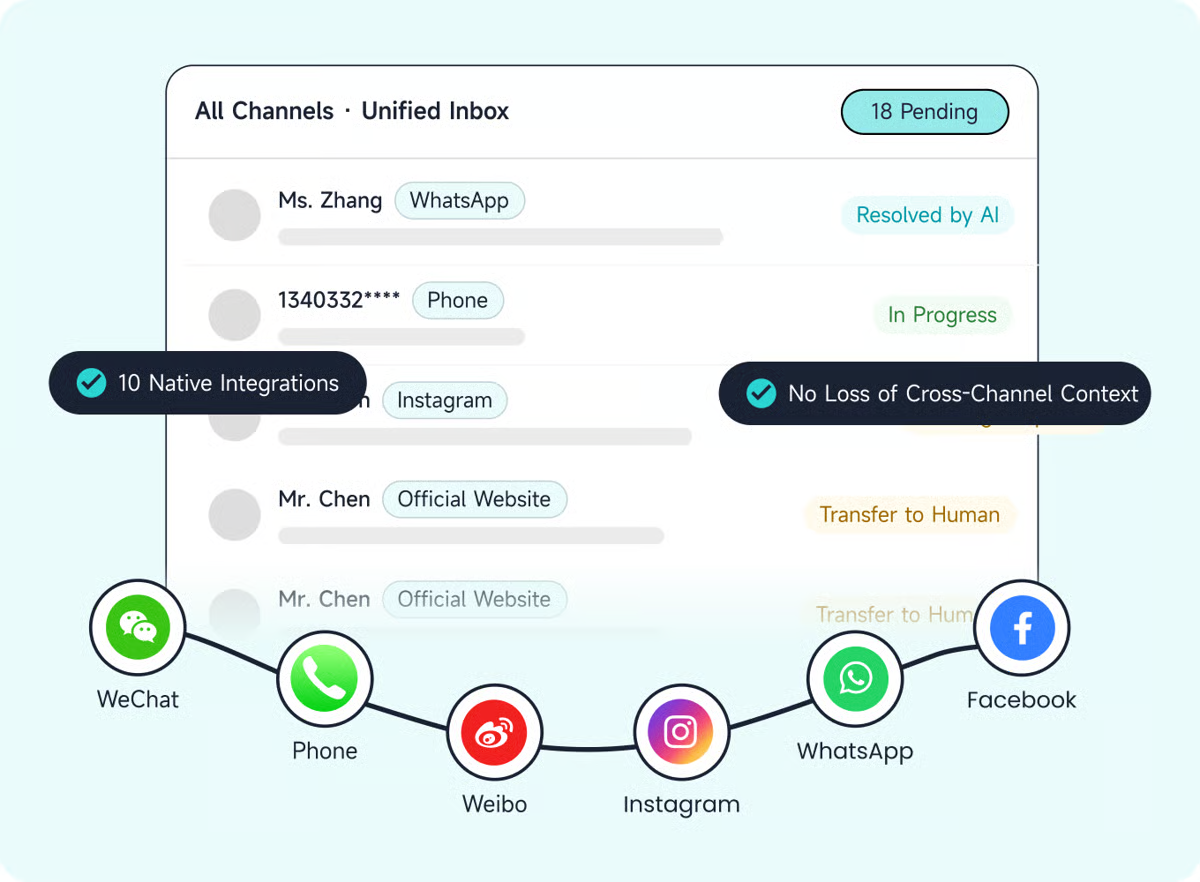
- Sobot, in contrast, is an AI-first, omnichannel customer experience platform. It integrates multiple communication channels, including chat, voice, email, and social media, into a unified system. Sobot’s philosophy centers on delivering end-to-end customer experience, using AI to automate routine tasks, provide instant responses, and optimize workflows for both small and enterprise-scale businesses.
Feature Scope Comparison
- LiveChat excels in live chat functionality, offering real-time conversations, multi-agent support, visitor tracking, and proactive engagement tools. However, its omnichannel capabilities are limited, and features like ticketing and chatbot automation are relatively basic or require separate add-ons.
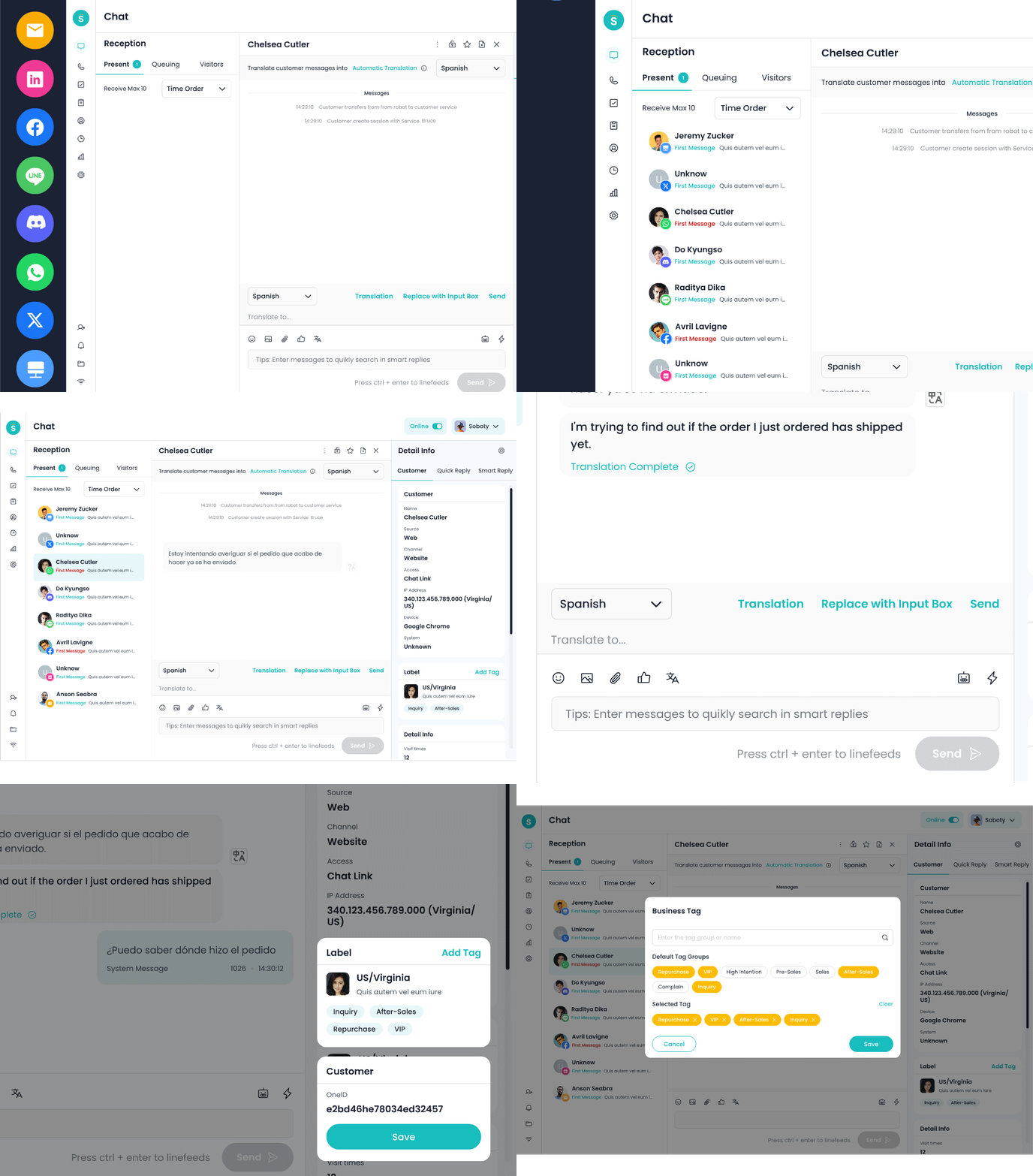
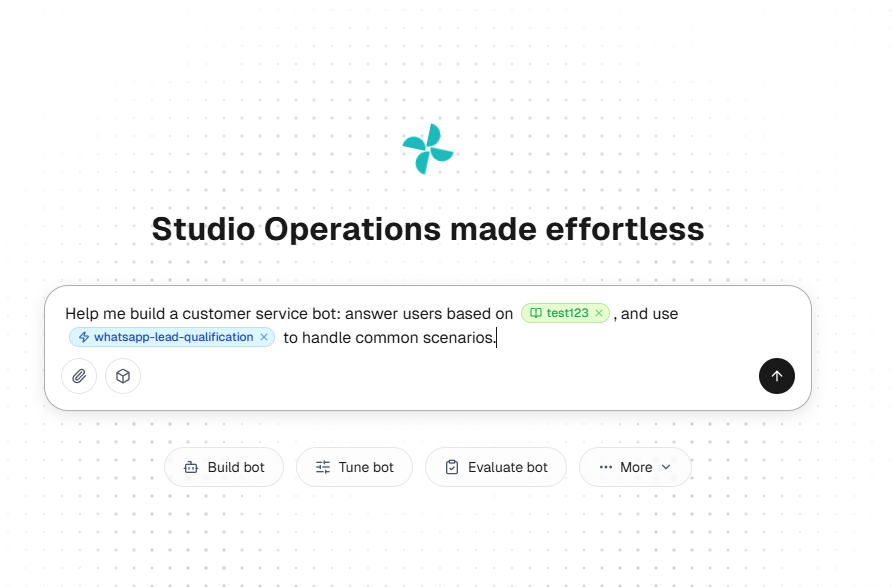
- Sobot provides a fully integrated suite that covers chat, voice, social media, and email. AI-driven automation is embedded throughout, enabling tasks such as lead qualification, workflow routing, and follow-up messaging, all from a single platform. This breadth makes Sobot suitable for businesses that need consistent, cross-channel customer engagement.
AI & Automation
- In LiveChat, AI tools such as AI Copilot or chatbots are optional add-ons. They support agents with suggestions, summaries, or limited automation, but AI is not central to the platform’s operation.
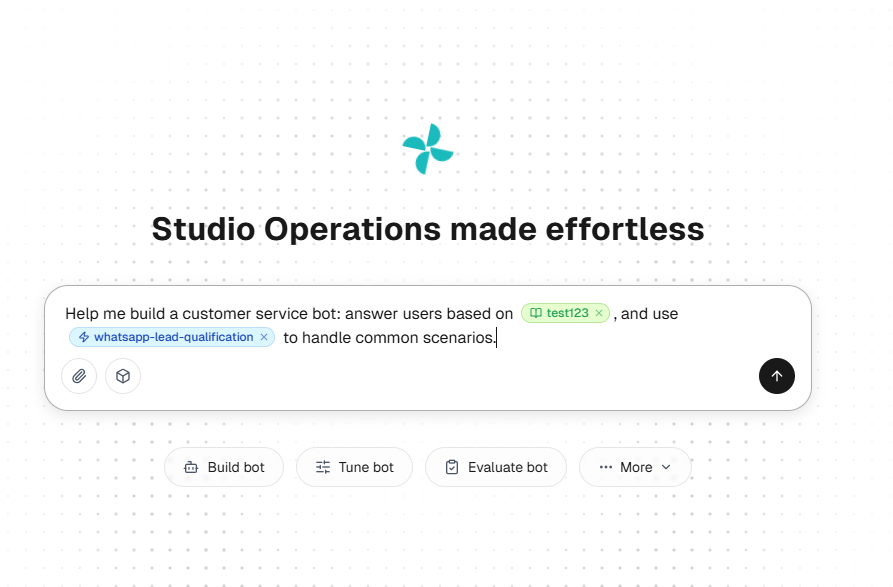
- Sobot places AI at the core of its system, powering automated responses, intelligent chat routing, workflow management, and analytics. Businesses can reduce manual workload while improving response accuracy and engagement quality.
Detailed Comparison Table
| Feature / Aspect | LiveChat | Sobot |
| Core Approach | Chat-first, real-time messaging focus | AI-first, omnichannel customer experience |
| Communication Channels | Website, Email, Messenger, WhatsApp | Website, Chat, Voice, Email, Social Media |
| AI & Automation | Optional add-ons (Copilot, Chatbots) | Fully integrated across workflows |
| Sales & Engagement Tools | Strong for proactive chat and conversions | Supports engagement via AI-assisted automation |
| Customer Experience Coverage | Limited to chat interactions | Full CX journey across multiple touchpoints |
| Integrations | 200+ third-party apps | Wide integrations with workflow automation |
| Best Suited For | Small to mid-sized businesses, sales-focused websites | Businesses needing scalable omnichannel support with AI-driven automation |
Why Businesses Are Moving Beyond Live Chat Tools
Modern businesses are moving past traditional live chat tools for several strategic reasons:
1. Shift from Single-Channel to Omnichannel
- Customers now interact across websites, email, social media, and messaging apps
- Consistent support across all channels is critical for retention and satisfaction
2. Need for Automation and Scalability
- Manual handling of repetitive queries slows teams and limits growth
- Automation reduces workload, minimizes errors, and allows teams to focus on complex issues
- Scalable solutions are essential for handling increasing customer interaction volumes
3. AI Becoming Core, Not Optional
- AI now drives intelligent routing, predictive responses, and workflow automation
- Businesses require AI to deliver fast, personalized, and efficient support
- Companies that delay adopting AI risk falling behind in customer experience and efficiency
Why Sobot is a Strong Alternative
Sobot is designed to overcome the limitations of basic live chat tools. Its key advantages include:
- Unified Omnichannel Platform: Manage chat, voice, email, and social media interactions from a single system
- Built-in AI (Not Add-on): AI powers chatbots, automation, and workflow management seamlessly
- Scalable for Enterprises: Handles growing customer volumes and complex support needs
- Full Customer Journey Coverage: Supports engagement from lead capture to post-sale service