Fast adoption is not proven by a fluent first answer; the support team must be able to recover uncertain, incomplete, or channel-shifted conversations. Sobot, Tidio, Freshdesk, Help Scout, Intercom, and Gorgias all offer plausible starting points, but the easiest choice changes with the team’s first workflow, knowledge readiness, and handoff ownership. A polished chatbot demo is useful evidence, but it is not the same as an operationally safe launch.
The Fast-Adoption Decision at a Glance
- There is no default winner. The right easy-to-adopt platform depends on the first workflow, knowledge readiness, and human recovery rule.
- Test recovery, not only response quality. A useful pilot shows what the AI does when it lacks an approved answer and how the right person receives the case.
- Start narrow, then widen deliberately. Approved knowledge, a limited audience, and a named handoff rule should come before a second channel or a broader automation scope.
- Keep commercial review separate. Confirm current packaging and pricing only after the team can describe the first workflow it needs to prove.
What Does Fast Adoption Mean in AI Customer Service?
Fast adoption means a support team can prepare approved knowledge, govern who sees the first AI experience, and transfer an exception to a person with relevant context. In this comparison, a knowledge source is the approved help content an AI system may use to answer a customer. A human handoff is the transfer of a conversation to a person with the reason for escalation and the context needed to continue it. Omnichannel means to preserve the support workflow when a customer changes channels; it does not simply mean adding more inboxes. This definition keeps the comparison focused on adoption work that a support team can observe and own.
Quick Comparison: 6 AI Customer Service Platforms
No platform is the easiest for every support team because the first workflow and existing system of record differ. Use this table as a conditional shortlist: the best first fit is only useful if the stated proof condition is visible in your own pilot.
| Platform | Best first adoption fit | AI starting point | What to prove before expanding | Commercial signal |
|---|---|---|---|---|
| Sobot | Teams testing AI support together with a broader channel workflow | Bounded support journey with an explicit routing and recovery path | Context, ownership, and channel continuity match the intended pilot | Confirm scoped configuration and current terms |
| Tidio | Website-chat teams keeping an existing helpdesk or CRM as the system of record | A narrow set of chat questions with a human follow-up path | A ticket or case reaches the right person when the AI cannot answer | Confirm the connected-stack and plan fit |
| Freshdesk | Ticket-heavy teams that want AI assistance inside the agent workspace | Agent-side help in the existing ticket flow | Agents can judge, adjust, and own AI-assisted work in real cases | Confirm current AI entitlement and configuration scope |
| Help Scout | Teams with maintained help content and a clear visitor-answer scope | Knowledge-based answers through Docs and Beacon | Approved source content covers the first questions and escalations are workable | Confirm account setup and commercial terms |
| Intercom | Product-led support teams with clear ownership for content and escalation | Configured audience, content, and handover for Fin | The owner can explain why a customer is included, answered, or handed over | Confirm current availability and packaging |
| Gorgias | Shopify support teams beginning with order and post-purchase questions | Skills for a limited group of shopper conversations | Shopify data, skill scope, and human handover work for the first case type | Confirm Shopify connection and current subscription terms |
What to Test Before Calling a Platform Easy
Test approved knowledge first, then a narrow audience with a human recovery rule, then a second channel only after recovery works. This sequence is intentionally less glamorous than a full-feature launch. It turns “easy” into a support-team question: can the people who own policy, routing, and exceptions explain what the AI is allowed to do and what happens when it stops?
The sequence also prevents a common comparison error. A team can launch a web-chat answer quickly while still being unable to show a receiving agent the customer’s original question, the policy source that shaped the reply, or the owner of an exception. If that reconstruction work is manual, the tool may still be useful, but the team has found a boundary that should shape the rollout.
Start With Knowledge Your Team Can Govern
A bounded AI launch begins with approved answer sources rather than an open-ended promise to automate every support conversation. Pick a question family that has a stable policy, such as shipping status, return-window guidance, or a documented address-change process. Assign an owner who can remove outdated guidance and decide what should never be answered automatically. The first scope becomes safer because the team knows both what the AI may use and where it must stop. That owner should also be able to point to the source used for a reply and explain when the source no longer applies.
Limit the First Audience and Name the Human Recovery Rule
A named human recovery rule is more meaningful than a generic promise that AI can escalate complex cases. Decide who receives a handoff, what triggers it, what the customer is told, and what information must travel with the case. Early exclusions should be real: payment disputes, legal threats, account-security concerns, VIP procedures, or any exception where the team needs discretion. This second step depends on the knowledge boundary above it; a handoff is only useful when the support team can explain why it happened. Write the rule in the pilot brief so an agent can challenge a wrong transfer instead of treating escalation as an opaque setting.
Add a Second Channel Only After the Recovery Path Works
A second channel should be added only after the team has seen how the first channel recovers an uncertain case. Email, web chat, messaging, and voice can create different expectations about response time, history, identity, and availability. Do not assume that a platform’s channel menu proves continuity in your operating model. Run one realistic channel-change test and ask the receiving agent to finish the case without searching for the original context or guessing the escalation reason. Record the result as a workflow observation, not as a vendor-wide conclusion during live tests.
Sobot: Best When AI Adoption Must Include an Omnichannel Workflow Test
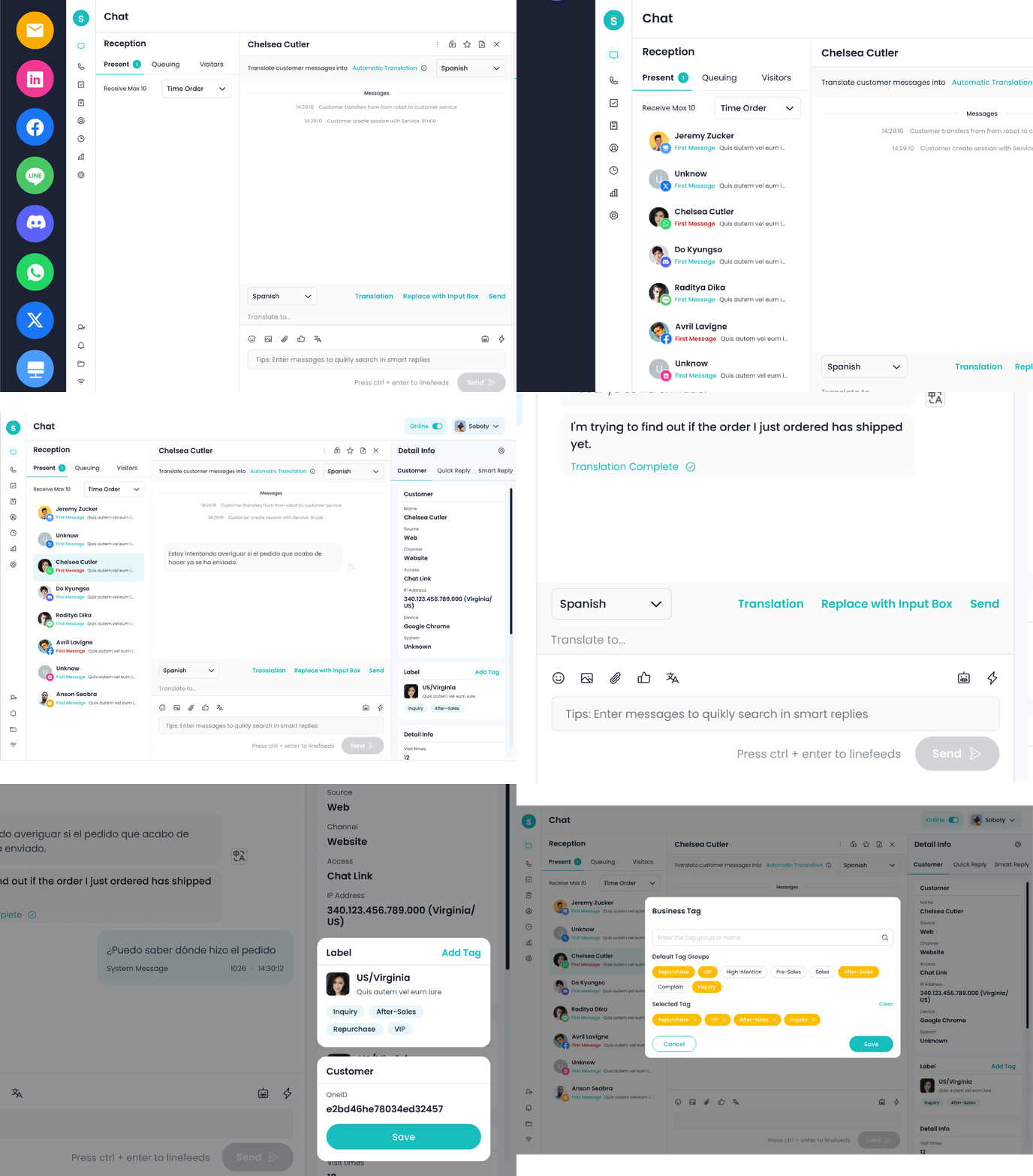
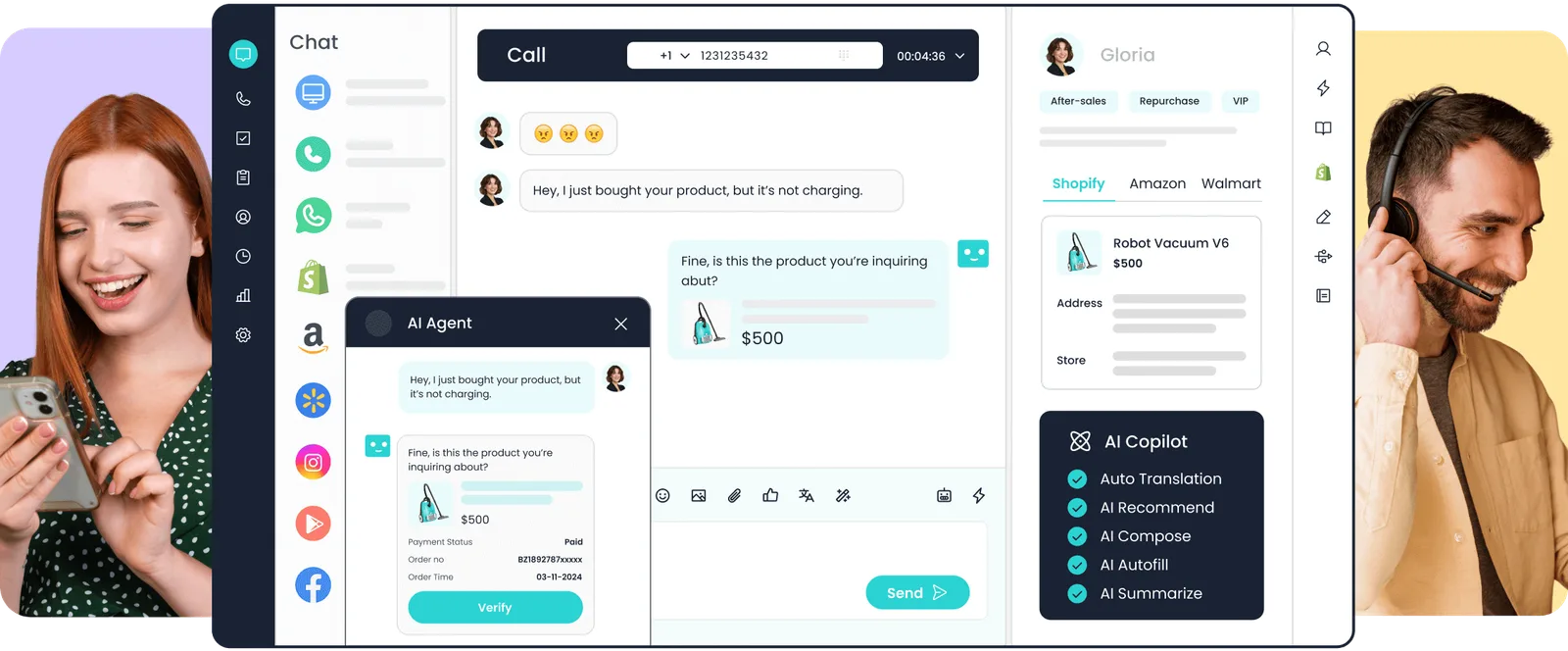
Sobot positions an AI customer-service approach for contact-center workflows; it is a conditional fit when a team wants to test AI support and an omnichannel workflow together. Review Sobot’s AI customer-service approach if the decision is not only whether an AI can answer a web question, but whether the support operation can keep a usable customer record and recovery path as its workflow broadens. That is a different starting point from buying a standalone chat layer.
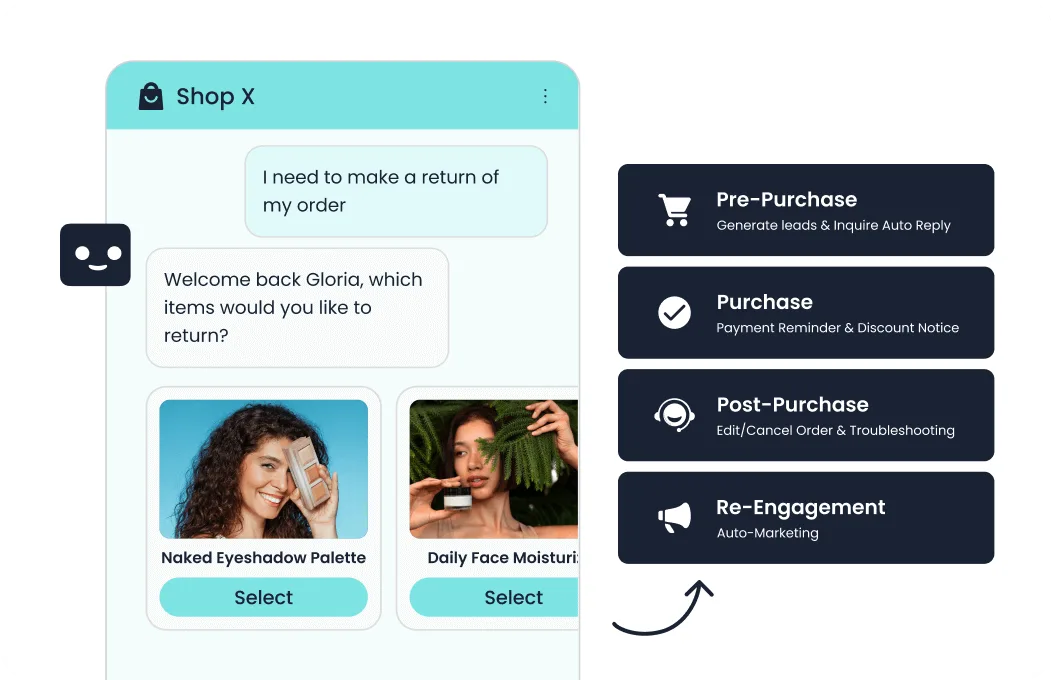
For a fast-adoption pilot, keep the first Sobot journey narrow: one issue type, one owner for knowledge, one receiving queue, and one explicit exception rule. The relevant strength is not an assumed feature advantage; it is the ability to evaluate the AI and broader workflow in the same decision. That may matter for a support leader who expects customers to move between email, chat, messaging, or voice, and who does not want those questions assessed as separate projects.
The tradeoff is administrative honesty. A broader workflow evaluation can surface more decisions about routing, customer data, permissions, and channel ownership than a simple widget trial. Sobot is therefore a better fit when the team is willing to test those dependencies early. It is a weaker first choice when the only requirement is a minimal website answer box and the team has no intention of examining the underlying support workflow. Validate the exact channel scope, data access, handoff behavior, and commercial terms in the account you would actually run.
Tidio: Best for a Narrow Website-Chat Start
Tidio documents Lyro connecting to an existing CRM or help desk and creating a ticket for human follow-up when it cannot answer. That makes Tidio a sensible platform to test when the team wants website chat to be the first experience while preserving another system as the case record. The practical question is not whether chat can go live quickly; it is whether unresolved questions become a useful ticket for the person who owns the follow-up.
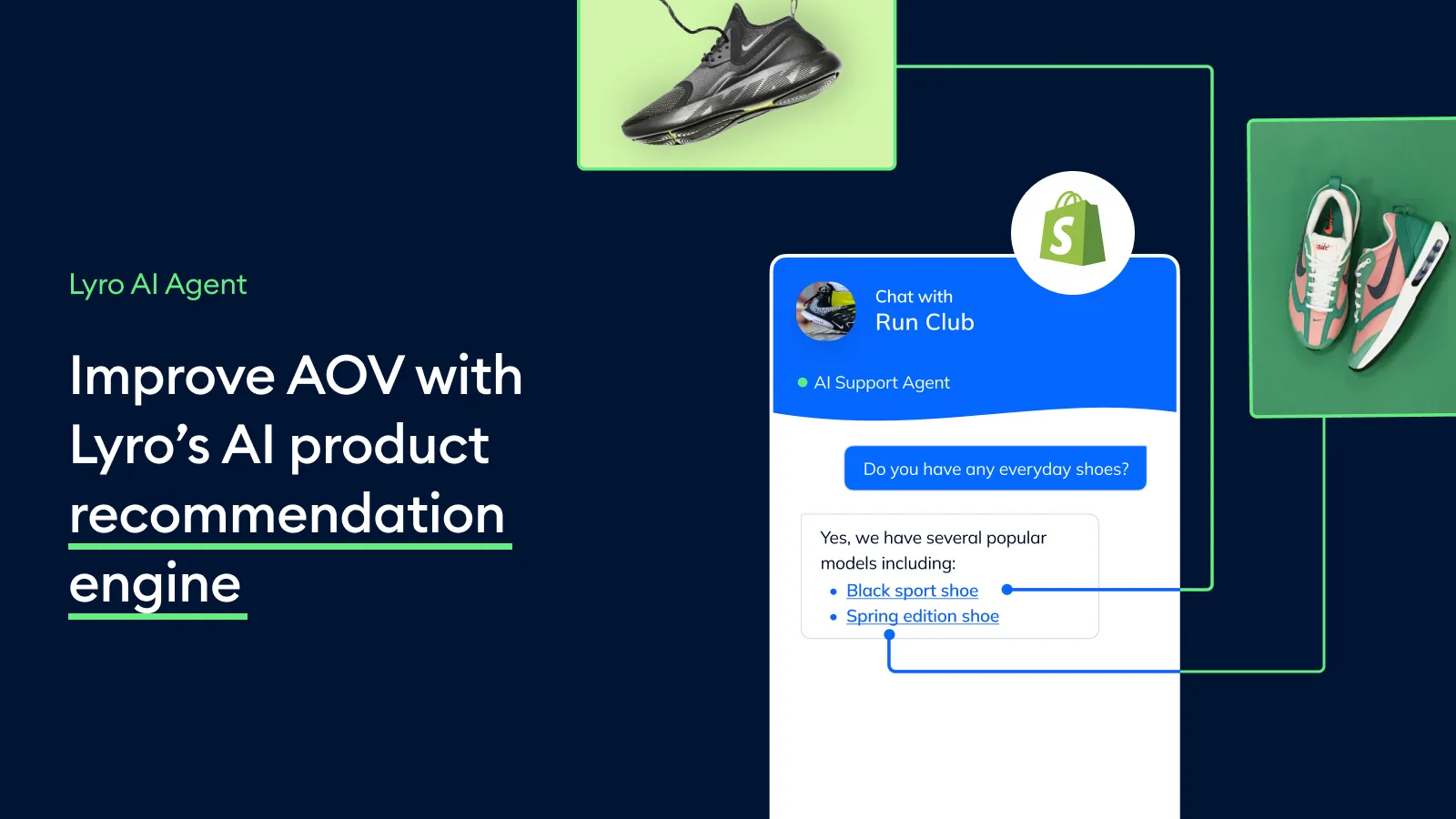
A good Tidio pilot uses a small intent set with clear content and a defined ticket destination. For example, a team could launch delivery-window questions while keeping address changes, refund disputes, and account requests with people. That creates a fair proof condition: when Lyro does not have an answer, the ticket should retain enough of the visitor’s question for the next person to continue without starting over.
The limitation is scope, not quality. A chat-first approach may be exactly right for a team whose volume and service model live on the website. It may be incomplete for a team whose real adoption problem is a complex ticket operation, a multi-channel history requirement, or a cross-functional exception process. Confirm the connected-stack behavior, ownership of knowledge, and commercial package against the workflow you intend to keep after the pilot.
Freshdesk: Best for Ticket-Centered Agent Assistance
Freshdesk documents Freddy Copilot as context-aware assistance inside tickets. That documented starting point makes Freshdesk relevant for teams that already manage work through tickets and want to assess AI inside the agent workspace, rather than making a customer-facing bot the entire project. The first adoption question is whether agents can use, review, and correct assistance in the flow where they already resolve cases.
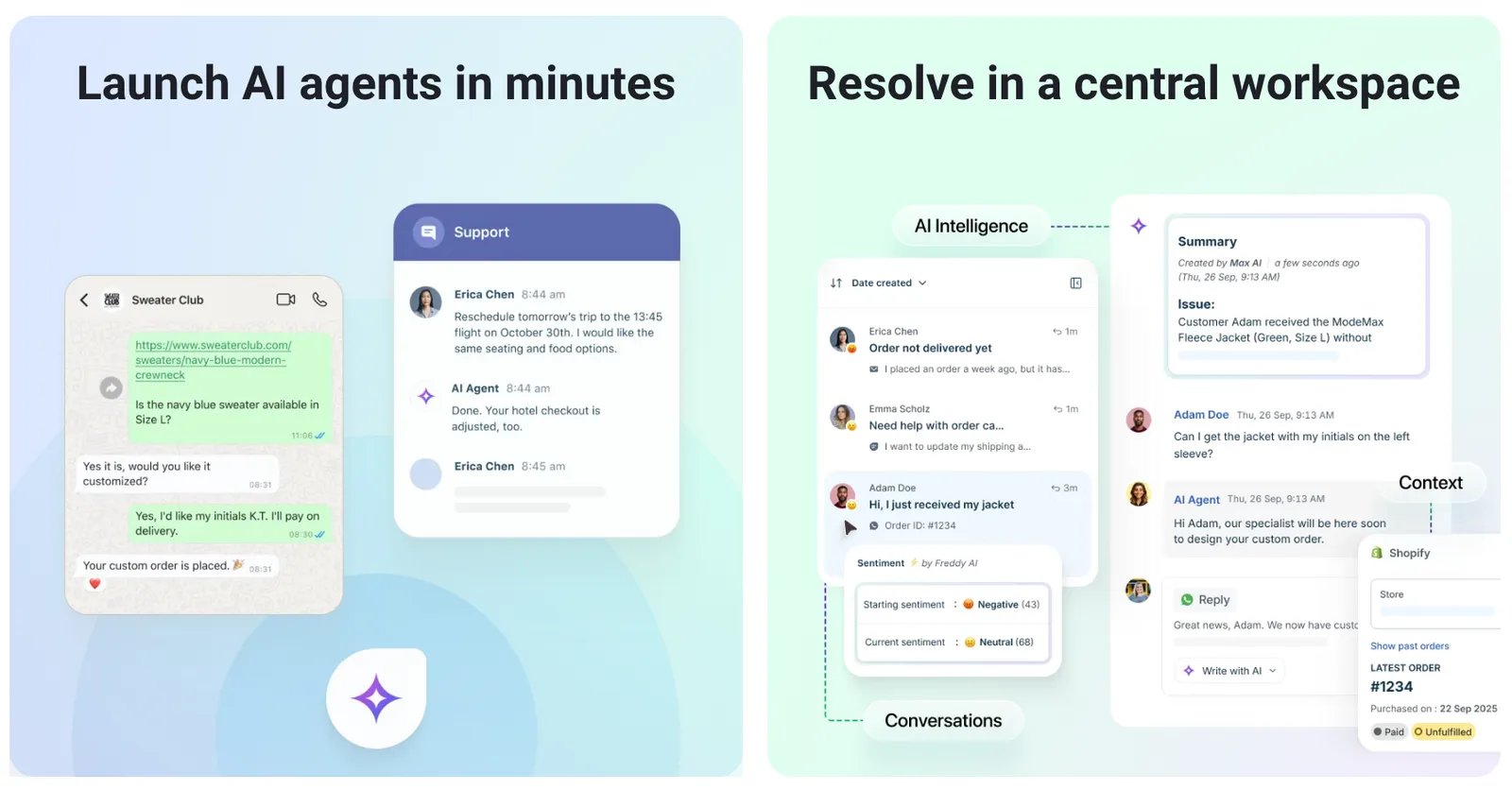
Start with a common ticket category and a short review routine. Have agents record when the assistance was useful, when it lacked policy context, and when the final answer needed a different owner. This approach can reduce the behavioral change required from a ticket-centric team, because the trial is connected to familiar case work rather than a separate chat experiment. It also produces a more useful decision record than asking agents whether an AI reply sounded good.
Freshdesk is less obviously the easiest option when the team’s first goal is only an anonymous website conversation or when the key problem is preserving a customer journey across several contact modes. Those needs are not impossible to evaluate, but they shift the pilot beyond the narrow ticket-assistance premise. Confirm current AI entitlement, routing options, access roles, and the details of the proposed configuration before treating the documented ticket capability as the complete answer.
Help Scout: Best for Teams Starting From Maintained Help Content
Help Scout documents AI Answers as using Docs content and other support sources, with AI Agent and Beacon part of visitor setup. Help Scout is therefore a strong conditional option when a team’s most mature asset is a maintained help center and it wants that content to be the first boundary for visitor answers. The first pilot is not “turn AI on”; it is “can we stand behind the sources it will use?”
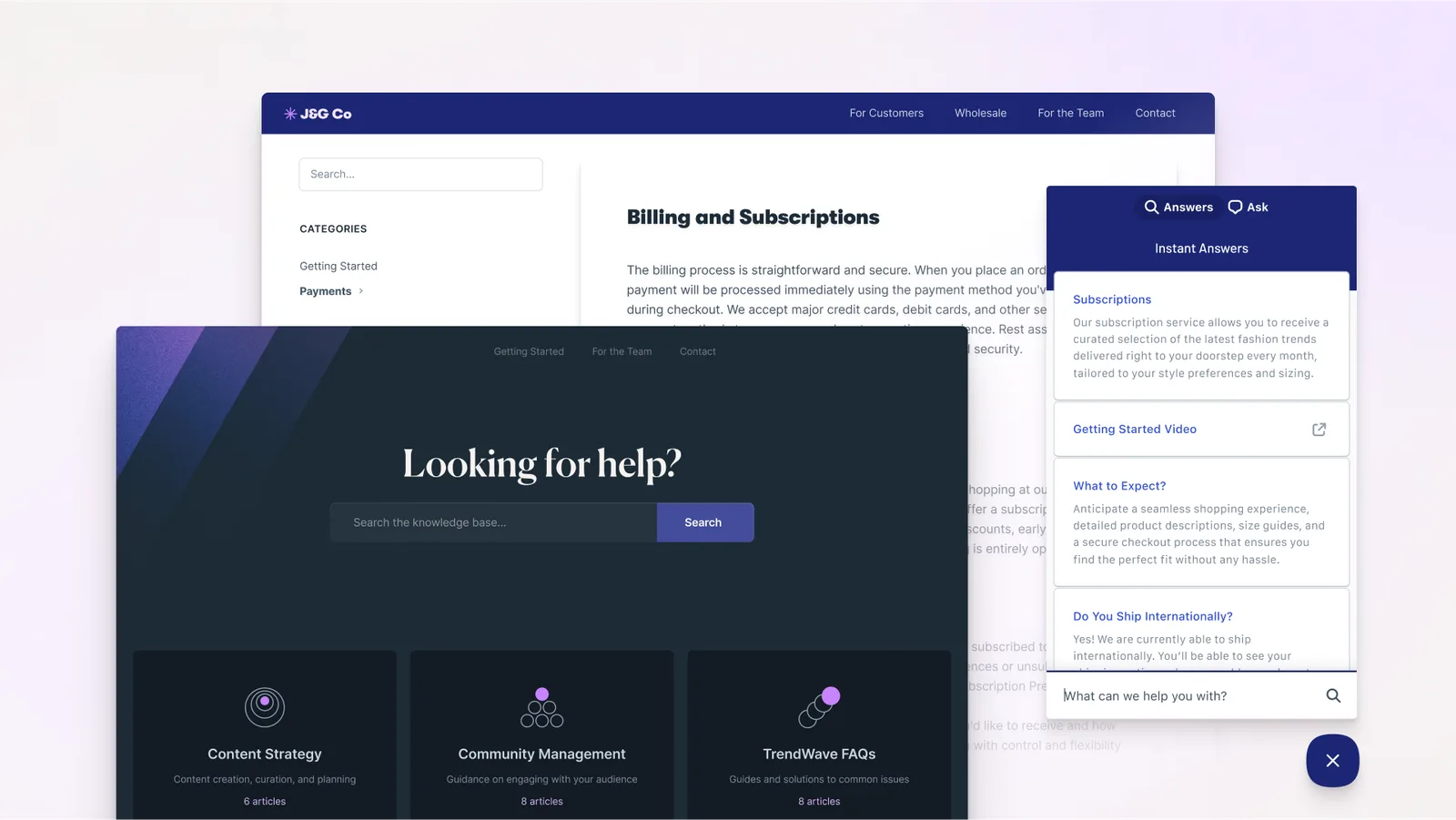
That can be an easier starting path for a smaller team with clear public policies, dependable Docs articles, and a narrow visitor question set. It gives the support owner a tangible weekly job: review gaps in the source material, retire stale guidance, and decide which questions should still reach a person. The human-handoff test should still be explicit, especially for questions that are technically covered by an article but need judgment about a customer’s situation.
The boundary is equally important. A well-maintained knowledge base does not automatically solve transactional exceptions, account-specific decisions, or complex routing. Teams whose first AI use case is deeply tied to order actions or multiple specialist queues should validate those flows directly rather than assuming the content-led start will extend to them. Confirm how the team’s sources, Beacon setup, and current commercial terms apply to the intended audience.
Intercom: Best for a Product-Led Support Team With Clear Content Ownership
Intercom documentation describes deploying Fin over chat through selected audience, enabled content, and handover configuration. That is a useful adoption model for a product-led support team that can decide who should receive the first experience, which content is approved, and what happens when Fin transfers a conversation. It is not evidence that Intercom will be the easiest platform for a team without those owners.
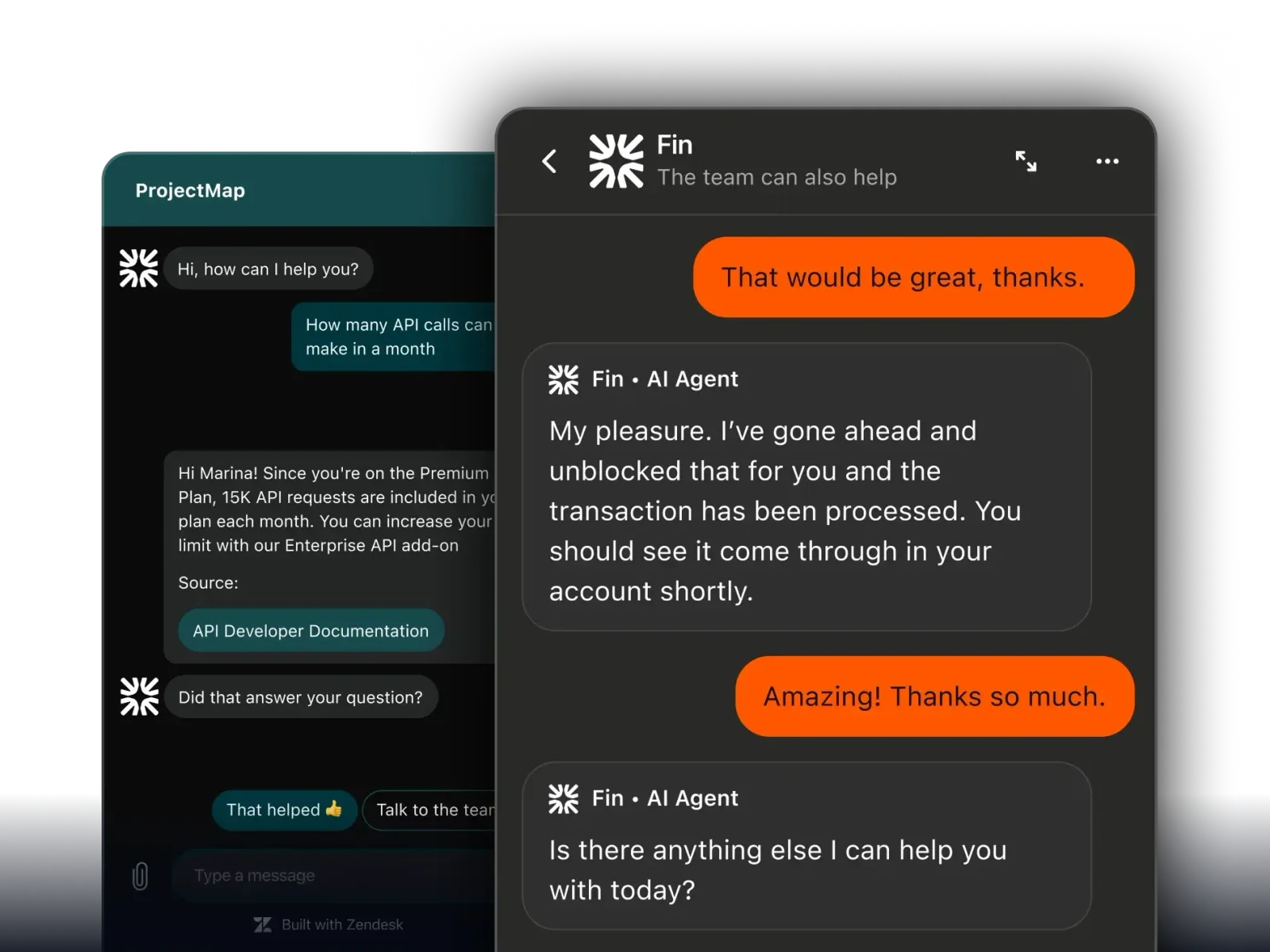
The practical advantage of that condition is clarity. A product-support group can start with a defined audience, such as logged-in users seeking guidance on a documented workflow, then observe what happens when the AI lacks confidence or the user asks for a person. If the content owner and support lead can explain the configuration, they have a workable basis for improving the pilot rather than expanding a black box.
The tradeoff is that deliberate configuration still takes operational attention. Teams that cannot assign someone to maintain content, revise the audience, and inspect handovers should not mistake a quick initial deployment for durable adoption. The right diligence is to test the team’s first conversation types, the customer-facing handover wording, and current product availability or package scope, not to compare stale public price snapshots.
Gorgias: Best for Shopify Support Teams Starting With Order Questions
Gorgias documents a dedicated AI Agent for each connected Shopify store, skills that can start with a few conversation types, and handover to human teams. That makes Gorgias a particularly relevant conditional choice for Shopify support teams that want to begin with order tracking, returns, order changes, or similar shopper questions. The platform is not a general-purpose default: its documented AI Agent scope depends on a connected Shopify store.
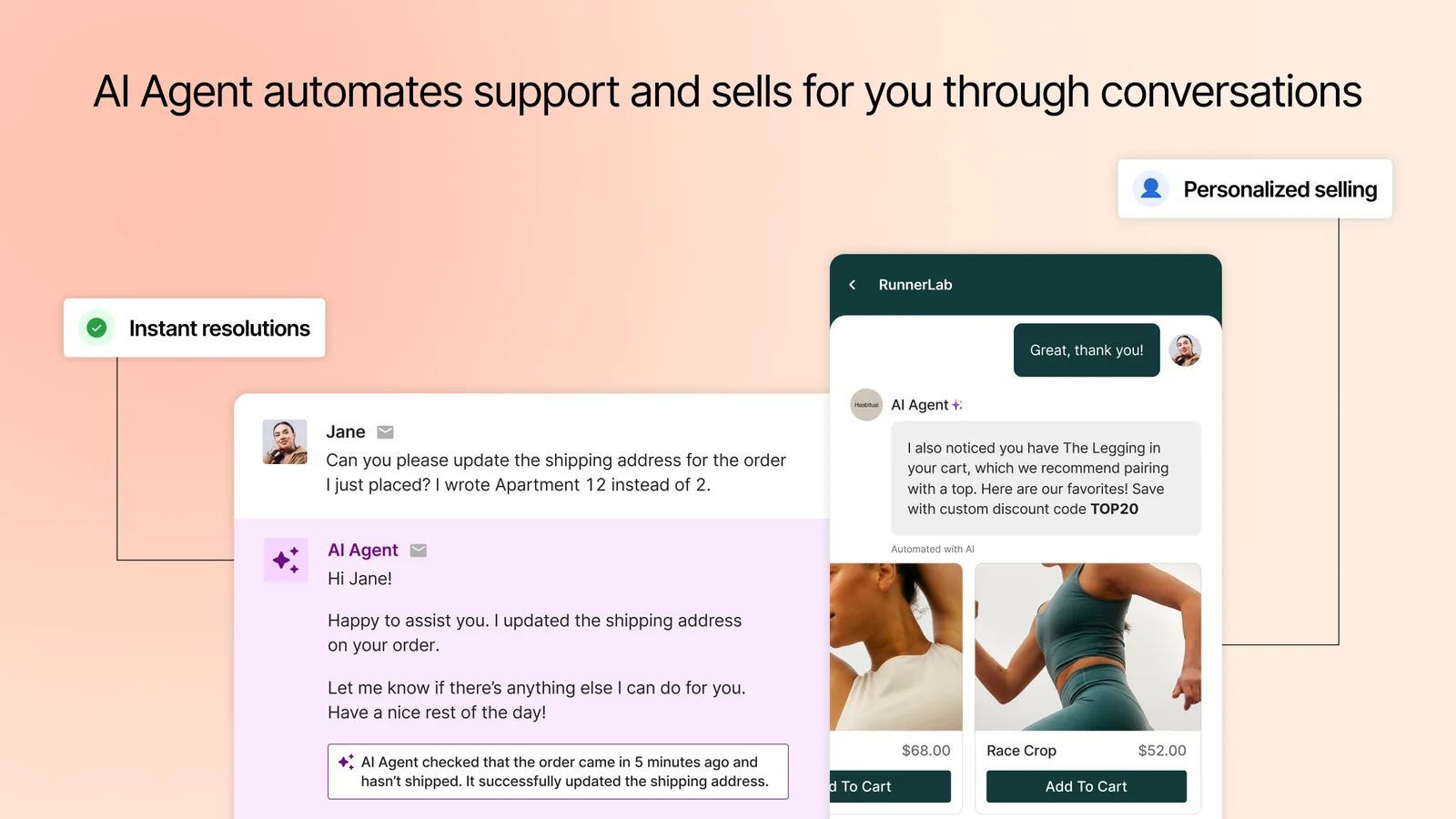
The skills-led start is useful because a retailer can choose a few repeatable conversations before adding broader coverage. A responsible pilot should still make the human boundary visible. Returns, cancellations, damaged-goods claims, and high-value customer requests can appear similar at first but require different authority or policy checks. Test the exact point where Gorgias hands the conversation to the team and whether the receiving agent has the customer’s original request and relevant order context.
Gorgias is a weaker fit for a non-Shopify operation or a team whose immediate priority is not ecommerce support. It is also not enough to say that the tool can address order questions; the buyer must verify the connected-store permissions, selected skills, excluded topics, and current commercial terms. Those conditions are what make the early scope safe to expand.
A 14-Day Adoption Sprint That Shows What a Demo Cannot
An illustrative 14-agent team can use a two-week sprint to test approved knowledge, named handoff, and a channel change without claiming a vendor-wide adoption benchmark. The purpose is not to prove that every team should launch in 14 days. It is to create a small, observable decision sequence before a broad rollout turns ordinary policy gaps into customer-facing failures.
Three Gates for the Illustrative 14-Day Sprint
The illustrative team should prove approved knowledge, named handoff, and a channel change in sequence. Consider an illustrative team of 14 support agents with 35 approved help articles and a 70/30 email-to-chat mix. The team starts with shipping-status and address-change questions, excludes payment disputes and legal threats, and names one operational owner. A customer begins in chat with a shipping question, then sends an email that includes an address exception and dispute language.
In days 1–4, the team checks whether the approved articles answer the original question and whether an agent can identify a missing or stale source. In days 5–9, it exposes the handoff: the dispute language should leave the AI scope, reach the named owner, and carry the conversation reason and history. A good reply does not pass this gate by itself; the team needs to see whether the exception is recoverable.
In days 10–14, the team repeats the case across the second channel. The receiving agent should see the question, the approved-source boundary, prior exchange, and owner without reconstructing the case. If not, pause expansion, document the missing context or unclear routing rule, and correct that condition before adding more intents or channels. This is an illustrative composite scenario, not a customer case, a measured outcome, or a substitute for security, legal, and commercial review.
How to Build a Shortlist Without Pretending There Is One Easiest Tool
The final shortlist should follow the first workflow and recovery condition, with current commercial terms checked separately. Choose Tidio when a bounded website-chat journey and connection to the existing support record are the first needs. Choose Freshdesk when the team already works through tickets and wants to evaluate AI assistance in that workspace. Choose Help Scout when maintained help content and a visitor-answer surface are the credible first assets. Choose Intercom when product, content, audience, and handover ownership can be defined clearly. Choose Gorgias when Shopify order support is the starting point.
Consider Sobot when the pilot needs to evaluate AI support and a broader customer-service workflow at the same time, especially when channel continuity is part of the decision rather than a later add-on. Explore Sobot’s omnichannel support workflow only if that is a real operational requirement, not because a channel count looks impressive on a feature list. The fair comparison is not “which vendor has more AI?” It is “which candidate can safely prove our next support workflow?”
Use the commercial conversation to test the same operating model, rather than treating it as a separate feature review. Ask each finalist to show the first question family from an approved source, the excluded topic that must leave AI scope, the information visible to the receiving agent, and the configuration owner who can change the rule. Then ask what the team would need to maintain after launch: source governance, routing ownership, quality review, and channel-specific availability. These questions do not produce a universal winner, but they reveal whether the promised easy start survives the ordinary work that follows a launch.
Keep the scorecard short enough that the operational owner can use it. A useful record names the test case, the approved source, the handoff trigger, the person who received it, the channel used, and the correction required before another test. That record is more valuable than a generic ease-of-use impression because it shows whether the team can govern the next change after the pilot under ordinary day-to-day support conditions.
Before a commercial conversation, prepare four inputs: the first question family, the approved knowledge sources, the named handoff owner, and the initial channel. If Sobot remains on the shortlist after those inputs are clear, Request a Sobot demo built around your first adoption sprint.
Frequently Asked Questions
What makes an AI customer service platform easy to adopt?
An AI customer-service platform is easy to adopt when a support team can prepare approved knowledge, limit the first audience, and recover exceptions through a named human handoff. A fast interface or polished demo can help, but it does not replace ownership of the content, exception rules, and customer context. The practical test is whether the team can explain what happens when the AI should not continue the conversation.
Should a support team start with one channel or many?
A support team should usually begin with the channel where its knowledge, ownership, and escalation path are easiest to observe, then add another channel only after the recovery path works. Starting with fewer channels makes missing context and unclear ownership easier to spot. The next channel should be a deliberate continuity test, not a feature checklist exercise, especially when email, chat, messaging, or voice create different handoff expectations.
How should teams compare AI handoff before buying?
Teams should compare AI handoff by testing what the agent receives, who owns the exception, what the customer sees, and whether the rule works when confidence is low. Ask a vendor to demonstrate a realistic excluded topic and a customer request for a human, not only an ideal knowledge-base question. A useful handoff gives the receiving person enough history and reason to continue the case without asking the customer to repeat it.
Do teams need vendor pricing before a pilot?
Teams need current vendor pricing before commercial approval, but they can define the first workflow, knowledge scope, handoff rule, and evaluation owners before comparing commercial terms. That separation avoids using a stale public price snapshot to choose a platform that cannot support the team’s actual operating model. Confirm the plan, usage basis, implementation scope, and any required capabilities directly with each vendor once the pilot conditions are clear.