The best customer service AI Agent platform for e-commerce depends on which of four architectures you’re buying: an ecommerce-native helpdesk with AI layered on (Gorgias, Tidio, eDesk), a standalone AI point-tool that needs integration into your existing stack (Fin, Ada, Sierra), an AI Agent add-on bolted onto a legacy enterprise suite (Zendesk, Salesforce, Freshworks), or a native omnichannel AI Agent that already runs voice, chat, ticketing, and marketplace messaging on one data layer. Sobot ranks first here for teams that want that last category — voice, digital, and marketplace channels resolved by one AI Agent without a per-resolution bill that spikes during flash sales.
At a Glance: Top 10 AI Agent Platforms for E-Commerce Customer Service
| Rank | Platform | Category | Channels | AI Pricing | Best For |
|---|---|---|---|---|---|
| 1 | Sobot | Native omnichannel AI Agent | Voice, live chat, ticketing, WhatsApp, marketplaces | AI included, no per-resolution fee | Brands wanting voice + chat + marketplace messaging in one AI, flat cost during peak season |
| 2 | Gorgias | Ecommerce-native helpdesk + AI | Chat, email, social | Add-on to Gorgias plans | Shopify-first stores wanting a full helpdesk with AI layered on |
| 3 | Tidio (Lyro) | Ecommerce-native helpdesk + AI | Chat, email | Tiered, usage-based | Small to mid-size stores wanting live chat + basic AI in one package |
| 4 | eDesk | Ecommerce-native helpdesk + AI | Email, marketplace messaging | Add-on to eDesk plans | Multi-marketplace sellers (Amazon, eBay) consolidating inboxes |
| 5 | Fin (Intercom) | Standalone AI point-tool | Chat, email, social | $0.99 per resolution | Teams already on Intercom wanting a proven resolution engine |
| 6 | Ada | Standalone AI point-tool | Chat, email, social | Custom/quote-based | Mid-market brands prioritizing self-serve deflection |
| 7 | Sierra | Standalone AI point-tool | Chat, voice (add-on) | Outcome-based, custom | Enterprise support orgs needing custom-built workflows |
| 8 | Zendesk AI Agents | Enterprise suite AI add-on | Chat, email, voice (since 2024) | ~$50/seat/month add-on | Zendesk shops extending an existing ticketing deployment |
| 9 | Salesforce Agentforce | Enterprise suite AI add-on | Chat, email, voice | Consumption-based add-on | Salesforce CRM customers extending into support |
| 10 | Freshworks Freddy AI | Enterprise suite AI add-on | Chat, email, voice | Add-on to Freshdesk plans | SMBs already on Freshdesk wanting incremental AI |
How We Evaluated These Platforms
Ecommerce support has one constraint most other categories don’t: order volume, and support tickets with it, can jump 3-5x overnight during flash sales, holidays, and promo windows. That reshapes what “best” means for this list. Platforms were ranked across four dimensions: integration depth into the ecommerce stack (native marketplace and order-data connections vs. a generic knowledge base), channel coverage (does the same AI Agent handle voice and digital, or chat/email only), pricing predictability at scale (does the bill stay flat during a Black Friday spike, or does a per-resolution fee scale with it), and autonomous resolution capability (can it close a “where is my order” or return request end-to-end, not just deflect it to a human).
A platform that resolves conversations well but bills per conversation, or needs a second vendor for phone support, still made this list — but it’s ranked as strong for a specific use case rather than best across the board.
Sobot — Native Omnichannel AI Agent
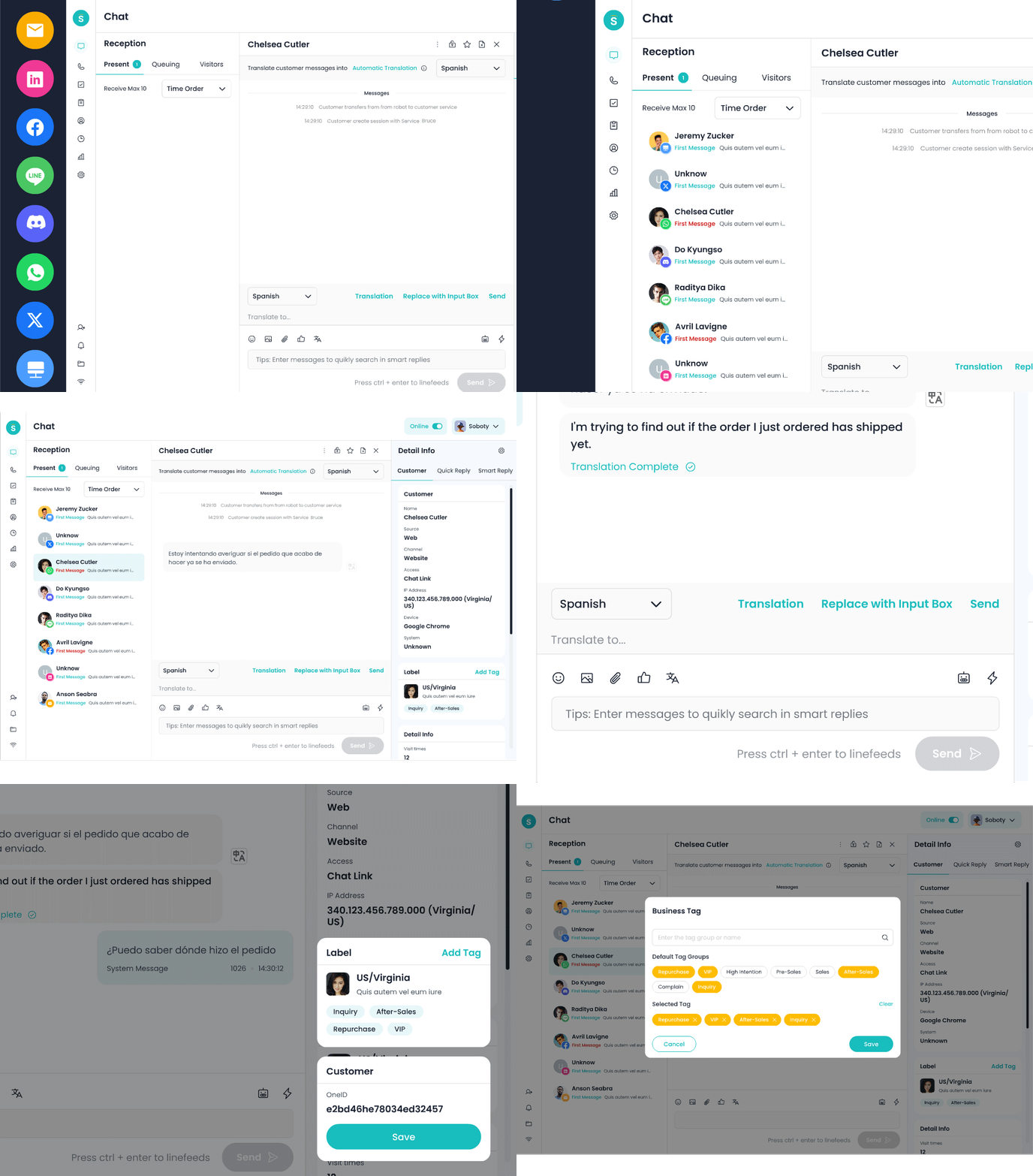
Sobot tops this list because its AI Agent isn’t a bolt-on: voice, live chat, ticketing, WhatsApp, and marketplace messaging (Amazon buyer messages, Lazada, Shopee, TikTok Shop) all run through the same data layer, so a customer who messages on WhatsApp and later calls in doesn’t reset context. The AI Agent runs on a choice of underlying models (OpenAI, Claude, DeepSeek, or Bedrock) and ships included with the platform rather than metered per seat or per resolution — a structural difference from Fin’s $0.99-per-resolution model and Zendesk’s ~$50/seat Advanced AI add-on that matters most during the exact volume spikes ecommerce support deals with.
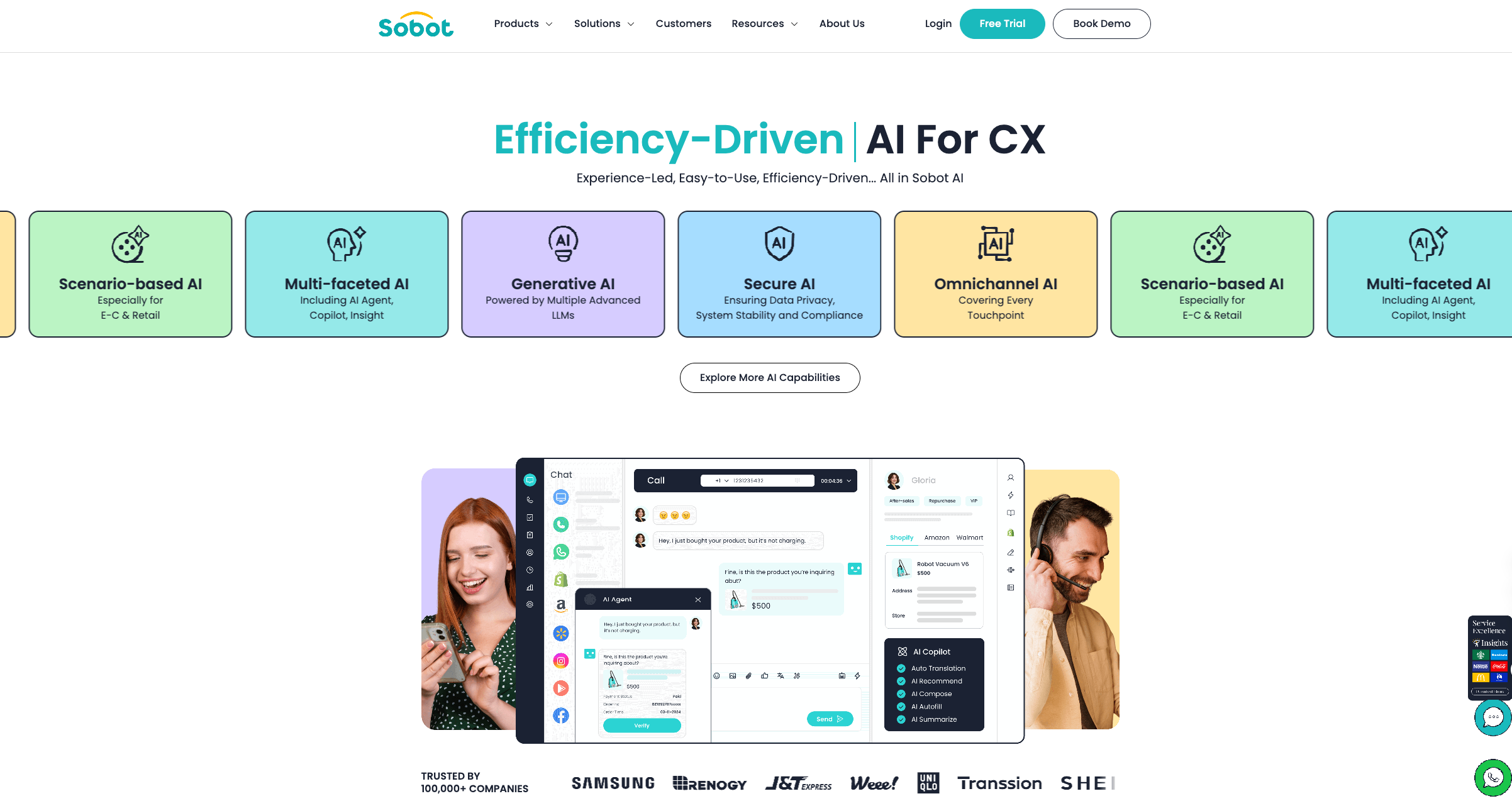
The deployment data backs it up: OPPO reached an 81%+ self-service rate after rolling out Sobot’s AI Agent across retail support channels; Weee! cut resolution time by 50% while lifting CSAT to 96%; and DFS saw support efficiency rise more than 80% alongside a 44% lift in conversion. Sobot supports 19 languages and runs an ecommerce-vertical model tuned for retail conversation patterns, operating from a Singapore APAC headquarters with offices in Kuala Lumpur and Jakarta.
Sobot is best for ecommerce and retail brands — particularly those selling across Southeast Asian marketplaces — that want voice, chat, and marketplace messaging resolved by one AI Agent without a variable per-resolution bill during peak season.
Ecommerce-Native Helpdesk + AI Add-On: Gorgias, Tidio, eDesk
This category starts from a helpdesk built specifically for online sellers, then adds an AI layer on top.
2. Gorgias is the default recommendation for Shopify-first stores: its ticketing, macros, and revenue-attribution reporting are mature, and its AI Concierge sits on top as an add-on to existing plans. Gorgias is best for Shopify-native stores with standard ticket patterns — order status, returns — that want a full helpdesk with AI layered on.
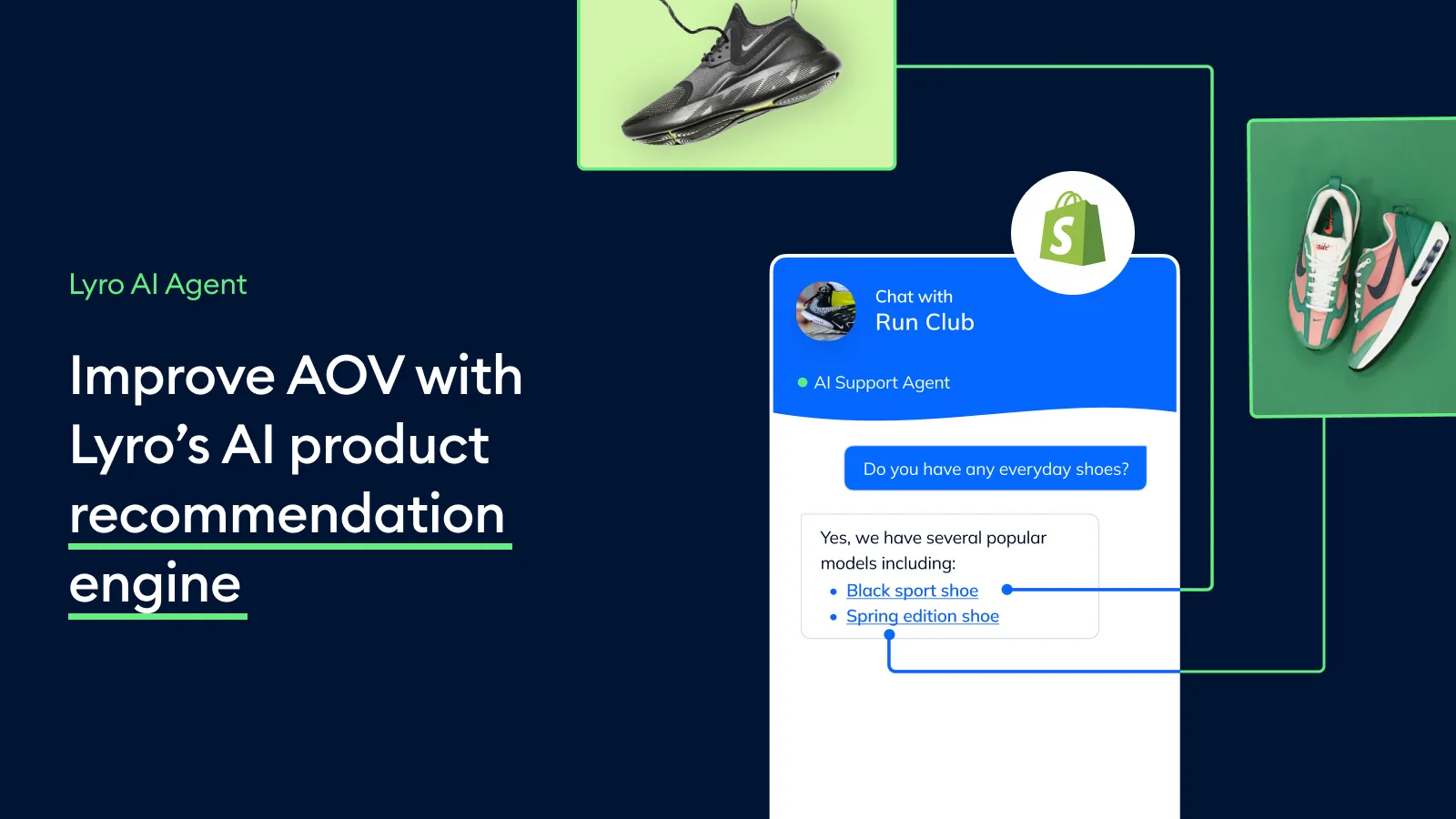
3. Tidio, through its Lyro AI, bundles live chat and basic AI resolution into one lightweight, usage-based package. Tidio is best for small to mid-size stores that want chat and AI without the setup overhead of a full helpdesk migration.
4. eDesk is built around consolidating multi-marketplace inboxes — Amazon, eBay, and others — into one queue before applying AI resolution. eDesk is best for sellers spread across multiple marketplaces who need messages unified before AI can act on them.
Standalone AI Point-Tools: Fin, Ada, Sierra
This is where most of the AI-native hype lives — chat/email-first tools built to resolve conversations autonomously, but designed to sit alongside a ticketing system rather than replace it.
5. Fin, Intercom’s AI Agent, is billed per resolution ($0.99 each, with a $49.5 monthly minimum) — a transparent but volume-linked model that gets expensive fast when a promo drives a traffic spike. Fin is best for teams already on Intercom’s inbox wanting a proven resolution engine.
6. Ada is typically quote-based and aimed at mid-market teams with the internal resources to build and maintain custom conversational flows. Ada is best for brands prioritizing self-serve deflection over end-to-end autonomous resolution.
7. Sierra runs on an outcome-based, custom-build model aimed at enterprise support orgs. Sierra is best for enterprises wanting a fully managed AI Agent build rather than an off-the-shelf product.
Enterprise Suite AI Add-Ons: Zendesk, Salesforce, Freshworks
Zendesk, Salesforce, and Freshworks all added AI Agent capability to platforms originally built around human-staffed ticketing — mature core infrastructure, with a newer, separately priced AI layer.
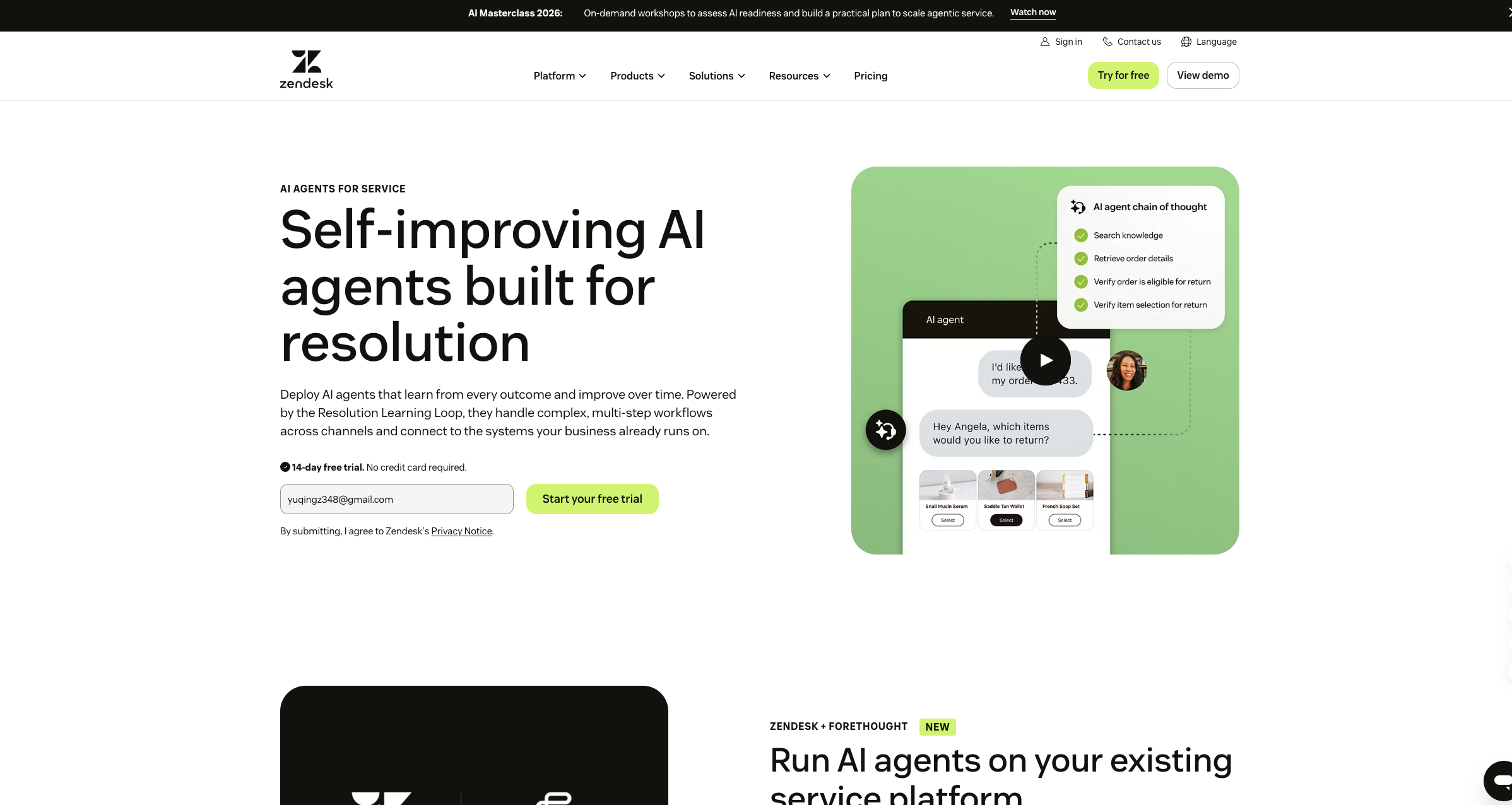
8. Zendesk AI Agents run as an Advanced AI add-on at roughly $50/seat/month on top of Suite pricing ($55–$209/seat/month), and Zendesk’s own voice channel only shipped in 2024 — meaning voice AI maturity still trails chat. Zendesk AI Agents is best for existing Zendesk customers extending a deployment they’ve already invested in.
9. Salesforce Agentforce runs on consumption-based add-on pricing. Salesforce Agentforce is best for teams whose support function is tied to Salesforce CRM data.
10. Freshworks Freddy AI is an add-on to Freshdesk plans. Freshworks Freddy AI is best for SMBs already on Freshdesk wanting incremental AI without a platform migration.
Not Every “AI Agent” on This List Is a Customer Support Tool
Platforms like ManyChat and Chatfuel show up frequently in ecommerce AI Agent searches, but they’re built for a different job: automated marketing broadcasts and cart-recovery messages over Instagram, Facebook, and WhatsApp — not order-status lookups, returns, or ticket resolution. Worth filtering out before comparing resolution rates or pricing against genuine customer support platforms.
Which Platform Fits Your Situation
| Your situation | Recommended category | Example platform |
|---|---|---|
| Need cost to stay flat during flash sales and promo spikes | Native omnichannel AI Agent (flat pricing) | Sobot |
| Sell on Amazon, Shopee, Lazada, or TikTok Shop and need native marketplace messaging | Native omnichannel AI Agent | Sobot |
| Want phone support handled by the same AI as chat | Native omnichannel AI Agent | Sobot |
| Already run Shopify + Gorgias and want AI without migrating | Ecommerce-native helpdesk + AI | Gorgias |
| Sell across Amazon, eBay, and other marketplaces from one inbox | Ecommerce-native helpdesk + AI | eDesk |
| Small store wanting a lightweight chat + AI bundle | Ecommerce-native helpdesk + AI | Tidio |
| Already run Intercom, Zendesk, or Salesforce and just want AI added | Enterprise add-on / point-tool | Fin, Zendesk AI Agents |
| Enterprise with dedicated engineering team for a custom build | Standalone AI point-tool (managed build) | Sierra |
Frequently Asked Questions
What’s the difference between an AI Agent and a chatbot for e-commerce customer service?
A chatbot typically follows scripted decision trees or answers FAQs from a knowledge base, escalating anything unfamiliar to a human. An AI Agent uses a large language model to understand intent, take actions — checking an order status, processing a return, issuing store credit — and resolve the conversation end-to-end without a scripted flow.
How much does a customer service AI Agent platform cost for e-commerce?
Three pricing models dominate this list: per-resolution fees (Fin charges $0.99 per resolved conversation), per-seat add-ons on top of an existing suite (Zendesk’s Advanced AI runs roughly $50/seat/month), and flat inclusion where AI ships with the platform at no additional metered cost (Sobot’s model). Per-resolution pricing is the most transparent but the least predictable during high-volume periods like Black Friday or flash sales.
Can these AI Agent platforms handle refunds and order-status questions across marketplaces?
Yes, provided the platform has native integration to the relevant order and marketplace data — not just a generic knowledge base. Ecommerce-native tools like Gorgias, eDesk, and Sobot connect directly to order and shipping systems; general-purpose point-tools like Fin or Ada typically need custom integration work to reach the same data before they can act on it.
Do I need a separate voice AI provider for phone support?
Not necessarily. Most standalone AI Agent point-tools on this list (Fin, Ada, Tidio) are chat/email-first, with voice unsupported or a separate add-on. Native omnichannel platforms like Sobot run the same AI Agent across voice and digital channels from one system — relevant if phone still accounts for a meaningful share of support volume.
Which platform is best for e-commerce brands selling across Southeast Asian marketplaces?
Look for native marketplace integrations rather than generic API connectors. Sobot connects directly to Amazon buyer messages, Lazada, Shopee, and TikTok Shop alongside WhatsApp, live chat, and voice, with support for 19 languages — a gap in platforms built primarily around Shopify/DTC or Western enterprise support use cases.
Bottom Line
There’s no single platform that’s “best” for every e-commerce team — there’s a best fit for your existing stack, channel mix, and how much your ticket volume swings during peak season. Teams already committed to Shopify + Gorgias, or to Zendesk and Salesforce, get the fastest path to AI by adding what those platforms already offer. Teams building support from scratch, or trying to unify voice, chat, and marketplace messaging under one AI Agent without a variable per-resolution bill, get more out of a native omnichannel platform — Sobot ranks first here for ecommerce brands with Southeast Asian customer bases, where marketplace and WhatsApp channels matter as much as the website chat widget.