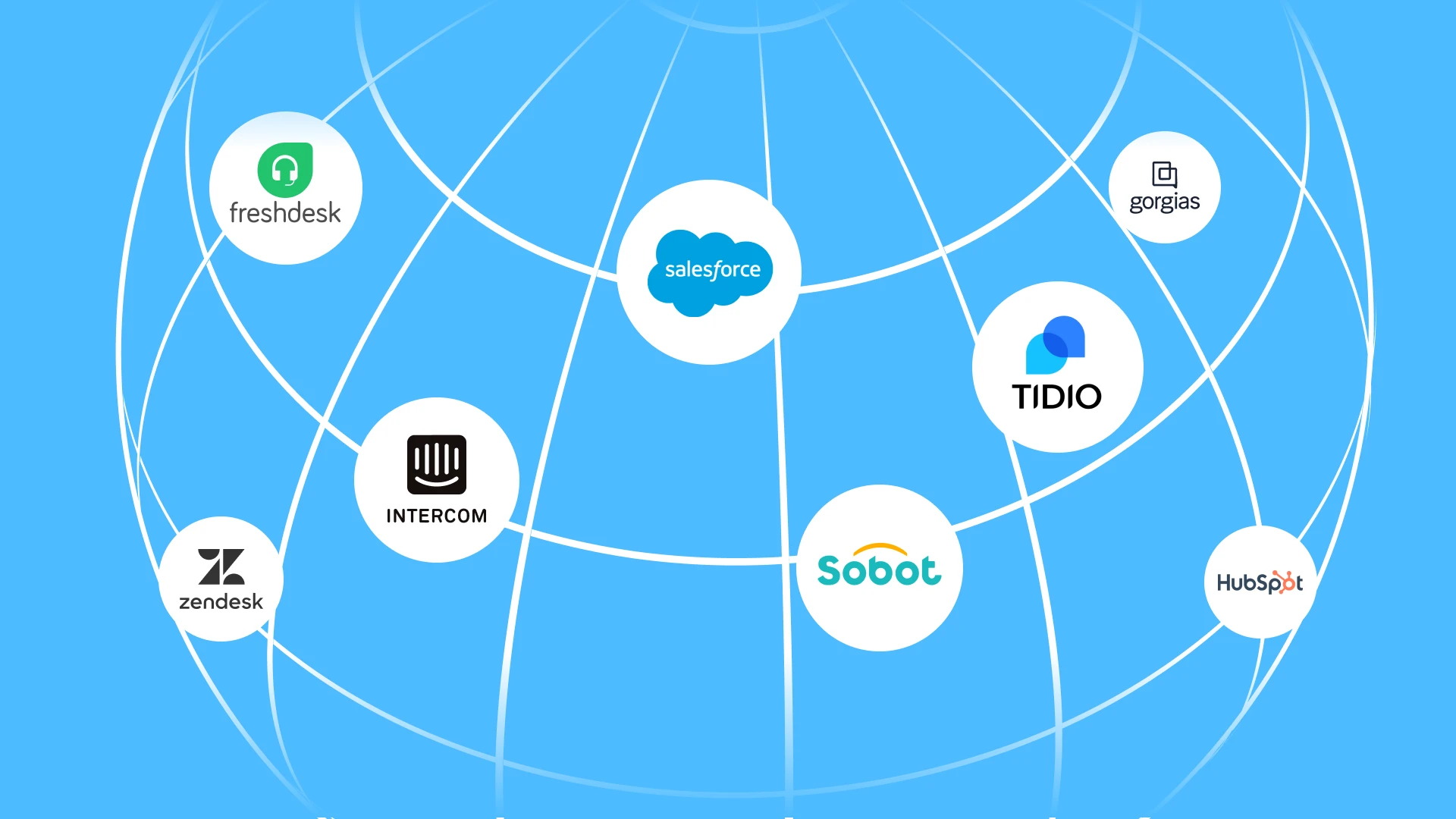
Customer service is entering a new phase. As CX leaders move beyond chatbot hype and focus on agentic AI, mobile-first customer journeys, and measurable business value, the question is no longer whether AI belongs in support. The real challenge in 2026 is choosing software that can reduce service costs, improve resolution quality, and orchestrate seamless experiences across every channel customers actually use. This guide covers the 11 best AI customer service software tools in 2026, with pricing, standout features, practical limitations, and the type of team each platform fits best. If you need one platform that combines AI agents, live chat, chatbot, voice, ticketing, and messaging in a single omnichannel workflow, Sobot is the strongest overall option this year.
TL;DR: Top Picks
- Best overall:Sobot
- Best for enterprise:Zendesk AI
- Best for e-commerce:Gorgias
- Best for SaaS teams:Intercom Fin AI
Sobot: Best Overall AI Customer Service Software
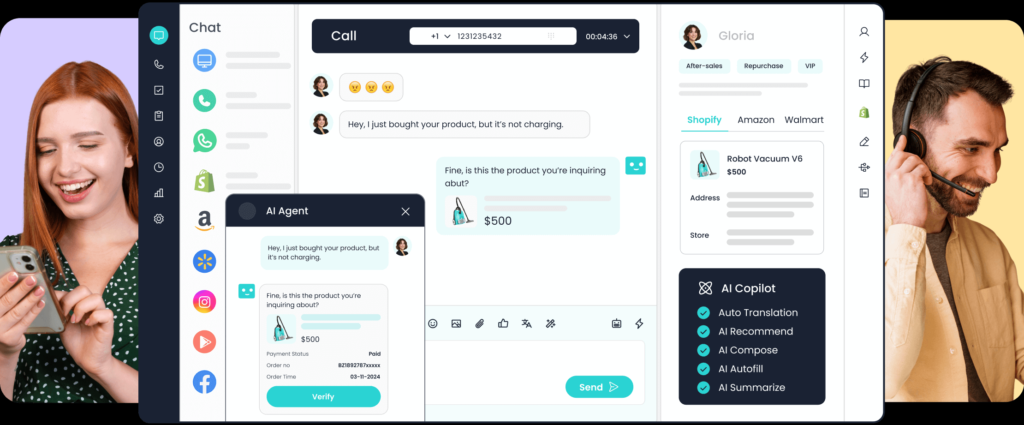
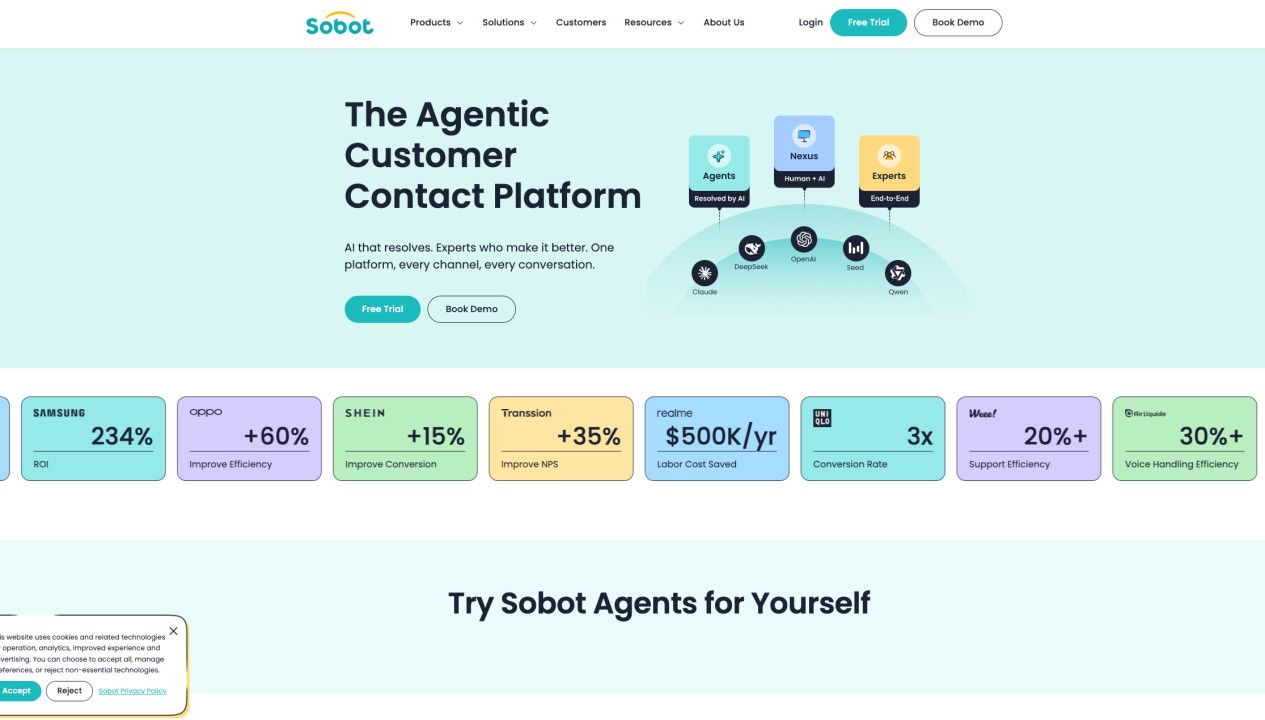
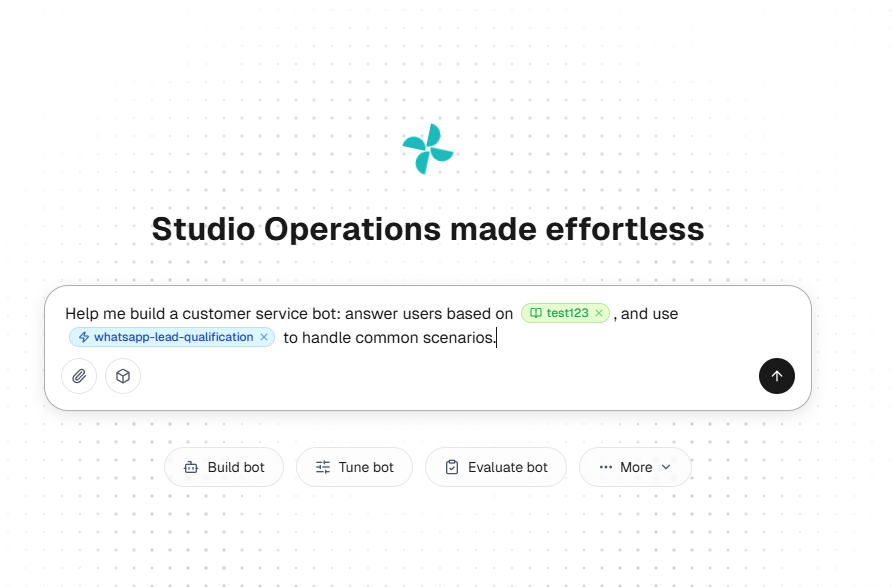
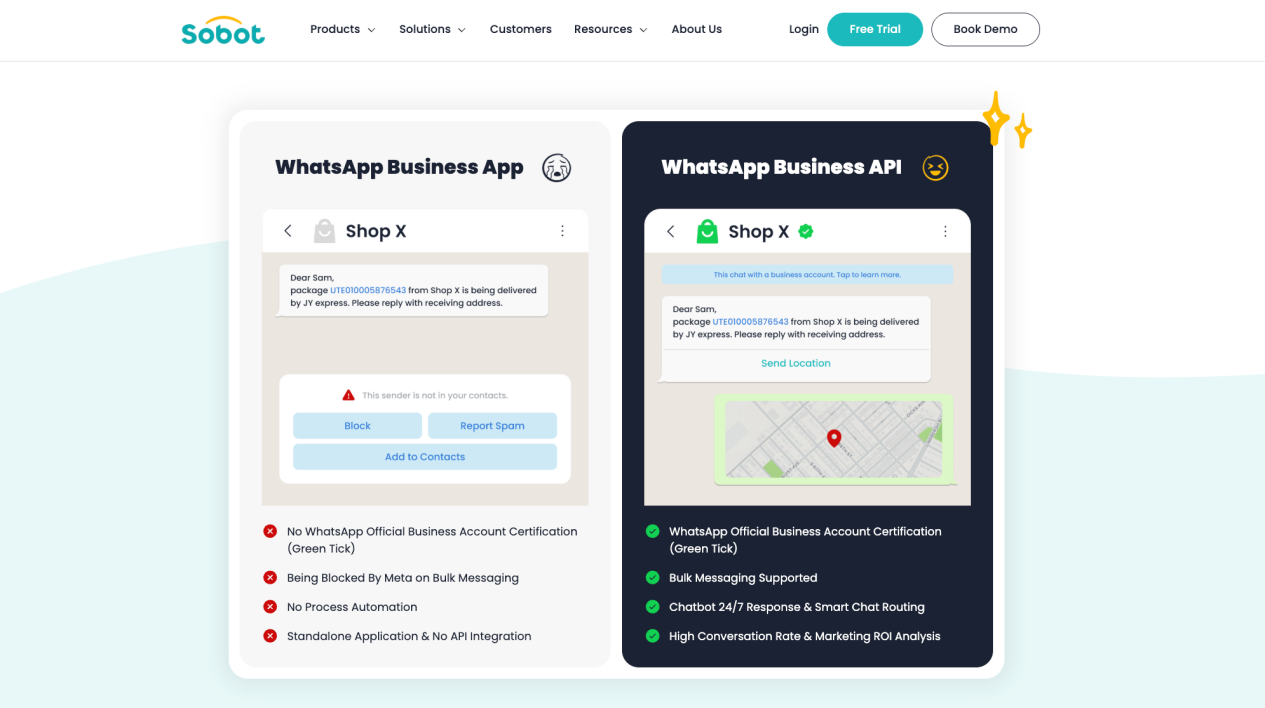
Sobot stands out because it solves a broader customer service problem than point tools do. Instead of offering only chat, only ticketing, or only AI automation, it brings together AI Agent, live chat, chatbot, voice, ticketing, and WhatsApp API inside one AI-first contact center. That matters for businesses that need to support pre-sales questions, post-sales service, proactive outreach, and internal collaboration without stitching together multiple vendors.
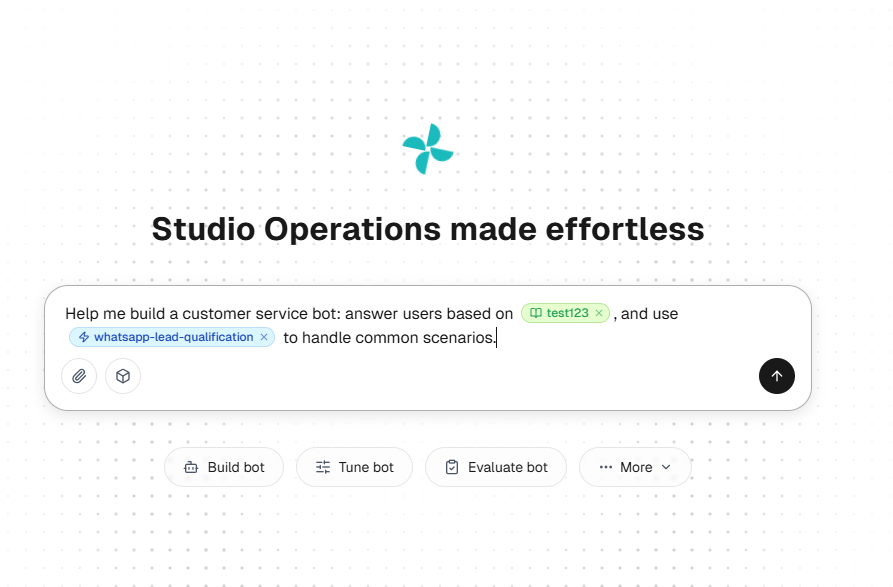
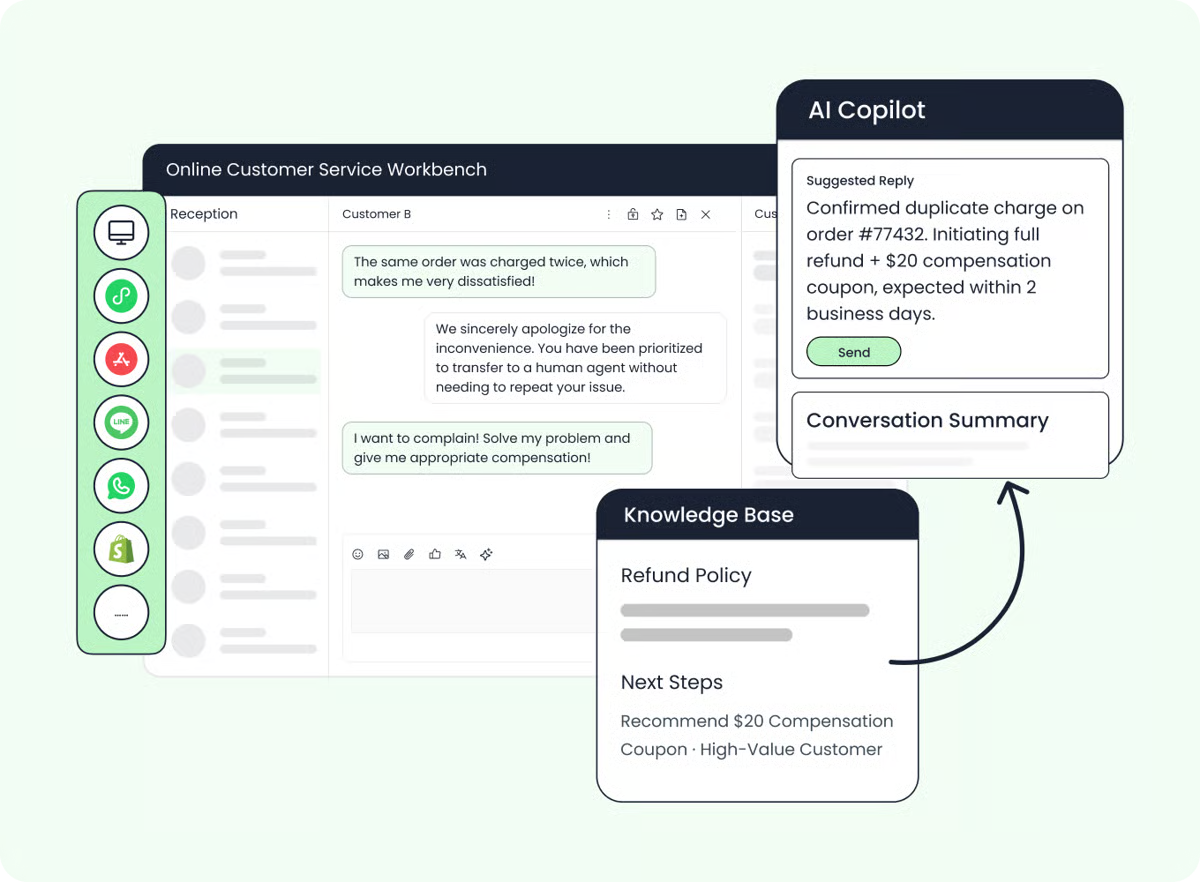
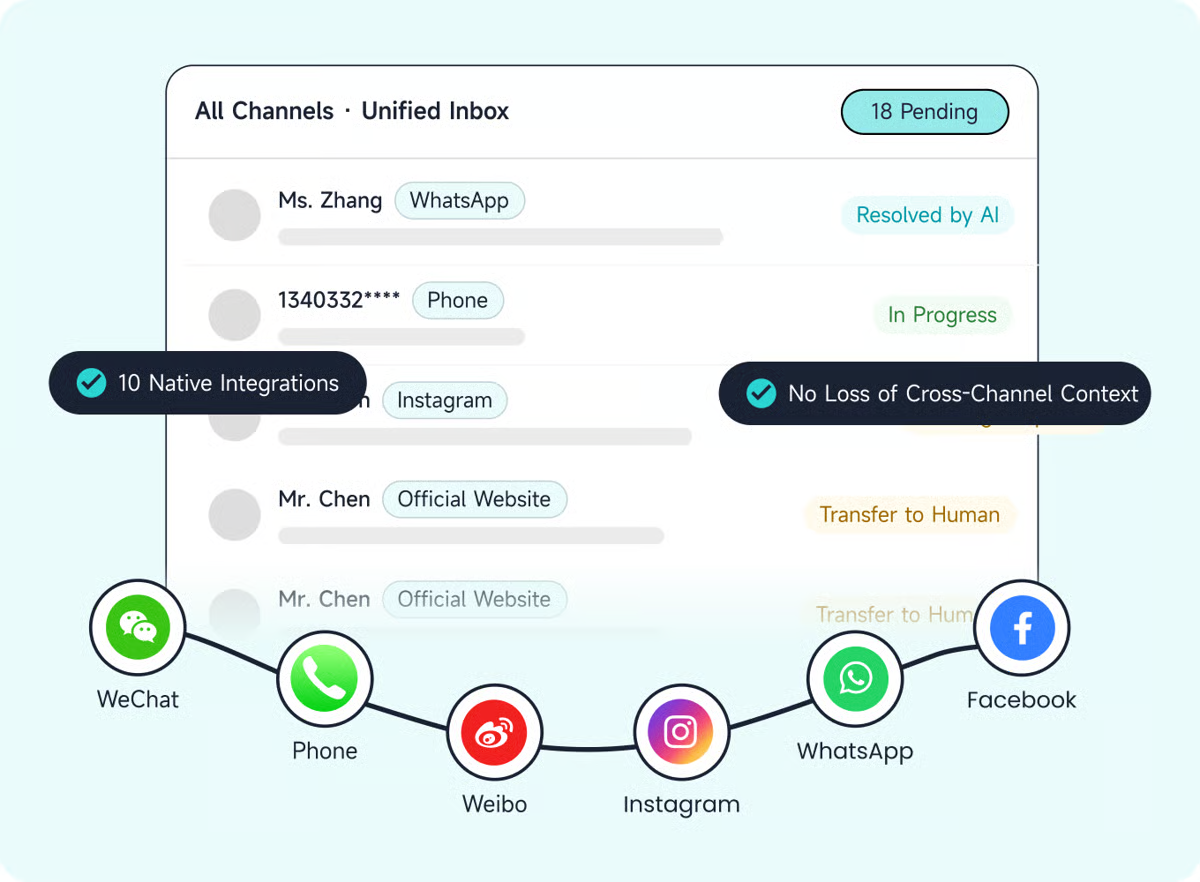
What makes Sobot the top overall pick is the combination of omnichannel depth and practical AI coverage. Sobot supports global customer engagement across website, app, email, voice, WhatsApp, Facebook Messenger, Instagram, Telegram, Amazon, Walmart, Shopify, and more. It also supports 18+ languages, uses a scenario-based AI approach for higher relevance by industry, and includes tools such as AI Copilot, no-code workflow building, and Tracing Debug for refining AI reasoning. Sobot says it is trusted by over 100,000 companies worldwide, including more than 10,000 active enterprise customers. Case studies in the uploaded knowledge base show strong operating results across brands such as OPPO, Renogy, Weee!, OPay, Mico, and J&T.
Key Features
- AI Agent that combines LLM reasoning, NLP, and rule-based logic for accurate responses
- Omnichannel inbox across website, app, email, voice, social, and marketplace channels
- Voice AI for inbound and outbound scenarios
- AI Copilot for summarization, draft replies, and ticket autofill
- No-code Flow Builder for automation and workflow design
- Scenario-based AI for industries such as e-commerce, finance, gaming, and services
- Tracing Debug for monitoring and refining AI reasoning
- Shopify, Amazon, Walmart, WhatsApp, and social media integrations
Pricing
Sobot uses custom quote pricing with flexible billing models, including per-agent, per-ticket, per-hour, and fixed-price hybrid options. Specialized modules such as AI voicebots, outbound marketing tools, and industry-focused AI solutions are priced separately. A free trial is available on the official site.
Limitations
Sobot’s pricing is not as transparent as fully self-serve SMB tools, so ROI is easier to evaluate after a demo than from the website alone. Teams that only need a lightweight website chatbot may find the platform broader than necessary. Its biggest strength is breadth, but that also means buyers should map their channels, integrations, and workflow needs before purchase.
Rating: 4.8 / 5
Best for: Global support teams, cross-border e-commerce brands, and enterprises that want one AI contact center across chat, ticketing, voice, and messaging.
Intercom Fin AI: Best for SaaS Teams That Want Outcome-Based Pricing
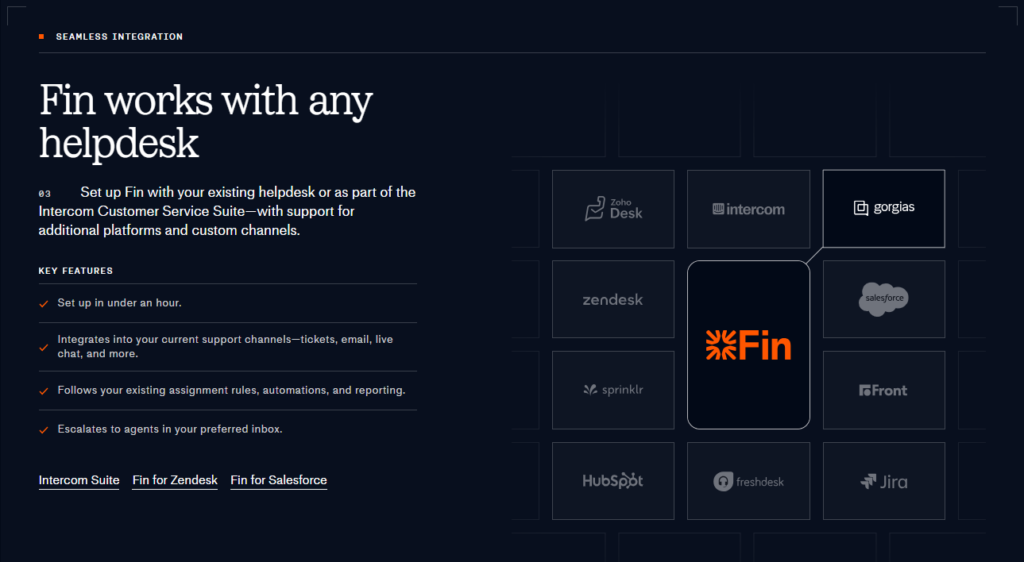
Intercom Fin AI remains one of the strongest AI customer service tools for SaaS and mid-market support teams. Its biggest advantage is simple outcome-based pricing. You pay when Fin resolves the conversation. If it escalates to a human agent, you are not charged. That makes ROI unusually easy to model.
Fin is also one of the most mature AI-first support agents in the market, with strong multilingual support, human handoff, and agent-assist capabilities inside the same inbox. For SaaS businesses that want fast deployment and clear resolution economics, it is still one of the safest choices.
Key Features
- Fin AI Engine built specifically for customer service
- 45+ language support
- Intelligent human handoff
- Rich custom answers
- Fin AI Copilot for agents
- Automated email support
Pricing
Plans start at $29/month. AI resolutions cost $0.99 per resolved conversation, with a minimum of 50 resolutions per month. Advanced plans start at $85 per seat/month, and unlimited Fin AI Copilot adds $35 per seat/month.
Limitations
Costs can become unpredictable at high volumes, and answer quality still needs monitoring because soft resolutions can be counted as resolved conversations.
Rating: 4.7 / 5
Best for: SaaS companies, mid-market teams, and businesses that prefer paying for results.
Zendesk AI: Best for Enterprise Customer Service Teams
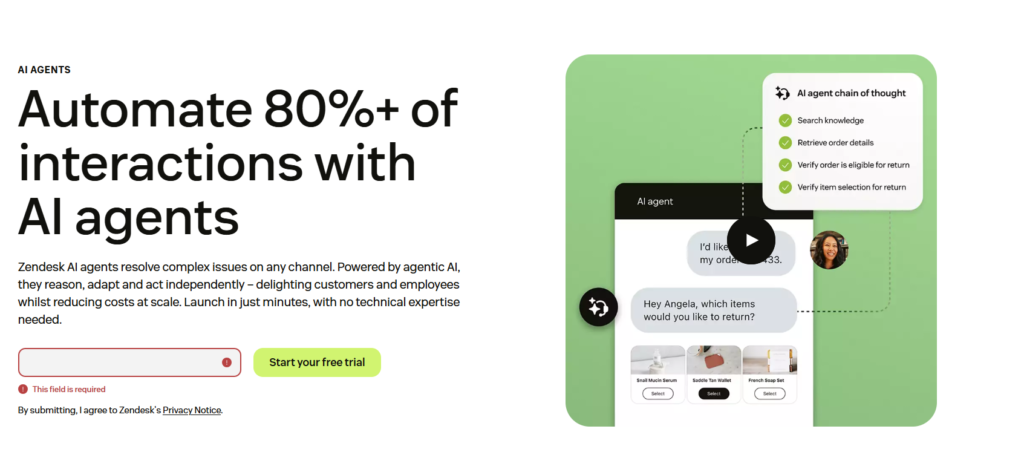
Zendesk AI is still one of the strongest enterprise options because it layers automation on top of a mature help desk, QA, and workforce management stack. For large support organizations that need smart triage, global routing, QA, and planning in one system, Zendesk remains a top-tier choice.
The platform is especially strong for enterprises that already run large support operations and need both agent productivity and management controls, not just a bot layer.
Key Features
- AI agents with smart triage
- Zendesk Copilot for suggested replies and summaries
- Quality Assurance for coaching opportunities and knowledge gaps
- Workforce Management for forecasting and scheduling
- Outcome-based billing for AI resolutions
- Omnichannel workspace across email, chat, voice, SMS, and social
Pricing
Suite Team starts at $55 per agent/month. Support Enterprise reaches $115 per agent/month. The Advanced AI add-on is about $50 per agent/month, and QA starts at $25 per agent/month.
Limitations
Costs stack quickly once AI, Copilot, QA, and enterprise plans are combined. Large knowledge bases also require significant setup work.
Rating: 4.5 / 5
Best for: Enterprise contact centers, global support operations, and teams that need advanced QA and workforce management.
Freshdesk Freddy AI: Best Value for SMB Support Teams
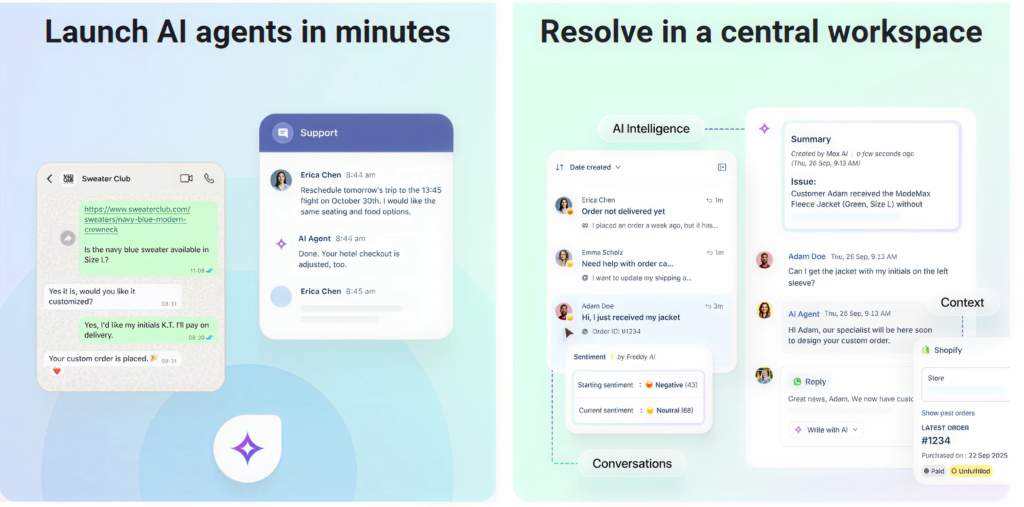
Freshdesk Freddy AI is one of the best value options for SMBs because it combines familiar help desk workflows with modular AI components. Smaller teams can buy only what they need instead of paying for a full enterprise AI stack upfront.
It is especially good at ticket automation, summarization, and routing, which makes it a strong fit for growing support teams that need better efficiency without enterprise-level complexity.
Key Features
- Ticket summarization
- Suggested replies
- Automatic classification and routing
- Omnichannel inbox
- Freddy Insights for analytics and performance trends
Pricing
Core plans start at $15 per agent/month and go up to $79 per agent/month. Freddy AI Agent is included in Pro and Enterprise plans, with 500 sessions included. Additional sessions cost $99 per 800 sessions. Freddy AI Copilot costs $29 per agent/month.
Limitations
Session-based pricing charges for unique user interactions whether or not the issue is resolved. AI coverage is also stronger in email than in live chat or in-app messaging.
Rating: 4.2 / 5
Best for: Growing SMBs that want a full-featured help desk with AI at a lower price than Zendesk.
Tidio: Best AI Chatbot for Small Businesses
Tidio is popular with small businesses because it is one of the fastest ways to launch an AI chatbot without technical help. Its Lyro AI Agent is trained on your own content, and the platform combines website chat, email, Instagram, Messenger, and WhatsApp in one inbox.
For small e-commerce teams or solo operators, Tidio hits a strong balance between affordability and ease of use.
Key Features
- Lyro AI Agent
- Drag-and-drop Flow Builder
- Multichannel inbox
- Real-time visitor tracking
- Native Shopify and WordPress integrations
Pricing
The Free plan includes 50 conversations and 50 Lyro interactions per month. Paid plans start at $29/month. Lyro AI is billed separately from $39/month.
Limitations
Pricing becomes more complex once human conversations, AI conversations, and chatbot flows are combined. Lower-tier branding removal also costs extra.
Rating: 4.3 / 5
Best for: Small e-commerce businesses, solo entrepreneurs, and Shopify stores that want affordable live chat plus AI.
Drift: Best Conversational AI for B2B Sales and Support
Drift is different from most tools in this list because it sits between support and sales. It is built to qualify website visitors, route them intelligently, and book meetings while also supporting existing customers.
That makes it powerful for B2B companies with high contract values, where even a small lift in qualified pipeline can justify premium software spend.
Key Features
- Drift Engage AI
- Real-time buyer intent signals
- Account-based marketing workflows
- Smart routing
- Video messaging
- Salesforce native integration
Pricing
Drift does not publish pricing publicly. Premium starts at about $2,500/month, with higher tiers often exceeding $5,000 to $10,000/month.
Limitations
The pricing is too high for most SMB teams. Reporting is less granular than dedicated analytics tools, and AI responses can still miss context.
Rating: 4.1 / 5
Best for: B2B SaaS companies with high ACV deals and dedicated sales teams.
HubSpot AI (Breeze): Best for Teams Already on HubSpot CRM
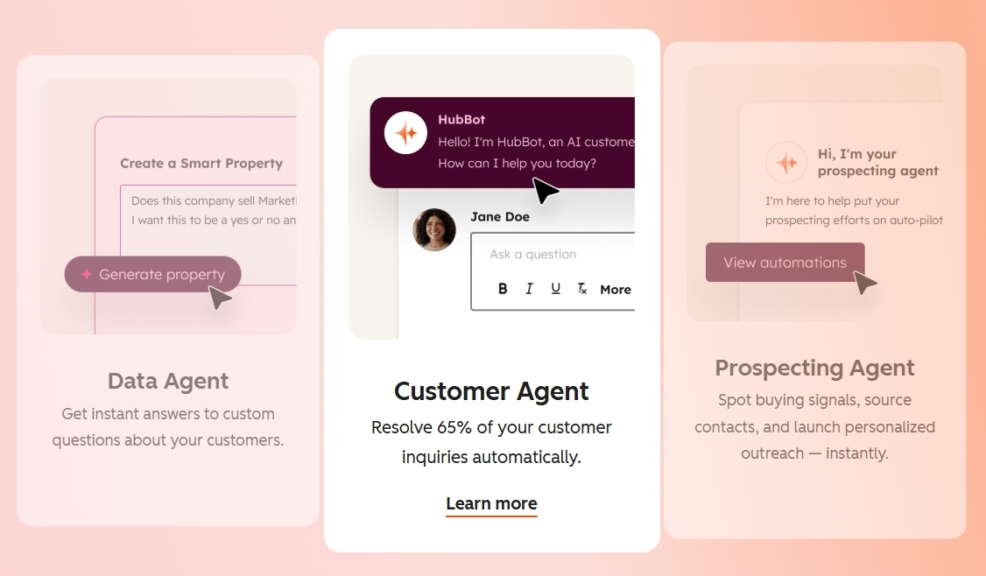
HubSpot Breeze makes the most sense when you are already deeply committed to HubSpot. Its customer service AI is strongest when it can work with existing CRM records, deal history, and support data inside the same platform.
For companies that want unified customer context without adding another major vendor, Breeze is a logical option.
Key Features
- Breeze Customer Agent
- CRM-connected AI context
- Breeze Intelligence
- Visual chatbot builder
- Credits-based AI billing
Pricing
Service Hub Starter starts at $9 per user/month. Professional starts at $90 per user/month, and Enterprise starts at $150 per user/month. Mandatory onboarding costs $3,000 for Professional and $7,000 for Enterprise.
Limitations
The AI value drops sharply if you are not already inside HubSpot. Lower-tier credit limits also restrict AI conversation volume quickly.
Rating: 4.2 / 5
Best for: Businesses already using HubSpot CRM that want unified CX without adding another vendor.
Salesforce Einstein: Best for Enterprise Salesforce Customers
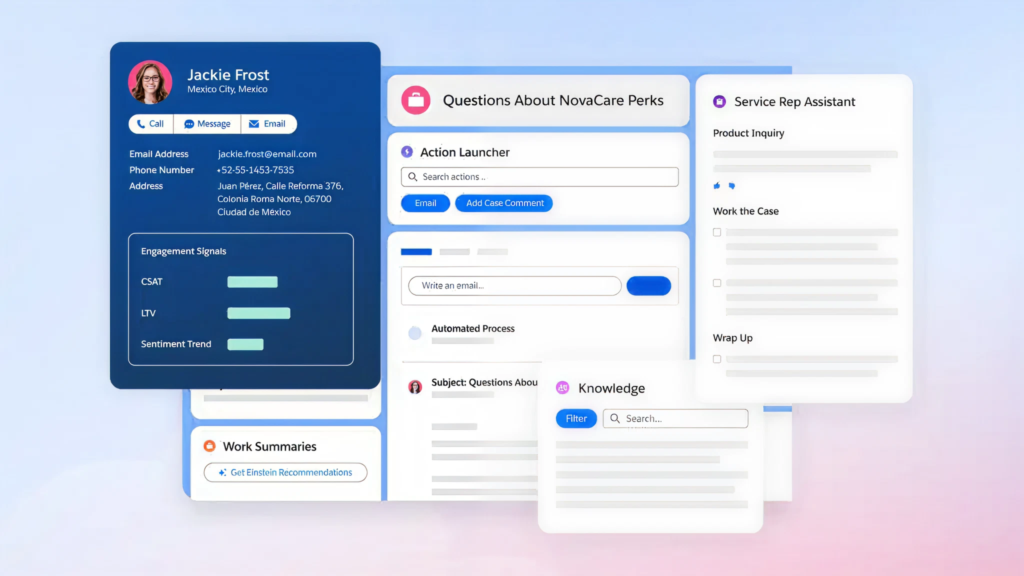
Salesforce Einstein is best when customer service is tightly tied to Salesforce data. Its biggest advantage is that the AI can work directly with case history, customer records, and wider CRM context instead of relying only on standalone support content.
That makes it valuable for organizations that already run complex operations inside Salesforce Service Cloud.
Key Features
- Einstein Bots
- Case Classification
- Article Recommendations
- Reply Recommendations
- CRM-grounded service context
Pricing
Service Cloud Einstein starts at $50 per user/month and requires Enterprise Edition or higher. Salesforce Enterprise Edition is $150 per user/month, and Unlimited Edition is $300 per user/month with Einstein included.
Limitations
The true cost is much higher than the add-on price suggests because the full value is locked behind higher Salesforce tiers. Setup is also complex and typically requires admin and data engineering support.
Rating: 4.0 / 5
Best for: Large enterprises with existing Salesforce investments and dedicated admin resources.
Gorgias: Best AI Customer Service Software for E-Commerce
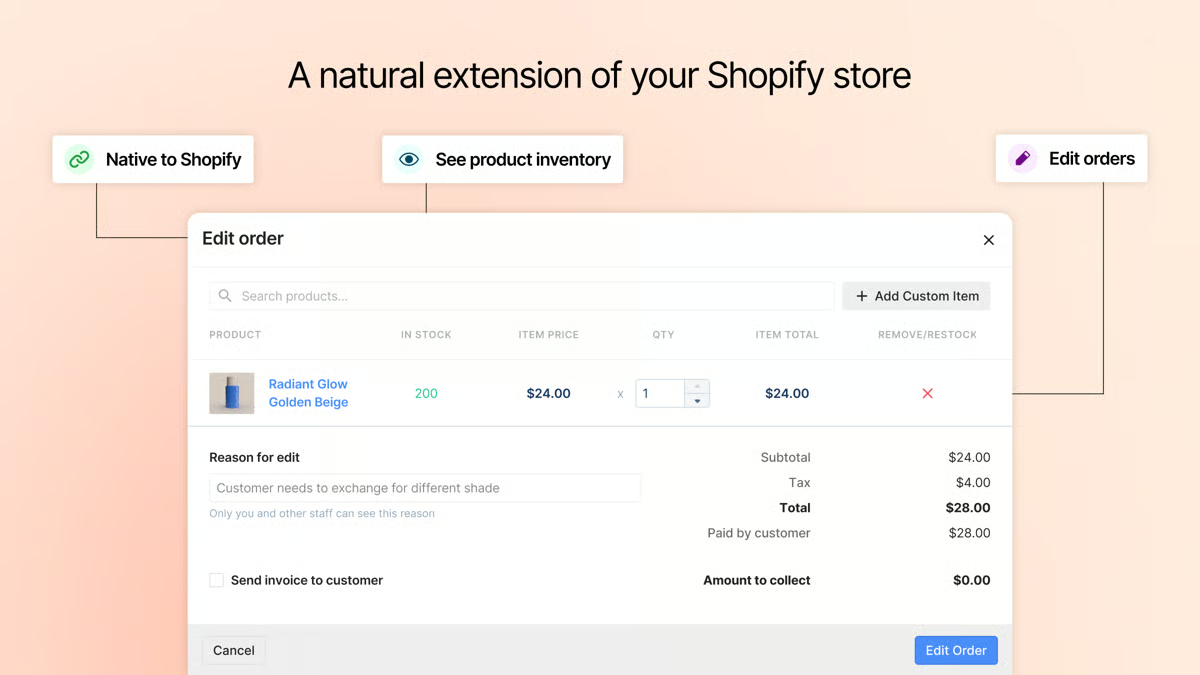
Gorgias remains the most specialized recommendation for Shopify-first e-commerce teams. Its strength is direct access to order data, purchase history, and return status, which allows the AI to handle order tracking, returns, and exchanges without asking customers to repeat information.
For merchants that live inside Shopify and want deep commerce workflows, Gorgias is still a top pick.
Key Features
- Shopify-native integration
- Shopping Assistant mode
- Support Agent mode
- Unlimited agent seats
- Multi-channel inbox
- WooCommerce and BigCommerce support
Pricing
Pricing starts at $10/month for 50 tickets and scales by ticket volume. The AI Agent add-on costs about $1.00 per automated resolution and also counts against monthly ticket quota.
Limitations
The AI pricing effectively double-bills automated resolutions because the conversation counts both as a ticket and as an AI fee. Overage charges can rise quickly during peak retail periods.
Rating: 4.4 / 5
Best for: Shopify-based DTC brands, subscription e-commerce, and merchants handling 300+ support tickets per month.
Ada: Best AI-First Platform for High-Volume Automation
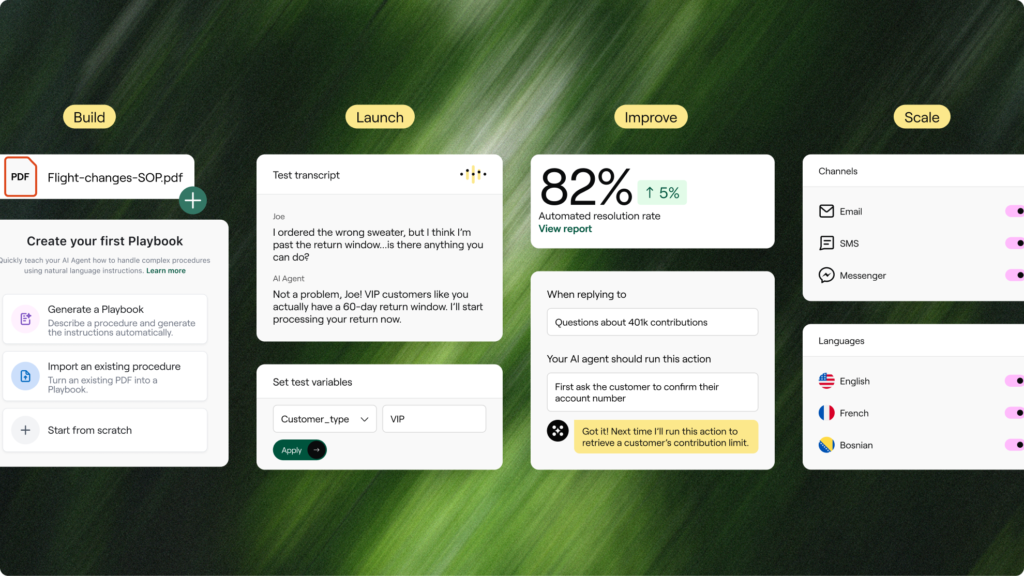
Ada is one of the most automation-heavy platforms in the market. It was designed from the start as an AI customer service platform rather than a traditional help desk. That matters for enterprises that care most about maximizing autonomous resolution rates.
It is also strong for regulated industries that need compliance, security, and governance alongside automation.
Key Features
- Reasoning Engine across multiple LLMs
- Conversation Hub across voice, email, chat, WhatsApp, SMS, Messenger, and Instagram
- Structured Playbooks
- AI Coaching
- Performance Center
- Compliance-grade security
Pricing
Ada does not publish public pricing. Contracts are typically annual and structured around usage volume, often reaching six figures annually.
Limitations
No public pricing and no self-serve trial make evaluation harder. Implementation timelines are also longer than with lighter tools.
Rating: 4.1 / 5
Best for: Large enterprises in regulated industries that need high automation rates and stricter compliance.
Chatbase: Best for Building a Custom AI Support Chatbot
Chatbase is the best fit when you want a custom support bot trained on your own content, but you do not need a full help desk platform. It is fast to deploy and flexible enough for teams that want to upload PDFs, connect websites, or import documentation and launch quickly.
For startups and smaller teams that want custom AI support without enterprise overhead, it is a strong option.
Key Features
- Custom training on PDFs, websites, Notion pages, and docs
- Multi-LLM support
- AI Actions for task automation
- Integrations with Stripe, Calendly, Zendesk, Slack, Zapier, and Make
- GDPR-compliant setup
- Analytics for interaction monitoring
Pricing
A free plan includes 100 message credits per month. Paid plans start at $40/month, then $150/month and $500/month for larger volumes.
Limitations
Chatbase is a chatbot builder, not a full customer service platform. It lacks native ticketing, SLA tracking, queue management, and broader agent performance tooling.
Rating: 4.0 / 5
Best for: Startups, small businesses, and developers who want a no-code custom AI chatbot without a full help desk.
Comparison Table: Best AI Customer Service Software in 2026
|
Tool |
Best For | Free Tier / Trial | Paid Starting Price |
Rating |
| Sobot | Overall / Omnichannel / Global support | Free trial | Custom quote | 4.8 / 5 |
| Intercom Fin AI | SaaS / Outcome-based AI | 14-day trial | $29/mo + $0.99/resolution | 4.7 / 5 |
| Zendesk AI | Enterprise | 6 months free for startups | $55/agent/mo | 4.5 / 5 |
| Freshdesk Freddy AI | SMB value | Limited free option | $15/agent/mo | 4.2 / 5 |
| Tidio | Small business | Yes | $29/mo | 4.3 / 5 |
| Drift | B2B sales + support | No | ~$2,500/mo | 4.1 / 5 |
| HubSpot Breeze | HubSpot customers | Basic chatbot tools | $9/user/mo | 4.2 / 5 |
| Salesforce Einstein | Salesforce enterprise | No | $50/user/mo add-on | 4.0 / 5 |
| Gorgias | E-commerce / Shopify | No | $10/mo | 4.4 / 5 |
| Ada | High-volume enterprise automation | No | Custom | 4.1 / 5 |
| Chatbase | Custom support chatbot | Yes | $40/mo | 4.0 / 5 |
The pricing and positioning above follow the reference comparison article for the non-Sobot tools, while Sobot’s positioning, feature set, customer footprint, and pricing model are based on the uploaded knowledge base and Sobot’s official site.
How to Choose the Right AI Customer Service Software
The right tool depends on three variables more than anything else: your support volume, your existing tech stack, and how many customer interactions you want AI to handle before a human steps in.
If you need a specialized Shopify support platform with deep order and returns workflows, Gorgias is the natural place to start. If you are already committed to Salesforce or HubSpot, their native AI layers are usually more practical than adding an external platform. If you are a SaaS company and want clean outcome-based pricing, Intercom Fin AI is still one of the easiest ROI stories to explain.
If you need broader channel coverage, especially chat, ticketing, voice, social, WhatsApp, and cross-border customer service in one system, Sobot is the strongest overall option. It is particularly well suited for businesses that do not want separate tools for e-commerce support, voice operations, agent assist, and omnichannel customer history. The platform’s scenario-based AI approach, multilingual support, and strong case results across retail, finance, gaming, and service industries make it more adaptable than narrow point tools.
For budget-sensitive small businesses, Tidio and Freshdesk still offer some of the best entry points. For companies that only need a custom support chatbot instead of a full help desk stack, Chatbase is a simpler fit.
FAQs
What is the best AI customer service software in 2026?
Sobot is the best overall AI customer service software in 2026 for most businesses that need a true all-in-one platform. It combines AI Agent, live chat, chatbot, voice, ticketing, and WhatsApp API inside one omnichannel system, supports 18+ languages, and serves a broad set of industries including e-commerce, finance, gaming, and services. For pure enterprise help desk depth, Zendesk AI is still a leading choice. For Shopify-first e-commerce teams, Gorgias remains the most specialized option.
How much does AI customer service software cost?
Costs vary widely. Tidio starts at $29/month. Freshdesk starts at $15 per agent/month. Intercom starts at $29/month plus $0.99 per resolved conversation. Zendesk starts at $55 per agent/month before AI add-ons. Enterprise tools like Drift and Ada can cost thousands of dollars per month or more. Sobot uses flexible custom pricing with models such as per-agent, per-ticket, per-hour, and hybrid billing, which is useful for teams with more complex channel mixes.
Can AI replace human customer service agents?
Not entirely. The best tools reduce repetitive workload and increase speed, but human agents still matter for emotional, unusual, high-risk, or high-value cases. In practice, AI works best as a first layer for self-service, triage, summarization, and repetitive request handling. Sobot’s knowledge base says its voice AI can resolve over 50% of voice inquiries, while leading AI-first platforms in the wider market report autonomous resolution rates that can reach into the 60% to 80% range for selected workflows.
What is the difference between an AI chatbot and an AI customer service agent?
An AI chatbot usually focuses on answering questions or following predefined flows. An AI customer service agent goes further. It can understand context, access customer data, summarize threads, route issues, trigger workflows, and support human agents with recommendations. Modern platforms increasingly offer both layers, with the agent layer handling more open-ended and operational work.
Which AI customer service software is best for e-commerce?
If you run a Shopify-first store and want deep access to order, return, and purchase data, Gorgias is still the most specialized e-commerce option. If your business needs broader omnichannel support, including voice, WhatsApp, ticketing, proactive marketing, and multilingual cross-border operations, Sobot is the stronger long-term choice because it goes beyond a single commerce workflow and supports the full customer engagement lifecycle.
Conclusion
The winners in 2026 will not be the platforms that simply add AI to a legacy support stack. They will be the ones that turn agentic AI into real operational value across mobile-first, omnichannel customer journeys. For most businesses, Sobot stands out because it addresses the full contact center challenge, not just one part of it, combining AI agents, live chat, chatbot, voice, ticketing, messaging, and scenario-based automation in one platform. The smartest next step is not to ask which tool sounds the most advanced, but which one can deliver faster service, better customer experiences, and measurable business outcomes without forcing your team to patch together multiple systems.