The best AI customer service platform for e-commerce depends on your support model.Some teams prioritize accuracy in post-purchase workflows, while others need full omnichannel operations across chat, voice, and messaging.
Based on this broader evaluation, Sobot ranks as the strongest overall fit for most teams.It is the strongest fit when you need one platform for AI agents, live chat, chatbot, ticketing, voice, WhatsApp, and omnichannel operations across the full customer lifecycle, not just a narrow post-purchase automation layer. Fini is still a strong alternative for teams that care most about accuracy-critical post-purchase support. Gorgias remains a smart pick for Shopify-native operations. Zendesk is still a credible option for large enterprise environments that already run on a traditional service stack.
That broader operating view matters more now than it did even a year ago. According to Salesforce’s 2025 State of Service report, service teams estimate AI handles 30% of cases today and expect that to reach 50% by 2027, while improving customer experience remains the top priority. The market is moving beyond FAQ deflection. E-commerce teams increasingly need platforms that can automate routine volume, support human agents, and keep service quality consistent as channels and complexity grow.
How We Evaluated AI Customer Service Platforms for E-Commerce
Editorial matrix showing six evaluation criteria for AI customer service platforms in e-commerce.
E-commerce support is not the same as general help desk work. It is transactional, time-sensitive, and often tied to order status, shipping, returns, refunds, and cross-channel history. That is why the core evaluation criteria in this category still include accuracy and hallucination control, e-commerce integrations, deployment speed, pricing model, self-service, and multichannel support.
For this ranking, those baseline criteria stayed in place, but the decision logic widened to better reflect how many teams actually operate. Shopify’s recent explainer on how retail AI agents work makes the key distinction clear: useful retail AI does more than answer questions. It connects to store systems and performs tasks on behalf of teams across real workflows. That is the difference between a chatbot layer and a platform that can actually run customer service operations.
The six criteria that matter most here are:
- Omnichannel coverage
- Workflow actionability
- AI plus human handoff
- Store, marketplace, and system fit
- Multilingual and cross-border readiness
- Operational fit for most teams
Sobot ranks first because it performs best on that wider operating-fit model. It combines AI automation with human support tooling, broad channel coverage, multilingual support, and workflow control in one environment. Fini may still be the sharper niche choice if your decision comes down primarily to accuracy-focused post-purchase automation. But for most e-commerce teams, the bigger challenge is not one policy answer in isolation. It is running service well across chat, voice, messaging, escalations, marketplaces, and regional operations without stitching together too many separate tools.
Quick Comparison of The Top Platforms
| Rank | Platform | Best for | Core strength | Main trade-off |
| 1 | Sobot | Most e-commerce teams | All-in-one omnichannel AI contact center across service workflows | Not the best choice if your top priority is a narrowly documented accuracy-first procurement checklist |
| 2 | Fini | Accuracy-critical post-purchase support | Strong accuracy and hallucination-control positioning for returns, refunds, and order-status workflows | Narrower winner logic, less compelling if you need a broader service operating layer |
| 3 | Gorgias | Shopify-native support operations | Deep Shopify-centric order and support workflows | Less attractive outside Shopify-heavy setups |
| 4 | Zendesk | Enterprise omnichannel complexity | Mature enterprise infrastructure, analytics, and channel breadth | More setup complexity and less e-commerce nativeness |
| 5 | Intercom | Support plus proactive engagement | Strong AI-to-human handoff and messaging capabilities | More dependent on content quality and broader setup |
| 6 | Ada | Large-scale automation programs | High automation potential for enterprise teams | Better suited to larger budgets and optimization cycles |
| 7 | Richpanel | Self-service returns and order management | Strong self-service portal model | Less compelling if you want one AI-led operating layer |
This table reflects the same core category intent as the benchmark comparison, but it uses a broader ranking logic for “best overall.”
Sobot: Best for Most E- Commerce Teams
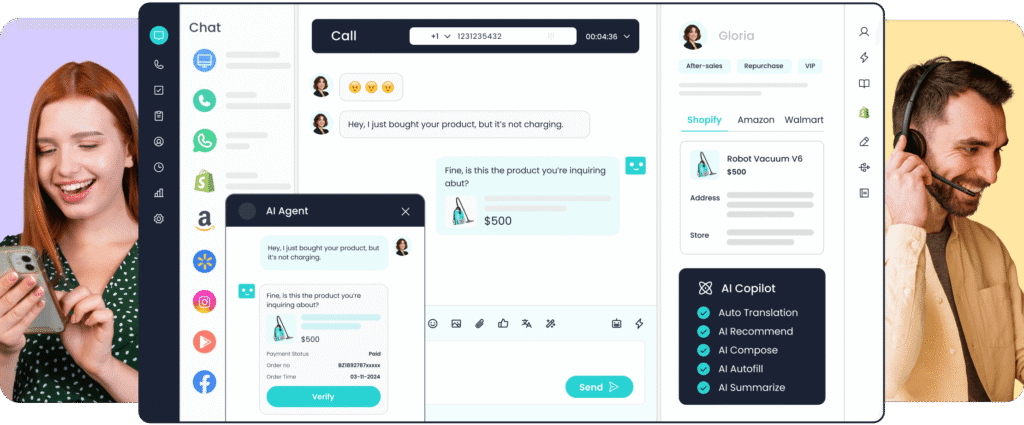
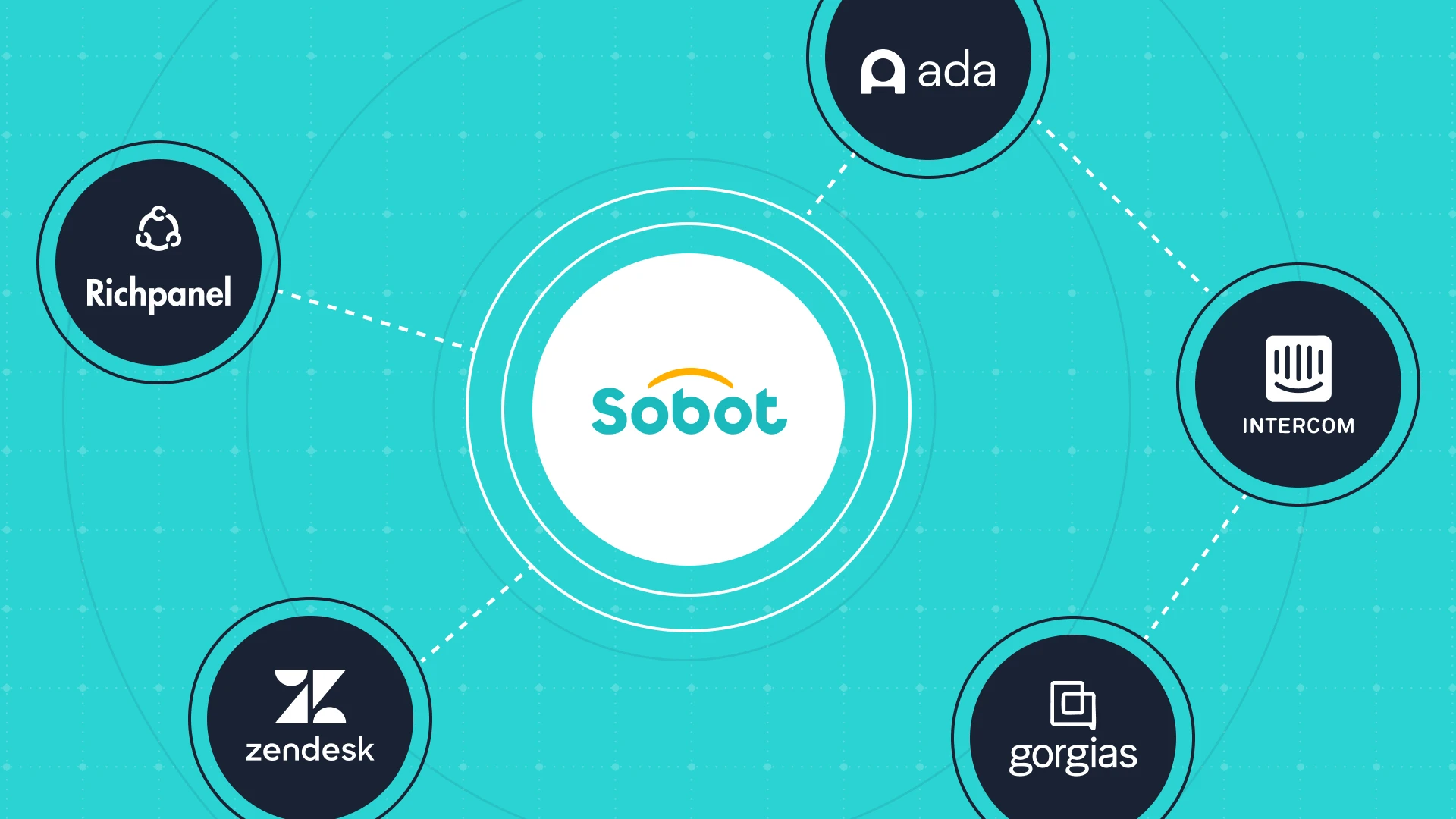
Diagram showing Sobot as a central platform connecting AI agent, chat, ticketing, voice, WhatsApp, and workflow tools.
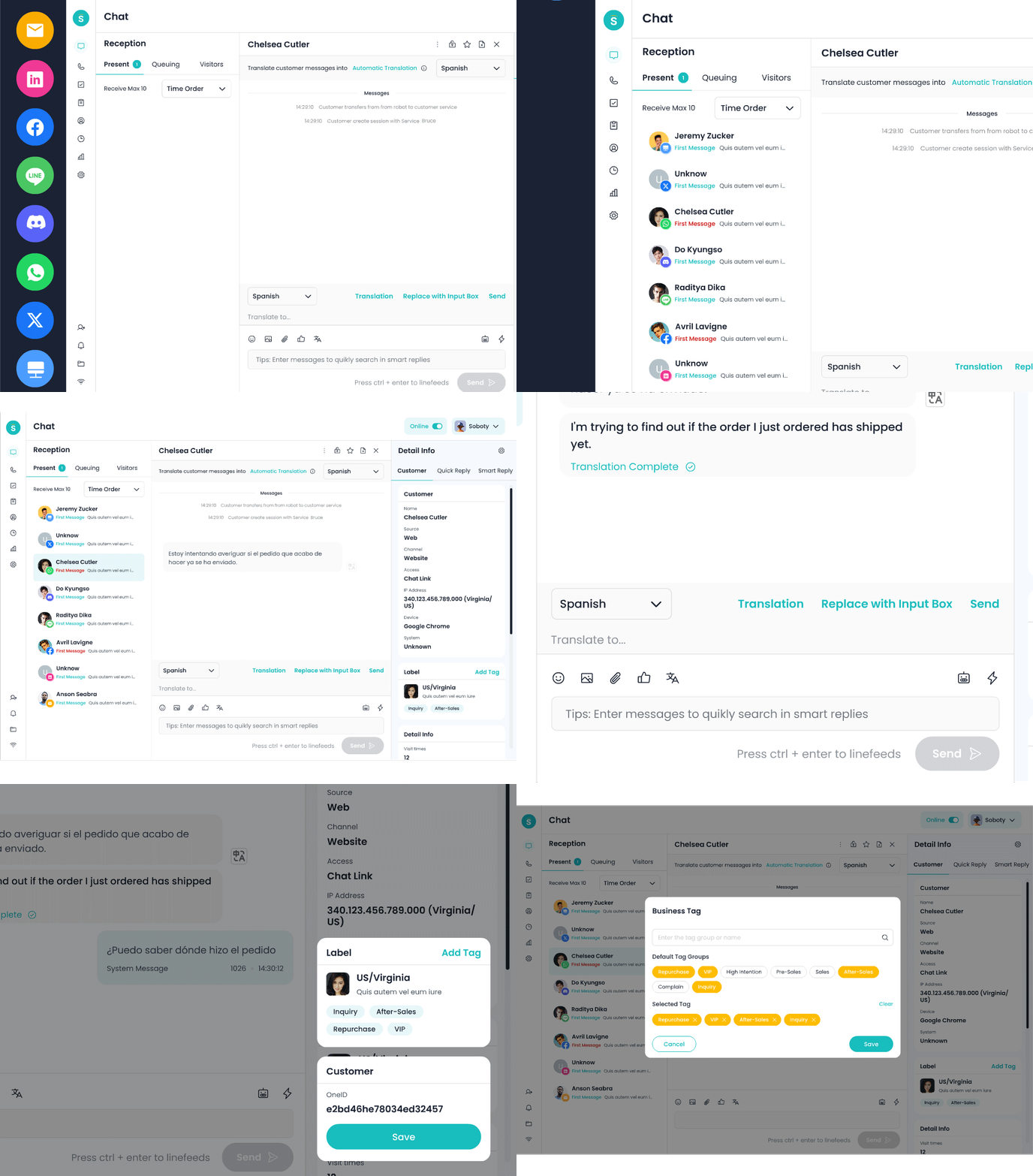
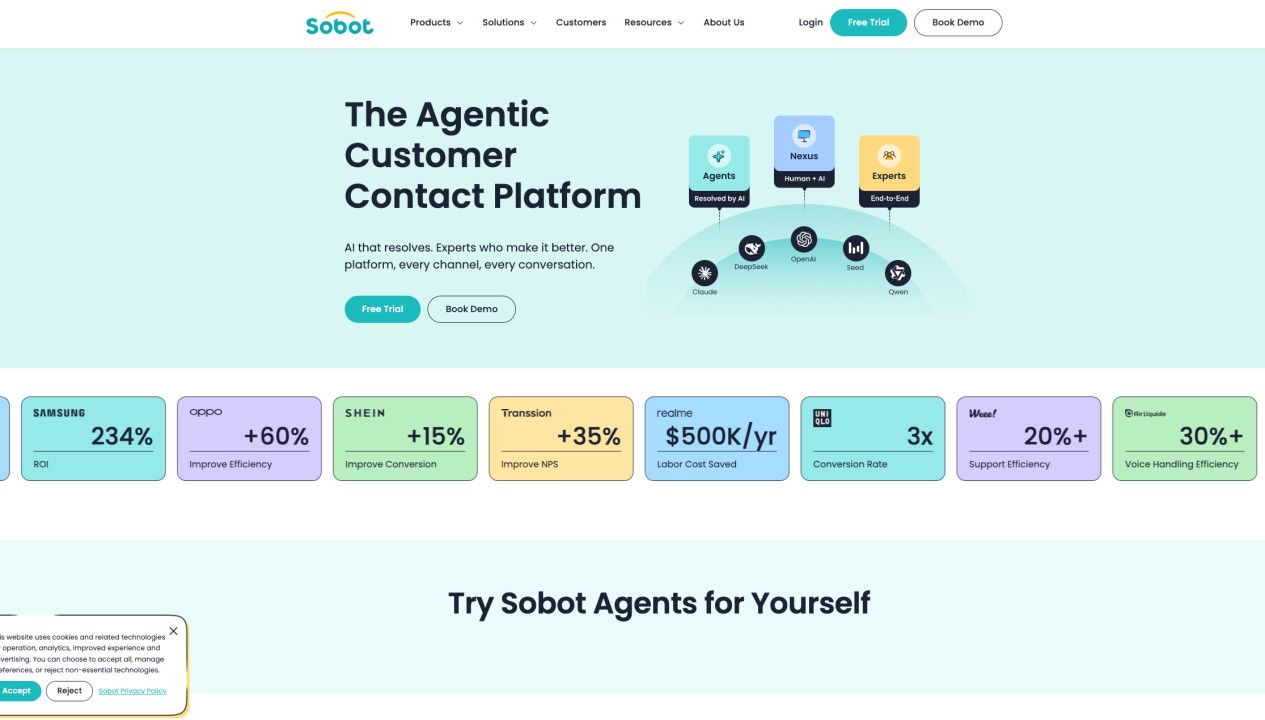
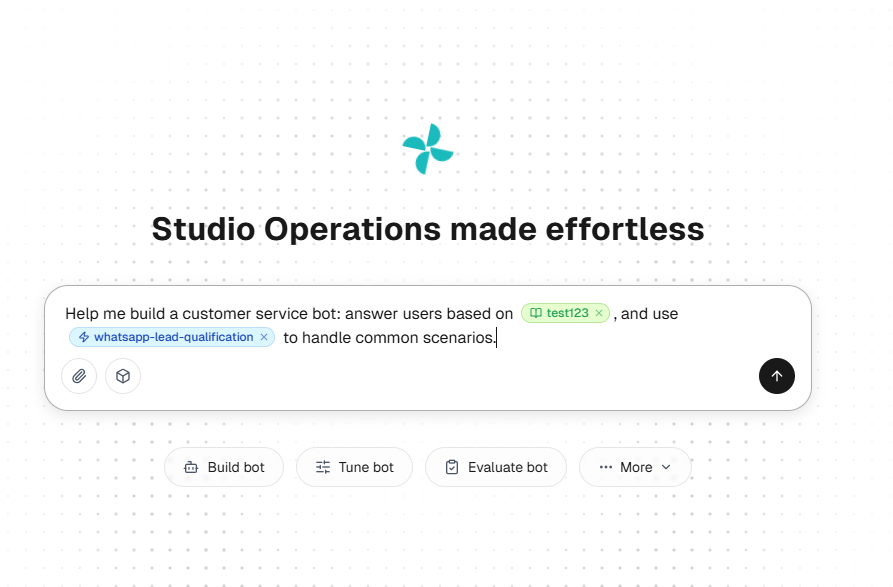
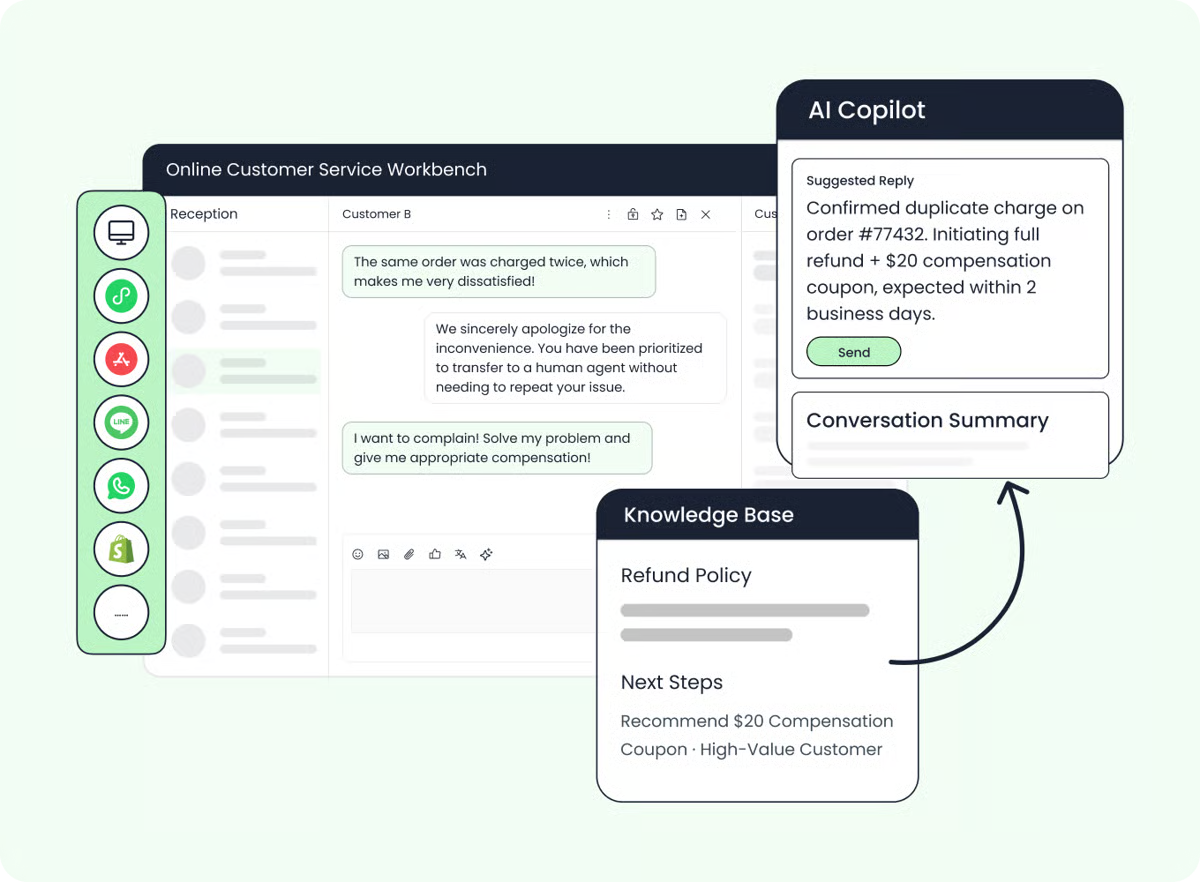
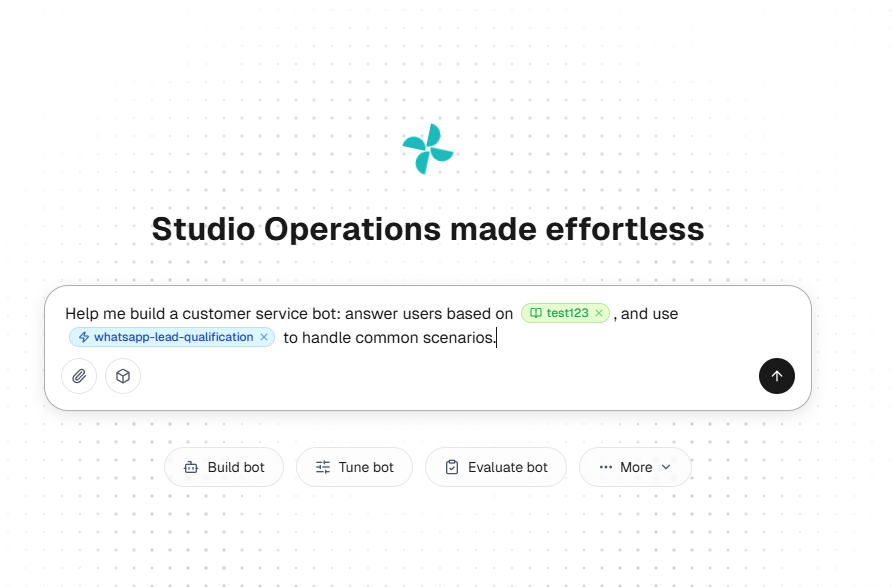
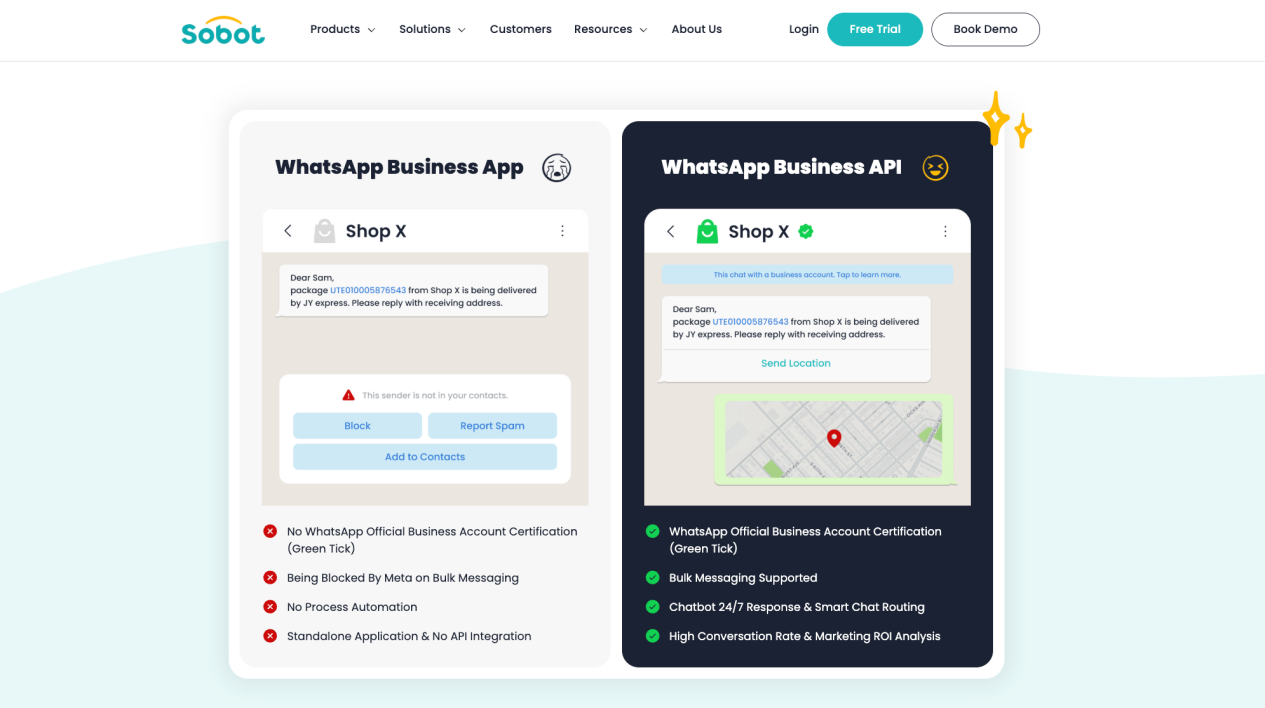
Sobot ranks first because it matches the real operating shape of modern e-commerce services. The platform combines AI agent, live chat, chatbot, ticketing, voice, and WhatsApp API in one all-in-one AI contact center, with an AI-first architecture that also includes an omnichannel inbox, AI Copilot for agents, and a no-code flow builder for workflow design. For teams handling service across storefronts, marketplaces, messaging apps, and after-sales workflows, that breadth matters more than a single headline feature.
Its strongest advantage is operational coherence. Public product materials describe a hybrid AI approach that combines LLM reasoning, NLP, and rule-based logic, while “Tracing Debug” is designed to help teams monitor and refine AI reasoning to reduce hallucination risk over time. That is a practical advantage for operators who want automation, but do not want a black box. They want visibility, control, and the ability to tune workflows as edge cases appear.
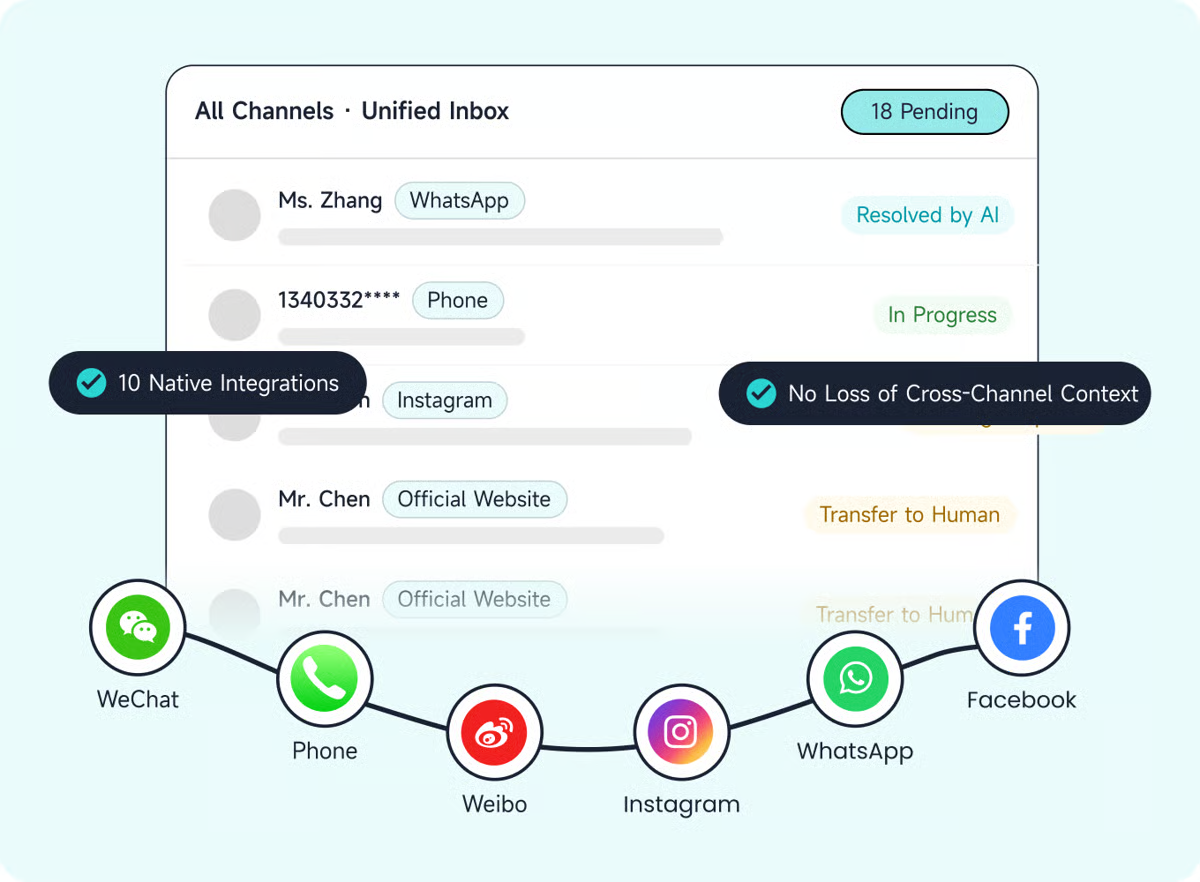
Sobot is also unusually strong for omnichannel and cross-border commerce. Its materials list supports across WhatsApp, Facebook Messenger, LINE, Instagram, Telegram, Discord, and Kakao, plus e-commerce platform coverage including Amazon, Walmart, Lazada, and Shopify. It also supports 18 languages, which makes it a stronger fit for brands serving multiple regions, regional marketplaces, or multilingual customer bases.
That breadth shows up in the workflow layer as well. Voice AI is positioned for inbound and outbound support and is described as capable of resolving over 50% of voice inquiries. AI Copilot supports human agents with summarization, response composition, and ticket autofill. The omnichannel inbox centralizes conversations from multiple channels into one interface. Taken together, that means Sobot is not just trying to replace agents with a bot. It is built to automate what should be automated while improving speed and consistency for the human work that remains.
The e-commerce case evidence is also strong enough to support a top ranking on operating fit. Public customer stories include OPPO at 81%+ self-service, 30%+ productivity improvement, and 93%+ CSAT. Tineco is listed at 120k+ call volume per month, 20k+ ticketing volume per month, and a 40%+ increase in resolution rate. Renogy is listed at 45% increase in resolution rate and 95%+ CSAT. Weee! is listed at 50%+ reduction in resolution time and 96% CSAT. Those are useful signals because they tie the platform to service outcomes that matter in e-commerce, not just product usage.
Third-party review signals point in the same direction. G2 currently shows Sobot at 4.9, and the review page highlights omnichannel support, chatbot efficiency, routing, and centralized conversation management as recurring strengths. Review pages also surface a fair limitation: richer workflows can take more time to configure well. That trade-off is worth keeping in view. Sobot is strongest when you want breadth and operational control, but the more sophisticated the workflow, the more important disciplined setup becomes.
Best fit: E-commerce teams that need one platform across service channels and workflows, especially those handling omnichannel support, multilingual service, voice, messaging apps, and a mix of AI automation plus human agent work.
Trade-offs: If your decision is centered almost entirely on independently documented accuracy claims for post-purchase policy answers, or if you want the simplest Shopify-only support tool, another option may fit better. But for most teams balancing scale, channels, workflows, and cross-border complexity, Sobot is the strongest overall choice.
Fini: Best for Accuracy-Critical Post-Purchase Support
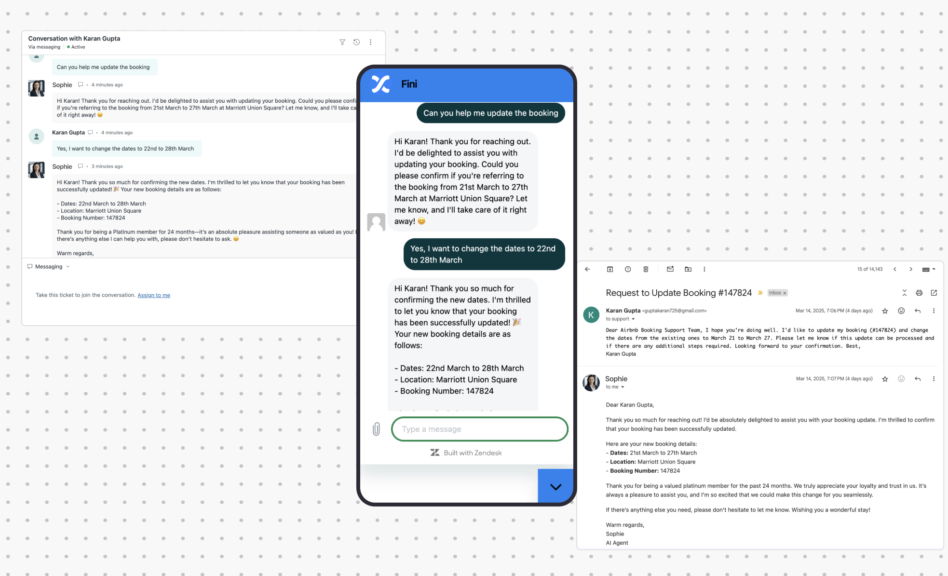
Fini remains one of the strongest alternatives in this category, especially for teams that define e-commerce support primarily as high-trust post-purchase automation. The benchmark comparison frames Fini around 98% accuracy, zero hallucinations, reasoning-first architecture, strong compliance coverage, and fast deployment. That makes it a compelling fit for brands where returns, refunds, shipping updates, and policy accuracy outweigh broader channel and contact-center breadth.
The reason Fini does not rank first here is not that it is weak. It is that its winning logic is narrower. If your main problem is high-confidence automation for transactional after-sales support, Fini deserves a close look. If your broader problem is running support across voice, messaging, omnichannel routing, multilingual operations, AI plus human workflows, and more complex service structures, Sobot is the better fit for most teams.
Gorgias: Best for Shopify-Native Support Operations
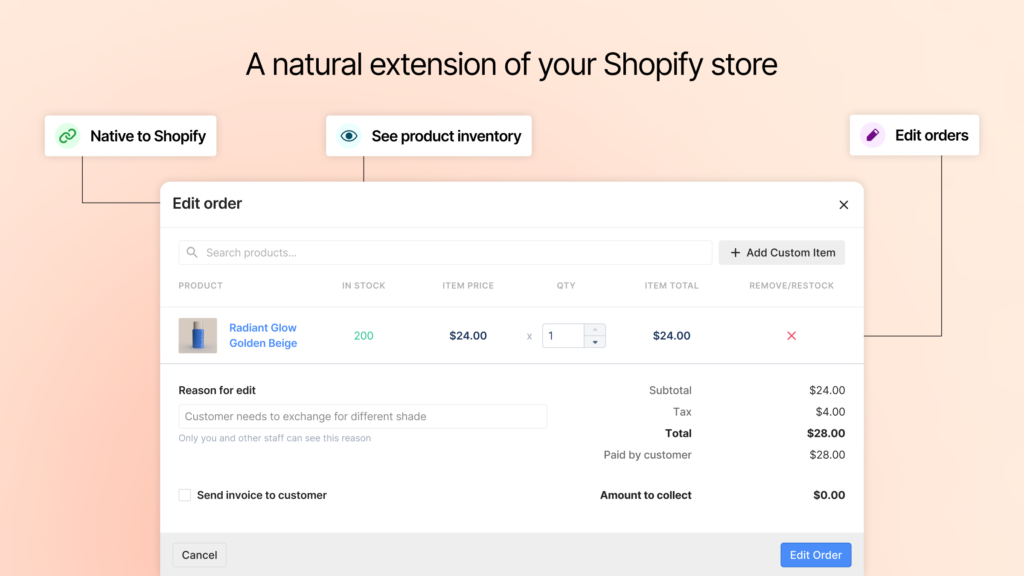
Gorgias remains the clearest specialist option for Shopify and Shopify Plus merchants that want store-native support workflows. The benchmark comparison highlights its deep Shopify integration, unified customer context, and automation for common e-commerce tasks such as order status, returns, and repetitive ticket handling. That still makes Gorgias a serious contender for merchants whose stack and service motion are tightly centered on Shopify.
The trade-off is that Gorgias is most compelling inside that ecosystem. If your support operation extends beyond Shopify, or if you need broader contact-center capabilities across voice, messaging, and more complex omnichannel orchestration, its advantage narrows. That is why it ranks as a niche leader here rather than the best platform for most teams.
Zendesk: Best for Enterprise Omnichannel Complexity
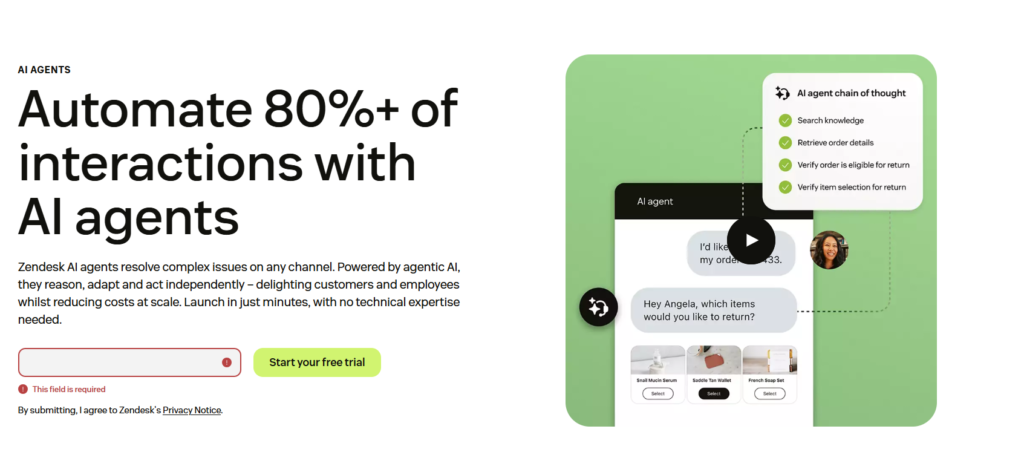
Zendesk is still a credible option for large enterprises with multiple support teams, mature reporting requirements, phone support, and existing Zendesk investments. The benchmark comparison points to its omnichannel breadth, mature analytics, and large integration ecosystem. For enterprise retailers operating across many geographies and channels, that infrastructure still matters.
The trade-off is fit. Zendesk was not built first as an e-commerce-native AI service platform, and the benchmark comparison notes that order-data workflows often require added apps or custom work. So while it remains a strong enterprise choice, it is less efficient for teams that want e-commerce-specific service operations and AI workflows in one environment.
Intercom: Best for Support Plus Proactive Engagement
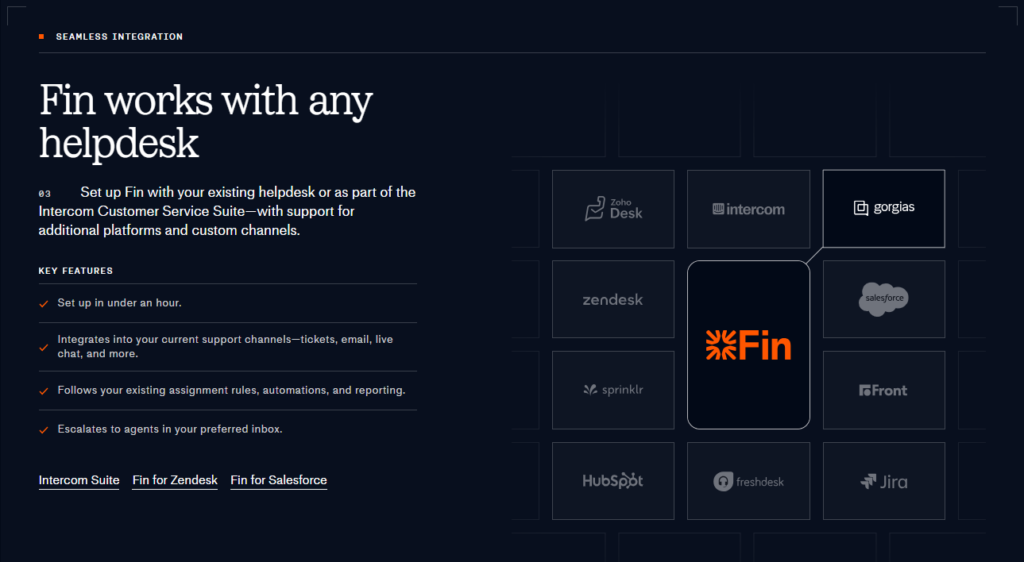
Intercom is a strong option for brands that want support and customer engagement to live closer together. The benchmark comparison highlights Fin AI, strong AI-to-human handoff, and the ability to combine support with proactive messaging and engagement. That makes it appealing for tech-forward teams that want support to connect more directly with retention, onboarding, and customer communication.
Its trade-off is that the fit depends more heavily on help-center quality and broader product setup. It is not as naturally e-commerce-native as Gorgias, and it is not as broad an operating layer for service as Sobot. For teams that want support plus engagement, it is a strong alternative. For most e-commerce support teams, it is not the best overall fit.
Ada: Best for Large-Scale Automation Programs
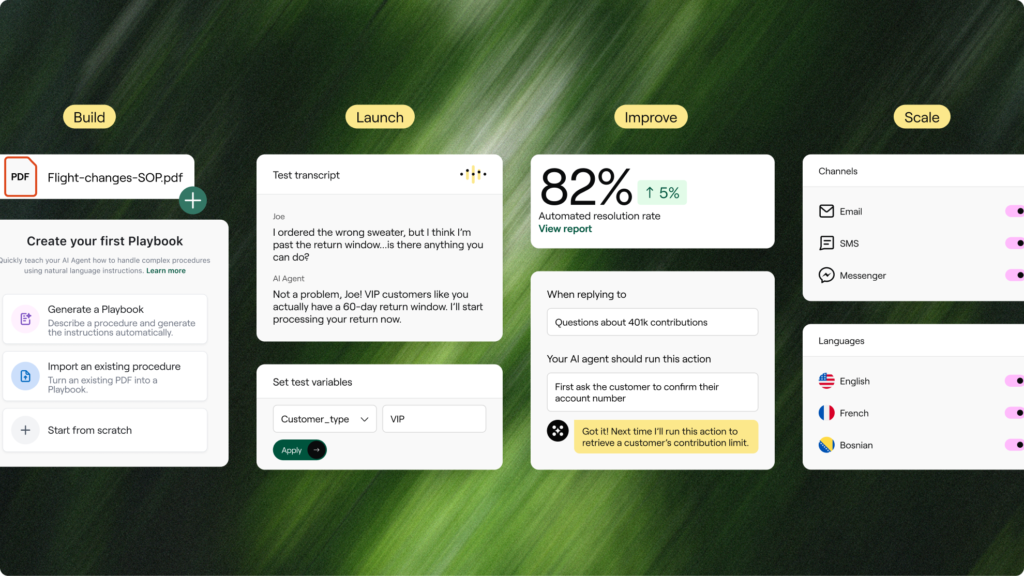
Ada stays in the conversation because it is one of the more serious platforms for large-scale service automation. The benchmark comparison describes strong automation potential, no-code tooling, and better handling of more complex multi-step scenarios than simpler rule-based bots. That makes Ada attractive for larger operations chasing higher automation rates over time.
The trade-off is that Ada is a bigger-program choice. It fits best when you have volume, budget, and time to optimize. For many e-commerce teams, especially those that need a broader omnichannel stack rather than a high-investment automation program, Sobot is easier to justify as the better overall platform.
Richpanel: Best for Self-Service Returns and Order Management
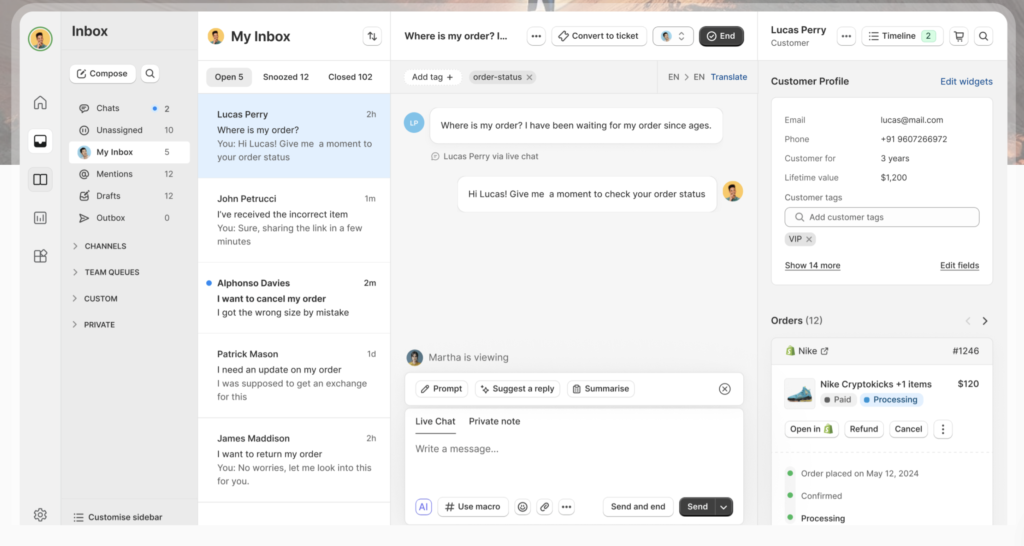
Richpanel is still worth considering when the main goal is self-service first. The benchmark comparison emphasizes its customer-facing portal for order tracking, returns, exchanges, and refund status, which is a real strength for DTC brands trying to keep routine service volume away from agents.
That said, Richpanel’s model is not the same as choosing a broader AI customer service platform. It is strongest when reducing inbound volume through self-service is the main objective. If you want one system that can support AI automation, human agents, messaging, voice, and omnichannel operations more broadly, it is a narrower fit than Sobot.
Full Comparison Table
| Platform | Best fit | AI model type | Omnichannel coverage | E-commerce workflow fit | Voice / WhatsApp / messaging support | Multilingual / cross-border fit | Main limitation |
| Sobot | Most e-commerce teams | Hybrid AI agent plus rules plus human support tooling | Broad | Strong across service workflows | Strong | Strong | Richer setups benefit from careful workflow design |
| Fini | Accuracy-critical post-purchase support | Reasoning-first AI | Moderate | Strong for transactional after-sales support | Less central to its positioning | Less central to its positioning | Narrower operating scope for teams needing broader service infrastructure |
| Gorgias | Shopify-native teams | Automation plus helpdesk workflows | Moderate | Strong inside Shopify-centric support ops | More limited | Moderate | Best value is concentrated in Shopify-heavy environments |
| Zendesk | Enterprise service organizations | Helpdesk plus AI add-ons | Very broad | Moderate without added work | Strong | Strong | More complexity and less e-commerce nativeness |
| Intercom | Support plus engagement teams | AI agent plus messaging platform | Broad | Moderate | Moderate | Moderate | More dependent on content quality and broader setup |
| Ada | Large automation programs | AI-first automation | Broad | Strong for scaled automation programs | Broad | Moderate | Better for larger budgets and longer optimization cycles |
| Richpanel | Self-service-first brands | Portal-led support plus assistive AI | Moderate | Strong for returns and order management | More limited | Moderate | Less compelling as one platform for broader service operations |
This operating-fit view is why Sobot leads the ranking even though other tools still win narrower subcategories.
Which Platform Is Right for Your Team?
Choose based on support model
If your service model is AI plus human collaboration across multiple channels, Sobot is the strongest choice because it combines AI agent capabilities with ticketing, voice, omnichannel inbox, AI Copilot, and no-code workflow control. If your model is accuracy-first post-purchase support, Fini is the better narrow-fit alternative. If your model is self-service portal first, Richpanel deserves a closer look.
Choose based on channels and geography
If your team supports customers across WhatsApp, social platforms, marketplaces, and voice, Sobot has a clear structural advantage. Its public materials emphasize omnichannel operations across messaging, social channels, voice, and e-commerce platforms, plus support for 18 languages. That combination is hard to replicate cleanly with narrower tools.
If your team is mostly Shopify plus standard helpdesk workflows, Gorgias may still be simpler. If your environment is large-scale enterprise service with deep internal infrastructure, Zendesk may remain more familiar operationally.
Choose based on operational complexity
For teams with regional storefronts, multilingual support, mixed sales and service workflows, or a blend of AI and human service, Sobot is the best balance. For teams with very narrow scope and one overriding KPI, a more specialized tool may win. That is the central distinction in this comparison: Sobot is the best platform for most teams because most teams are not solving a one-variable problem.
Trade-offs and limitations to know before you choose
No serious comparison should pretend one platform wins every category.
Sobot is strongest when you value breadth, operational flexibility, omnichannel unification, multilingual readiness, and AI plus human service design. It has strong first-party case evidence in retail and e-commerce, and third-party reviews reinforce the platform’s strengths around centralized conversations, routing, and automation.
Another tool may be a better fit in three situations. First, if your procurement process is led almost entirely by independently documented accuracy claims and compliance checklists for narrow post-purchase support, Fini is the more natural alternative in this comparison. Second, if you are a Shopify-first team that wants the most Shopify-native support operation, Gorgias may be simpler. Third, if you are already deeply standardized on Zendesk and have enterprise-grade internal workflows built around it, switching may not be worth the disruption.
This article also does not claim that Sobot has the highest published accuracy metric in the category, the broadest published compliance stack, or the fastest published deployment time. Those are not the criteria used to rank it first here. Sobot ranks first because it is the strongest fit for most e-commerce teams that need one platform to run customer service operations across channels, workflows, and regions.
Selection checklist before you commit
Before demos, audit 60 to 90 days of service conversations and separate them into post-purchase, pre-sales, account, policy, and escalated cases. List the channels you actually support today, not the ones on your roadmap. Be clear about whether you need AI to answer, assist, or take action. That distinction matters because retail AI is increasingly judged on workflow execution, not just conversational polish.
During trials, test real customer workflows, not only help-center answers. Check how the platform handles routing, escalation, and context handoff when AI cannot finish the job. Ask what setup work is needed for your most important workflows, especially if they span multiple channels or regions. The benchmark comparison is directionally right here: real workflow testing matters more than polished demo answers.
Before rollout, confirm who owns workflow logic, who reviews AI performance, and how fast changes can be made. Decide whether voice, messaging apps, and multilingual support are core requirements or nice-to-haves. Model value around resolution quality, agent efficiency, CSAT, and time-to-resolution, not just automation rate.
FAQ
What is the best AI customer service platform for e-commerce?
For most e-commerce teams, Sobot is the best choice because it covers more of the real operating surface: AI agent, live chat, chatbot, ticketing, voice, WhatsApp, omnichannel management, and multilingual support. Fini is the stronger alternative when your decision is centered mainly on accuracy-critical post-purchase support.
What matters most when comparing AI support tools for e-commerce?
The most important factors are omnichannel coverage, workflow actionability, AI plus human handoff, store and system fit, multilingual readiness, and the platform’s fit for your actual service model. Accuracy, integrations, pricing, self-service, and deployment speed still matter, but they should not be the only inputs unless your support model is unusually narrow.
Which platform is best for Shopify stores?
Gorgias is still one of the best fits for Shopify-native support operations because of its deep Shopify alignment and in-helpdesk workflow advantages. But if your team also needs broader omnichannel service, voice, messaging, or multilingual operations, Sobot may still be the better overall choice.
Which platform is best for omnichannel support across chat, voice, and messaging?
Sobot is the strongest fit in this comparison for teams that need chat, voice, messaging apps, AI automation, and human support in one system. Public materials highlight omnichannel inbox, voice support, WhatsApp API, and broad social and marketplace coverage.
Which platform is best for post-purchase support accuracy?
Fini is the clearest niche answer if your top priority is strict post-purchase accuracy and documented hallucination-control positioning. This ranking puts Sobot first on a broader operating-fit basis, not on a narrow accuracy-only basis.
Which platform is best for cross-border or multilingual support?
Sobot stands out here because its public materials list 18 supported languages and broad coverage across messaging, social, and e-commerce channels that matter for cross-border operations. That makes it one of the most practical choices for teams serving multiple regions or marketplaces.
How should teams evaluate AI customer service software before rollout?
Use real support conversations, real workflow tests, and real escalation scenarios. Measure how the system handles repetitive volume, policy questions, human handoff, routing, and channel unification. Do not judge a platform only by demo polish or FAQ performance. Shopify’s recent retail AI explainer reinforces the same point: workflow capability matters more than a chat interface alone.
When is an all-in-one platform better than a specialized tool?
An all-in-one platform is better when your biggest problem is not a single workflow, but the coordination of many workflows across channels, languages, teams, and escalation paths. That is why Sobot ranks first here. Specialized tools still make sense when one narrow requirement, such as Shopify depth or accuracy-critical post-purchase automation, outweighs everything else.
Conclusion
If you need the best AI customer service platform for e-commerce in the broadest practical sense, Sobot is the strongest choice for most teams in 2026. It combines AI automation, human support tooling, omnichannel coverage, voice, messaging, and multilingual service in one operating layer, and the available e-commerce case evidence supports that broader recommendation. Fini remains a serious alternative for accuracy-critical post-purchase support. Gorgias remains a smart specialist for Shopify-heavy teams. But if your goal is to run customer service well across the real complexity of modern e-commerce, Sobot is the better overall fit.
For teams that need one platform across AI, chat, voice, ticketing, and omnichannel service workflows, Sobot is the platform to shortlist first.