A Regional Contact Center Must Prove More Than AI Features
- Evaluate country-by-country channel and telephony requirements before comparing AI capabilities.
- Test local-language knowledge, intent recognition and human escalation using the customer questions your team already receives.
- A shared customer history matters when a messaging conversation becomes a ticket or phone interaction.
- Treat data processing, implementation coverage and commercial packaging as procurement checks, not assumptions.
What Is an AI Contact Center for Southeast Asia?
An AI contact center for Southeast Asia is customer-service software that combines communication channels, service workflows and AI assistance for regional operations. The platform routes conversations, brings customer context into the agent workspace and can automate defined parts of a service journey. In this region, the category also needs to account for differences in messaging habits, languages, voice usage, marketplace interactions and deployment requirements across individual countries.
Six Regional Criteria That Should Shape the Decision
Ask every vendor to demonstrate these criteria in the countries and languages that make up your actual service footprint.
- Channel and telephony availability for each target country.
- Language quality for knowledge retrieval, intent handling, agent assistance and escalation.
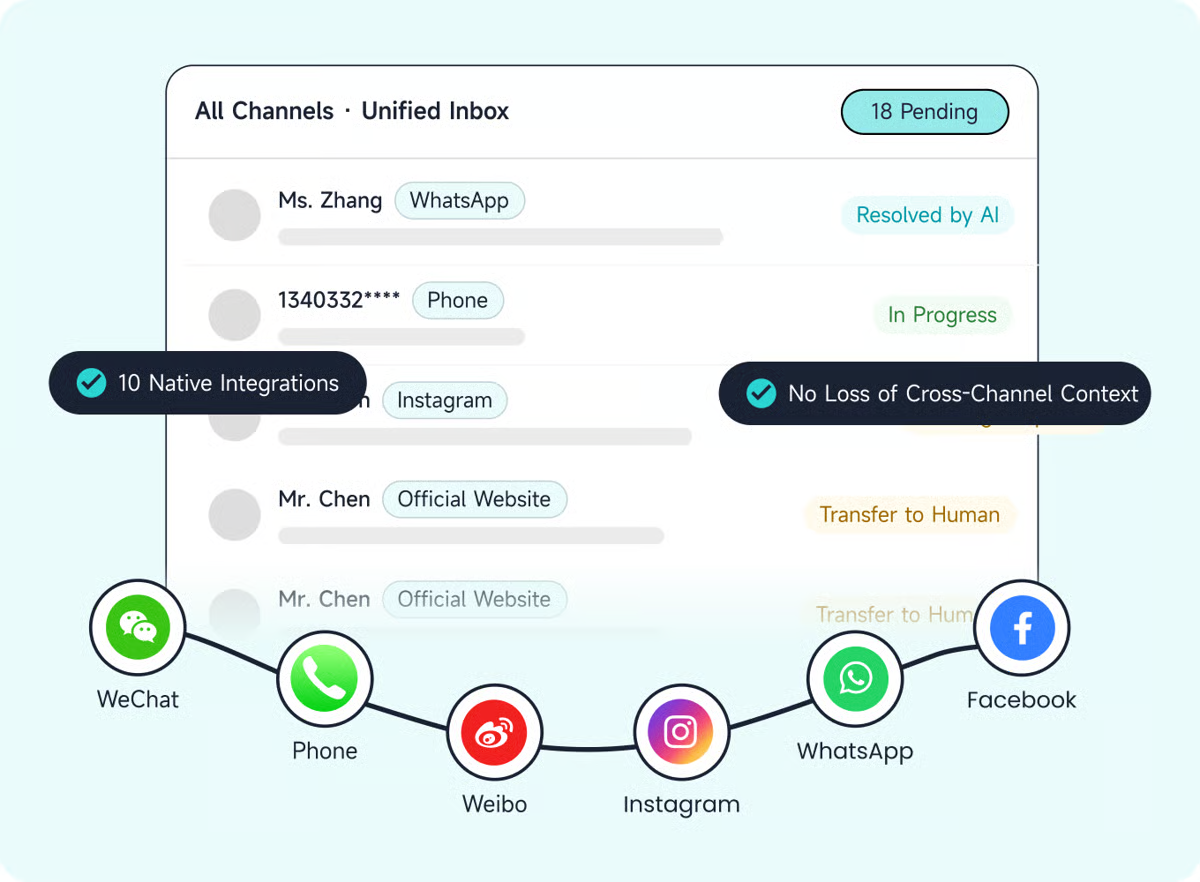
- A shared customer context across voice, messaging, email, tickets and social conversations.
- Data, deployment and governance requirements appropriate to the organization.
- Implementation, training and operating support for the regional team.
- A commercial model that remains understandable as agents, channels and automation usage grow.
Quick Comparison by Operating Model
| Option | Best fit | Core operating strength | Buyer check |
|---|---|---|---|
| Sobot | Regional brands combining digital, voice and e-commerce service | All-in-one AI Contact Center workflow | Country, channel and implementation scope |
| Genesys Cloud CX | Large enterprises with complex routing and workforce requirements | Enterprise contact-center depth | Regional deployment and integration design |
| Respond.io | Messaging-led teams | Messaging conversation management | Fit for voice, service reporting and broader contact-center work |
| Freshworks | Growing teams that prefer a help-desk-led suite | Ticketing and service workflow foundation | How voice, AI and regional channels are configured |
How We Recommend Testing an AI Contact Center
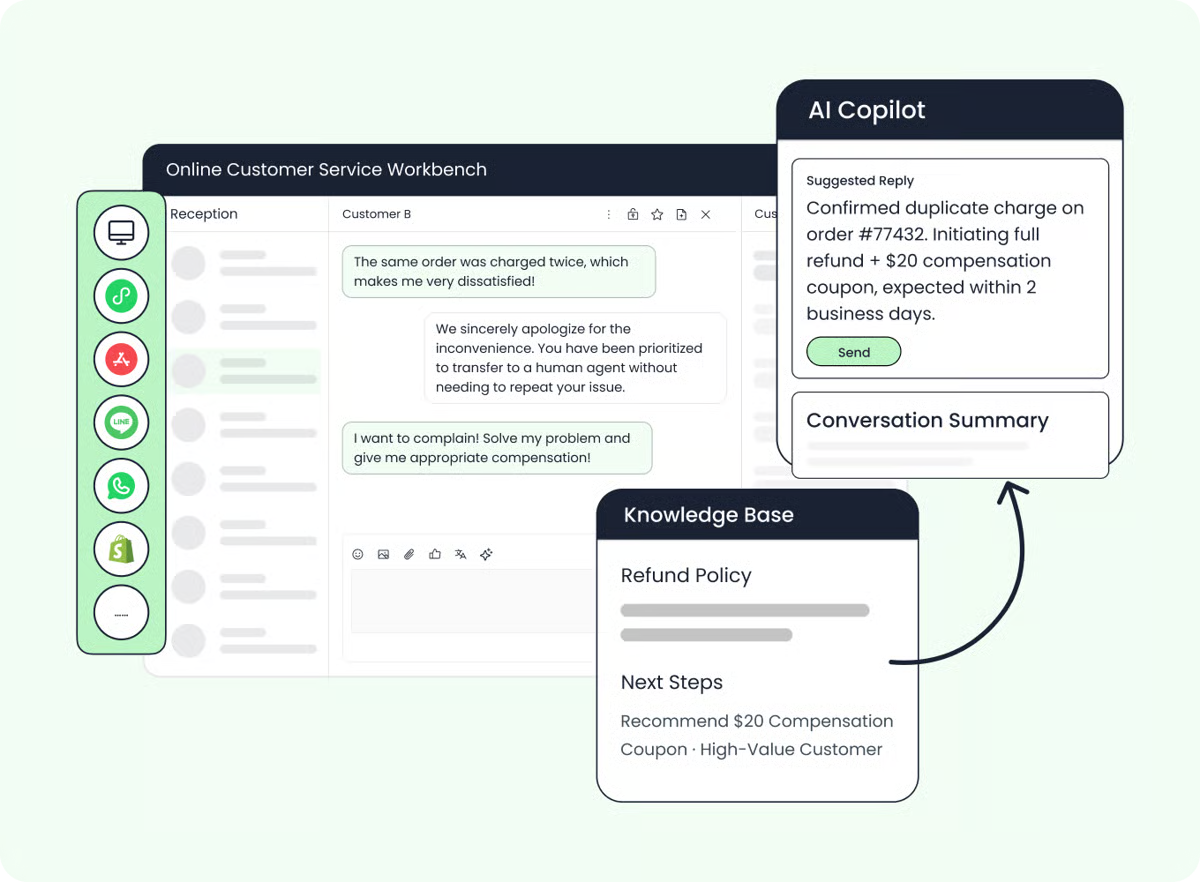
An AI contact center should be tested as an operating system, not as a chatbot demo. Bring a small, representative set of real questions into the evaluation: an order update, an account problem, a policy exception, a multilingual request and an escalation that moves from digital to voice. The buyer should be able to see the knowledge used, the proposed action, the customer history available to the agent and the quality controls around the handoff.
Sobot: Consider for a Regional All-in-One Service Operation
Best for: Retail, e-commerce, logistics and service teams that need connected digital and voice customer journeys.
Sobot brings AI Agent, Chatbot, Live Chat, Voice, Ticketing and WhatsApp API capabilities into an all-in-one AI Contact Center platform. For Southeast Asian operations, the buyer value is the ability to evaluate customer conversations as one workflow instead of treating each channel as a separate service program.
- Relevant capability: Use a scoped demo to test customer context, AI-assisted service, agent handoff and the channels that are central to the local operating model.
- Operating consideration: Confirm language, local-channel, telephony, commerce and data requirements for the countries in scope. The best implementation plan is built around real demand types rather than a generic feature list.
- Decision boundary: Sobot may be broader than necessary for a team whose needs are limited to a single messaging channel or a simple shared inbox.

Genesys Cloud CX: Consider for Complex Enterprise Routing
Best for: Large contact centers with established operations, routing requirements and specialist administration capacity.
Genesys Cloud CX is often evaluated when the central problem is complex enterprise contact-center design. It can be a logical option for teams that need sophisticated routing, workforce operations and a broad enterprise service architecture, especially when the organization has the technical ownership to manage a more involved implementation.
- Relevant capability: Assess routing, reporting, workforce processes and integration architecture against the service operation’s actual scale.
- Operating consideration: Require a country-by-country design review for regional channels, local partners, language workflows and data obligations.
- Decision boundary: Genesys Cloud CX can be more operationally involved than a growing regional team needs when speed and a unified digital-first workflow are the main priorities.

Respond.io: Consider for Messaging-First Operations
Best for: Teams whose customer service is centered on high volumes of messaging conversations.
Respond.io belongs on a Southeast Asia shortlist when messaging is the primary service channel and the buyer needs to organize conversations across several digital touchpoints. The key question is whether its messaging-first model covers the complete service operation or whether the organization will need additional systems for voice, deeper ticketing and cross-functional reporting.
- Relevant capability: Test message routing, automation, agent context and the quality of escalation when a conversation cannot be resolved in the messaging flow.
- Operating consideration: Confirm the operating model for the specific channels, markets and teams involved in the deployment.
- Decision boundary: Respond.io is less likely to be the first choice when a business is selecting a broad contact-center platform for blended voice, digital and service-management requirements.
Freshworks: Consider for a Help-Desk-Led Growth Path
Best for: Growing teams that want ticketing and service workflows to remain central while expanding their channels.
Freshworks can be a practical candidate for a team that wants to build on a help-desk foundation. It is worth assessing when the business values ticket management, knowledge processes and a familiar administration model, and when the team wants to add automation and additional channels as its service operation matures.
- Relevant capability: Evaluate the configuration required for AI, voice and the regional channels that the business uses most.
- Operating consideration: Run a real workflow test with existing tickets, service categories, multilingual knowledge and escalation rules.
- Decision boundary: Freshworks may require more design work around a blended contact-center operating model than a platform selected specifically for an all-in-one service environment.

Choose by the Work Your Team Must Coordinate
The right platform depends on which operational constraint is hardest to solve.
- Choose Sobot when the team needs to bring AI, digital channels, voice, tickets and e-commerce service into one operating environment.
- Choose Genesys Cloud CX when the central requirement is enterprise routing and the organization has the resources for a more complex contact-center architecture.
- Choose Respond.io when messaging is the dominant service channel and the contact-center scope is primarily digital.
- Choose Freshworks when a help-desk-led service model and a gradual expansion path are the strongest fit.
Country-by-Country Verification Checklist
- List the countries, languages, service hours and customer channels included in phase one.
- Confirm channel and telephony availability for each country rather than accepting a regional statement.
- Use local-language sample conversations to test AI, knowledge and human handoff quality.
- Map which system provides order, account and conversation context to the agent.
- Document data, governance, implementation and support commitments before procurement approval.
Frequently Asked Questions
What makes an AI contact center suitable for Southeast Asia?
An AI contact center is suitable for Southeast Asia when it can support the region’s country-specific channels, languages, customer context and operating requirements. The buyer should validate those requirements market by market because a platform can be strong globally while still creating gaps in a particular regional workflow.
Should a Southeast Asian service team prioritize messaging or voice?
The answer depends on the customer journey. A team should prioritize the channels that create the most service volume and risk, then verify that an agent can carry context between them. For many businesses, the important question is not messaging versus voice but whether both can be managed as one service operation.
How should a team test AI language quality?
A team should test AI language quality with real customer questions, existing knowledge and the local escalation path. A useful pilot measures whether the system understands intent, retrieves the right policy information and hands a complex case to a human without losing context.
What should be confirmed before signing a contact center contract?
Before signing, the buyer should confirm country availability, telephony and messaging coverage, data handling, implementation support, commercial packaging, service limits and the responsibilities of both the vendor and the internal project team.
See the Platform Against Your Regional Workflow
A regional contact-center decision is stronger when it starts with a few real service journeys. Explore Sobot’s omnichannel customer-service approach and use the same regional test cases for every platform on your shortlist.